Choosing between Lumar (formerly Deepcrawl) and EdgeComet depends on your priorities: an enterprise website intelligence platform for audits and issue tracking, or direct control over bot access and SEO execution.
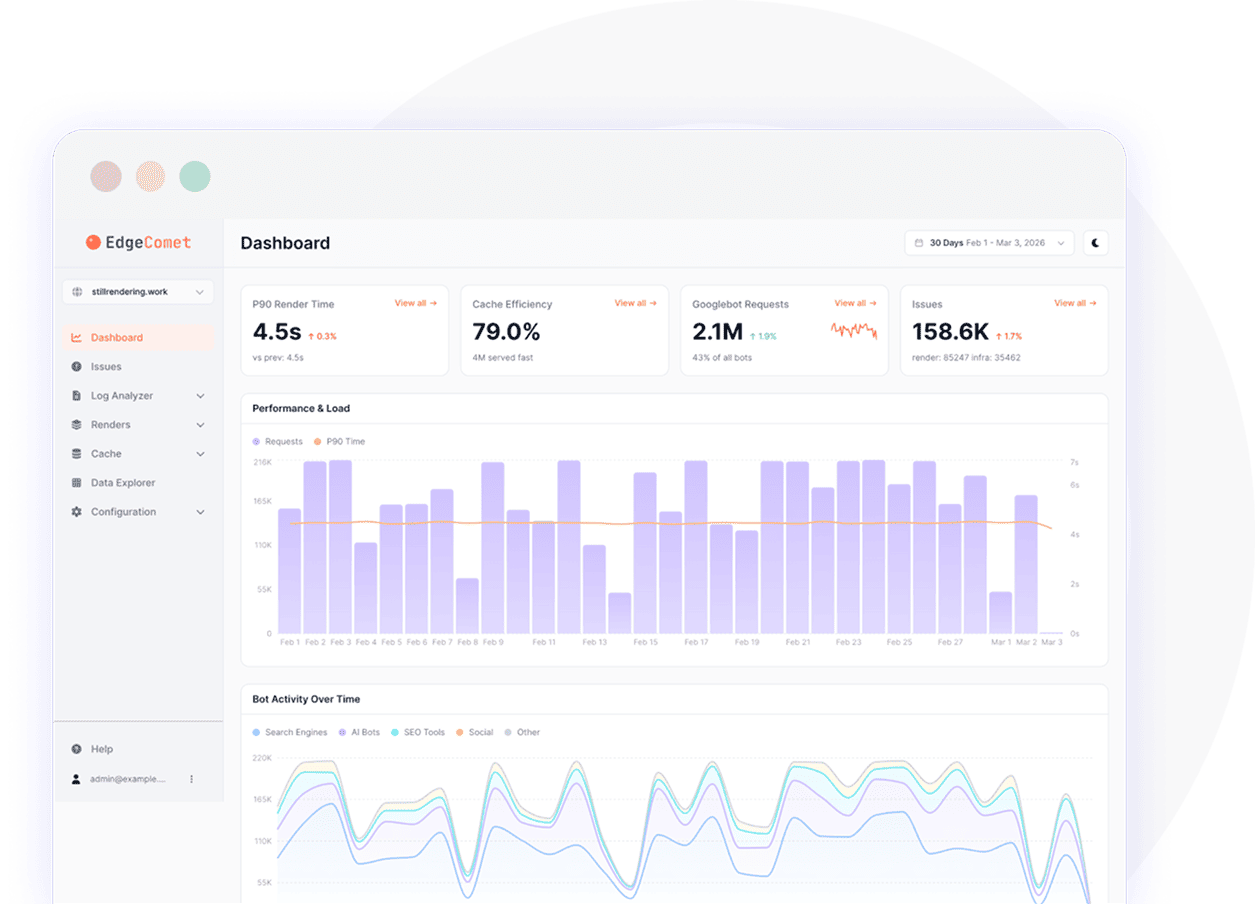
As a Lumar alternative, EdgeComet combines real-time bot visibility, log analysis, caching, AI visibility monitoring, and SEO changes applied at the edge in one technical SEO platform.
Explore the EdgeComet vs Lumar comparison to find the right solution for improving search performance and AI visibility.
Both EdgeComet and Lumar help teams identify, prioritize, and resolve technical SEO issues. Lumar provides broad website optimization across SEO, site speed, accessibility, and monitoring. EdgeComet focuses on search and AI bot behavior, technical SEO execution, and direct control over how sites are delivered to bots.
Lumar's website intelligence platform helps teams discover technical SEO issues through scheduled crawls and audits. EdgeComet goes further by combining issue detection with real-time bot monitoring, rendering verification, and direct SEO execution - so teams can identify problems and fix them without waiting for the next crawl cycle.
Lumar helps teams find technical SEO problems and opportunities. EdgeComet goes further by linking issue detection with implementation. This allows teams to solve problems, track changes, and measure impact from a single platform.
Most SEO platforms show symptoms like indexation gaps or crawl issues. EdgeComet not only reveals visibility problems but also pinpoints their root causes, so they can understand and resolve them much faster.
Technical SEO problems can affect visibility long before audits detect them. EdgeComet continuously monitors real bot interactions. This helps teams find, prioritize, and implement changes before they cause traffic drops or impact your AI visibility.
Many SEO platforms often require different tools for monitoring, rendering, bot analysis, and implementation. EdgeComet combines these workflows, making it easier for teams to reduce complexity and work more quickly.
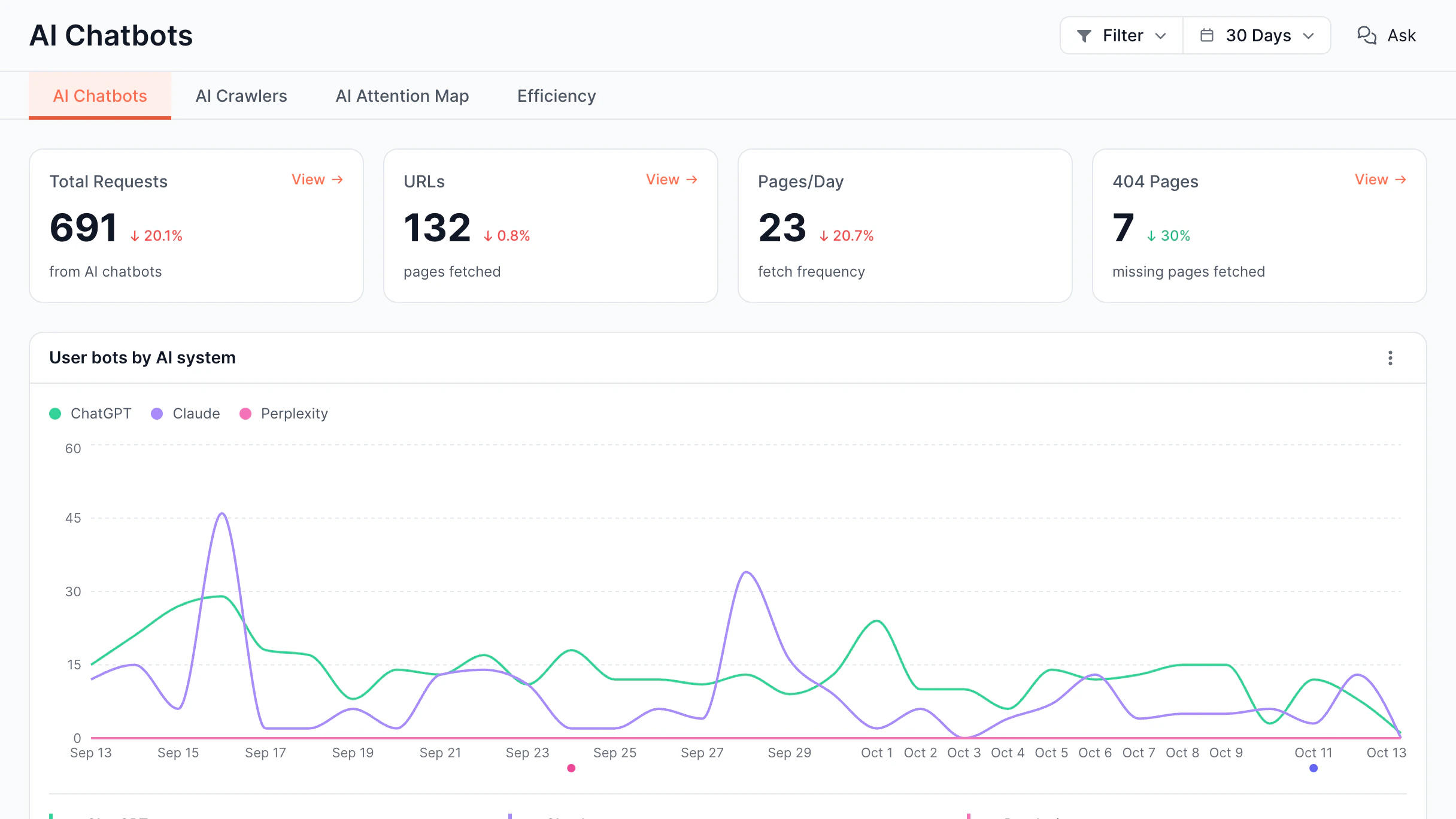
Pages ChatGPT, Claude, and Perplexity fetch while answering users, by day.
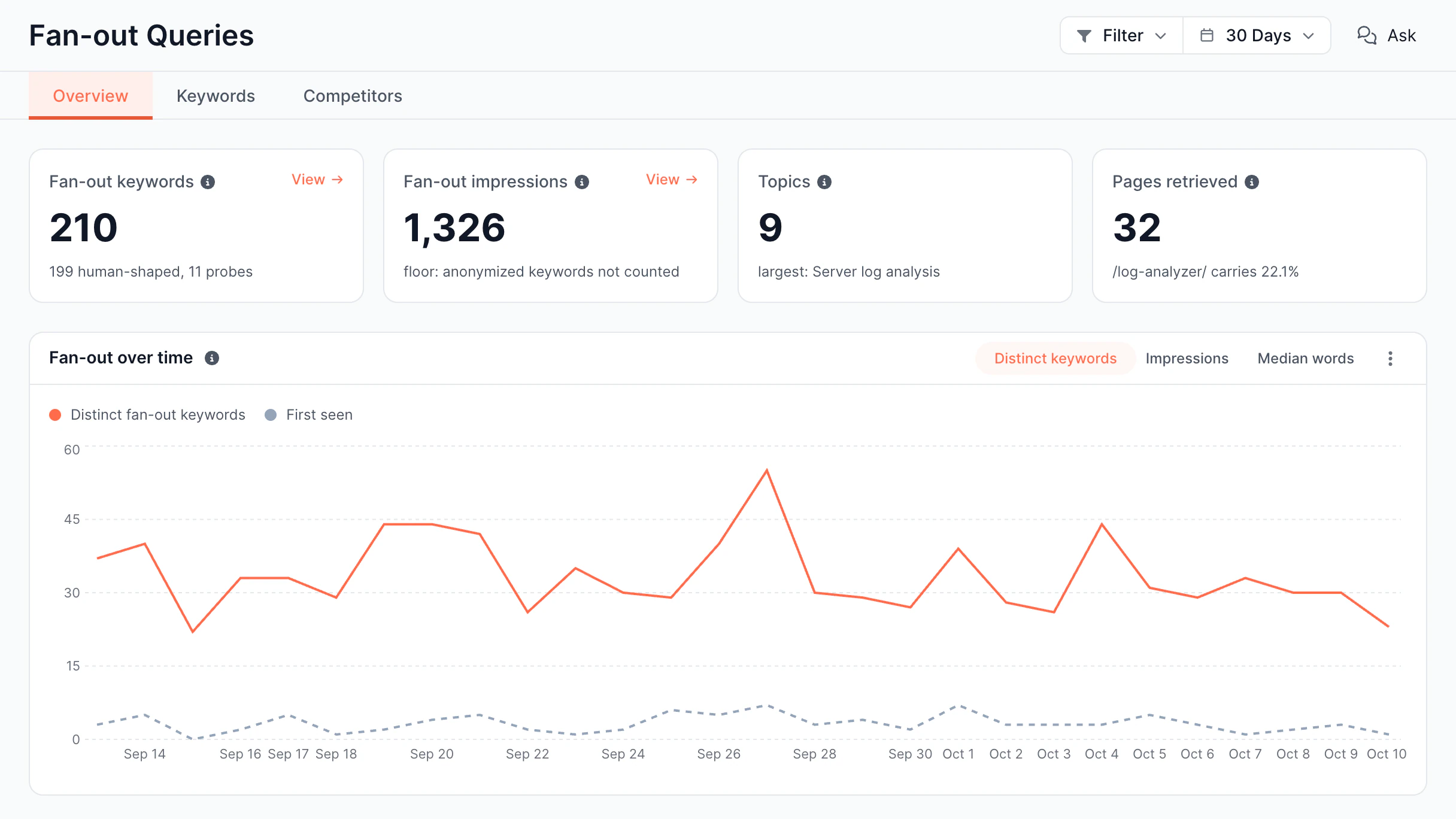
Fan-out keywords from Search Console, grouped into topics, with impressions.
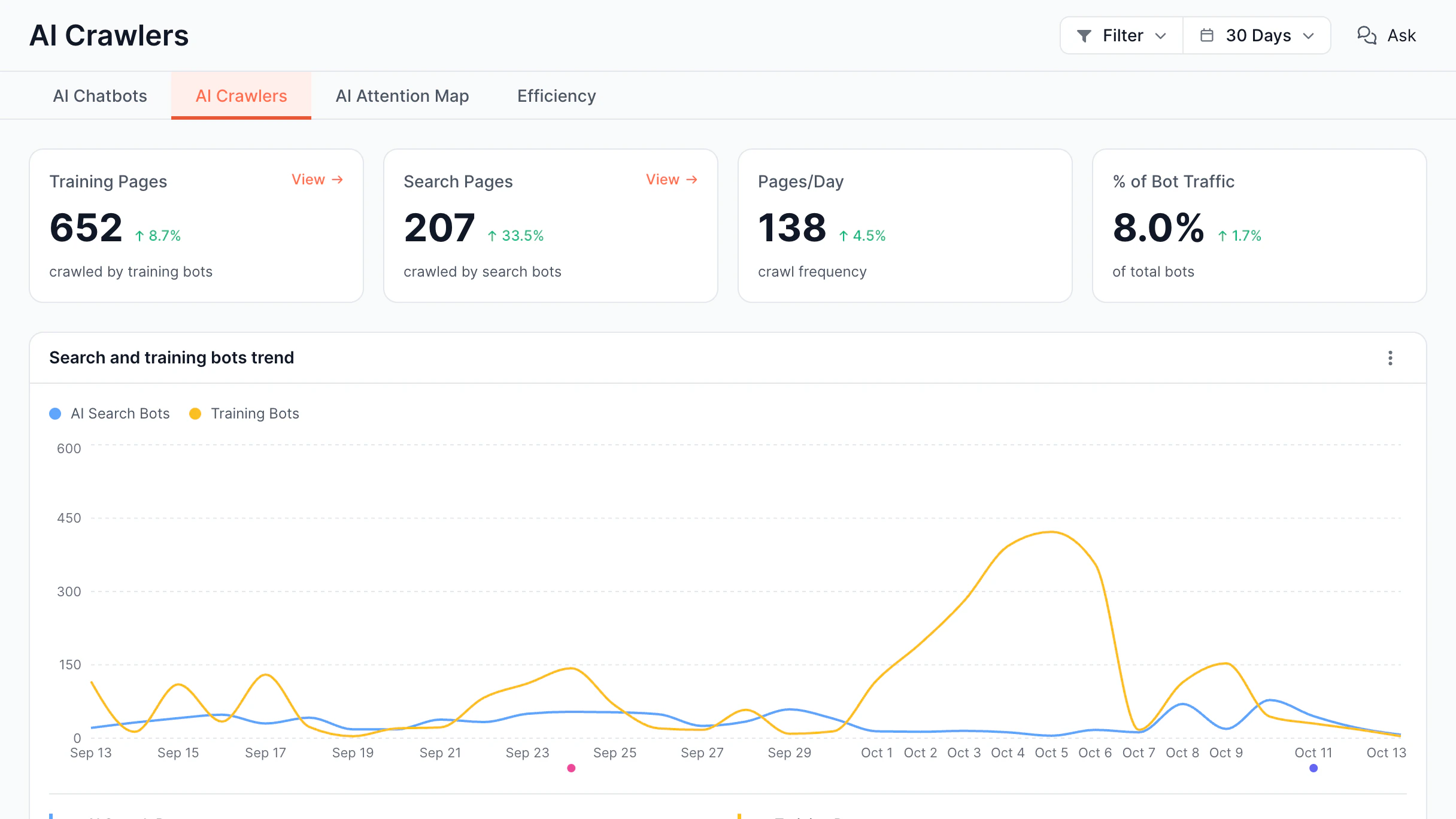
AI training and search bots: pages crawled, pages per day, share of traffic.
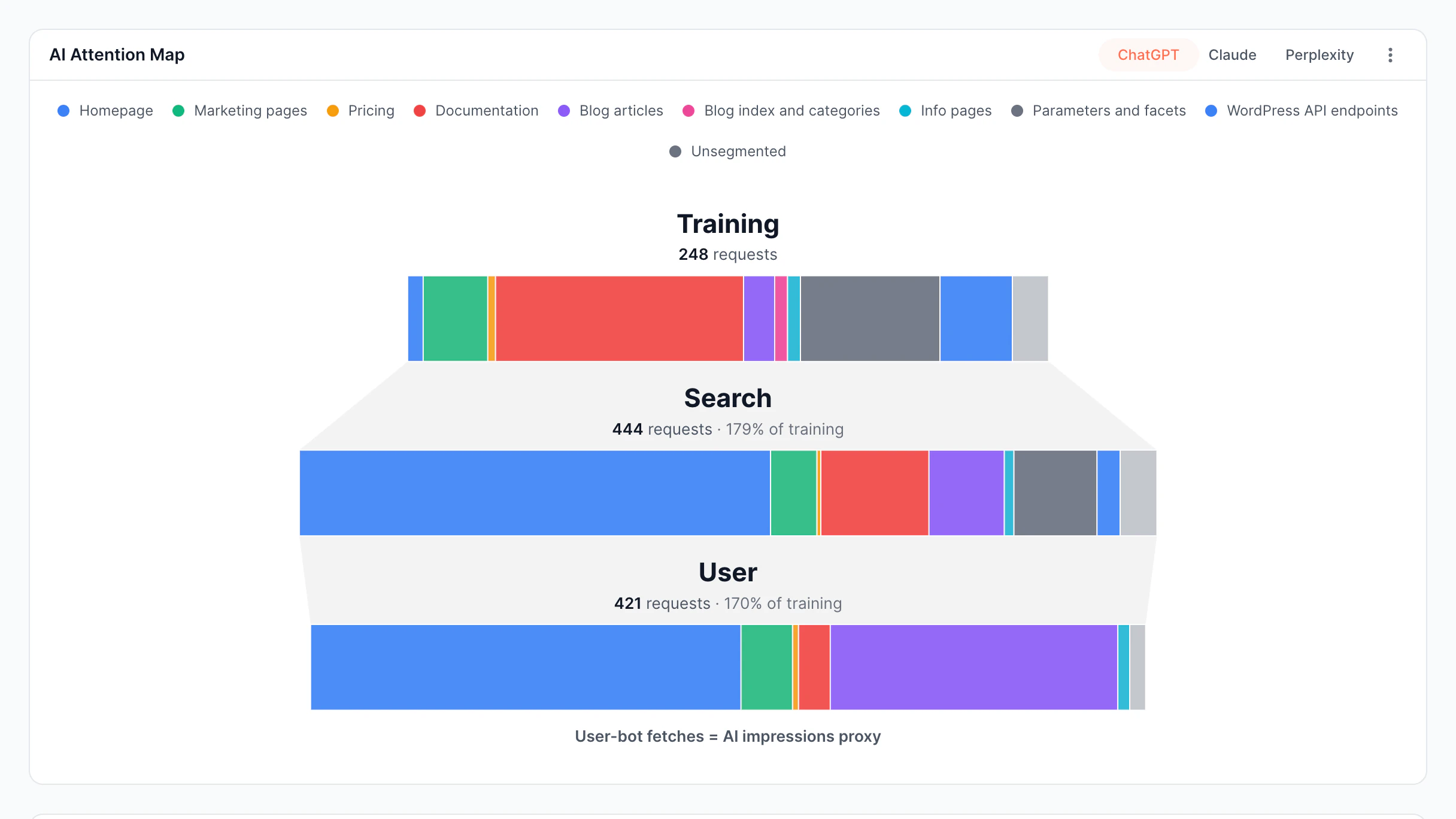
Training, search, and user bot requests by page type, for each AI provider.
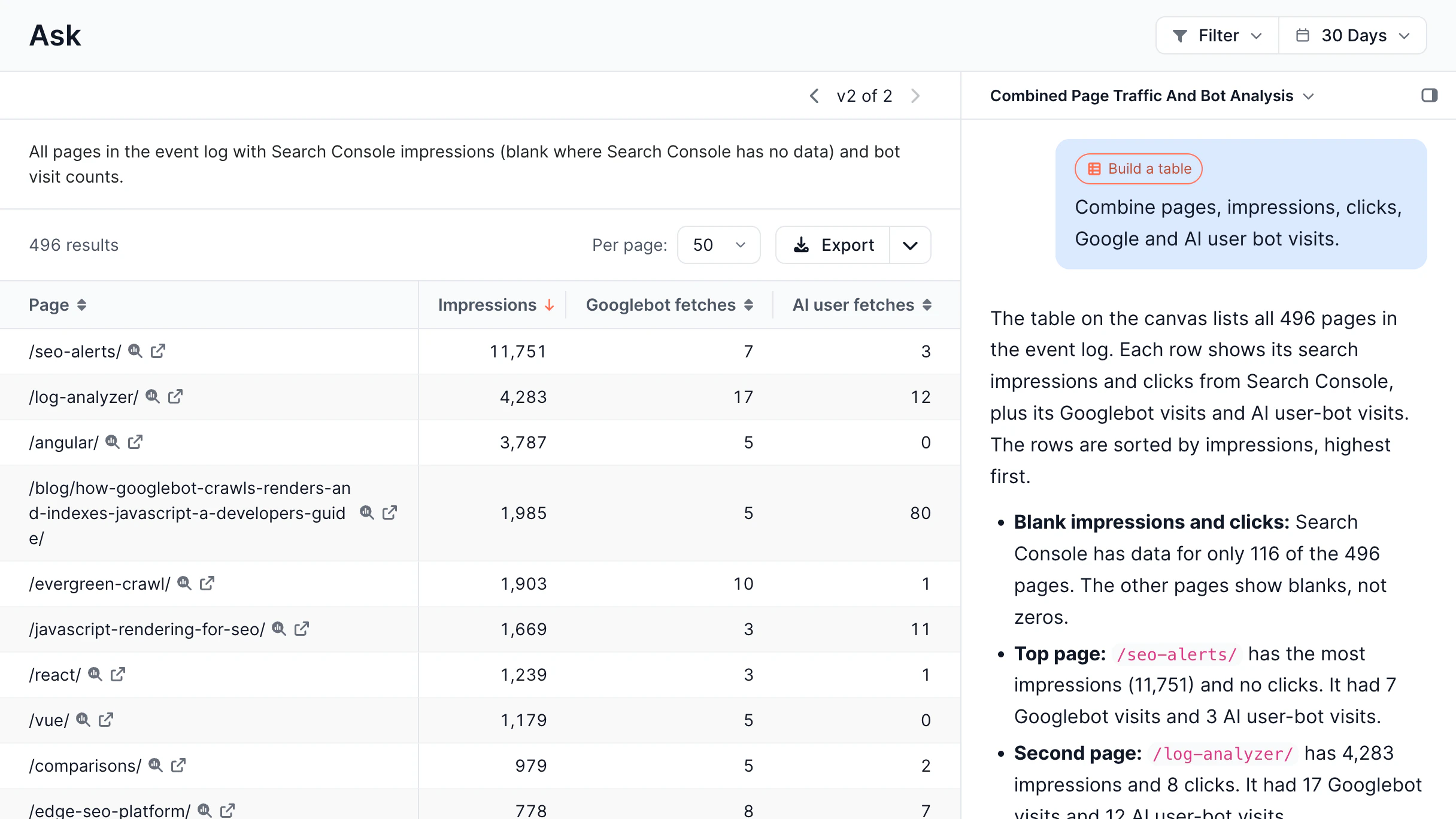
Chat that answers with sortable tables you can export to CSV or Google Sheets.
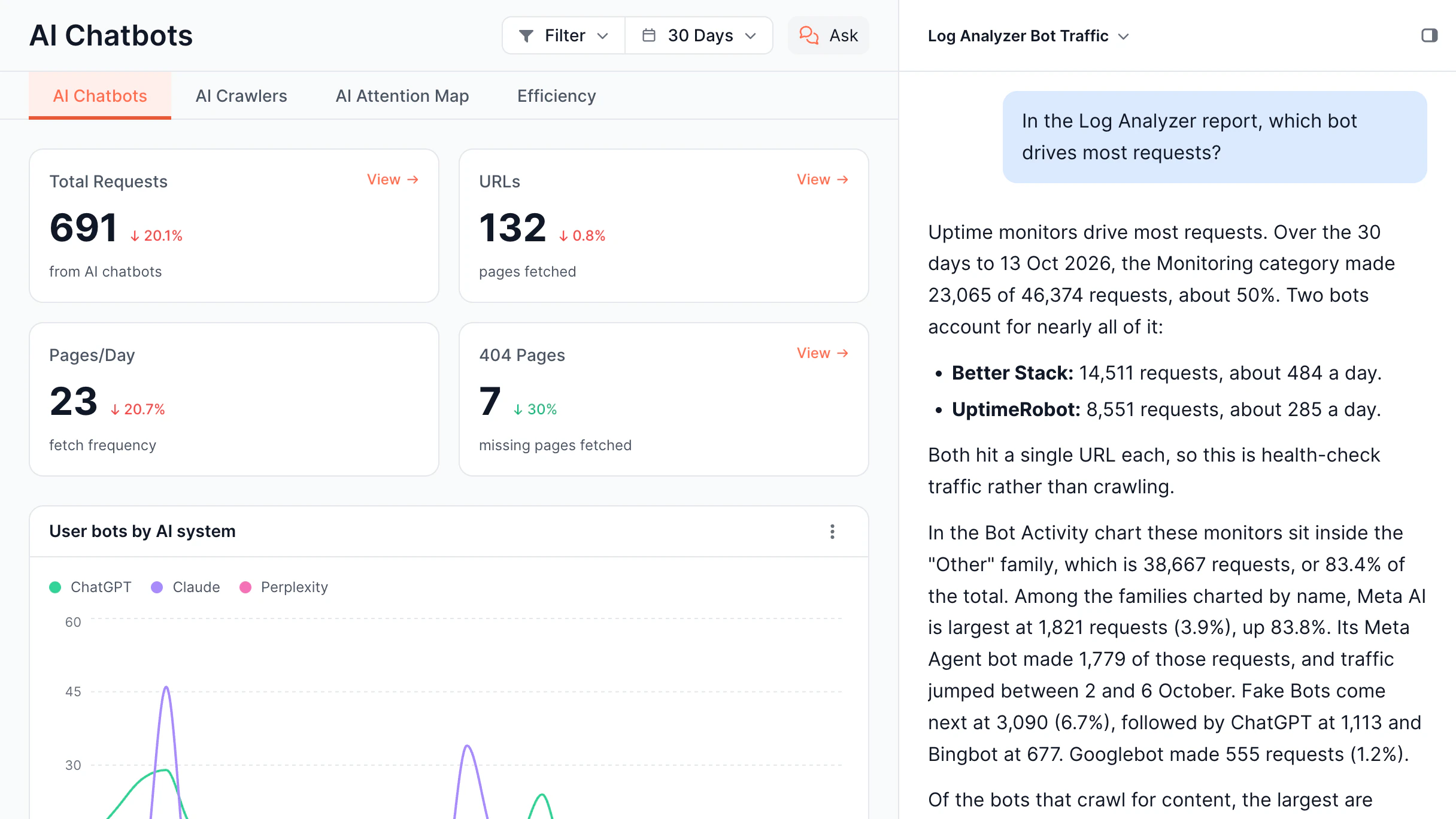
Chat panel next to any report that answers questions about its data.
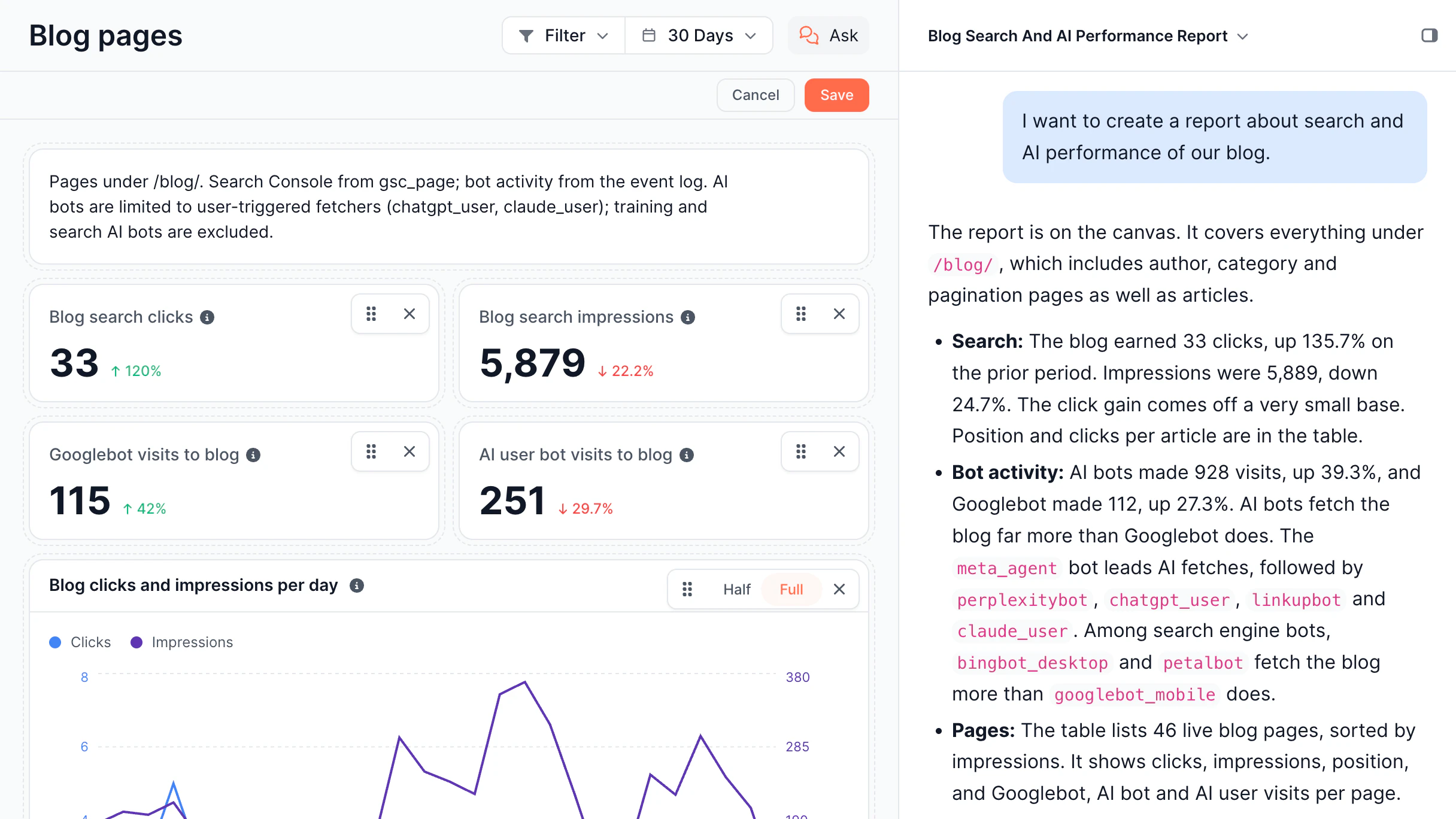
Custom reports built from a chat request, with widgets you can edit and save.
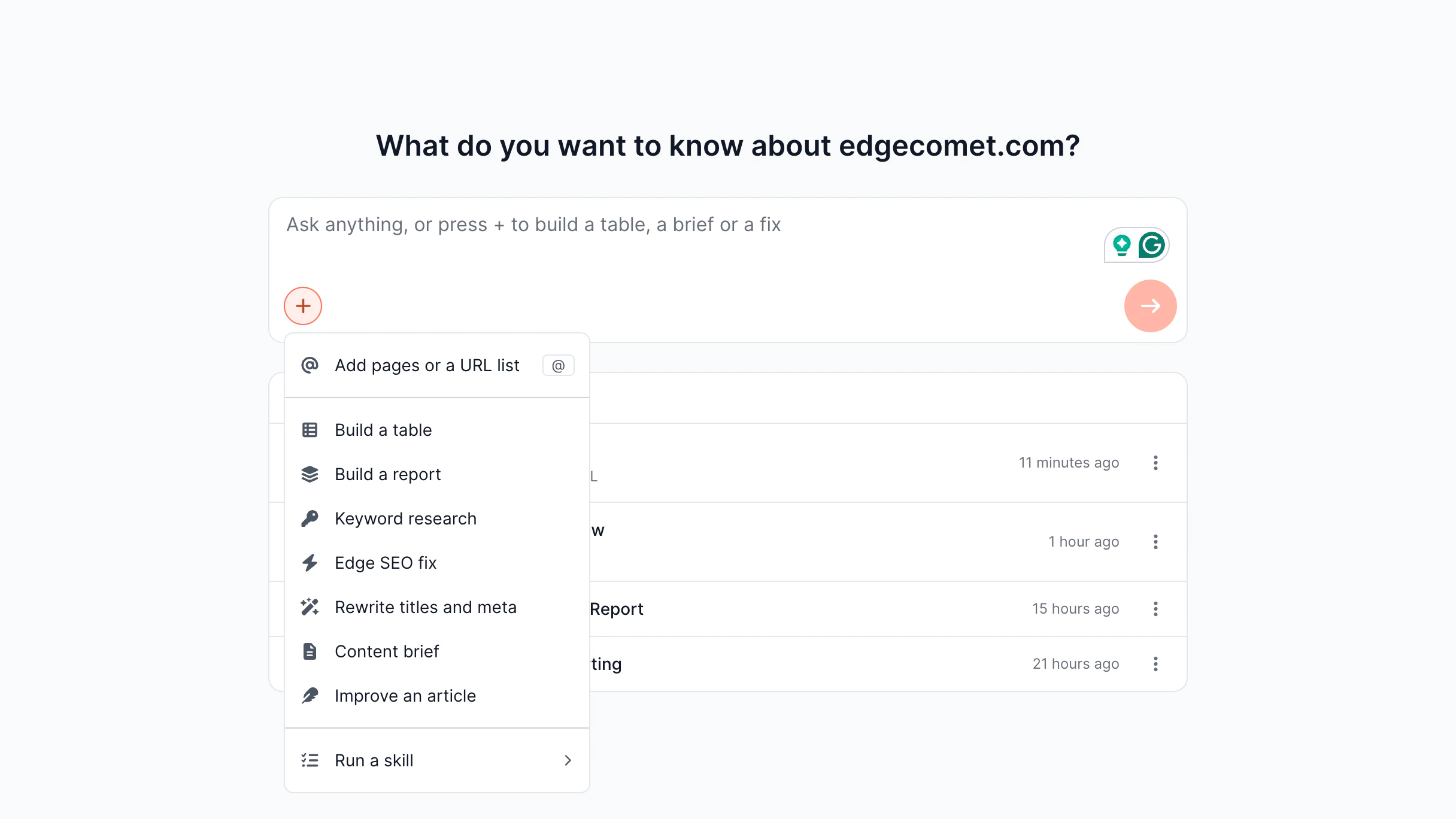
Skills menu: keyword research, content briefs, article and meta rewrites.
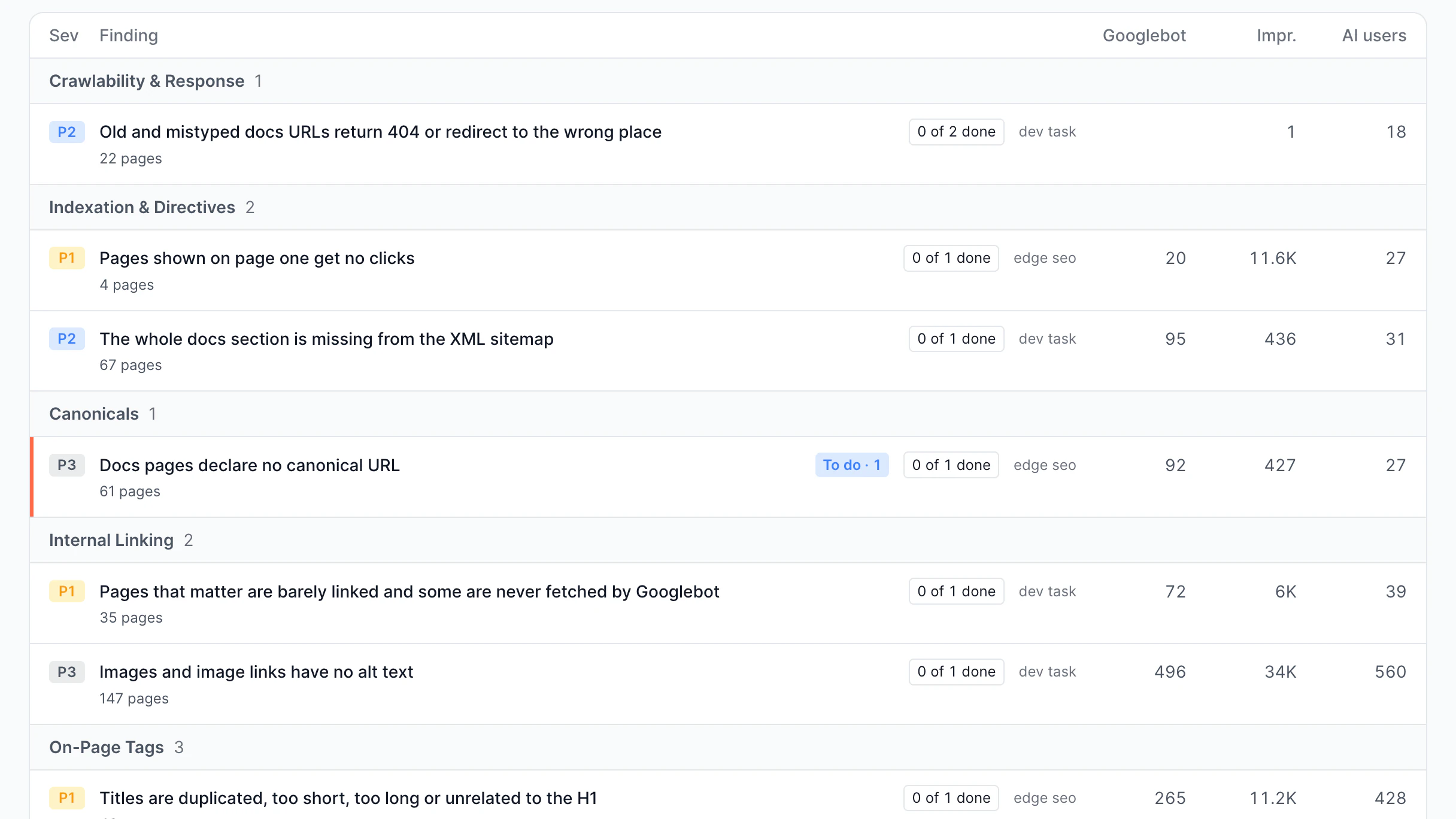
Findings by type and severity, with traffic per issue.
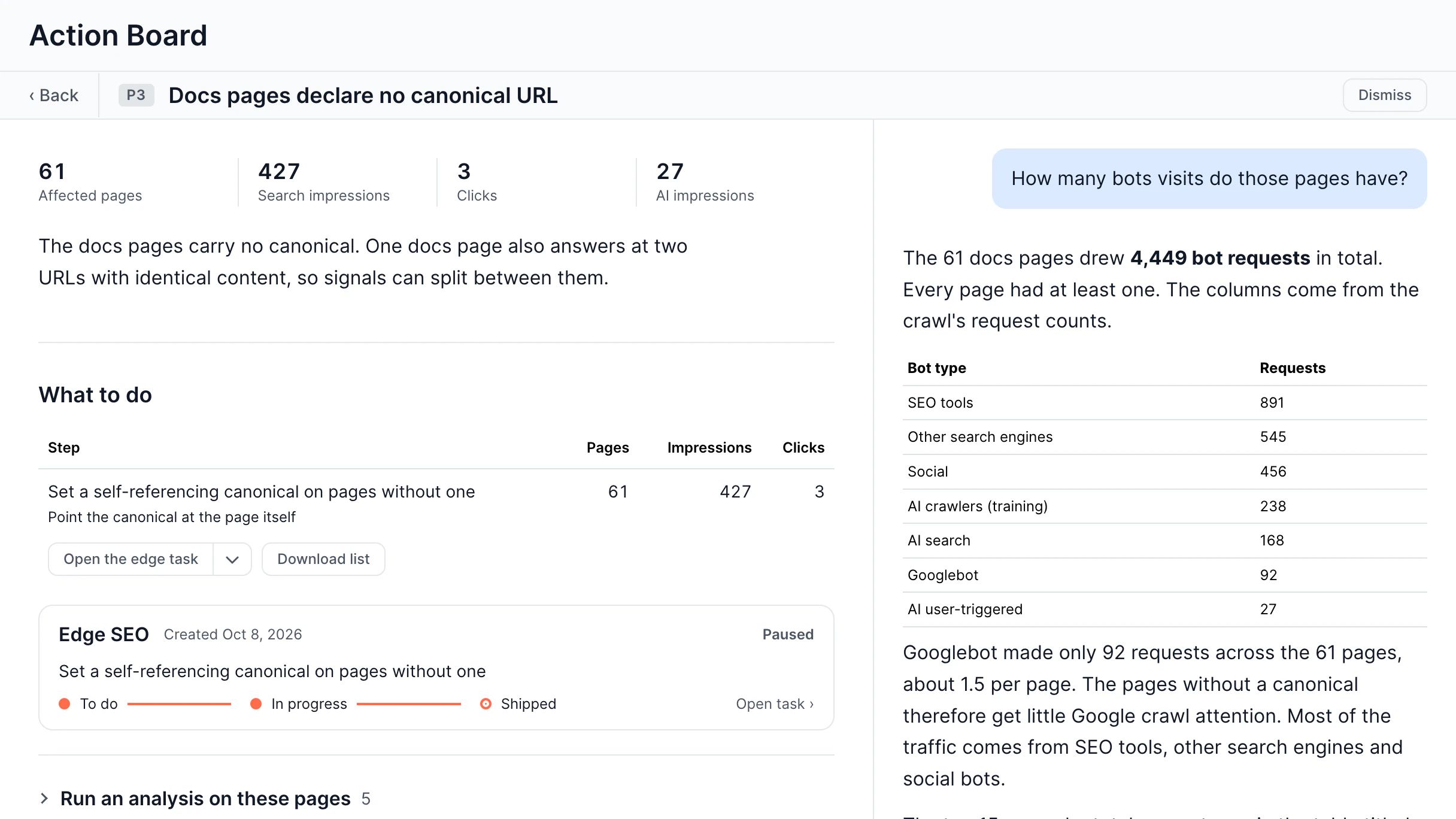
One finding: affected pages, fix steps, task status.
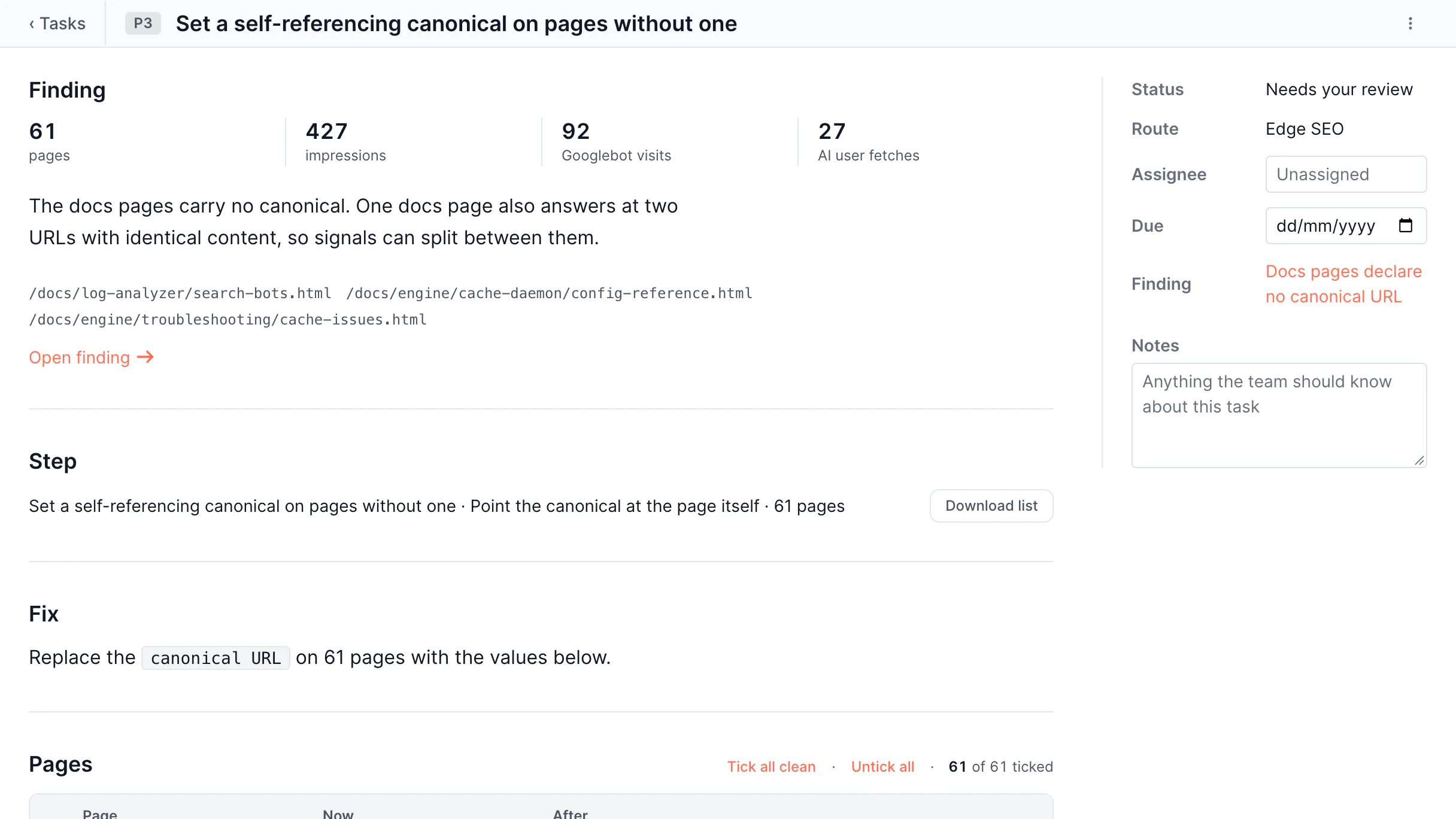
Task page with status, assignee, due date, and notes.
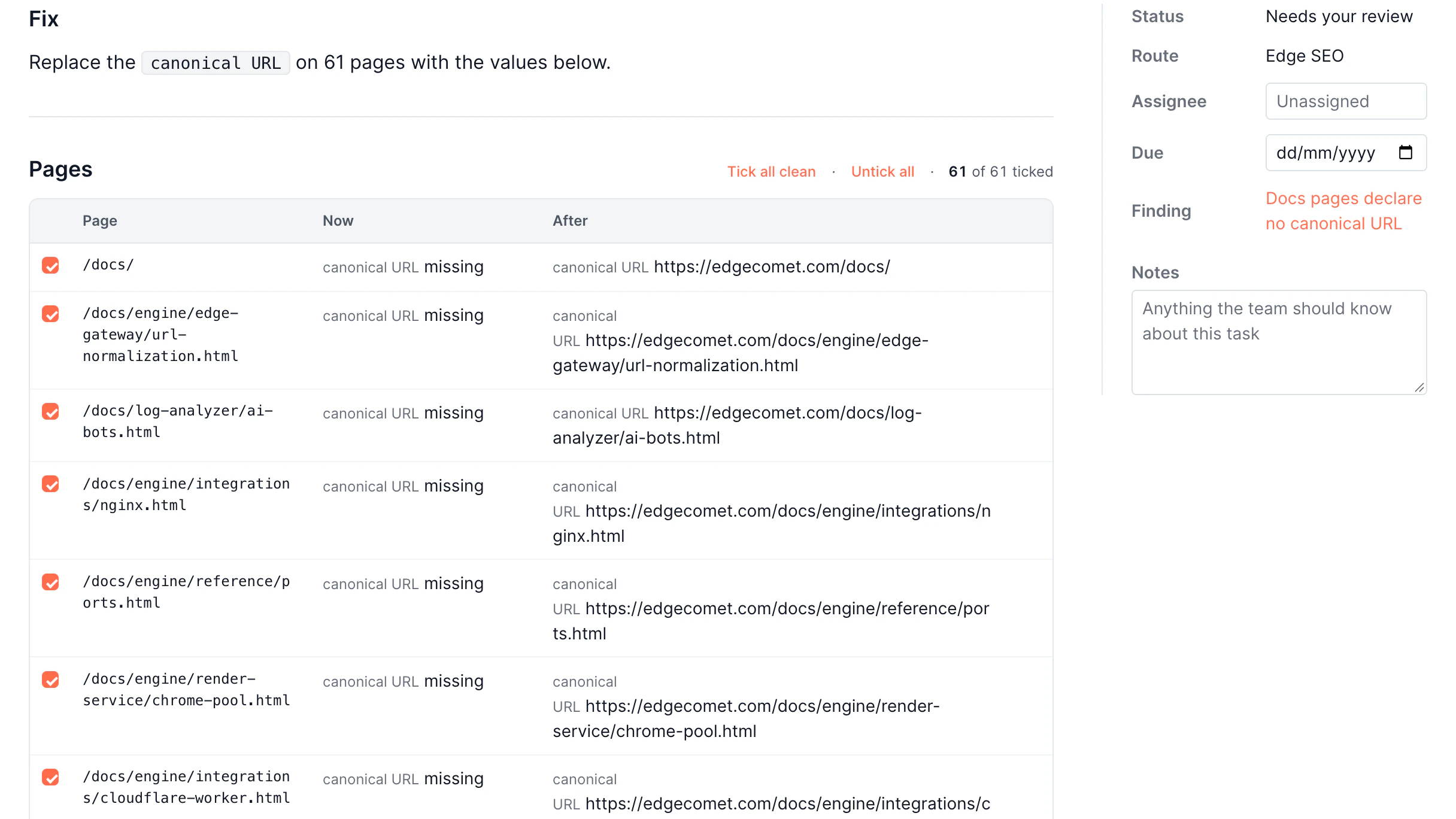
Before and after values per page, with edge deploy.
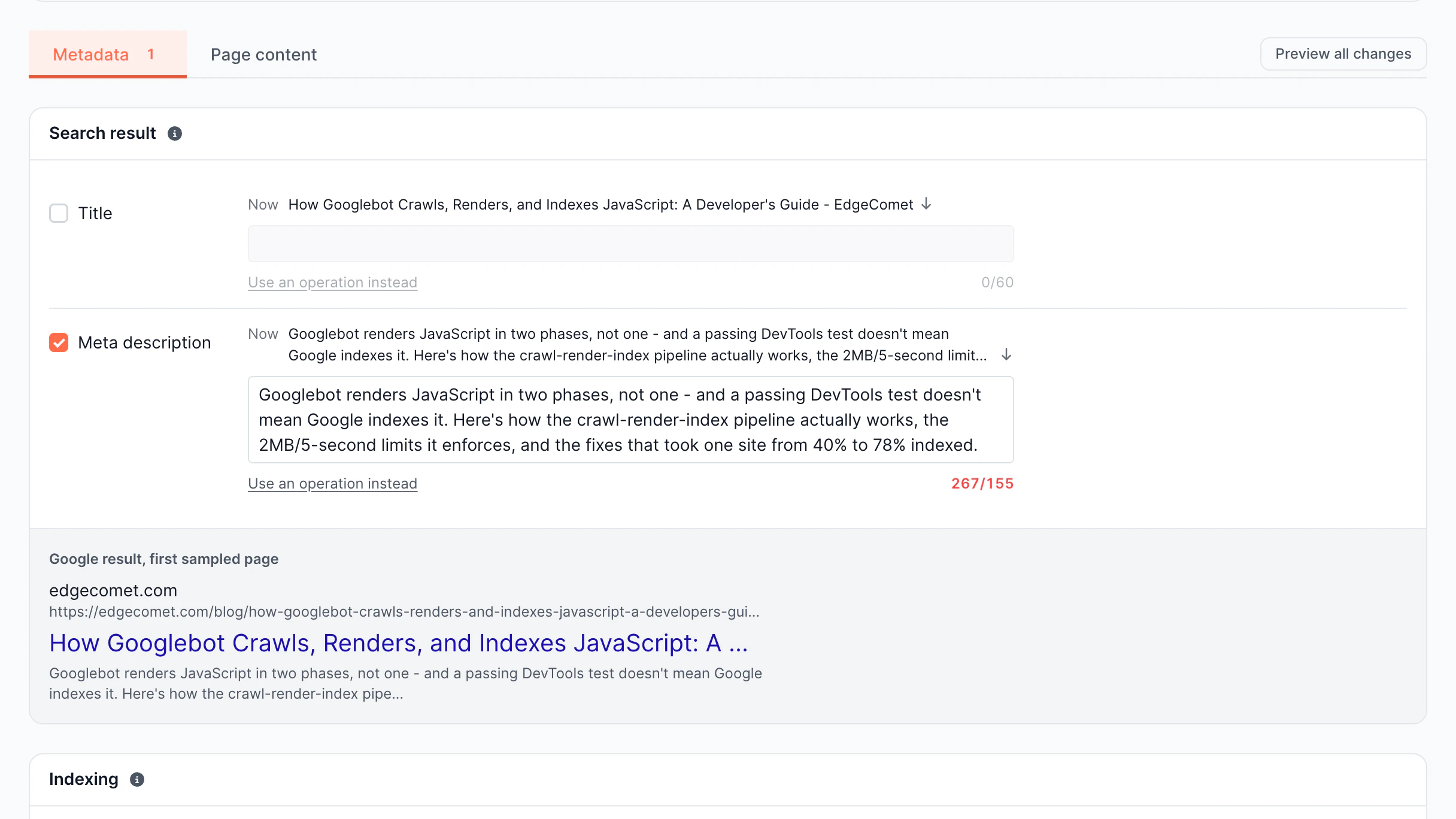
Title and meta overrides with a Google result preview.
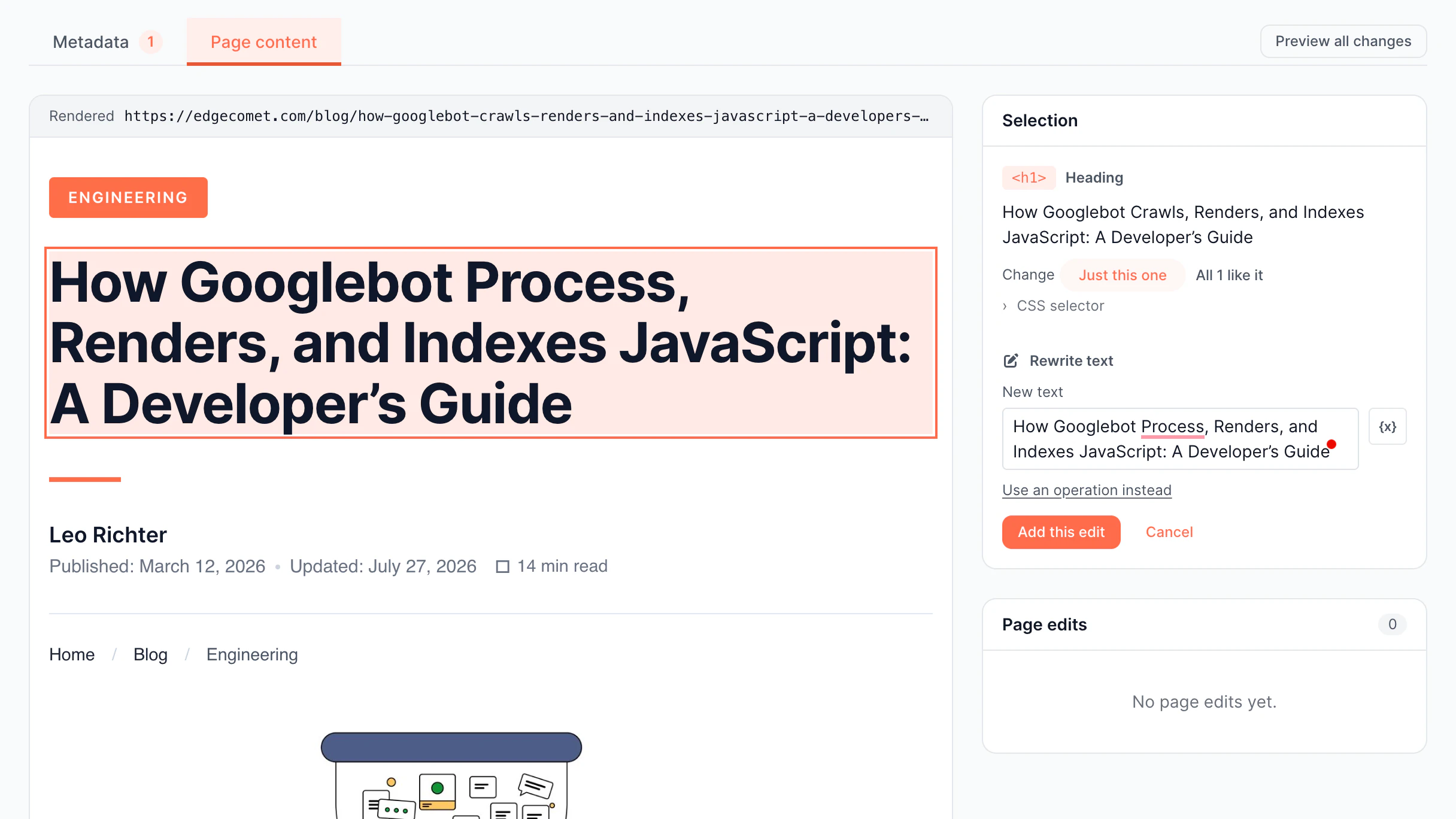
Select an element on the rendered page and edit its text.
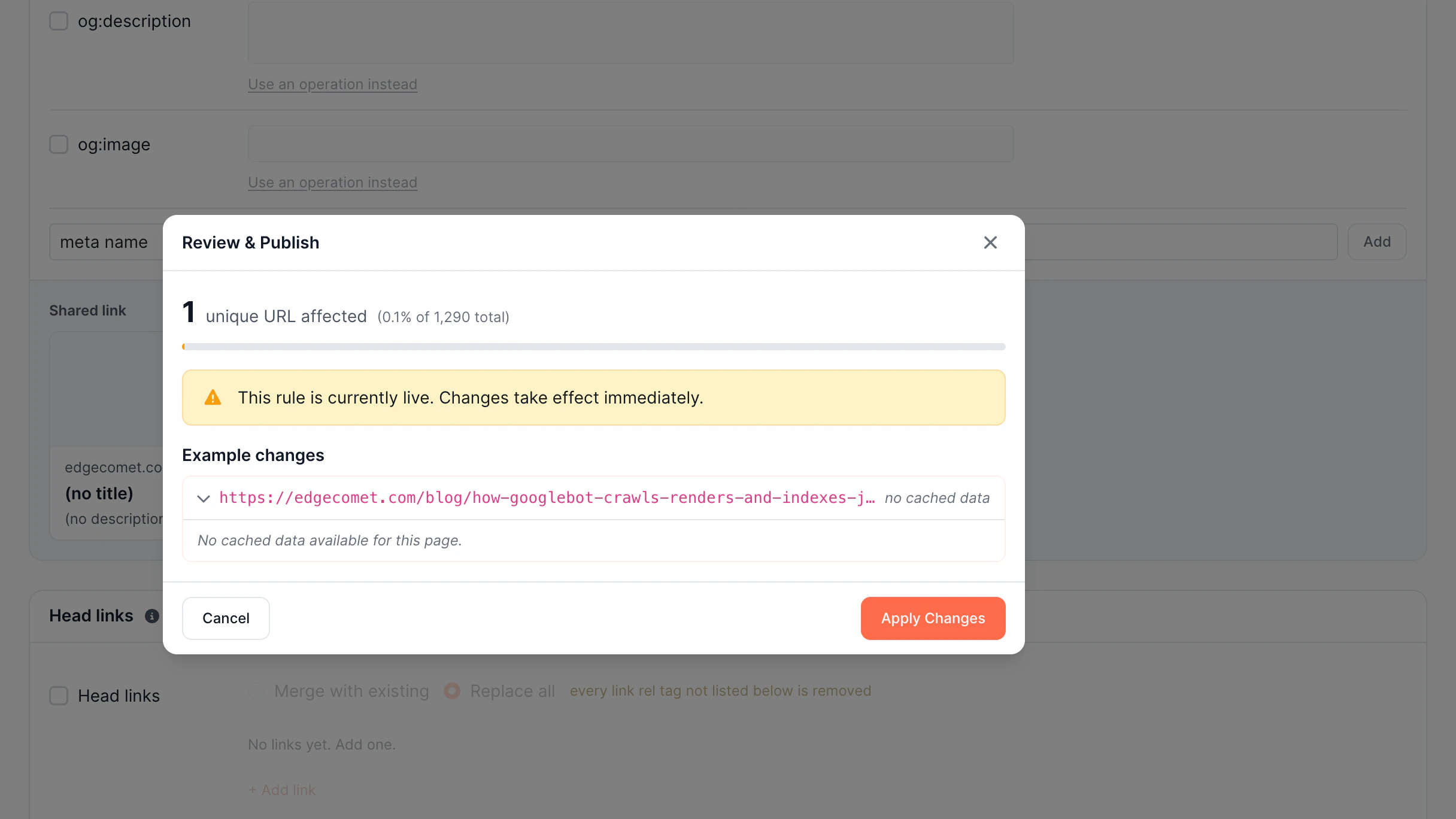
Review dialog with the number of URLs a rule changes.
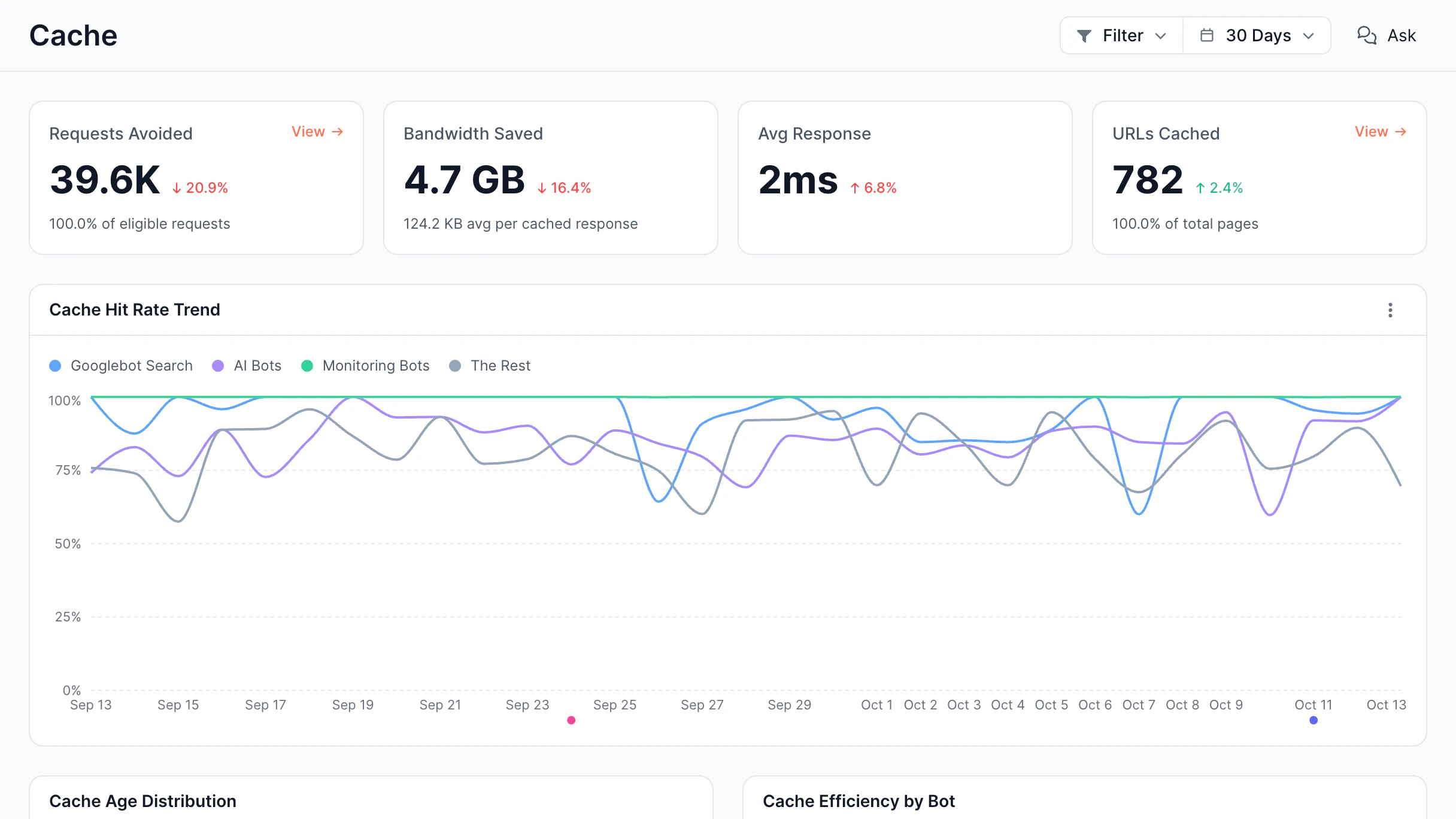
Hit rate, bandwidth saved, and cache age.
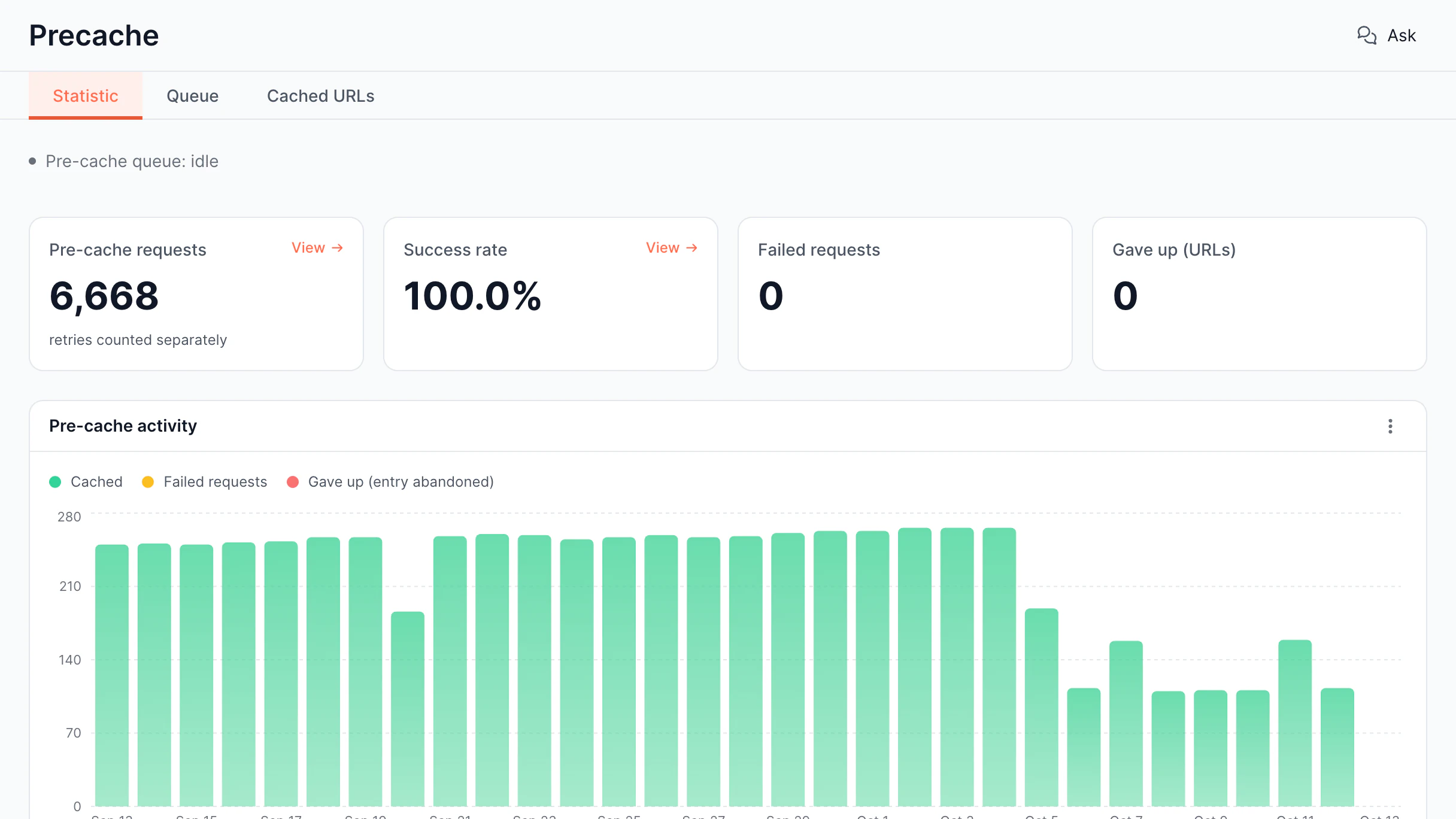
Pre-cache queue, success rate, and failures.
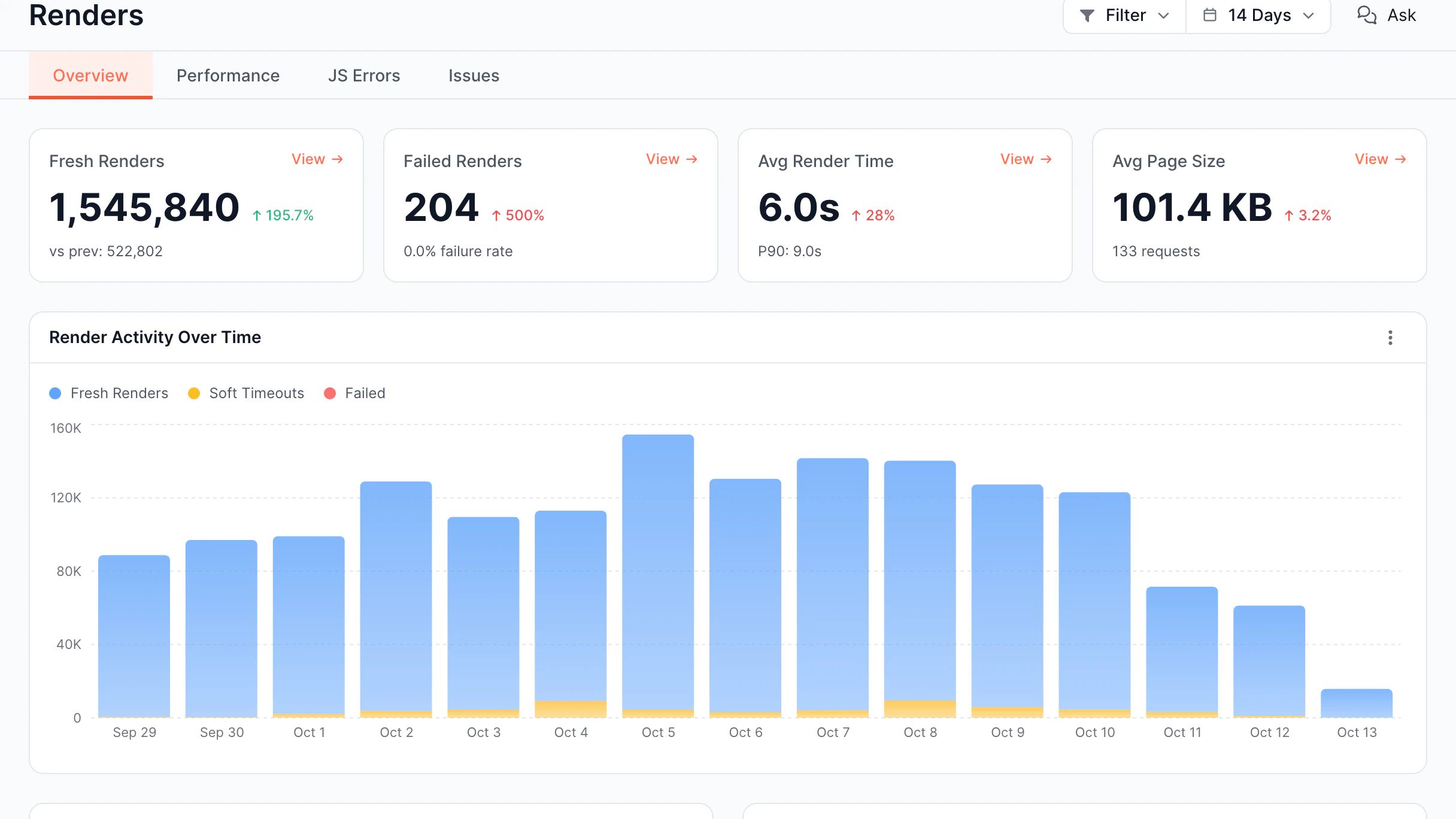
Renders per day, failures, and render time.
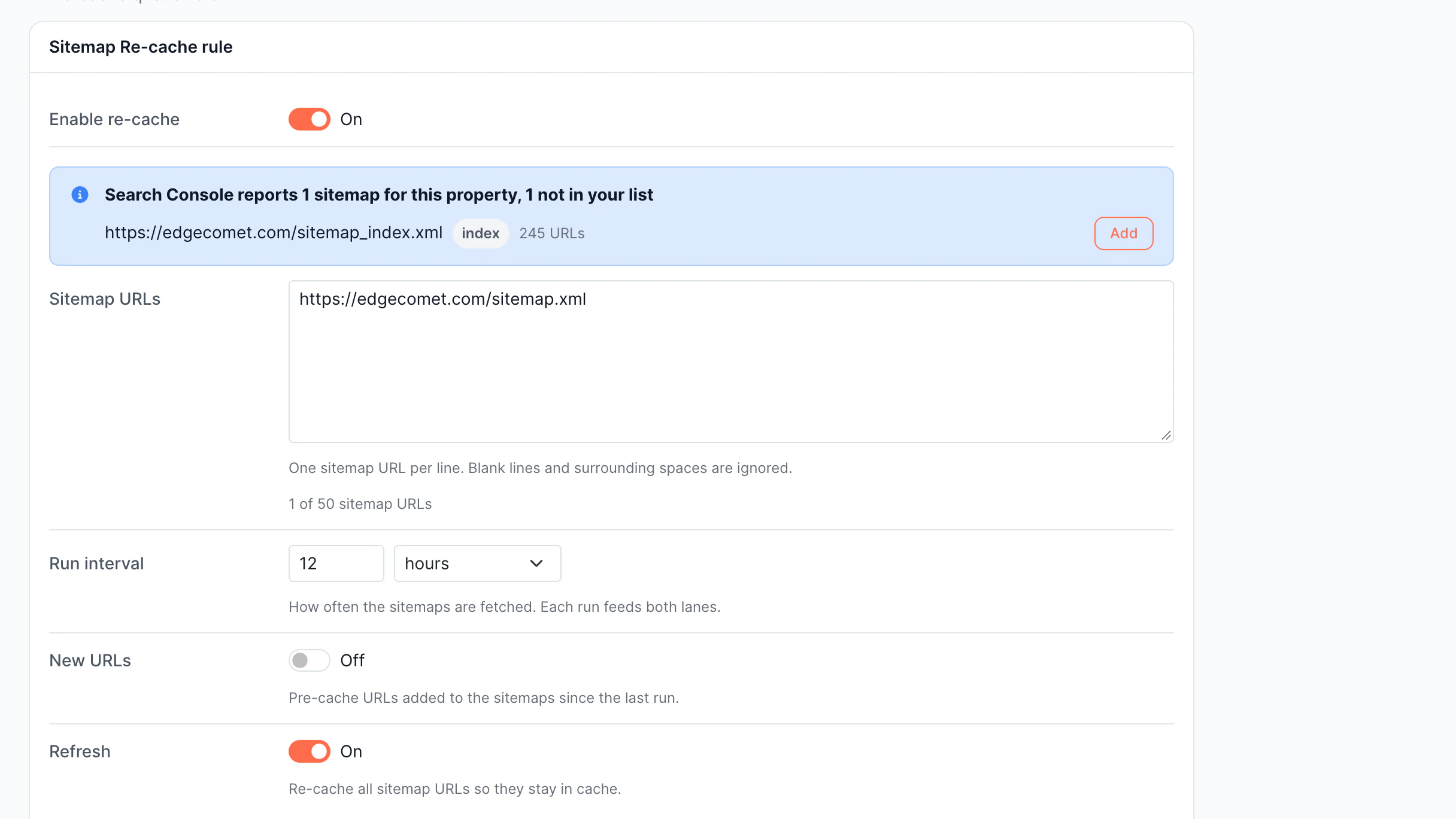
Re-cache rule for sitemap URLs on a schedule.
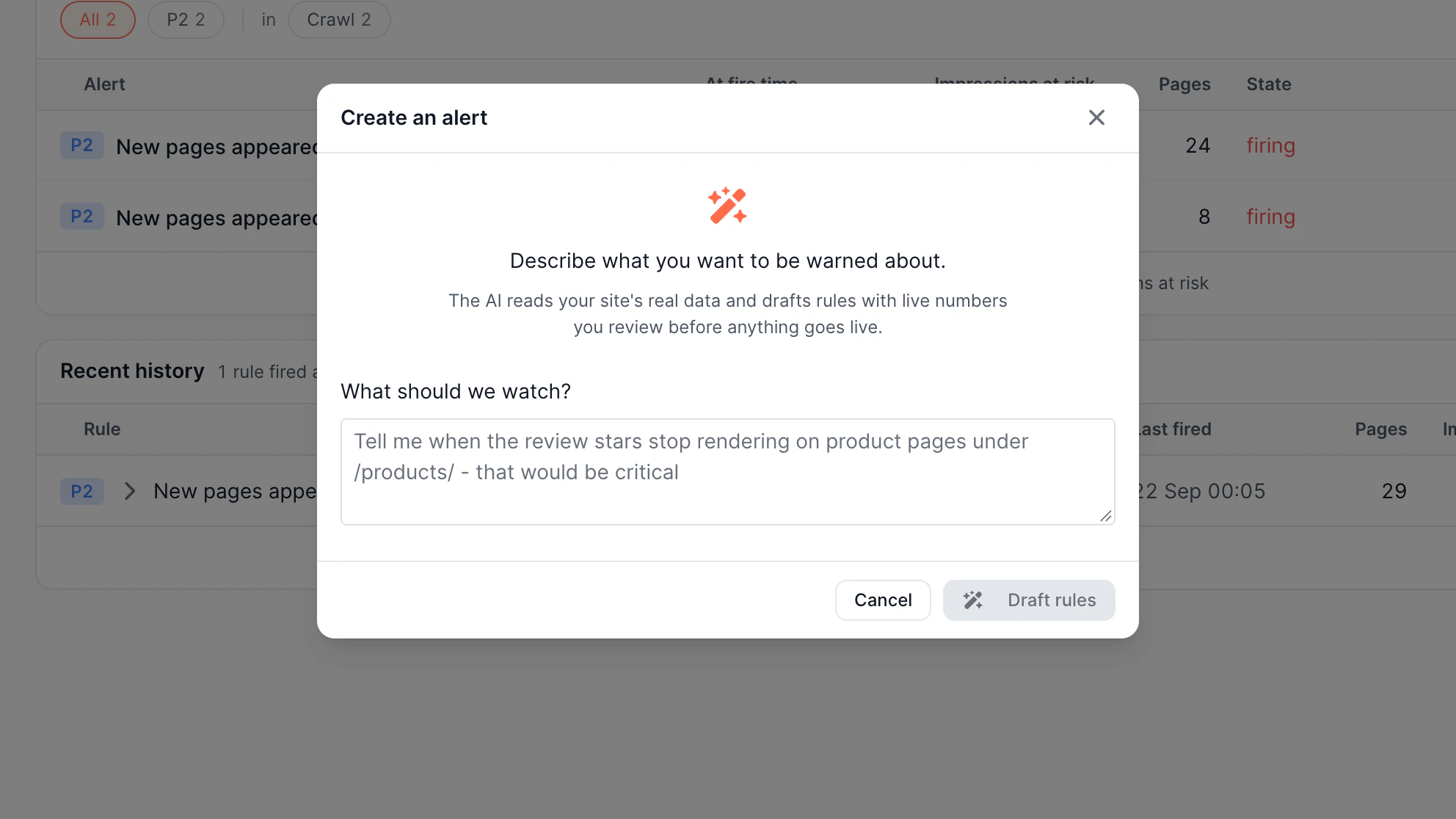
Create an alert by describing it in plain text.
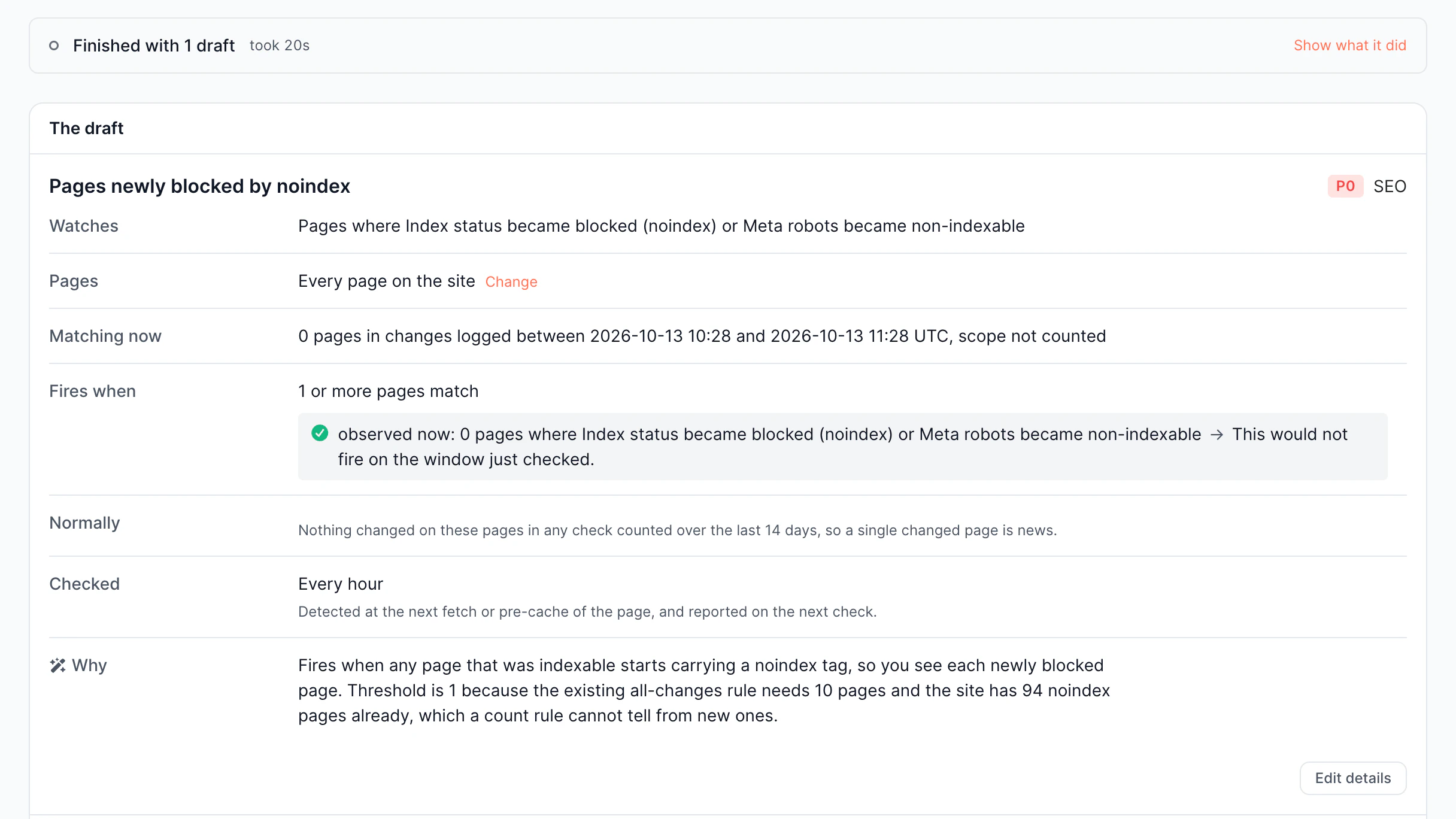
AI-drafted rule: what it watches and when it fires.
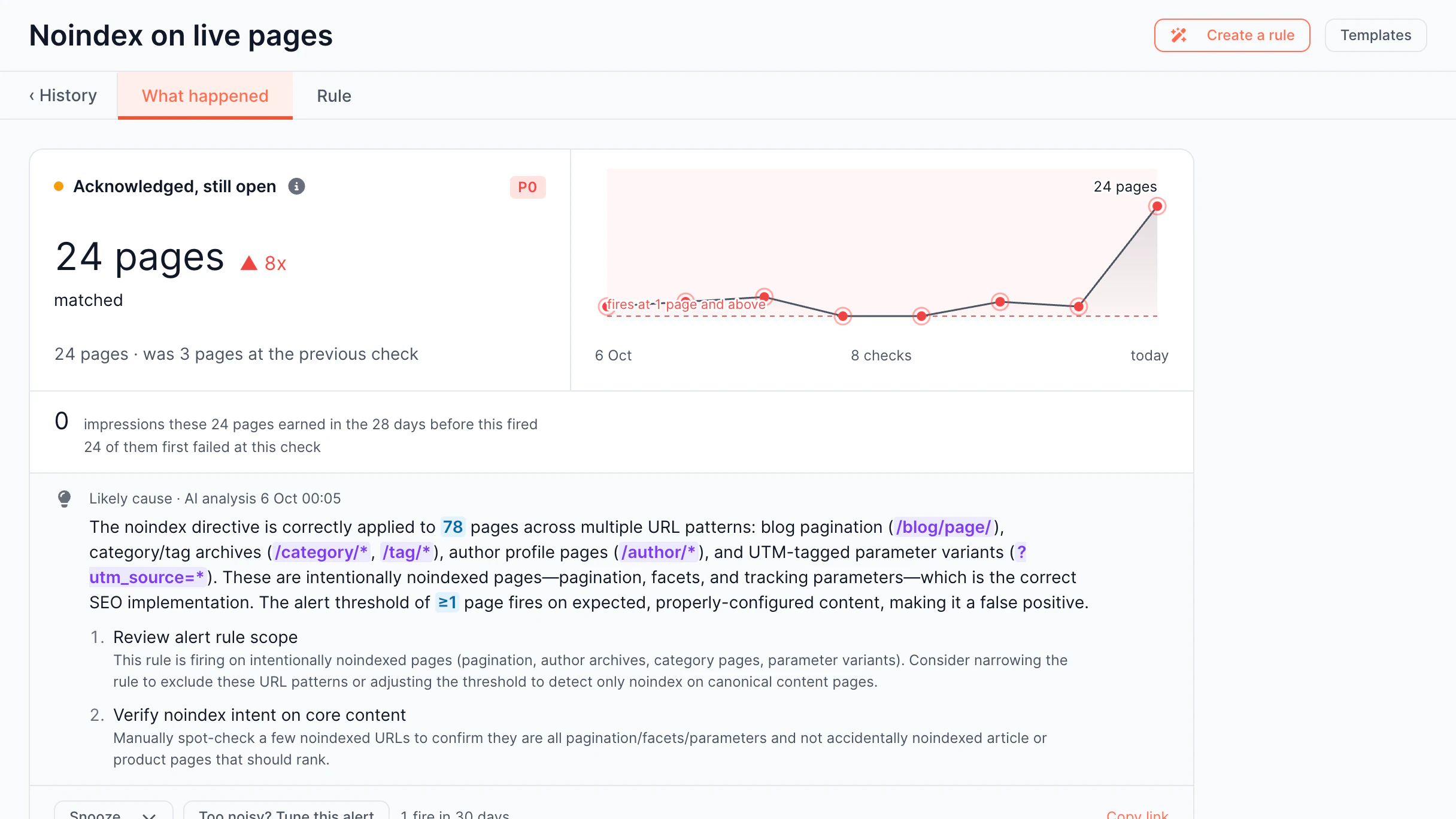
Incident page with matched pages and AI cause analysis.
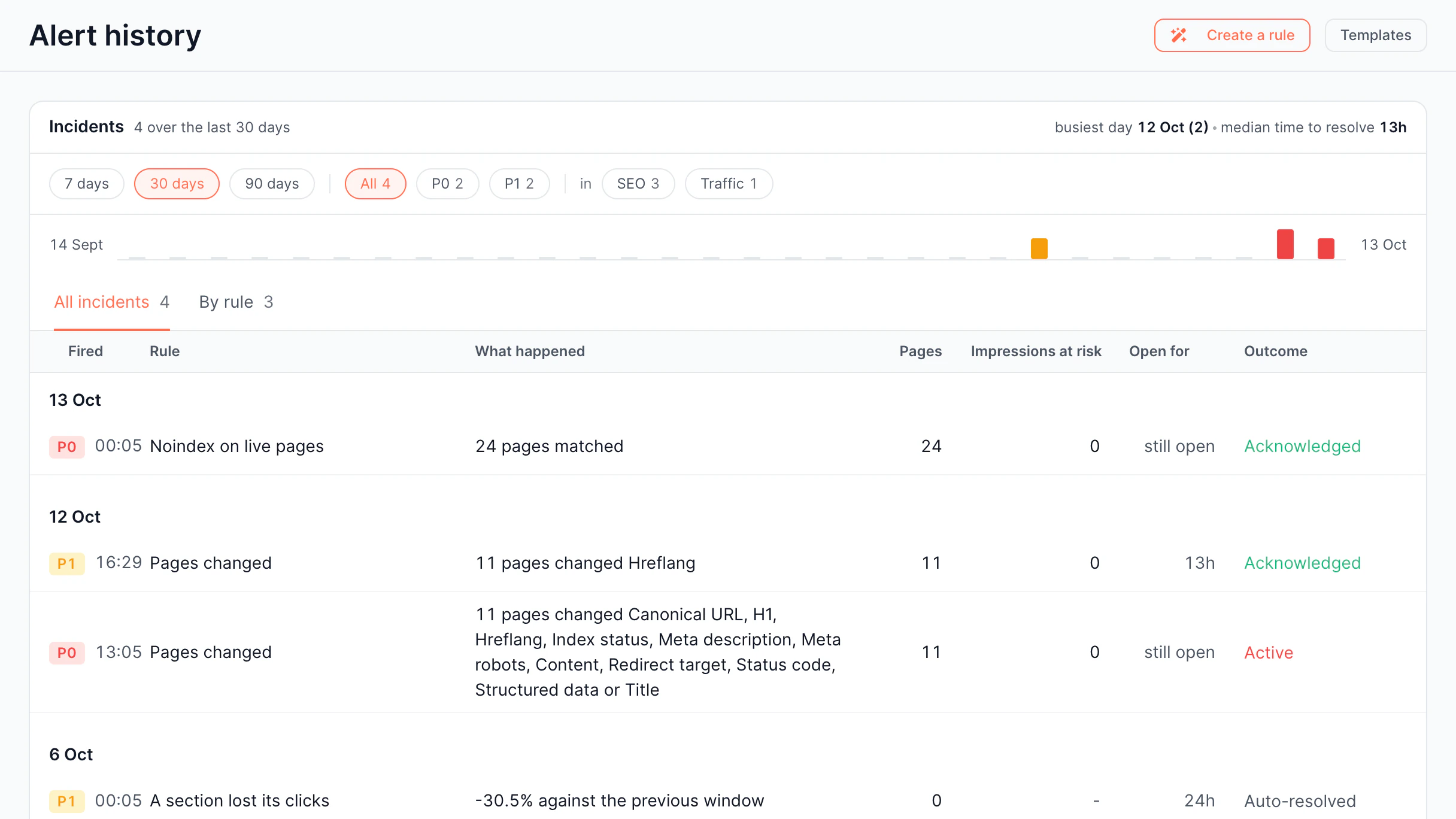
Incident log with pages, impressions at risk, and outcome.
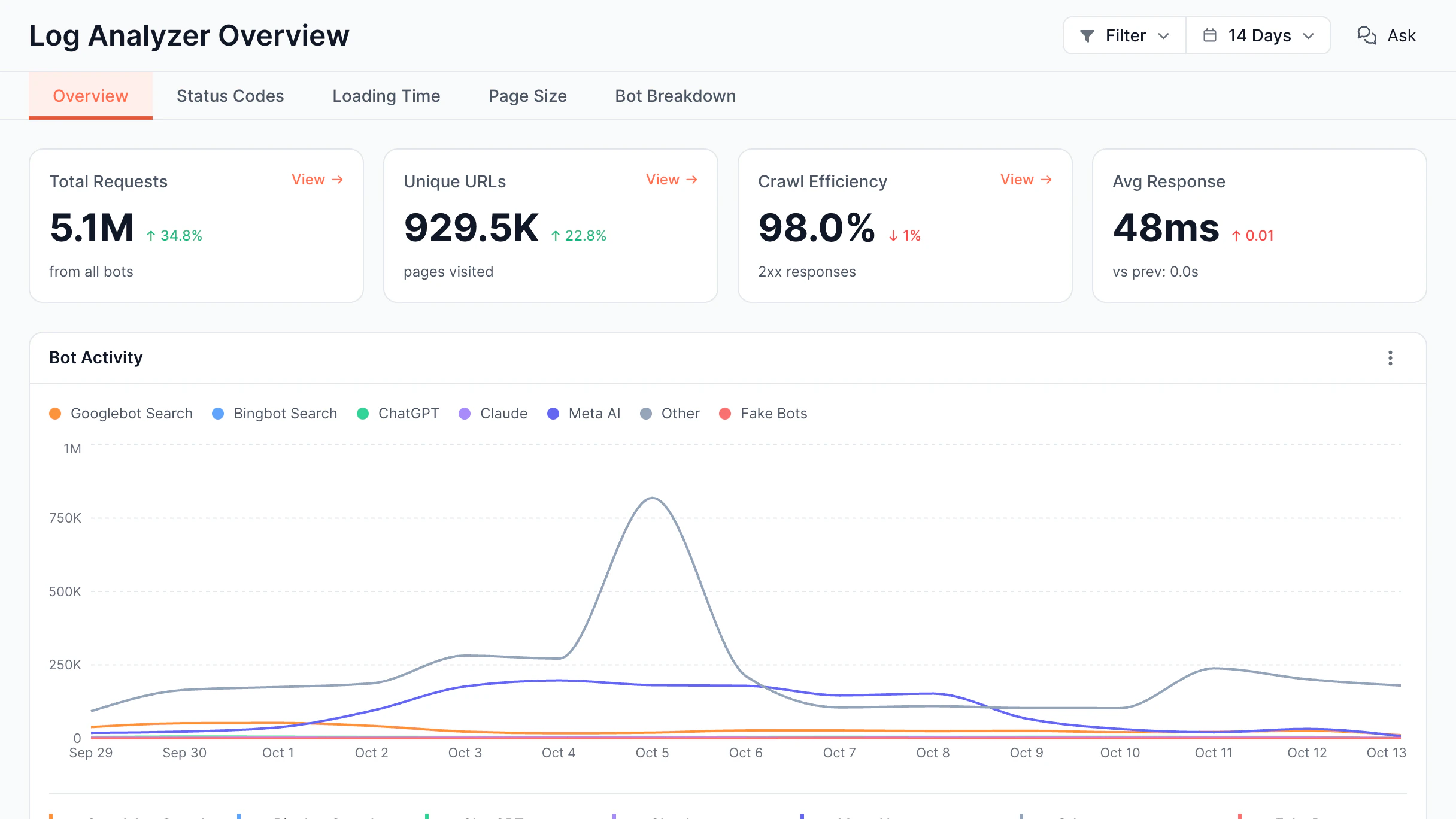
Requests per bot family, with status and response time.
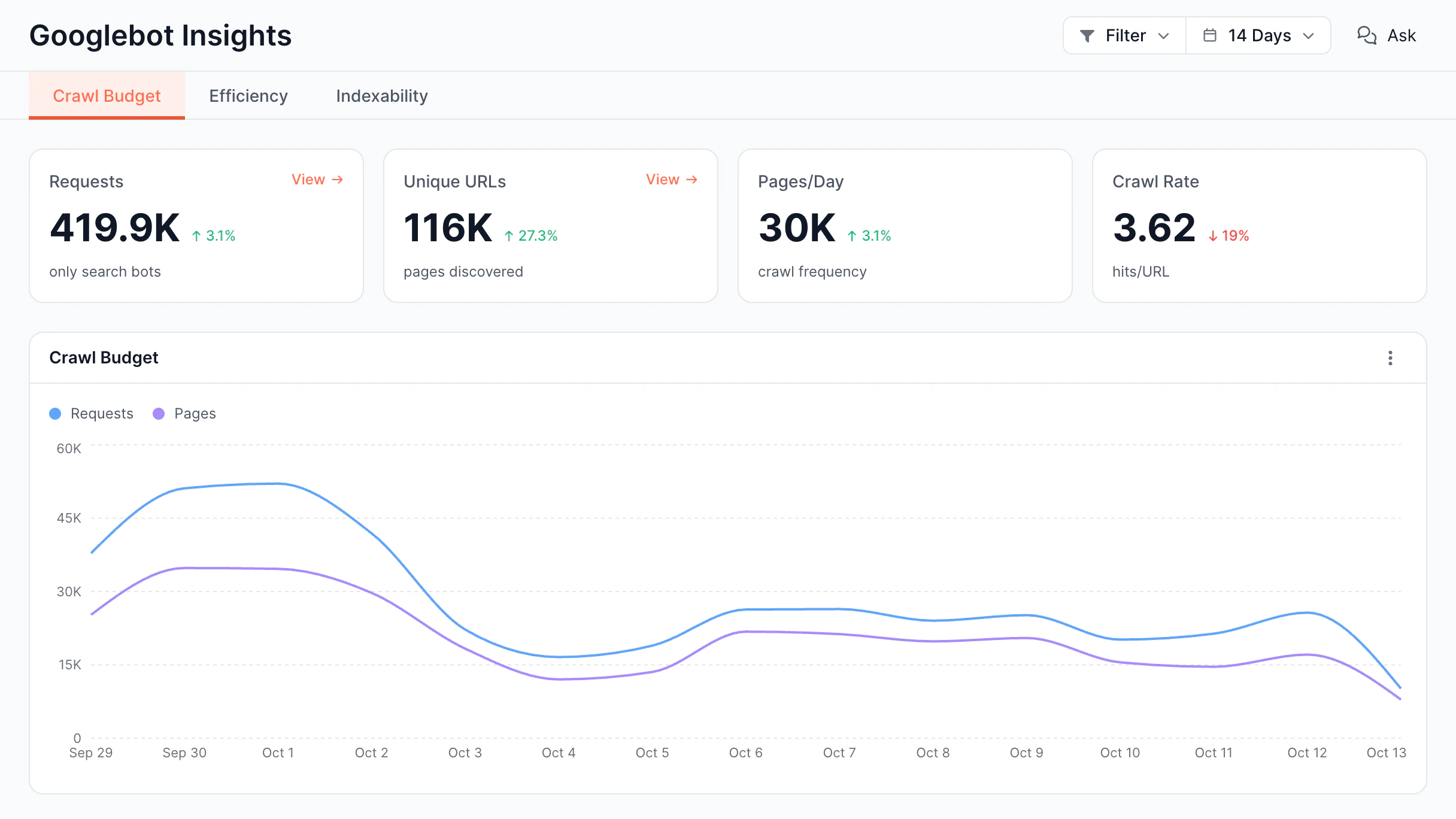
Googlebot requests, unique URLs, and crawl rate per day.
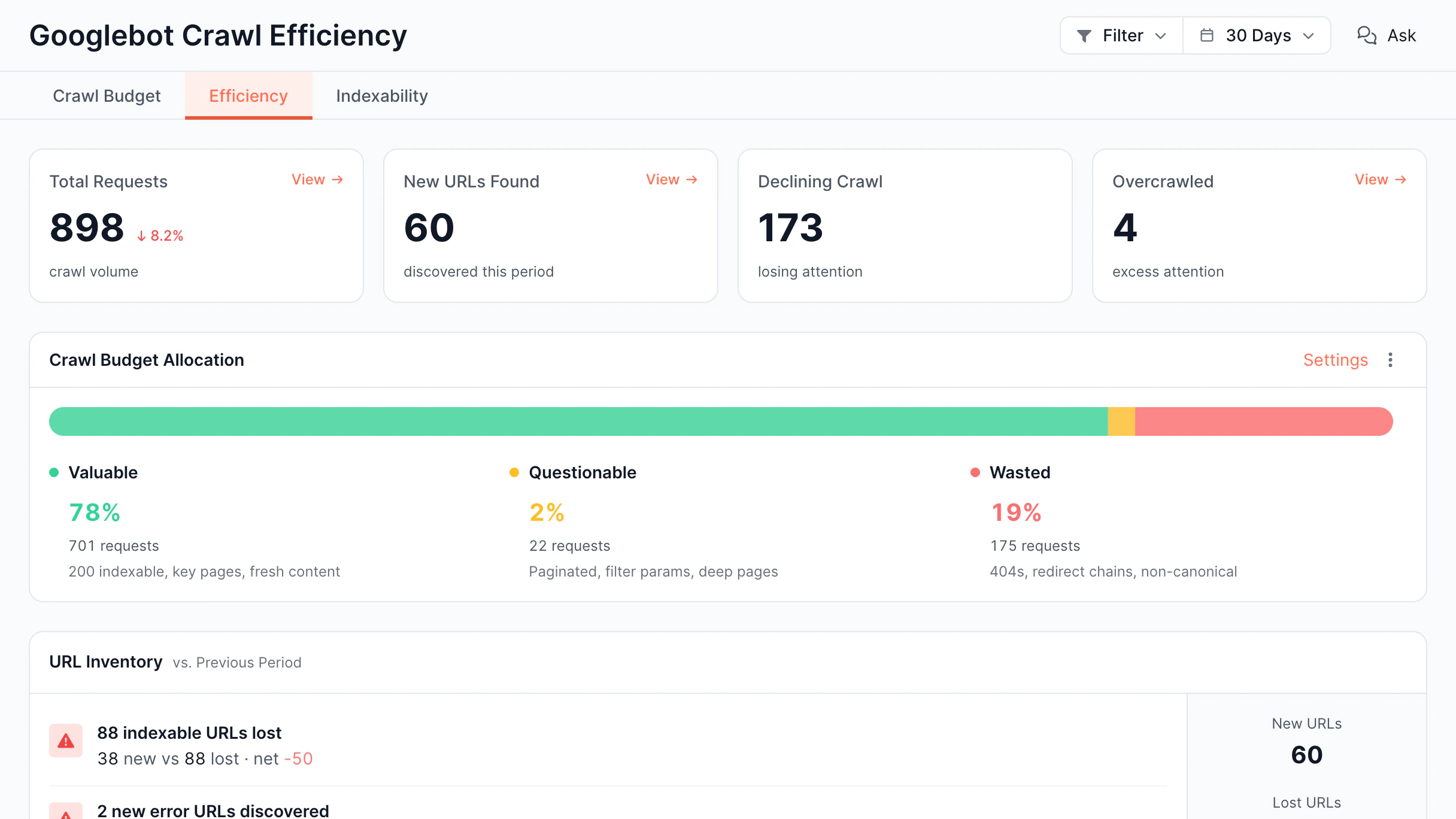
Googlebot crawl split into valuable, questionable, wasted.
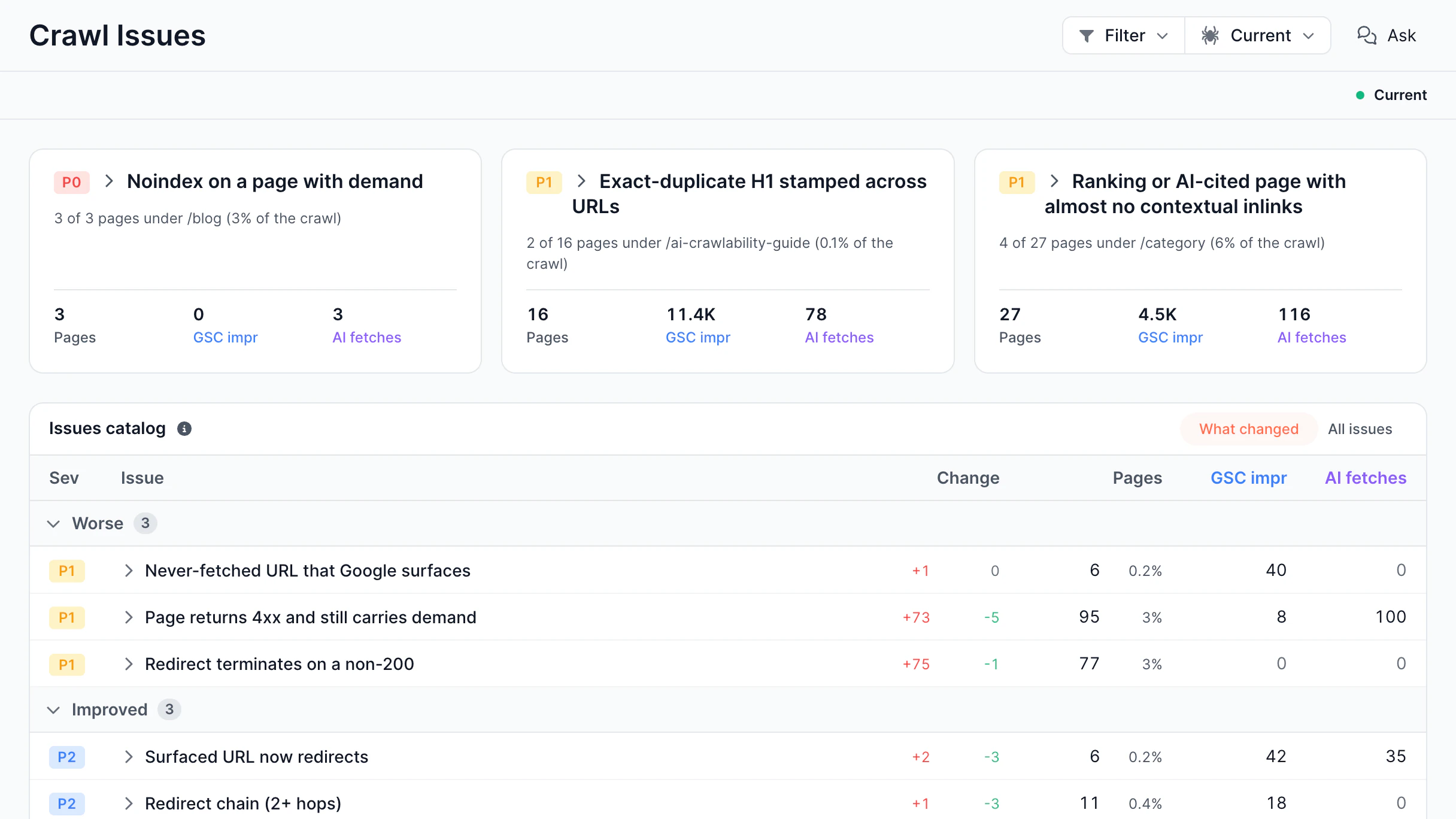
Audit issues that changed since the last crawl.
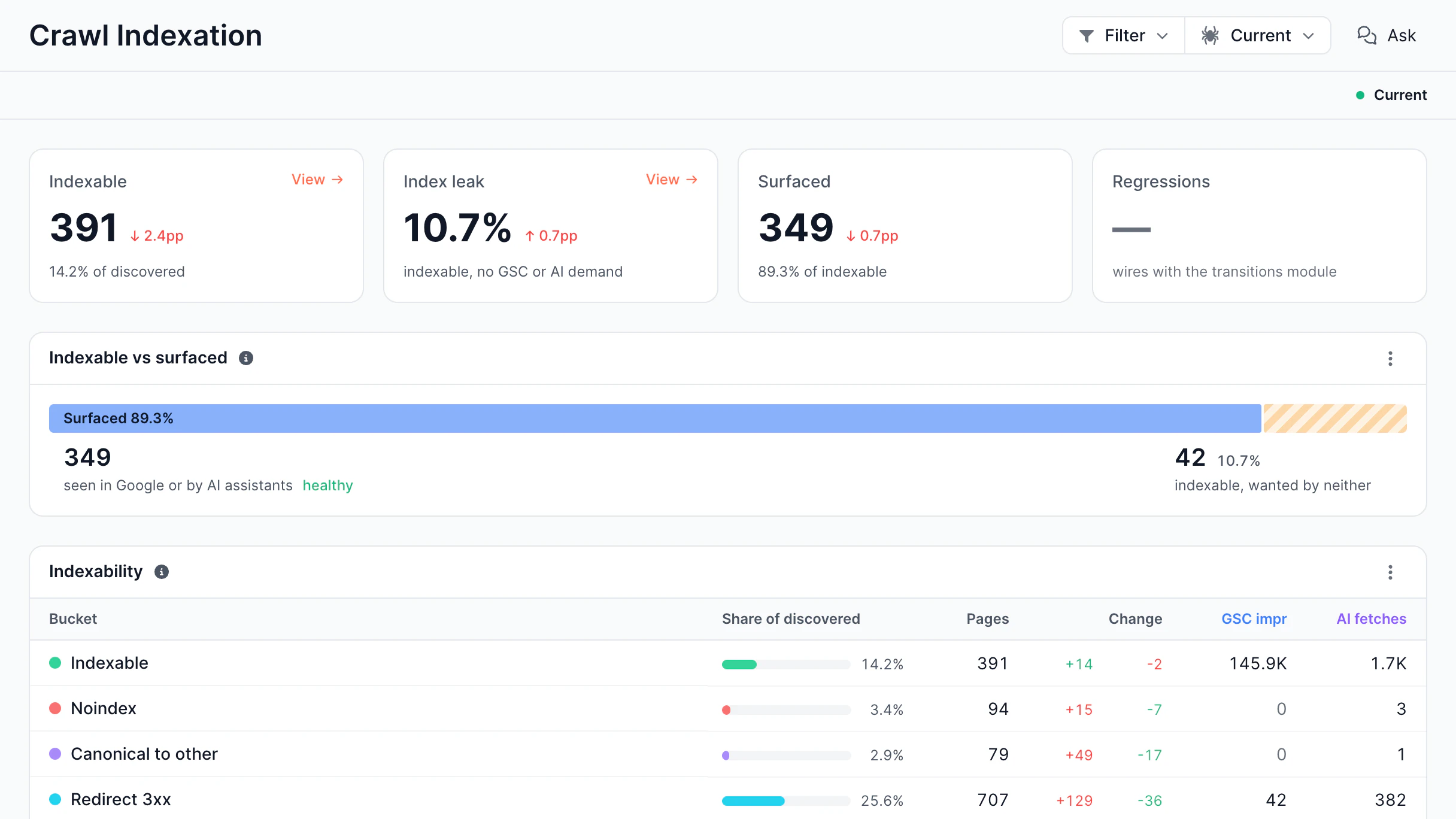
Indexable, noindex, canonicalized, and redirected pages.
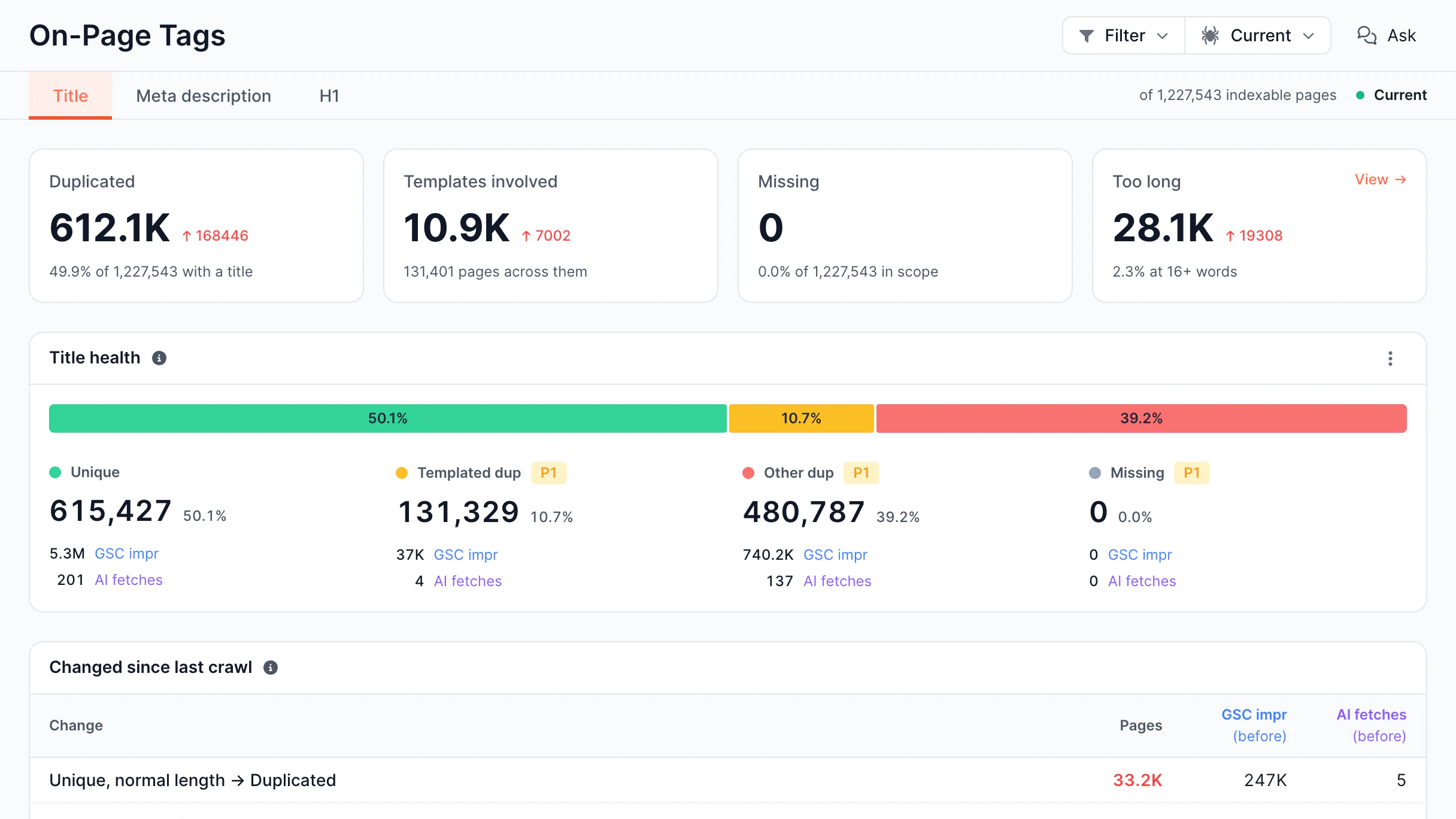
Duplicate, missing, and too-long titles.
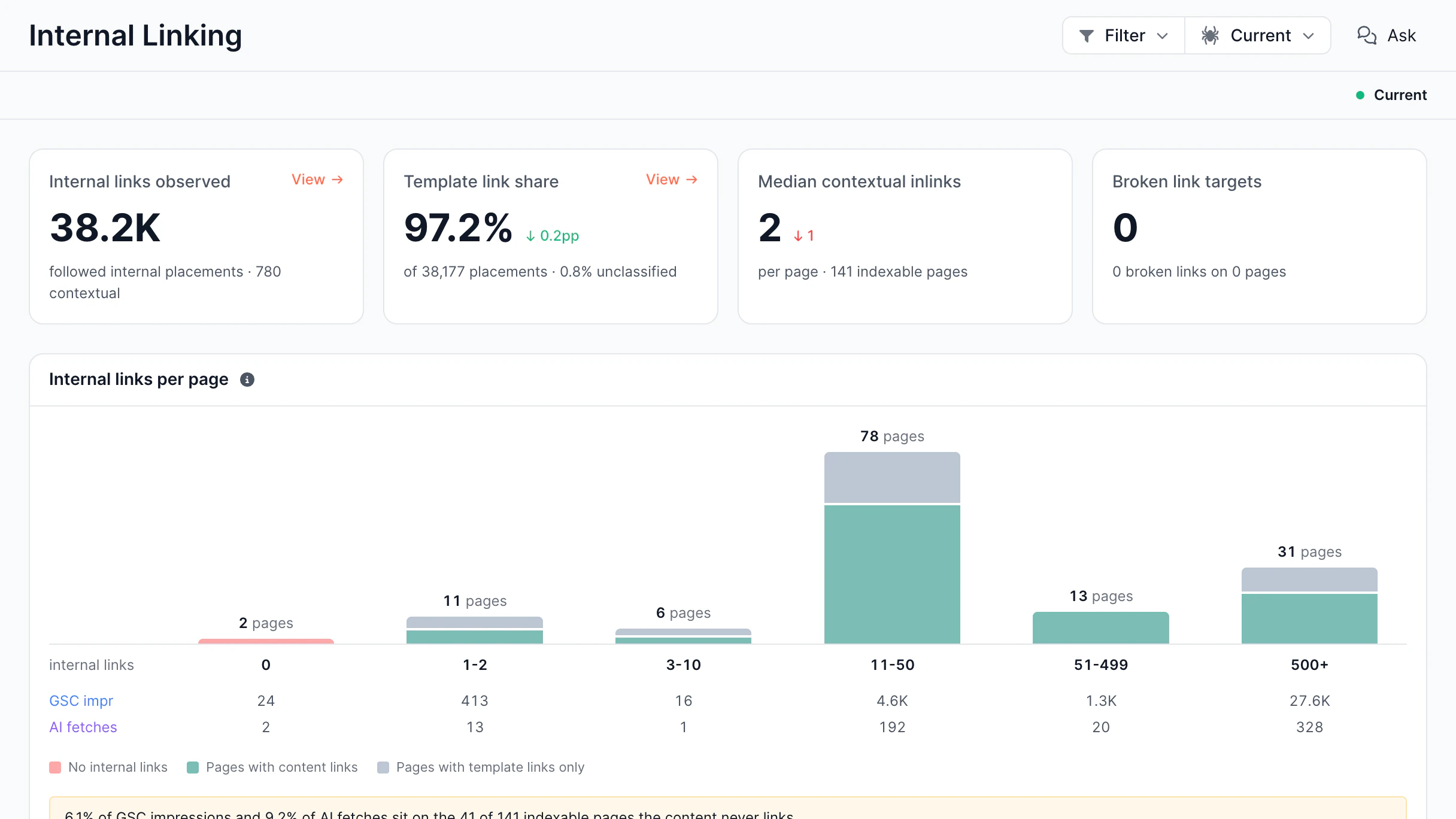
Internal links per page, content vs template.
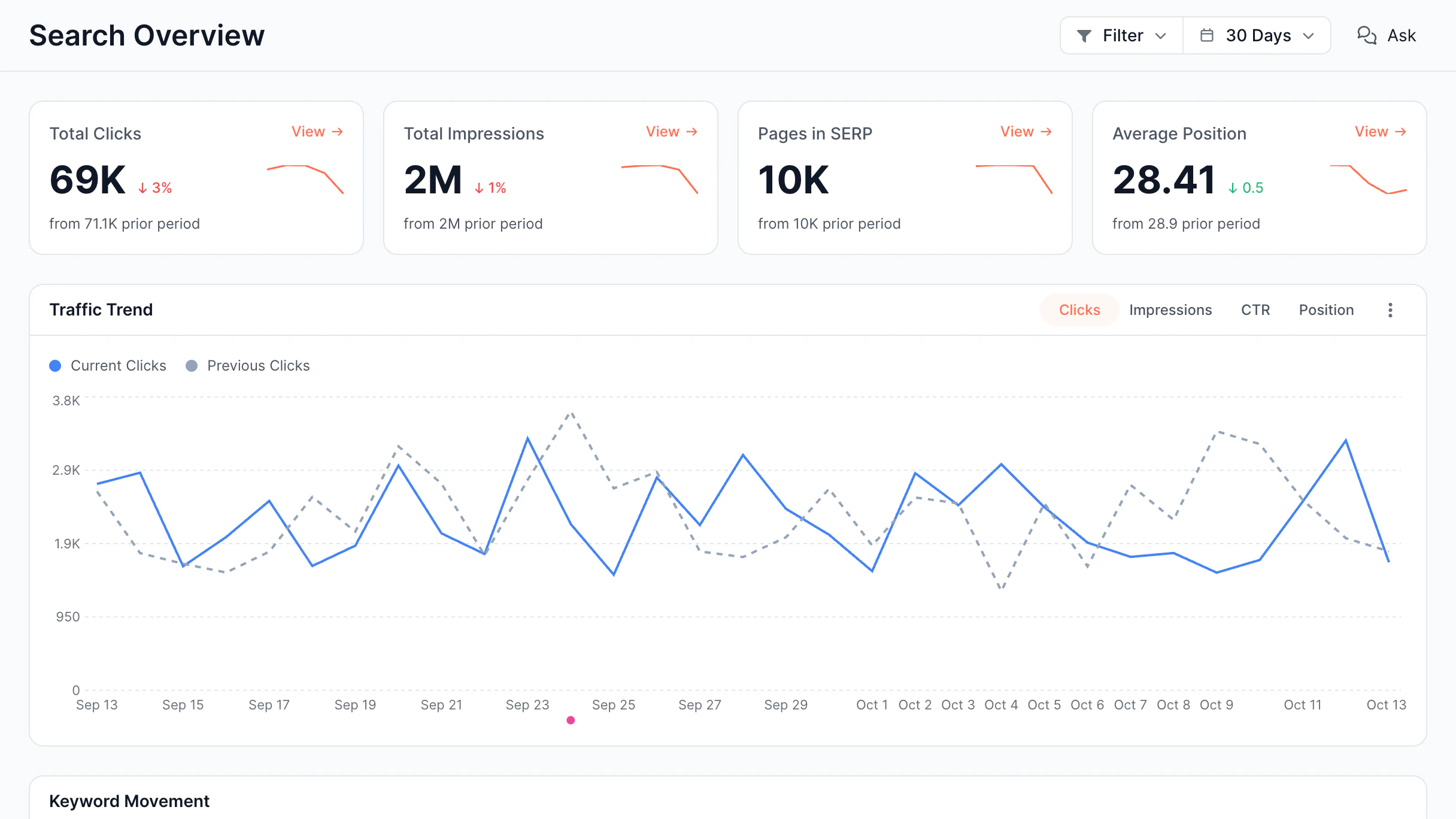
Search Console clicks, impressions, and position vs the previous period.
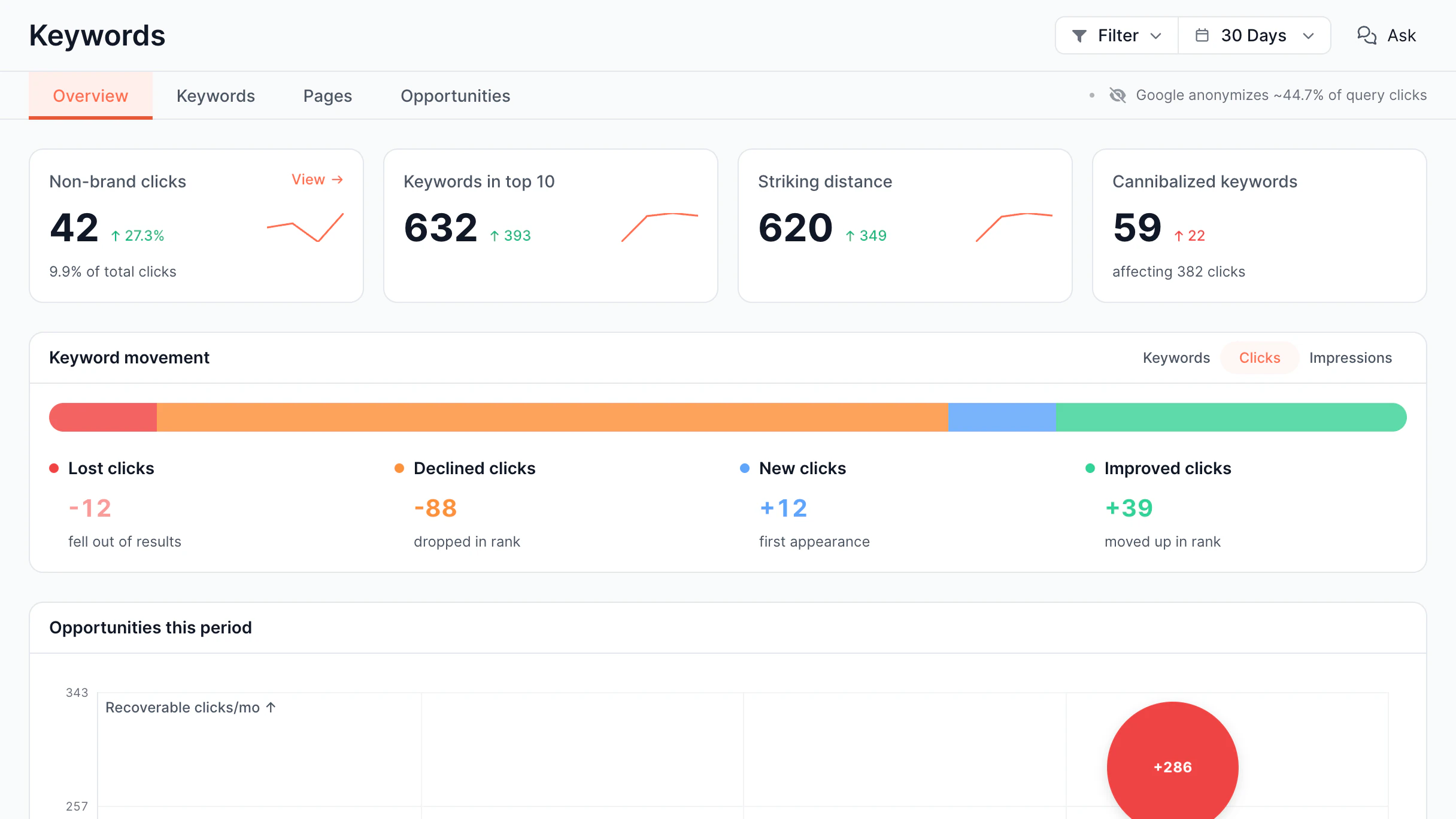
Keyword movement, top-10 counts, and striking-distance keywords.
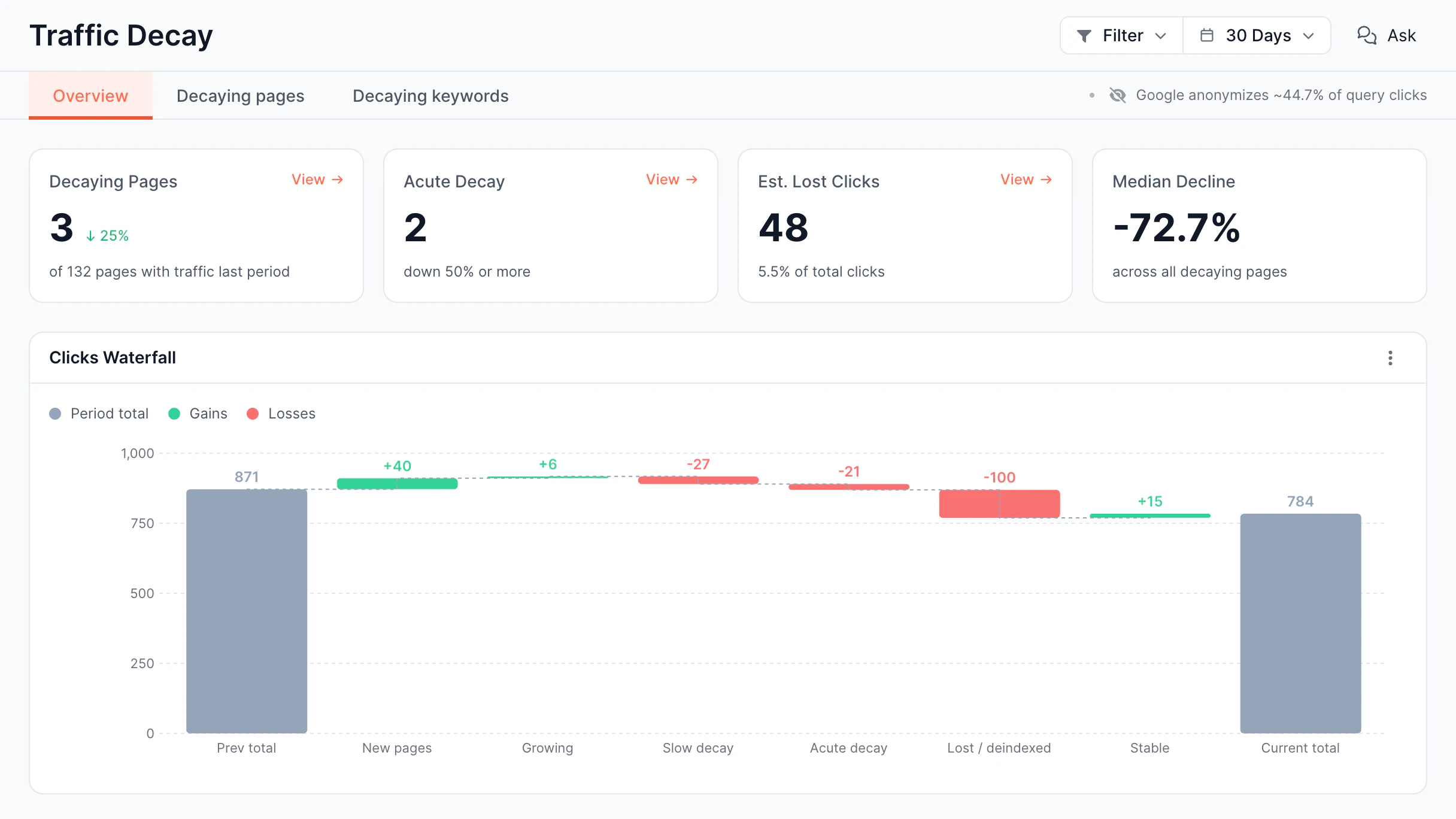
Pages losing clicks, split into slow decay, acute decay, and deindexed.
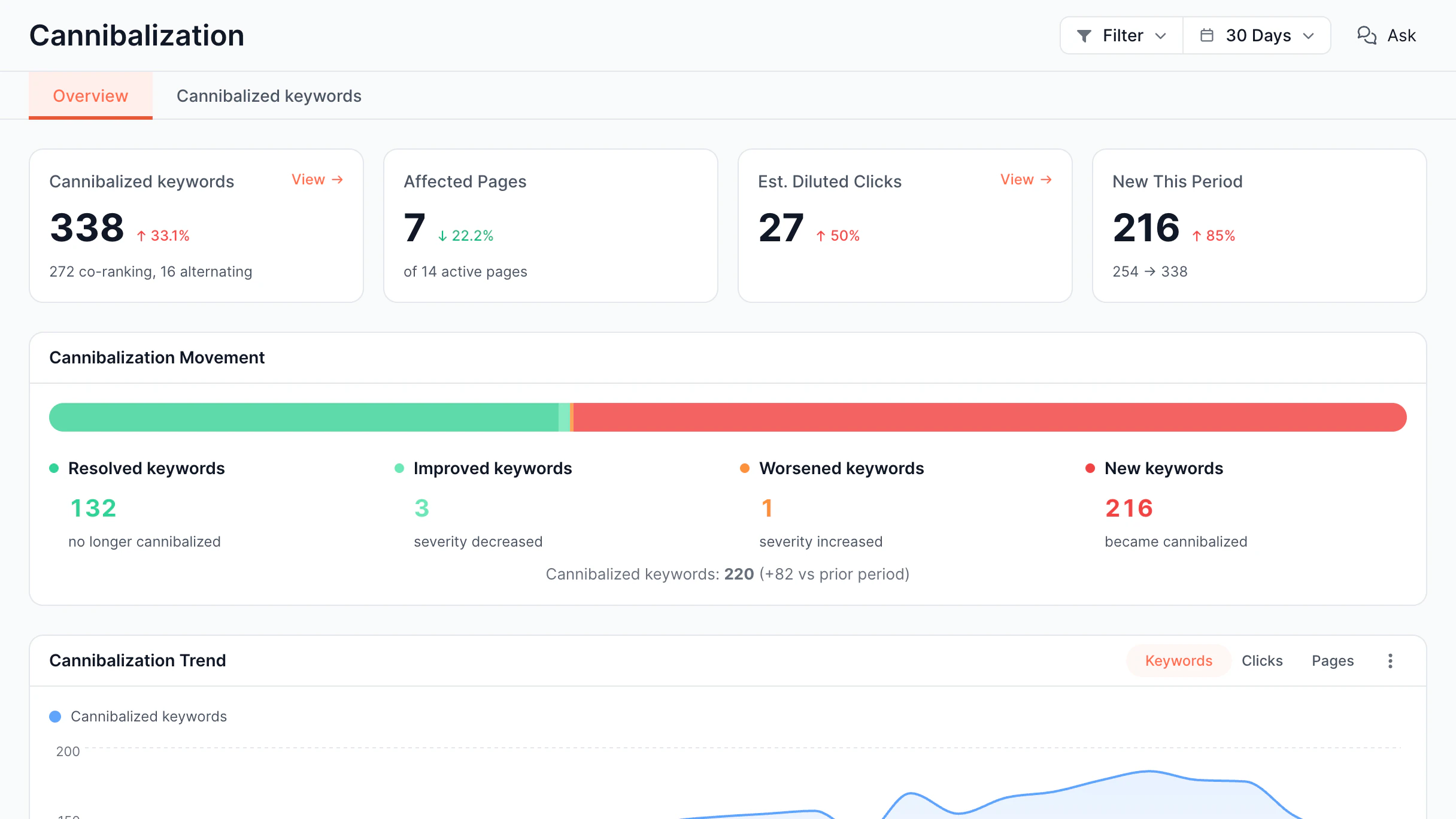
Keywords where several of your pages rank, and how that changed.
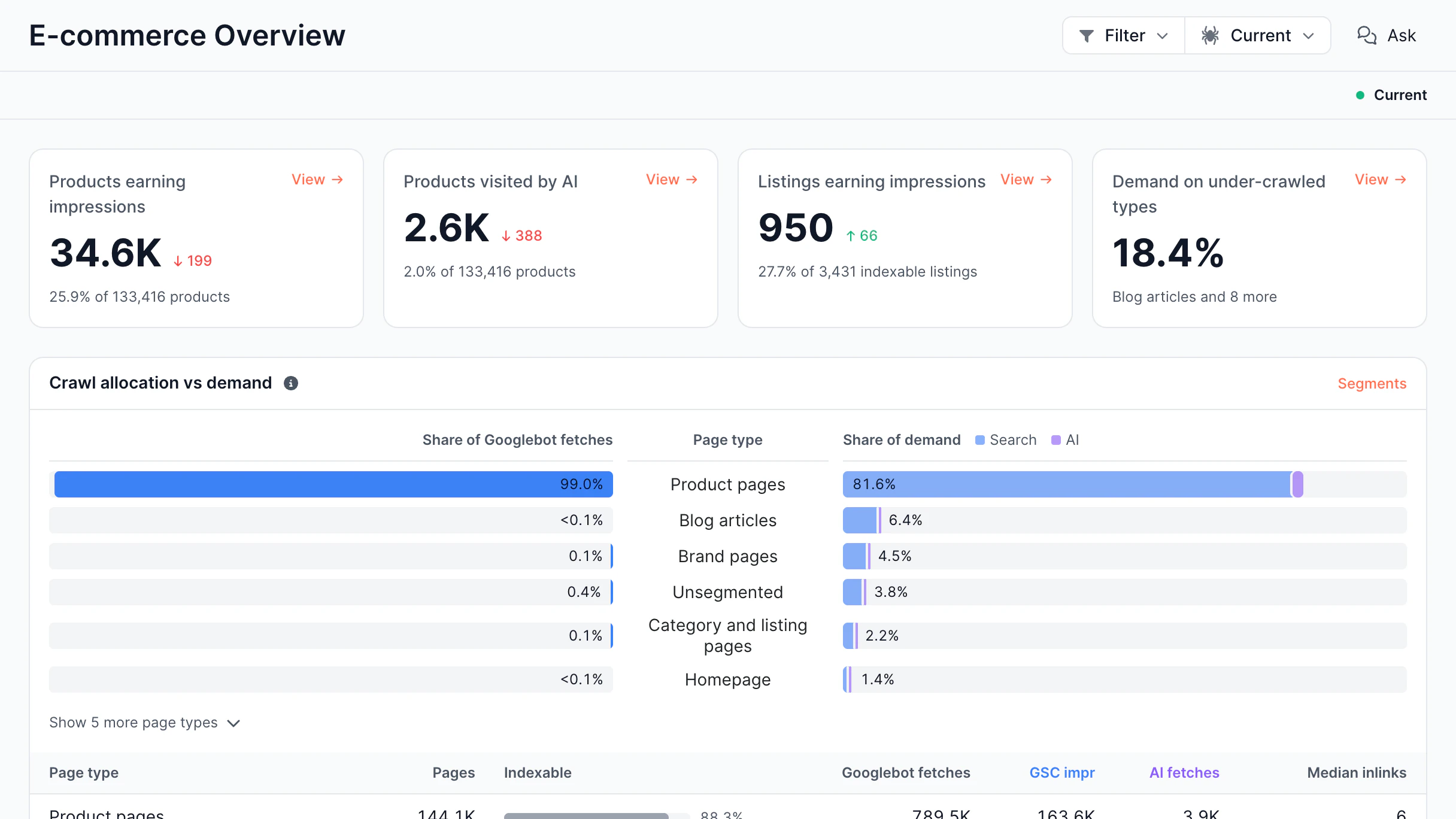
Googlebot fetches vs search and AI demand by page type.
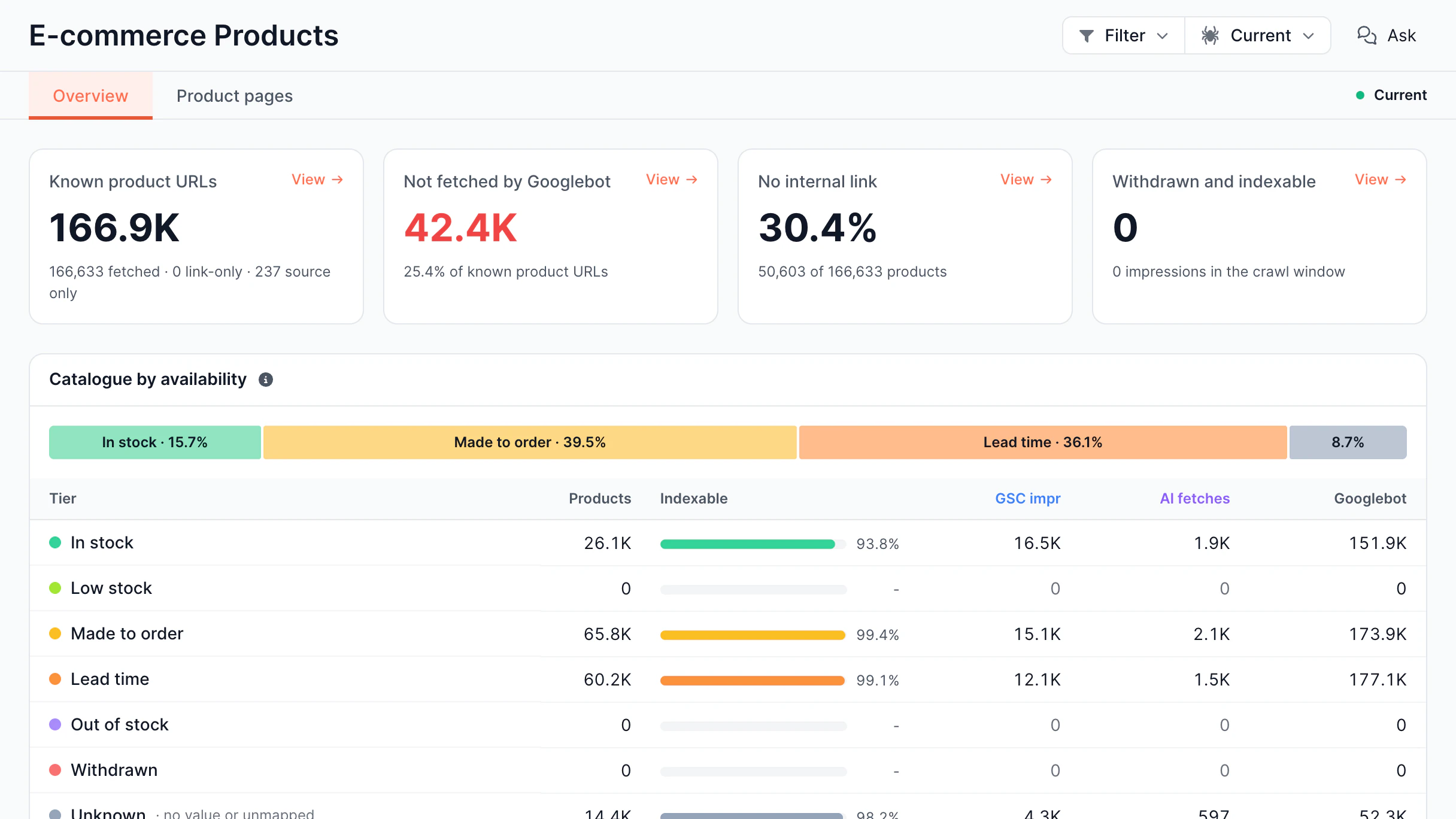
Products not fetched by Googlebot or not linked.
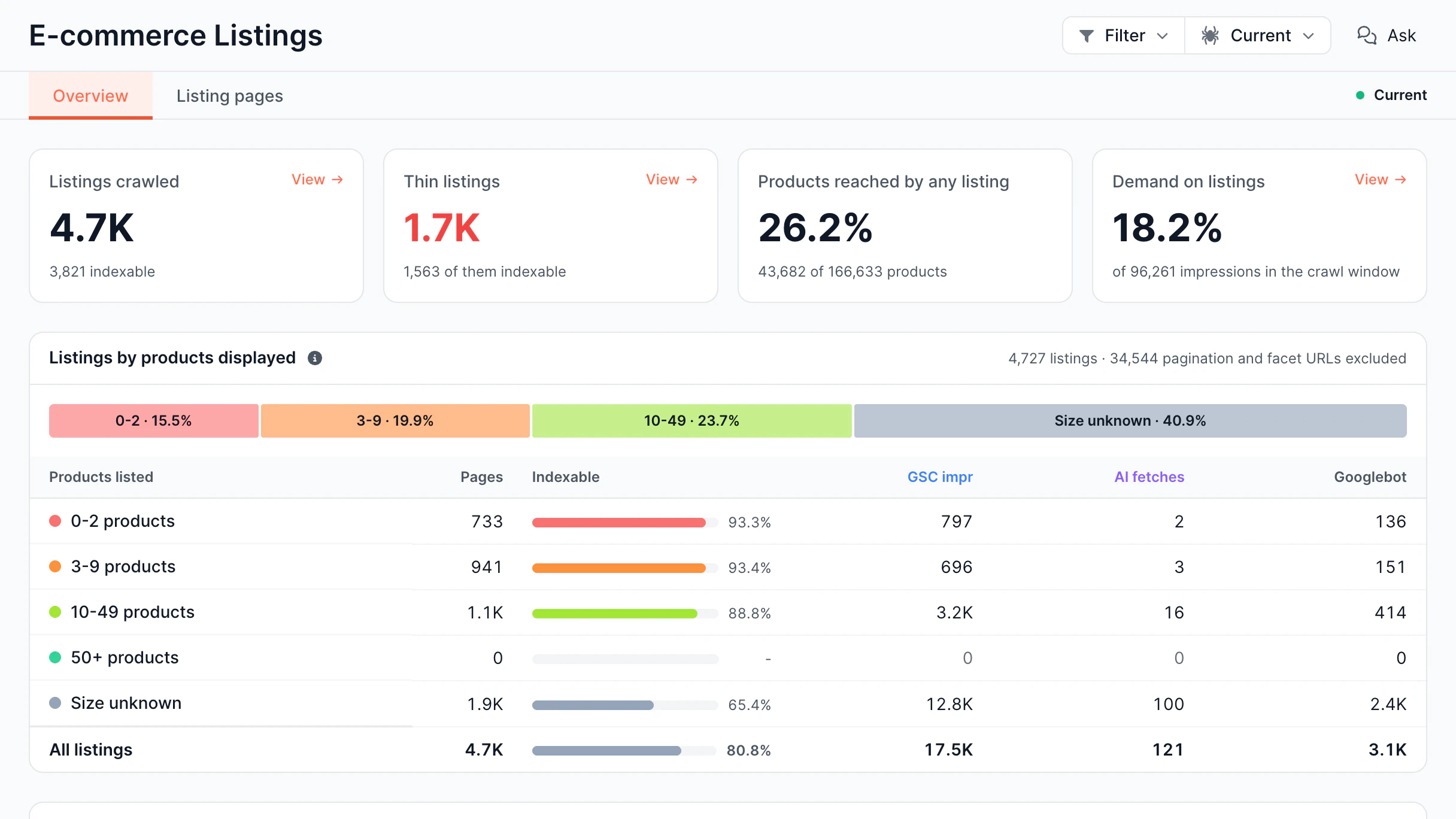
Category pages by number of products listed.
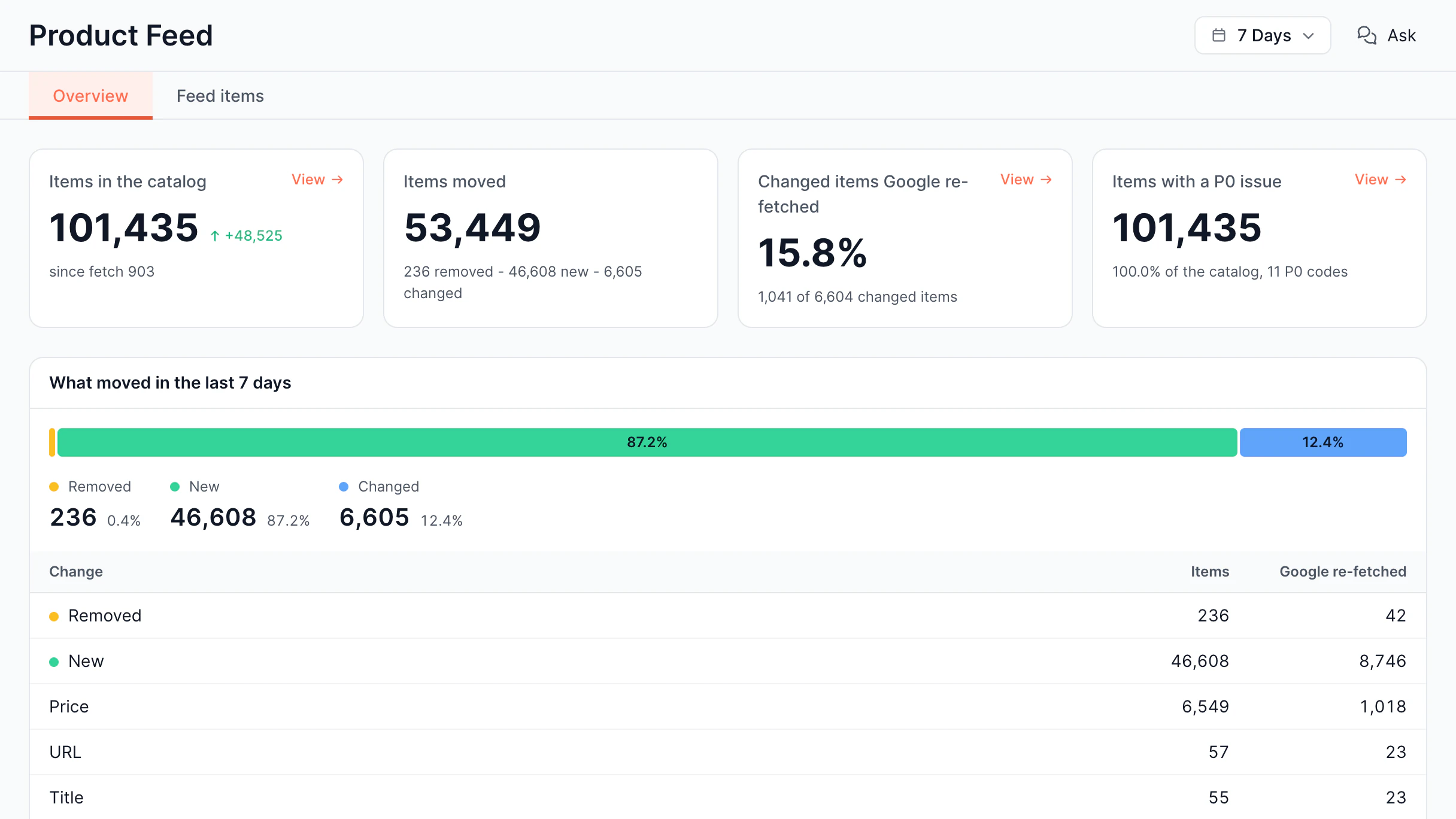
Merchant feed changes and Google re-fetches.
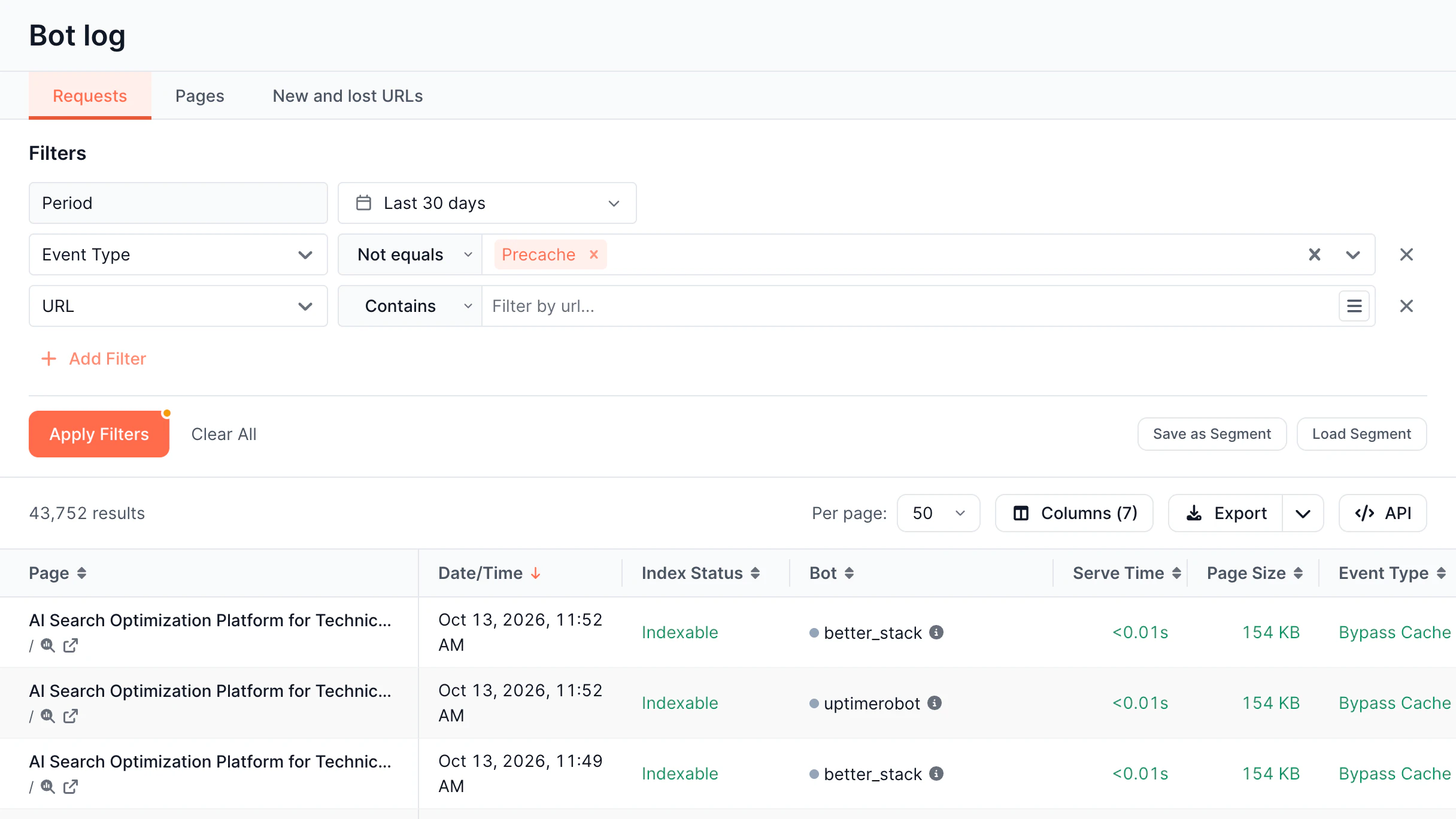
Table of every bot request with filters, segments, and export.
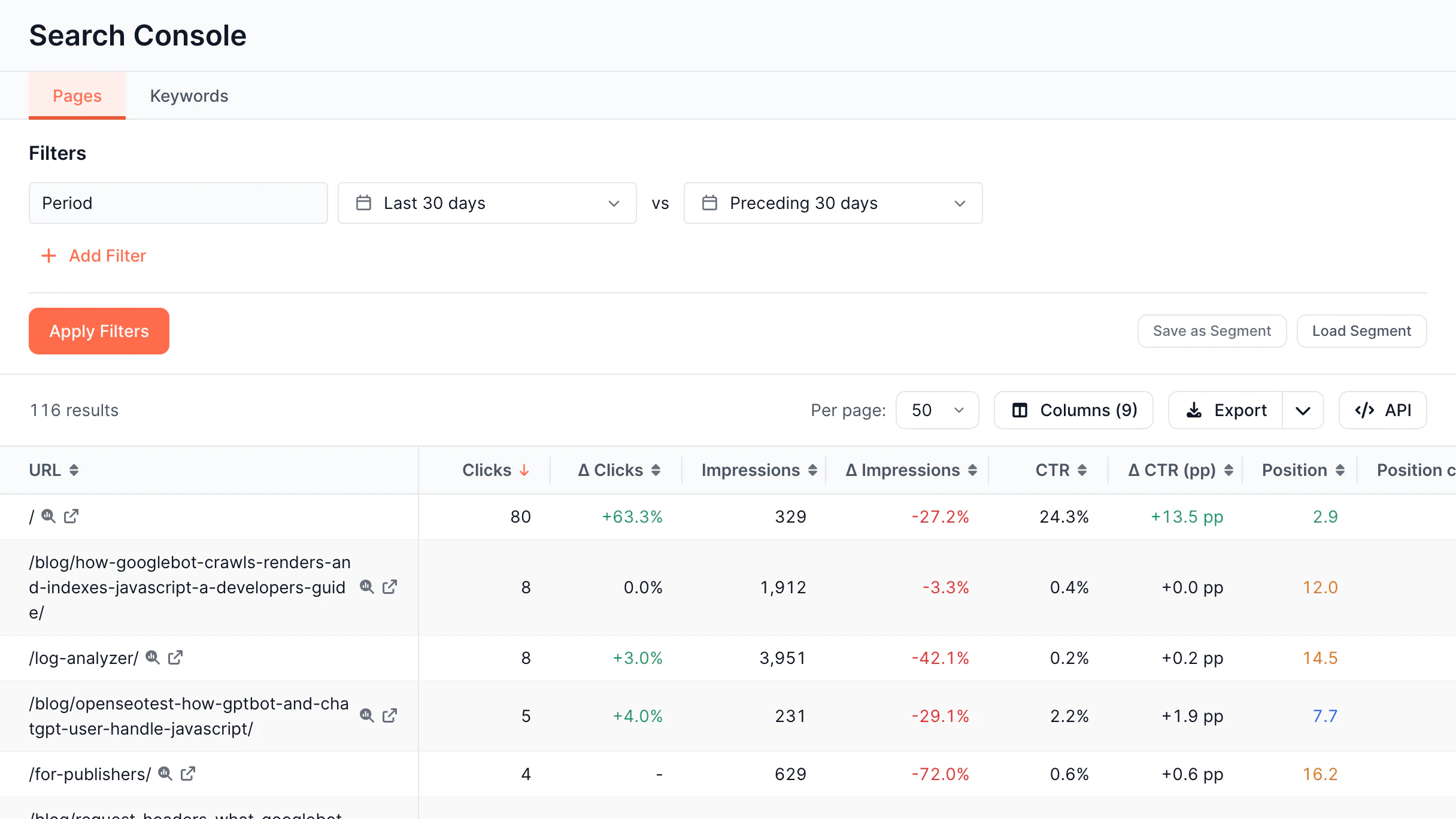
Search Console rows by page or keyword, with filters and period comparison.
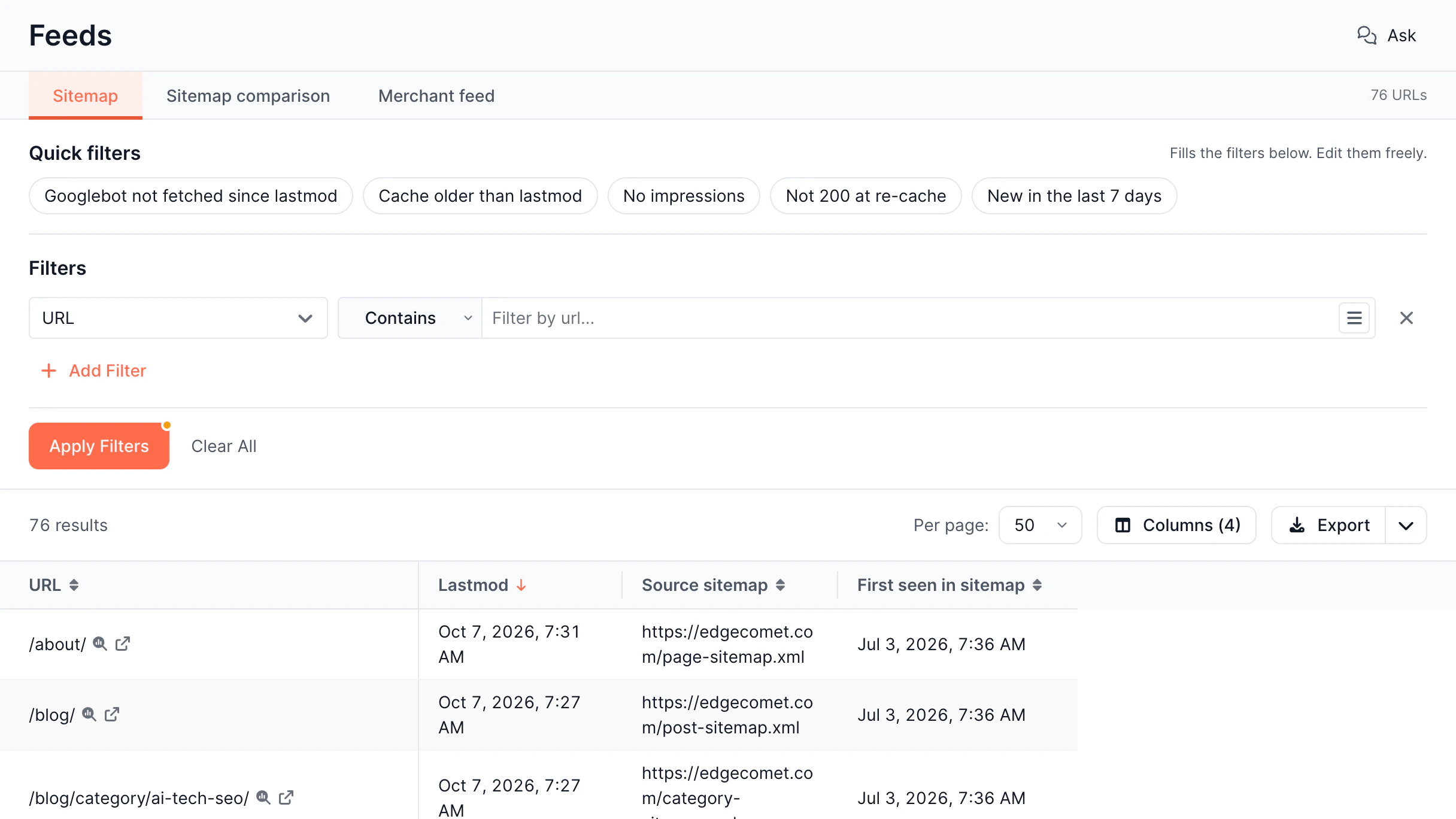
Sitemap and Merchant feed URLs with quick filters and export.
If you need more than technical SEO audits, EdgeComet brings together SEO execution, rendering, AI visibility monitoring, and crawl analytics in one platform.
14-day free trial
Organizations often look for Lumar alternatives when they need more than just SEO auditing. EdgeComet combines auditing, SEO execution, rendering, monitoring, and AI visibility tools in one platform.
The main difference is that Lumar focuses on technical SEO analysis. EdgeComet combines issue detection with implementation, monitoring, and AI visibility features.
Yes. EdgeComet is a strong alternative for teams that want to manage technical SEO execution, rendering, AI visibility, and monitoring all from one platform.
Yes. Lumar is the new name of Deepcrawl. The company rebranded in 2022, when it grew from a crawl-focused technical SEO tool into a broader website intelligence platform. It now includes accessibility, site speed, and AI visibility (GEO) features alongside its core crawl analysis.
Both platforms support enterprise SEO workflows. Lumar focuses on auditing and reporting. EdgeComet helps teams execute SEO improvements and manage visibility across search and AI platforms.
Yes. EdgeComet offers technical SEO analysis, along with rendering, monitoring, AI visibility insights, and SEO execution features.
When evaluating Lumar competitors and alternatives, teams should look for platforms that combine crawl analysis with real-time bot monitoring, rendering verification, and SEO execution. Key capabilities include: visibility into what search and AI bots actually receive (not just simulated crawl data), the ability to implement SEO changes without developer involvement, continuous monitoring rather than scheduled audits, and transparent pricing with self-serve onboarding. EdgeComet addresses these needs by combining rendering, bot analytics, AI visibility monitoring, and technical SEO execution in a single platform.
Yes. EdgeComet serves as an alternative to both Deepcrawl and Lumar for teams that need more than scheduled crawl audits. While Lumar (formerly Deepcrawl) focuses on identifying technical SEO issues through crawl data, EdgeComet adds real-time bot monitoring, JavaScript rendering verification, AI visibility tracking, and direct SEO execution - allowing teams to both discover and fix problems from one platform.