
Why EdgeComet’s Alerts Catch What Scheduled Monitors Miss
There is nothing worse than discovering a site-wide “noindex” error days after a deployment – when your rankings have already...
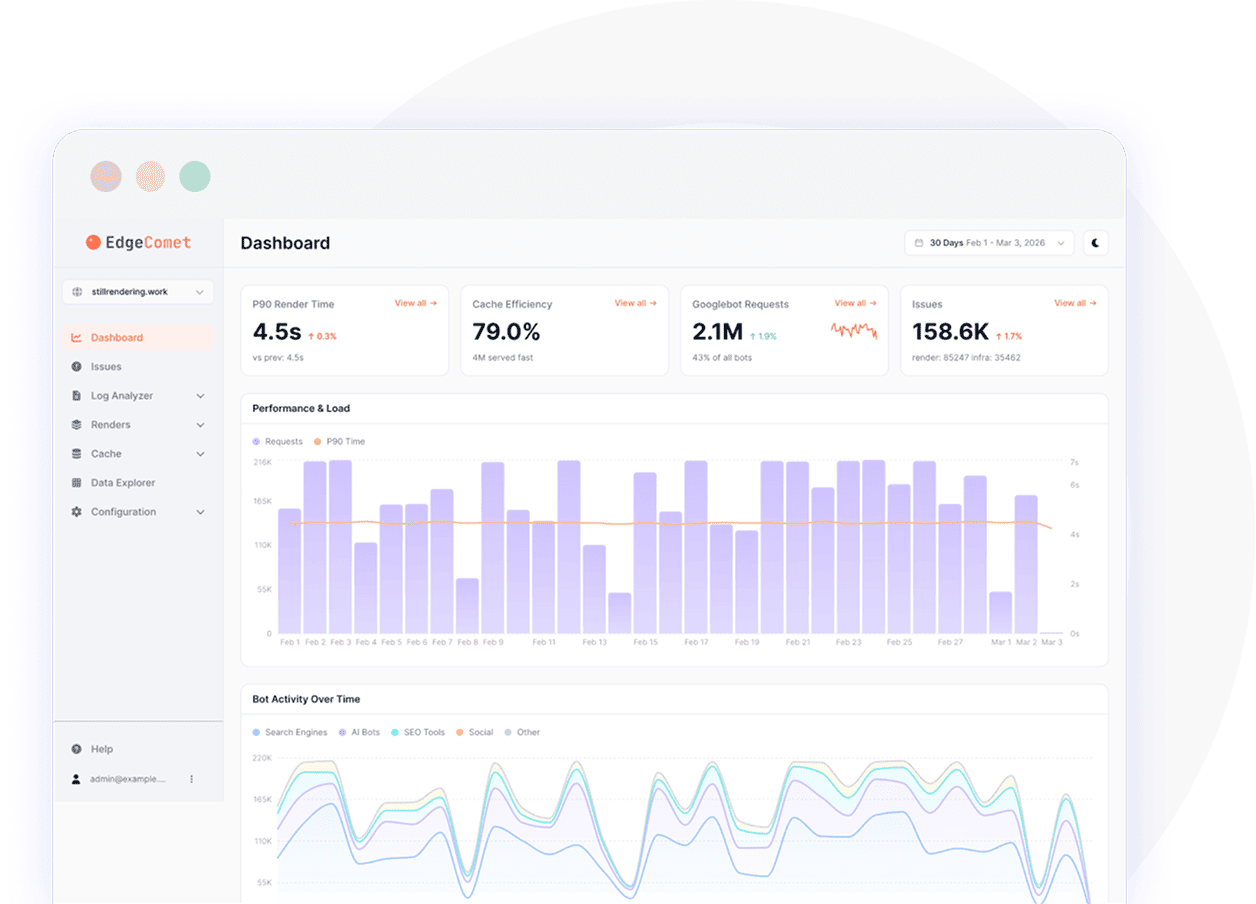
Read ArticleHandle all bot traffic in one place - without rewriting your frontend or introducing SSR. Render pages, cache responses for immediate delivery, and monitor what crawlers see, including errors, failures, and crawl patterns.
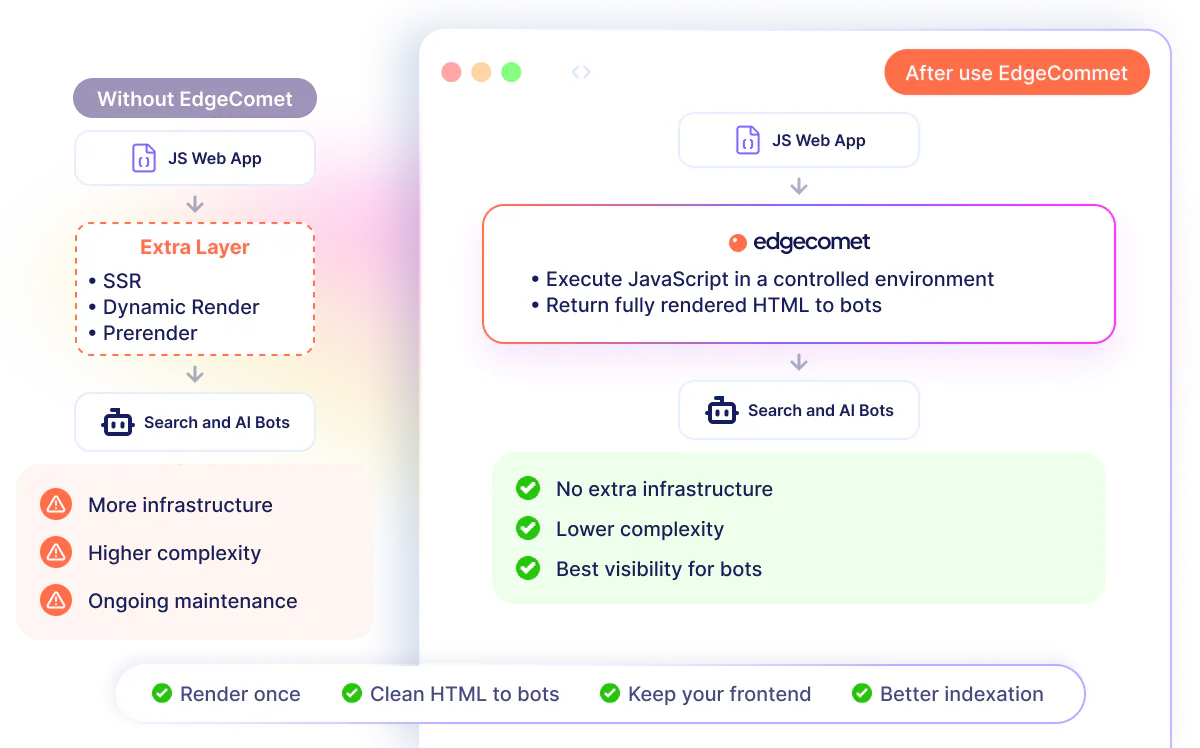
Most search and AI crawlers only fetch the initial HTML and don’t reliably execute JavaScript.If your app relies on client-side rendering, bots often don’t see the final page. They stop at the initial HTML, which means parts of your content never make it through.
To work around that, teams end up adding SSR, dynamic rendering, or custom bot handling. Now you’re dealing with headless browsers, queues, cache invalidation, and scaling. It’s a separate system that needs care, but doesn’t move your product forward.
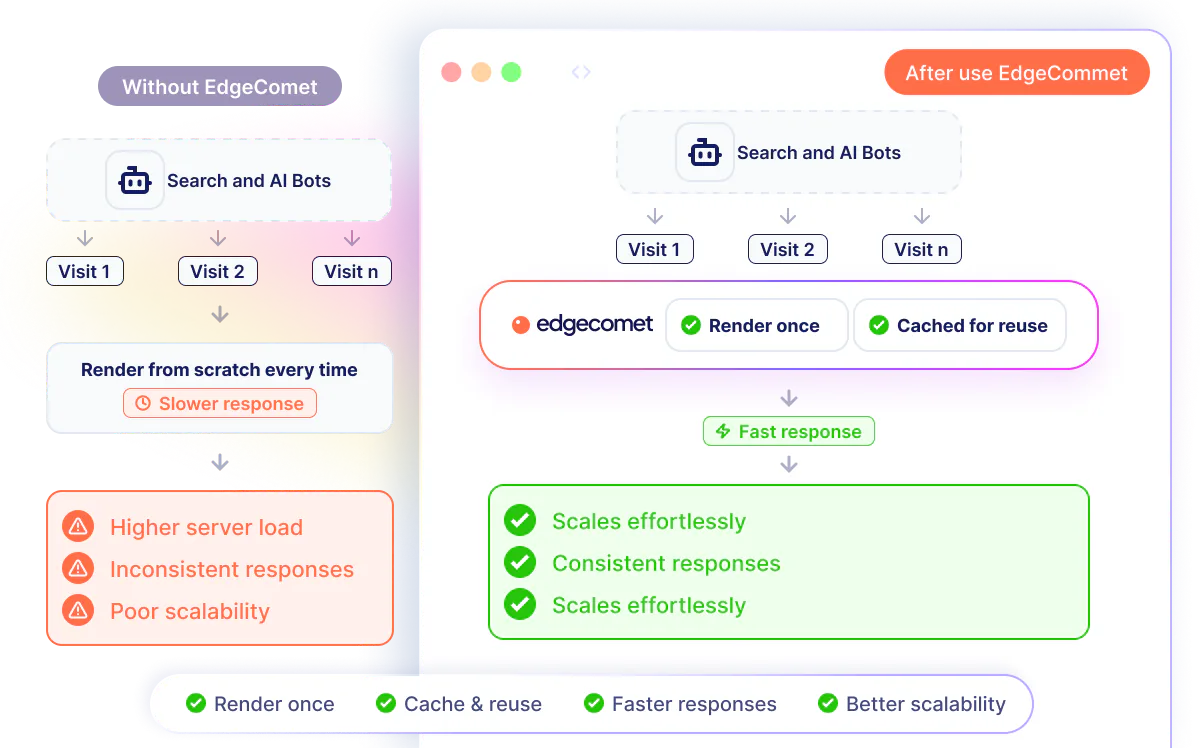
Without a proper caching layer, every bot visit runs the whole render again. Same pages, same work, over and over. When crawl traffic ramps up, it silently adds latency, increases infrastructure load, and wastes crawl budget.
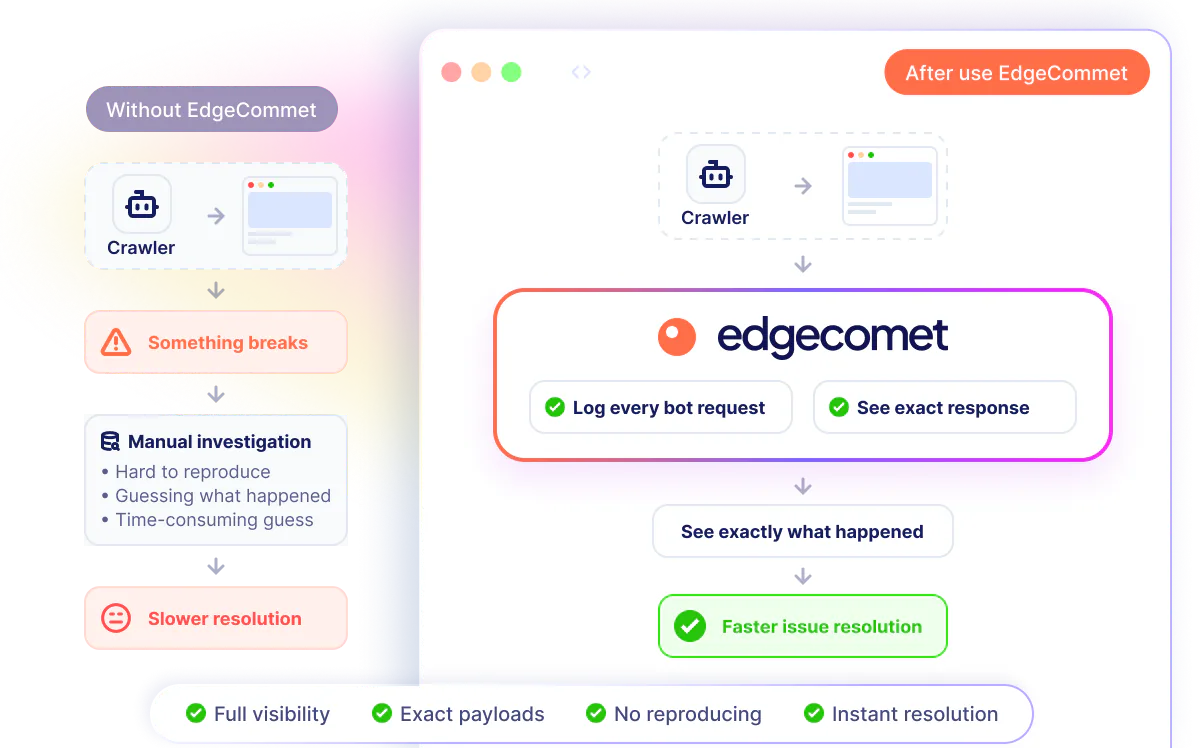
When something breaks, it’s hard to see what actually happened. You don’t know what the bot requested or what it got back. Most of the time, you’re piecing things together instead of looking at a clear answer.
In most JavaScript-heavy apps, making content visible to crawlers means adding another layer like SSR or dynamic rendering. That usually comes with tradeoffs and extra complexity.
With EdgeComet, we execute your JavaScript in a controlled environment and return fully rendered HTML to bots, so your existing frontend can stay as it is.
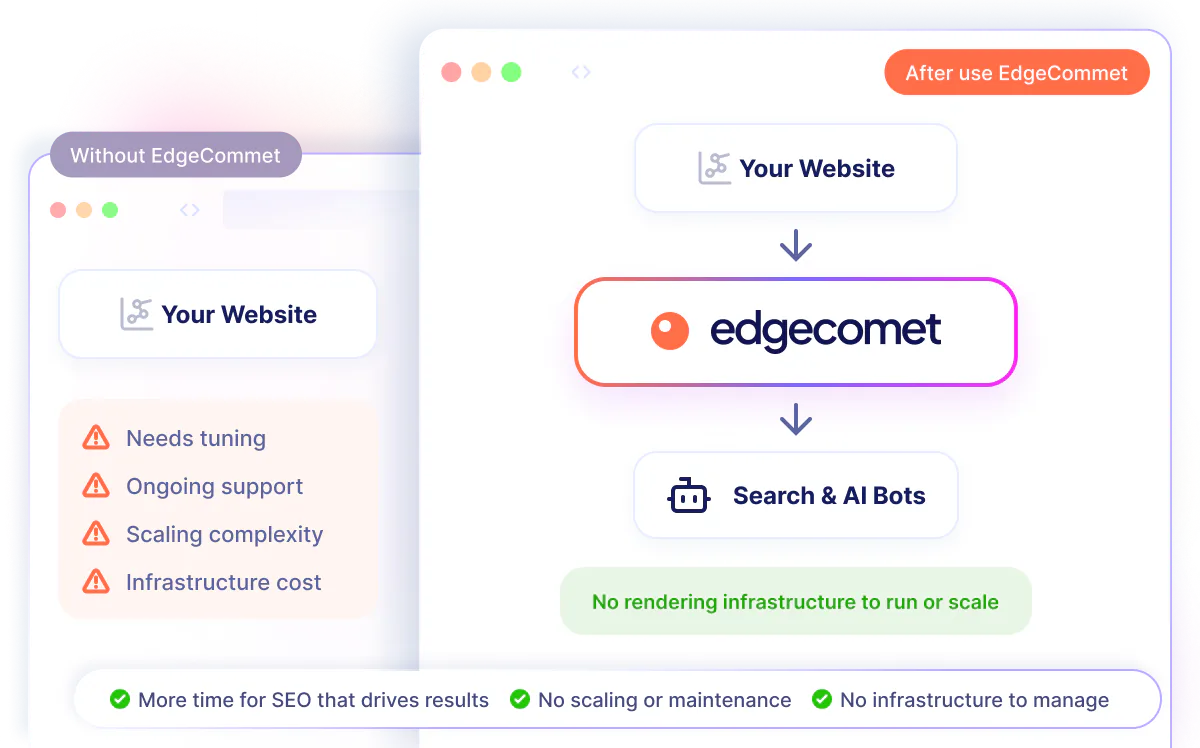
Rendering pipelines tend to grow over time. What starts as a quick setup often turns into something that needs ongoing tuning and support.
We take that piece out of your stack entirely, so your team doesn’t have to run or scale any rendering services.
Bots revisit pages more often than it seems, and repeated rendering can quietly add up in terms of load and response time.
Once EdgeComet renders a page, it’s stored and reused for future requests, avoiding unnecessary work and keeping responses consistent.
When something breaks, the hardest part is usually figuring out what the crawler actually saw. Most of the time, you’re working with partial logs or trying to recreate the scenario.
With EdgeComet, we log every bot request along with the exact response it got back, so you get a comprehensive technical seo audit checklist for web developers.
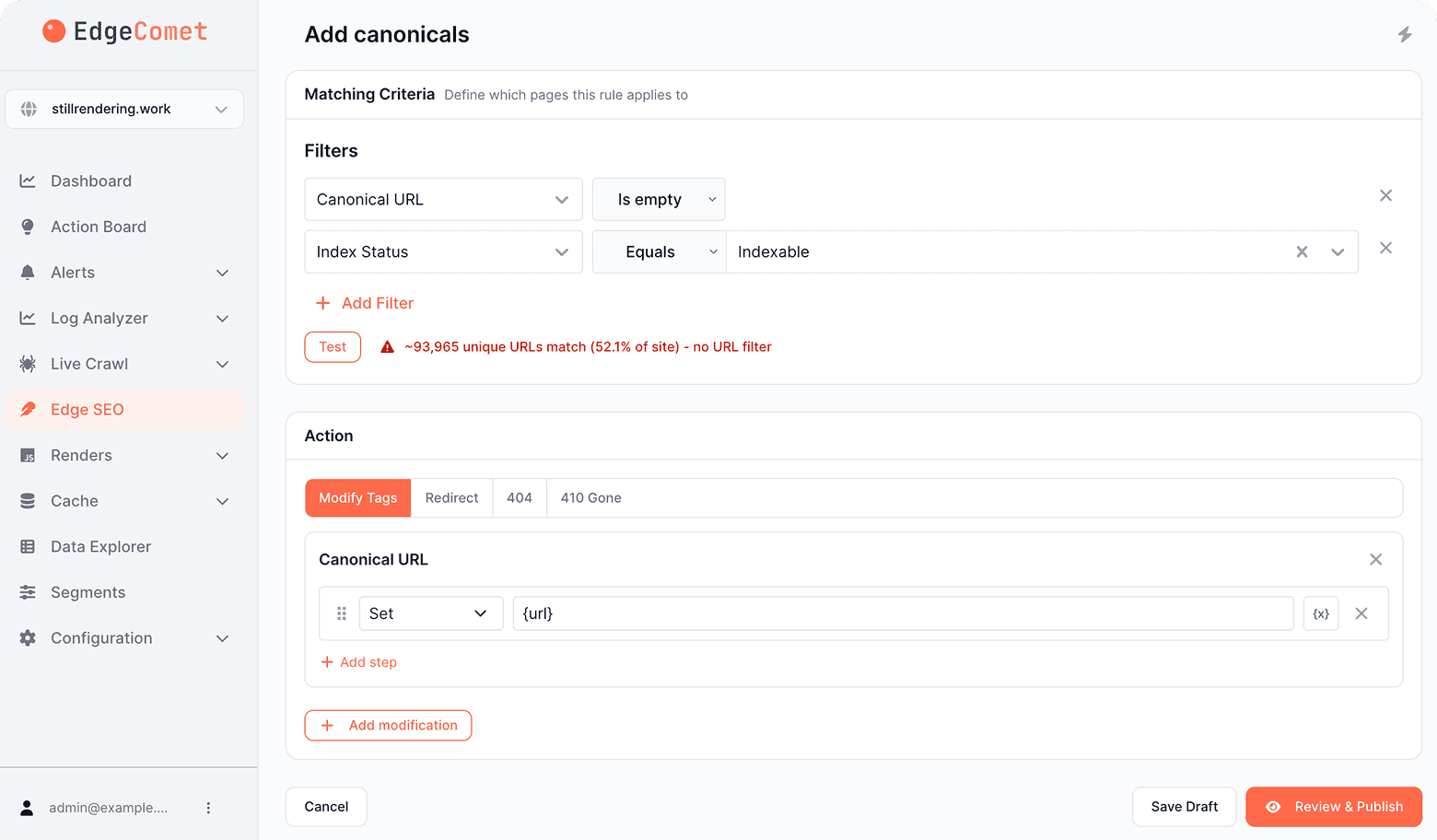
None of the minor SEO issues should require developers and a long wait. EdgeComet lets your SEO team make changes instantly.
Apply SEO changes across any set of pages
See exactly how a page will look to bots
Every change is tracked, you can revert it
AI generates correct rules for you
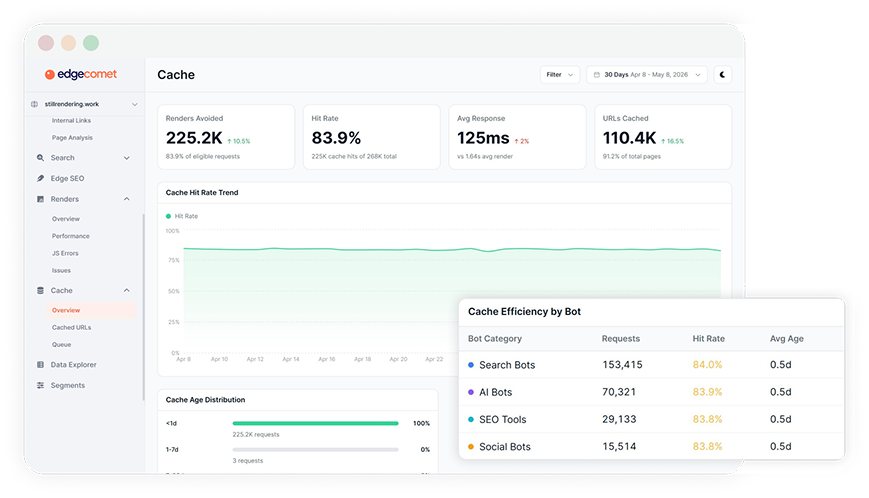
Rendering JavaScript pages on every request is slow and expensive. EdgeComet's caching system ensures bots receive pre-rendered pages instantly.
Manage and monitor cached renders
Pre-render critical pages before bots arrive
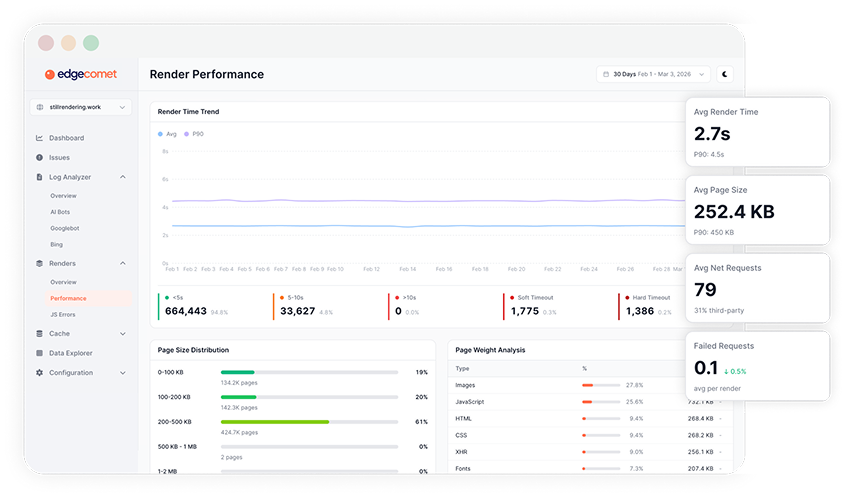
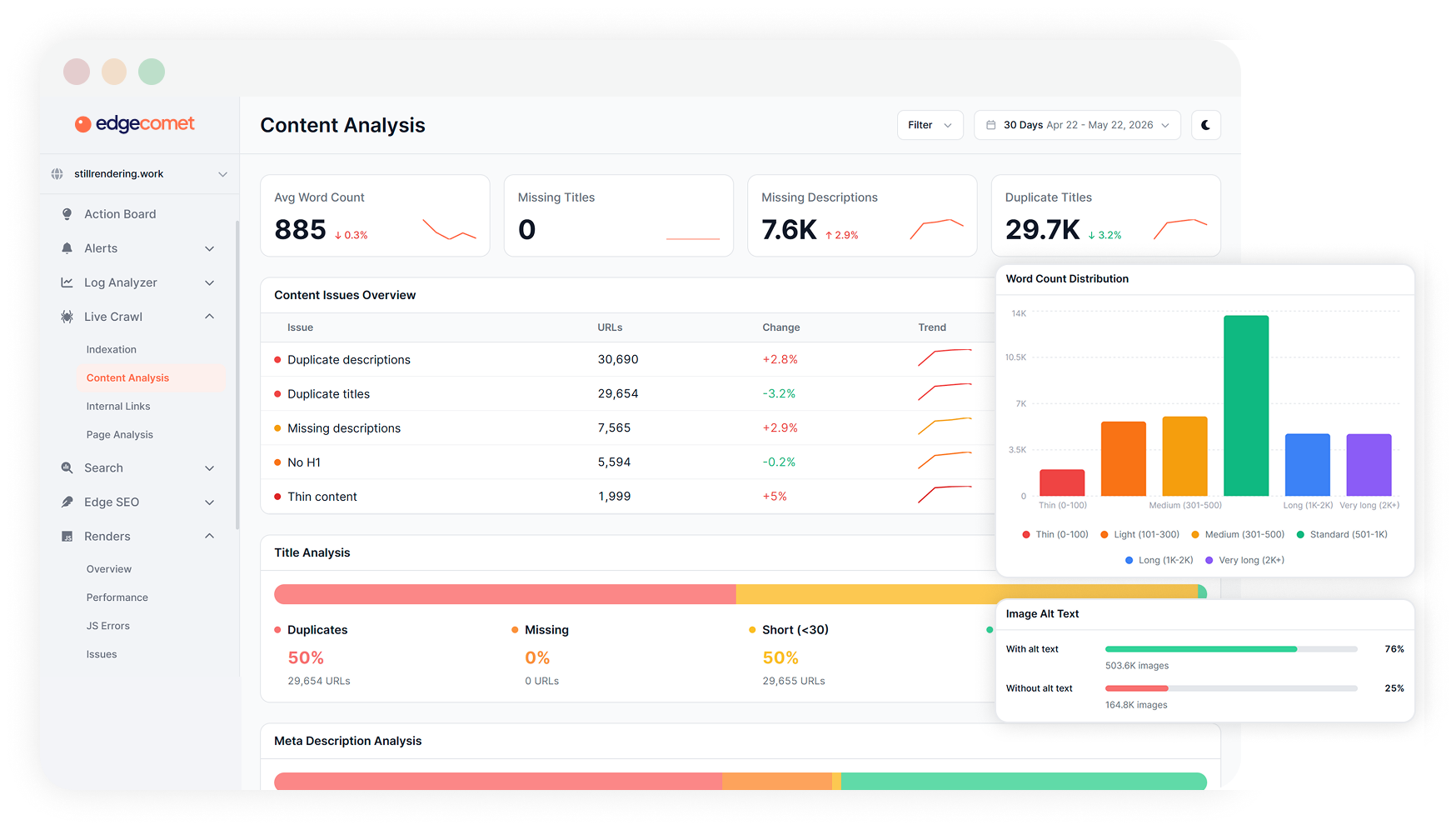
JavaScript rendering failures can silently break SEO and AI visibility. EdgeComet continuously monitors rendering performance.
Monitor rendering activity and performance
Detect JS errors during bot rendering
Analyze render time and page size
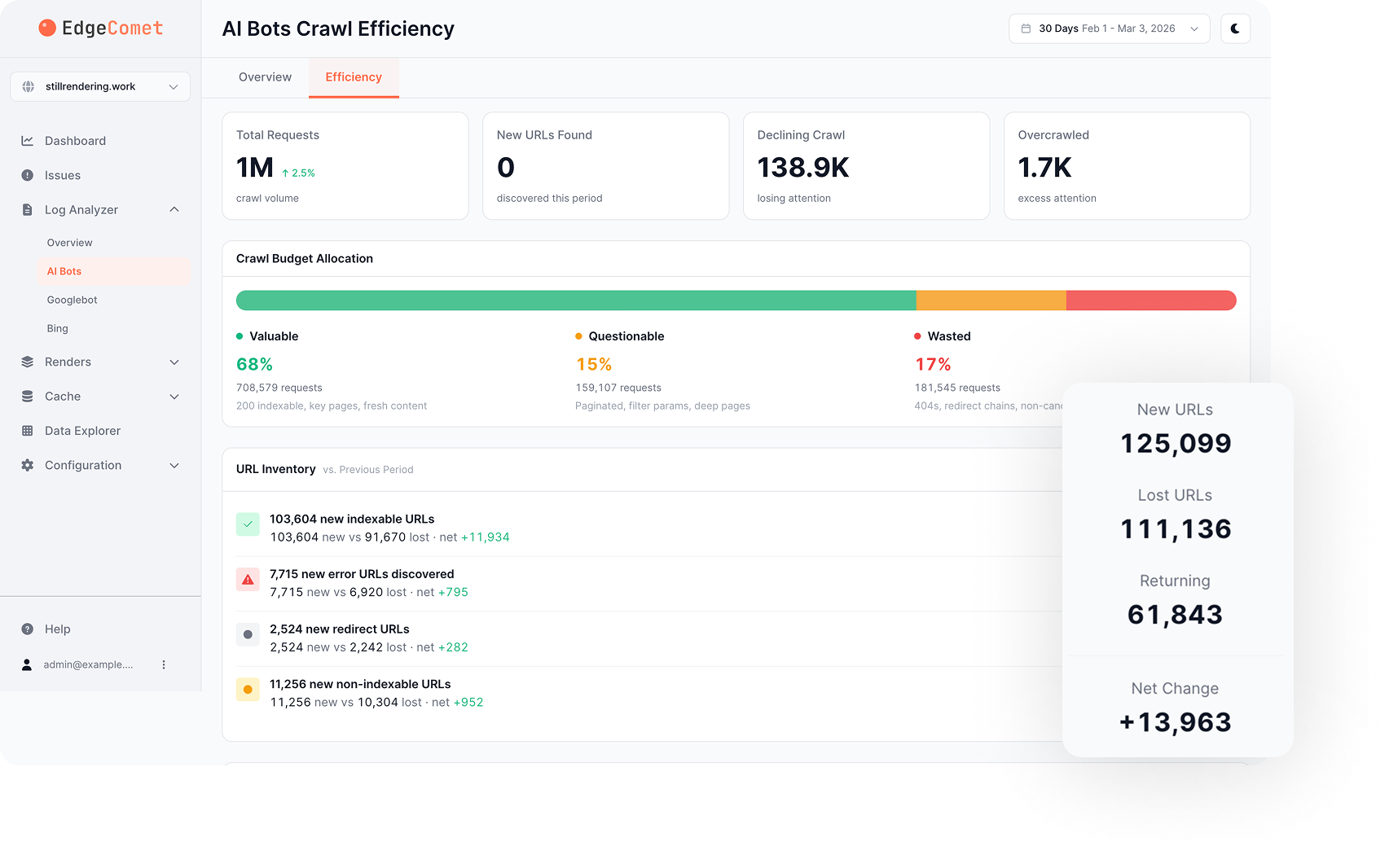
Track ChatGPT, Claude, Perplexity crawlers
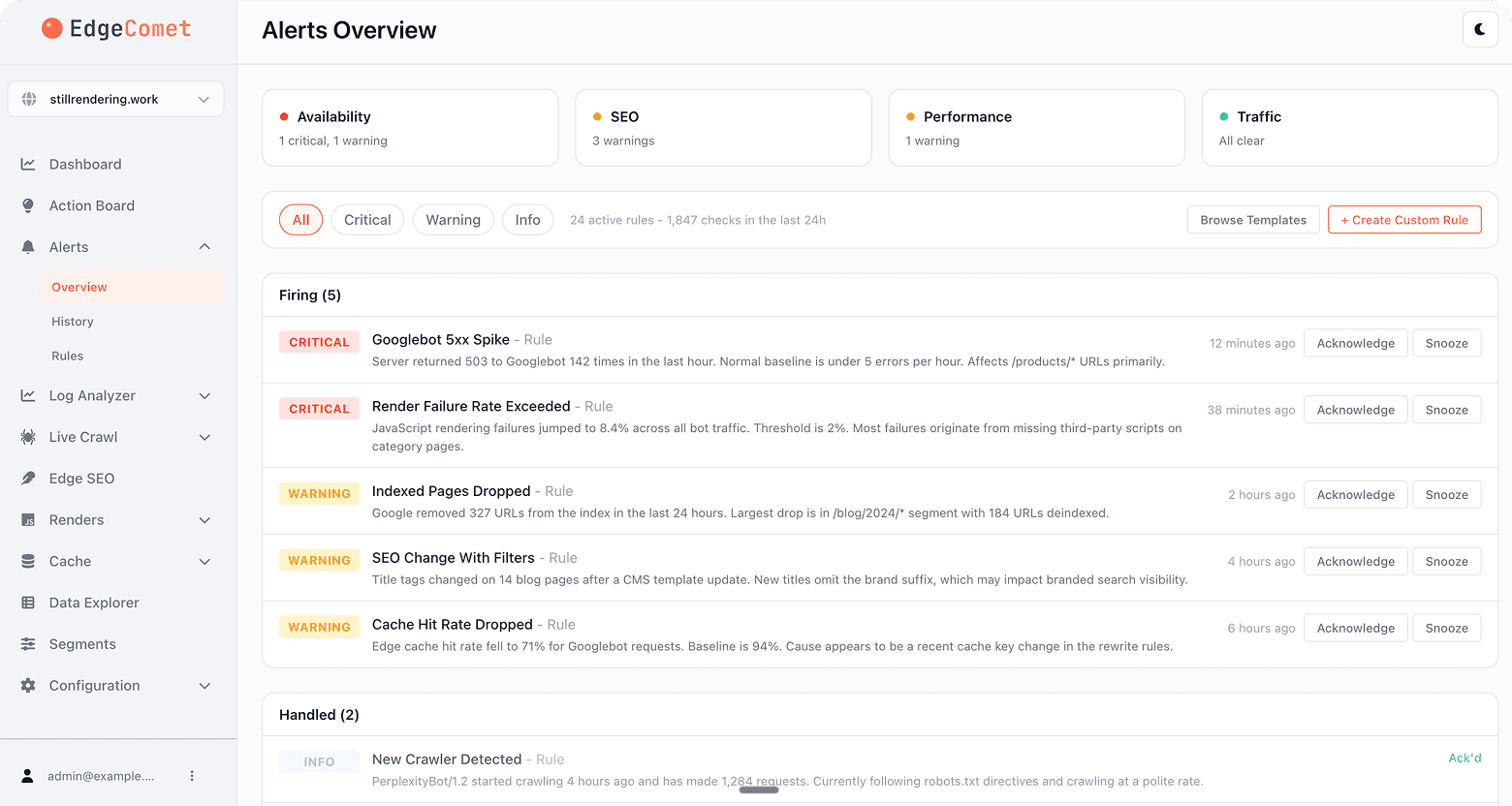
SEO issues happen often. EdgeComet monitors every real bot request and notifies if something seems wrong.
Alerts are triggered by actual bot traffic
AI explains what happened and why
Ready-to-use alert rules, active in one click
Get alerts where your team actually works
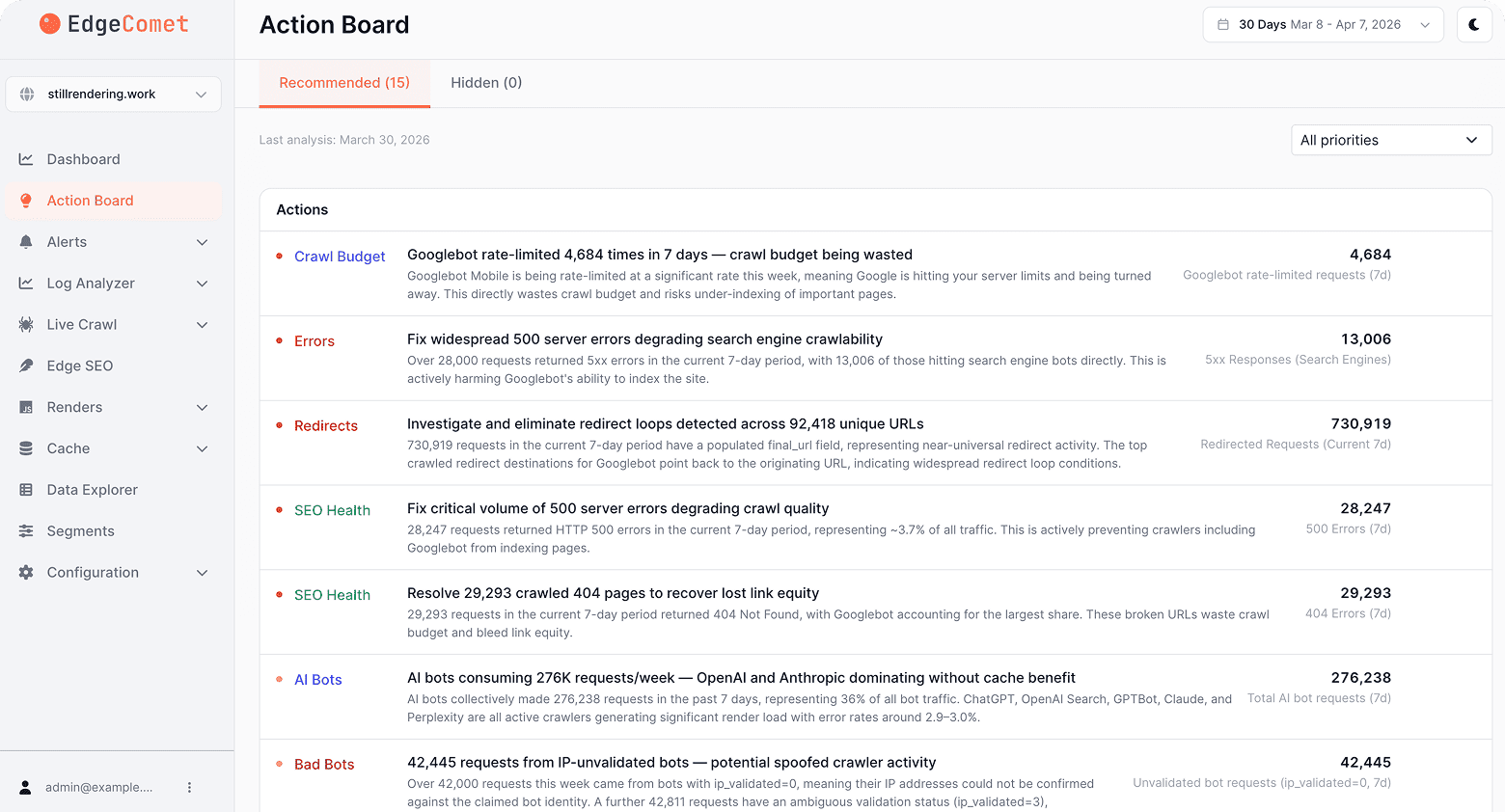
SEO data is only useful if you know what to do with it. EdgeComet's AI SEO website optimization platform monitors your site and tells you what to fix and how.
AI surfaces problems
Get specific fixes, not vague observations
AI builds rules for you
Serve fast, complete pages to search and AI bots – with rendering, caching, and full bot visibility handled in one platform.
Improve indexing, visibility, and traffic from day one.
14-days free trial
No, your frontend remains as it is. EdgeComet works as an alternative to SSR, handling rendering for crawlers outside your app, so there’s nothing to rebuild or refactor.
At the proxy layer between bots and your origin. Crawlers go through EdgeComet, while users keep hitting your app as usual.
Just routing at the edge like Cloudflare, NGINX, or HAProxy. Think of it as one item on your technical SEO checklist for developers: redirect bot traffic to EdgeComet, and rendering is handled outside your stack.
Most bot requests are served straight from cache in about 15ms. It is one of the key technical SEO considerations for developers building at scale. That cuts down repeated rendering, keeps the load off your backend, and lets bots move through more content in a single pass.
You can bypass EdgeComet at the proxy level and send traffic straight to your origin at any time, without touching your code or affecting your SEO setup.
EdgeComet refreshes cached pages based on rules you define or when bots request updated content. You stay in control of how and when pages are re-rendered.
Yes, EdgeComet renders pages using headless Chrome, so it works with any JavaScript framework, including React, Vue, and Angular, without modifying your code.
No, EdgeComet complements your existing setup by rendering pages for bots at the edge, so you achieve SEO without SSR and get the same indexing benefits without rebuilding your frontend architecture.
By delivering a fully rendered HTML snapshot to search engine crawlers, EdgeComet ensures your JavaScript-driven content is visible and indexable, rather than appearing as a blank page to Googlebot.
Stay ahead with expert insights on search visibility, AI optimization, and technical SEO
There is nothing worse than discovering a site-wide “noindex” error days after a deployment – when your rankings have already...
Read Article
We often get this question from our customers: “Where is Google-Extended in my logs? Why doesn’t EdgeComet show it as...
Read Article
“I’ve used ChatGPT for three years. It’s basically trained on me; it understands me perfectly.” I’ve heard this version more...
Read Article