How Googlebot Crawls, Renders, and Indexes JavaScript: A Developer’s Guide
JavaScript content takes hours to weeks longer to index than static HTML because Googlebot cannot index it on the first...
Read ArticleIn React-based applications, the content is generated through React rendering, which might lead to differences for search engines and AI crawlers. These differences reduce visibility, as bots don’t process pages like users do.
EdgeComet helps improve React SEO issues by by generating a consistent rendering output identical to how your pages are viewed, and further enabling you to fix the issues directly thus your content remains visible, indexable
Key content loads after the initial page response. In such case, crawlers can hit the page before everything is fully loaded, so text, links, and metadata may be missed, which can limit proper indexing.
Important SEO elements like metadata, internal links, and core content often depend on JavaScript. Because of this, crawlers don’t always access them consistently.
JavaScript errors, timeouts, or blocked resources can disrupt rendering without any visible signs on the frontend. As a result, bots may process only part of the page or an empty response.
Heavy scripts, multiple requests, and third-party dependencies slow down page processing. As a result, bots cover fewer pages within their crawl budget.
EdgeComet helps improve React SEO by making pages more consistent for search engines and AI crawlers, while giving you a clear view of how your pages are actually processed.
Pages are prepared in a controlled environment before crawling begins, so bots receive full content instead of partial or delayed output.
Metadata, links, and core content are consistently available to crawlers, improving visibility regardless of how the page is structured or loaded.
JavaScript errors, timeouts, or blocked resources are surfaced as they happen. Even if everything looks fine to users, you can see what affects bots.
With fewer delays and less unnecessary load, bots can move through more pages without running into performance limits.
Run EdgeComet on your real traffic with full access to the platform, including rendering, monitoring, and Edge SEO.
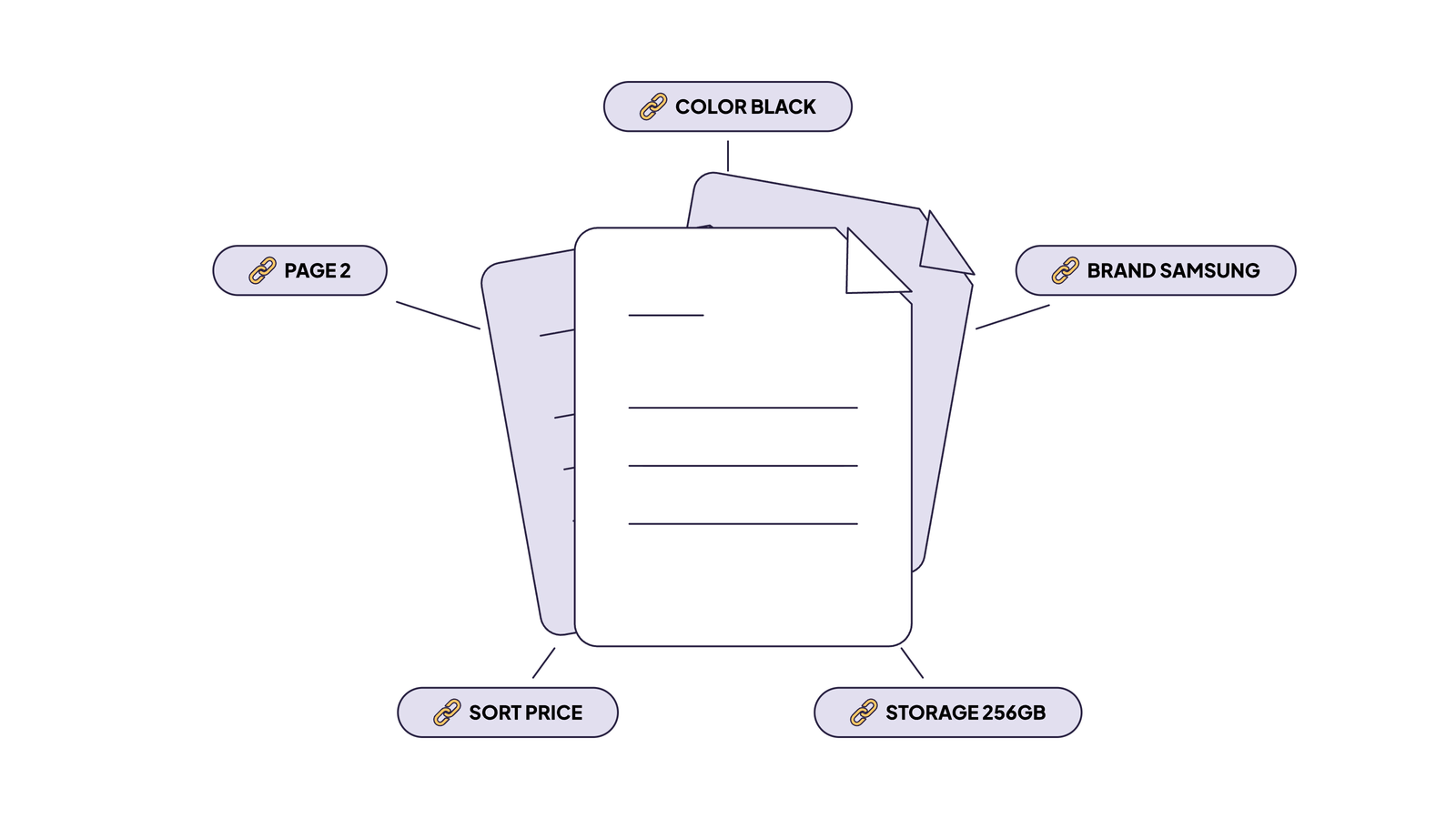
Content changes when users apply filters or sorting, often without a full page reload. This creates shifting page states that aren’t always consistent for crawlers.
Faceted navigation can generate multiple versions of the same page through parameters. These variations don’t always produce stable or predictable output, which can affect indexing.
Titles, descriptions, canonicals, and structured data are often set after the page loads. Because of that, crawlers may not always see them in time.
Tabs, expandable sections, and lazy-loaded elements appear later or after interaction. In many cases, crawlers never reach that content.
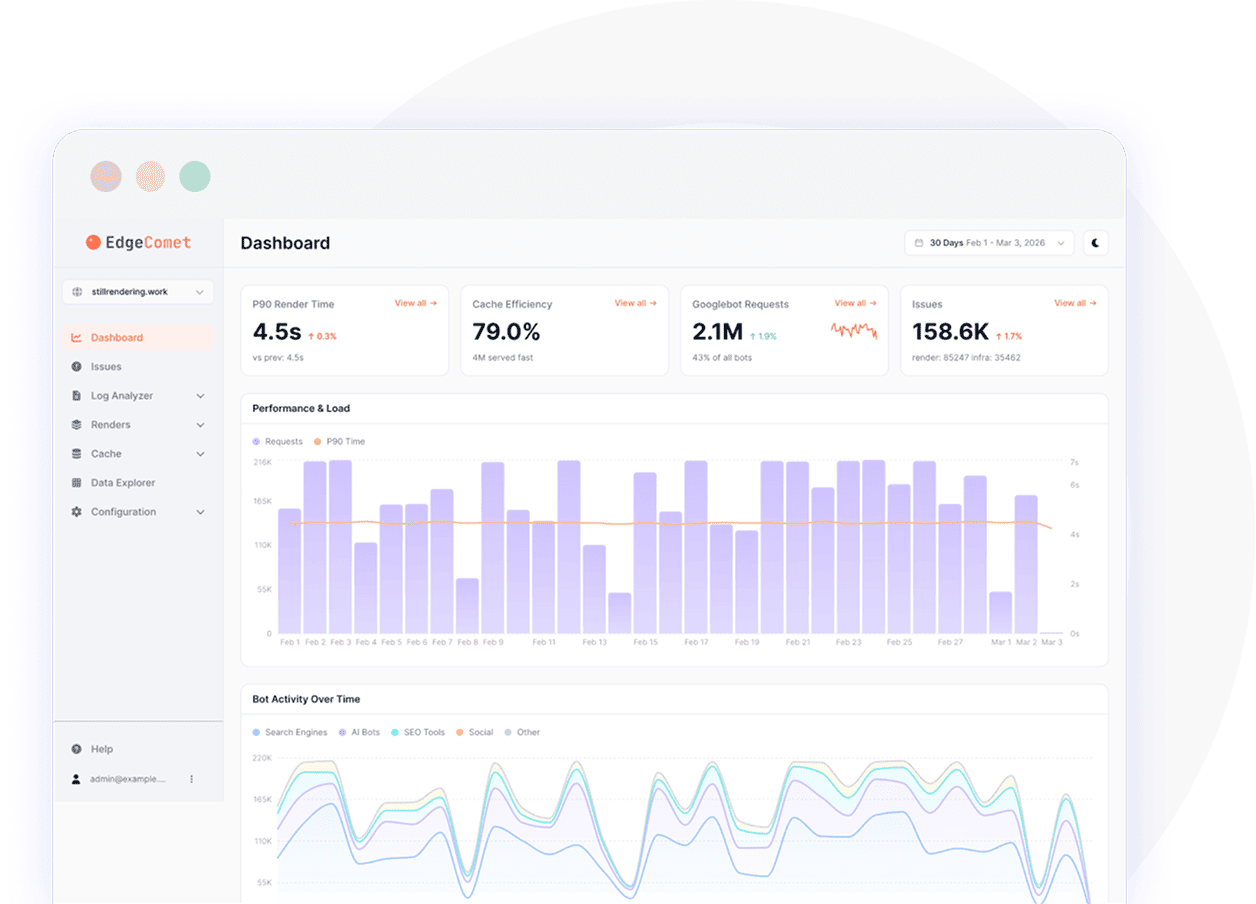
With proper monitoring of how bots manage your React application, you get a clear and reliable picture of how your pages are handled.
Content stays consistent across different page types, helping bots process pages more reliably and improving overall performance.
When timing and load matter less, bot processing becomes more predictable. That makes crawling outcomes steadier and easier to work with.
Problems that would normally go unnoticed become visible, so your team can identify and address them before they affect visibility.
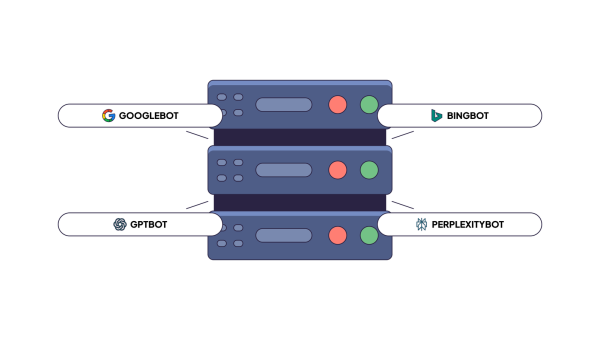
You can see how different crawlers access your pages, giving you insights into patterns, inconsistencies, and areas that need attention.
Improve indexing, visibility, and traffic from day one.
14-days free trial
React JS SEO can work well, but only if content is consistently accessible to crawlers. Without that, important parts of the page may not be indexed.
Because content often depends on JavaScript execution, which is not always processed fully or consistently by bots.
Sometimes, but not reliably in all cases. Timing, complexity, and errors can affect the outcome.
Missing content, delayed execution, and rendering failures that prevent bots from seeing the full page.
If content depends on it, bots may miss or partially process the page, which leads to poor indexing.
Rendering is crucial for React JS SEO because search engines rely on the final version of a page, not the raw code. If that rendered version is incomplete, important content can be missed, which limits visibility and negatively affects indexing.
Stay ahead with expert insights on search visibility, AI optimization, and technical SEO
JavaScript content takes hours to weeks longer to index than static HTML because Googlebot cannot index it on the first...
Read Article
When you optimize a website for search and AI visibility, you think about content quality, page speed, structured data, and...
Read Article
In contrast to Google Search, AI systems like ChatGPT, Perplexity, and even Gemini publish very little about their internal data...
Read Article