How to Optimize Faceted Navigation SEO for Crawling and Indexing
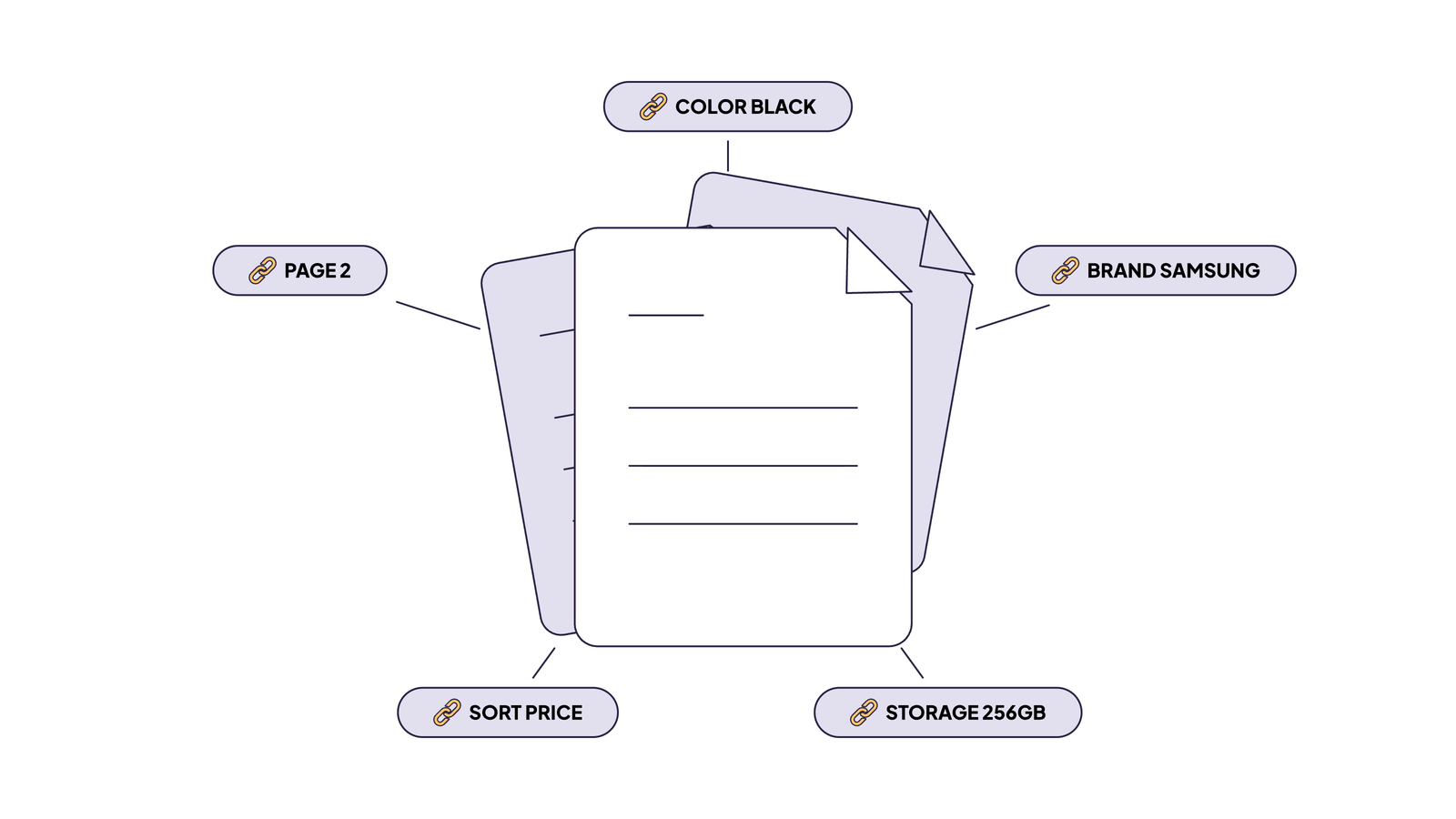
Faceted navigation SEO comes down to two decisions for every filter URL: may search engines crawl it, and may they...
Read ArticleTrack what AI crawlers and search engines actually get on every page: rendered content, SEO metadata, and indexability status captured from real bot traffic, not a generic audit you conduct once a month.
Without SEO crawl tools, critical indexing issues accumulate quietly, and you can detect
them only after traffic has already decreased.
Nonindexed pages, mismatching canonicals, and missing data won’t activate alerts with traditional tools. By the time the issue is fixed, Googlebot has processed the wrong metadata.
On single-page applications and headless sites, content appears for crawlers only after JavaScript runs. Crawlers that don't execute JavaScript see empty pages.
Traditional SEO tools like Screaming Frog or Botify audit sites using their own bots different from Googlebot. They don’t reflect the actual responses bots get during the visit.
Crawls display what your site looked like at the moment of scan. Canonical overwrites from deployments stay undetected until the next scheduled crawl, which could be weeks away.
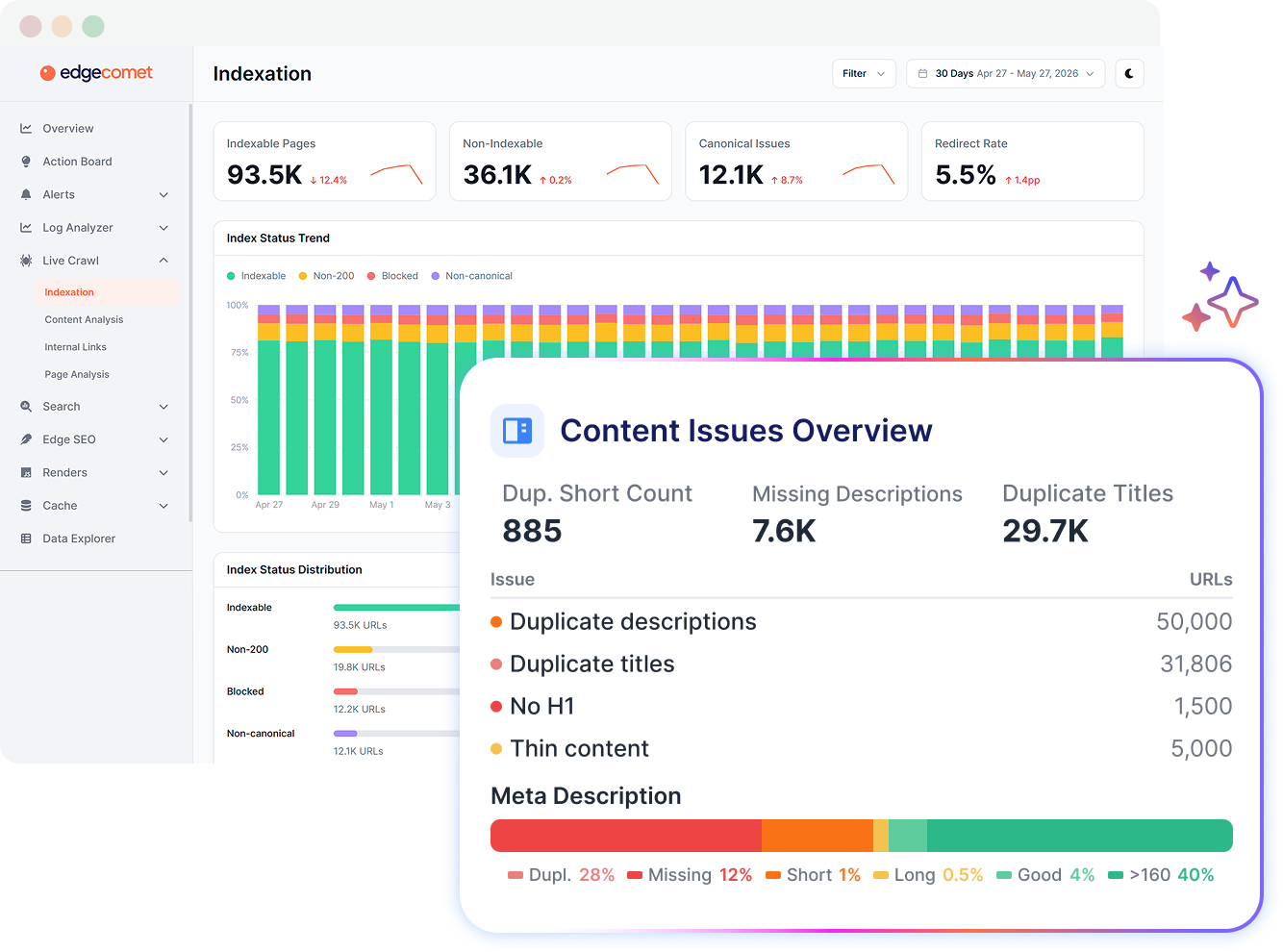
EdgeComet's SEO site crawler captures 40+ SEO fields per rendering from every real Googlebot,
GPTBot, and ClaudeBot visit, and displays issues in real time.
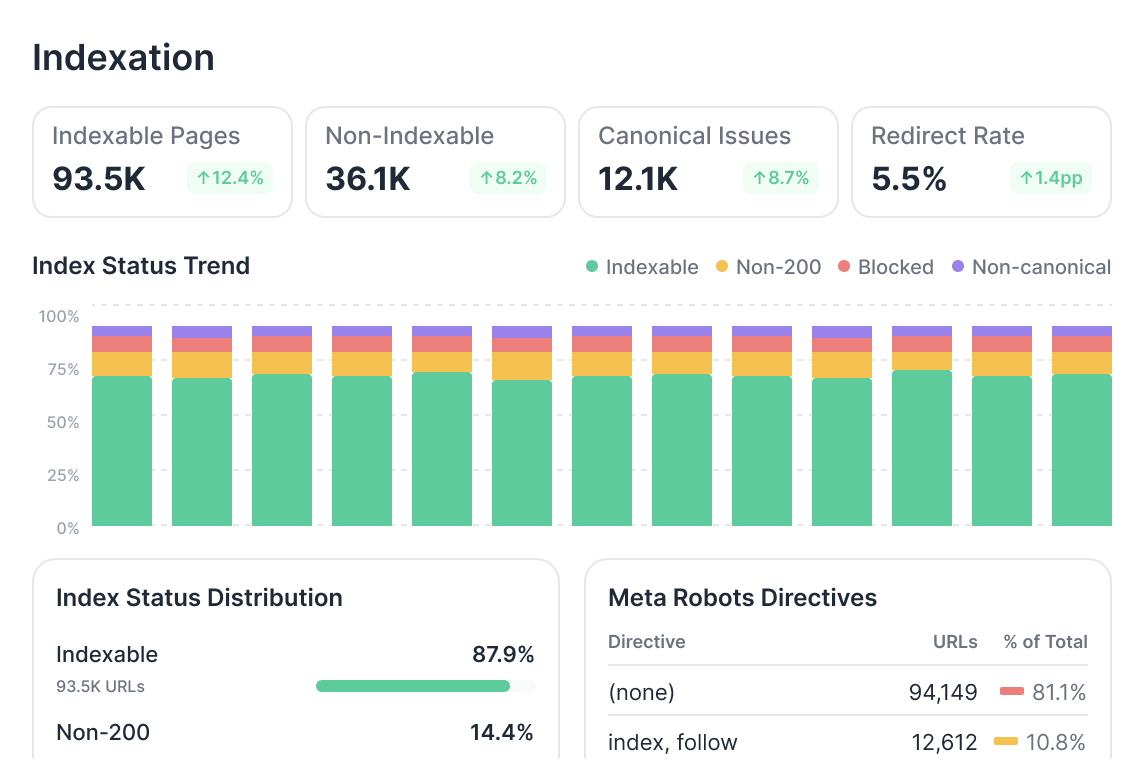
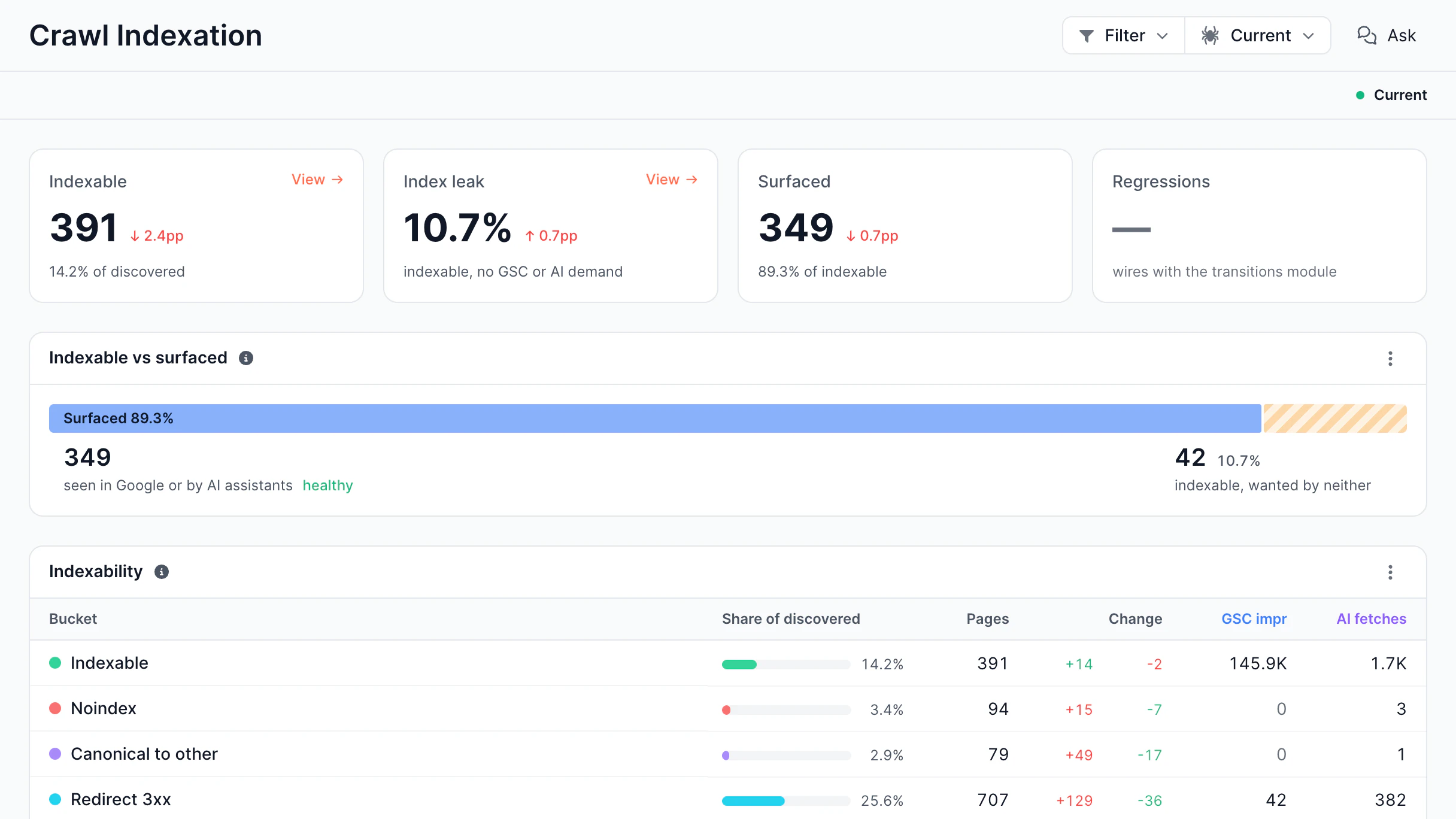
Detect and analyze indexing issues across your website: monitor which pages are indexable, blocked, and understand the reasons.
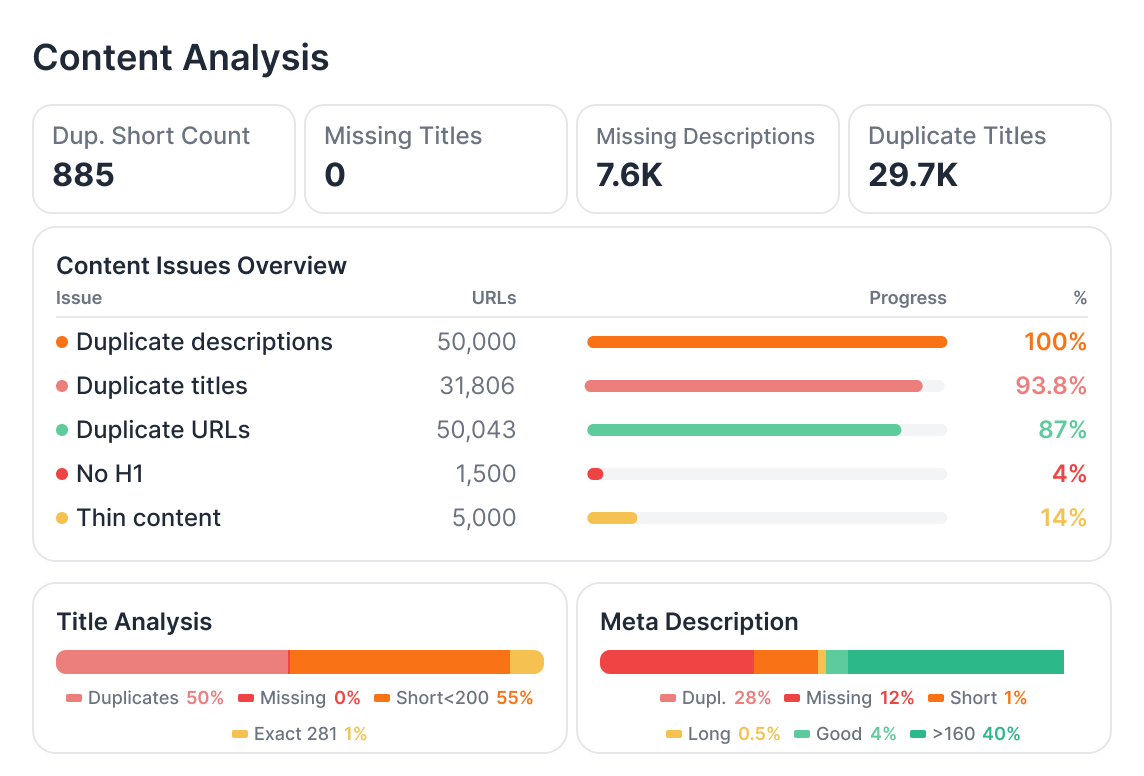
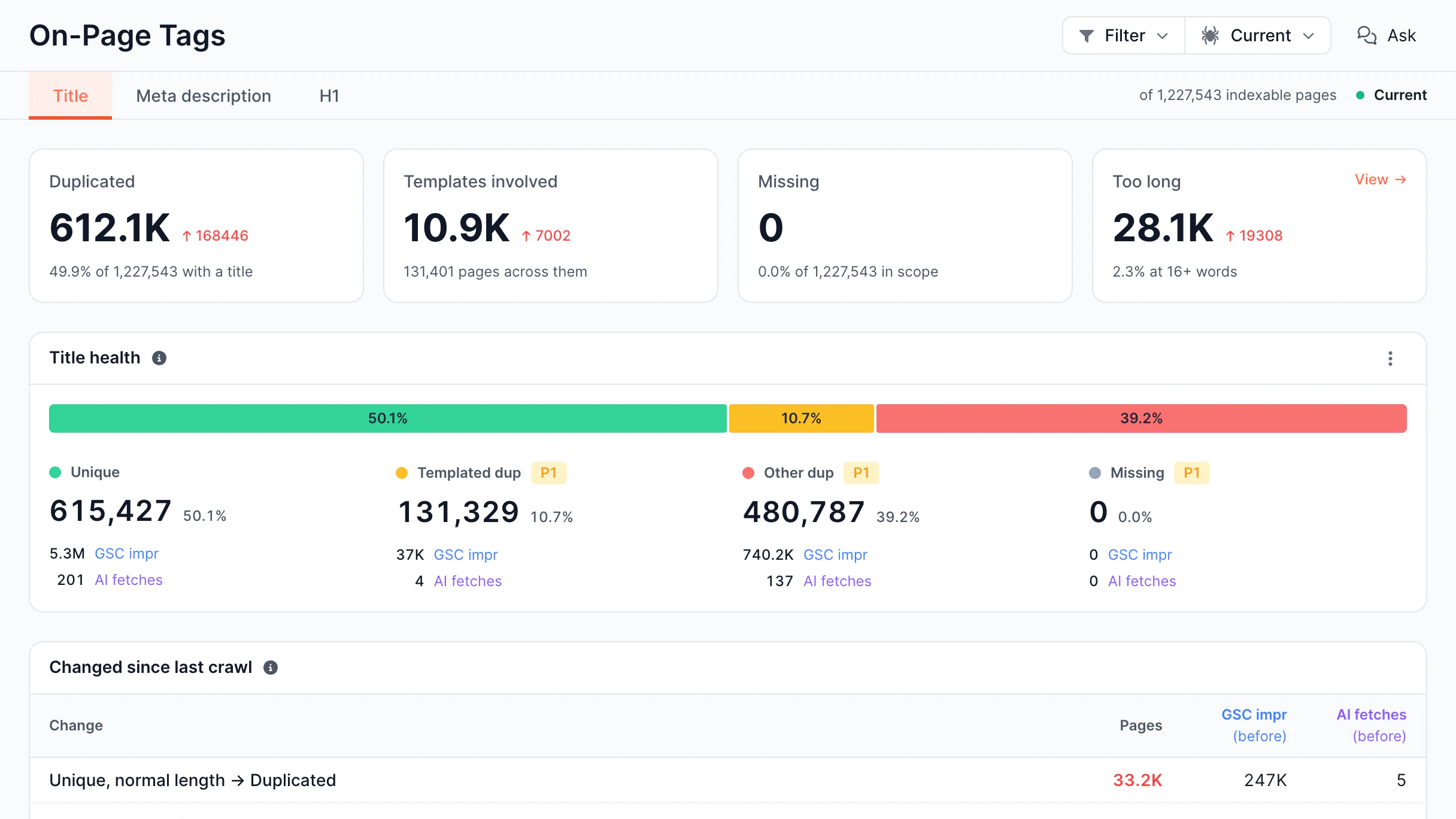
Analyze content in real time using data from what bots see: duplicate titles, missing descriptions, low-value content, and structured data gaps.
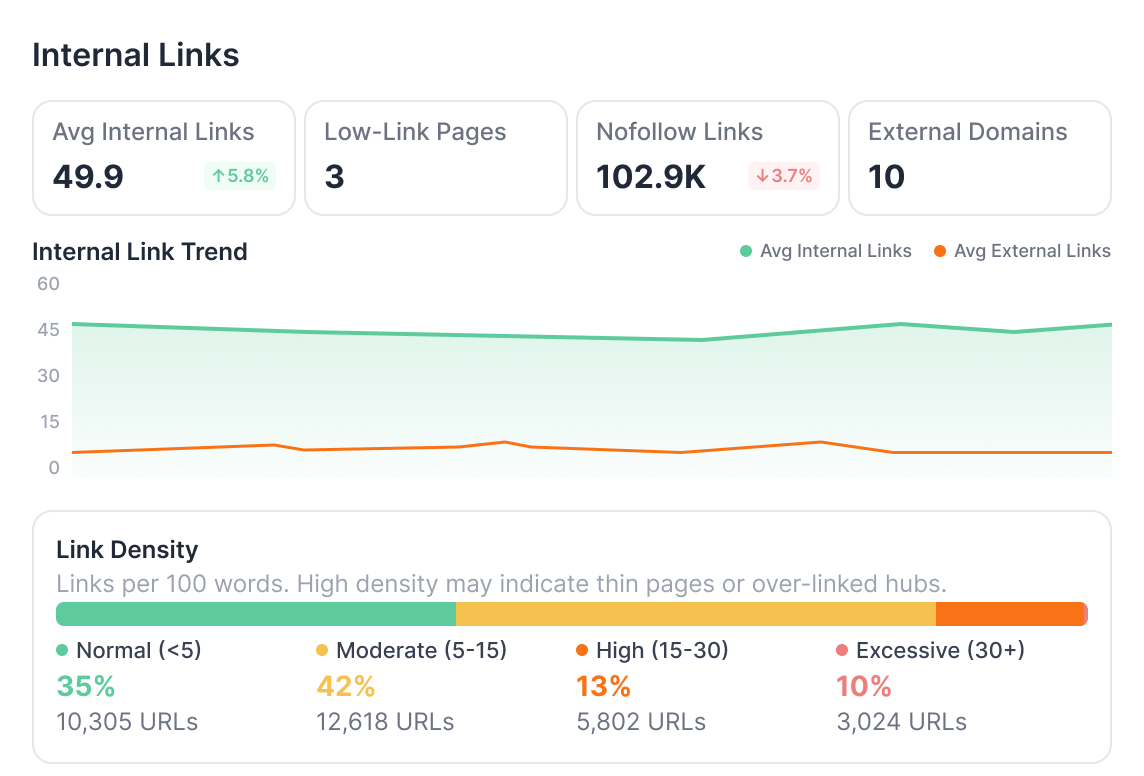
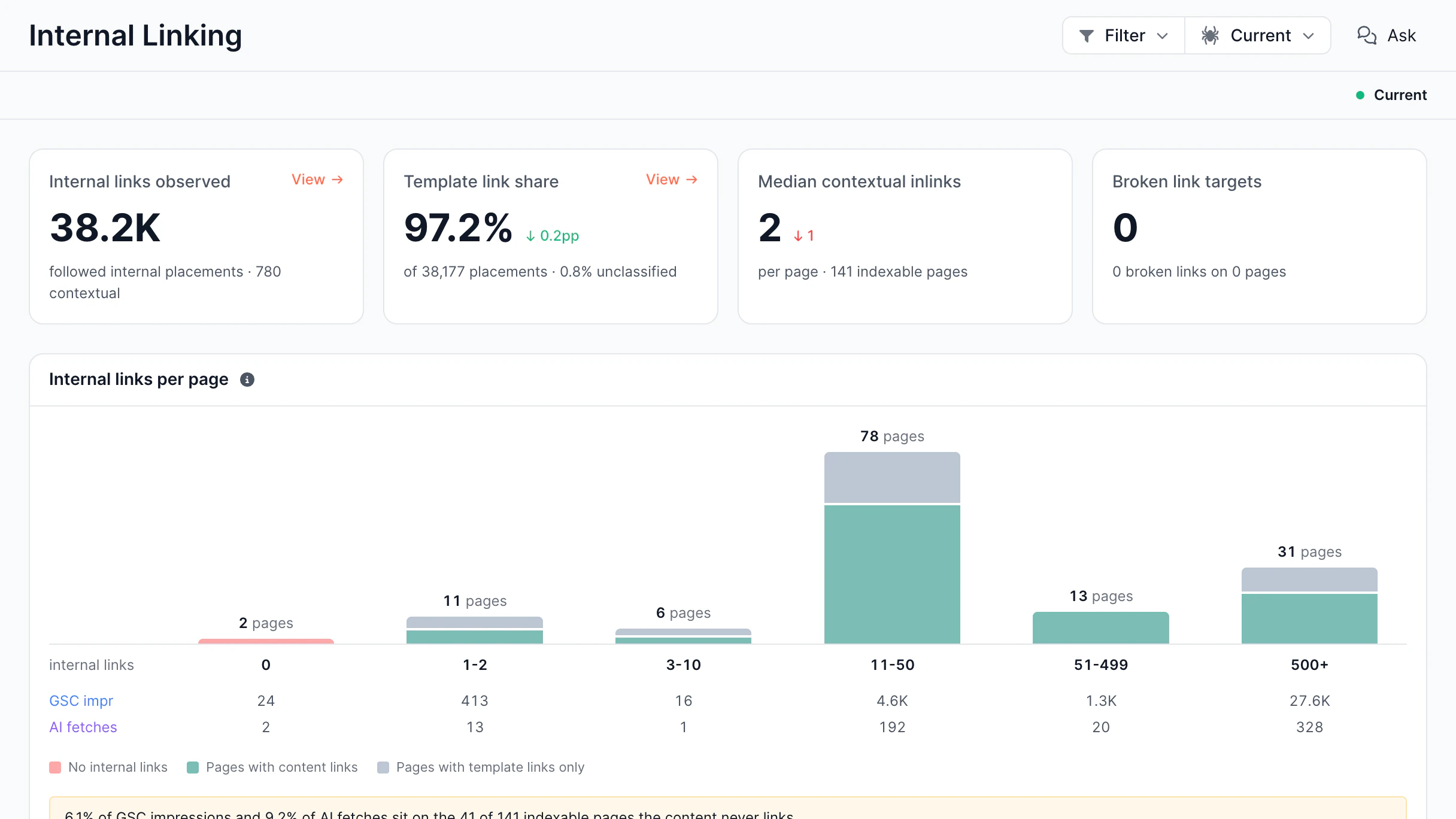
Run internal link audits continuously, so you can see how crawlers navigate your website structure right now.
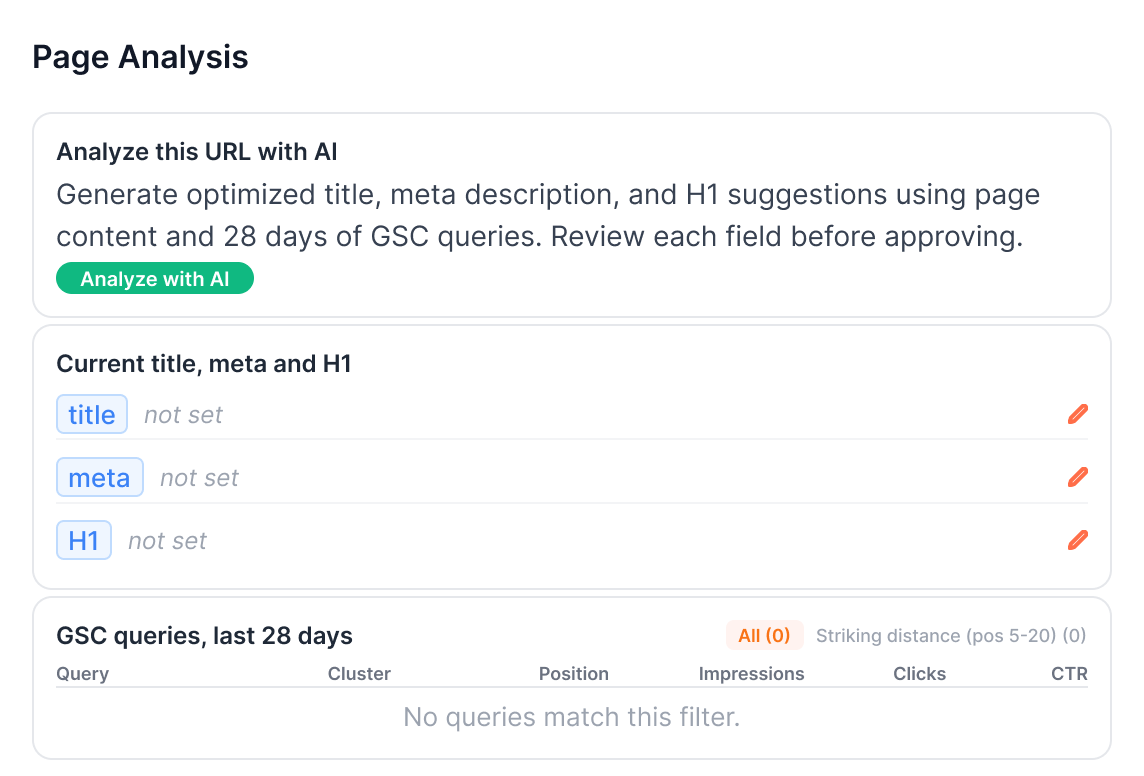
Learn what the bot actually gets: every SEO field inspected at rendering time, attached to every request, searchable across any time range.
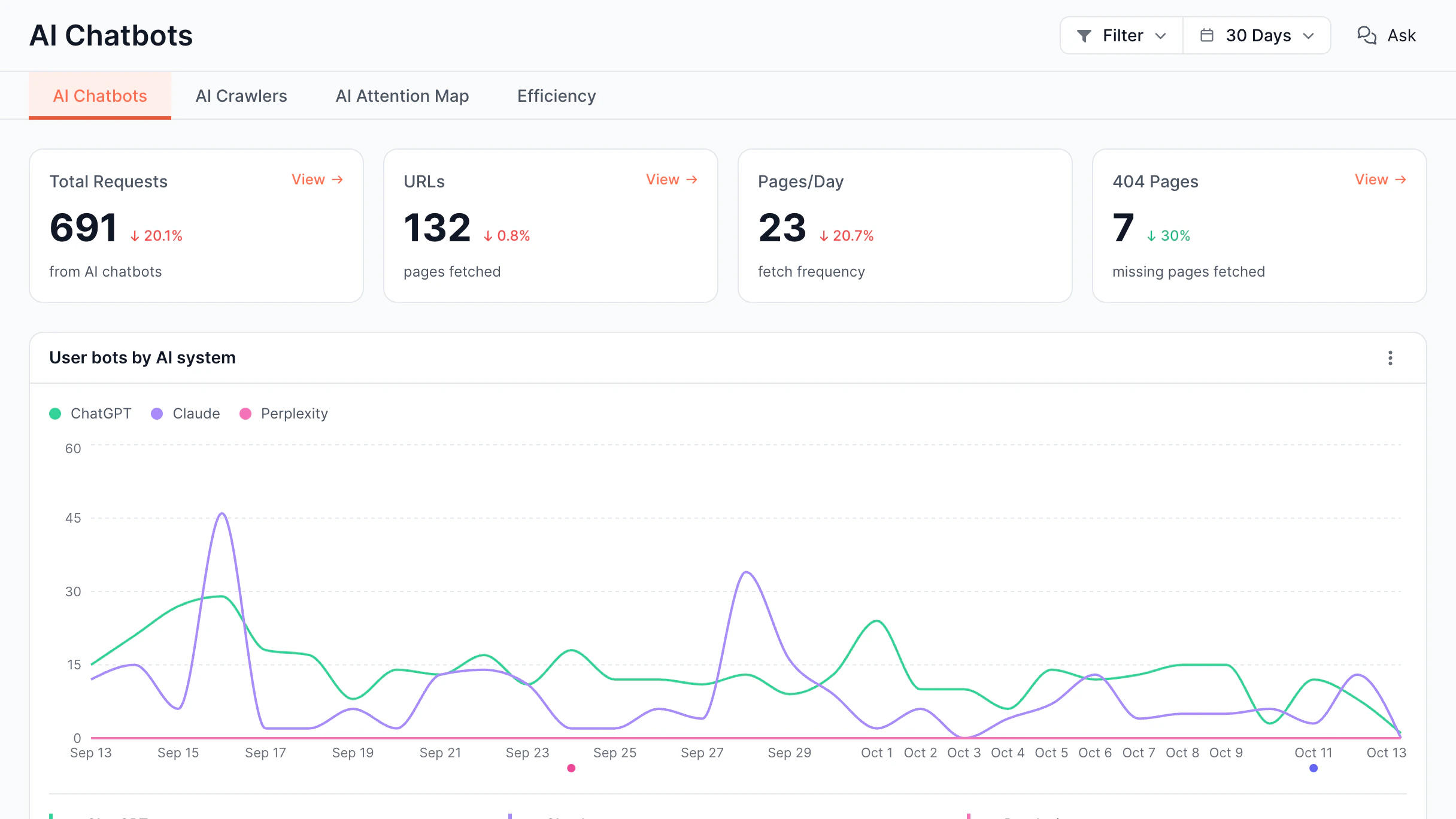
Pages ChatGPT, Claude, and Perplexity fetch while answering users, by day.
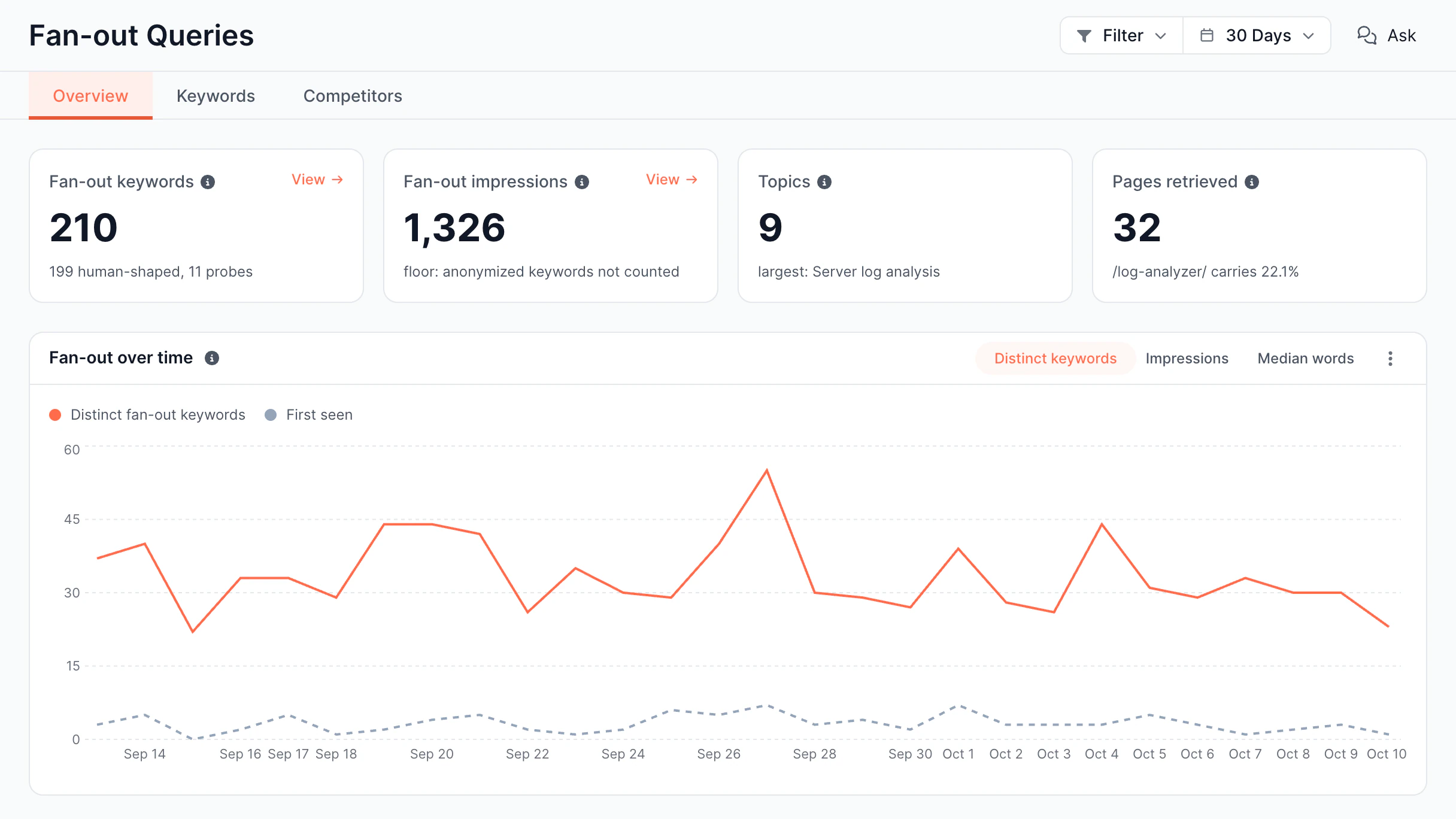
Fan-out keywords from Search Console, grouped into topics, with impressions.
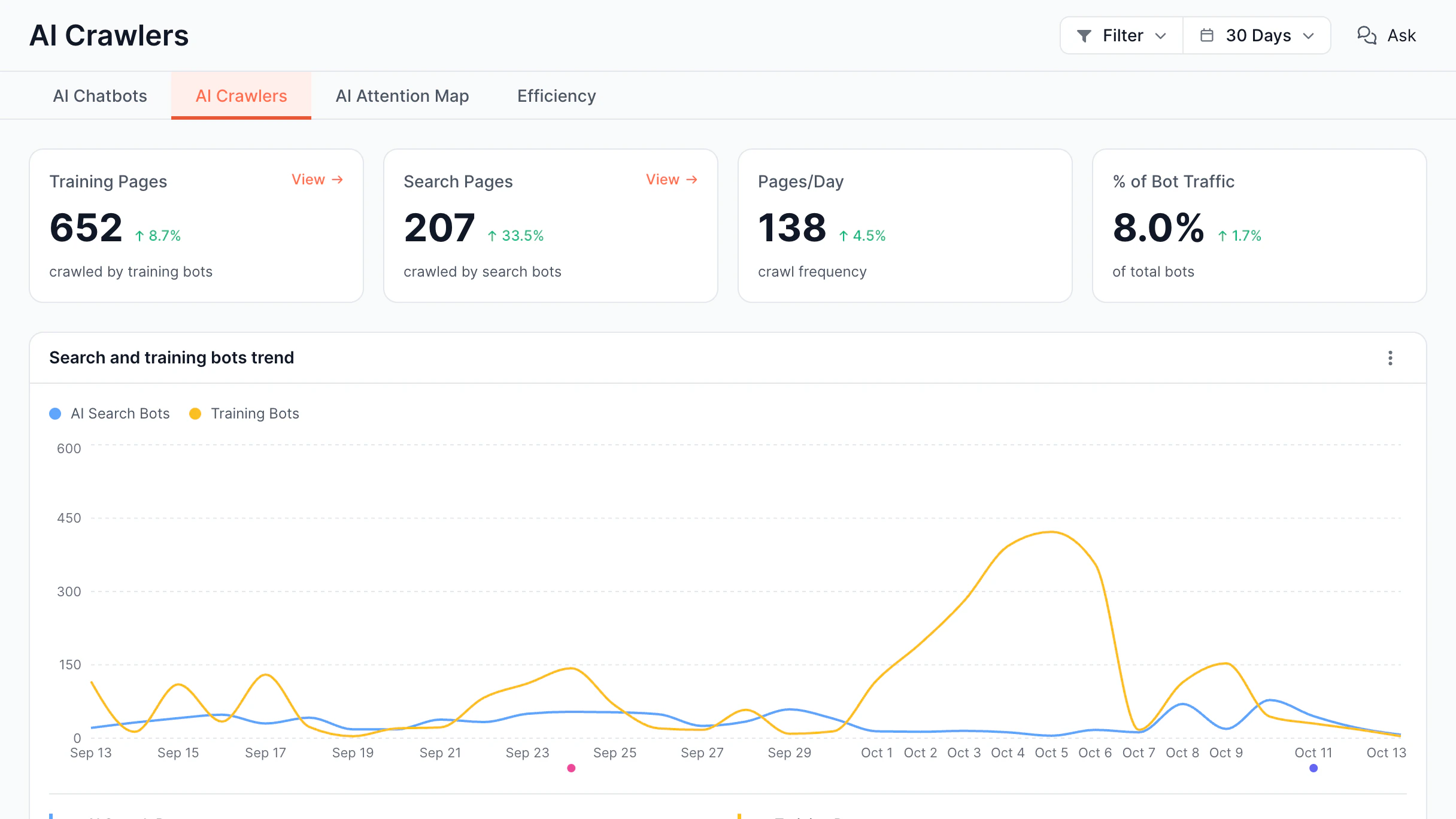
AI training and search bots: pages crawled, pages per day, share of traffic.
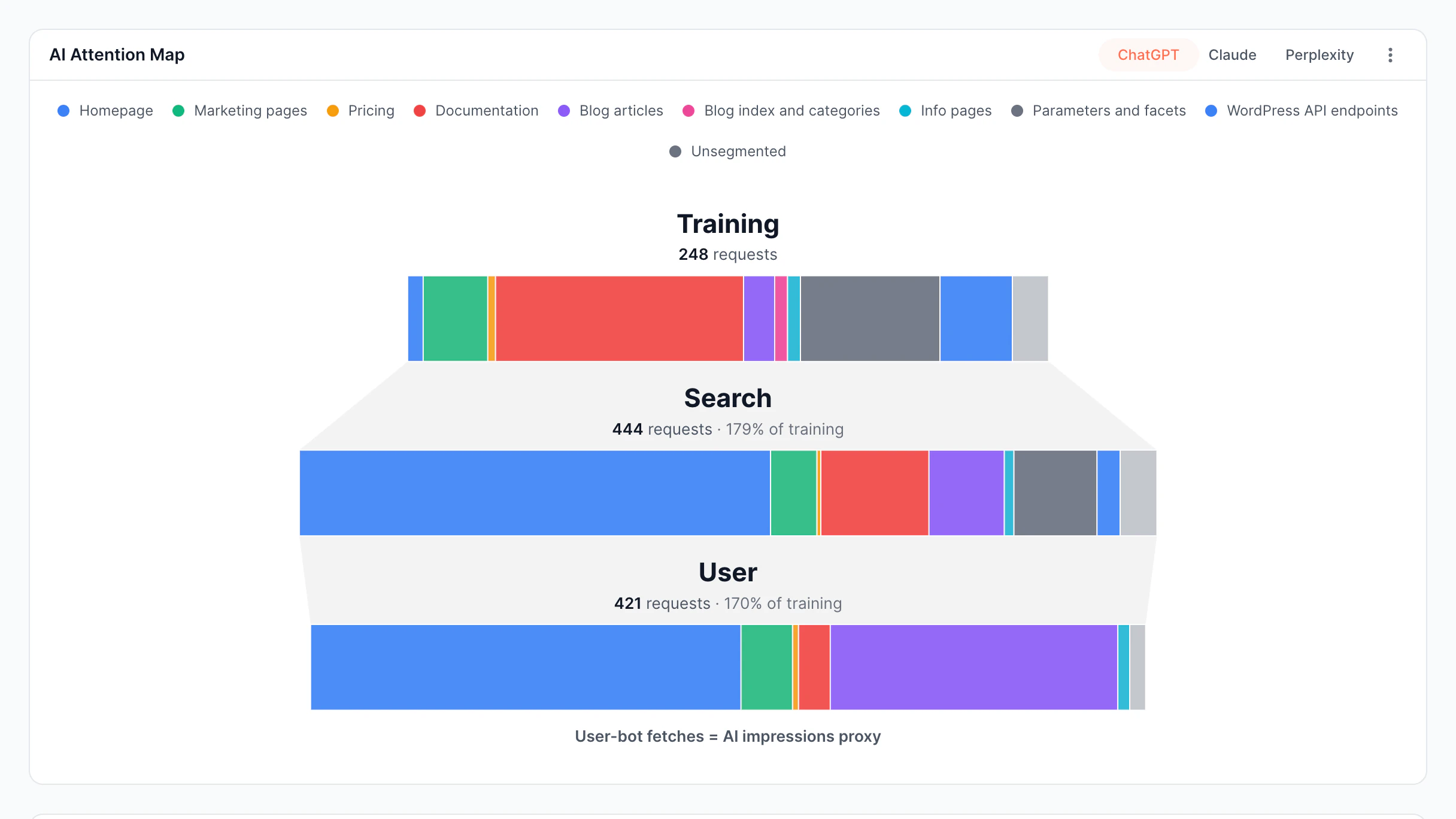
Training, search, and user bot requests by page type, for each AI provider.
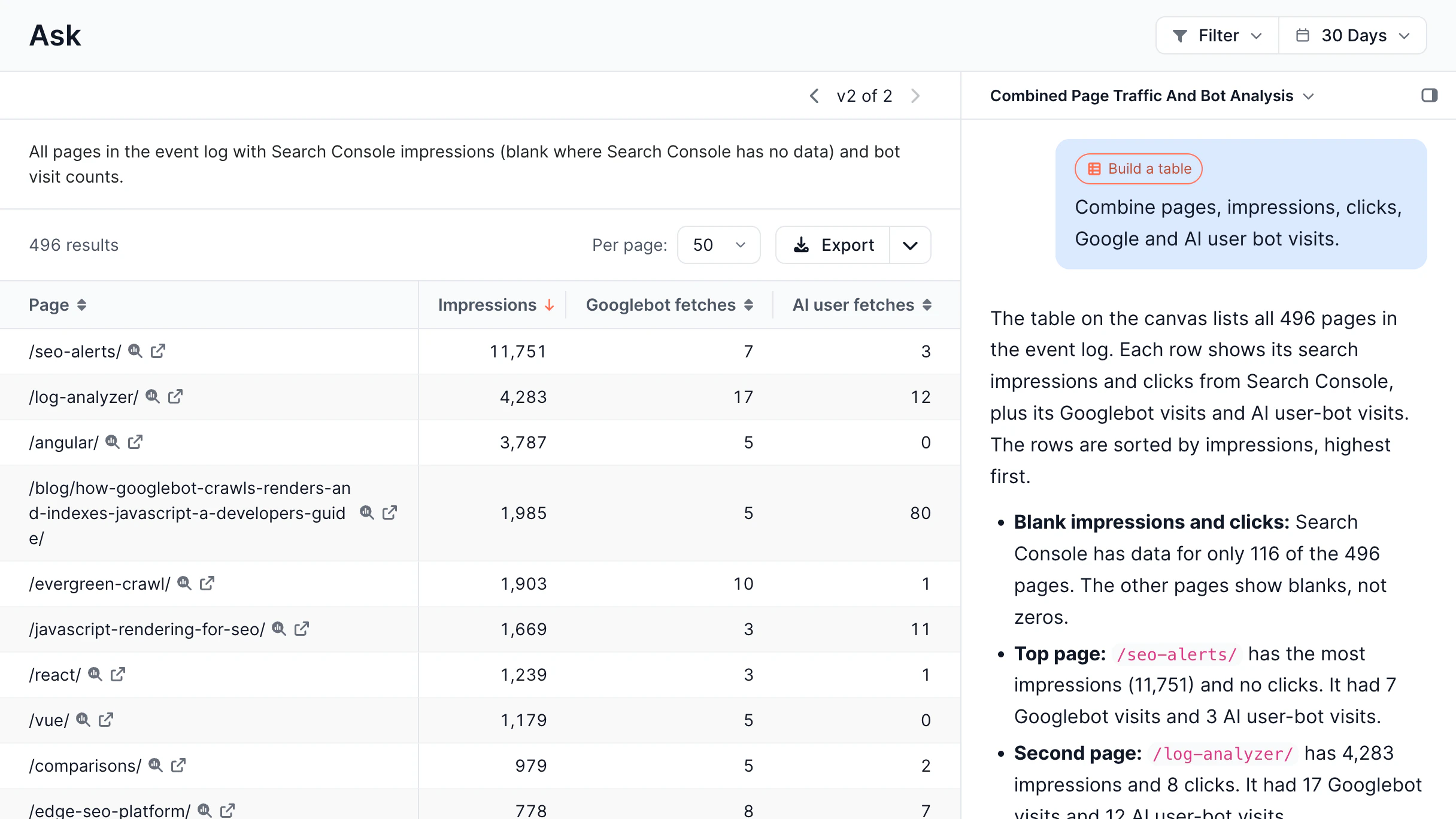
Chat that answers with sortable tables you can export to CSV or Google Sheets.
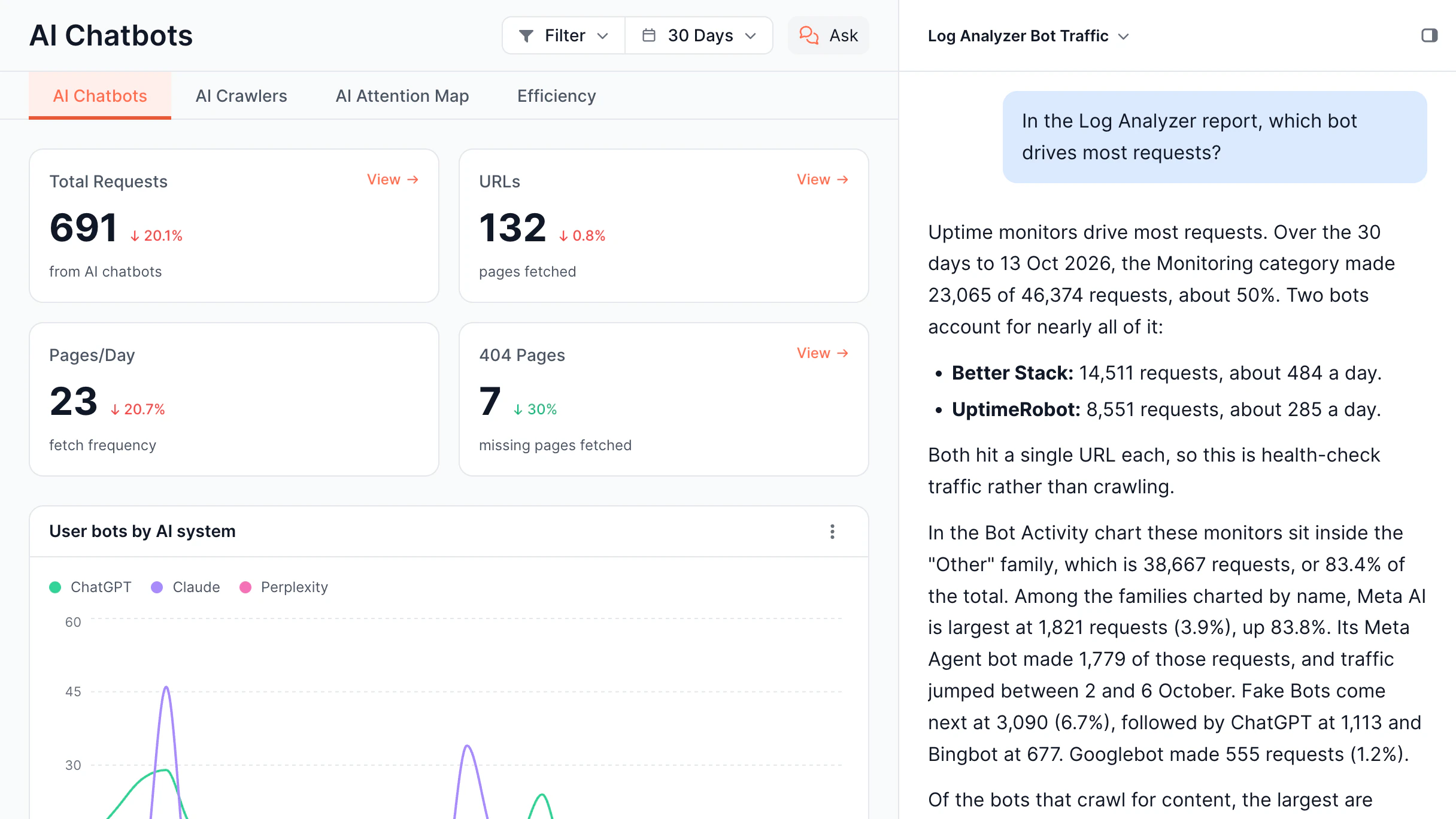
Chat panel next to any report that answers questions about its data.
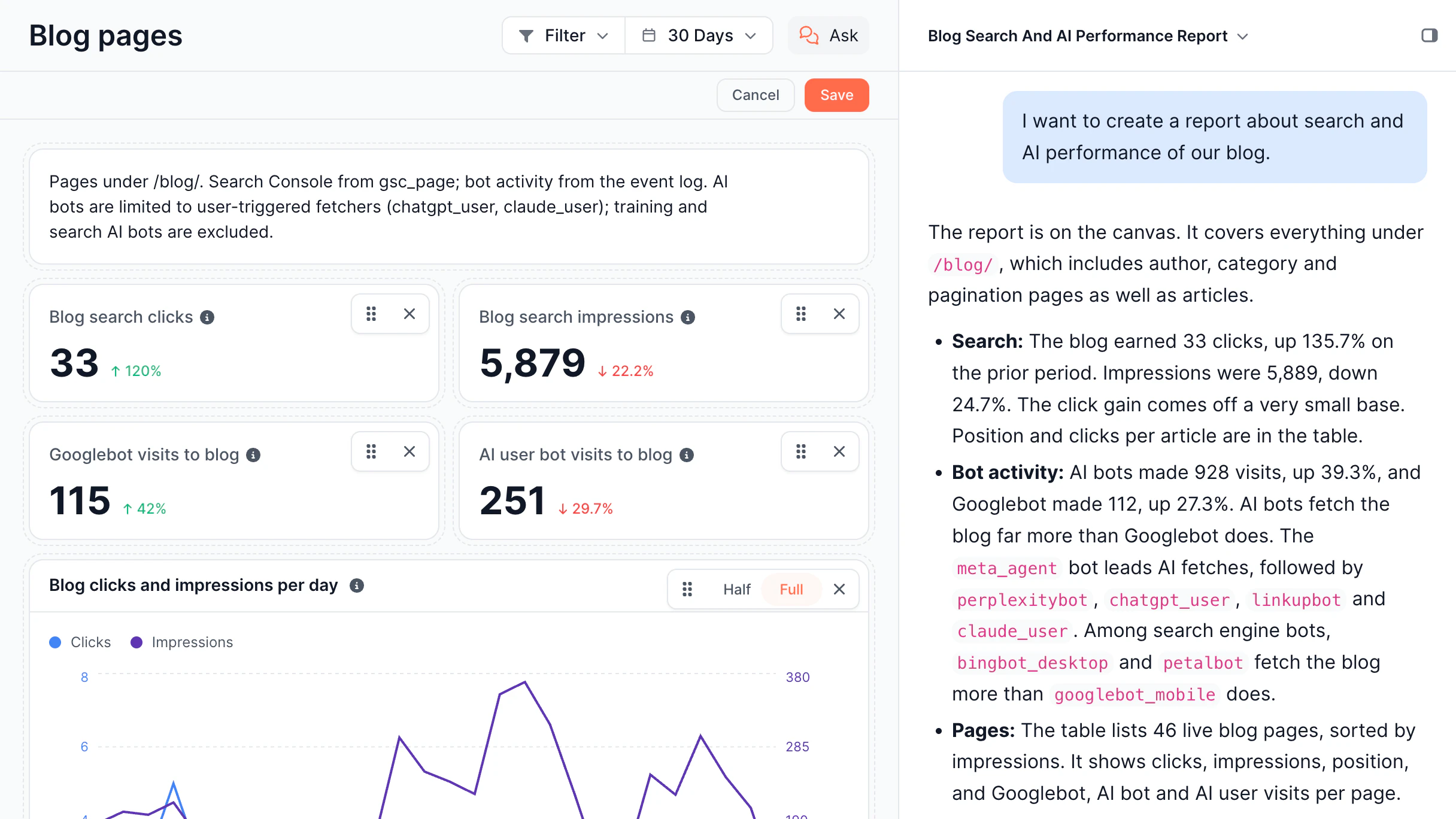
Custom reports built from a chat request, with widgets you can edit and save.
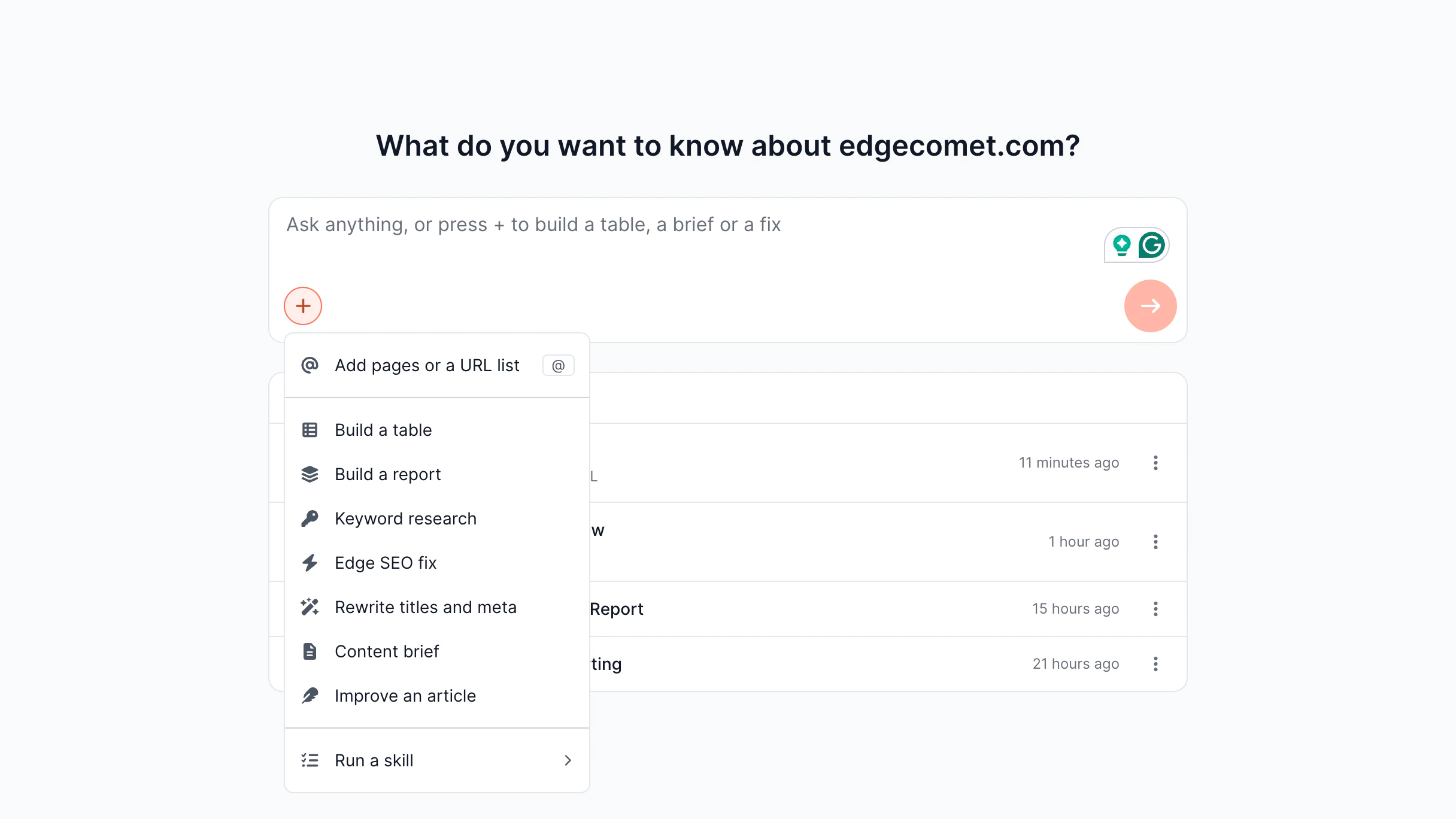
Skills menu: keyword research, content briefs, article and meta rewrites.
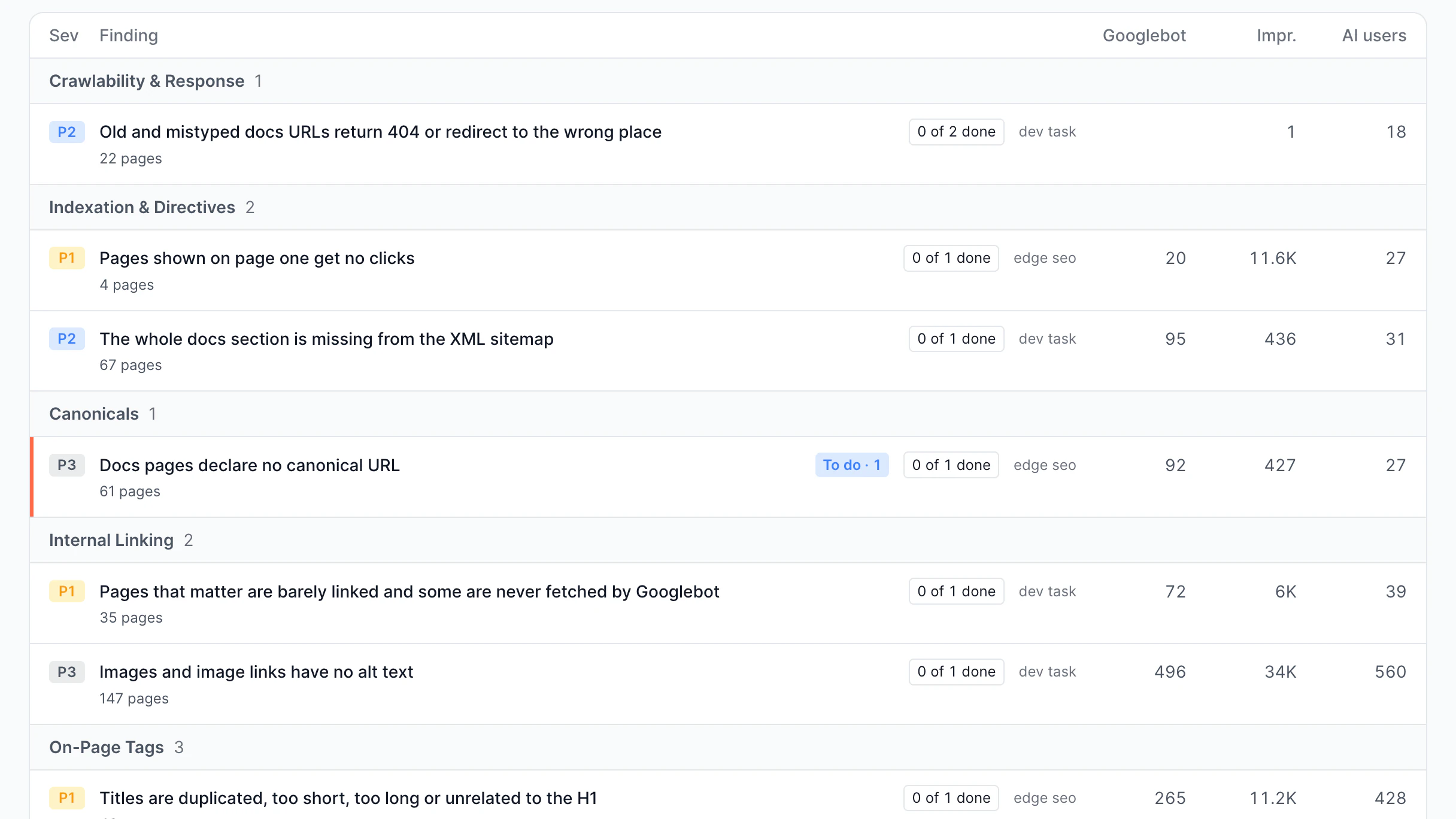
Findings by type and severity, with traffic per issue.
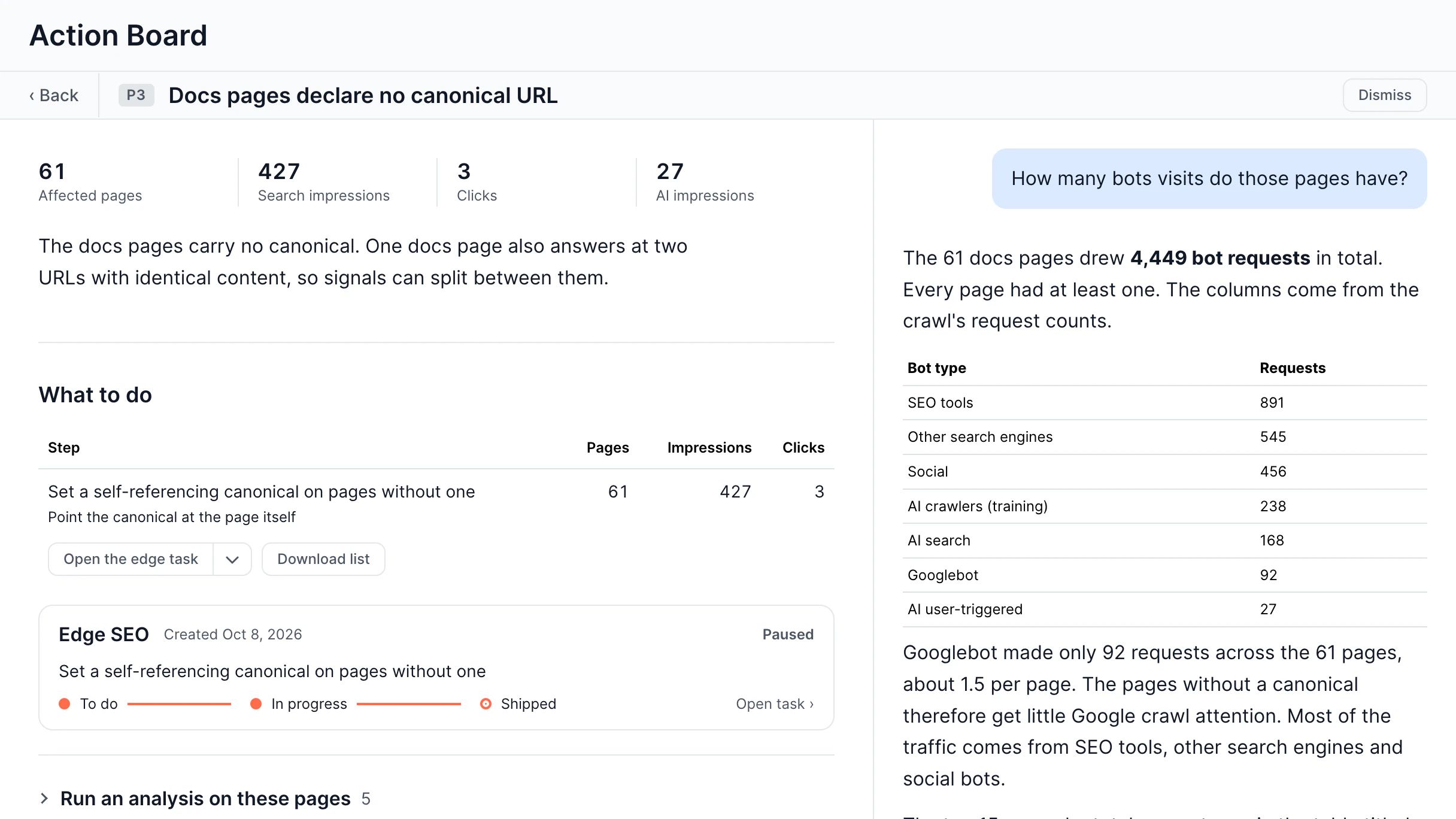
One finding: affected pages, fix steps, task status.
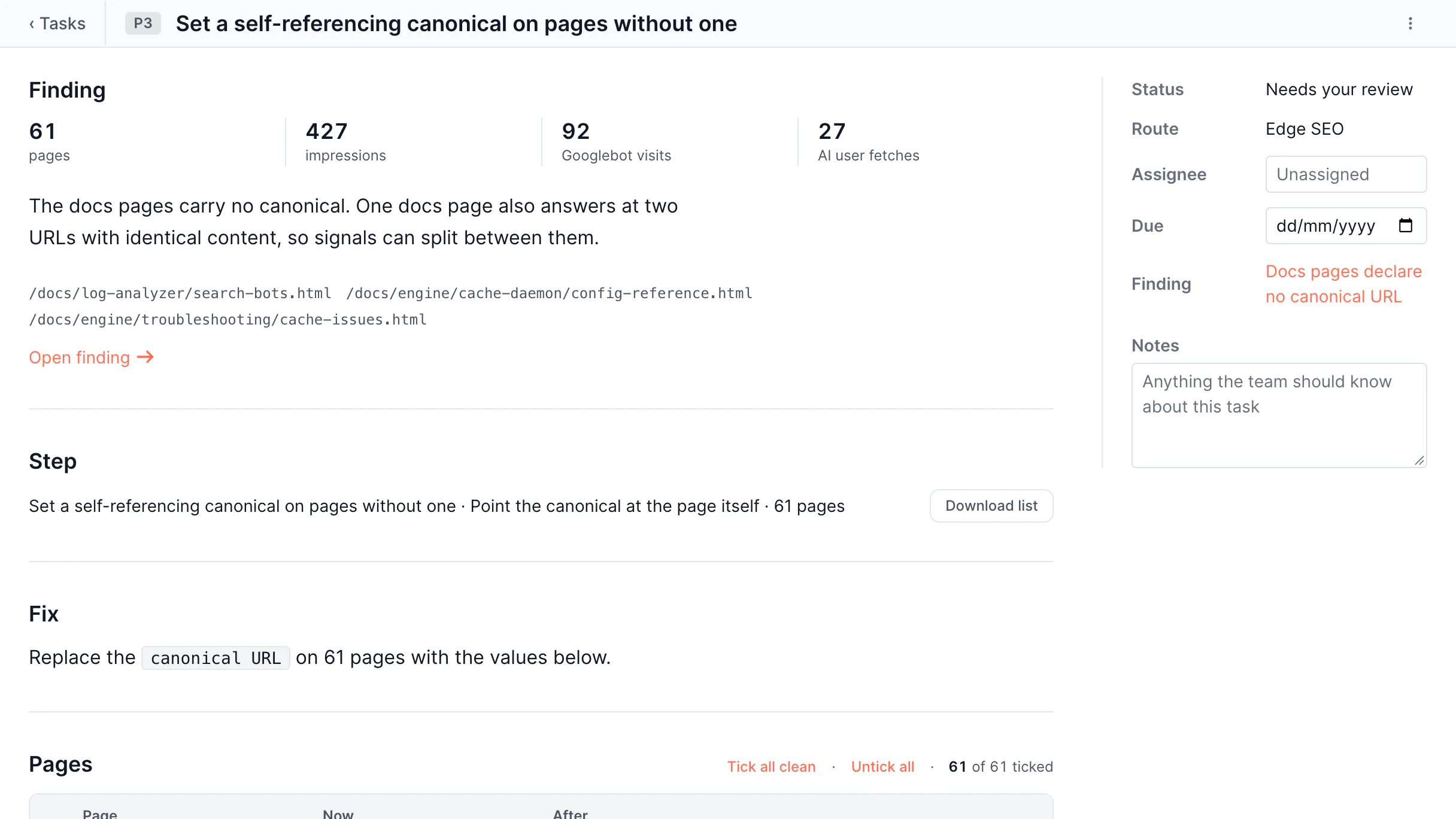
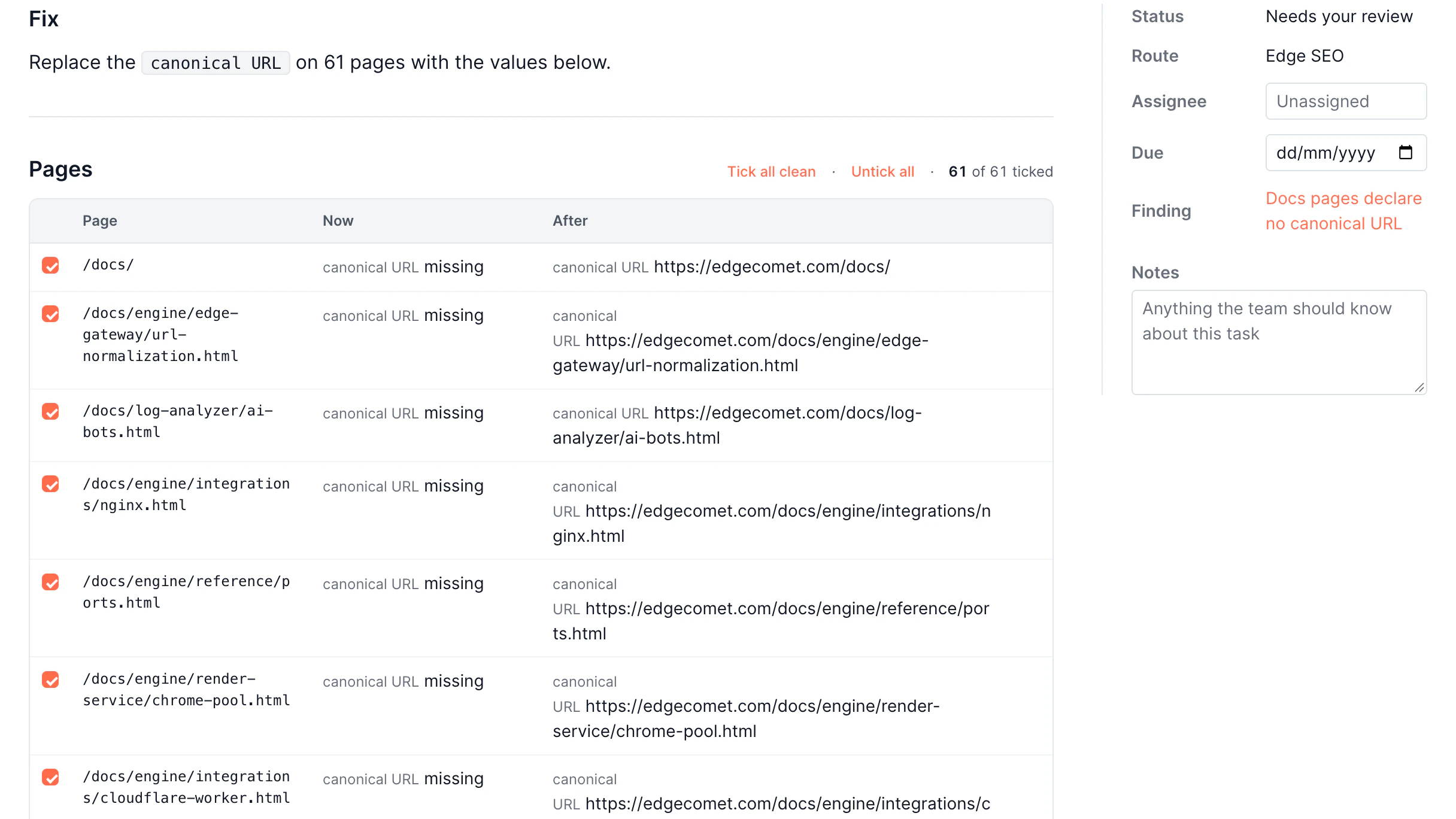
Task page with status, assignee, due date, and notes.
Before and after values per page, with edge deploy.
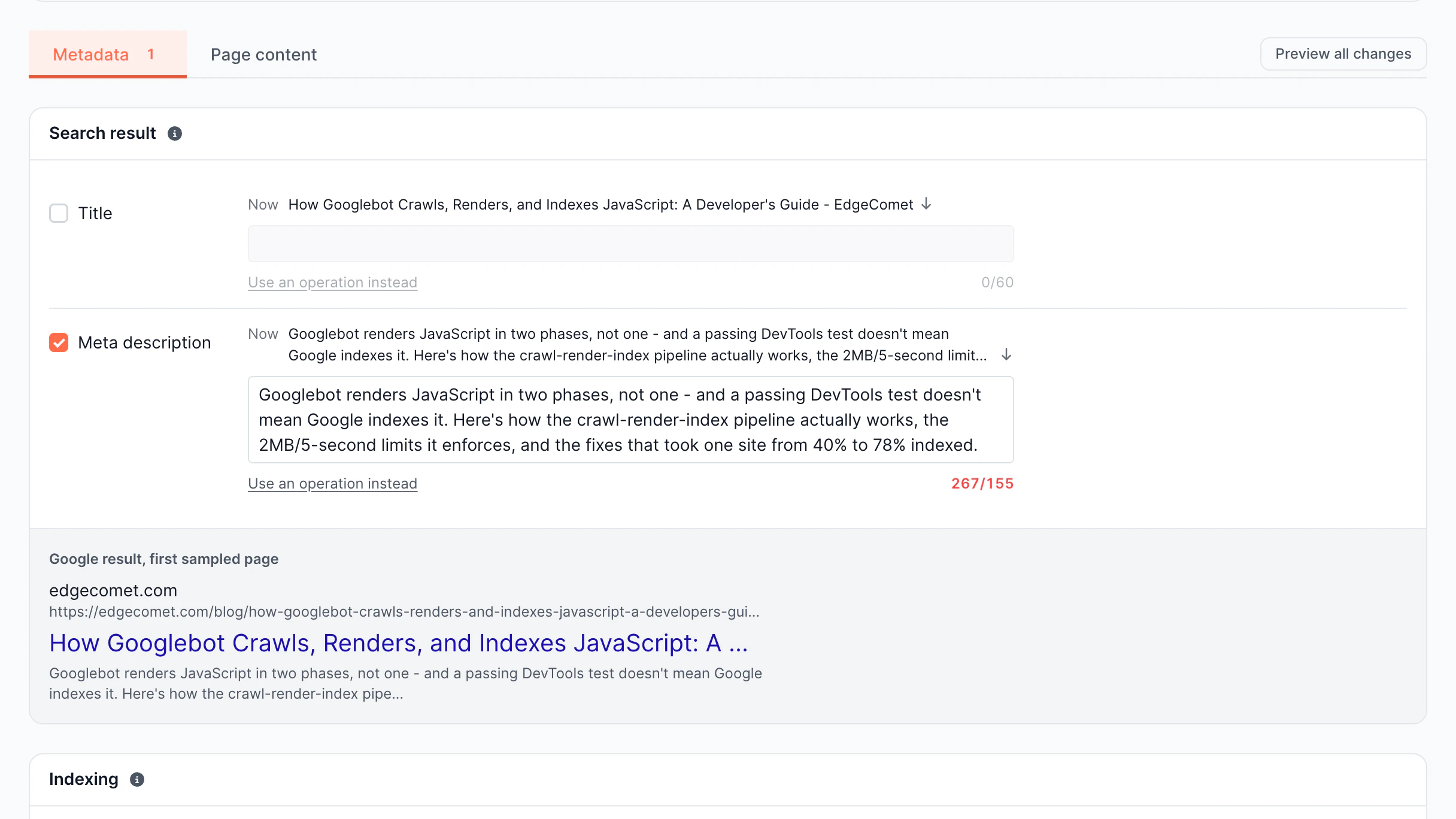
Title and meta overrides with a Google result preview.
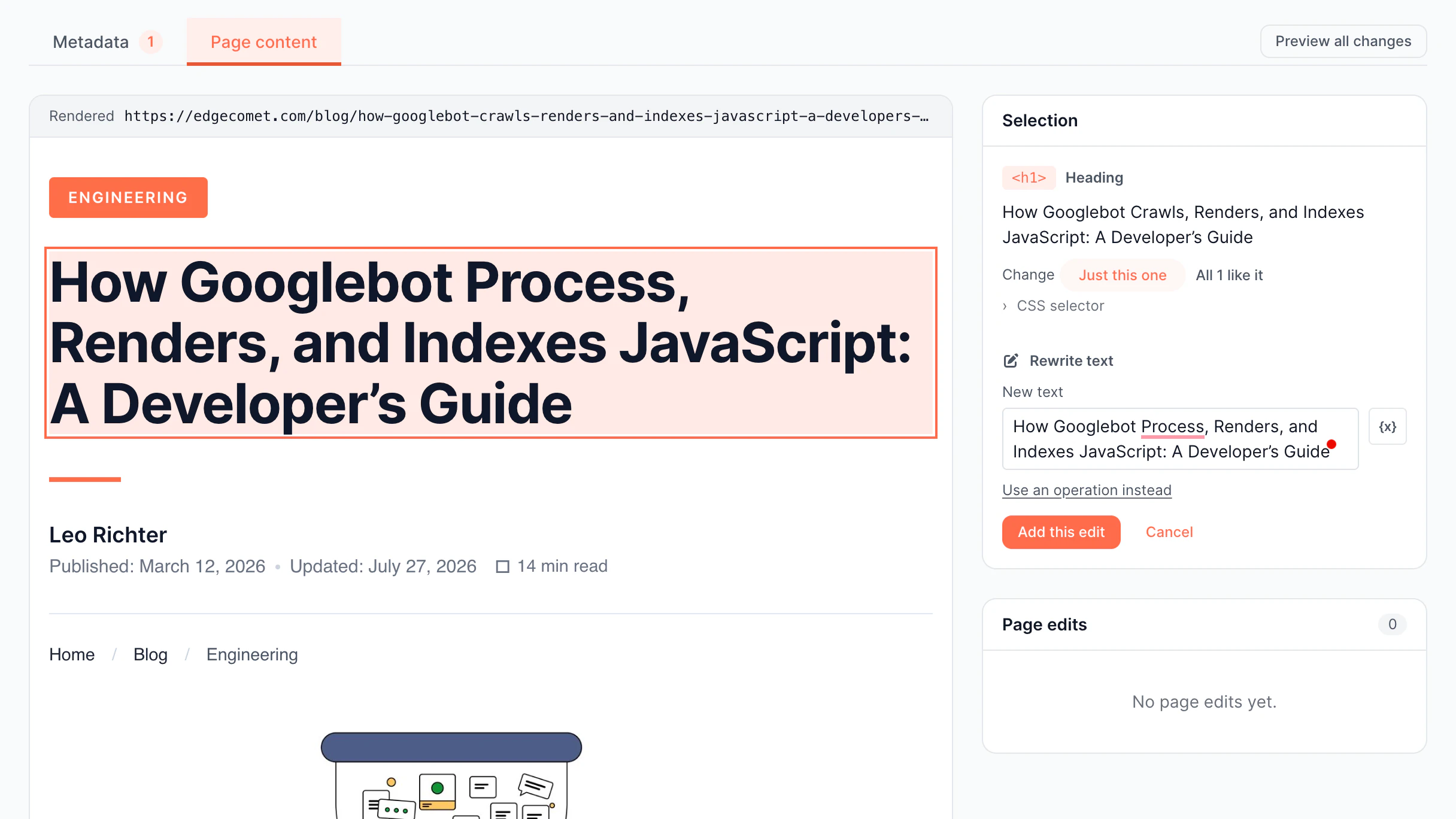
Select an element on the rendered page and edit its text.
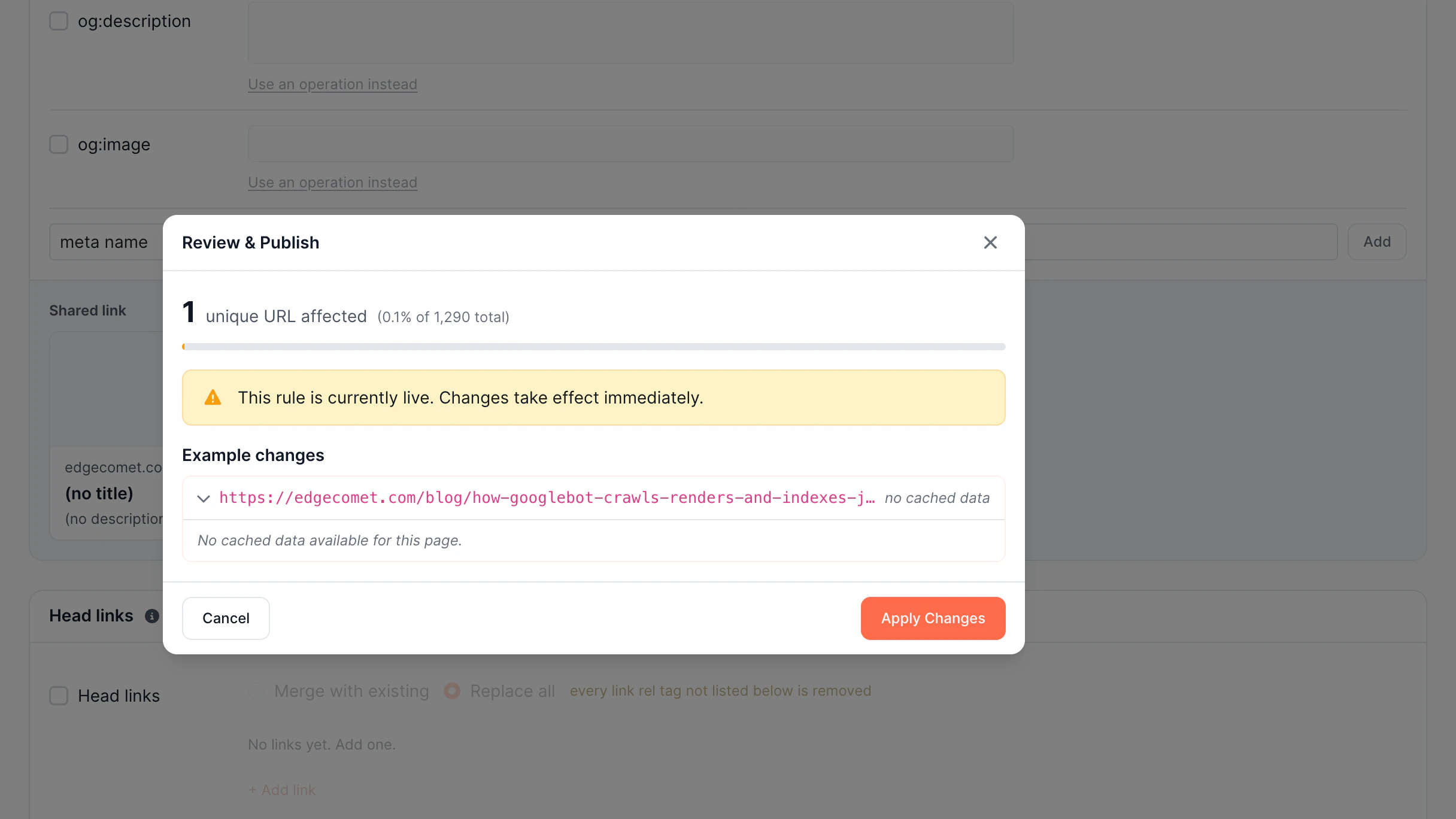
Review dialog with the number of URLs a rule changes.
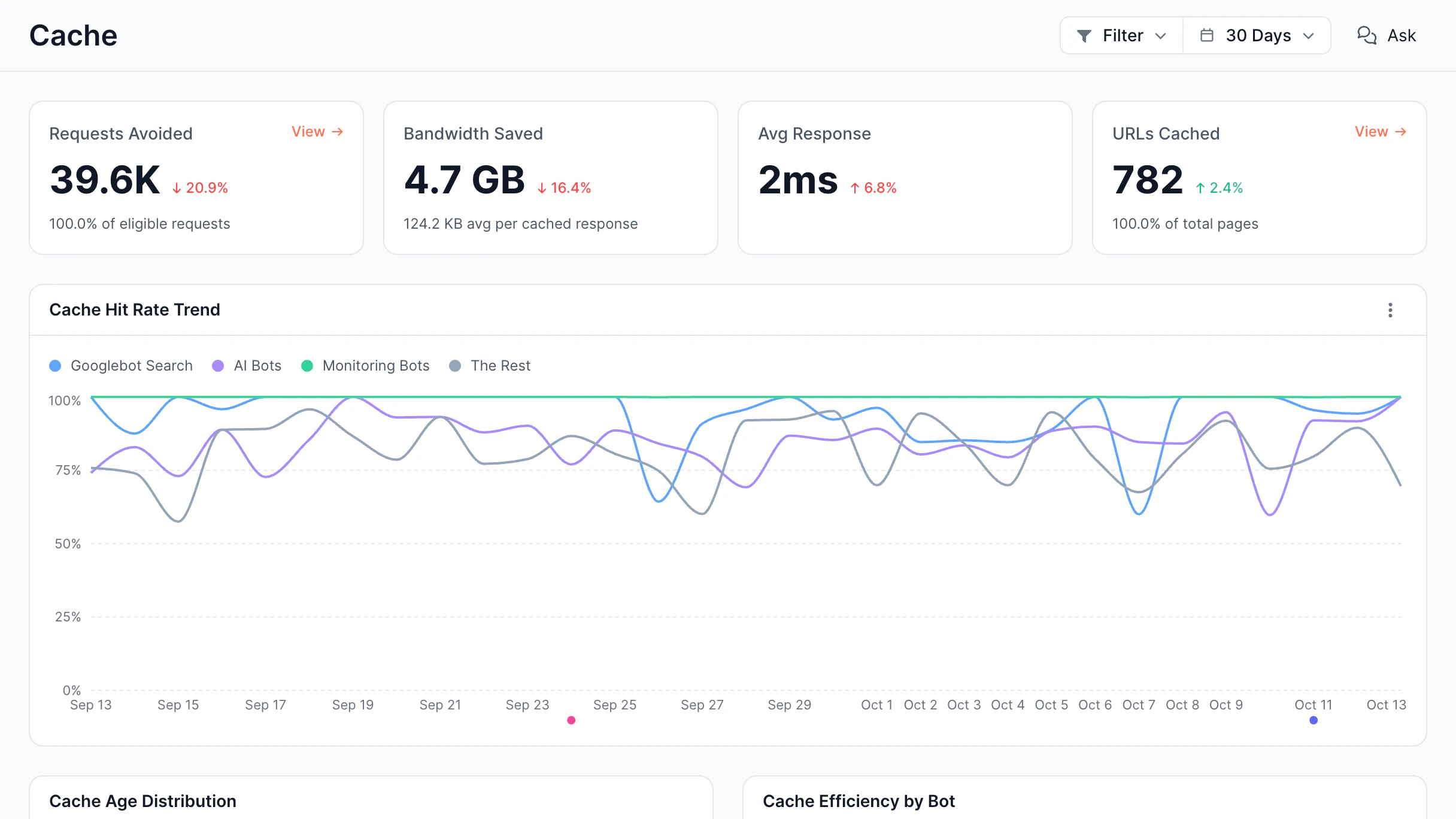
Hit rate, bandwidth saved, and cache age.
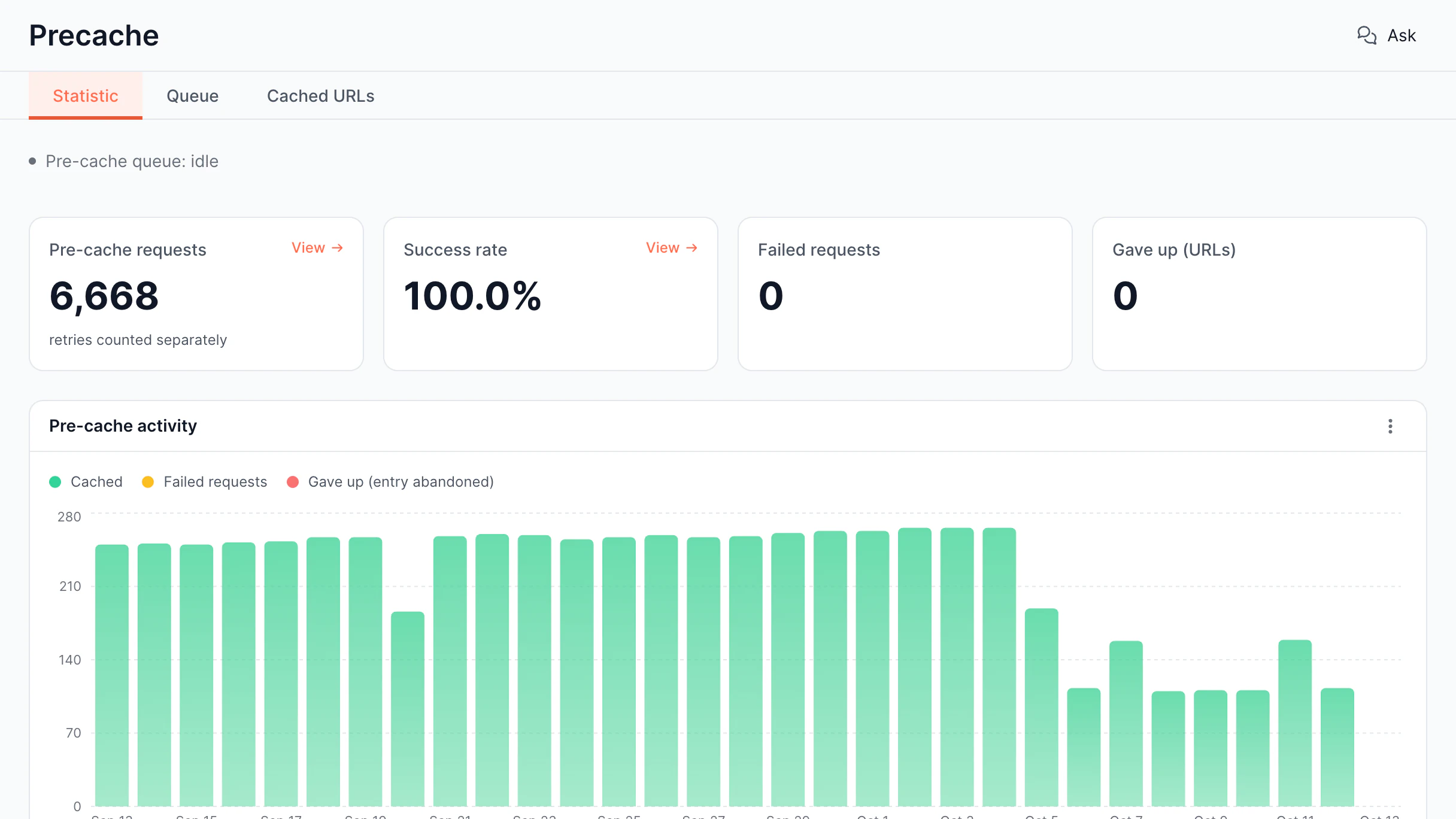
Pre-cache queue, success rate, and failures.
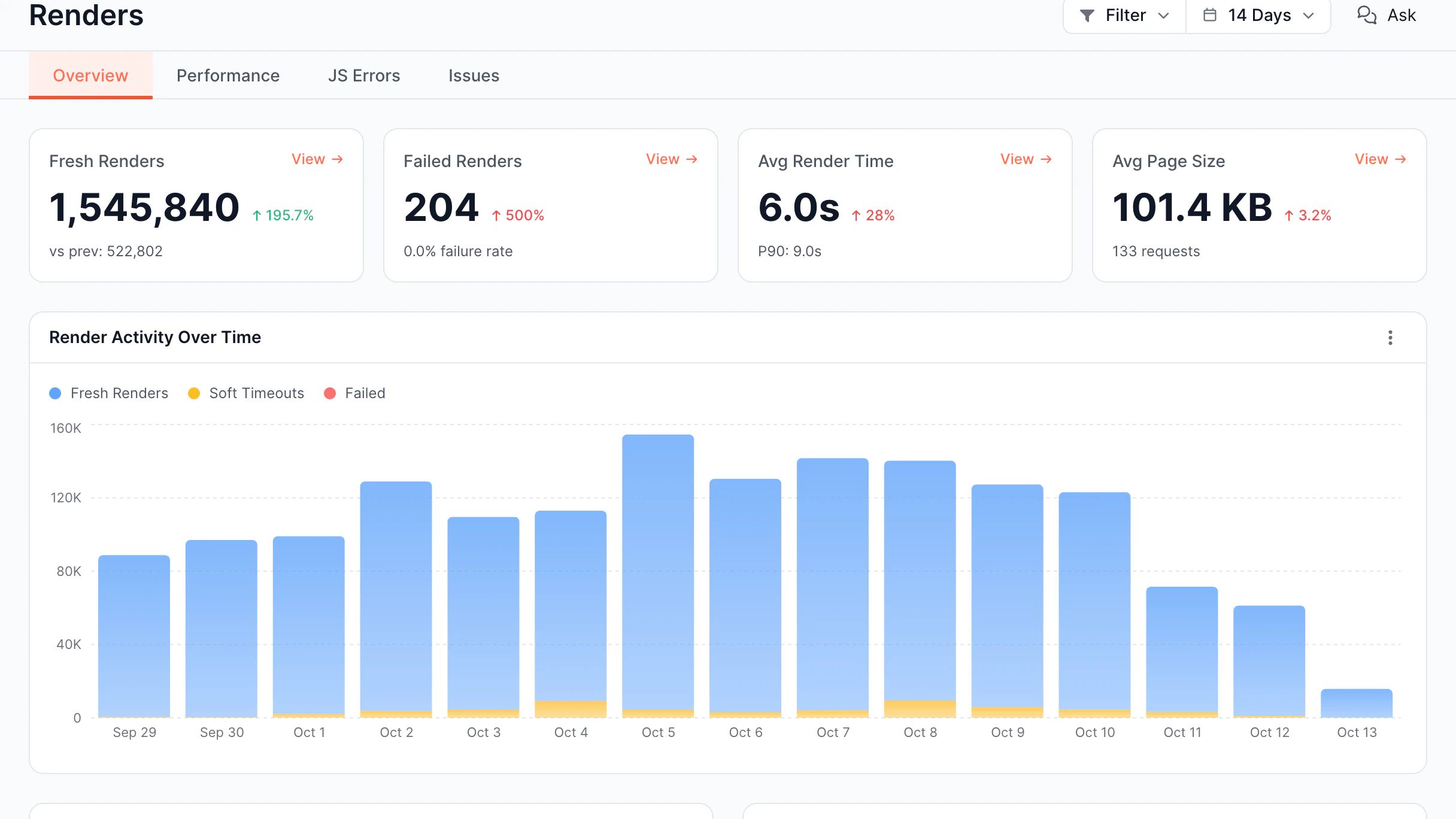
Renders per day, failures, and render time.
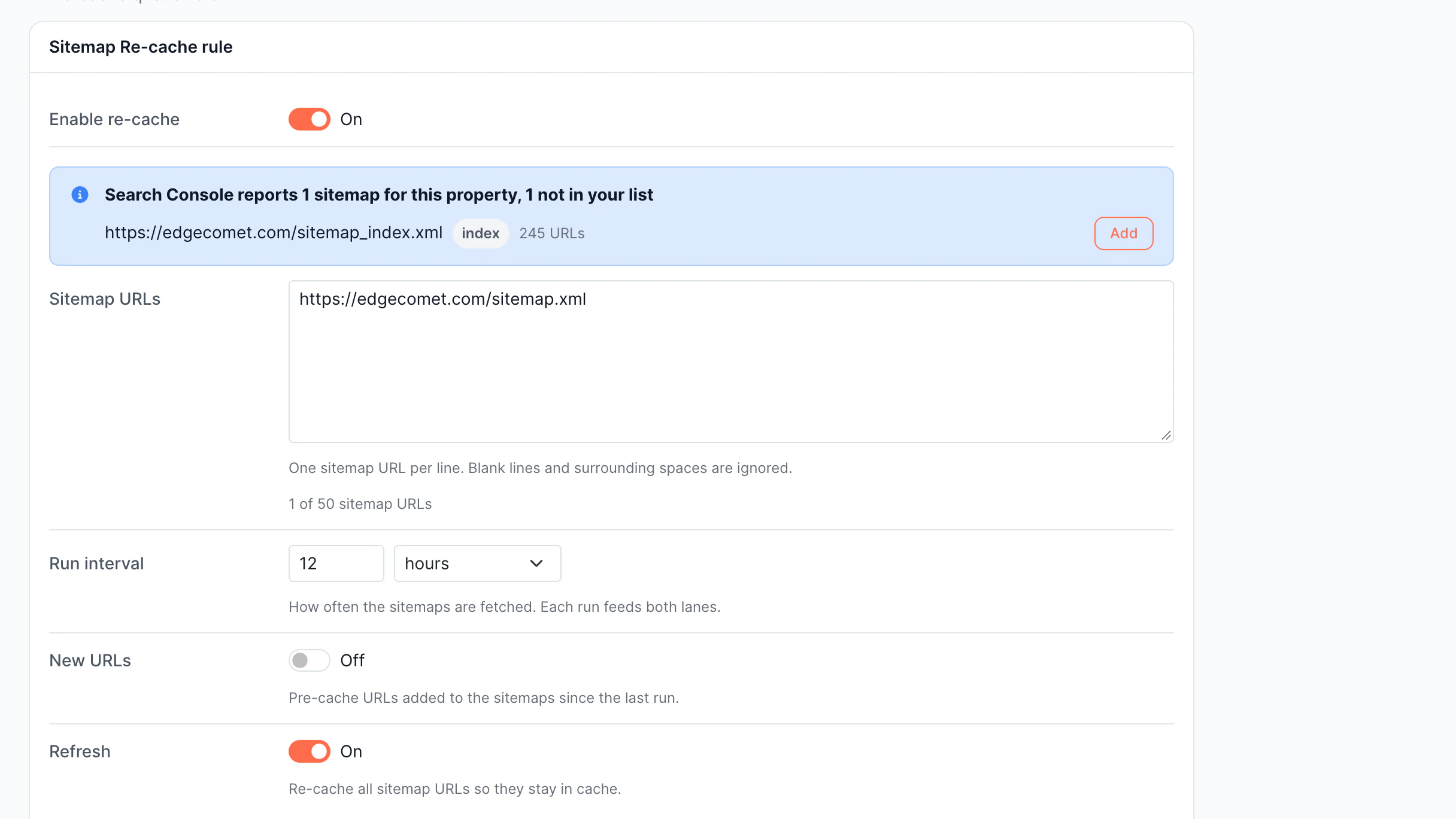
Re-cache rule for sitemap URLs on a schedule.
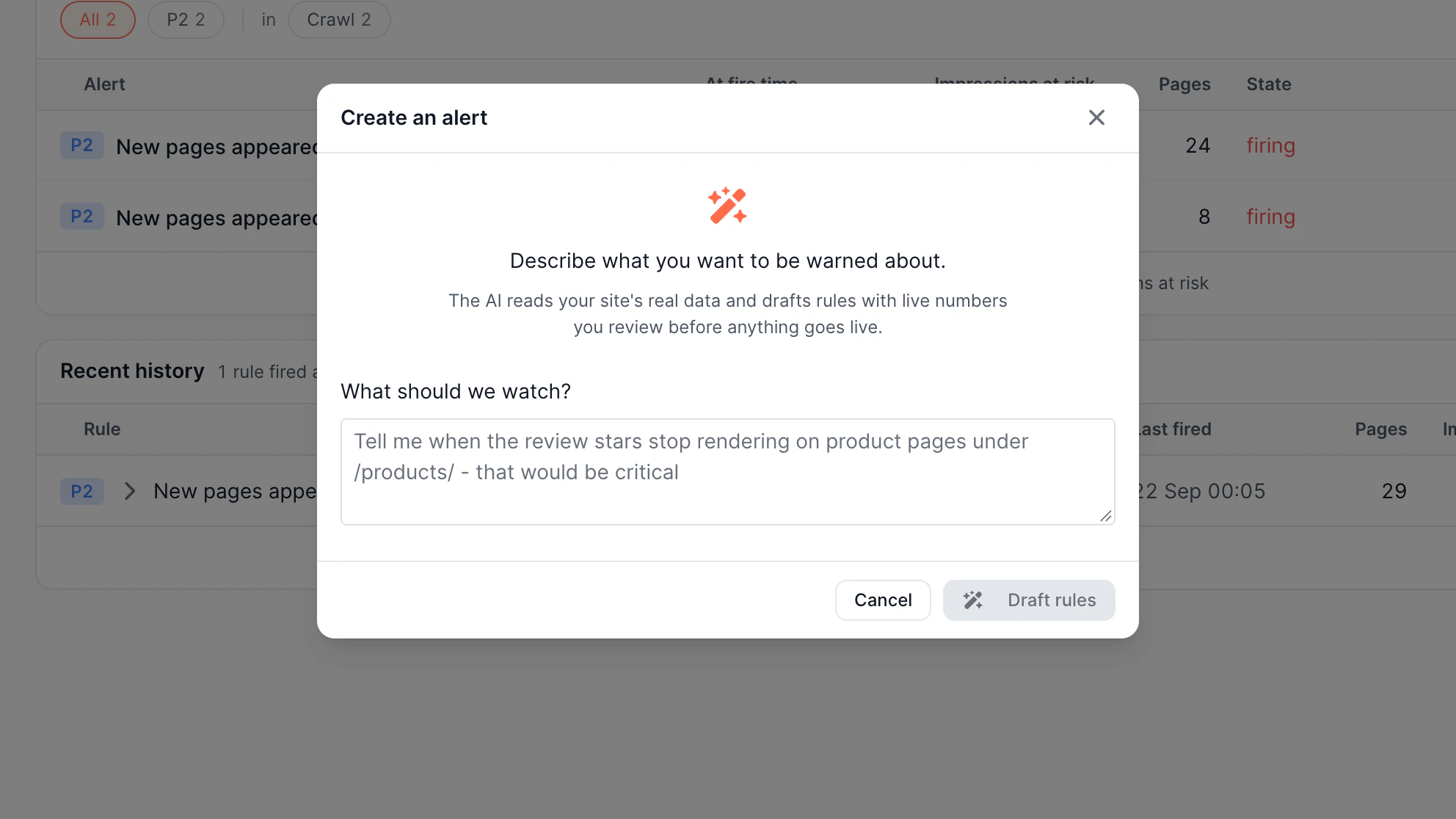
Create an alert by describing it in plain text.
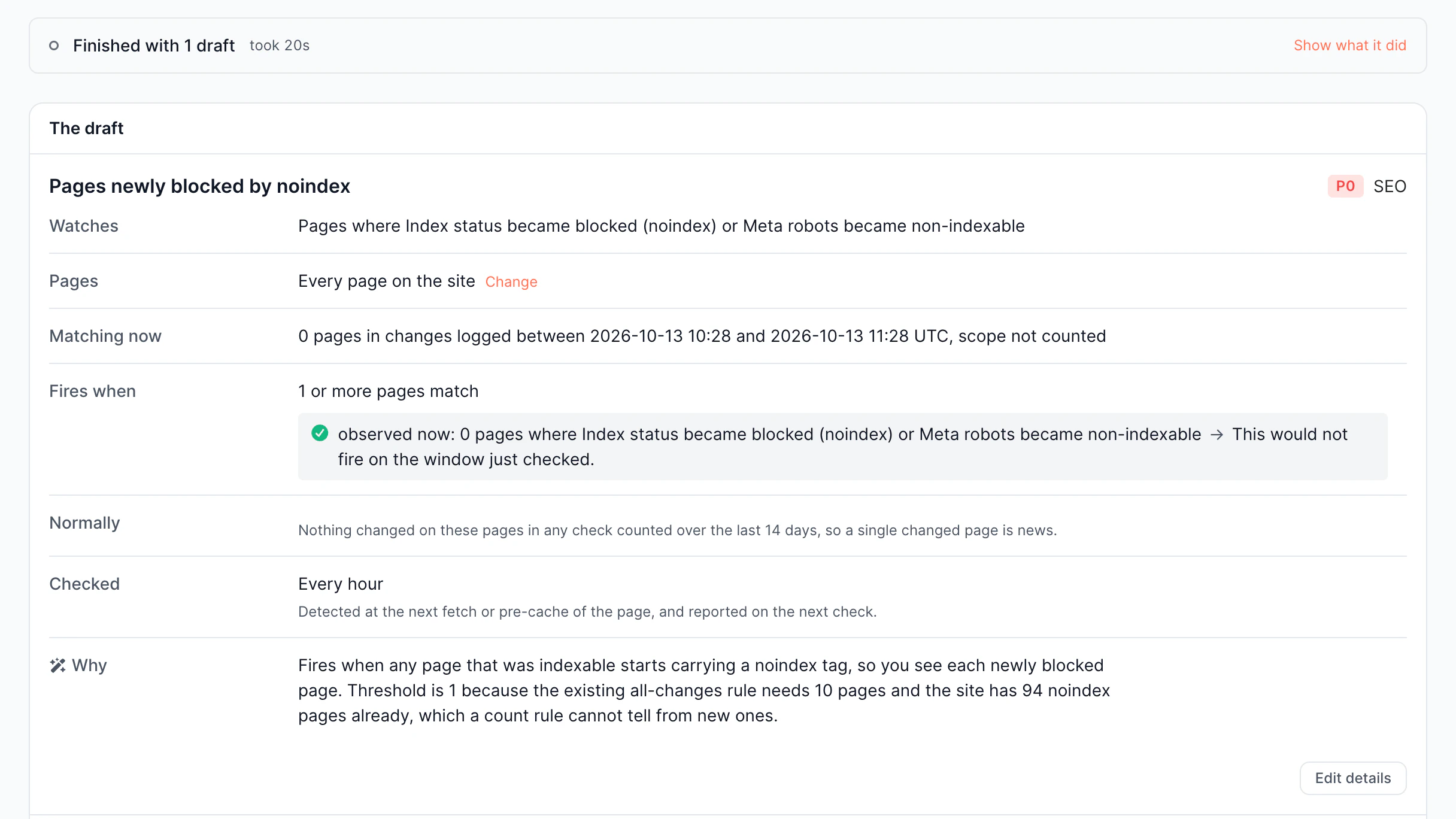
AI-drafted rule: what it watches and when it fires.
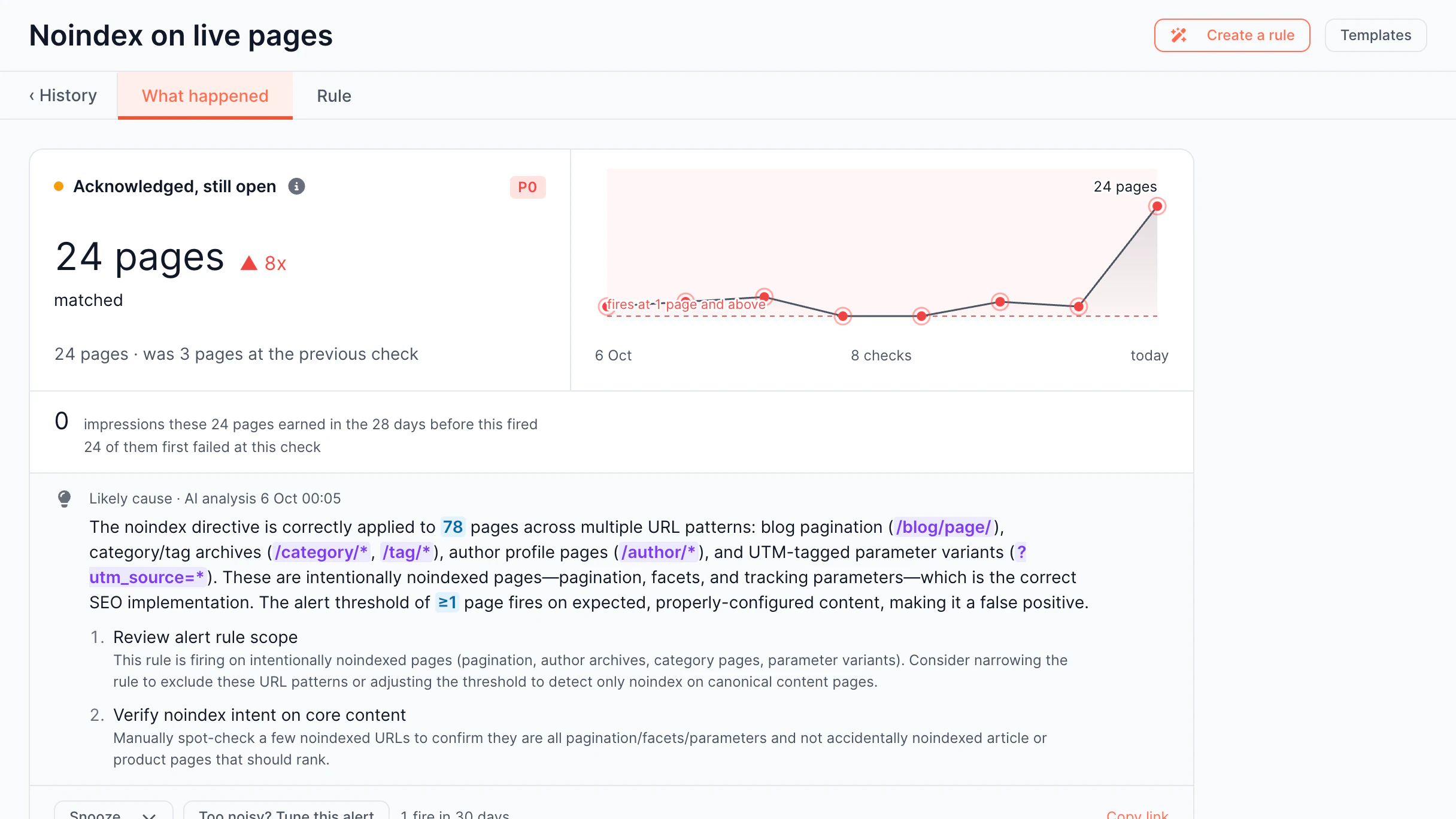
Incident page with matched pages and AI cause analysis.
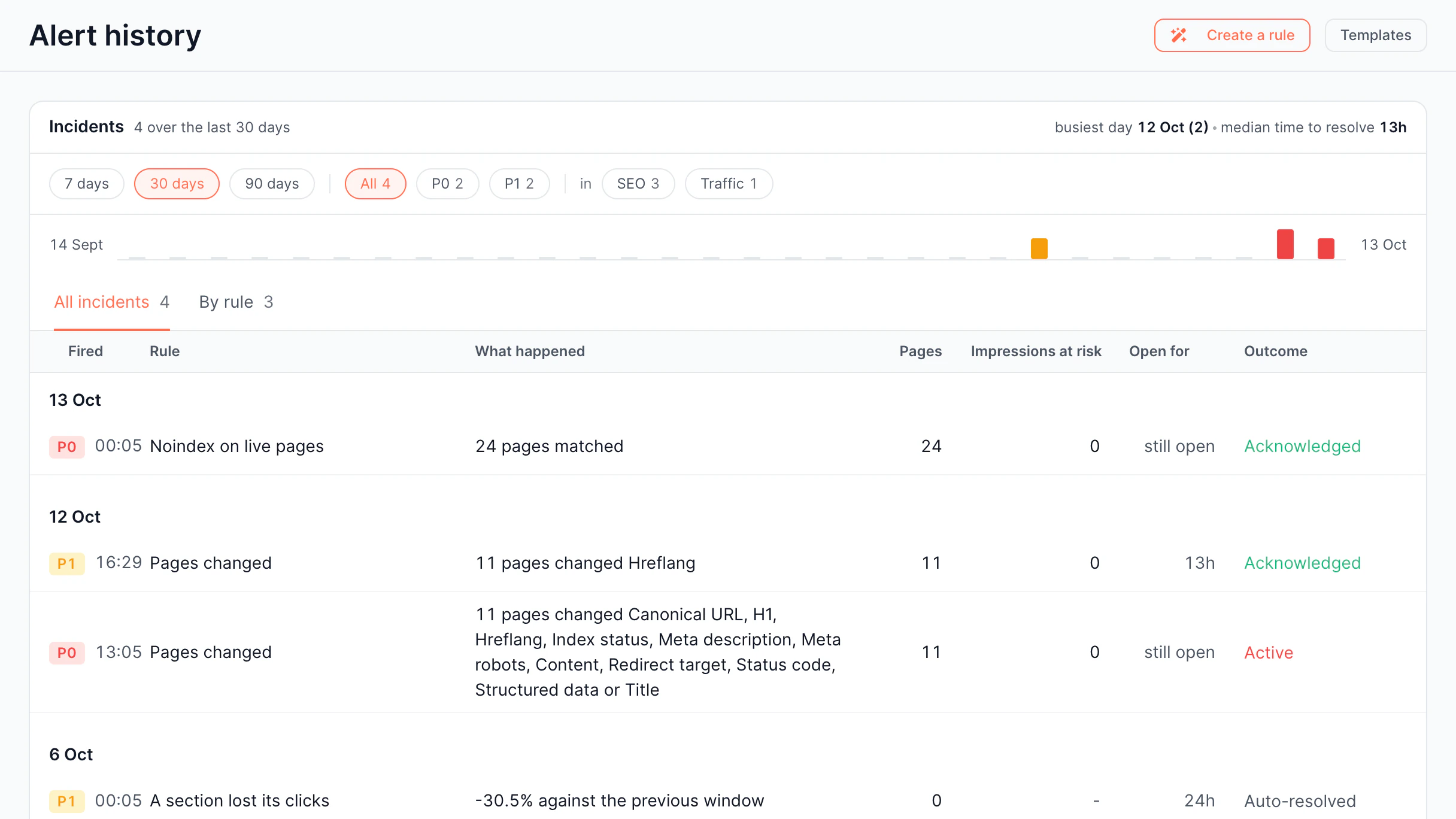
Incident log with pages, impressions at risk, and outcome.
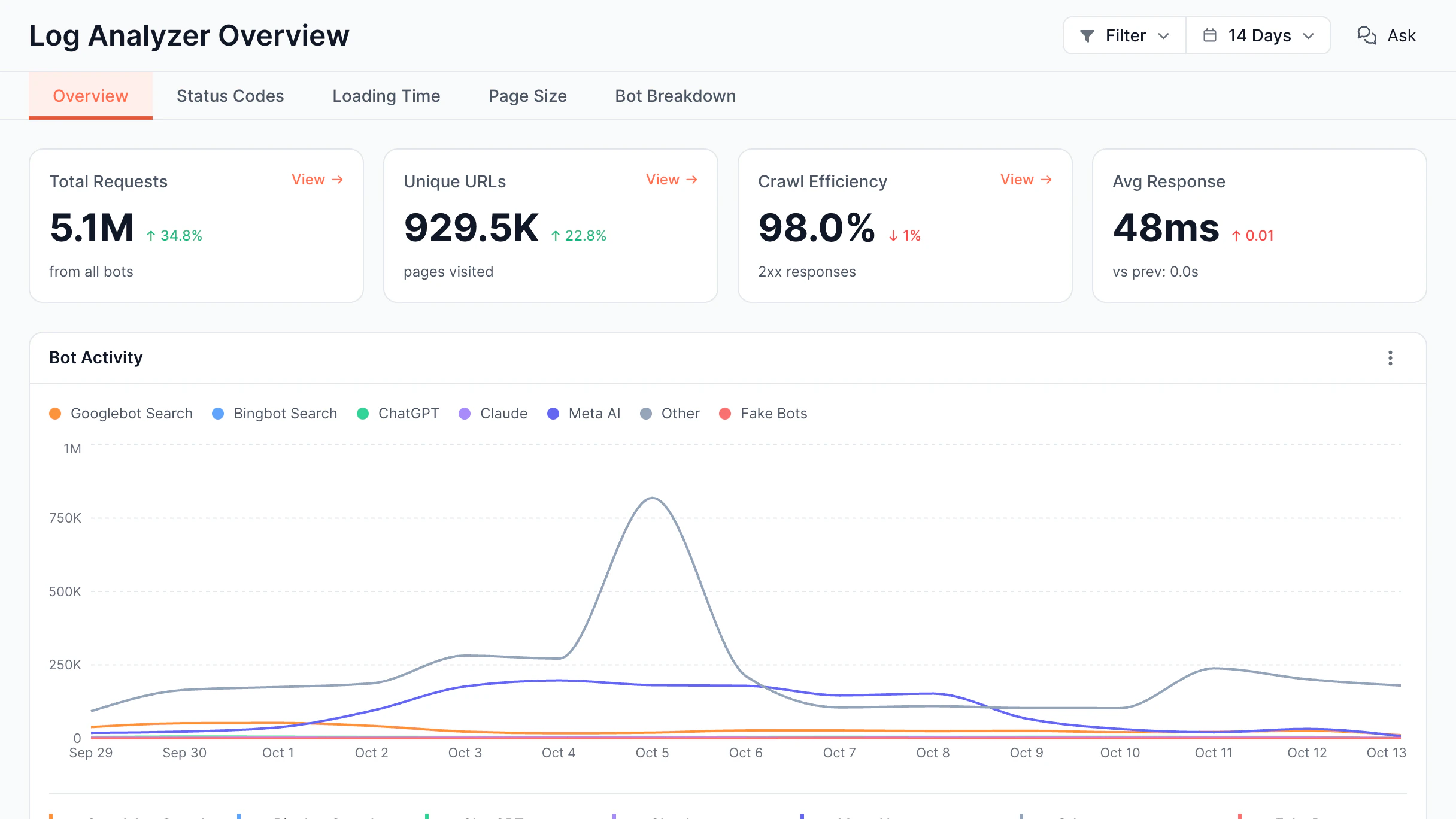
Requests per bot family, with status and response time.
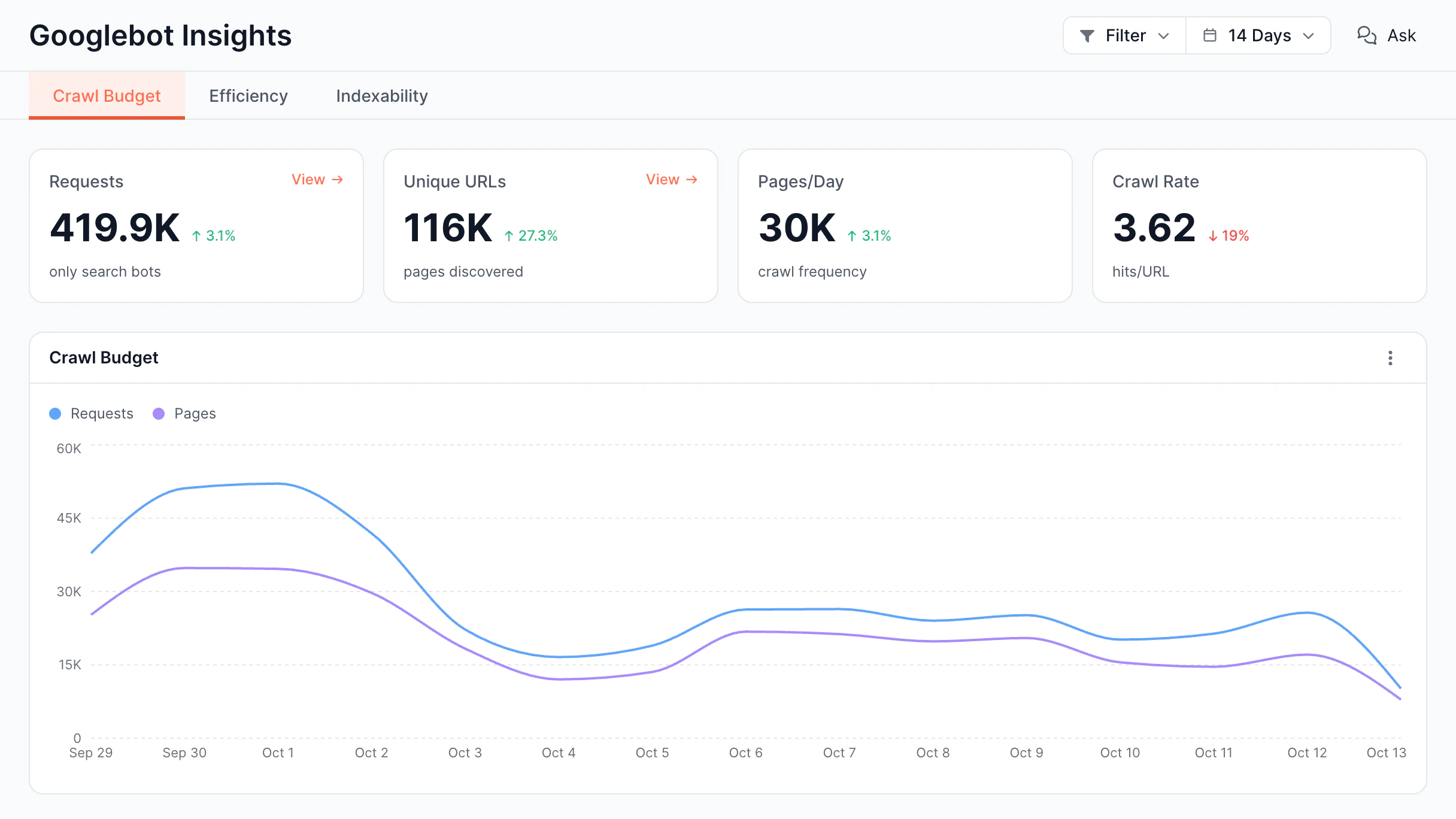
Googlebot requests, unique URLs, and crawl rate per day.
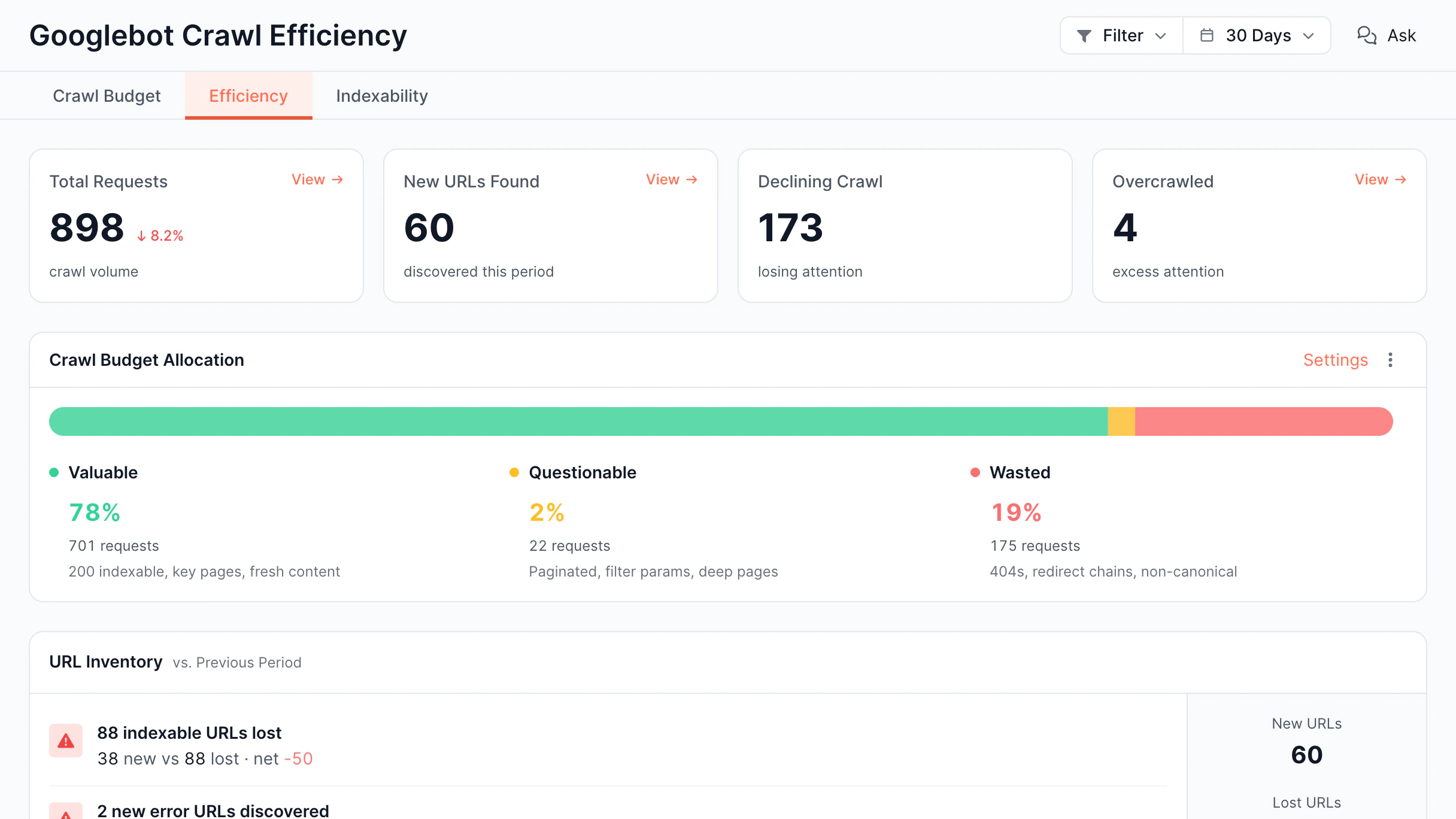
Googlebot crawl split into valuable, questionable, wasted.
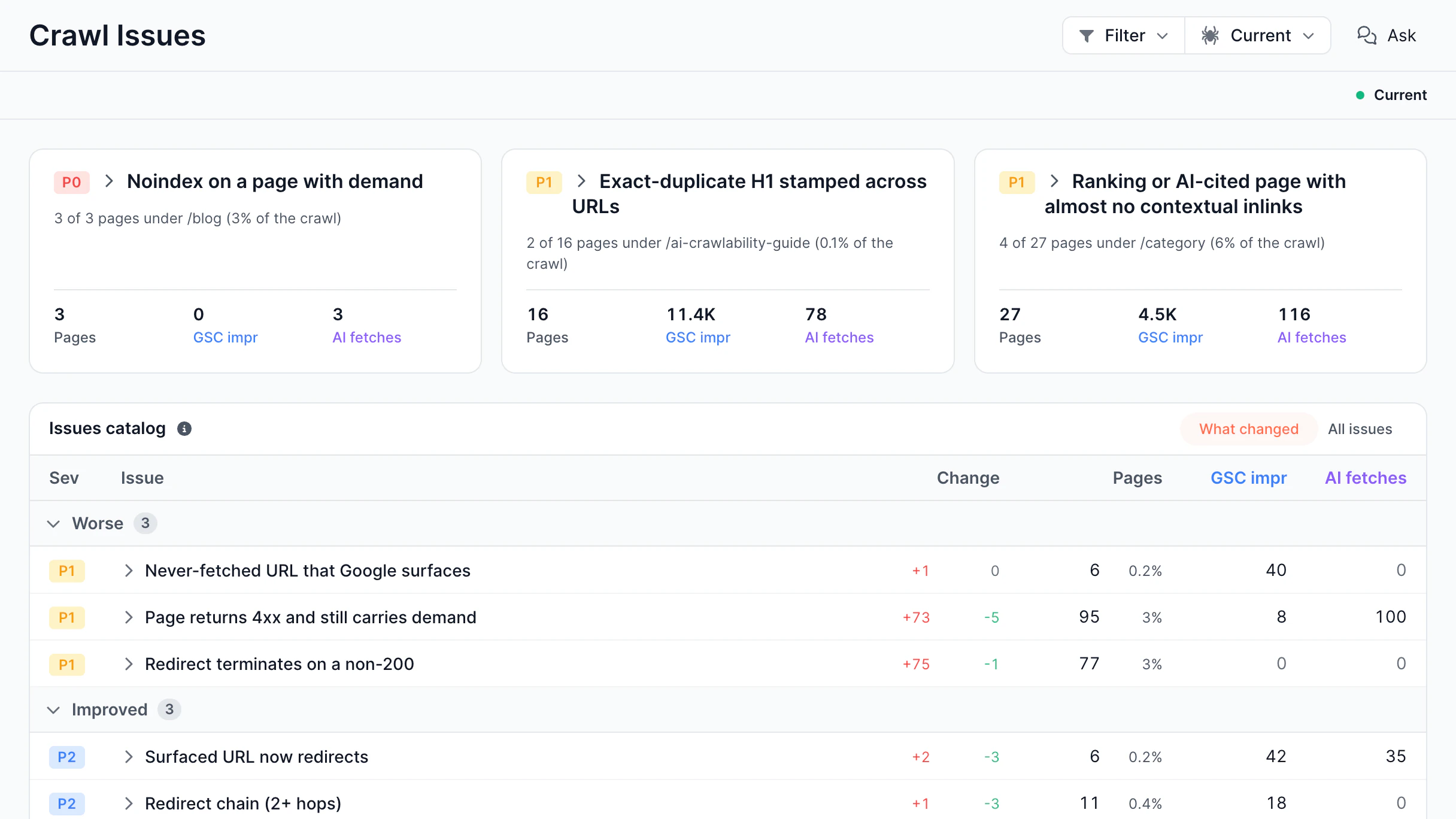
Audit issues that changed since the last crawl.
Indexable, noindex, canonicalized, and redirected pages.
Duplicate, missing, and too-long titles.
Internal links per page, content vs template.
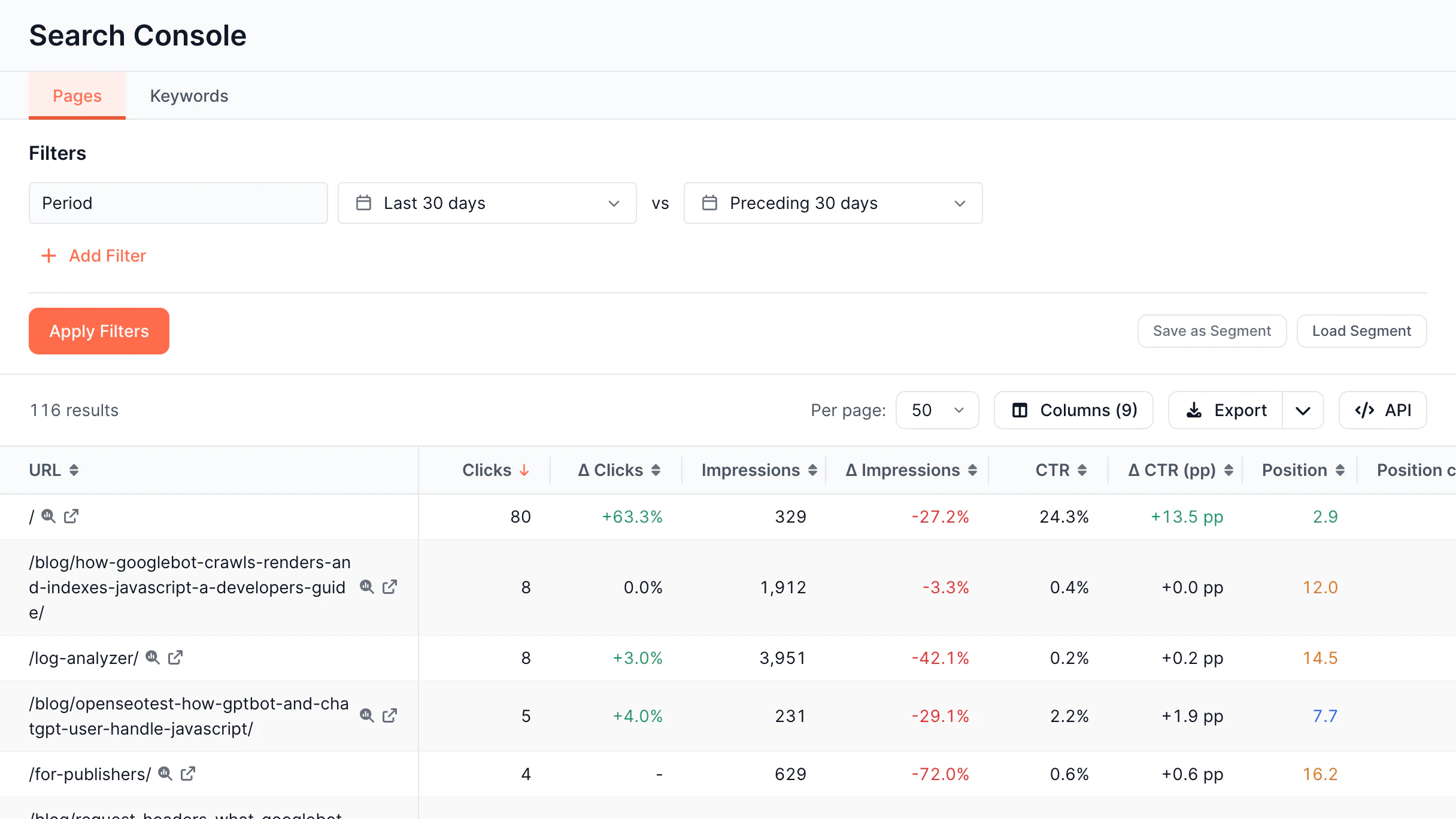
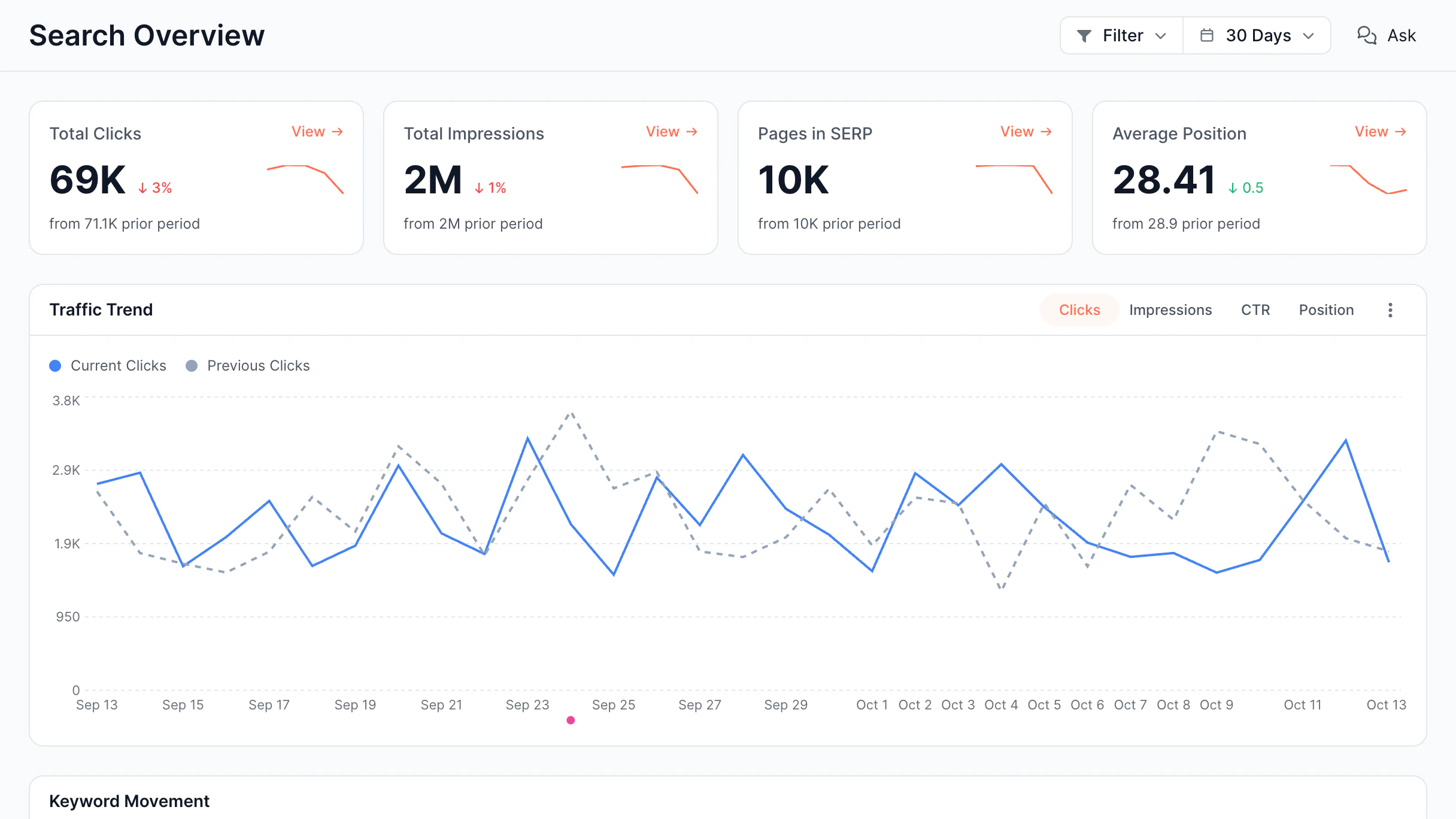
Search Console clicks, impressions, and position vs the previous period.
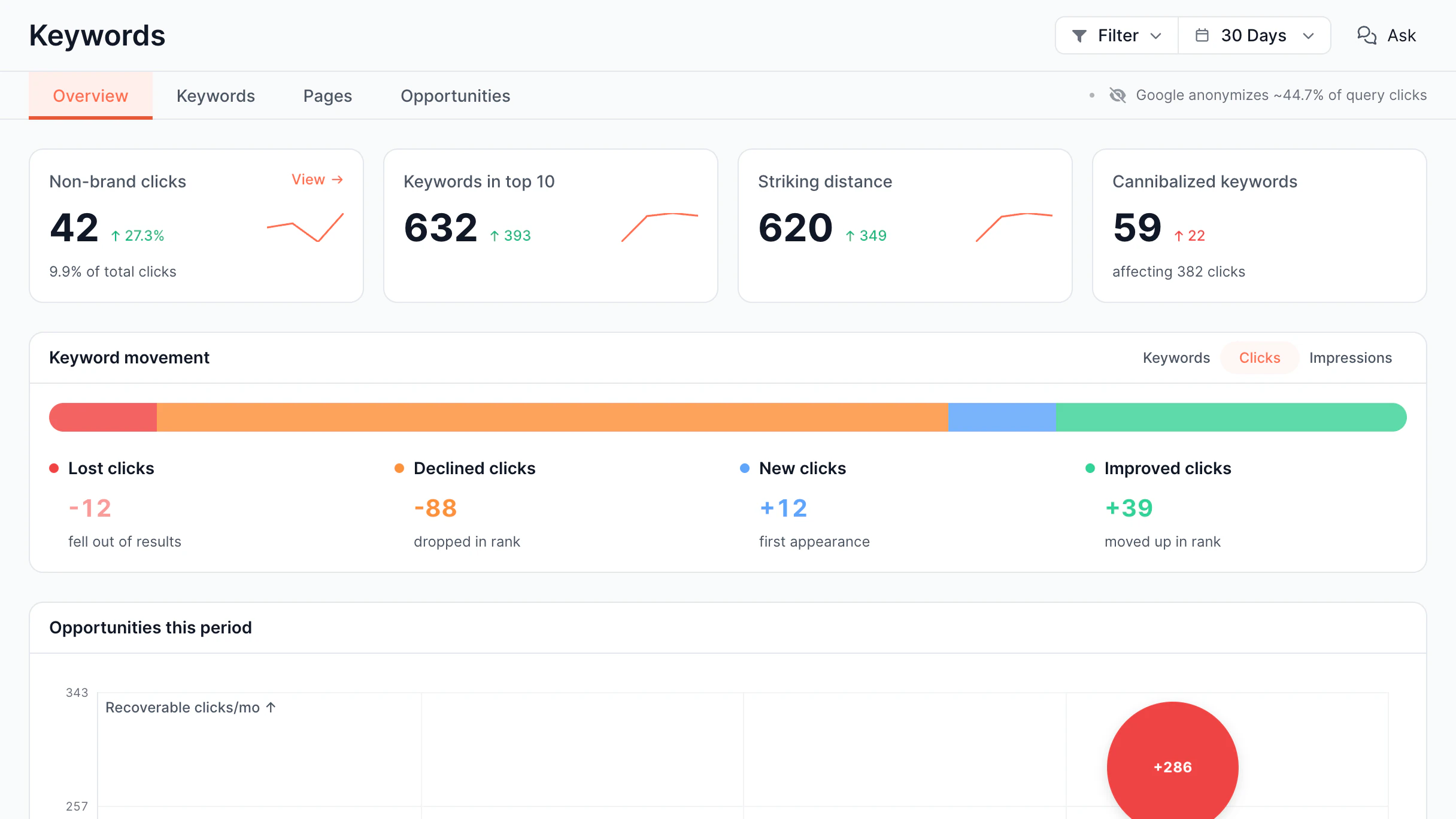
Keyword movement, top-10 counts, and striking-distance keywords.
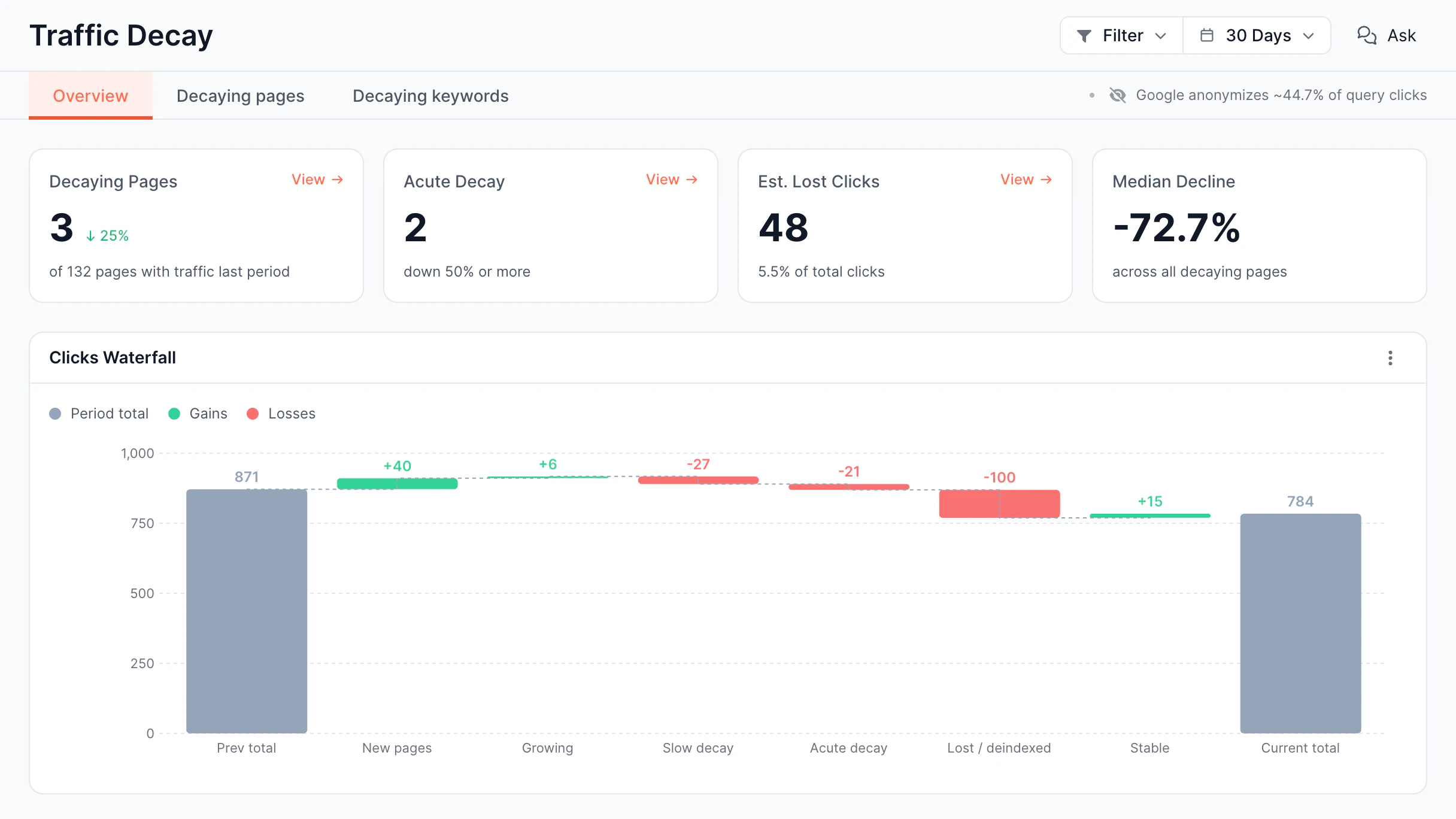
Pages losing clicks, split into slow decay, acute decay, and deindexed.
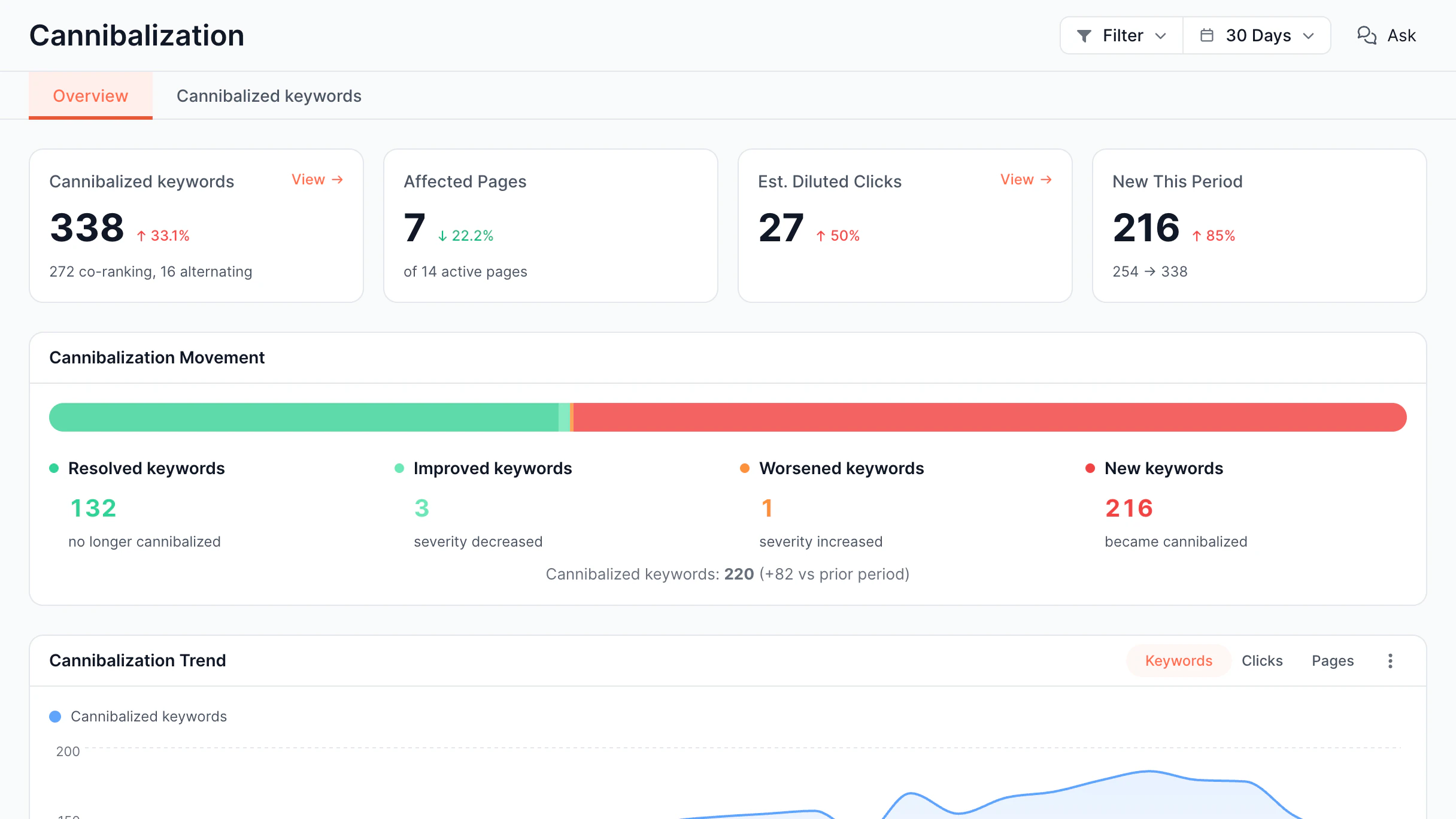
Keywords where several of your pages rank, and how that changed.
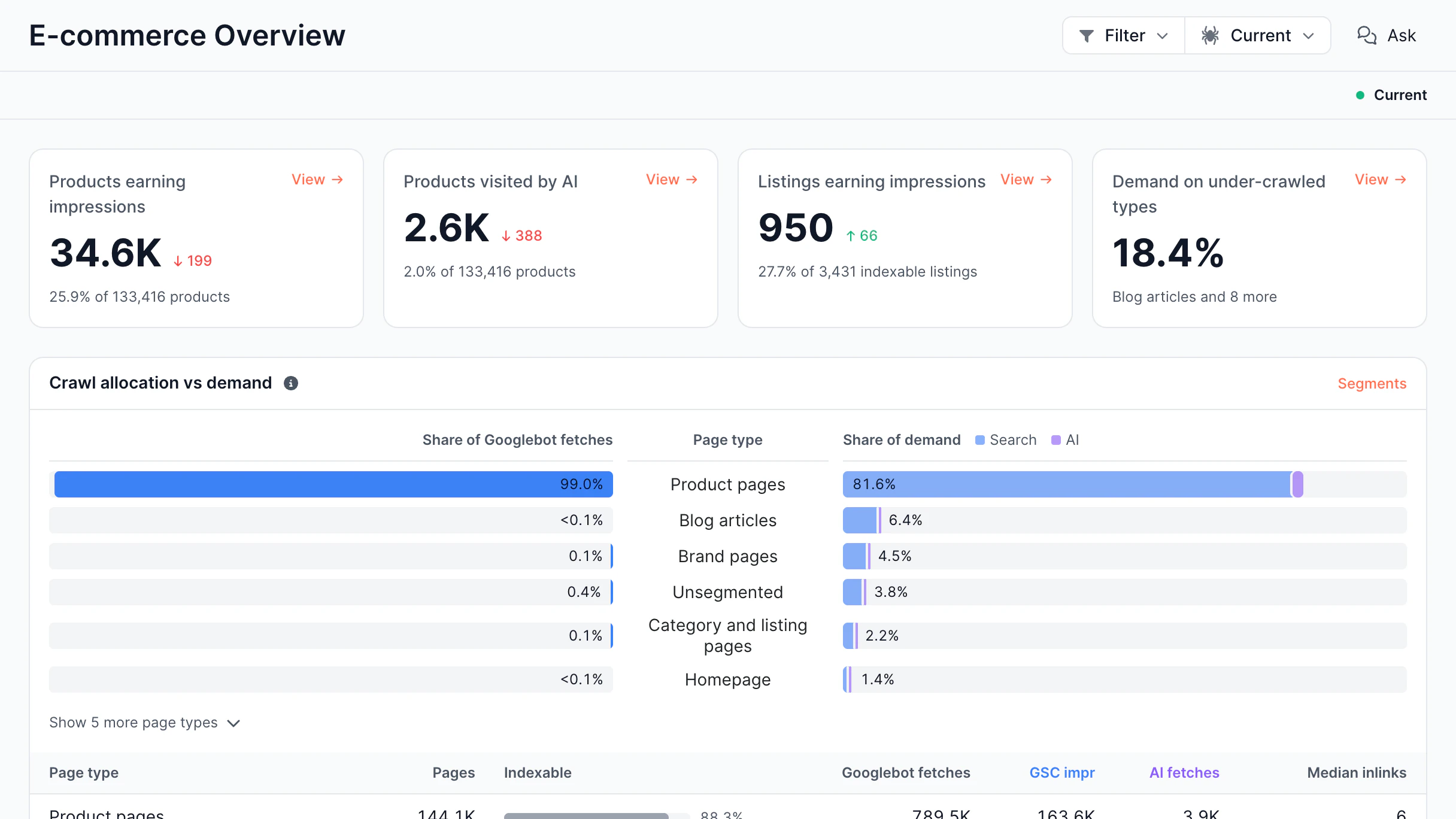
Googlebot fetches vs search and AI demand by page type.
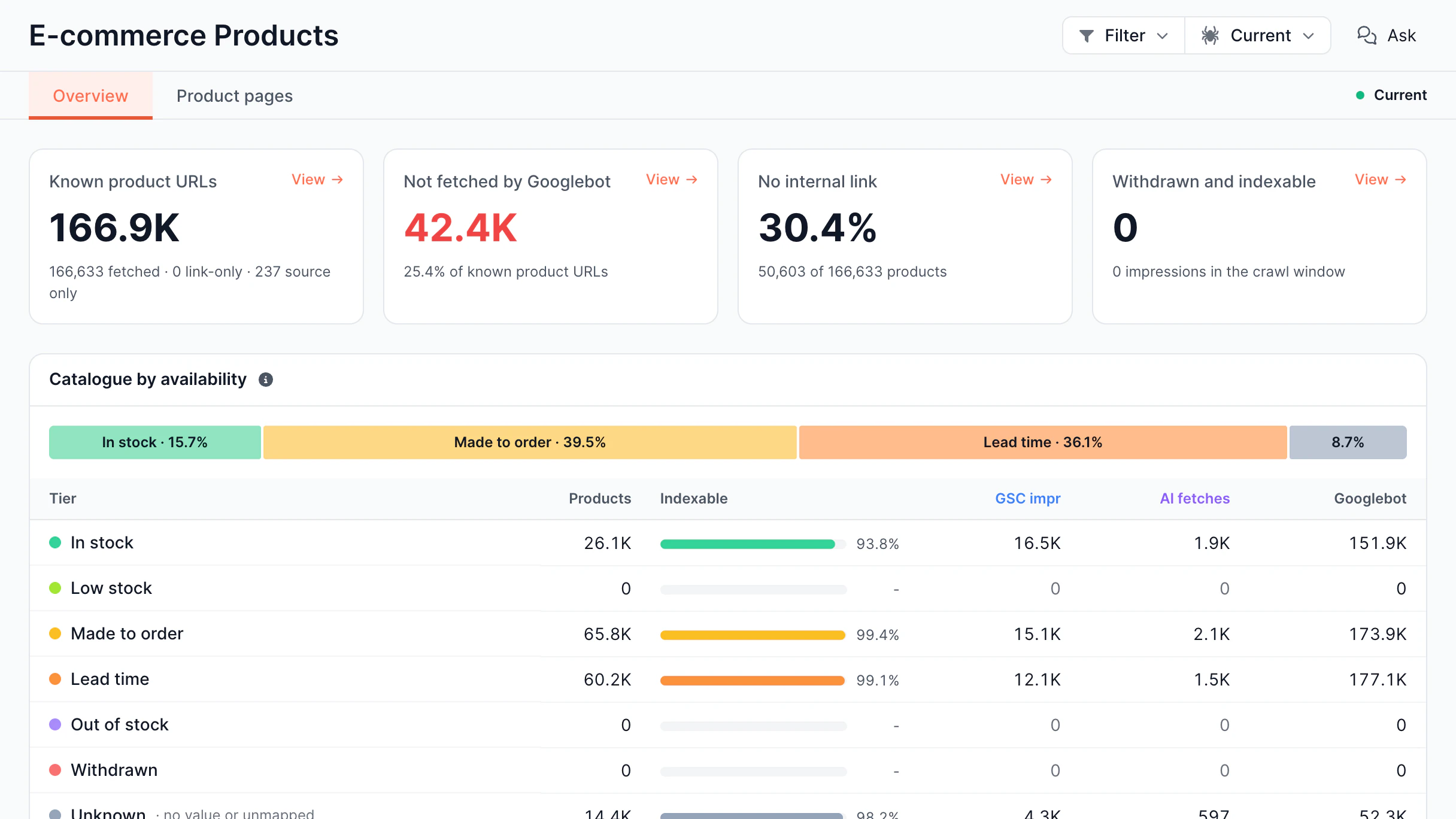
Products not fetched by Googlebot or not linked.
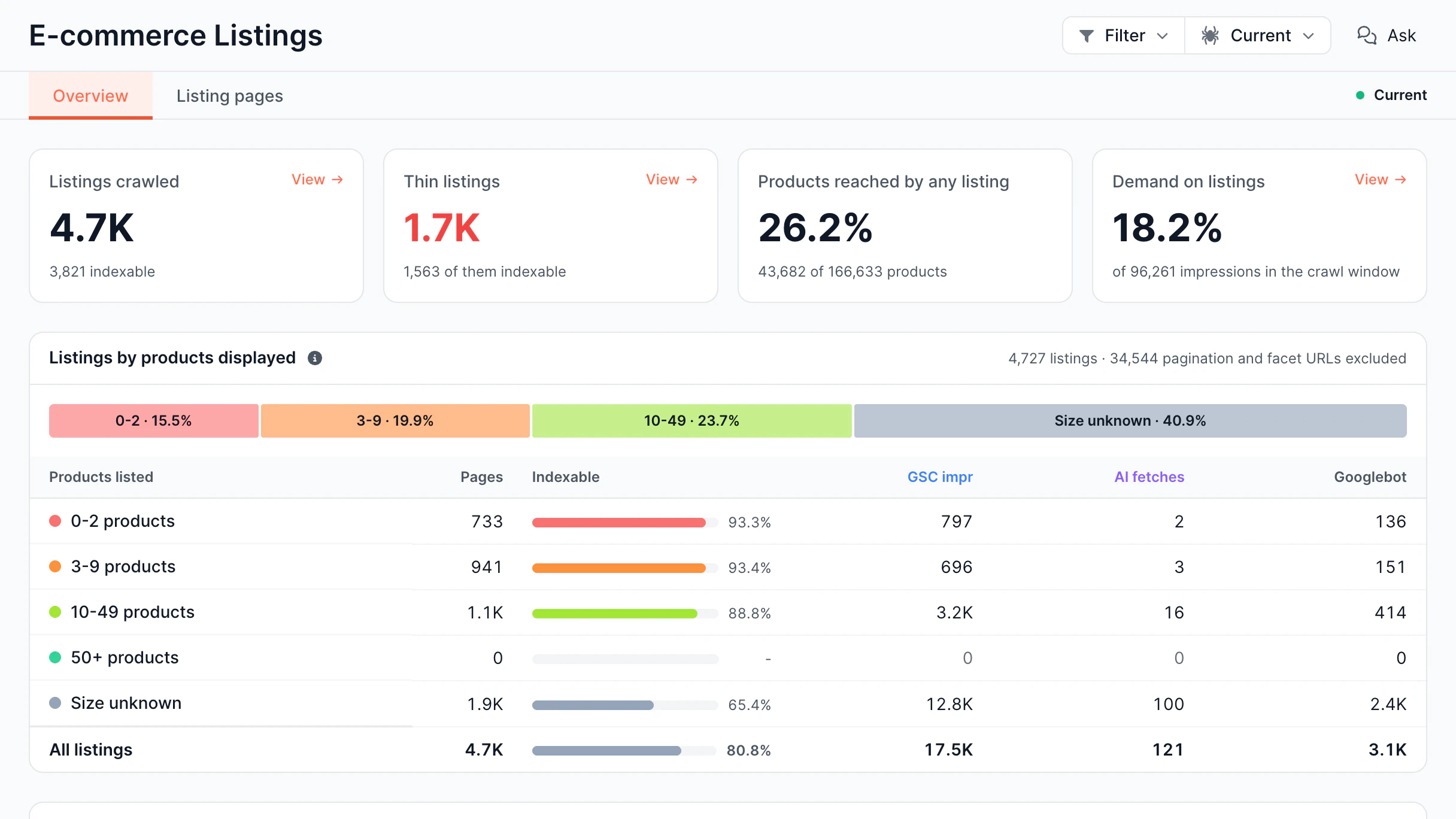
Category pages by number of products listed.
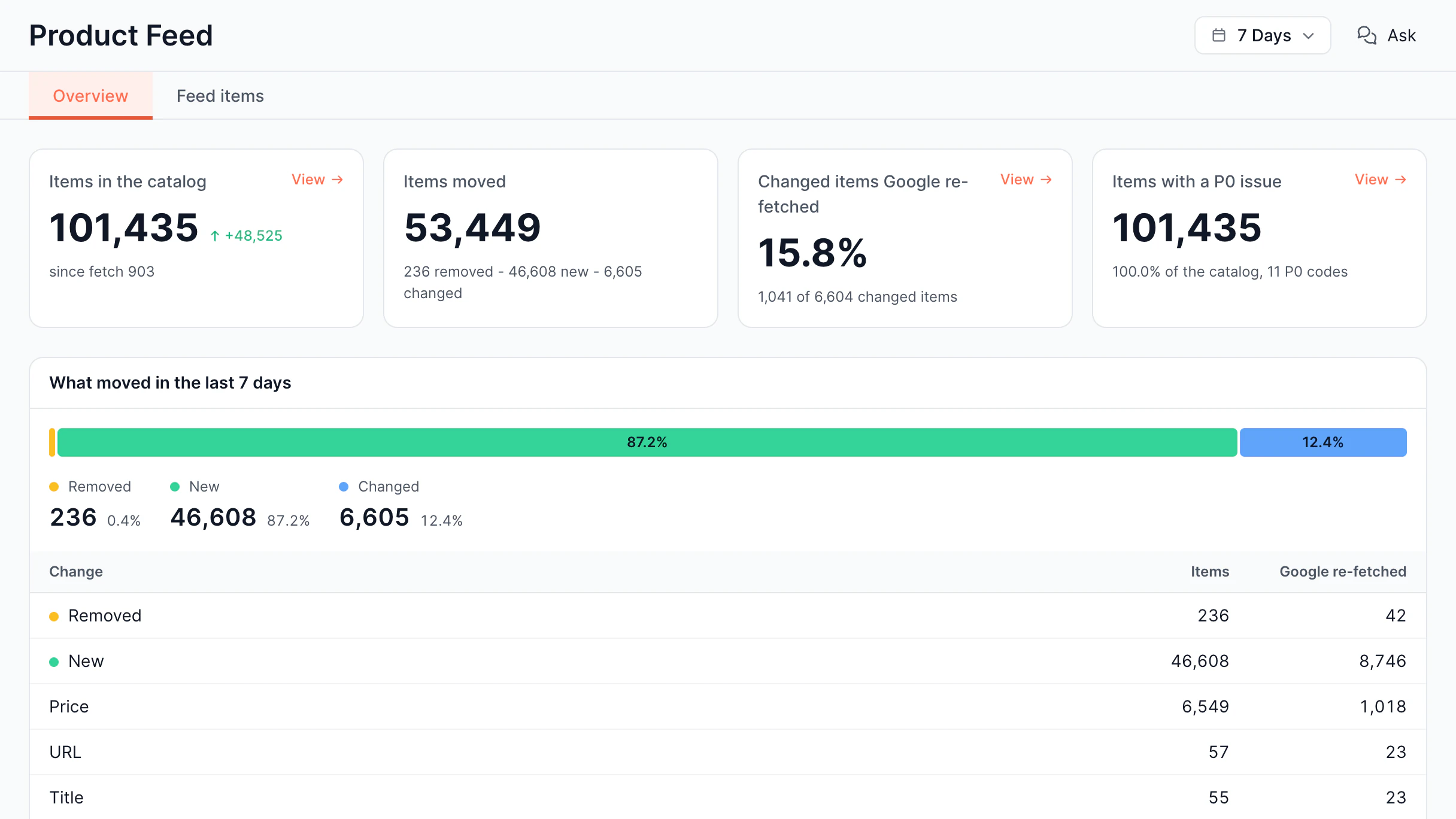
Merchant feed changes and Google re-fetches.
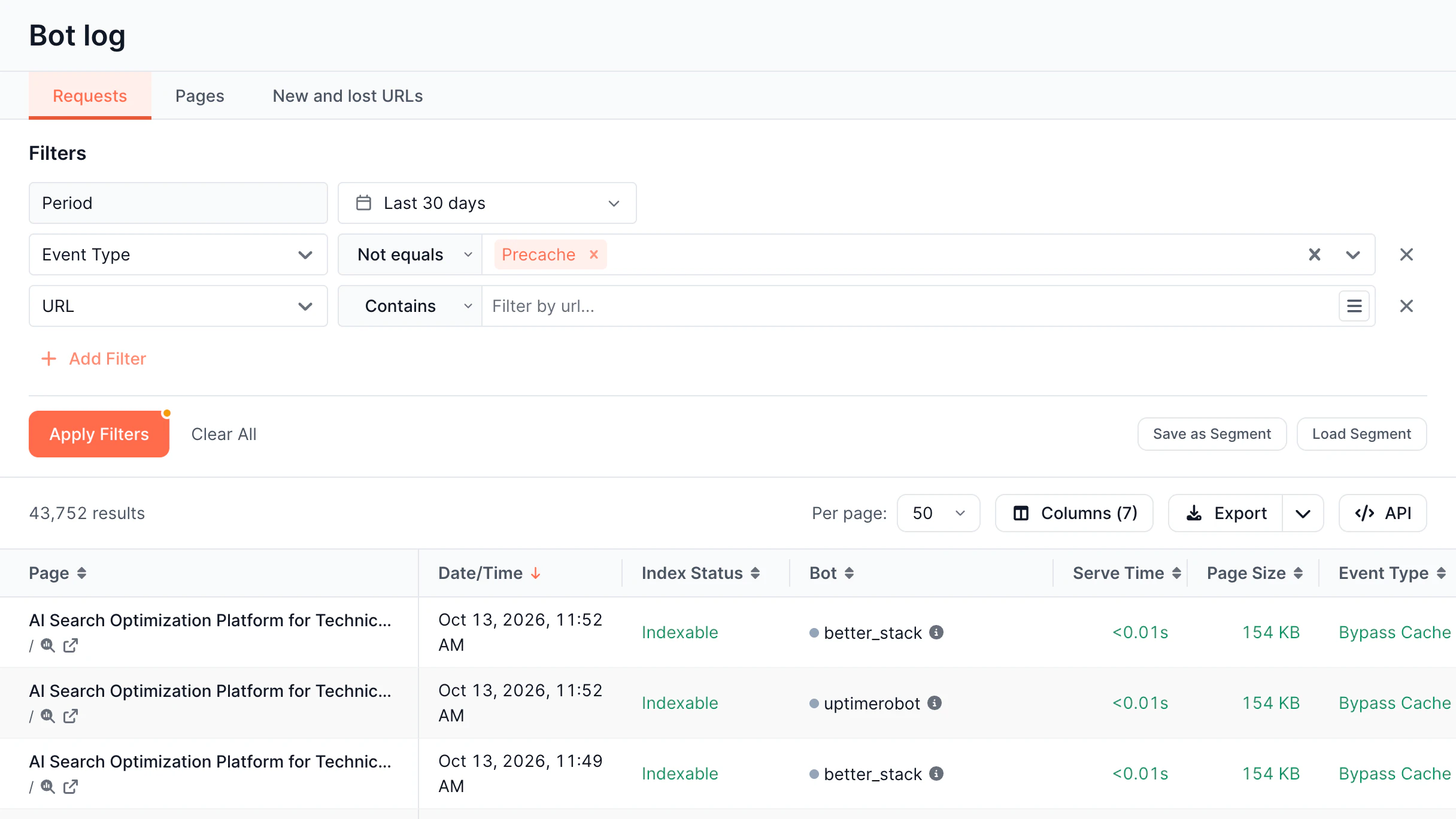
Table of every bot request with filters, segments, and export.
Search Console rows by page or keyword, with filters and period comparison.
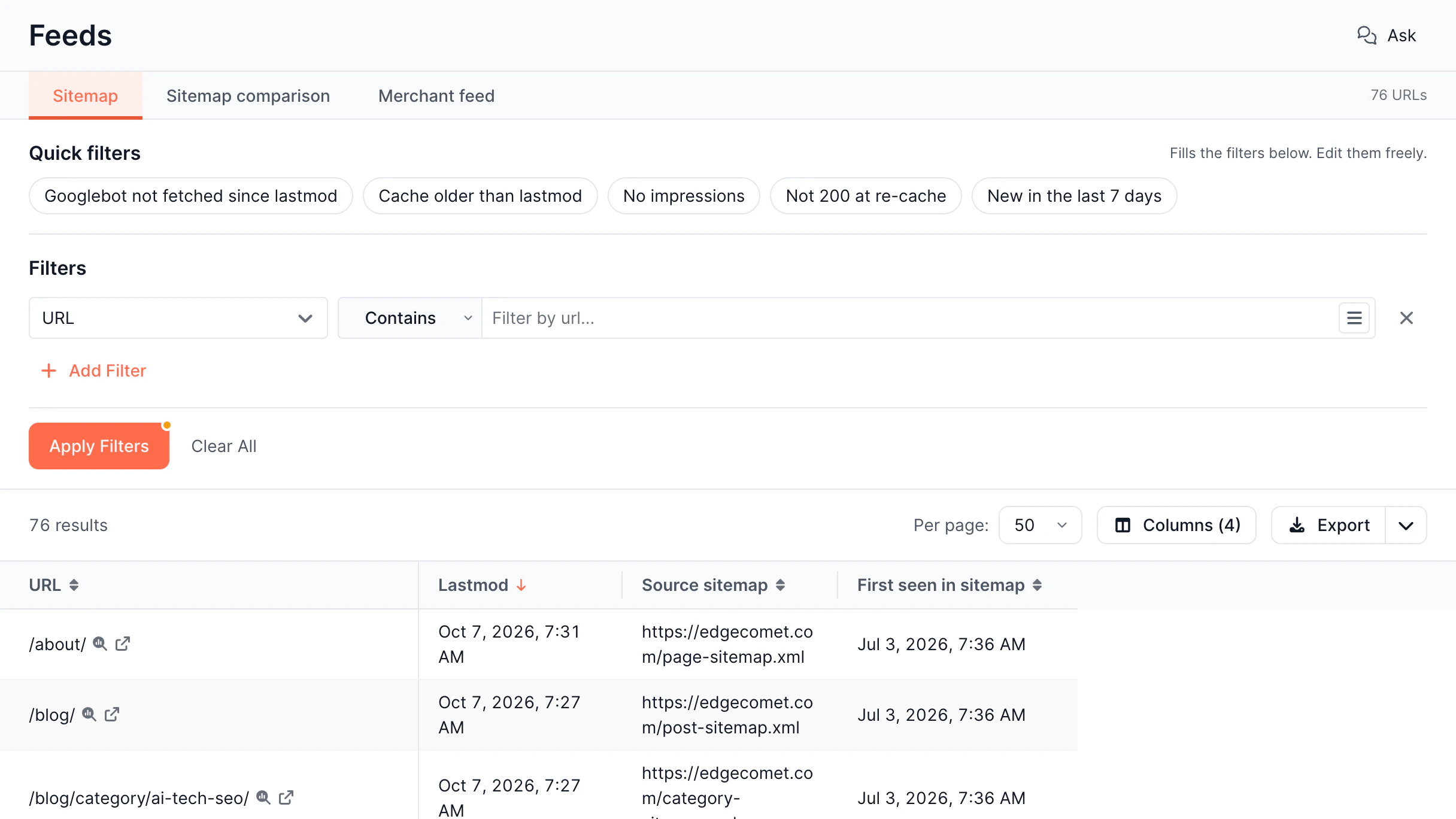
Sitemap and Merchant feed URLs with quick filters and export.
Check how EdgeComet differs from traditional SEO and analytics solutions – across real bot
data, AI visibility, and crawl intelligence. Here's a comparison of SEO alert tools.
EdgeComet inspects your content the same way Google does, after all scripts
have run and the complete page has loaded.
Traditional crawlers run their own bot, separate from what Googlebot or GPTBot experience, simulating a visit.
EdgeComet continuously captures the fully rendered page from real bot traffic.
But your tool flags issues that don't exist on the live site.
EdgeComet can verify what it changes.
On headless or SPA sites, those links don't exist yet at that stage.
EdgeComet audits the link structure Google actually sees.
Run EdgeComet on your real traffic with full access to the platform, including rendering, monitoring, and Edge SEO.
EdgeComet's SEO content crawler doesn't plan visits to your site. It tracks every real bot visit and captures full SEO data. Here's how it works in practice:
EdgeComet detects all incoming bots and sends the request via the rendering and analysis pipeline.
A headless Chrome instance renders the page, executing JavaScript and waiting for the configured condition. The completely rendered HTML is captured.
EdgeComet gets 40+ SEO fields from the rendered page, including titles, meta descriptions, headings, canonicals, robots, hreflang, word count, and more.
EdgeComet's crawler provides continuous indexation for any content platform where website crawling efficiency, content freshness, or AI visibility is business-critical.
EdgeComet monitors indexability across all product pages, detects duplicates and missing structured data, and identifies other crawl errors and budget waste from low-value content.
Listings post and delete pages constantly. EdgeComet's live crawl tracks new and lost links, so SEO teams know instantly when new pages aren't being crawled.
EdgeComet tracks data coverage across all property listing pages and notifies you the moment Googlebot finds missing or broken data, so listings stay visible in search results and AI replies.
EdgeComet shows crawl frequency per article, identifies thin content consuming crawl budget, and tracks AI visits separately, so editorial teams know whether bots explore new content.
Improve indexing, visibility, and traffic from day one.
14-day free trial
An SEO crawler is a bot that visits your pages and extracts metadata: titles, canonicals, structured data, indexability status, and more. So, you can see how your site looks to search engines. Some crawlers render JavaScript before extracting data, others read raw HTML only, which matters if your site relies on client-side rendering.
A crawler in SEO is a bot that simulates Googlebot behavior by visiting your pages and extracting metadata, but it's not the same bot. It doesn't reflect the same rendering environment. EdgeComet captures each Googlebot visit with the full rendered page content attached.
EdgeComet's live crawl shows duplicates and missing titles and canonicals, absent or too short meta descriptions, noindex pages, structured data gaps and schema errors, thin content, broken heading structure, slow serve times to bots, JavaScript render failures, and 4xx or 5xx errors.
Most traditional crawlers are struggling with JavaScript; they parse raw HTML and empty pages. EdgeComet renders every page in headless Chrome before capturing metadata, so SEO elements generated by JavaScript are fully visible.
All indexation issues have a cause: missing canonicals, noindex, JavaScript error, or a server too slow for bots to crawl efficiently. EdgeComet’s JS crawler SEO identifies these issues in real time from actual bot traffic, so you can resolve them before rankings drop.
Yes, EdgeComet handles high-volume websites without planning scans or adding workload to your server, since every site structure analysis comes from real bot visits.
Continuous crawling reads real bots as they hit your site. Googlebot, GPTBot, ClaudeBot capture what they saw the moment it happened. Scheduled crawls run their own bot on a timer, once a day or week, showing a snapshot that's often already stale by the time you see it. One tracks reality; the other approximates it.
Stay ahead with expert insights on search visibility, AI optimization, and technical SEO
Faceted navigation SEO comes down to two decisions for every filter URL: may search engines crawl it, and may they...
Read Article
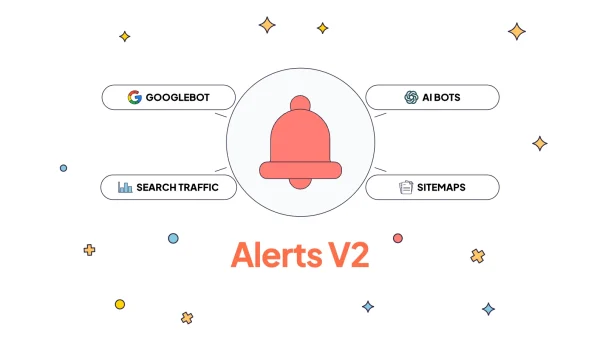
We’ve just released the second version of SEO alerts in EdgeComet, and it’s a huge step up from the first...
Read Article
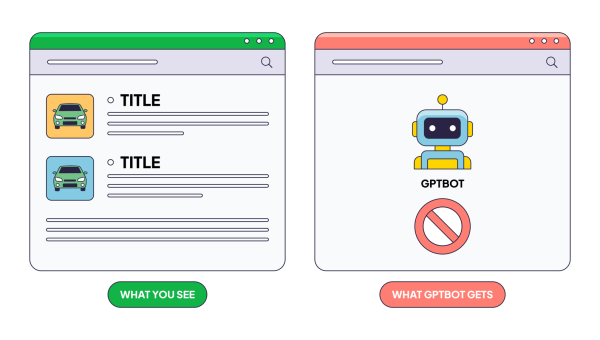
Every AI answer that cites a website begins with a bot fetching a page from it. No fetch, no content....
Read Article