How Googlebot Crawls, Renders, and Indexes JavaScript: A Developer’s Guide
JavaScript content takes hours to weeks longer to index than static HTML because Googlebot cannot index it on the first...
Read ArticleCatch SEO issues the moment they occur – not days later when the damage is done. SEO Alerts evaluate bot requests every 5 minutes across two detection engines (metric + SEO change), so you always know exactly what broke and when.
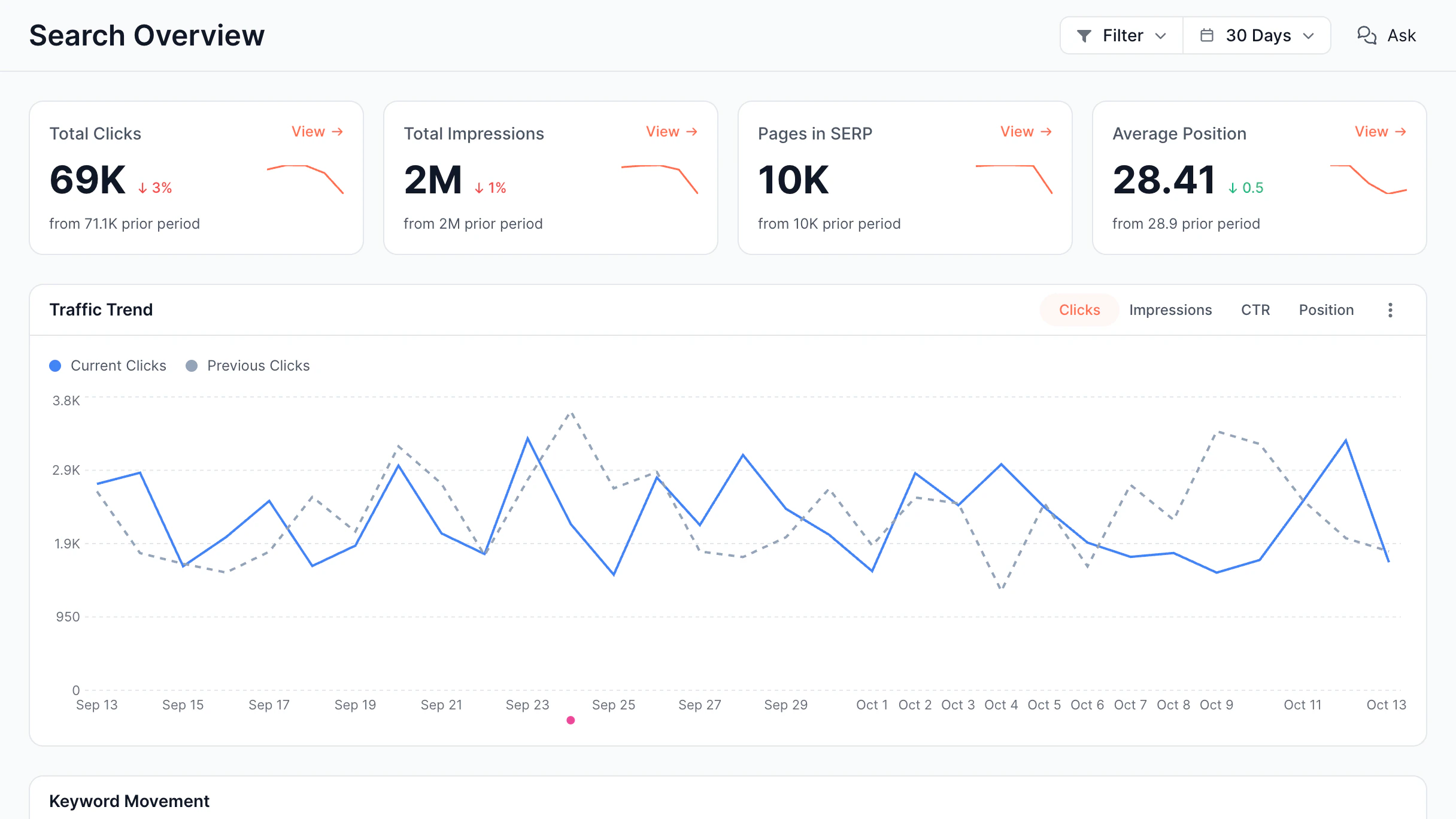
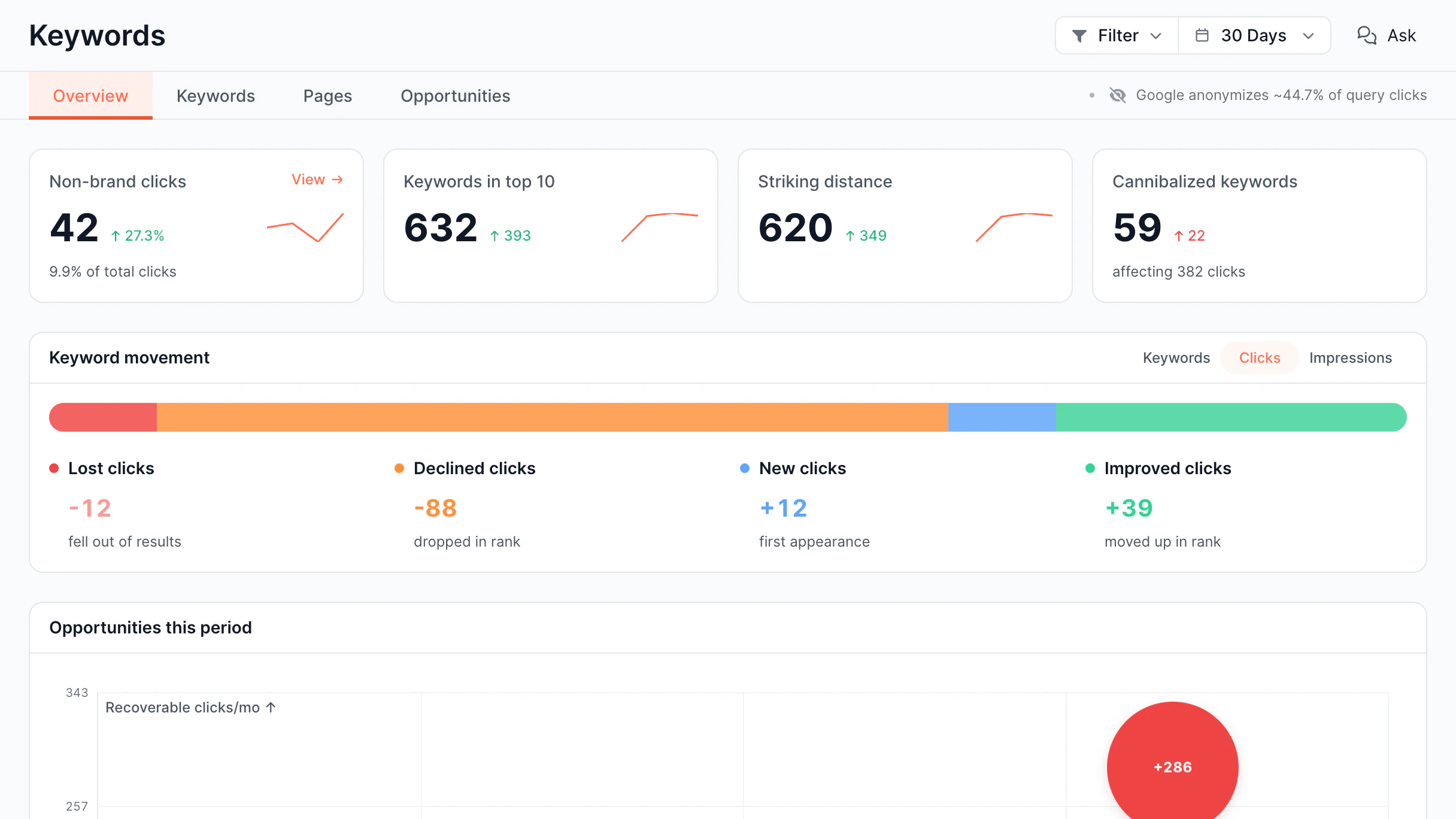
With EdgeComet's SEO Alerts, detect critical SEO issues as soon as they happen – before they cost you rankings, traffic, and revenue.
A single unsuccessful deployment can accidentally noindex hundreds of pages. Without real-time alerting, you only understand it when organic traffic has already dropped.
Missing canonicals, title overwrites, and broken structured data pass undetected after every release. Existing monitoring tools uncover issues hours after they happen.
Traditional solutions mimic crawls or report HTTP status codes, but not what bots actually got. You can't catch render failures or SEO regressions that are invisible in real time.
Raw anomaly notifications without context create alert fatigue. Teams spend hours investigating irrelevant SEO daily alerts, missing the ones that actually matter.
Check SEO issues once they occur. EdgeComet assesses bot requests every 5 minutes across 25 alert templates and 4 monitoring categories, so you know what broke, where, and why.
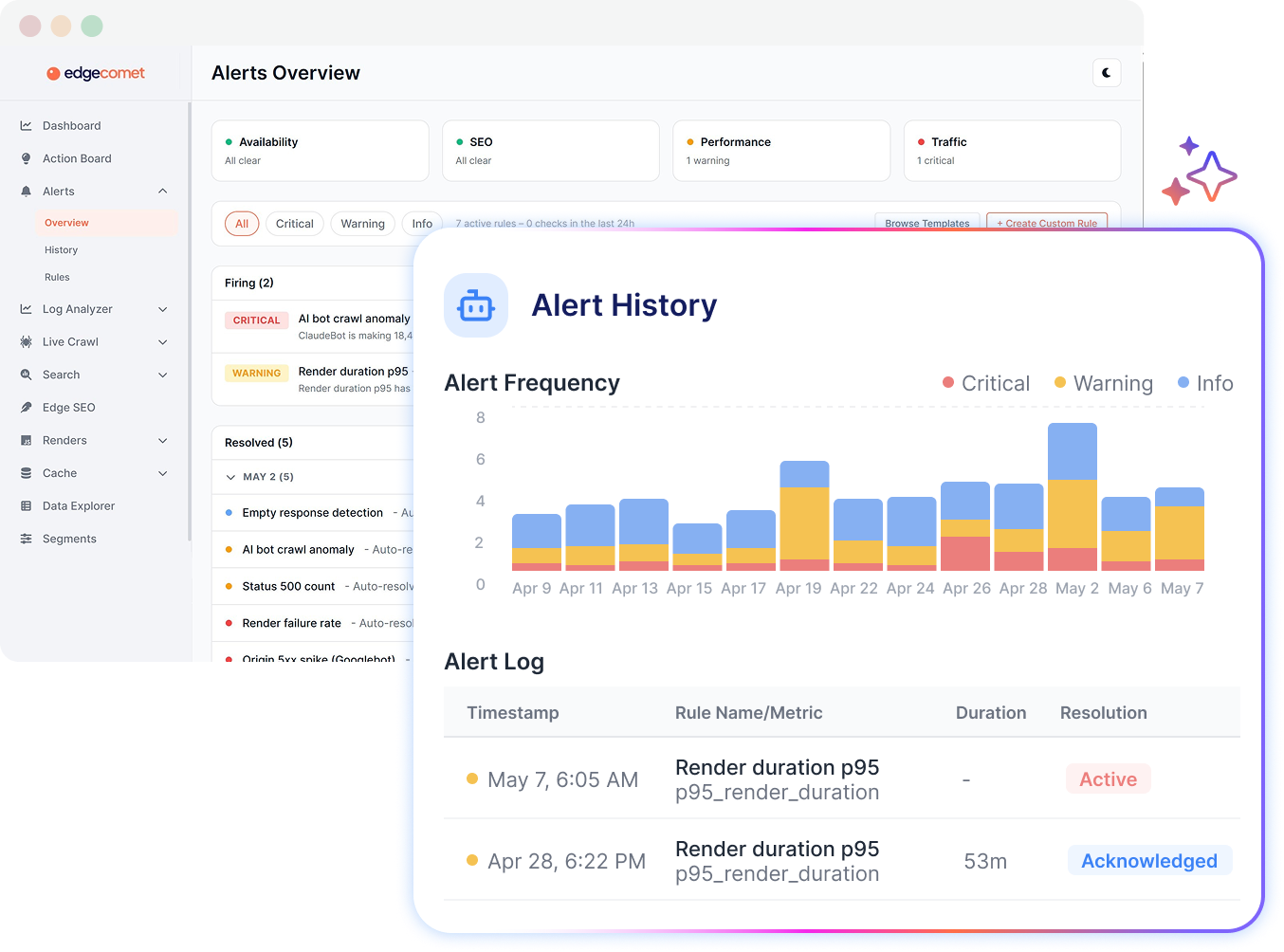
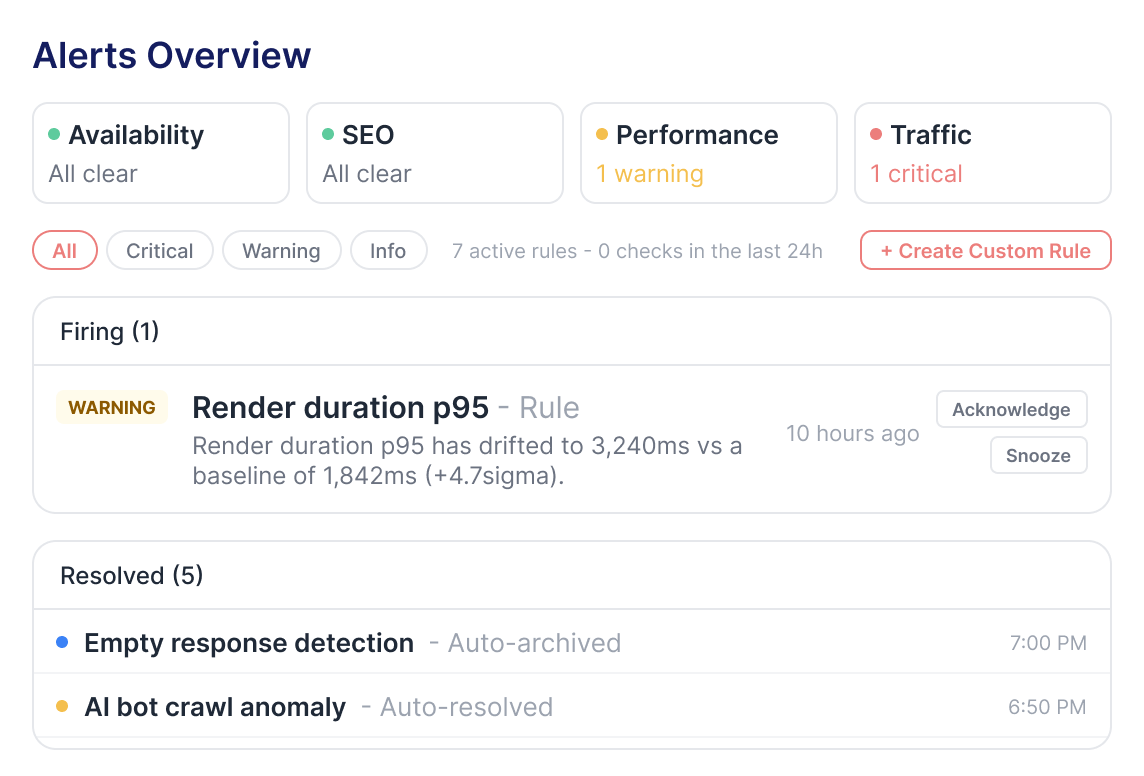
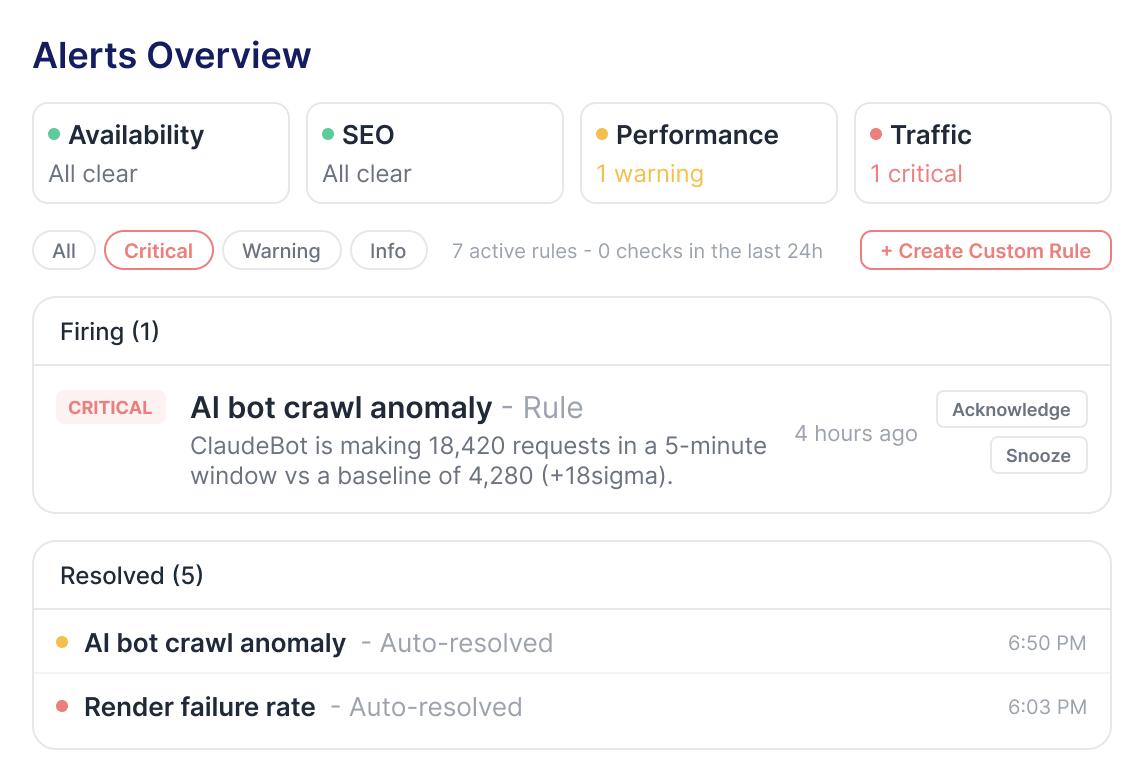
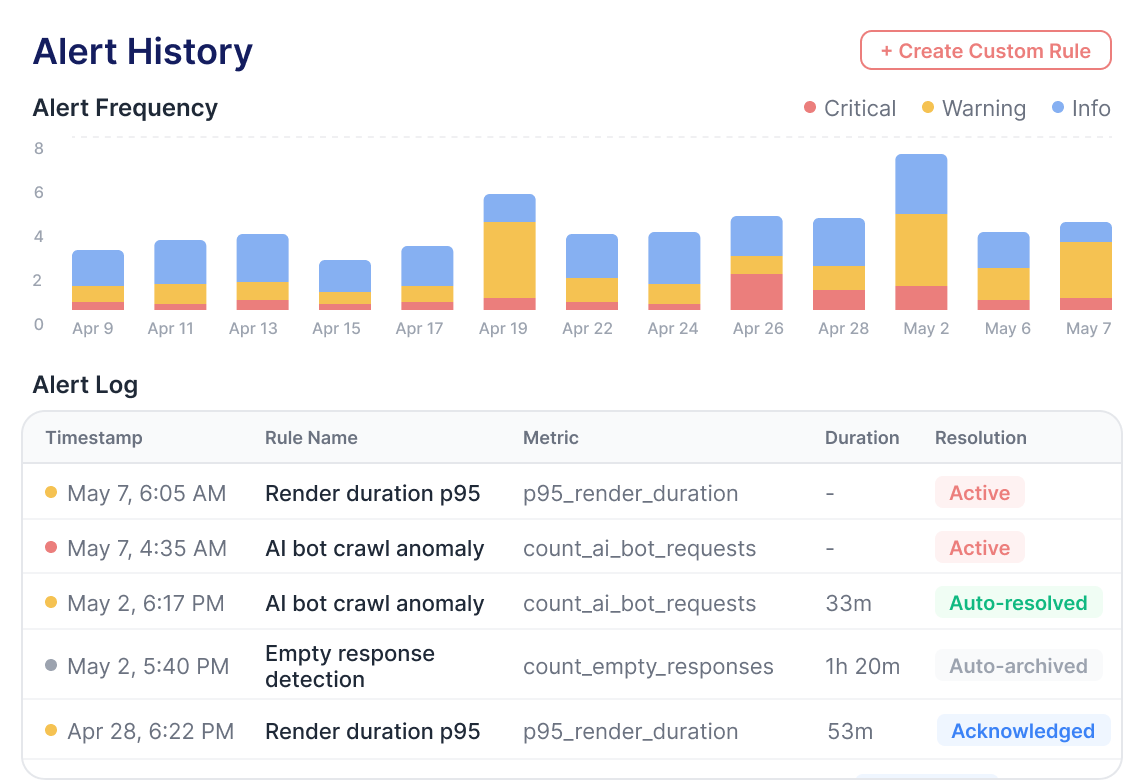
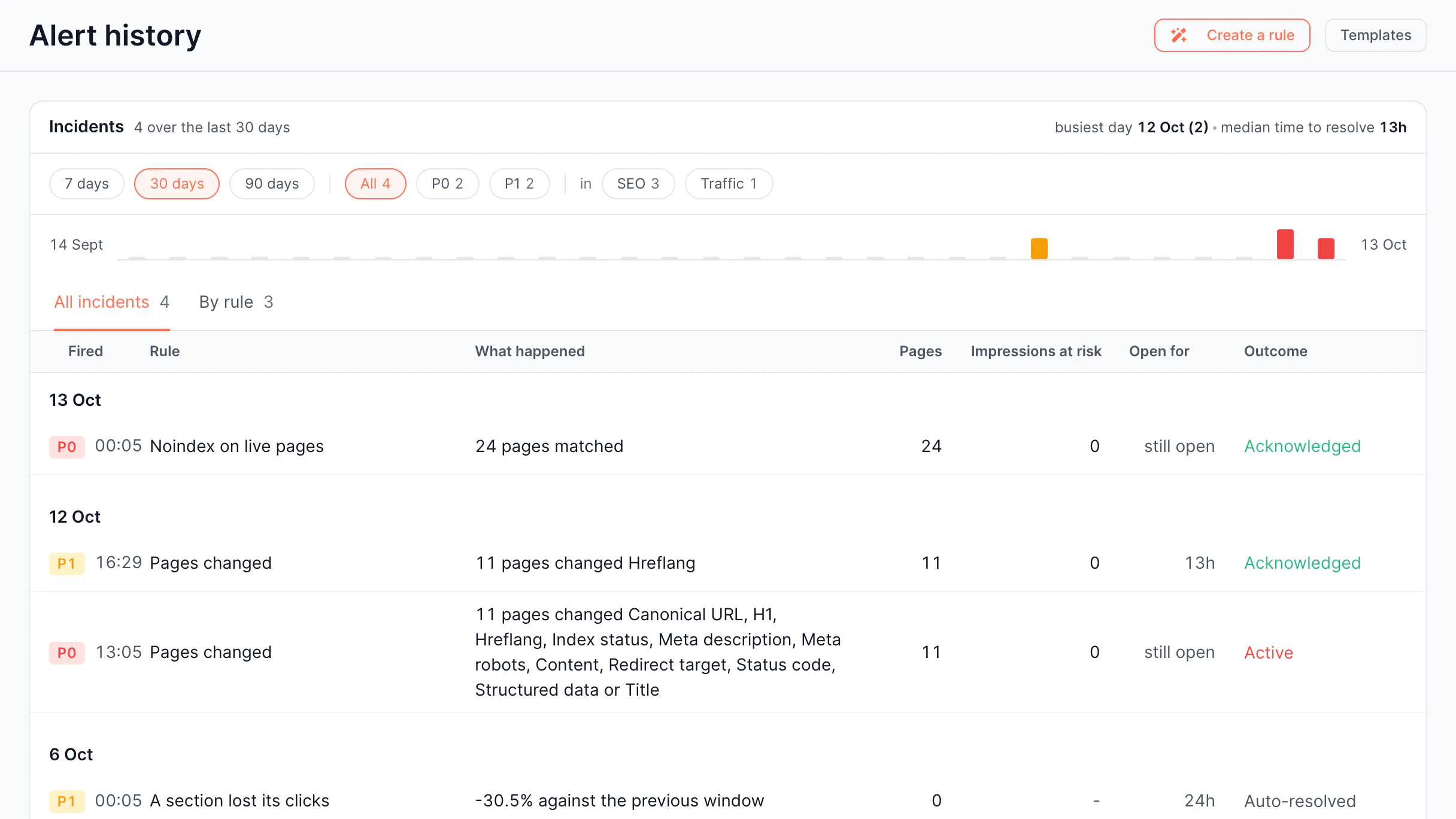
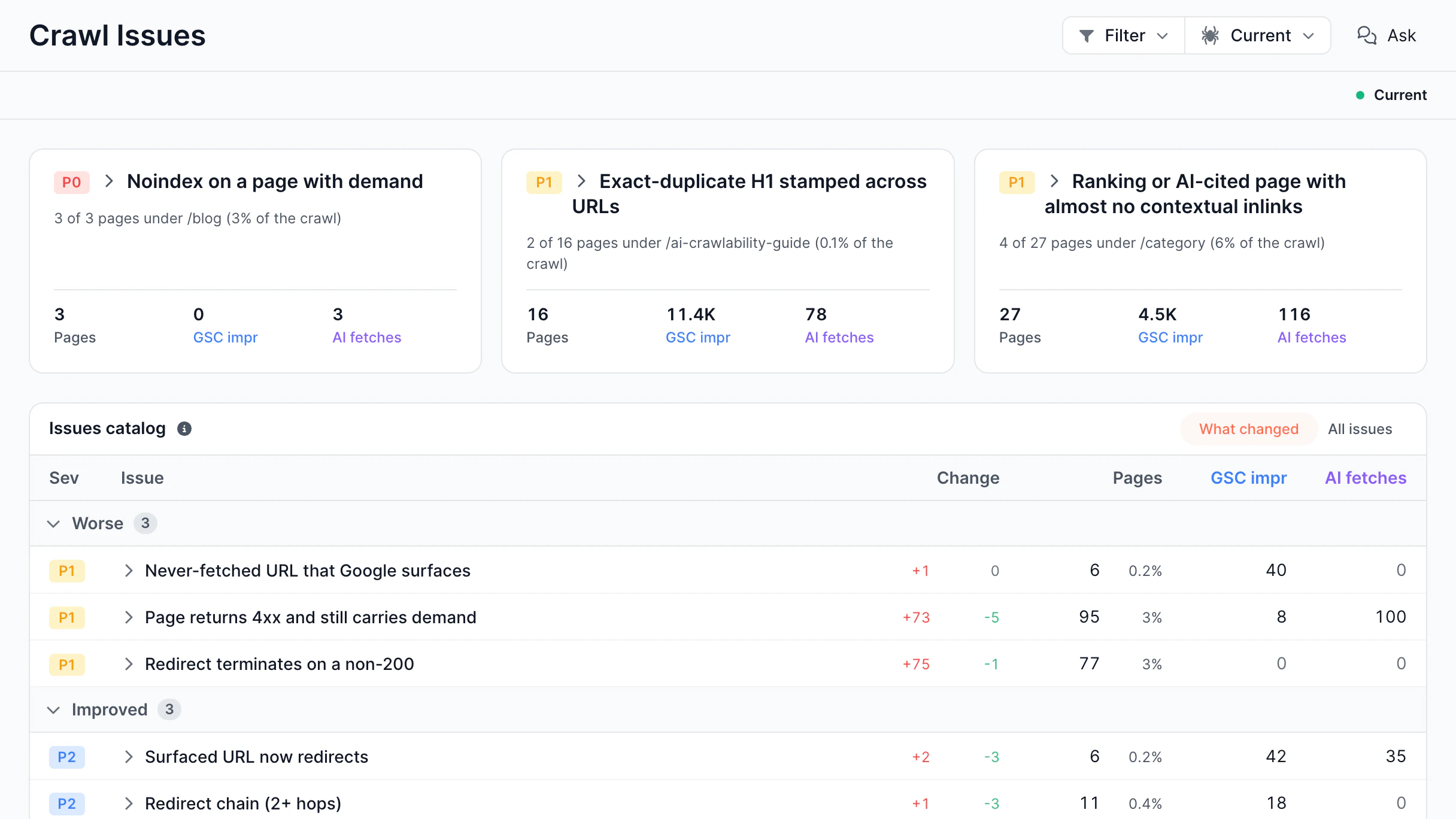
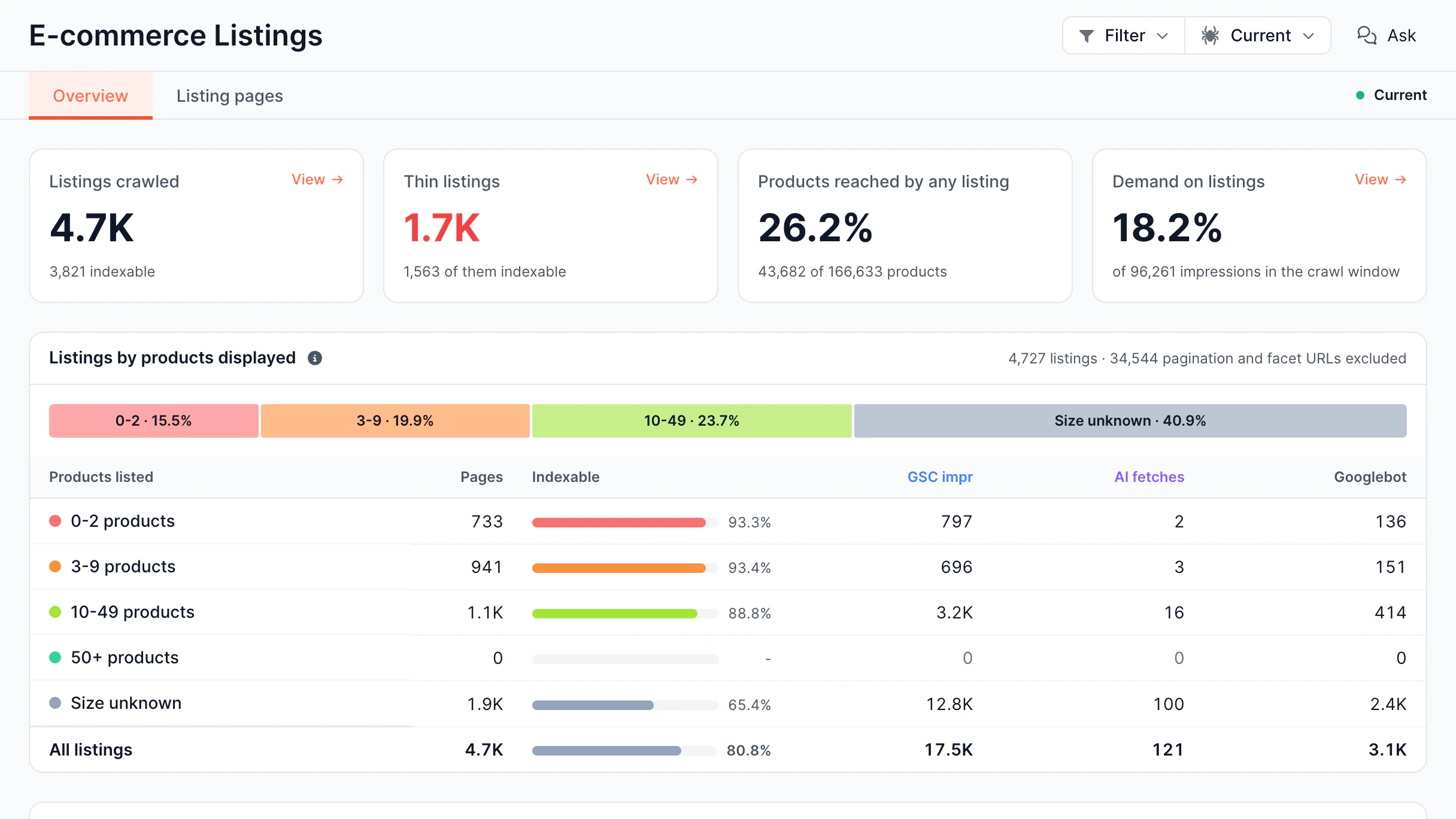
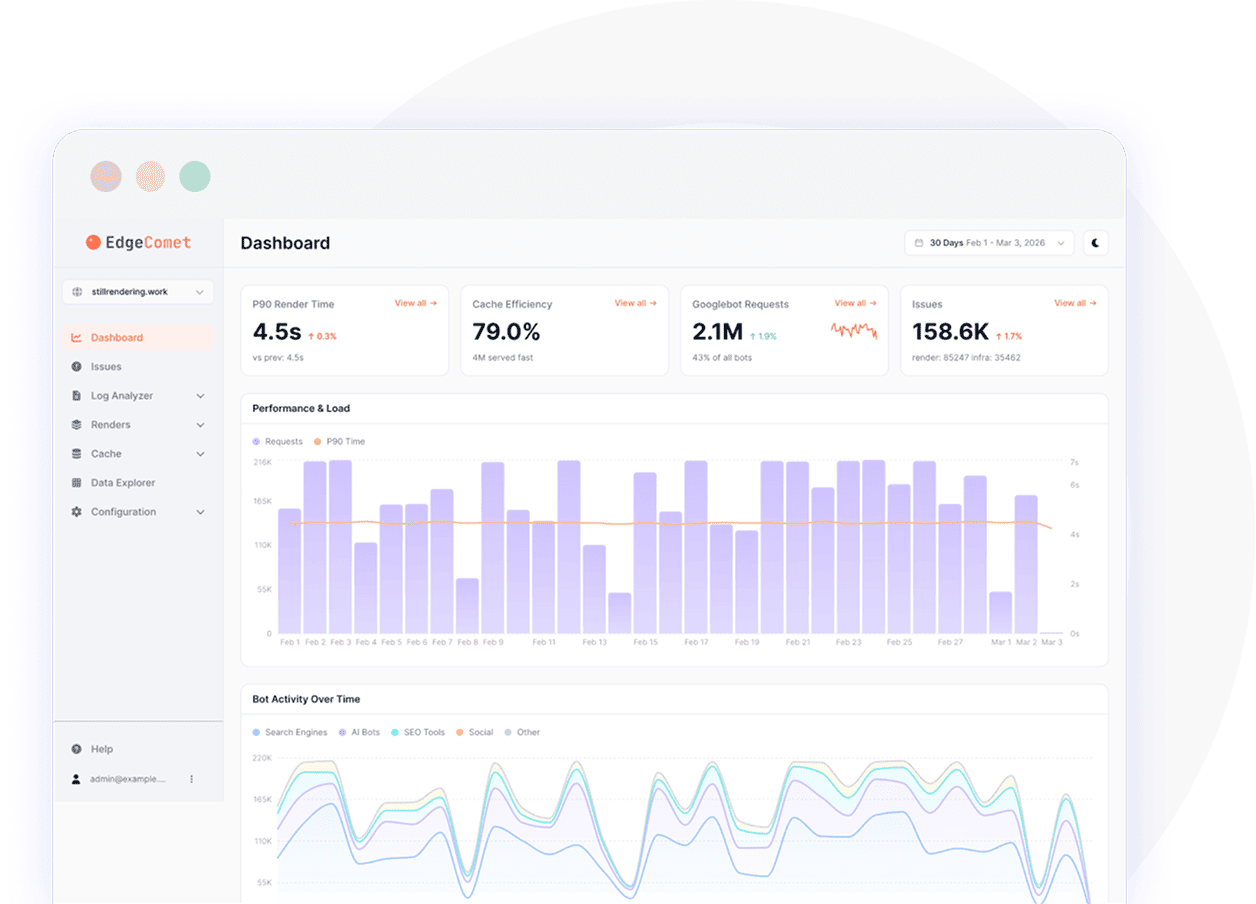
Monitor traffic, availability, SEO, and performance issues on a single dashboard. See all hot alerts in real time, filtered by severity, without switching between different tools.
Analyze which alerts are hot, acknowledged, or resolved
Check every alert filtered by severity
Filter Critical, Warning, and Info alerts
Accept or snooze any alert on the dashboard
Capture title overwrites, canonical shifts, no-index issues, and structured data removal the moment they affect real bot renders. Get notified on meaningful deviations.
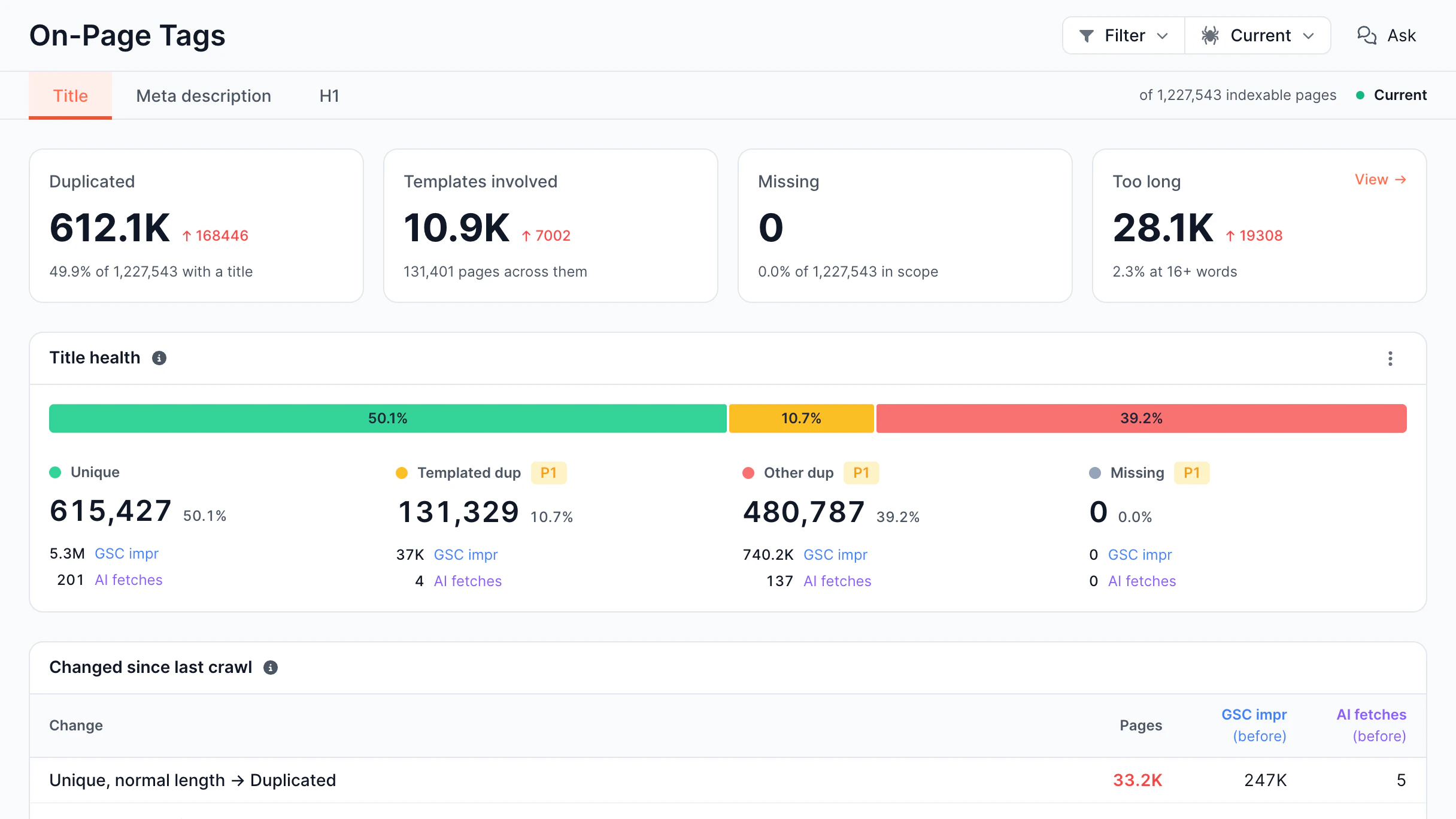
Know when title tags change across dozens of pages
Get notified when any critical SEO element is modified
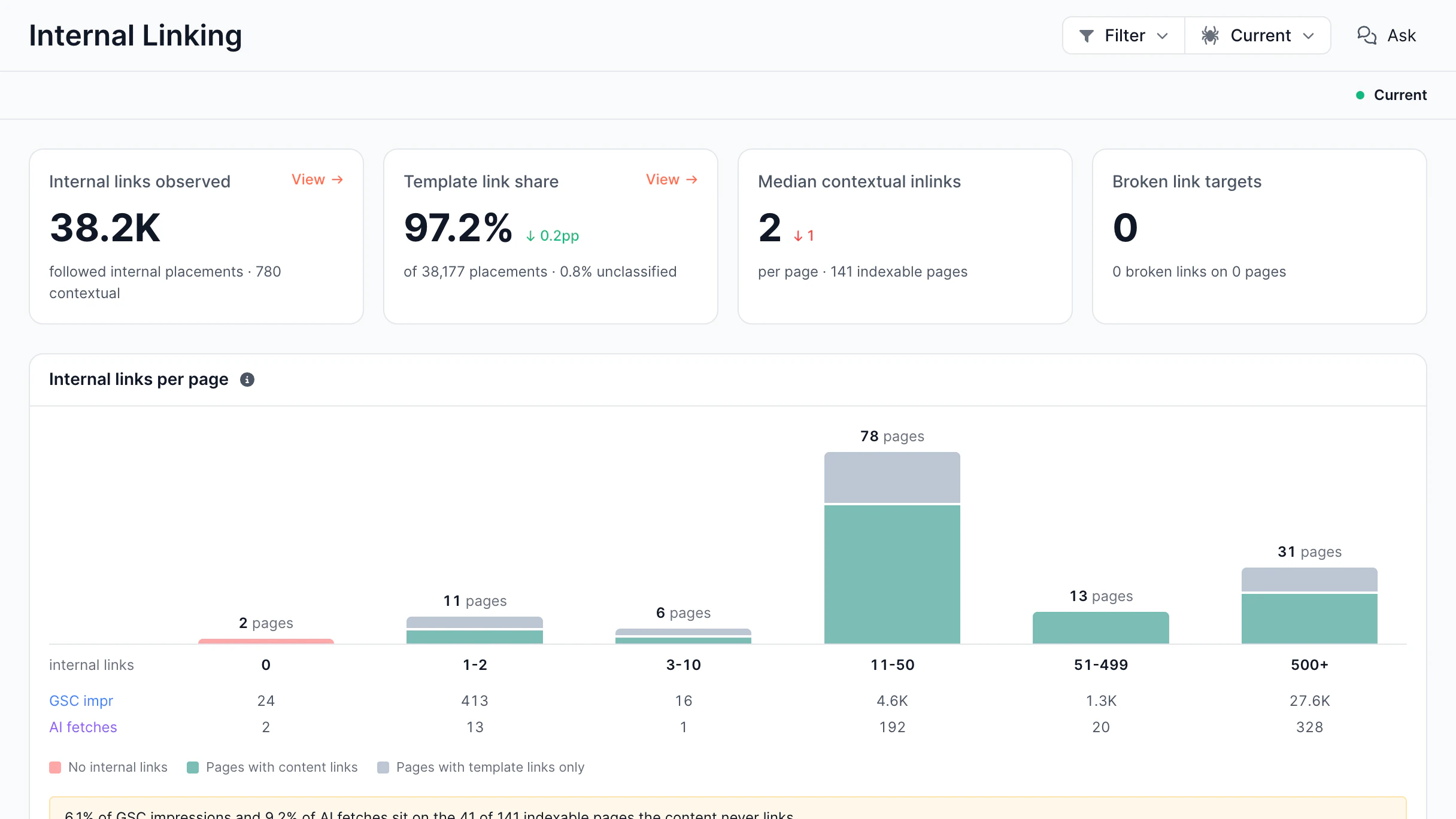
Identify the specific pages and segments with changes
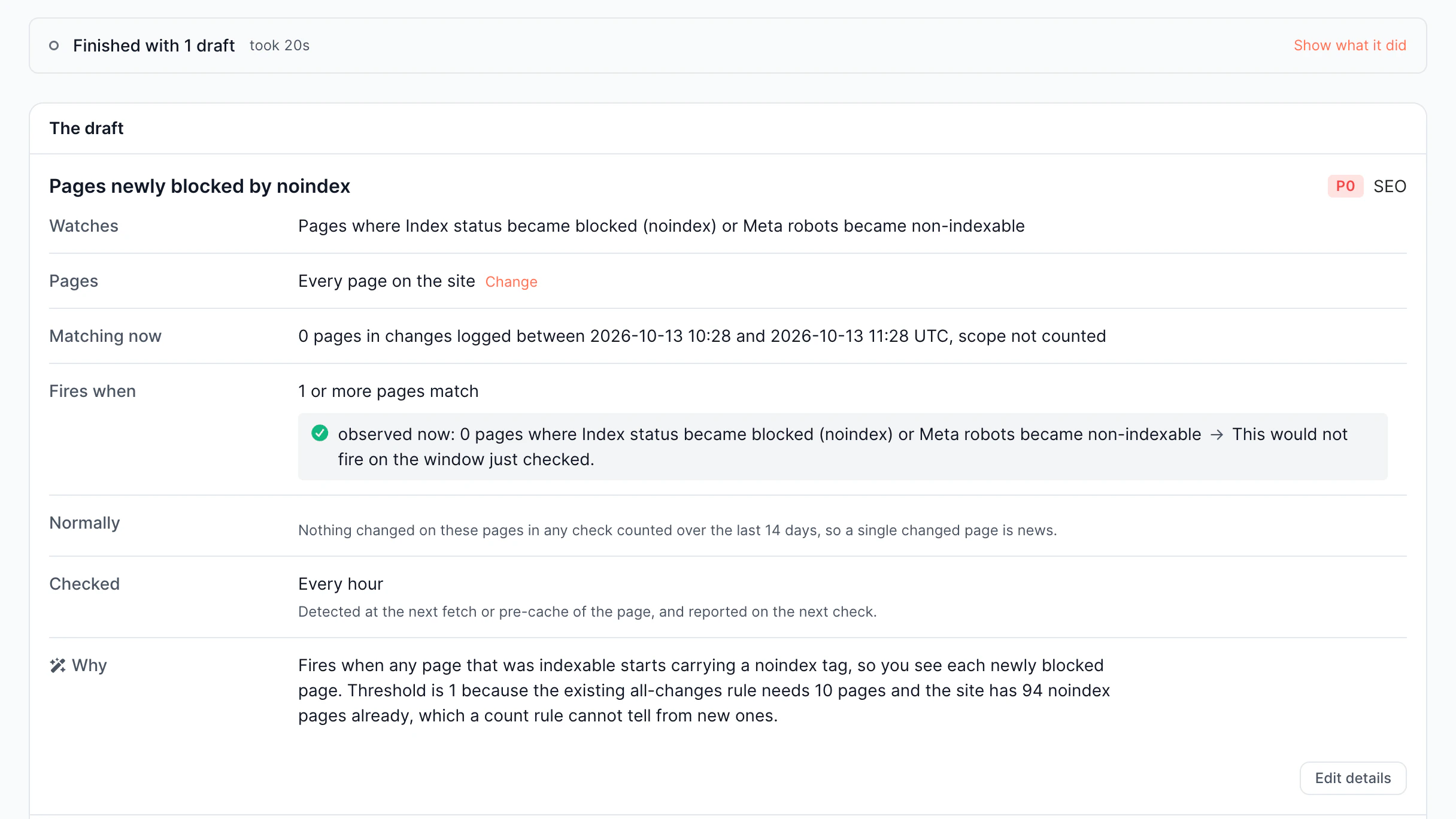
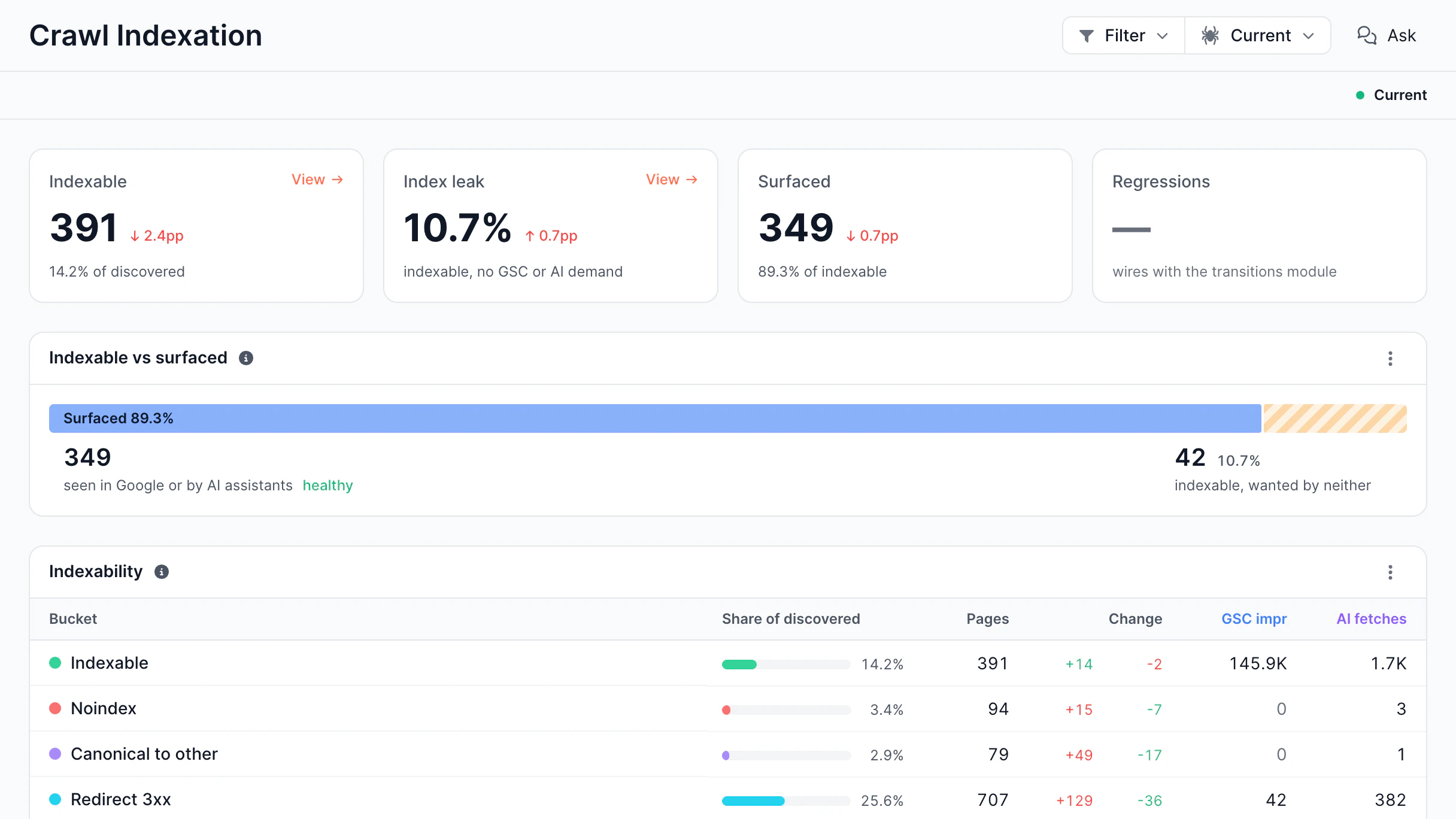
Learn when pages are blocked from indexing
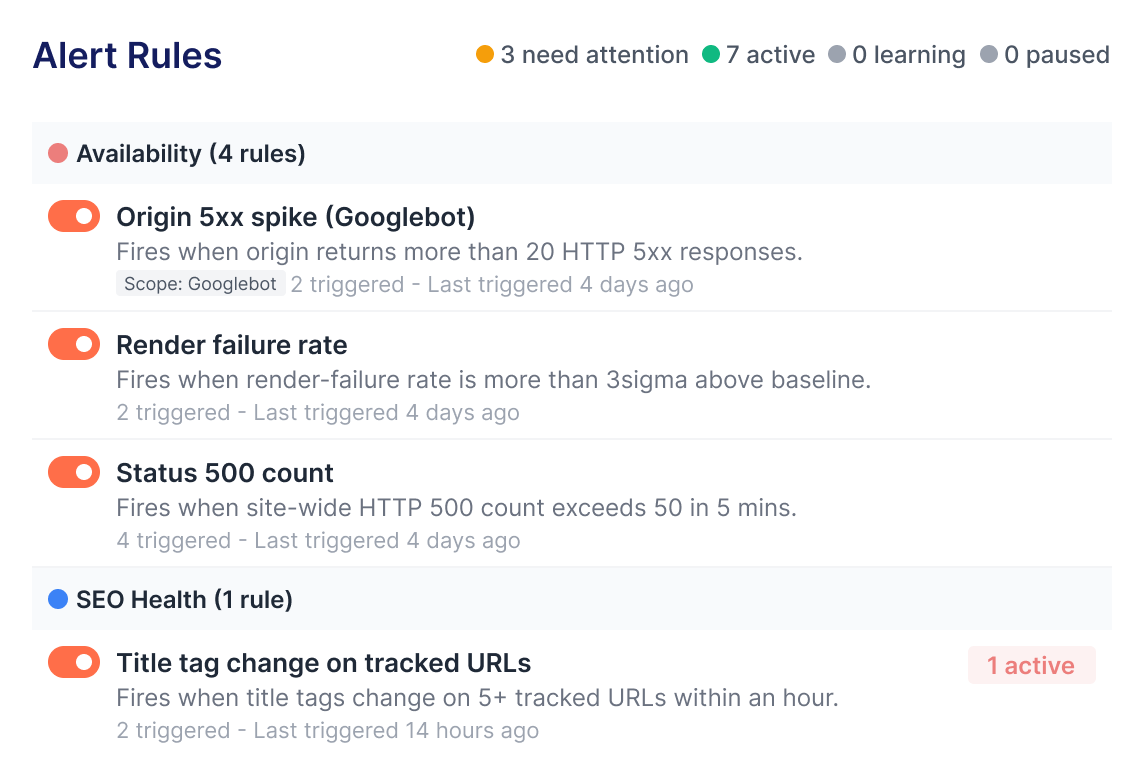
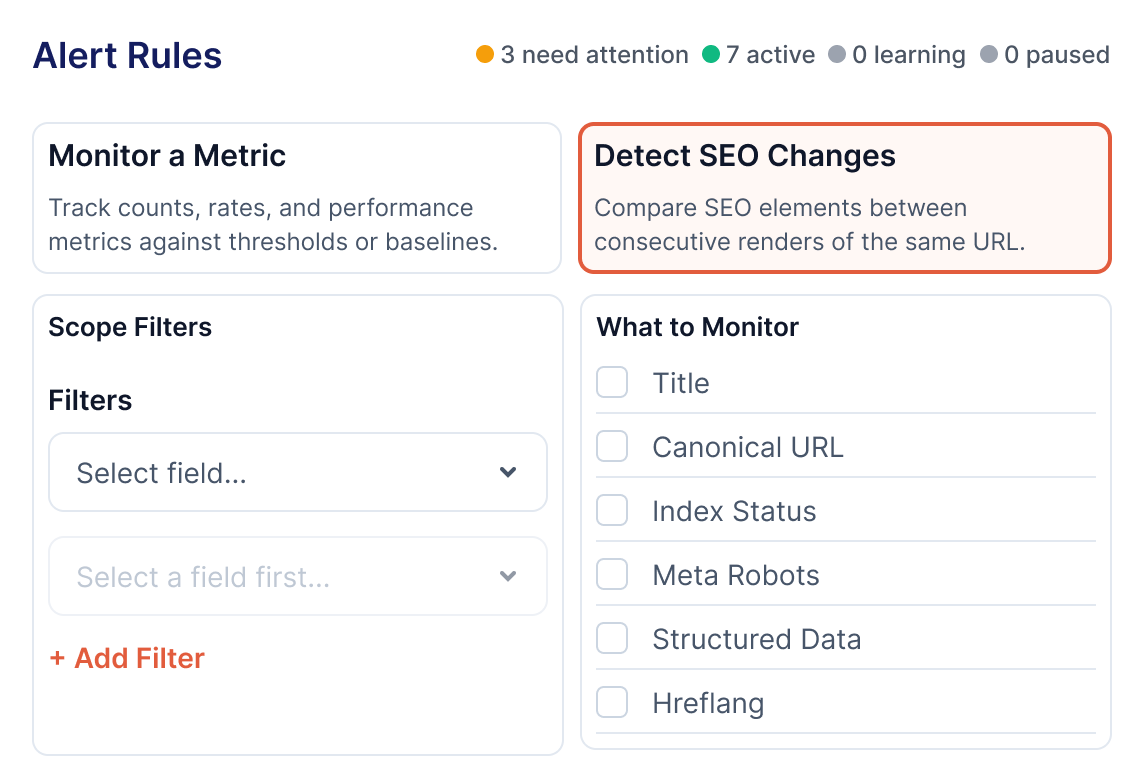
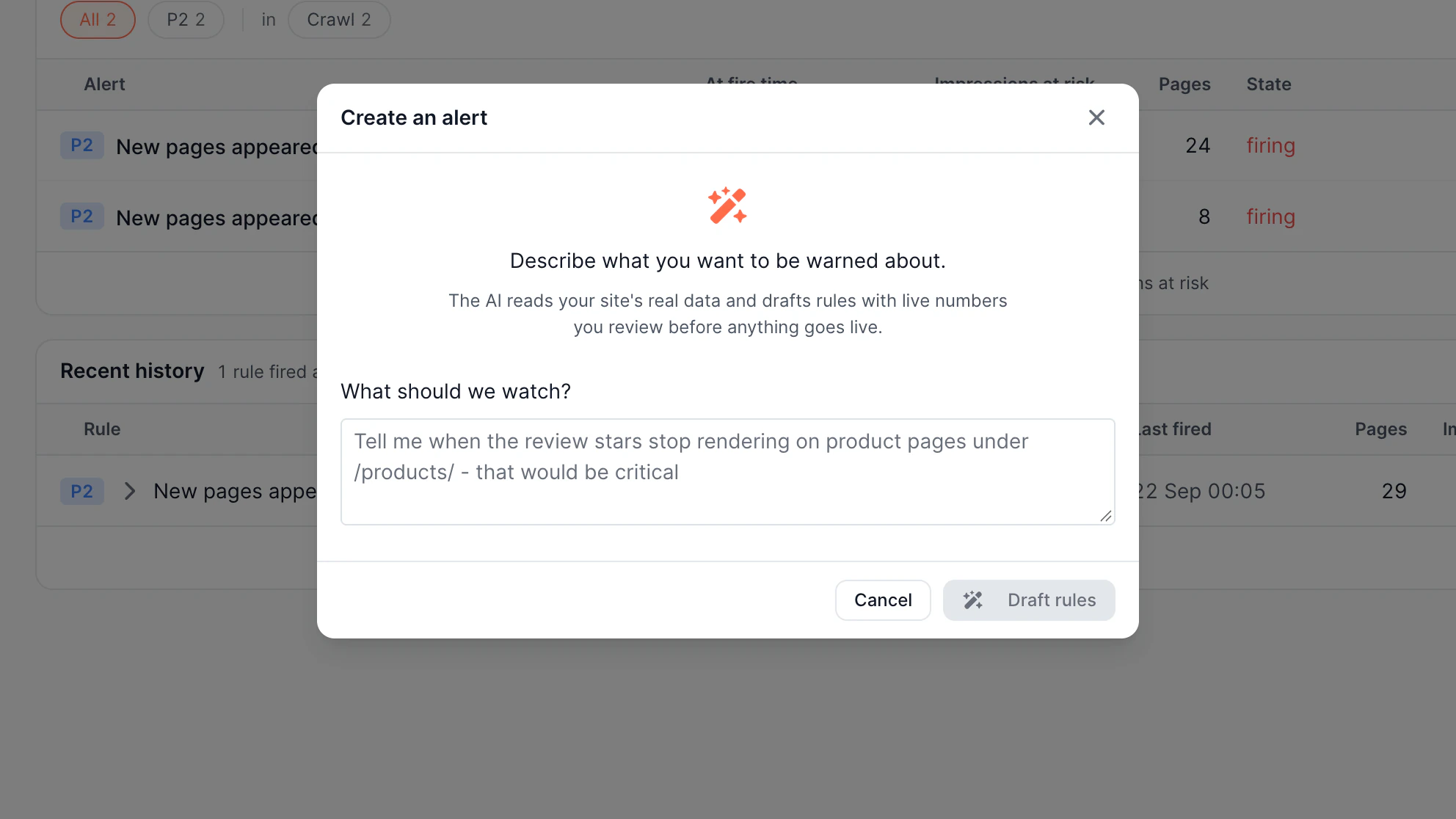
Create custom alert rules and monitor any elements on any pages. Go beyond pre-built templates and define what matters most for your site's specific setup.
Customize alerts on any SEO field or metadata
Launch common failure scenarios
Adjust sensitivity for each rule independently
Mark alerts as accepted or postpone them
Get alerts wherever it is convenient for your team. Send notifications to the right specialists through the right channels without switching tools.
Meet your team where they already are
Send critical alerts to Slack, summaries to email
Avoid alerts by scheduling maintenance windows
Distinguish between hot and resolved alerts
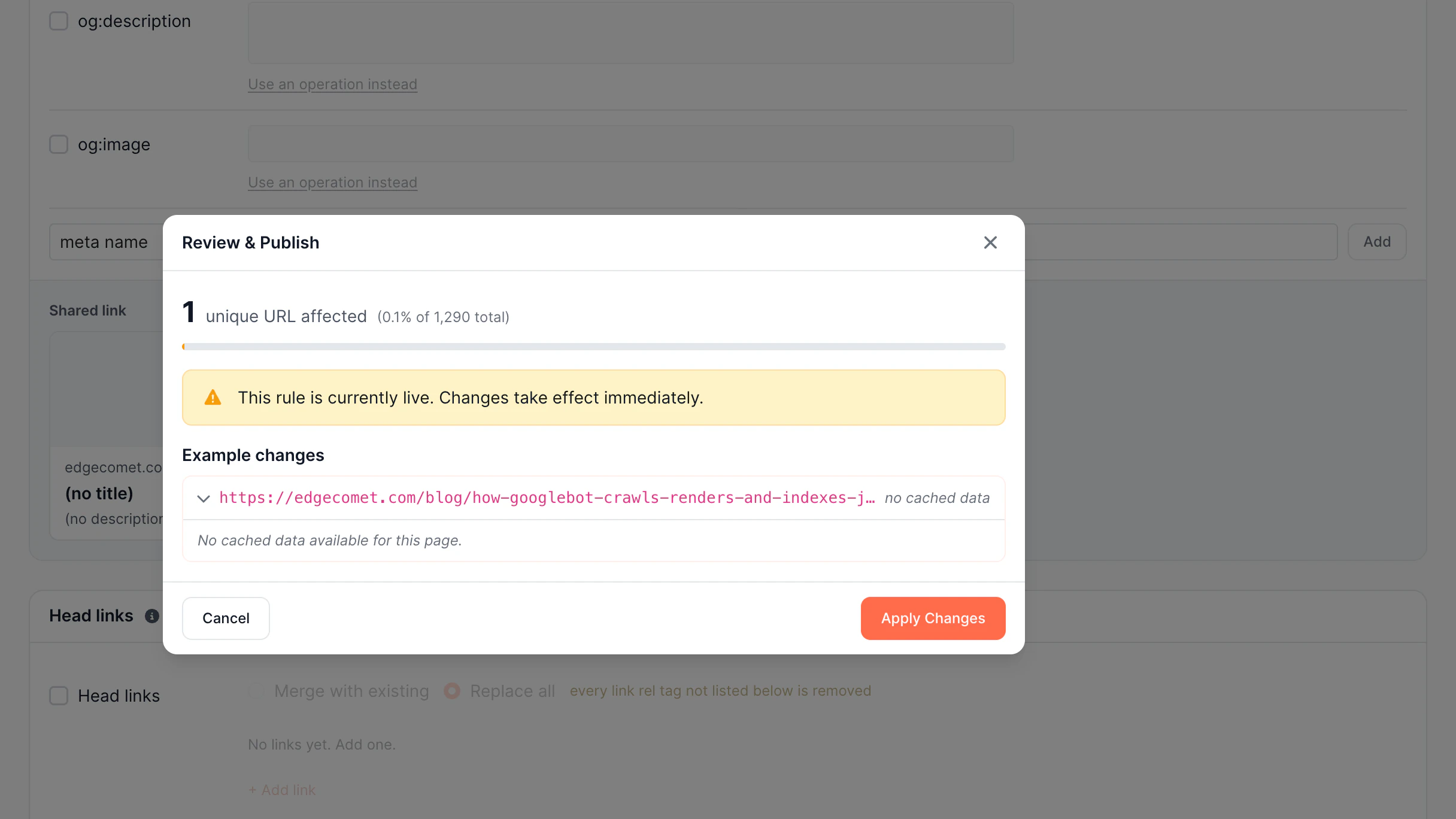
None of the minor SEO issues should require developers and a long wait. EdgeComet lets your SEO team make changes instantly.
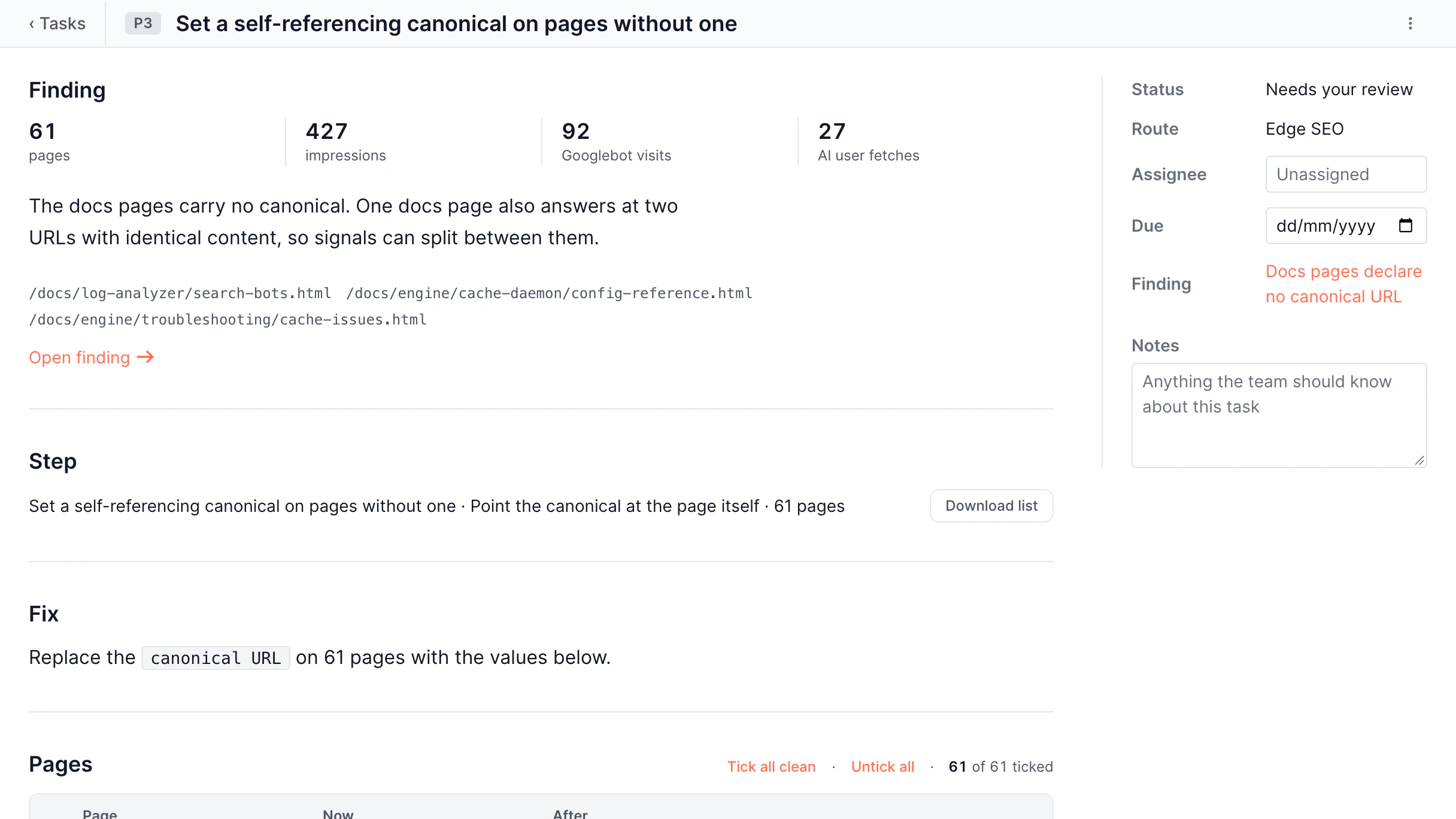
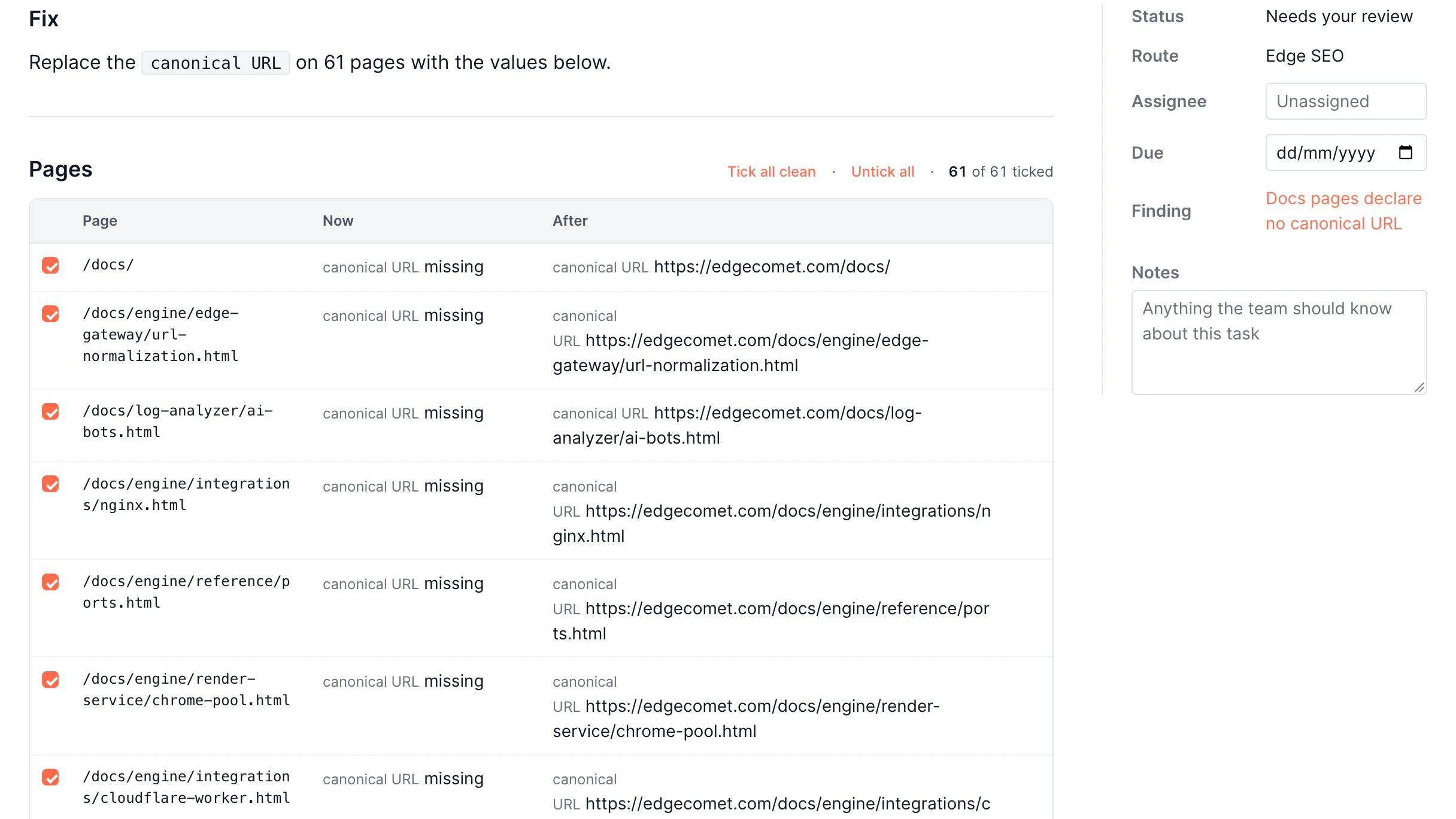
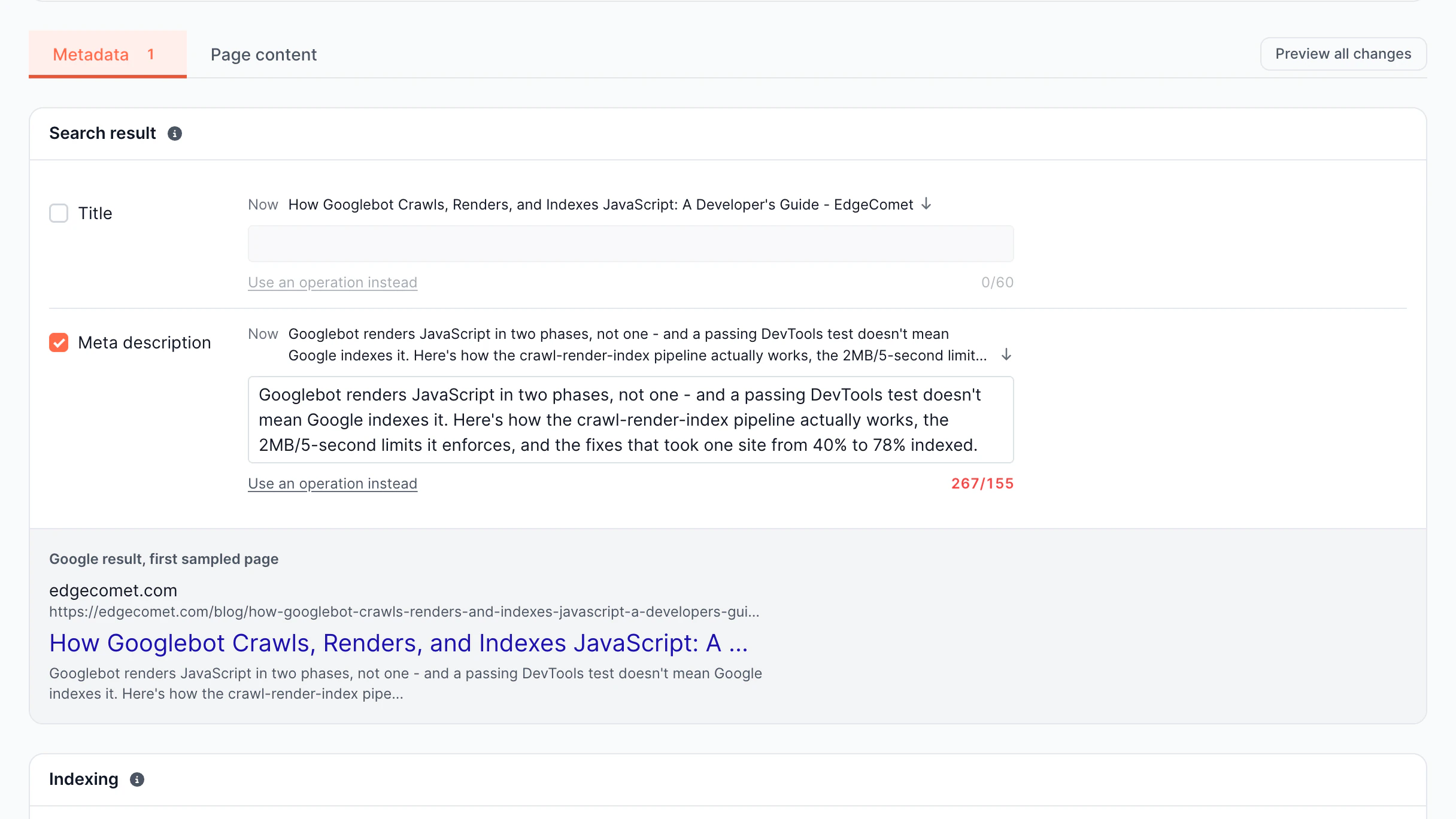
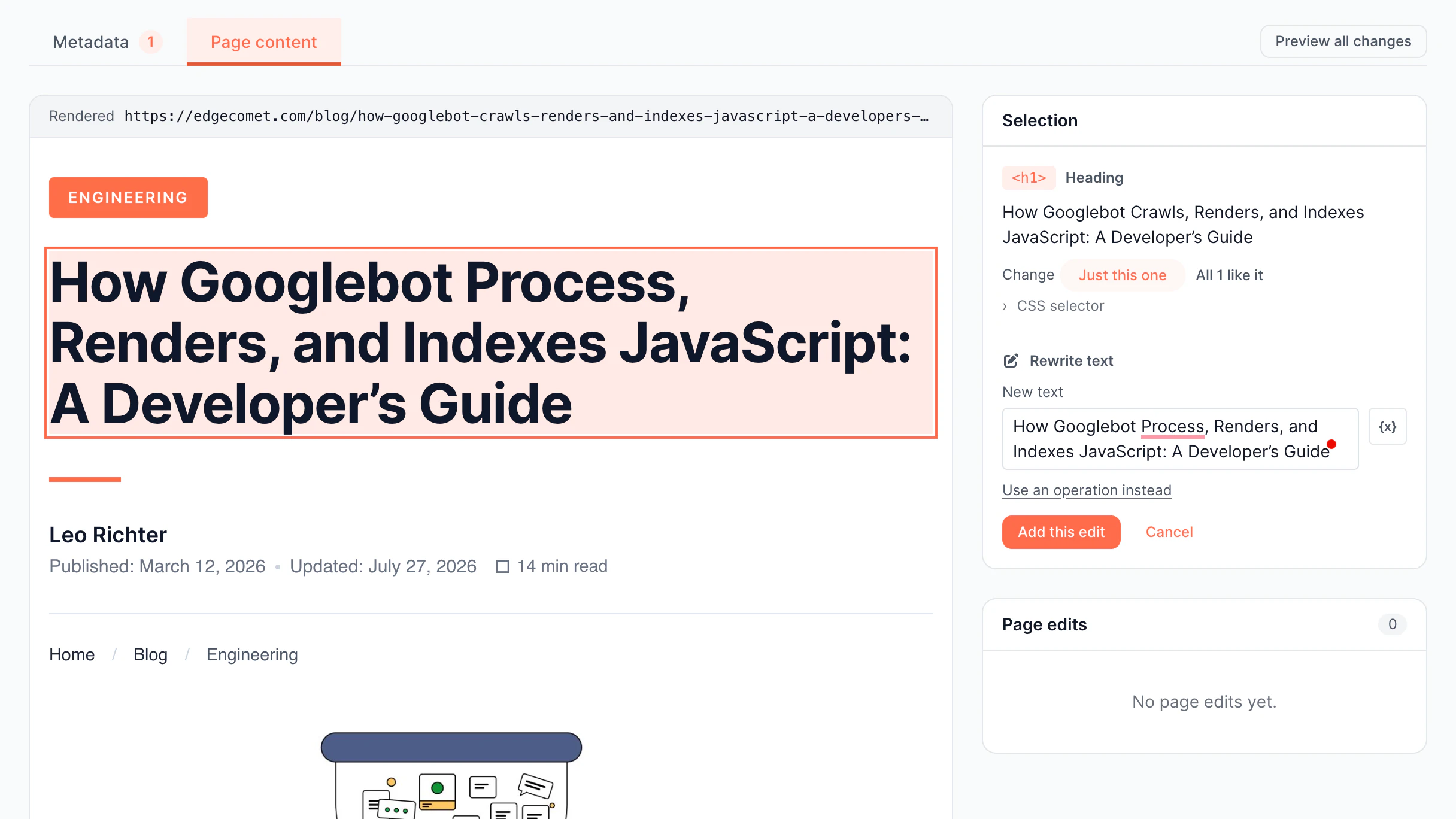
Apply SEO changes across any set of pages
See exactly how a page will look to bots
Every change is tracked, you can revert it
AI generates correct rules for you
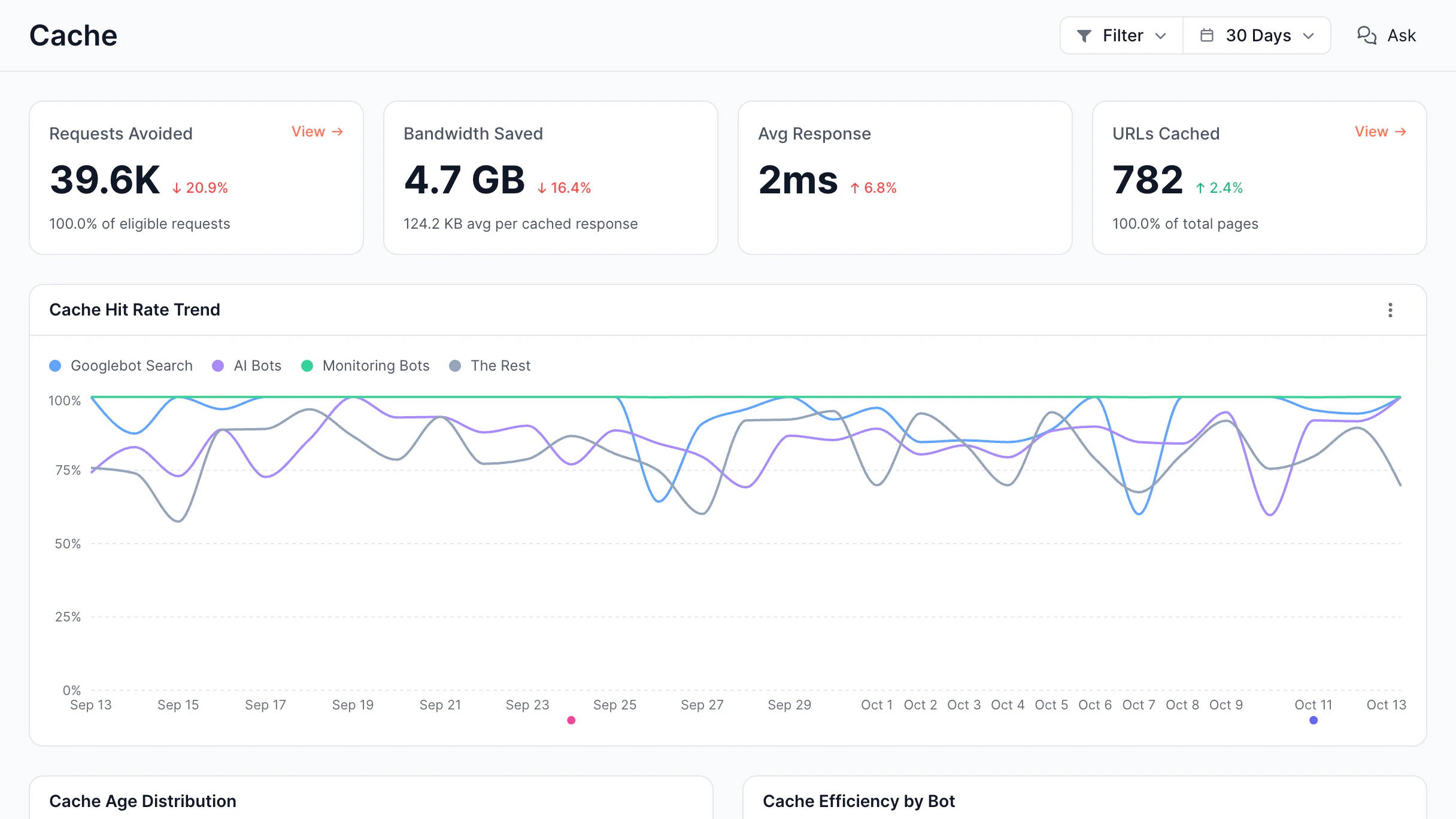
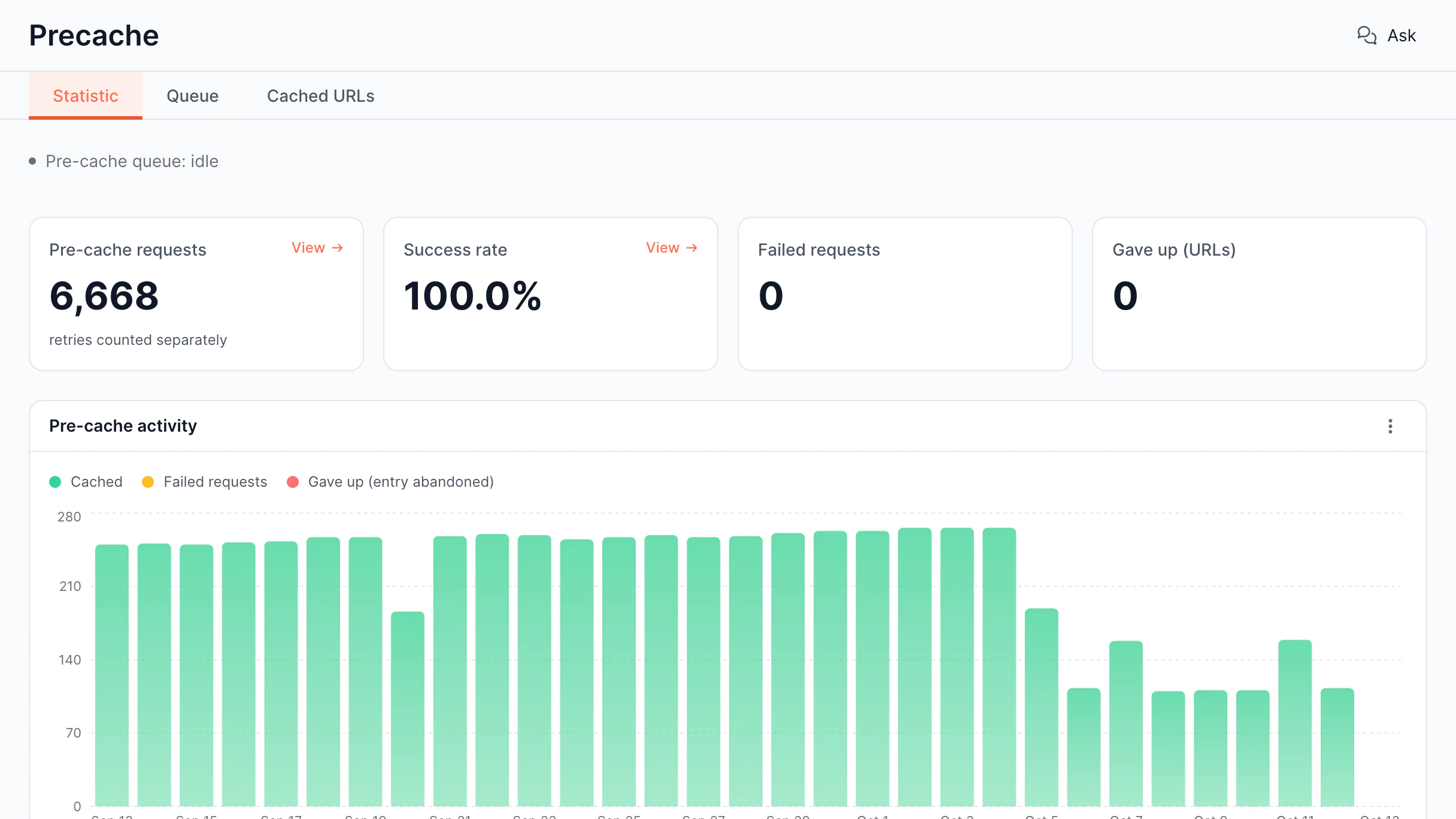
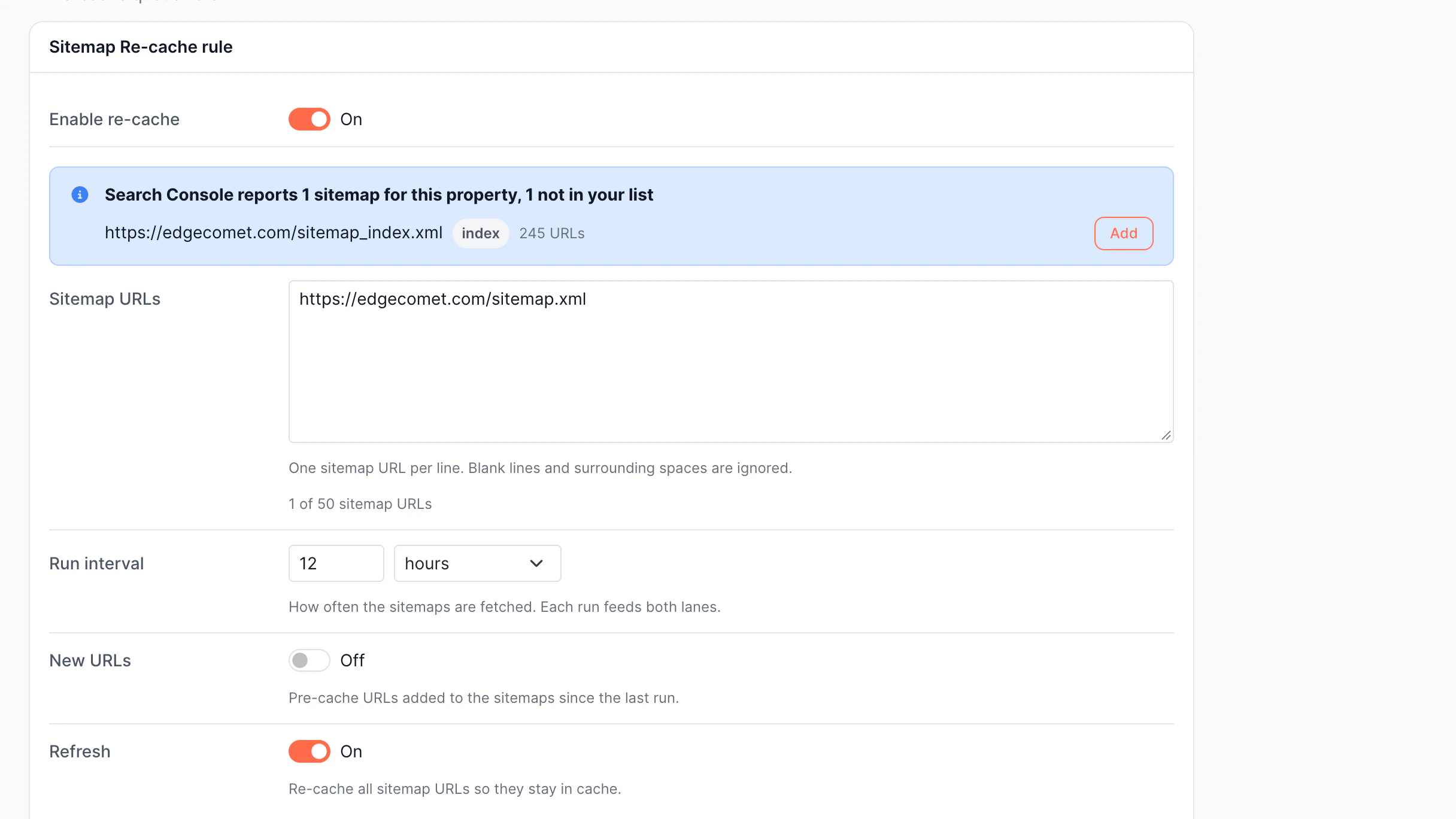
Rendering JavaScript pages on every request is slow and expensive. EdgeComet's caching system ensures bots receive pre-rendered pages instantly.
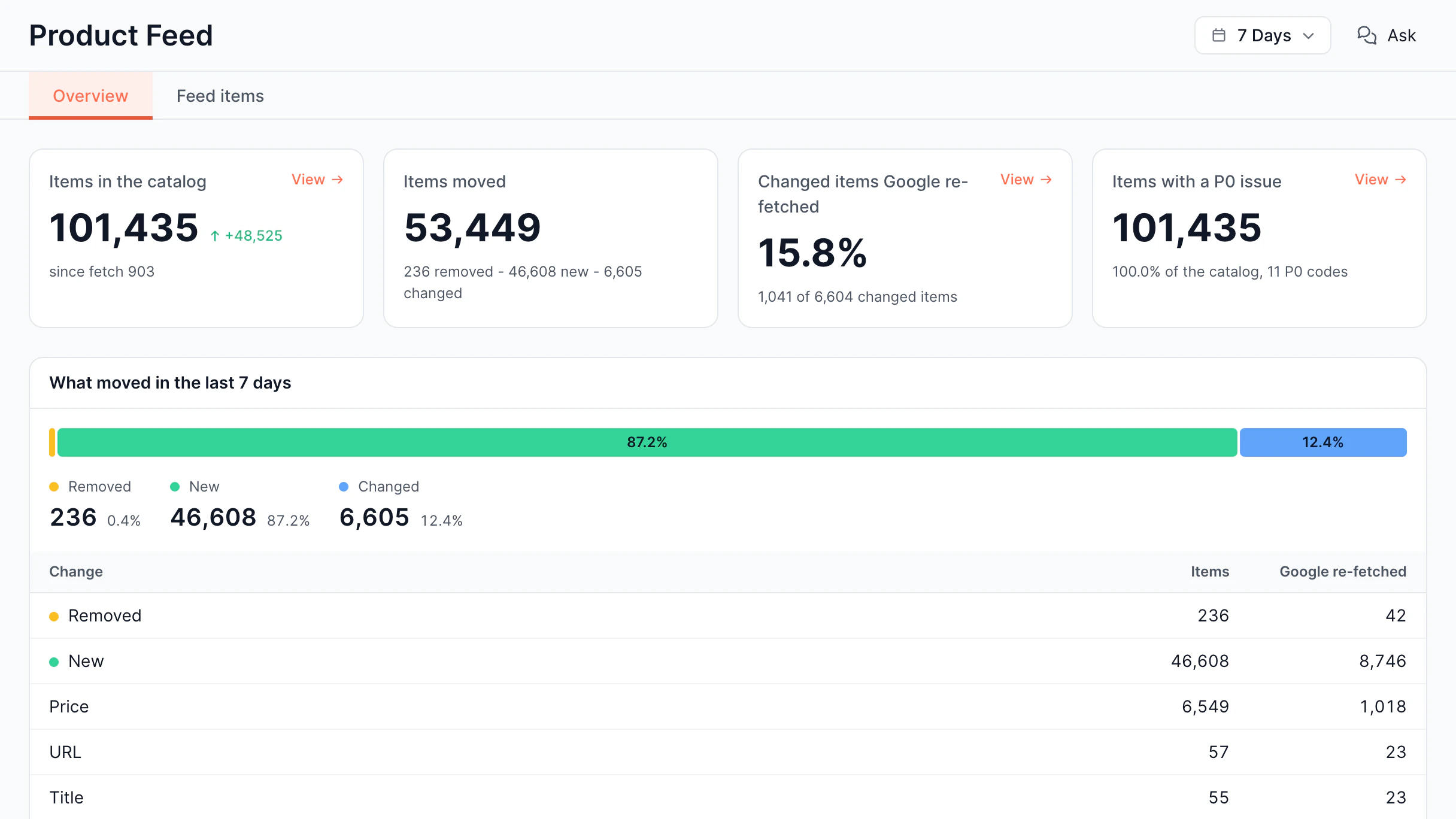
Manage and monitor cached renders
Pre-render critical pages before bots arrive
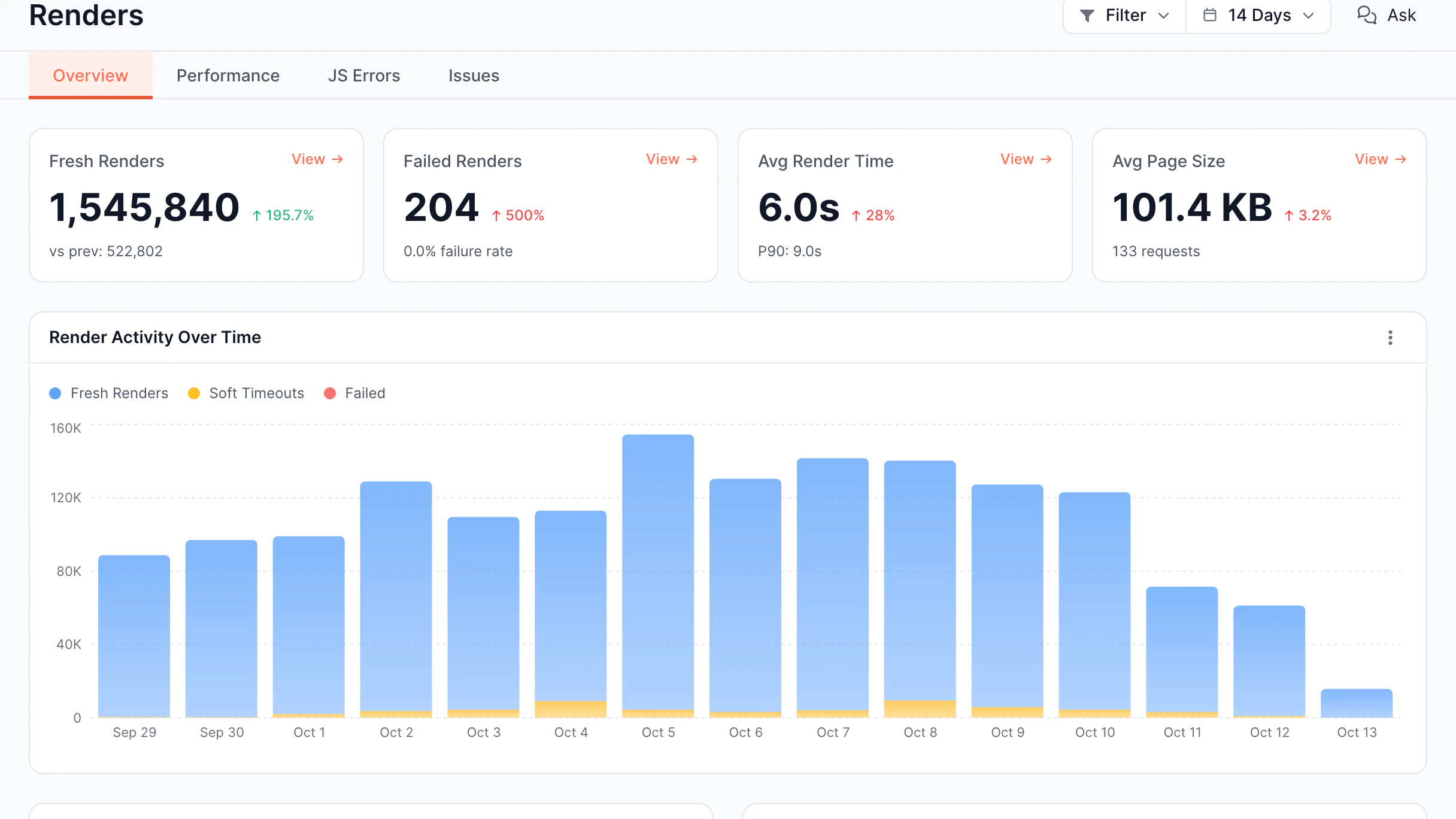
JavaScript rendering failures can silently break SEO and AI visibility. EdgeComet continuously monitors rendering performance.
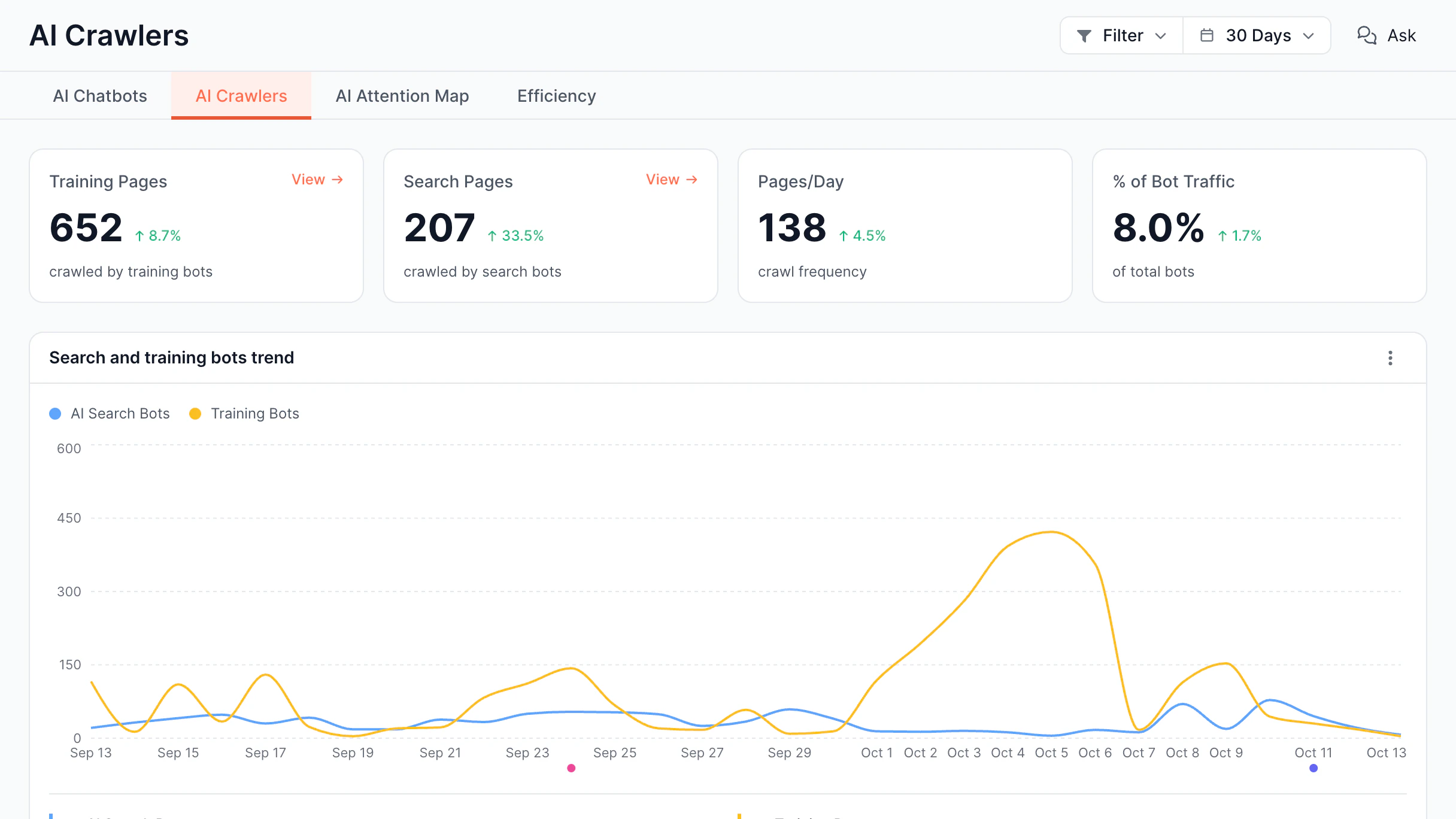
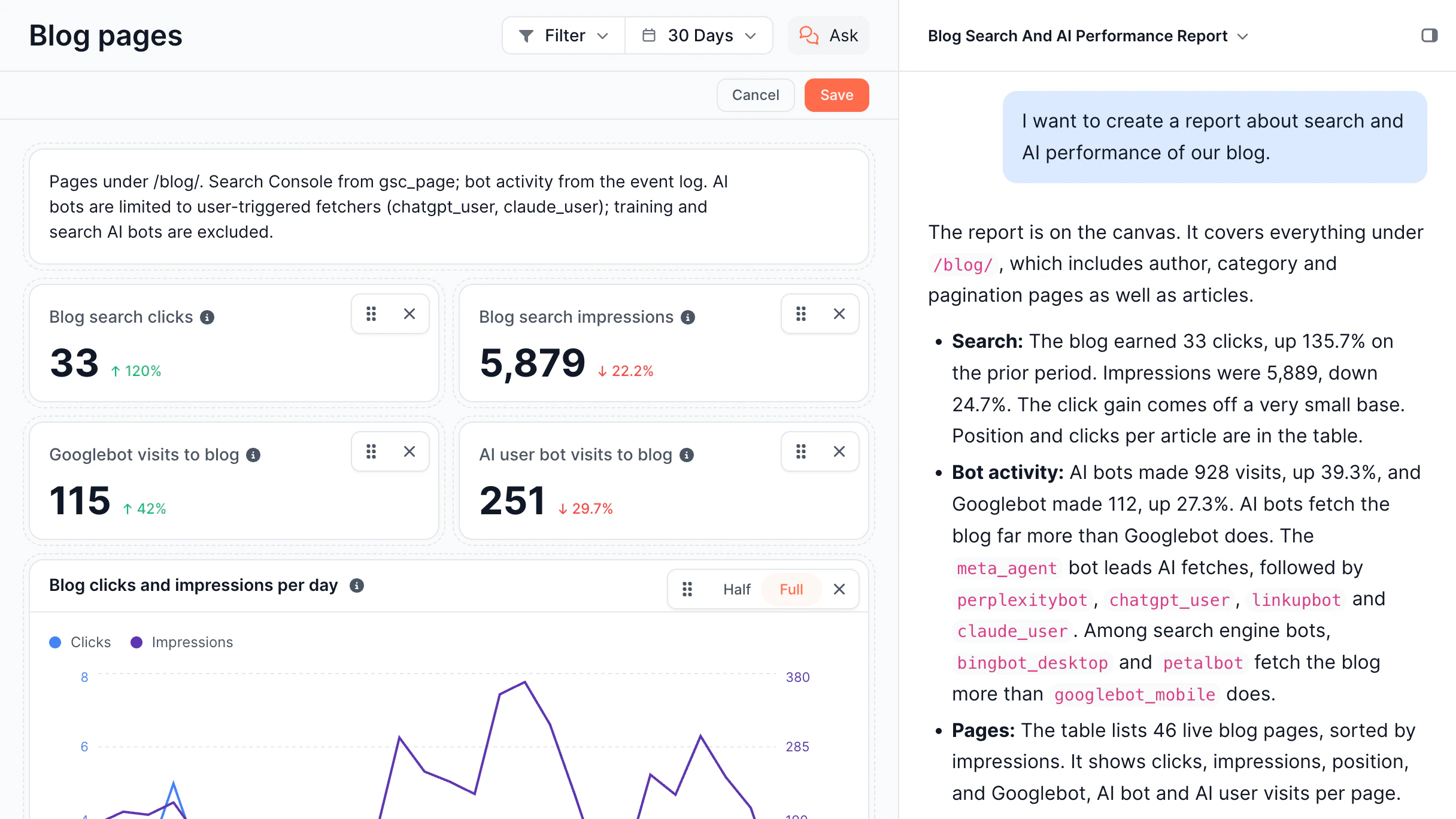
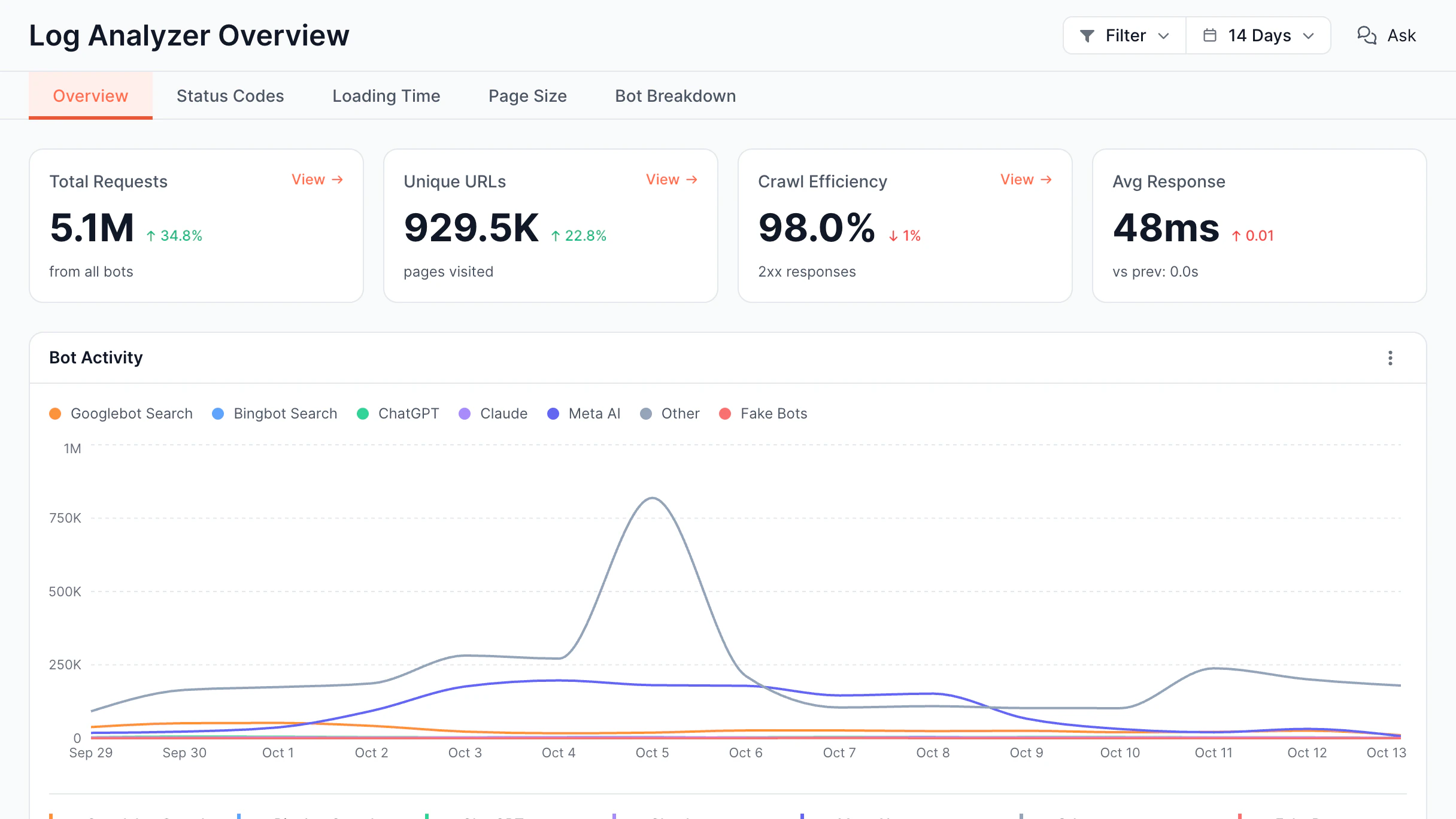
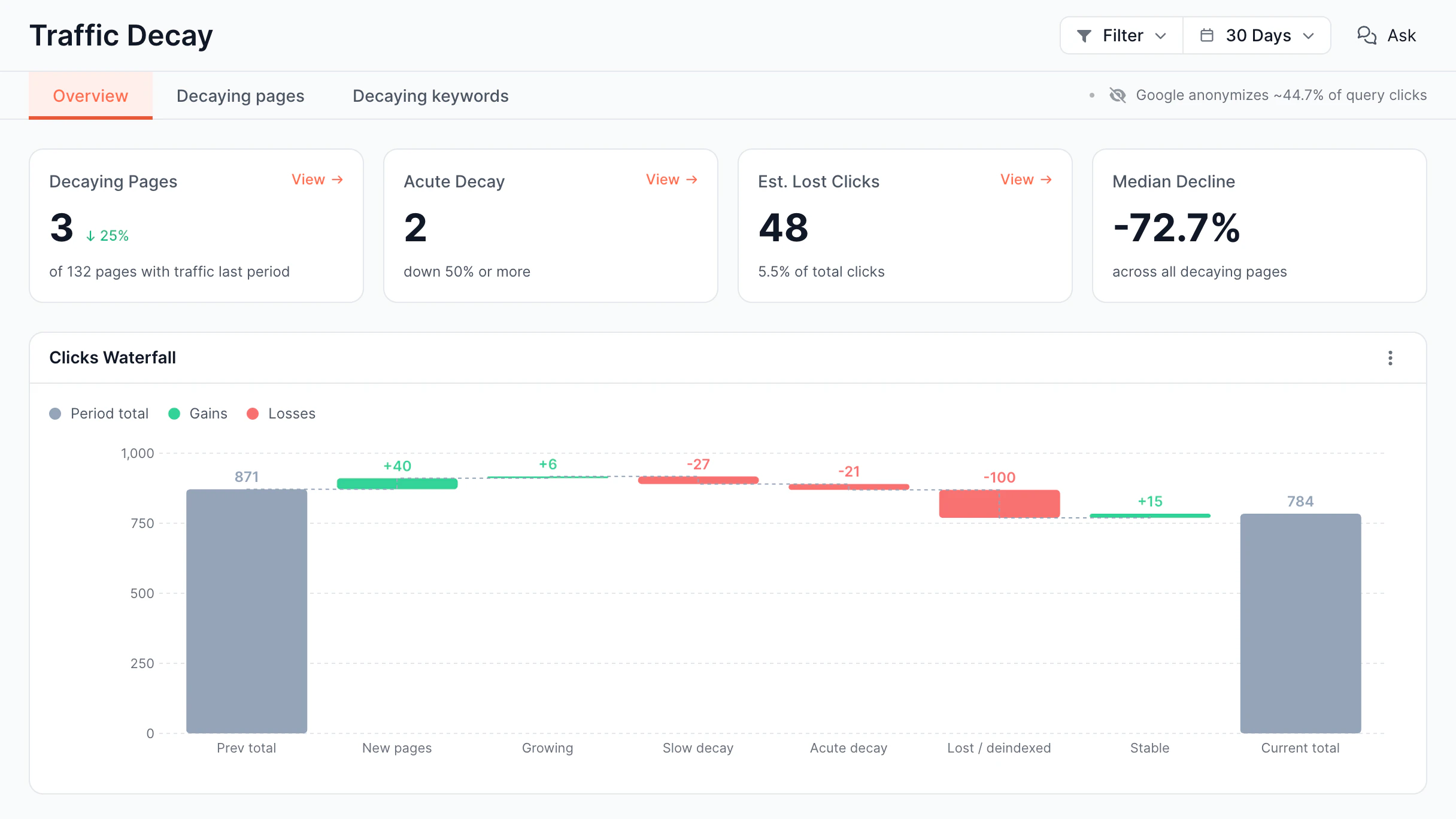
Monitor rendering activity and performance
Detect JS errors during bot rendering
Analyze render time and page size
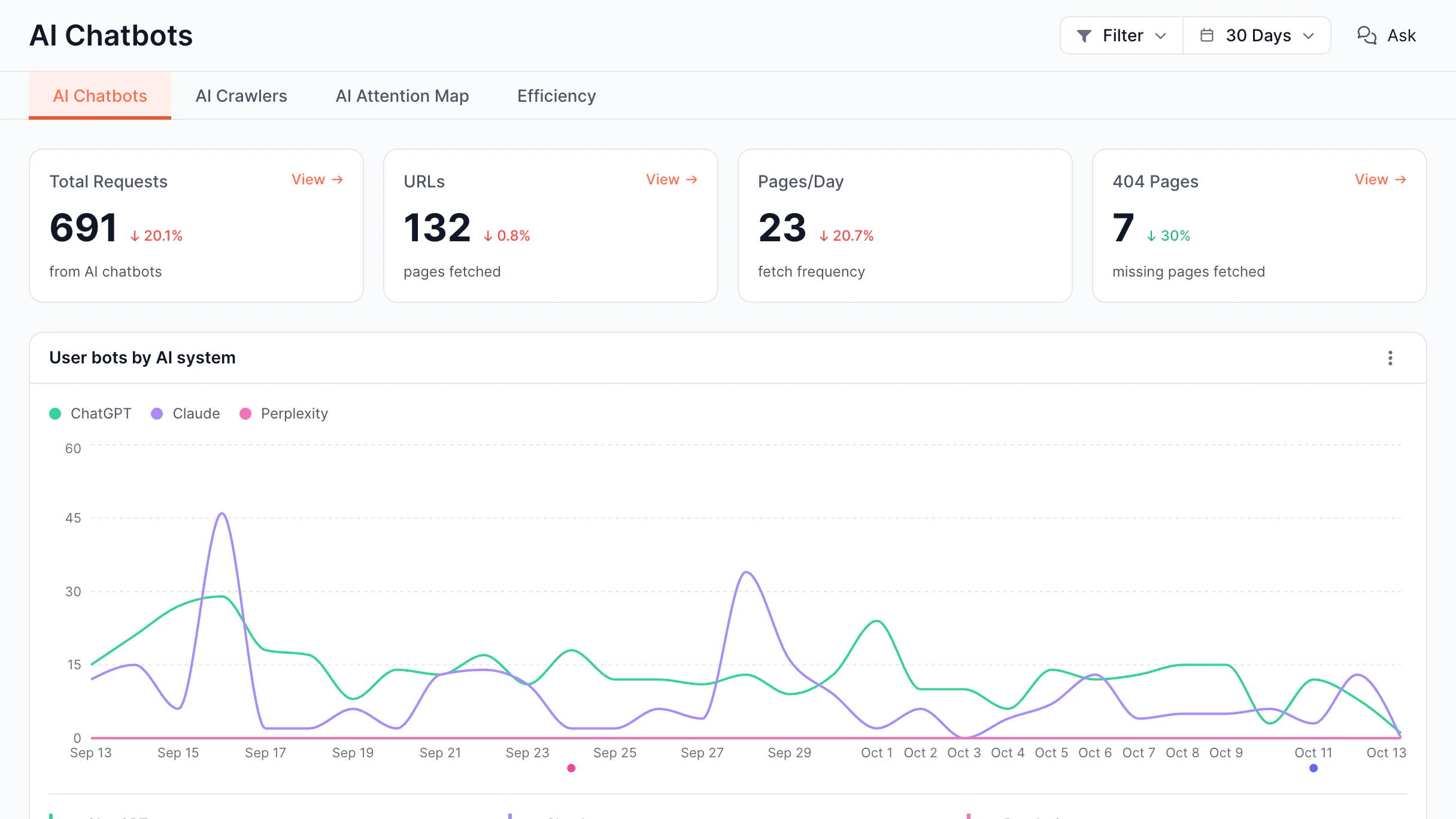
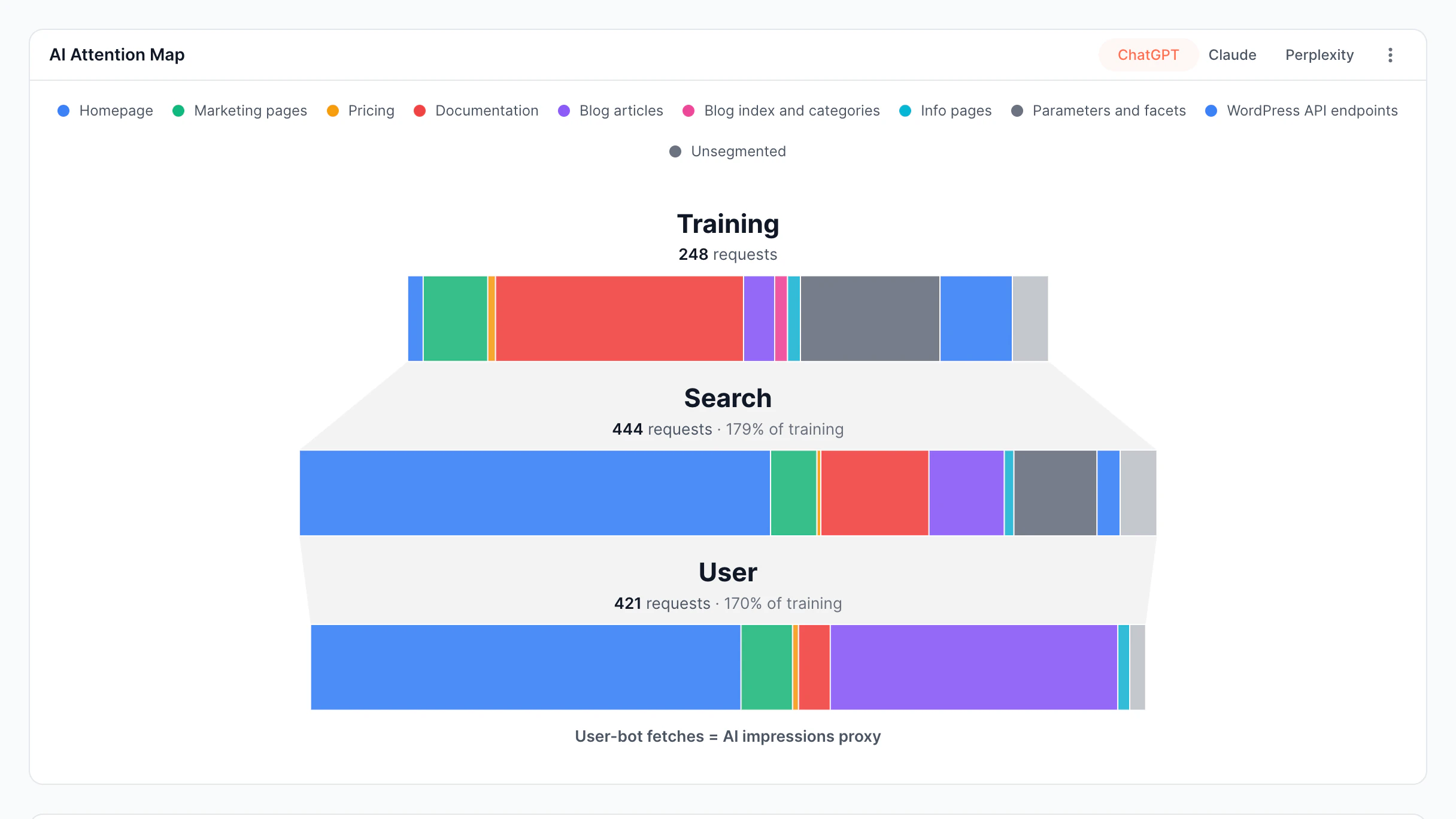
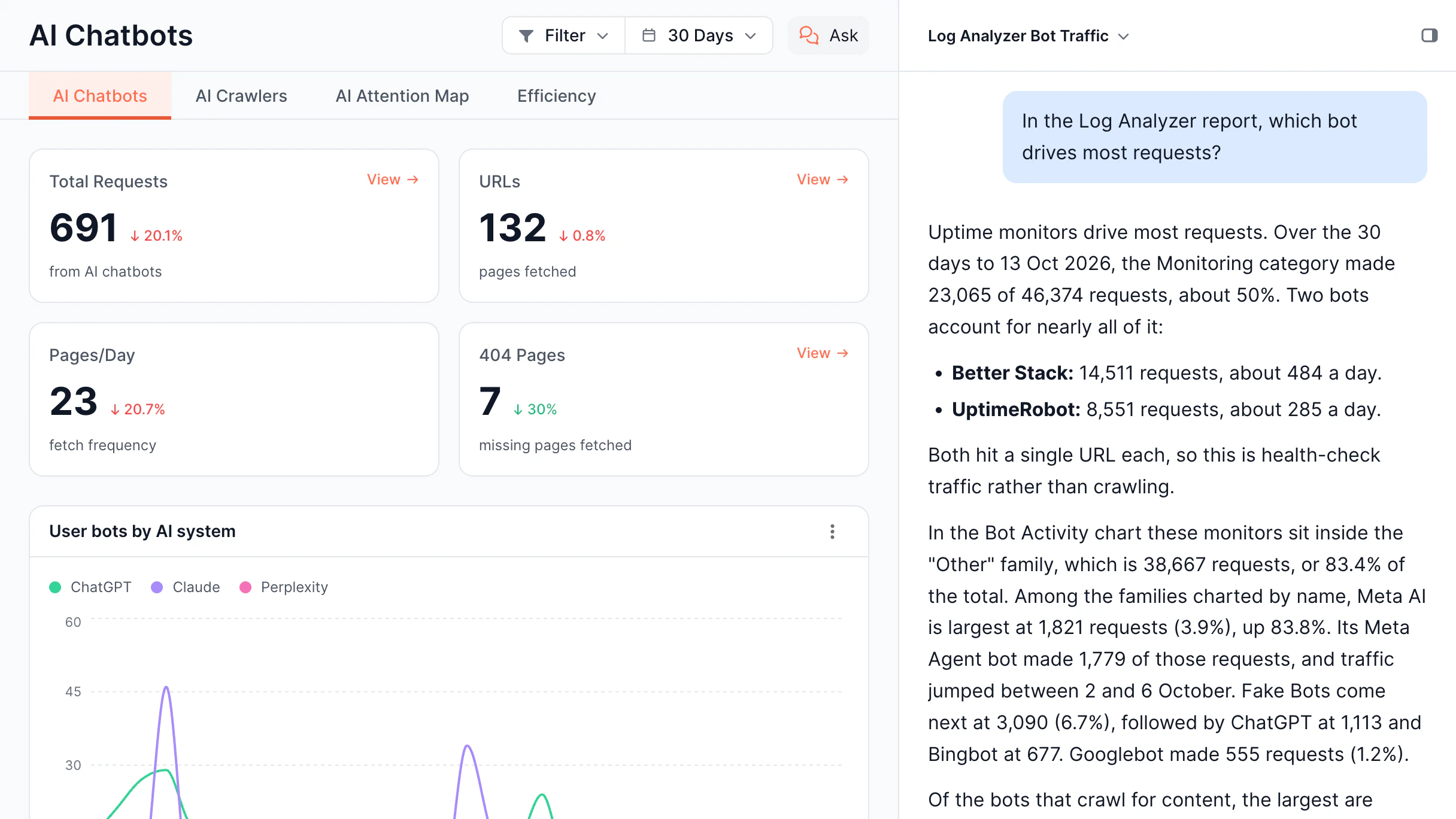
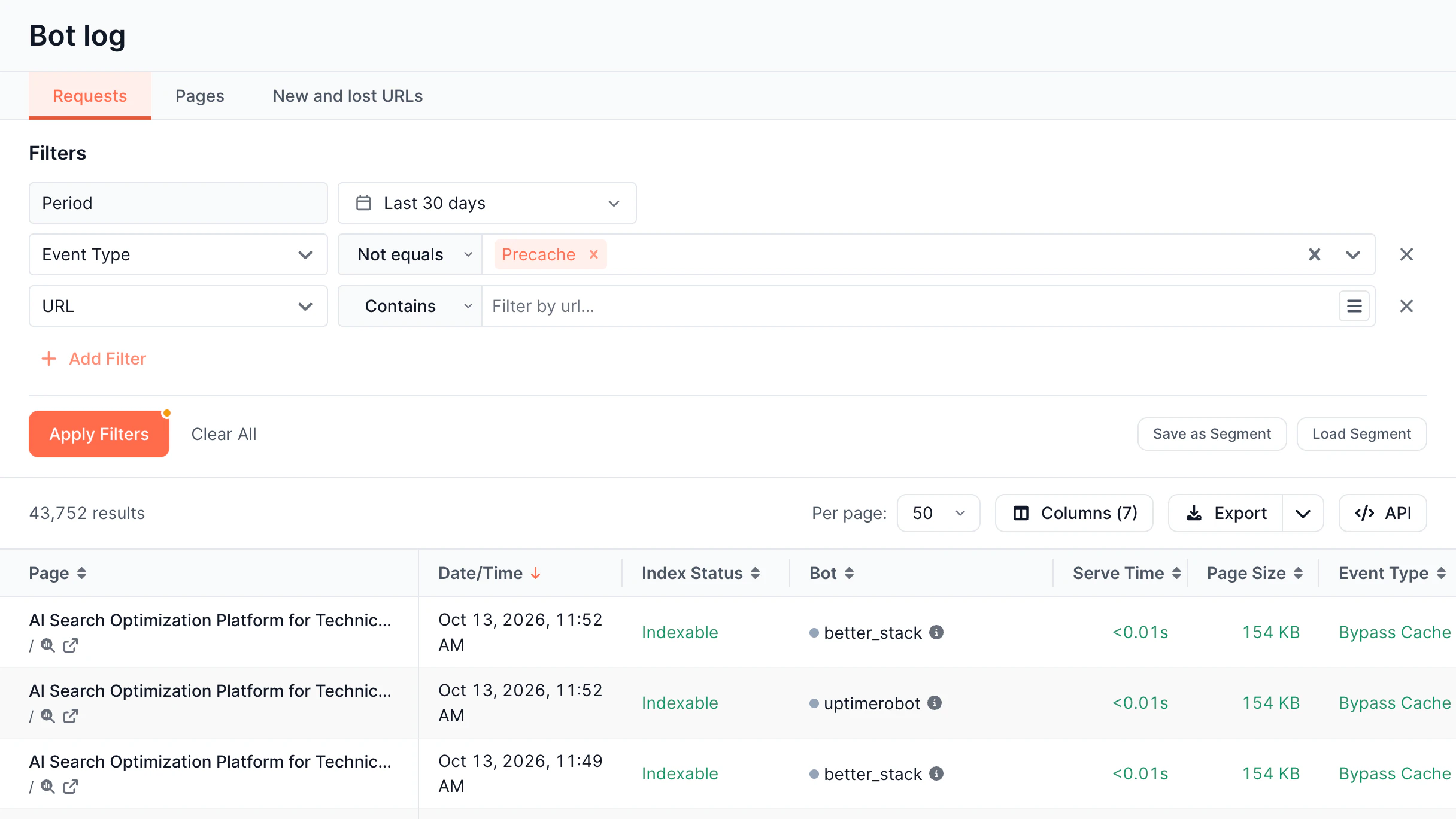
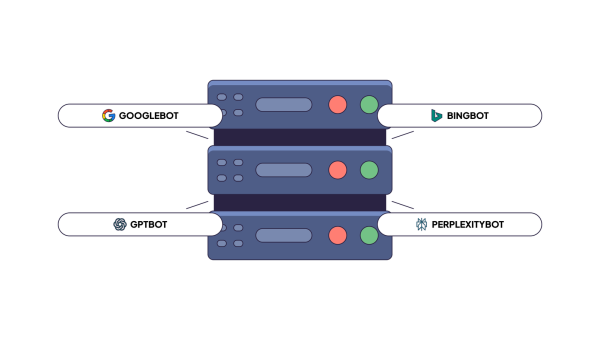
Track ChatGPT, Claude, Perplexity crawlers
SEO issues happen often. EdgeComet monitors every real bot request and notifies if something seems wrong.
Alerts are triggered by actual bot traffic
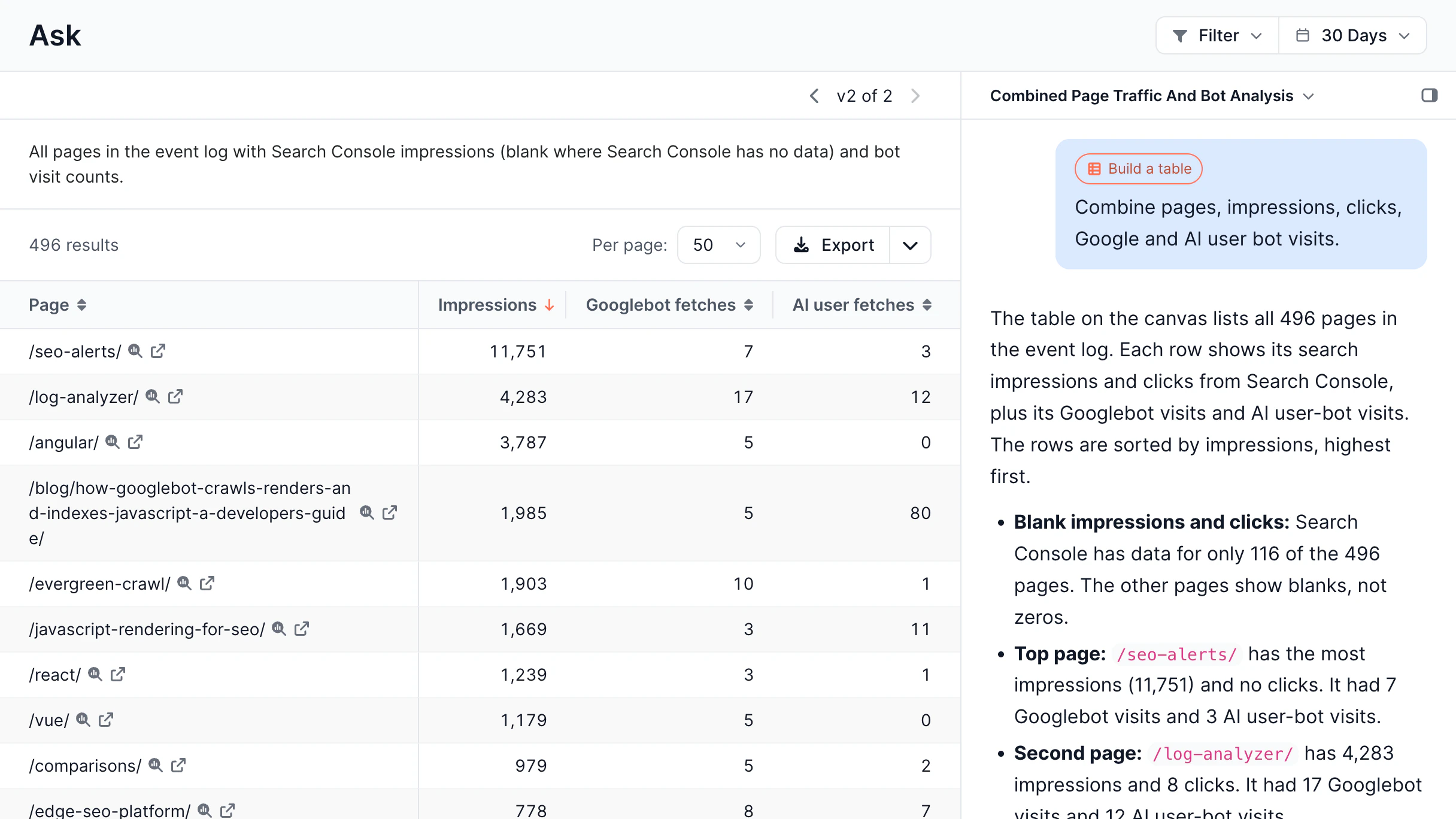
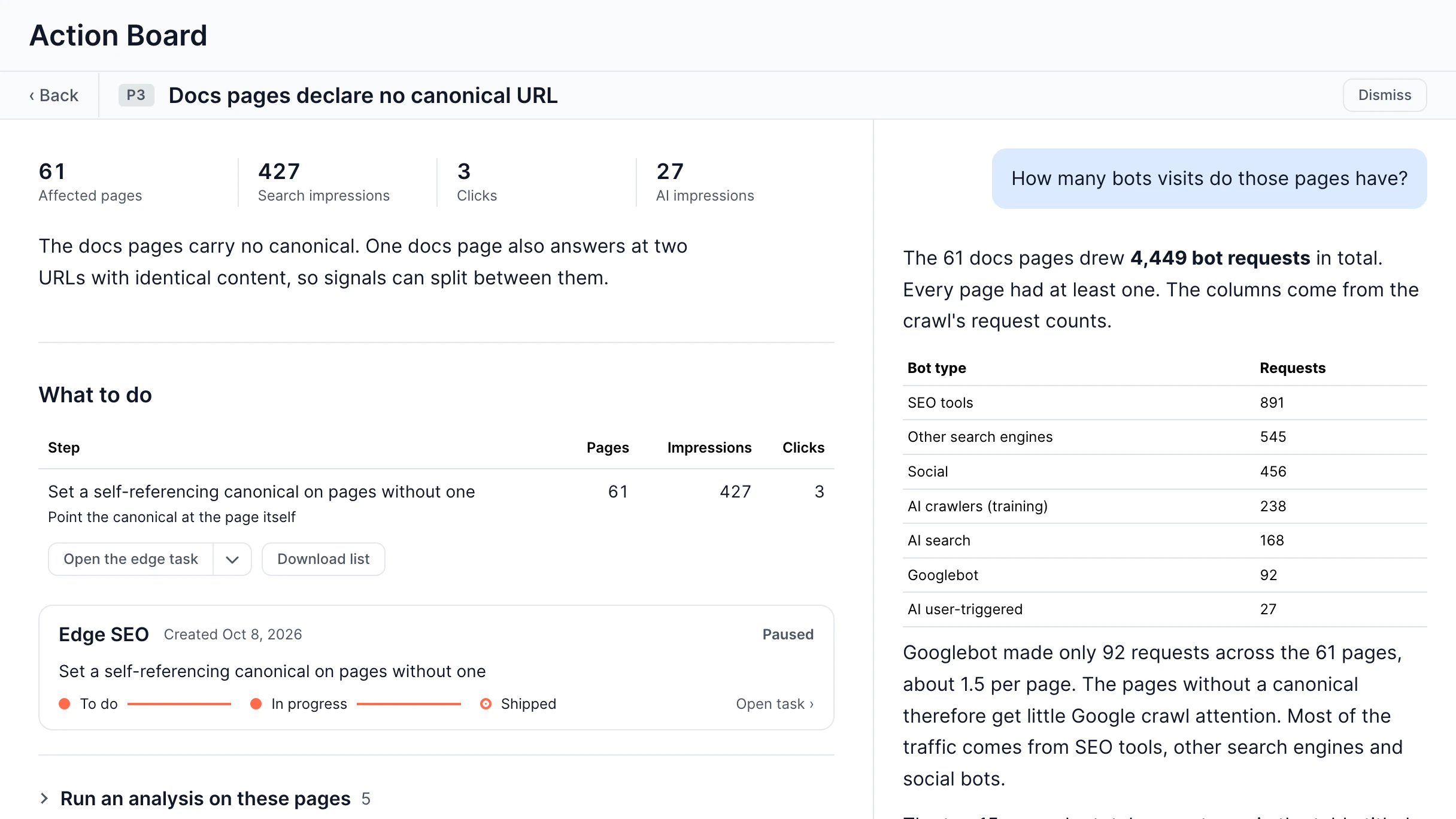
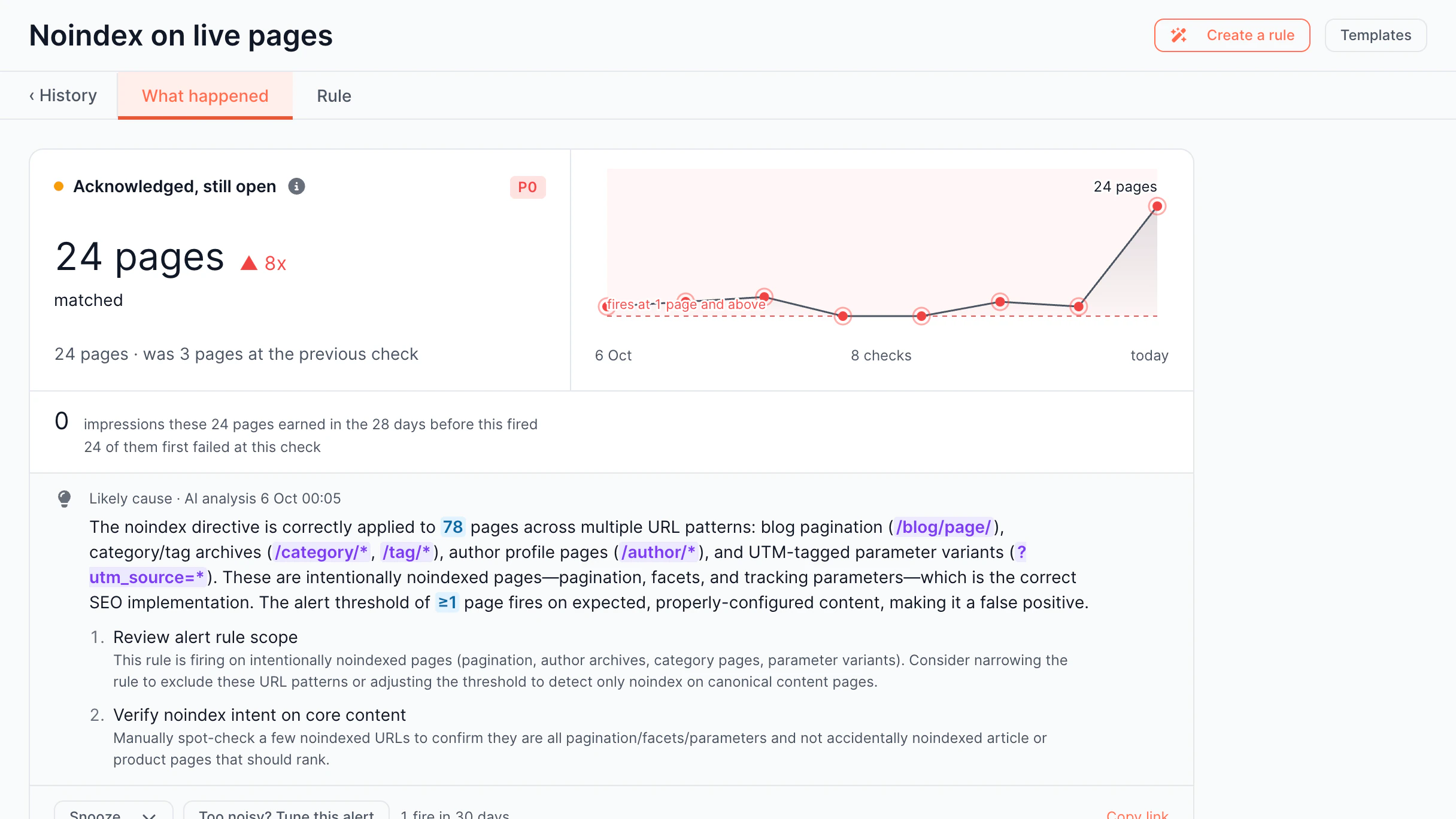
AI explains what happened and why
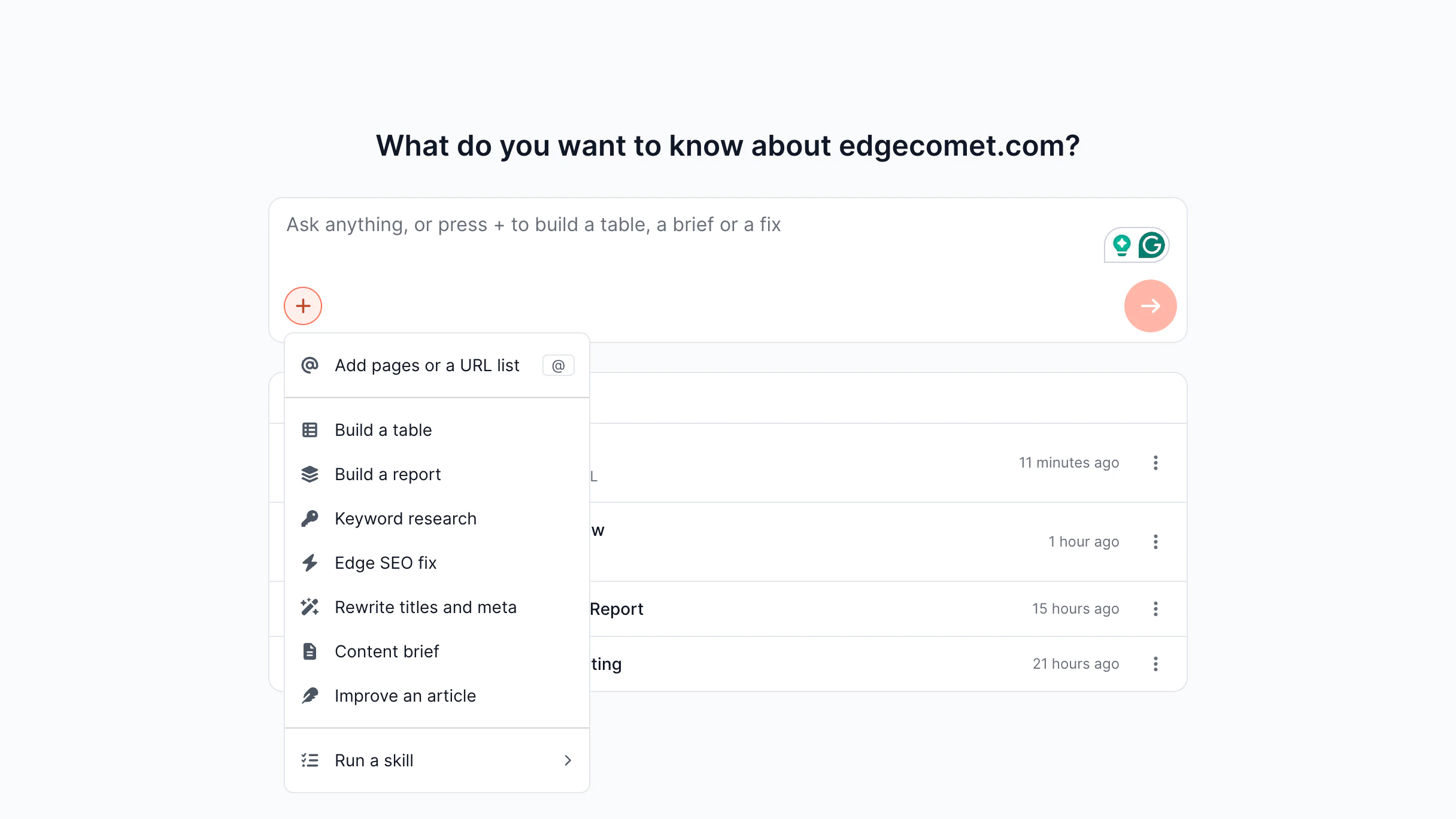
Ready-to-use alert rules, active in one click
Get alerts where your team actually works
SEO data is only useful if you know what to do with it. EdgeComet's AI SEO website optimization platform monitors your site and tells you what to fix and how.
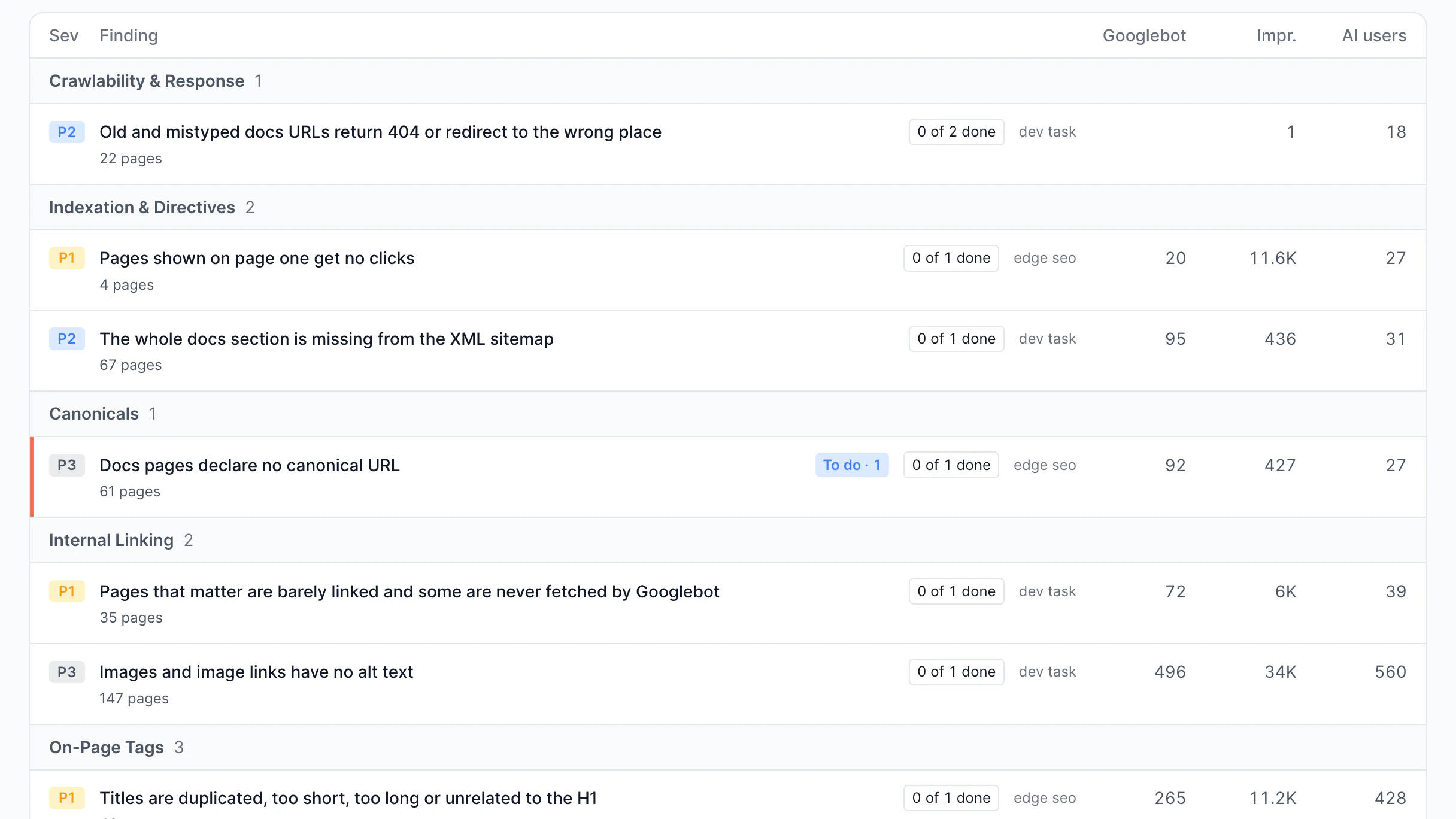
AI surfaces problems
Get specific fixes, not vague observations
AI builds rules for you
Check how EdgeComet differs from traditional SEO and analytics solutions – across real bot data, AI visibility, and crawl intelligence. Here's a comparison of SEO alert tools.
EdgeComet identifies issues once they happen. You don't need to wait for a planned crawl to find out that something broke on your site.
By the time they find issues, those may have already hurt your rankings. EdgeComet detects issues in real time.
They miss real failures that may only appear during Google visits. EdgeComet captures issues as they happen.
You get an alert, but not an explanation of the issues. EdgeComet explains what is wrong and why.
Run EdgeComet on your real traffic with full access to the platform, including rendering, monitoring, and Edge SEO.
SEO alerts track site’s performance and technical health, detecting traffic drops, broken pages, and indexing issues. They trigger alerts based on crawl and integration data, so you can react quickly and avoid traffic loss.
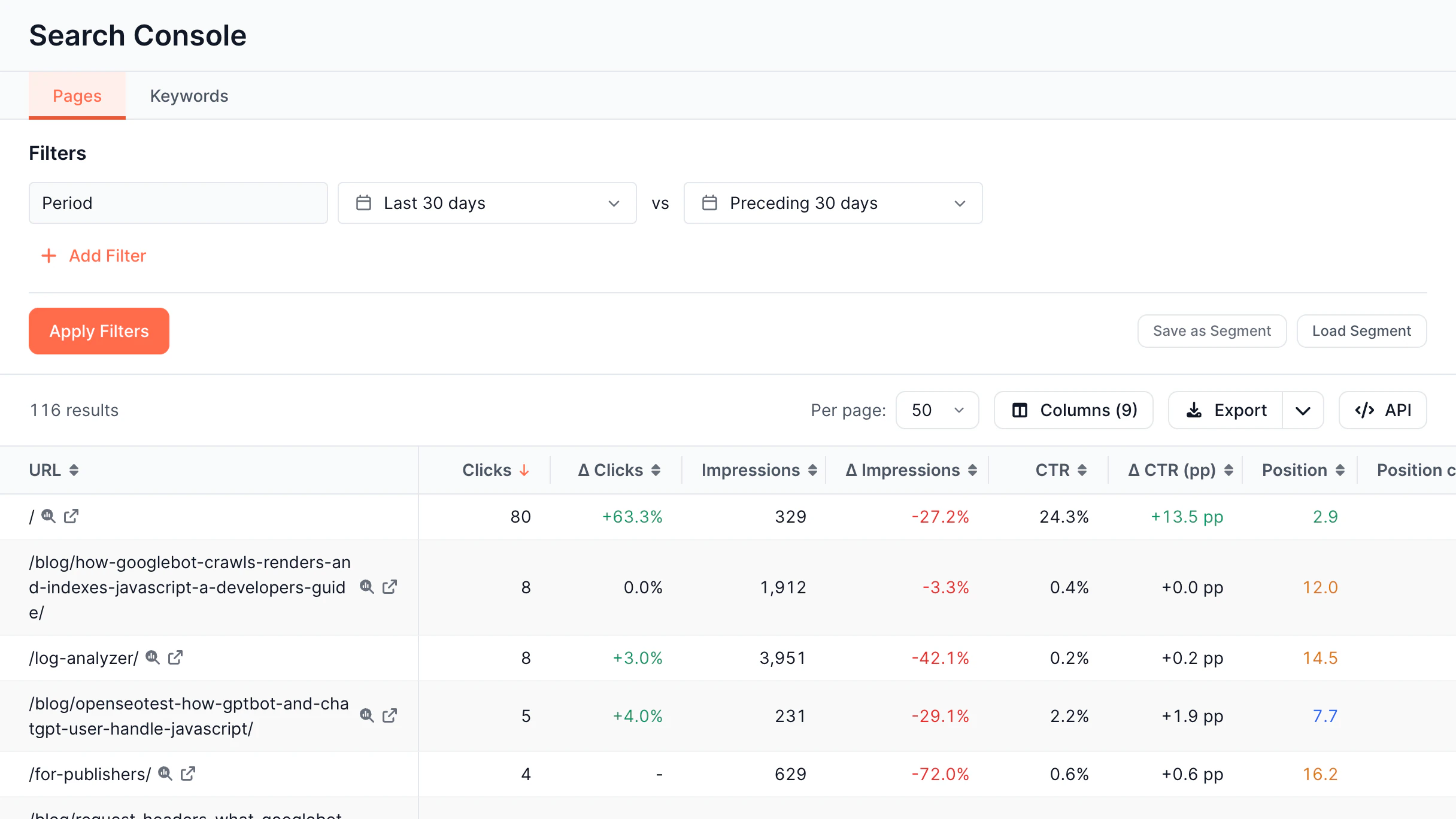
SEO tools keep crawling your website and pull data from Google Search Console via API to monitor rankings, traffic, and any technical issues.
You can define the rules on your own, for example, "inform me if traffic falls by more than 15% in a single day."
Once a problem gains your threshold, the tool sends a notification to your email, Slack, or another channel so you can fix it right away.
SEO alerting from EdgeComet will allow your team to catch critical problems as soon as they appear – from real bot traffic – before content rankings and your revenue are impacted.
Online stores can lose revenue if product pages are non-indexed or canonical tags break after a deployment. EdgeComet SEO Alerts show such changes when Googlebot detects them.
Large listings frequently publish new pages and delete old ones. SEO Alerts notify when crawl errors appear, no-index rules misfire, or AI bots start inspecting the wrong URLs.
Dynamic real estate sites can fail rendering – SEO Alerts capture broken structured data and visibility issues once real bots experience them, not after your content rankings decrease.
For content publishing sites where every indexing delay may cost traffic, EdgeComet’s SEO Alerts show title tag changes, no-index anomalies, and new AI bot activity as they appear.
Improve indexing, visibility, and traffic from day one.
14-days free trial
Ranking alerts in SEO are notifications that you get when bots identify changes that impact how content is indexed and ranked.
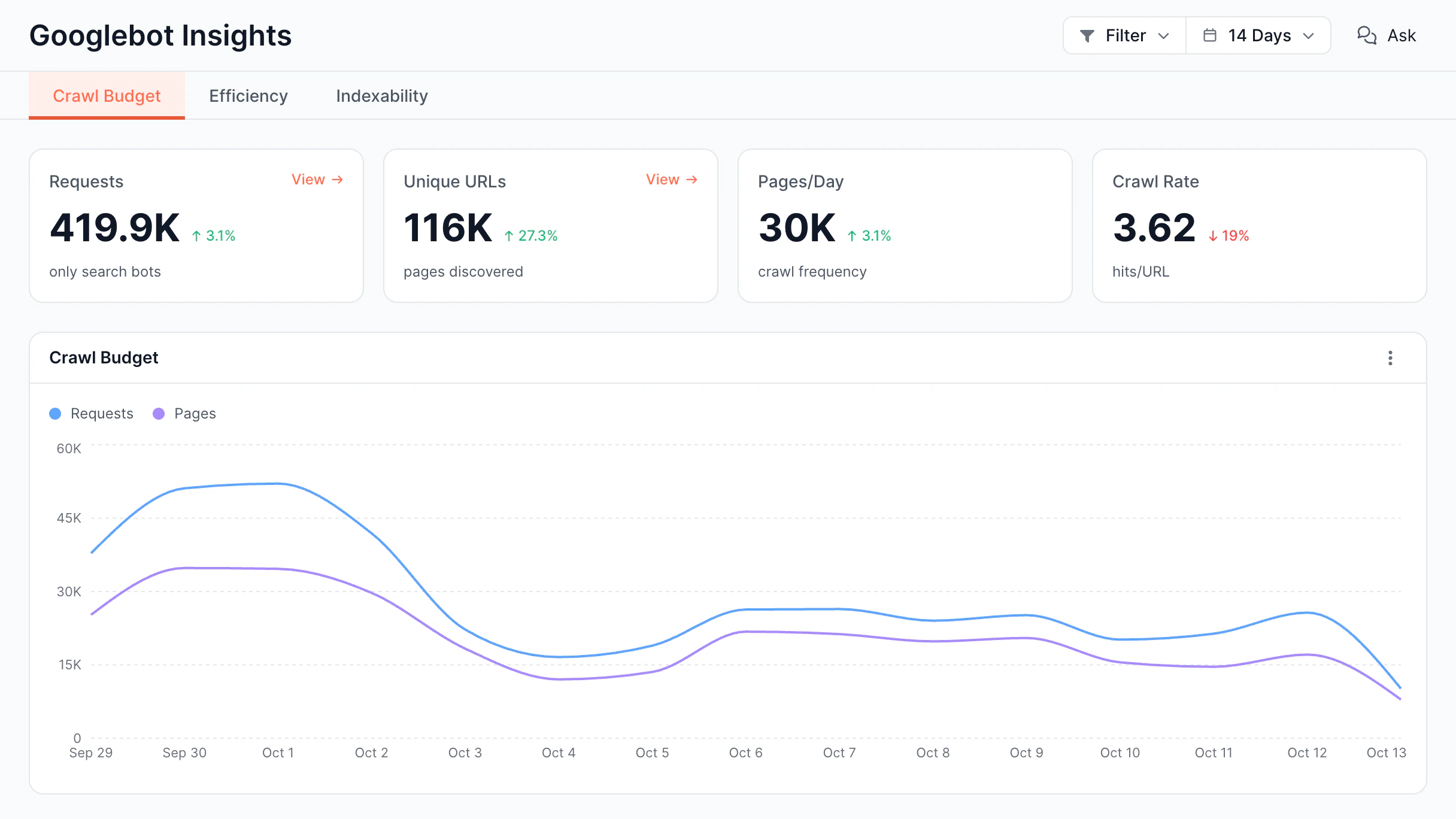
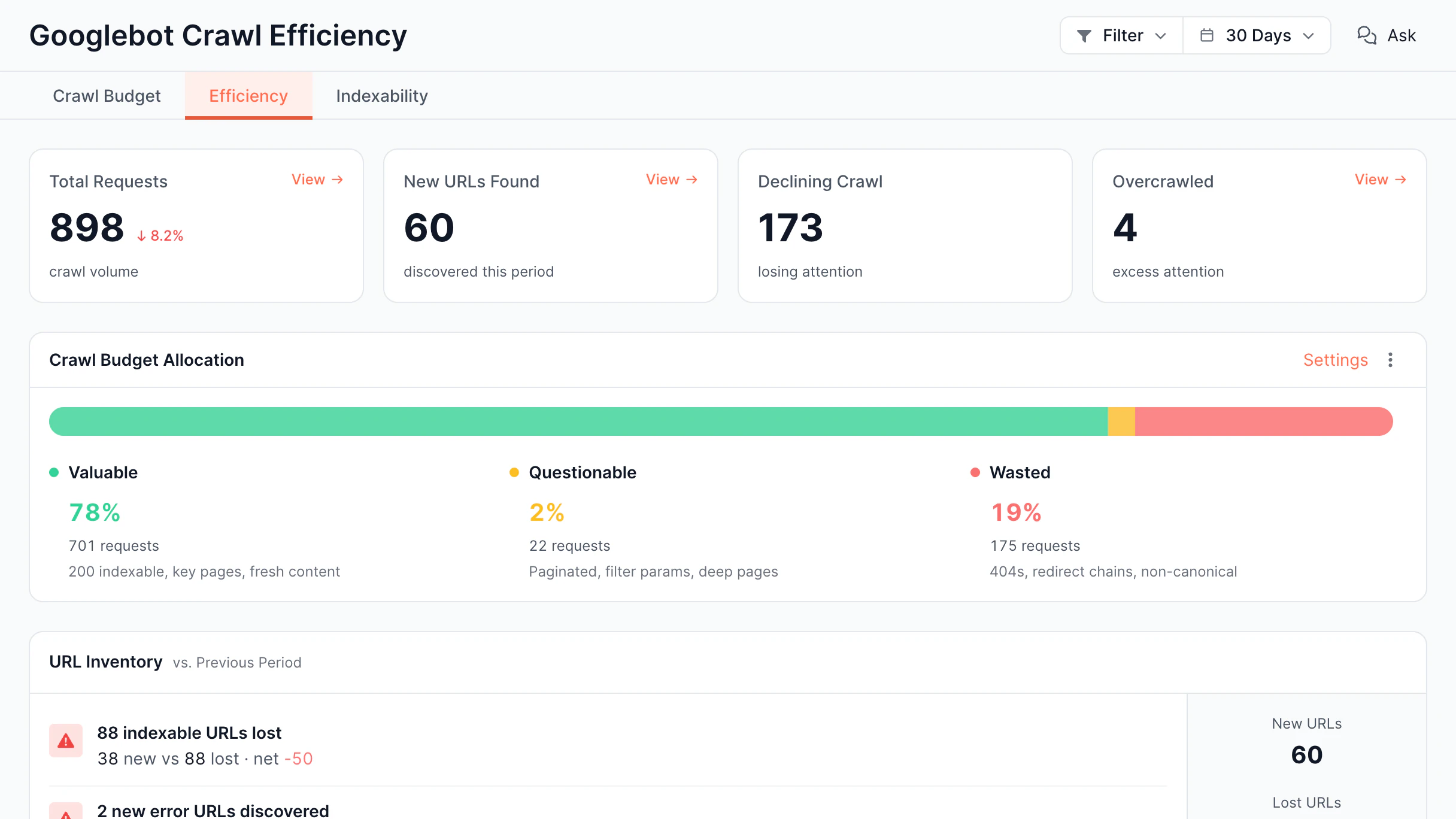
EdgeComet monitors crawling budget allocation, response times, HTTP status codes, title tags, canonicals, structured data, indexability status, and AI bot activity.
Alerts appear when a real Googlebot, GPTBot, or ClaudeBot request uncovers an anomaly, for example, pages going noindex, canonicals mismatch, JavaScript rendering failures, or unusual spikes in crawl errors.
EdgeComet identifies problems on the first affected bot request and assesses signals within a 5 minutes – faster than crawl-based solutions that may report hours after the issue appeared.
Yes, you can, EdgeComet offers 25 ready-to-use alerting templates and allows teams to configure thresholds for specific URL patterns, bot types, status codes, and SEO field changes.
By capturing rendering, indexability, and crawl issues when real bots experience them, SEO teams can fix those issues before rankings decrease rather than after traffic already fell.
EdgeComet handles high-volume sites and monitors multiple domains continuously from live bot traffic, with no additional crawl load on your origin servers.
Search engines and AI bots make indexing decisions based on what they see in production, not what a generic audit reveals. Real-time monitoring from actual bot traffic is the only way to ensure what crawlers see aligns with what you intend.
Stay ahead with expert insights on search visibility, AI optimization, and technical SEO
JavaScript content takes hours to weeks longer to index than static HTML because Googlebot cannot index it on the first...
Read Article
When you optimize a website for search and AI visibility, you think about content quality, page speed, structured data, and...
Read Article
In contrast to Google Search, AI systems like ChatGPT, Perplexity, and even Gemini publish very little about their internal data...
Read Article