
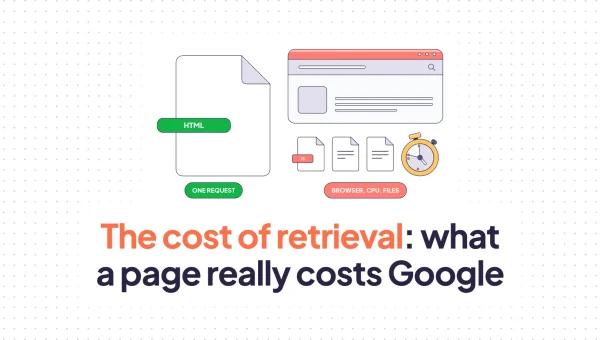
The cost of retrieval: what a page really costs Googlebot
I started digging into crawl budget around 2016, and in 2018 I gave my first talk built on crawl data...
Read ArticleEdgeComet handles how your property listings are delivered to search engines and AI crawlers, so they are always fast, complete, and visible. It helps to increase organic traffic and qualified inquiries, allowing more buyers and renters to explore your listings.
Search bots may explore listing URLs but fail rendering the content. A lot of property pages may be explored but not indexed, which means that buyers will never see them in search results.
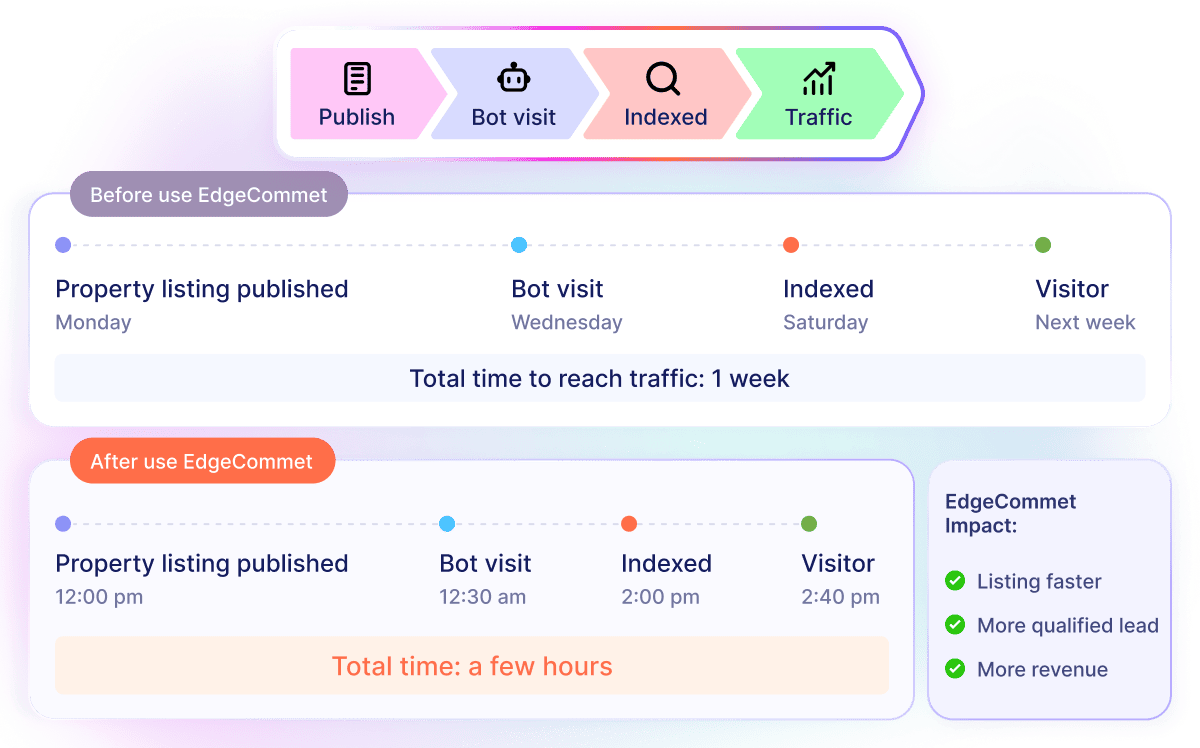
Real estate catalogs change quickly. If it takes days for listings to get indexed, buyers may already find your competitors’ listings elsewhere.
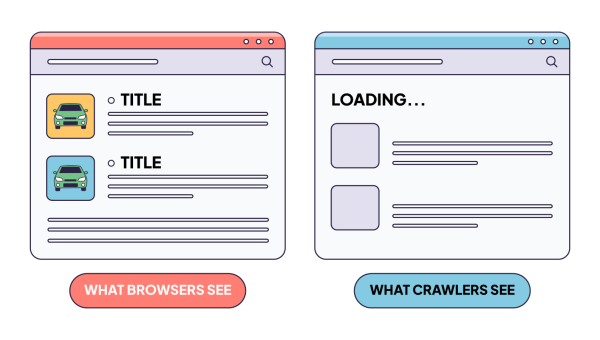
AI bots often fail to execute JavaScript-based pages. If your listings load dynamically, crawlers may never discover property details, prices, and locations.
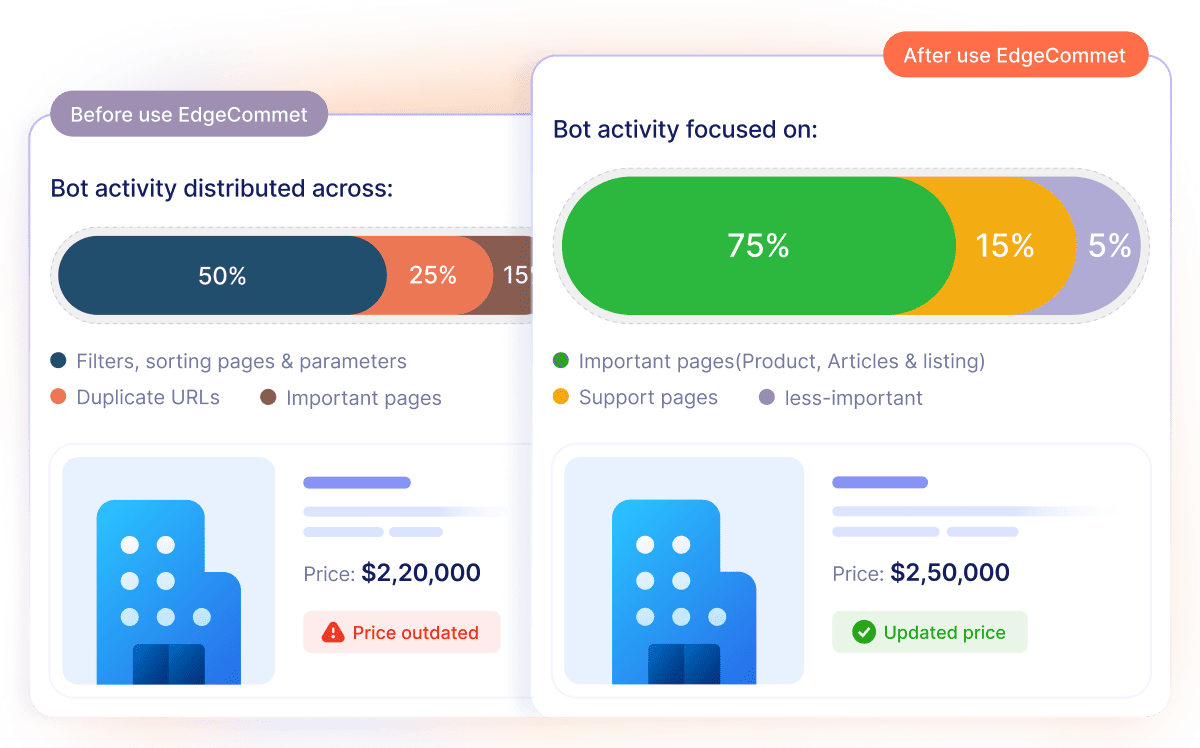
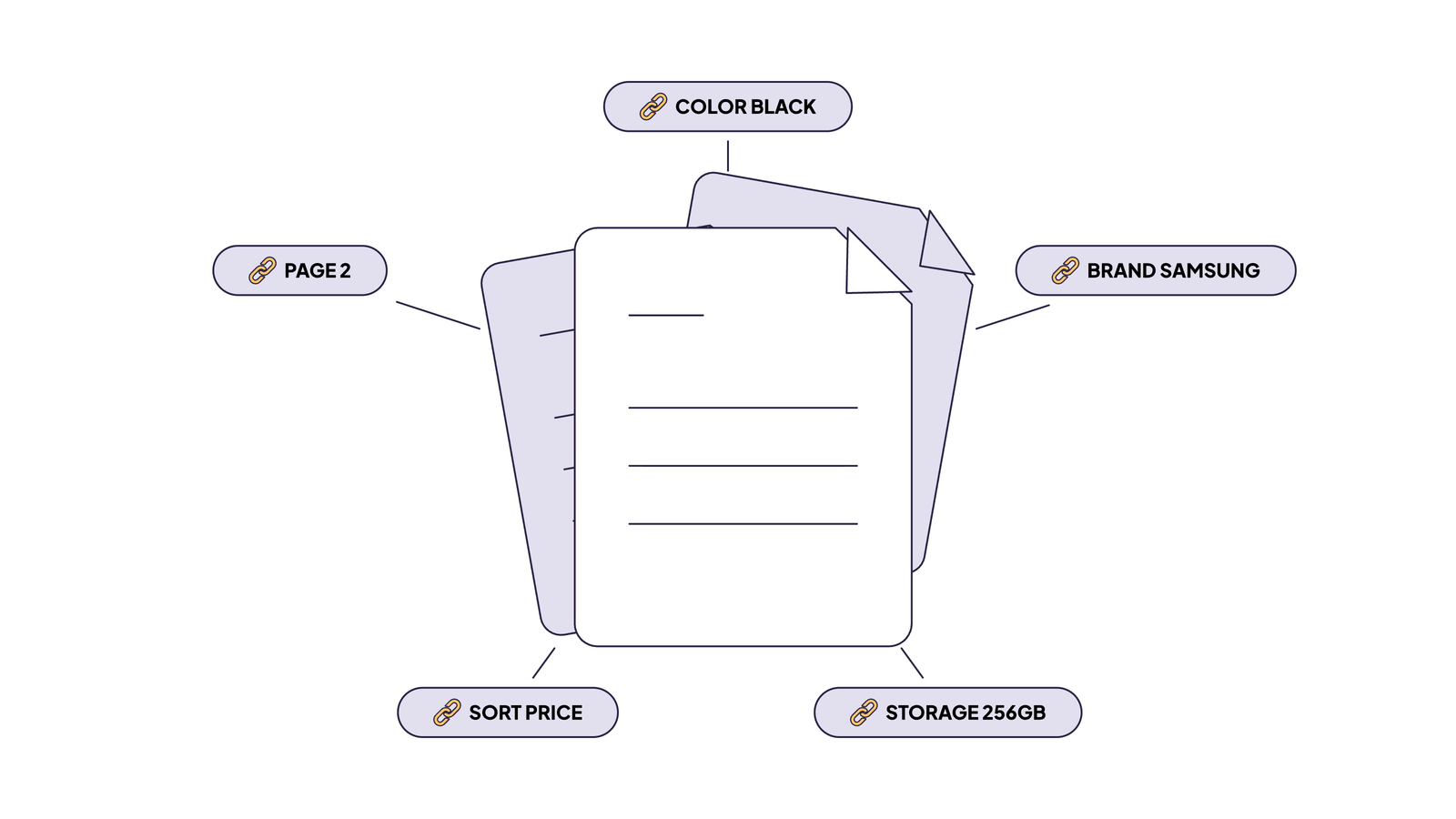
Price ranges, property-specific filters, and maps generate a large number of URLs. Crawlers spend resources there instead of focusing on more important property content.
Newly published property listings attract the highest interest during the first days online. If search engines can’t access content quickly, early buyers will never find the property.
EdgeComet helps bots inspect listings during the first crawl, making addresses, prices, photos, and other property data visible at once.
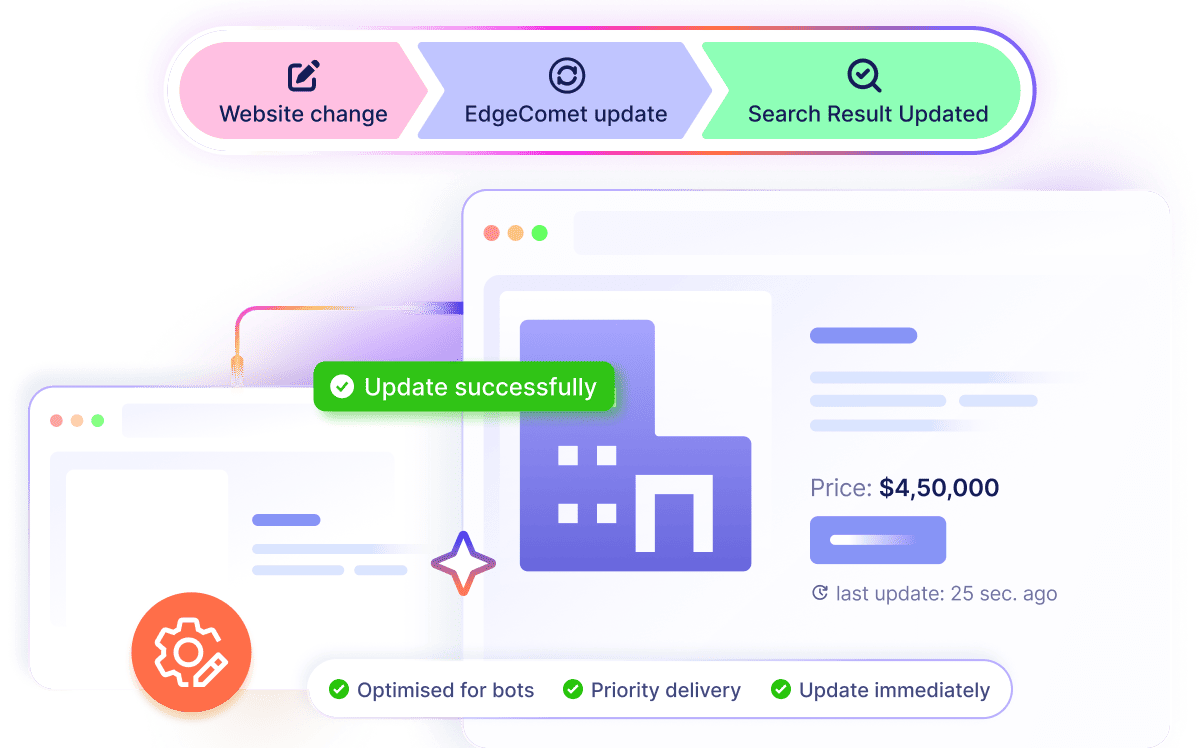
Real estate listings change often. Daily prices are updated, properties are sold, and new listings appear. If search bots find outdated data, buyers may see incorrect or unavailable properties.
EdgeComet instantly prerenders content if listing details change to keep property data fresh.
Real estate platforms may contain thousands of listing pages across cities, neighborhoods, and property types. JavaScript rendering delays limit the number of listings bots process per visit.
EdgeComet provides fast light HTML responses, and bots can access more listings per visit.
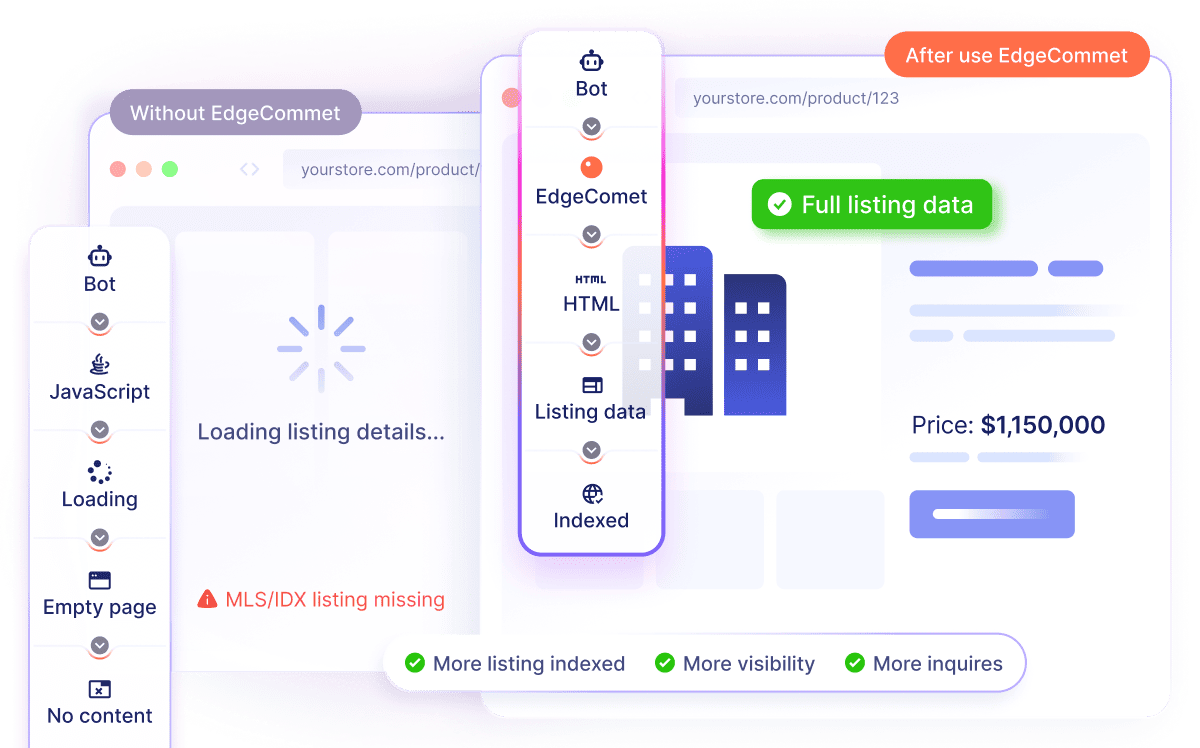
A lot of real estate platforms rely on IDX or iframe-based MLS integrations. Search engines often face difficulties accessing listing details with these embeds.
EdgeComet renders IDX content into clean, indexable HTML so crawlers index property details, locations, and pricing.
Search is the key discovery channel for real estate. If a listing isn't indexed, buyers don't see it. So, every unindexed property page is a missed opportunity.
According to Zillow's 2026 research, 82% of homebuyers use AI, and 61% of those users have used it during the homebuying process. When listing data is invisible, AI assistants surface competing platforms instead.
Most real estate websites rely on JavaScript-heavy frontends, whereas 69% of AI bots can’t execute JS. The result is a gap between your listings and those visible in search and AI results.
Search engines have a fixed crawl budget. When bots spend their time on filter combinations and pagination instead of actual property pages, primary inventory is hidden from search.
When buyers ask AI "what are the best apartments under $3,000," it doesn't show pages with links.
It offers specific properties from a platform it could read. If your listings are invisible to AI bots, they recommend your competitors instead.
Today, the real value is being the platform AI chooses when a buyer asks to recommend a property.
GPTBot, ClaudeBot, and PerplexityBot inspect your listings the same way search engines do — and they all can’t execute JavaScript.
AI bots don't wait for your content to load, they read raw HTML and move on.
Real estate platforms with dynamic listings that rely on rendering are invisible to AI – no matter how many properties they offer or how strong their brand is.
EdgeComet ensures your property details are visible across search and AI engines.
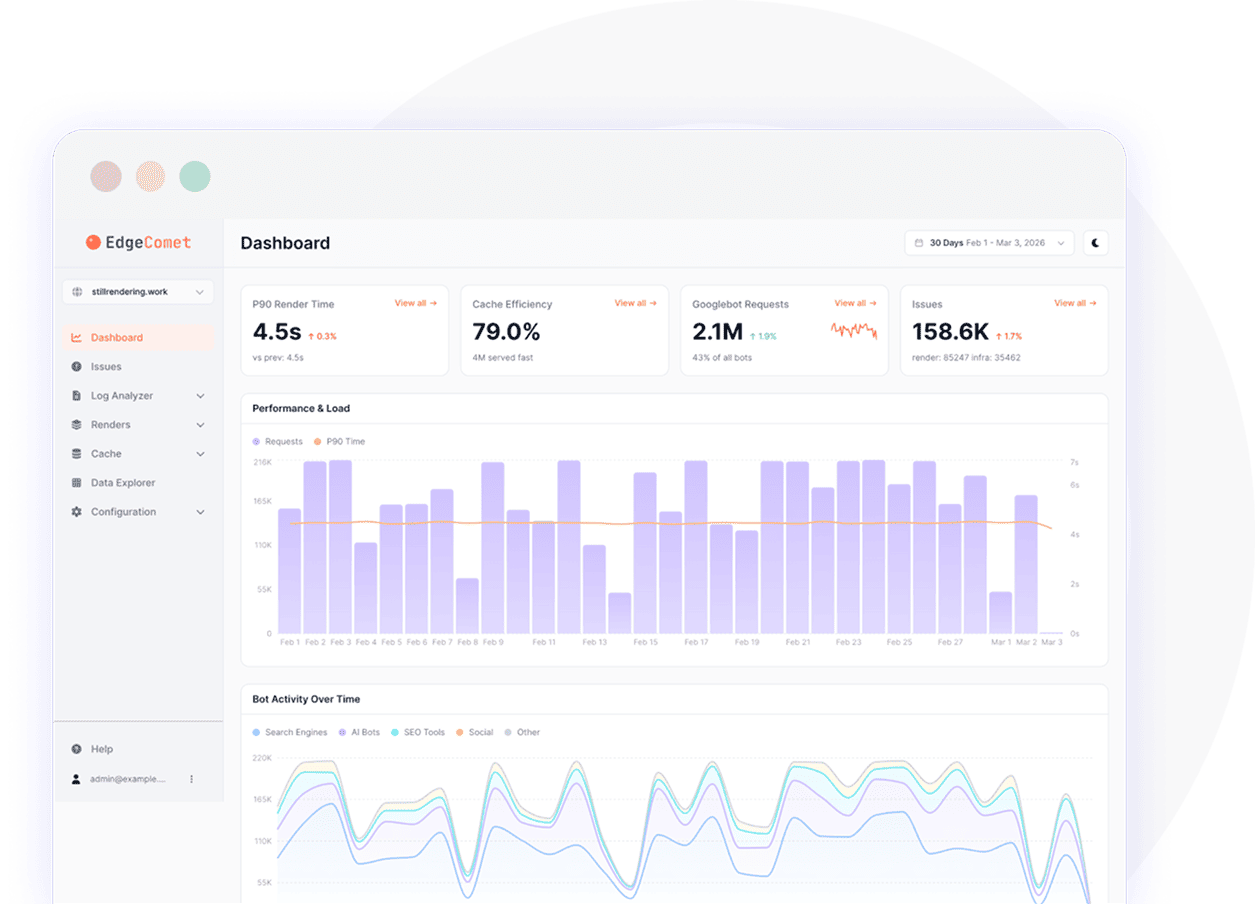
EdgeComet displays information on what Googlebot, ClaudeBot, GPTBot, or other bots get after JavaScript is rendered, with page-level SEO details.
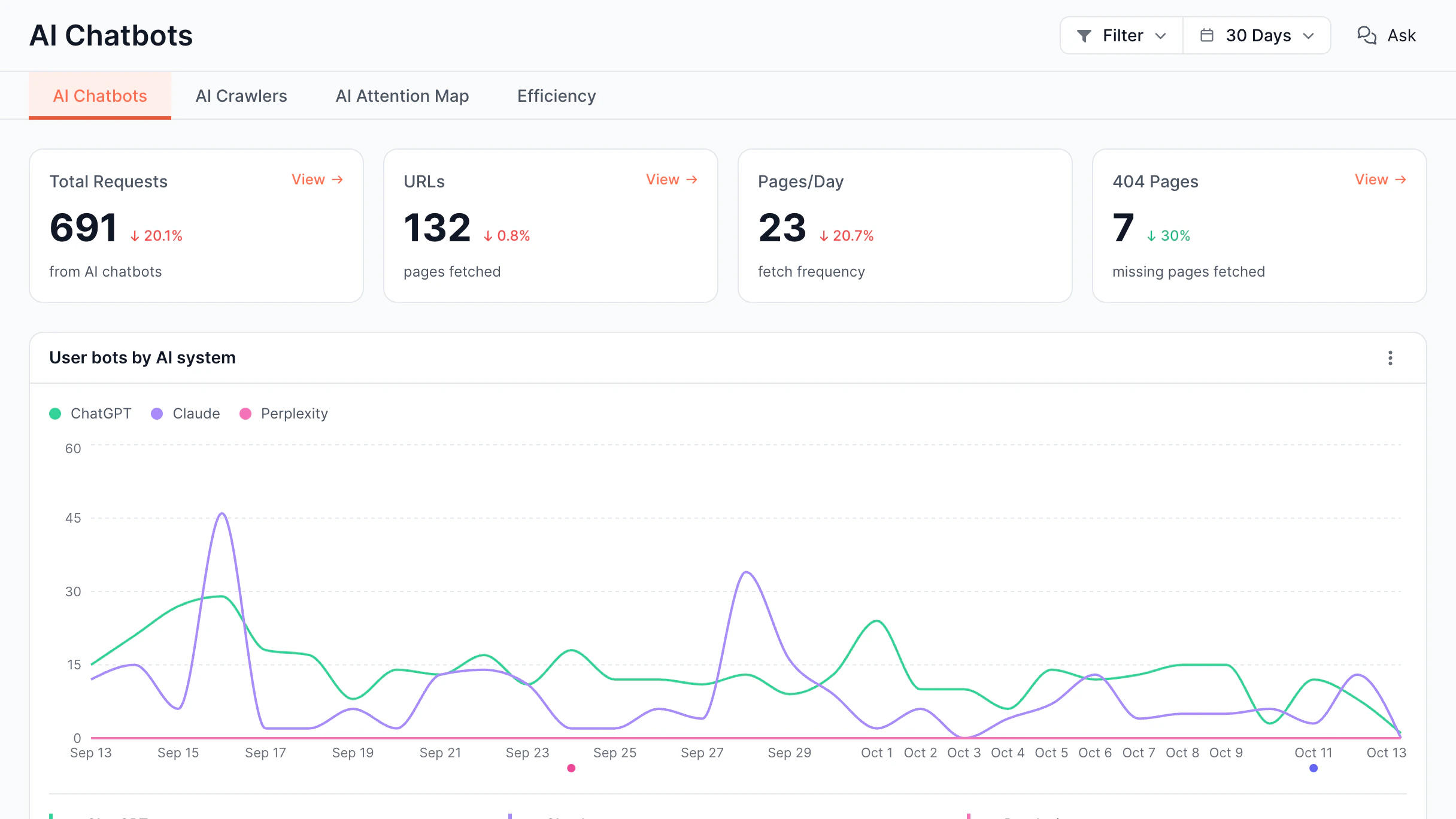
Pages ChatGPT, Claude, and Perplexity fetch while answering users, by day.
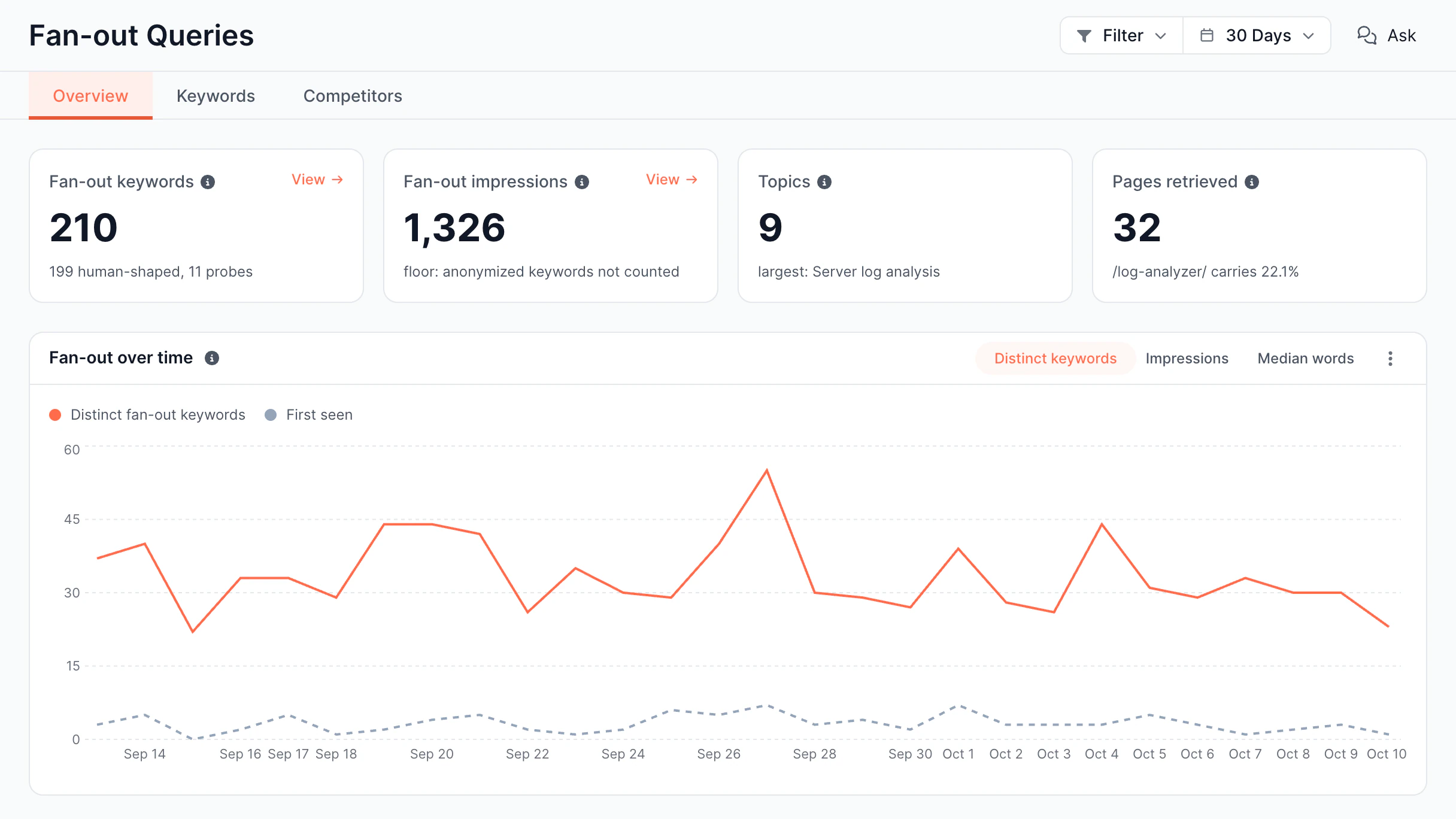
Fan-out keywords from Search Console, grouped into topics, with impressions.
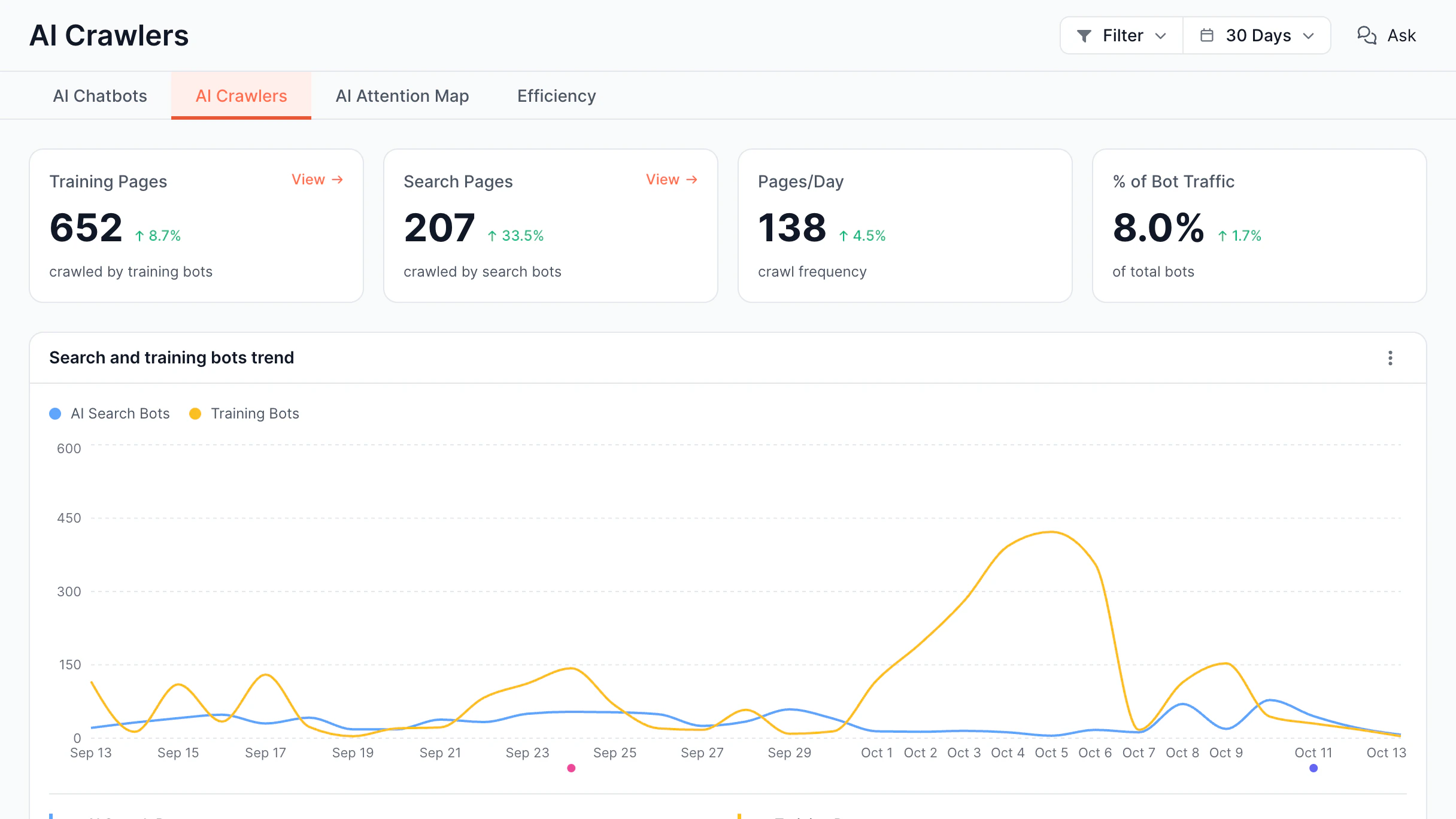
AI training and search bots: pages crawled, pages per day, share of traffic.
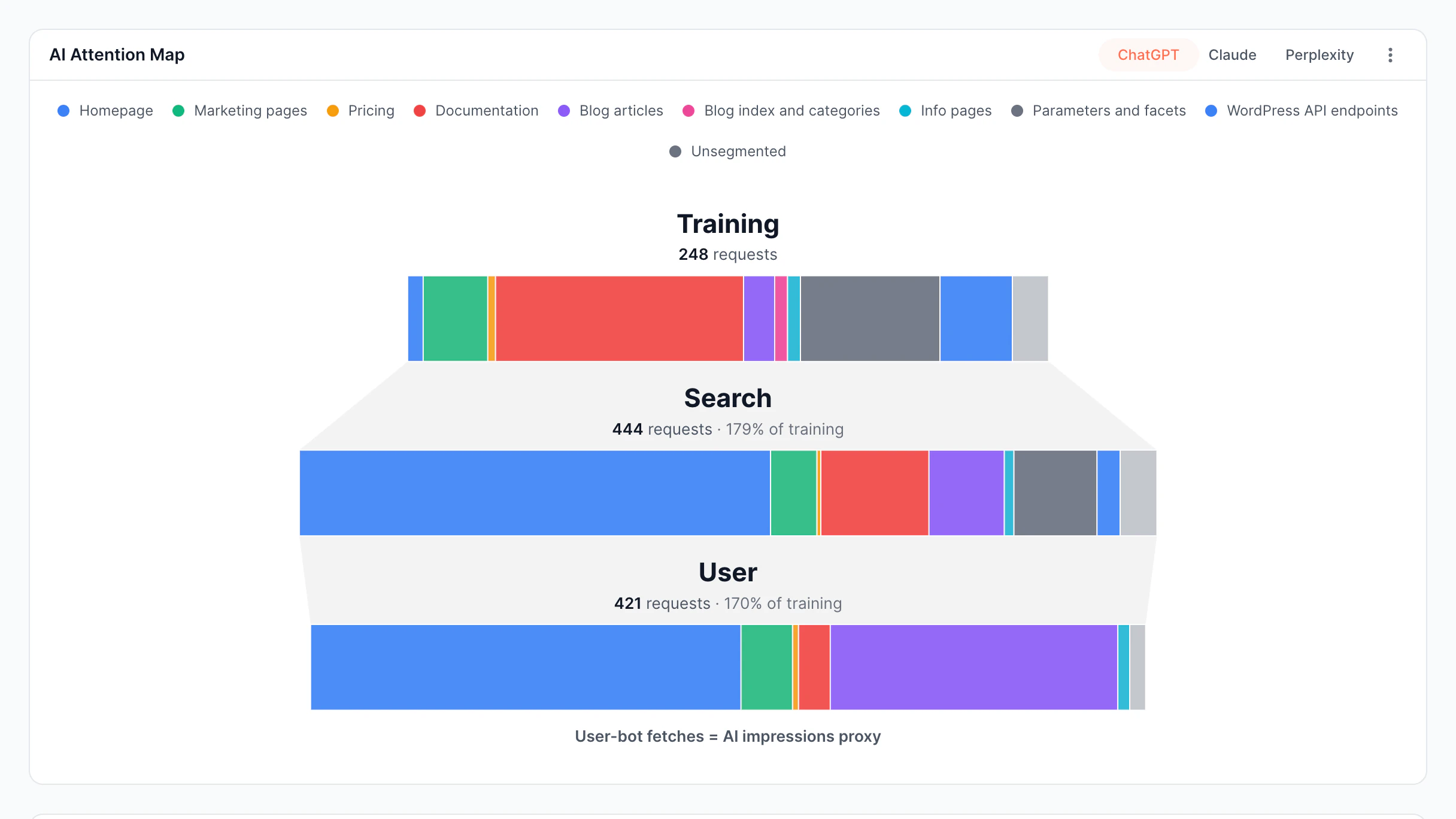
Training, search, and user bot requests by page type, for each AI provider.
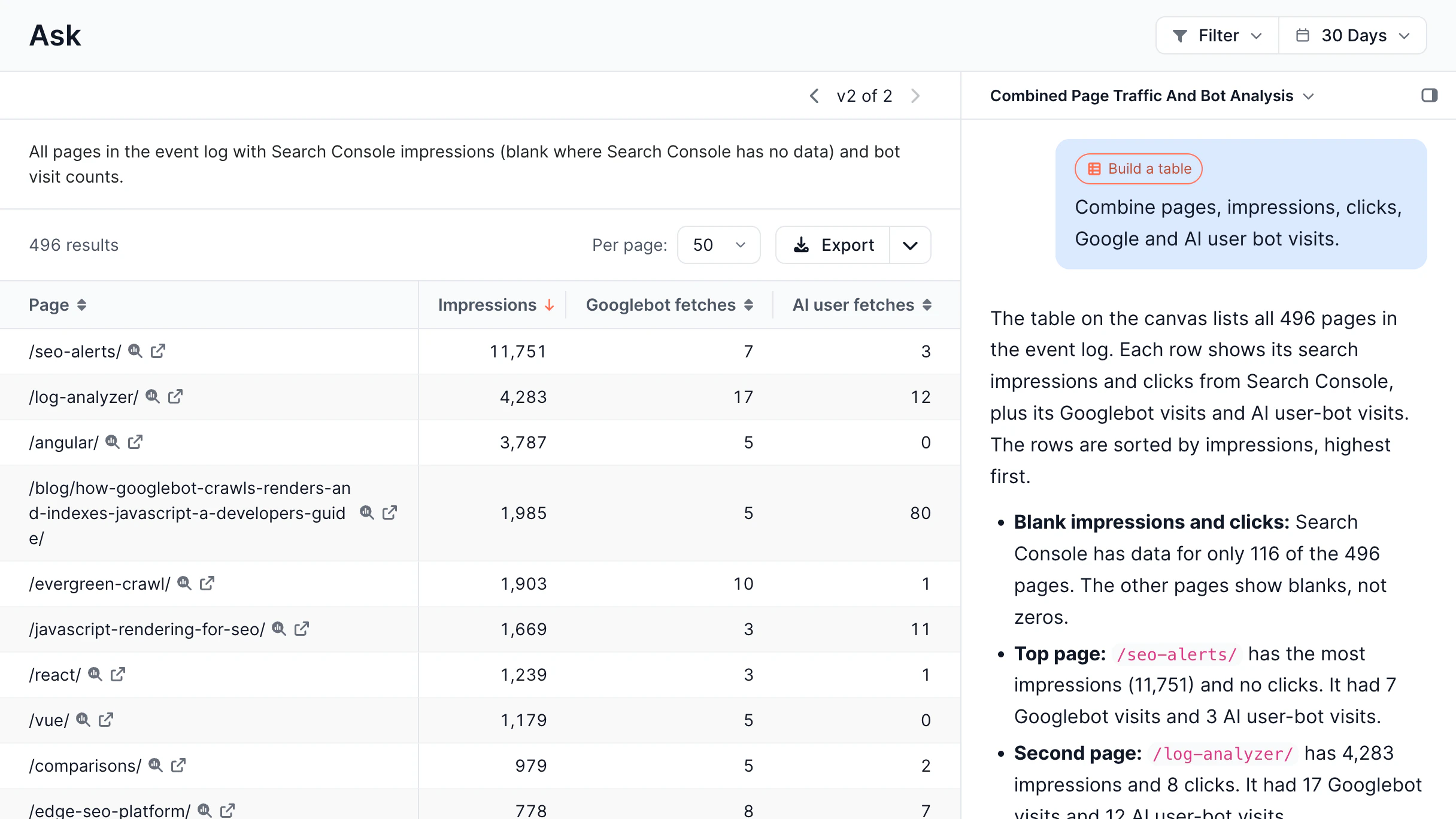
Chat that answers with sortable tables you can export to CSV or Google Sheets.
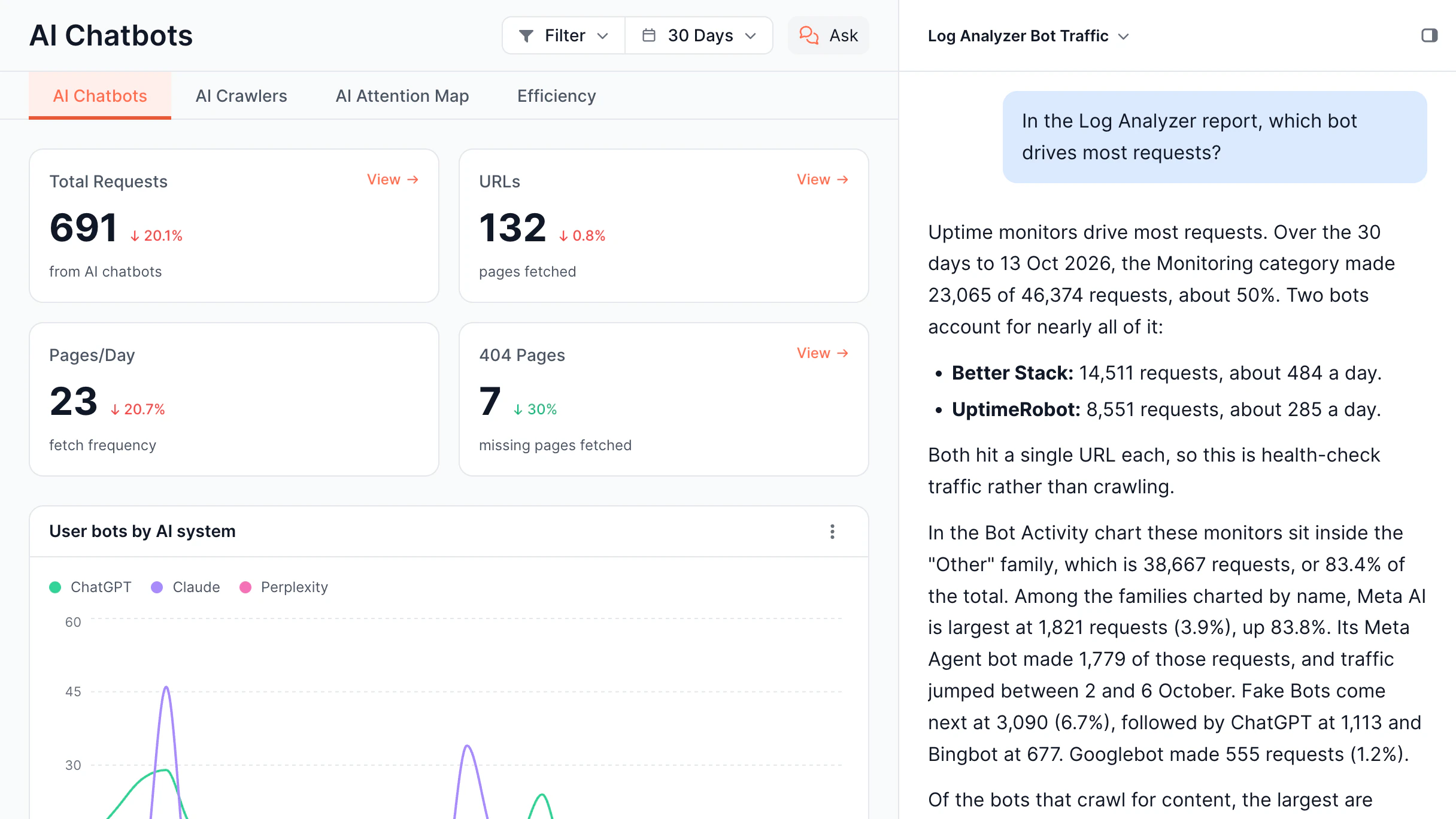
Chat panel next to any report that answers questions about its data.
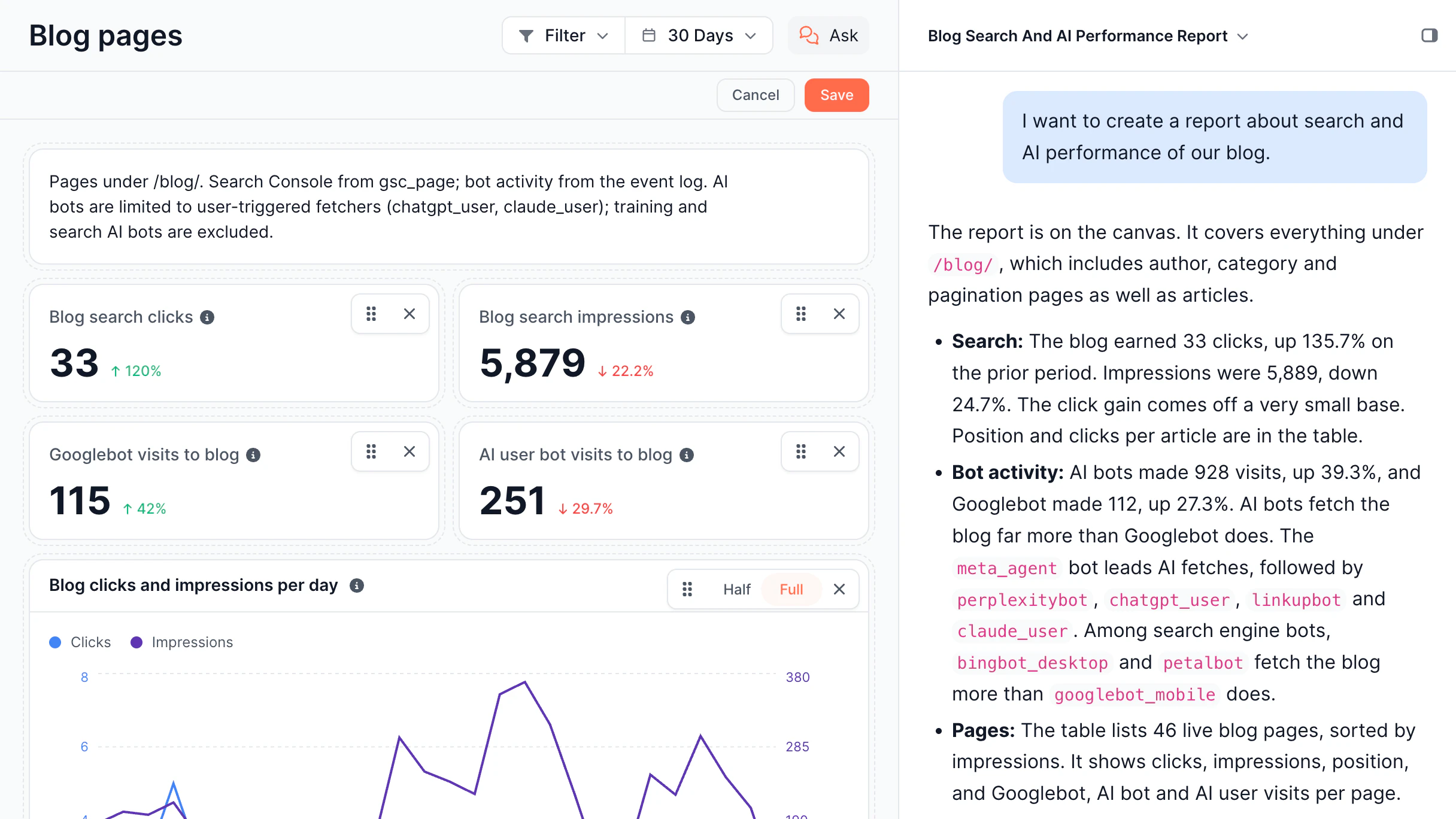
Custom reports built from a chat request, with widgets you can edit and save.
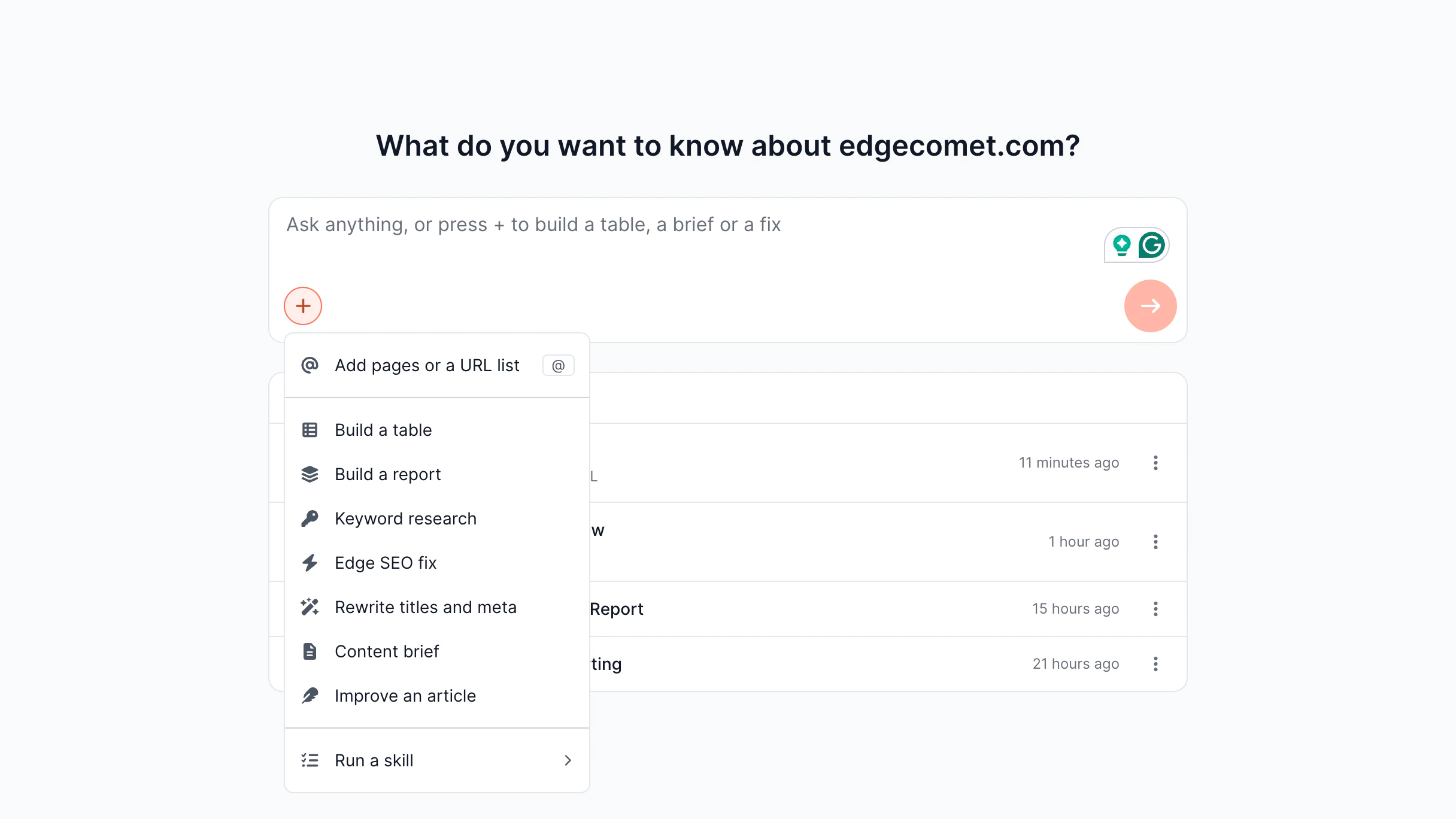
Skills menu: keyword research, content briefs, article and meta rewrites.
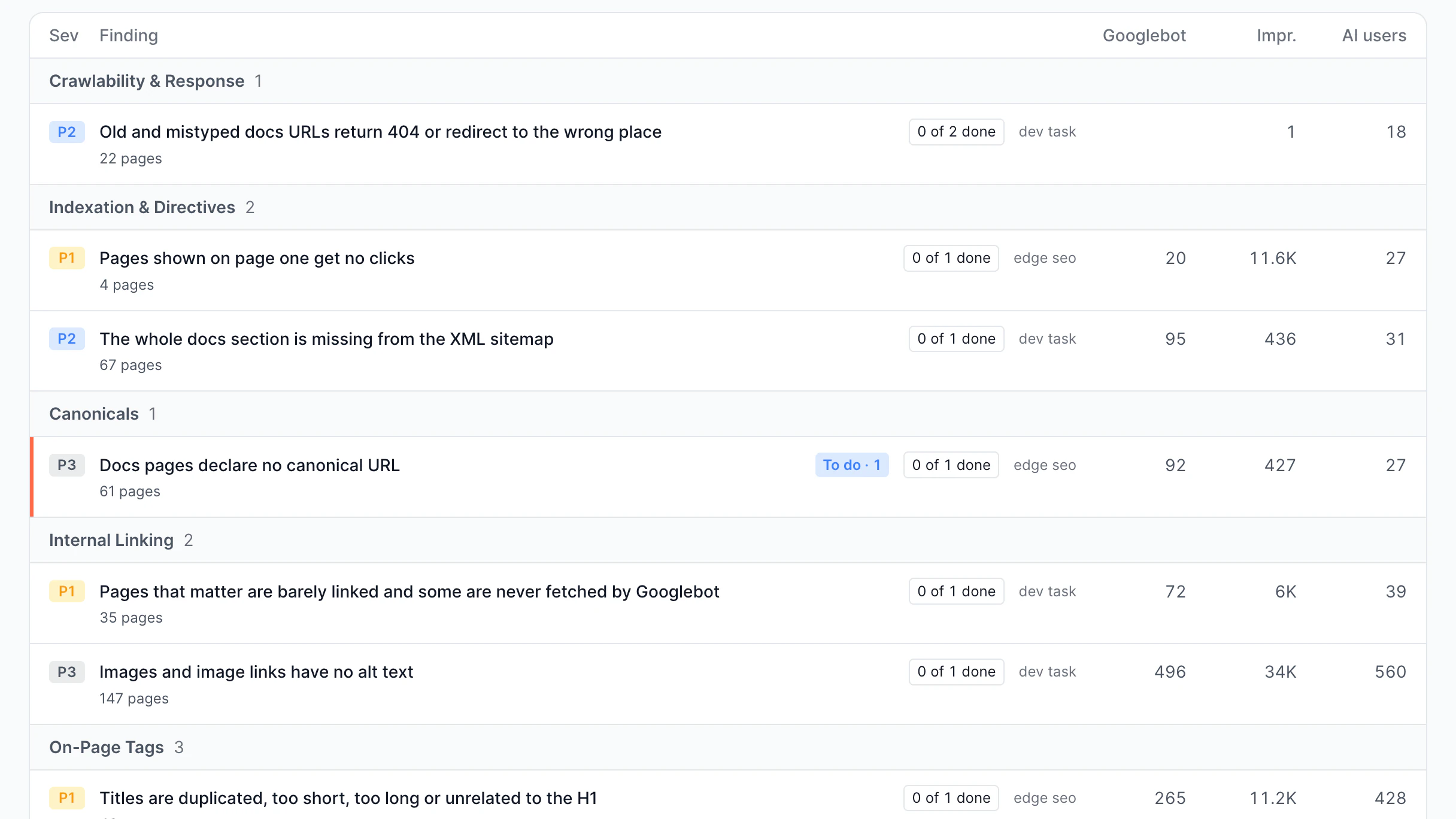
Findings by type and severity, with traffic per issue.
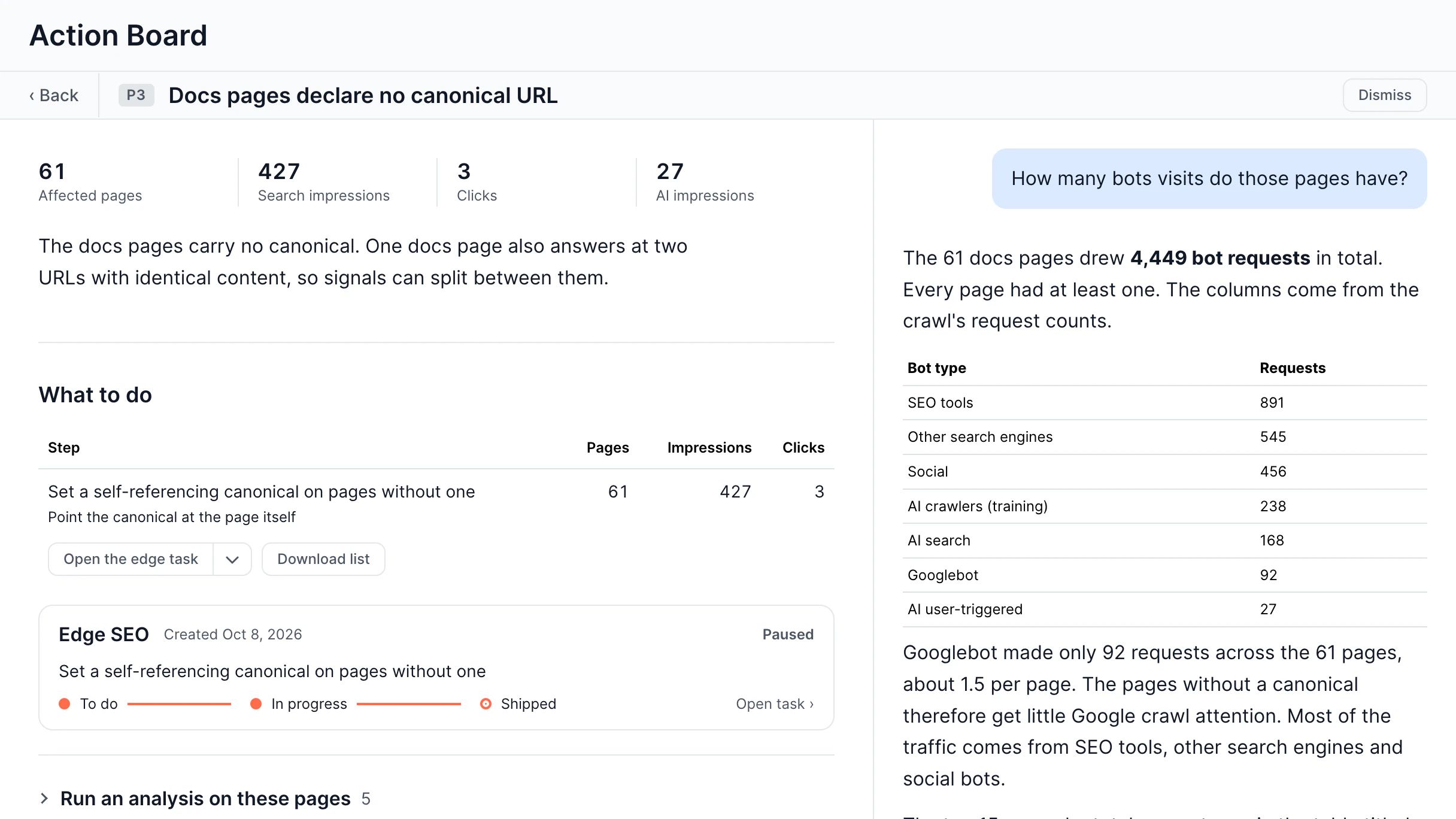
One finding: affected pages, fix steps, task status.
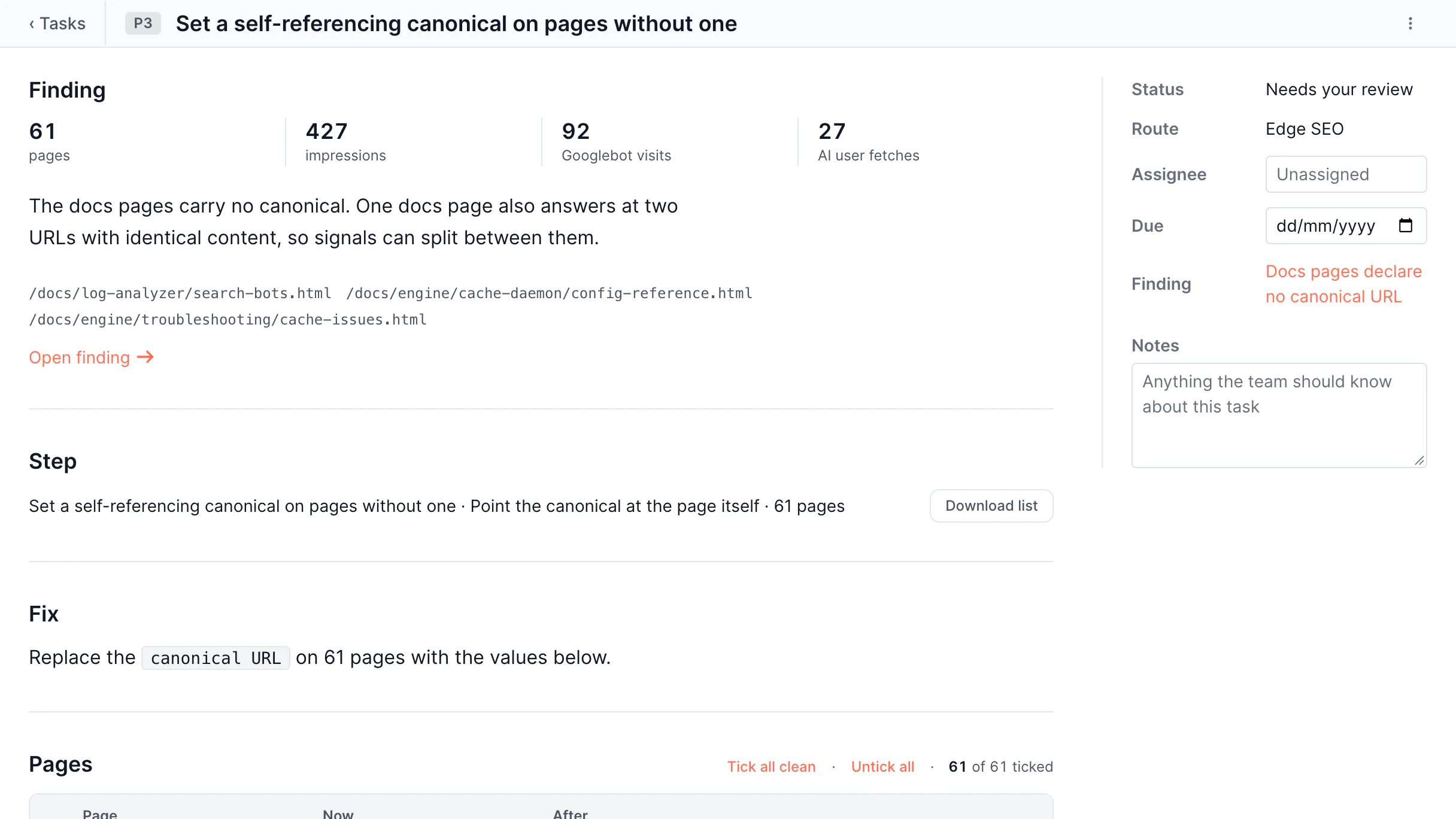
Task page with status, assignee, due date, and notes.
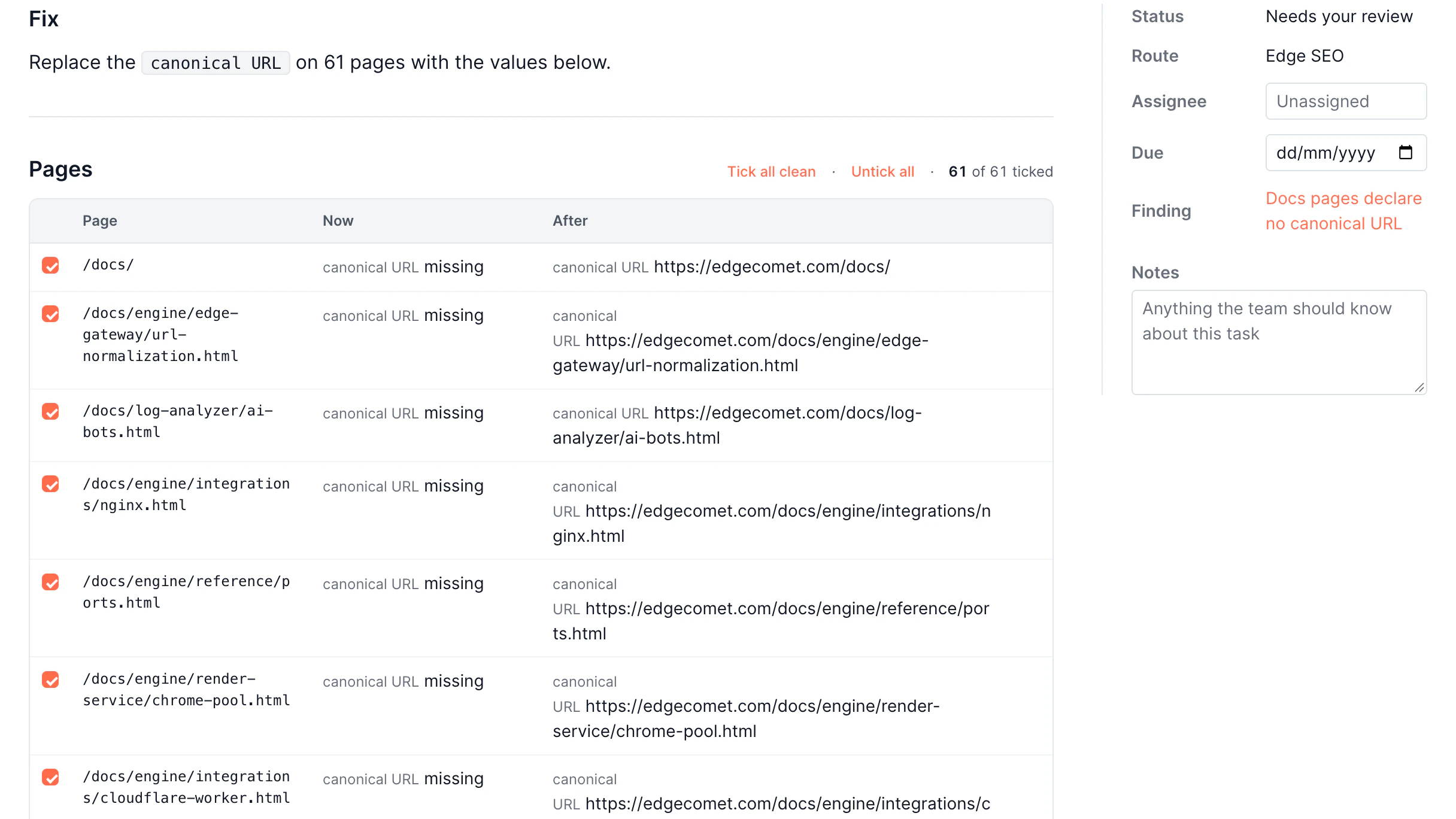
Before and after values per page, with edge deploy.
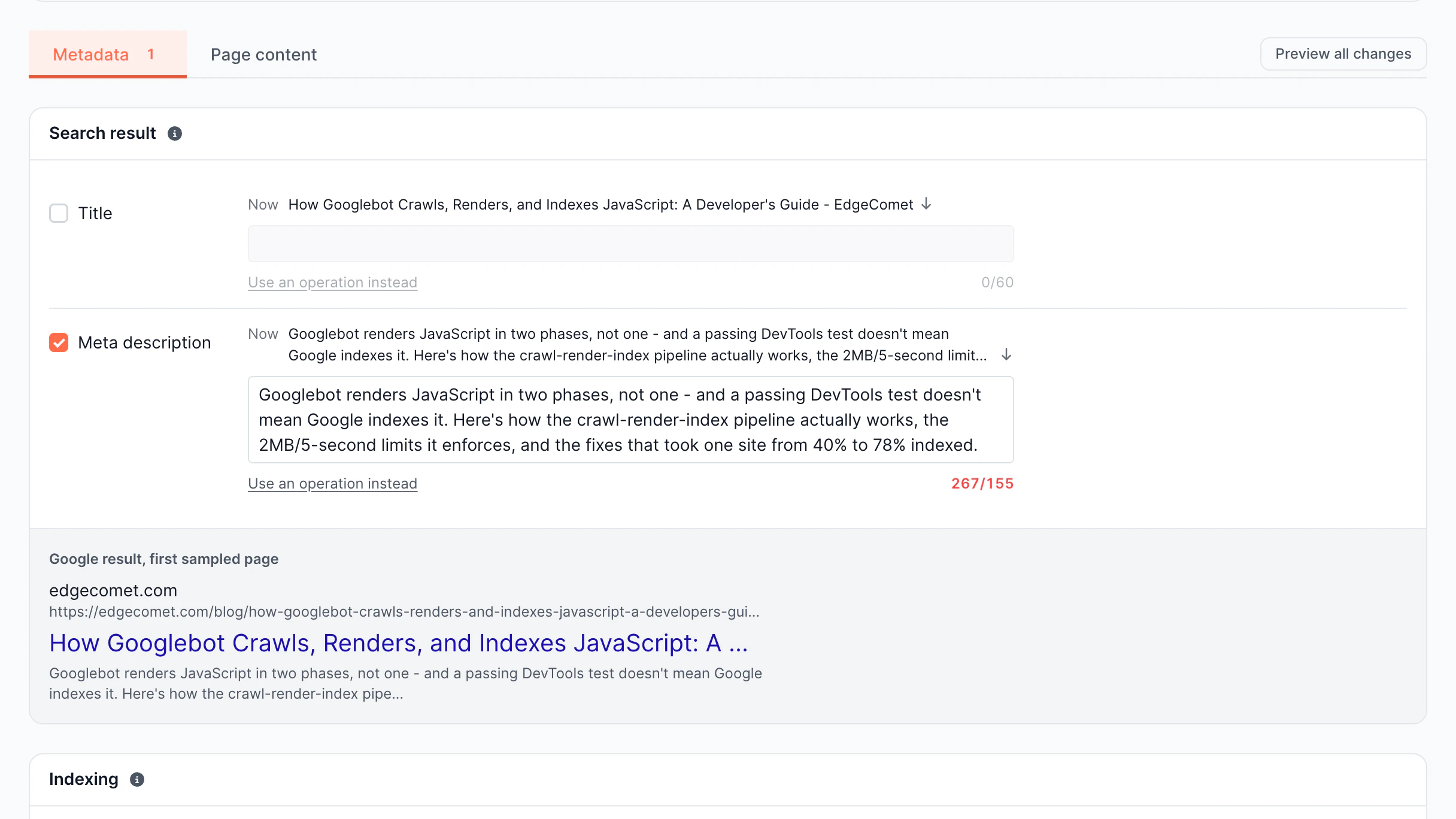
Title and meta overrides with a Google result preview.
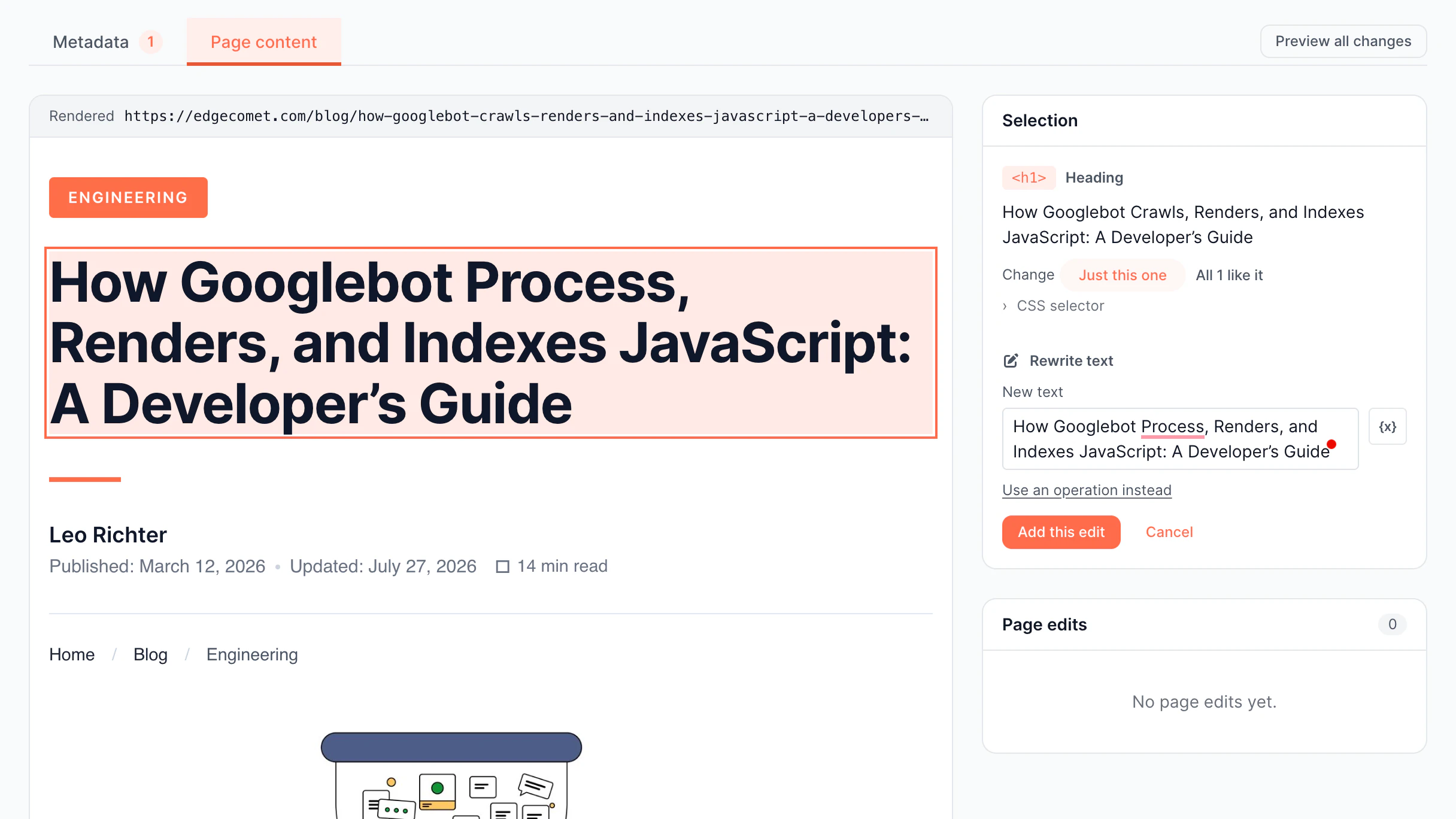
Select an element on the rendered page and edit its text.
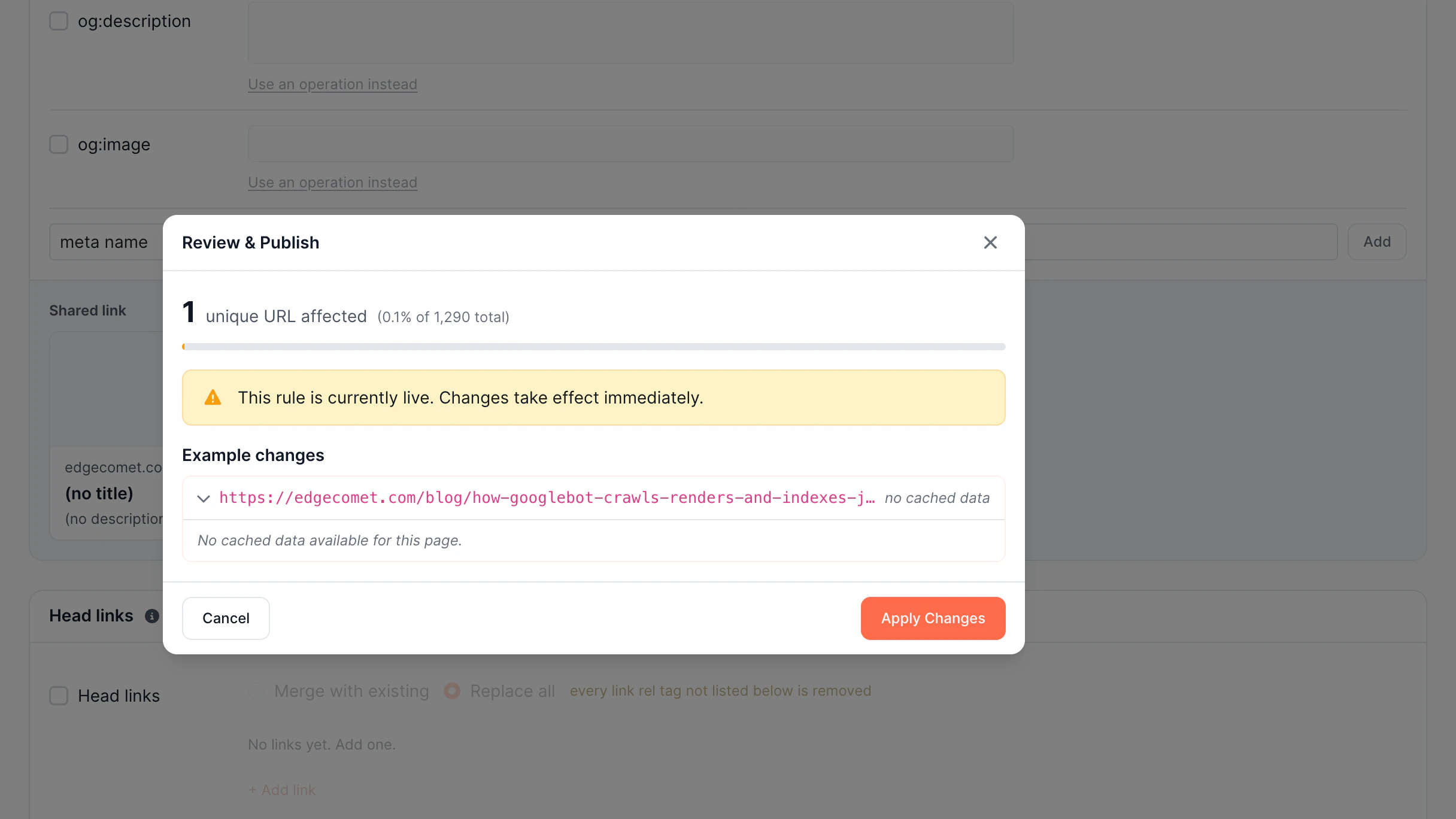
Review dialog with the number of URLs a rule changes.
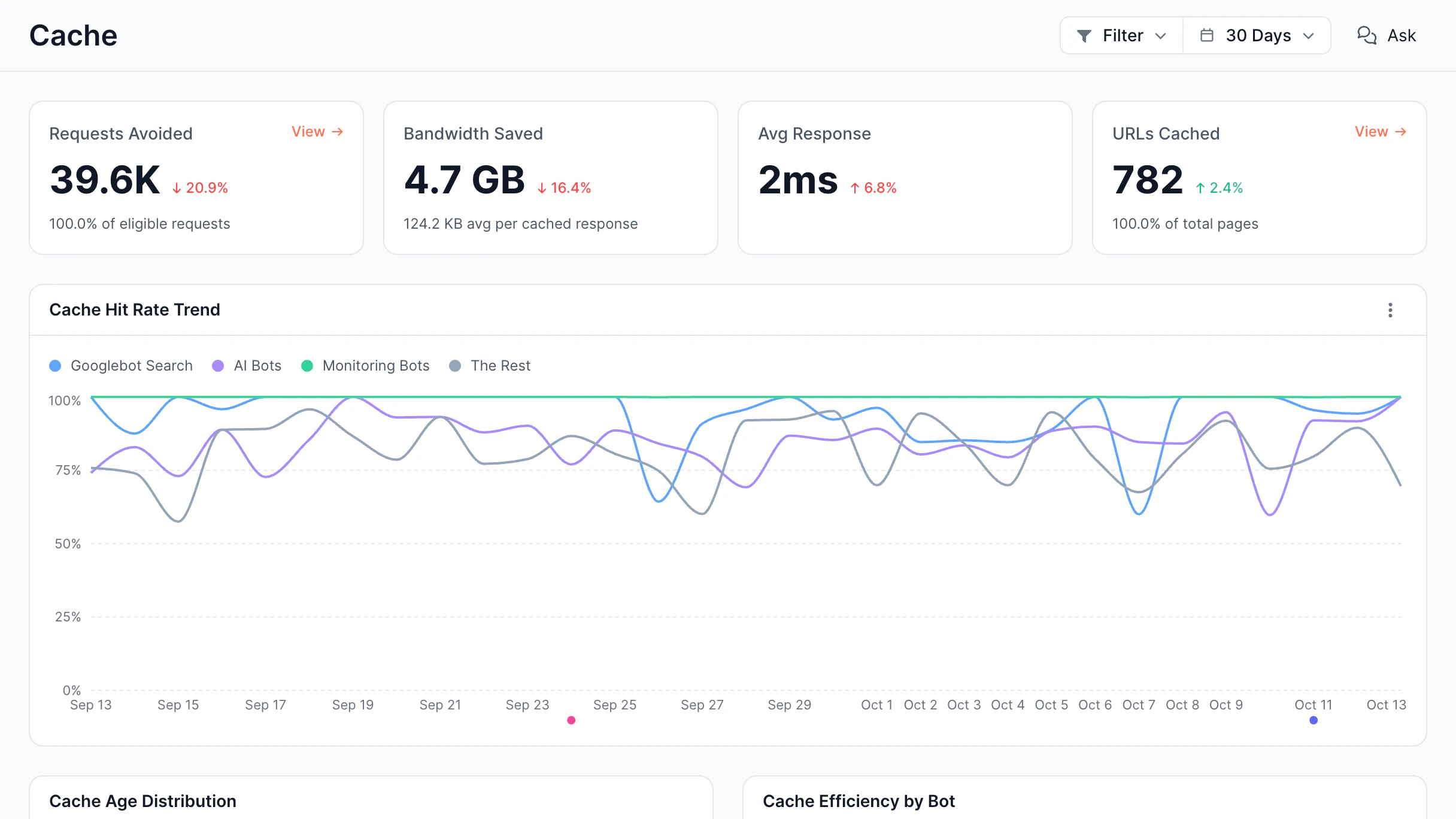
Hit rate, bandwidth saved, and cache age.
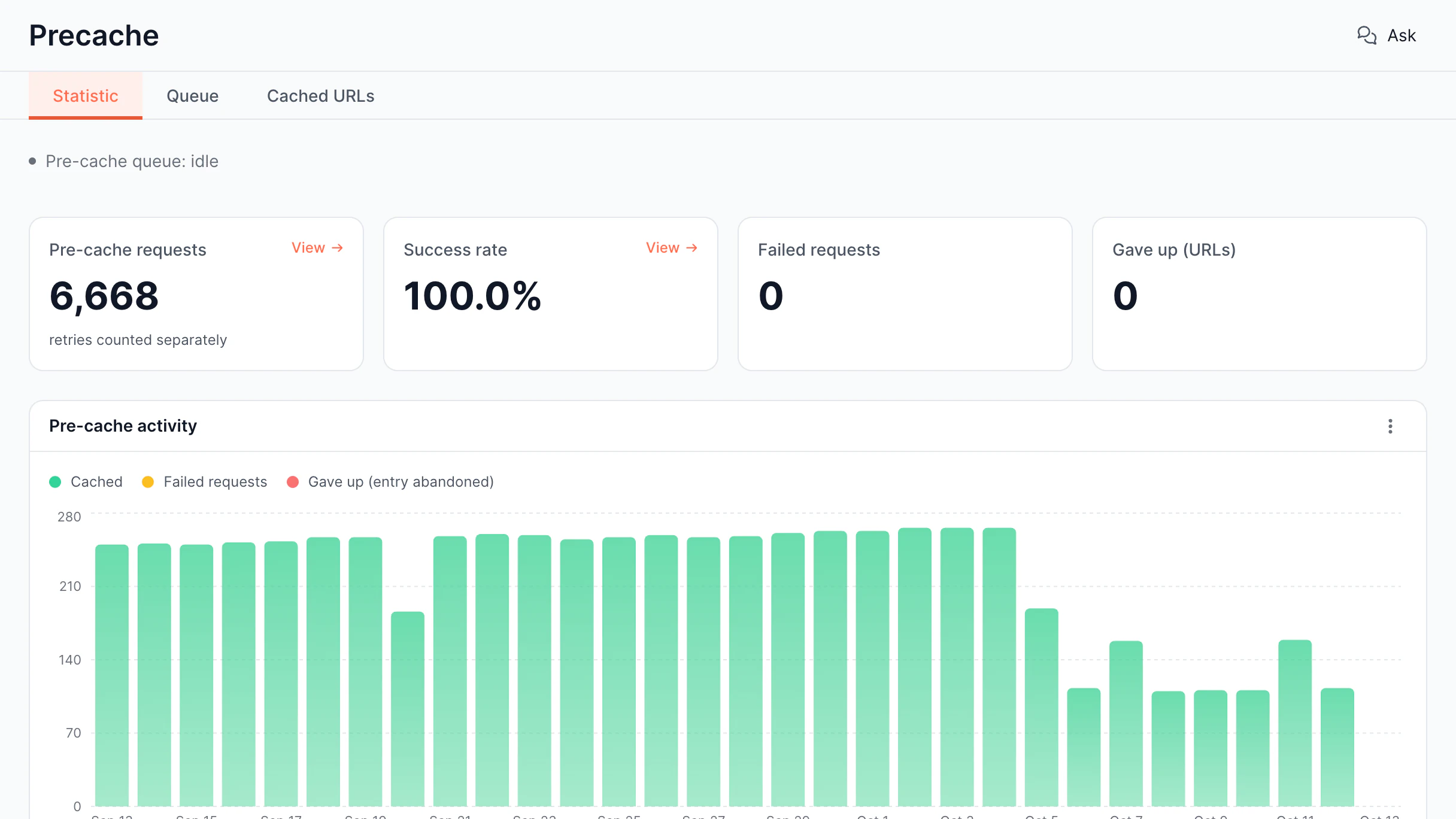
Pre-cache queue, success rate, and failures.
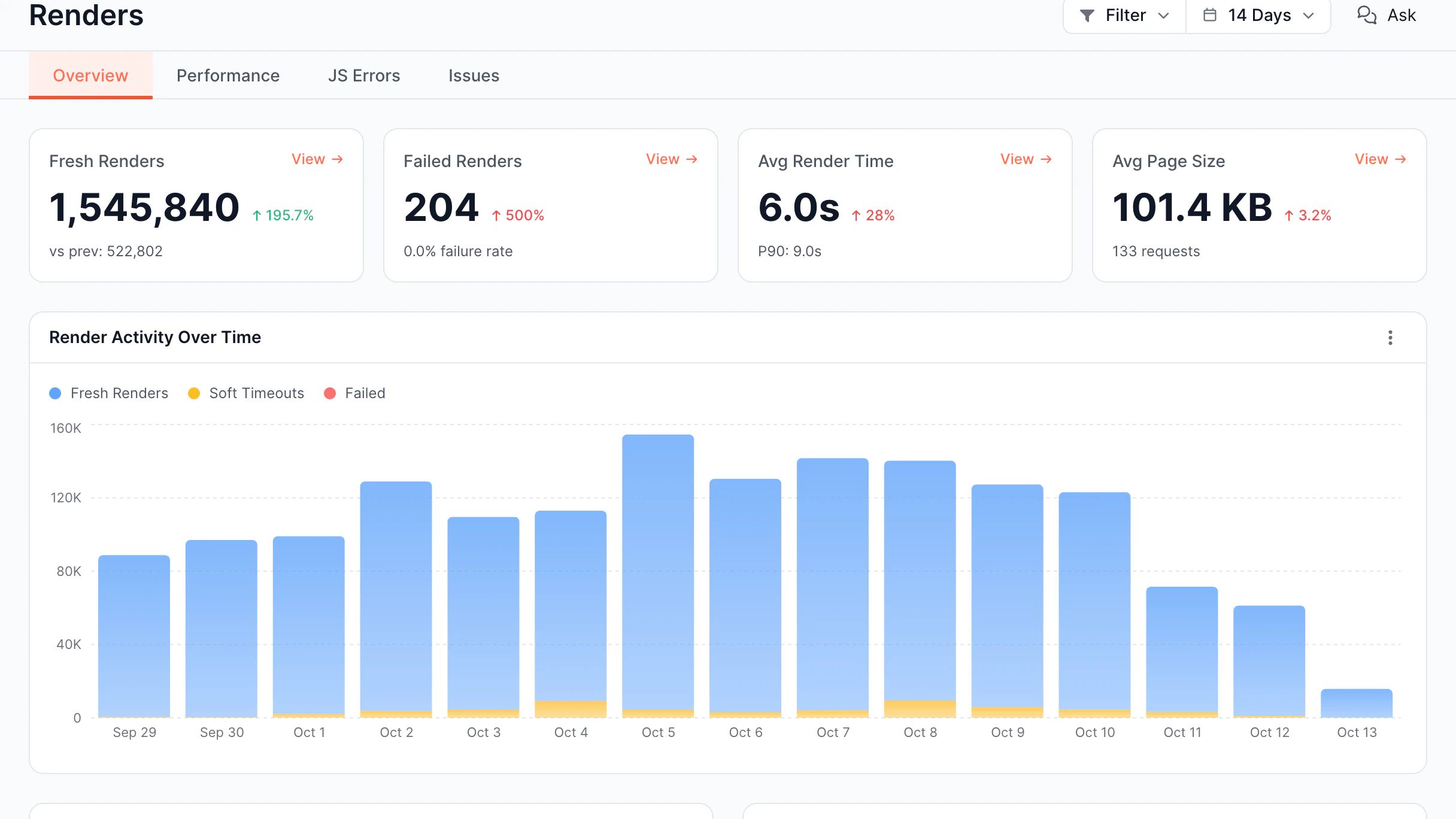
Renders per day, failures, and render time.
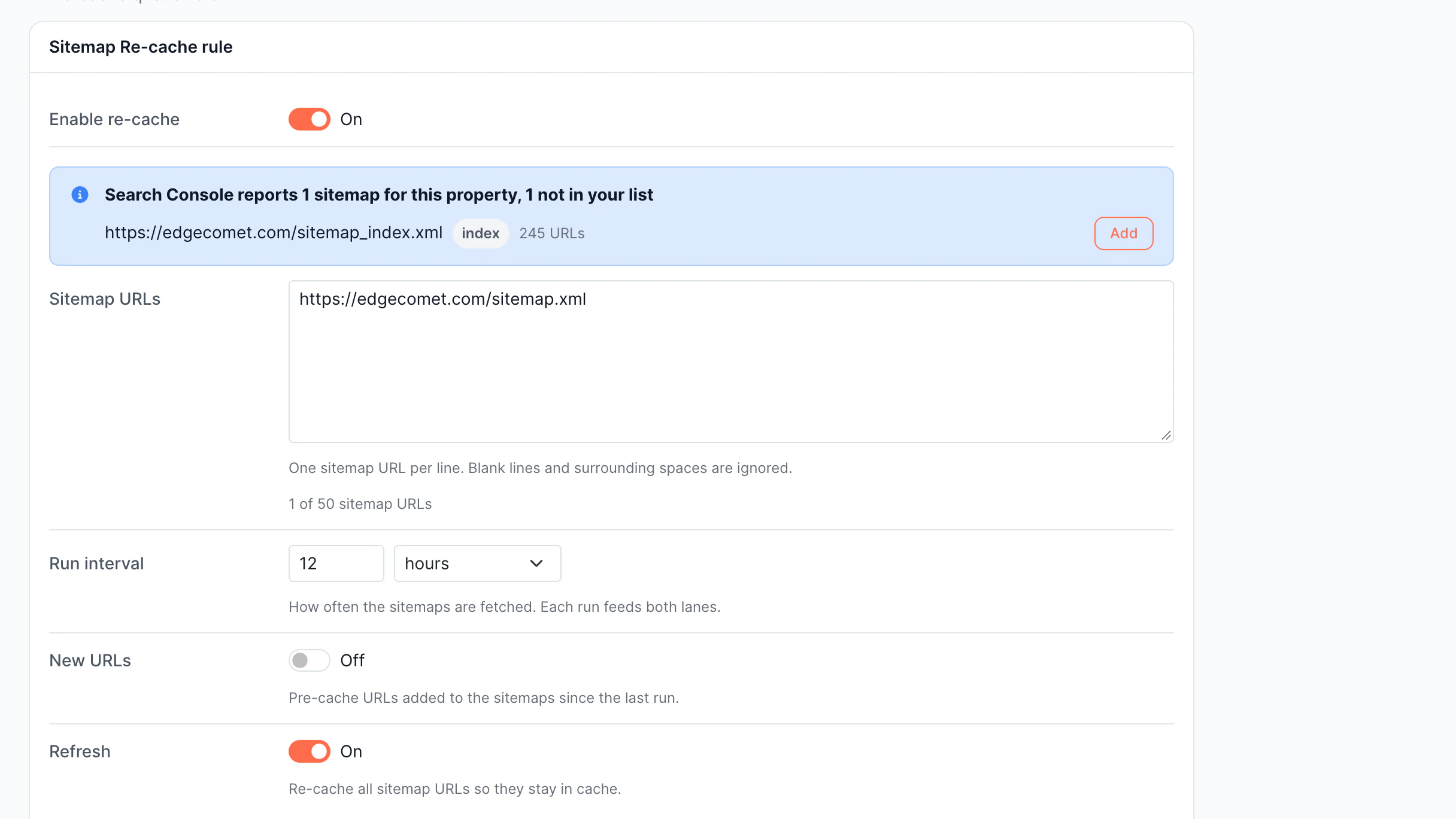
Re-cache rule for sitemap URLs on a schedule.
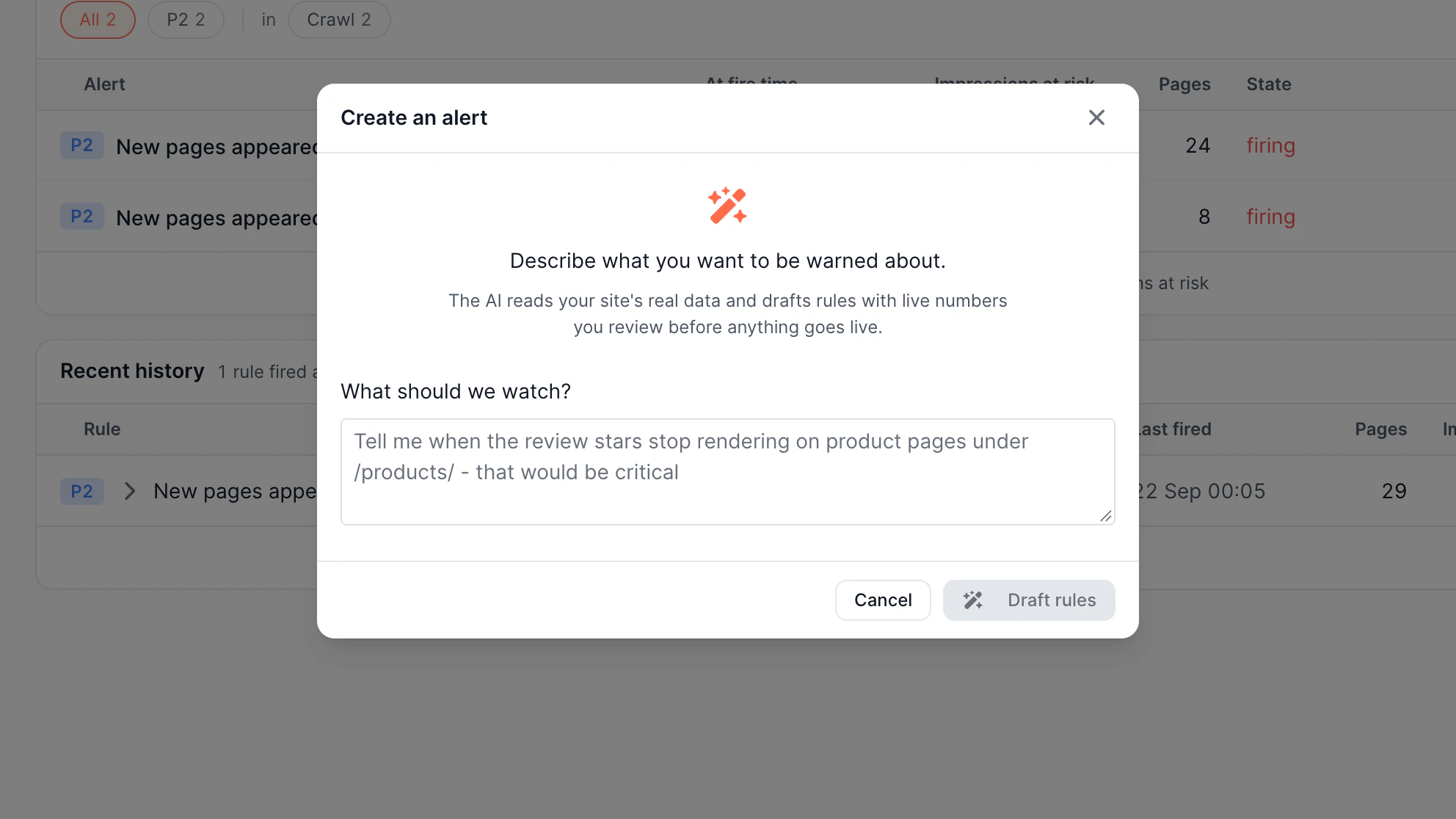
Create an alert by describing it in plain text.
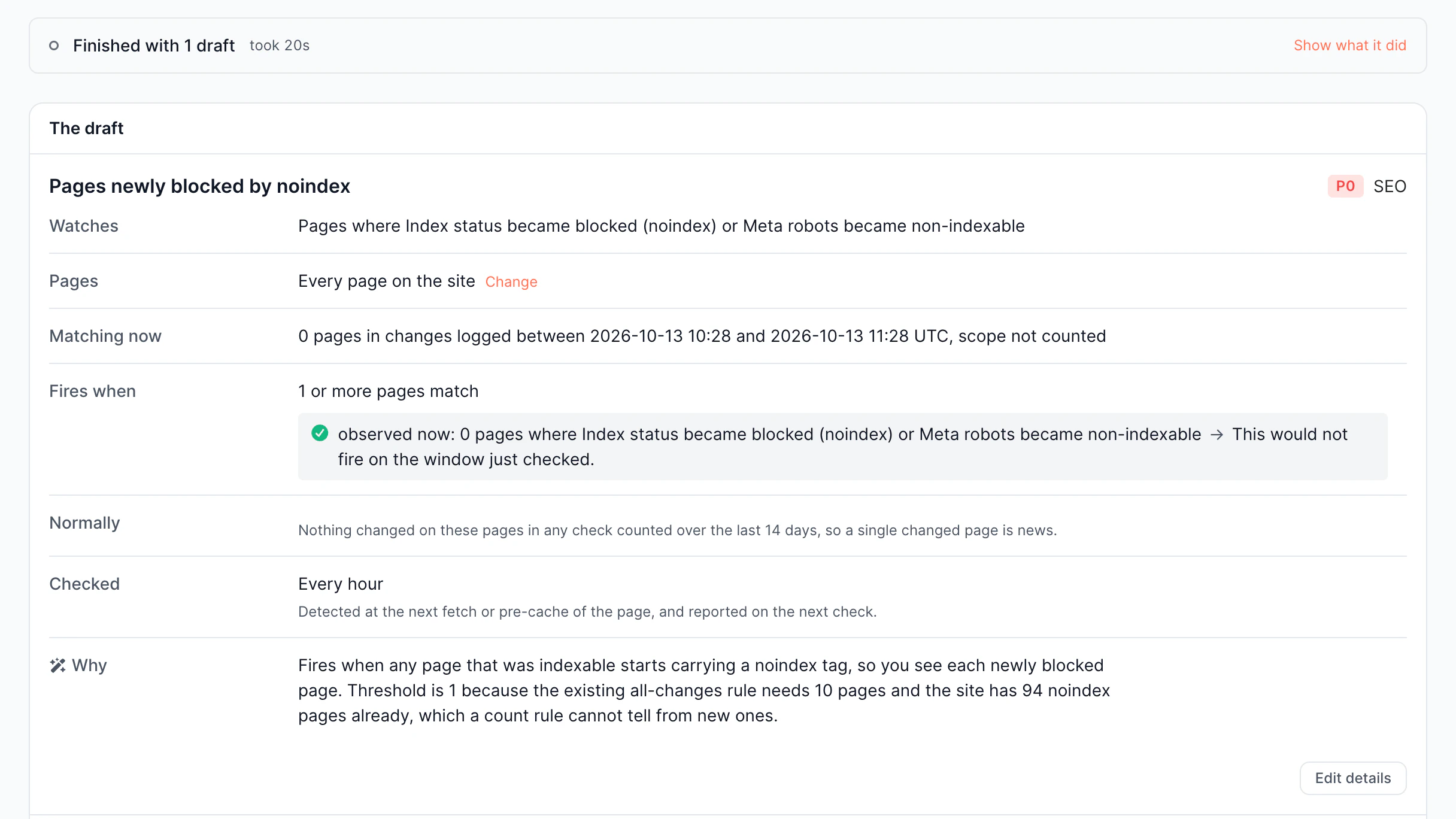
AI-drafted rule: what it watches and when it fires.
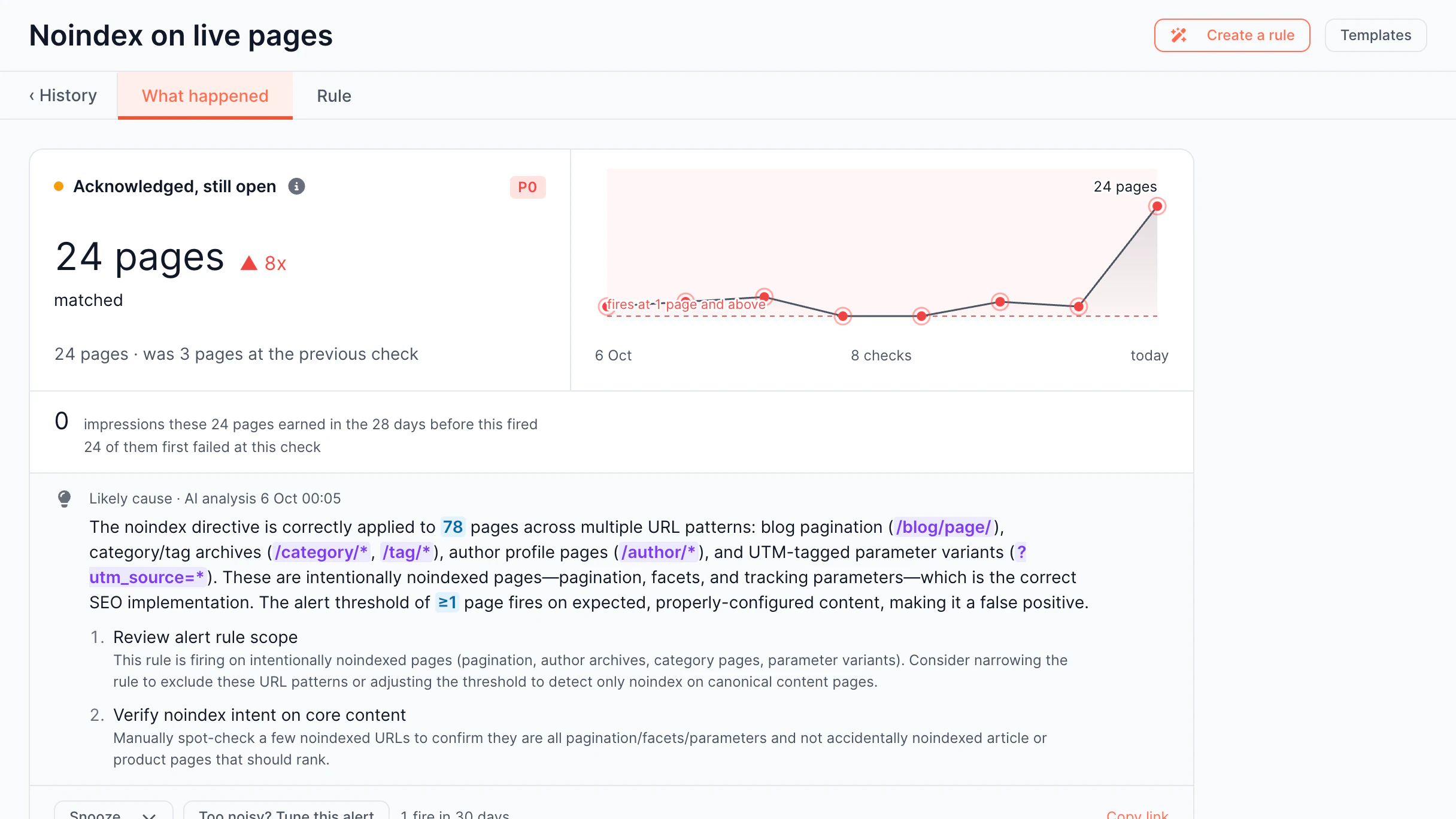
Incident page with matched pages and AI cause analysis.
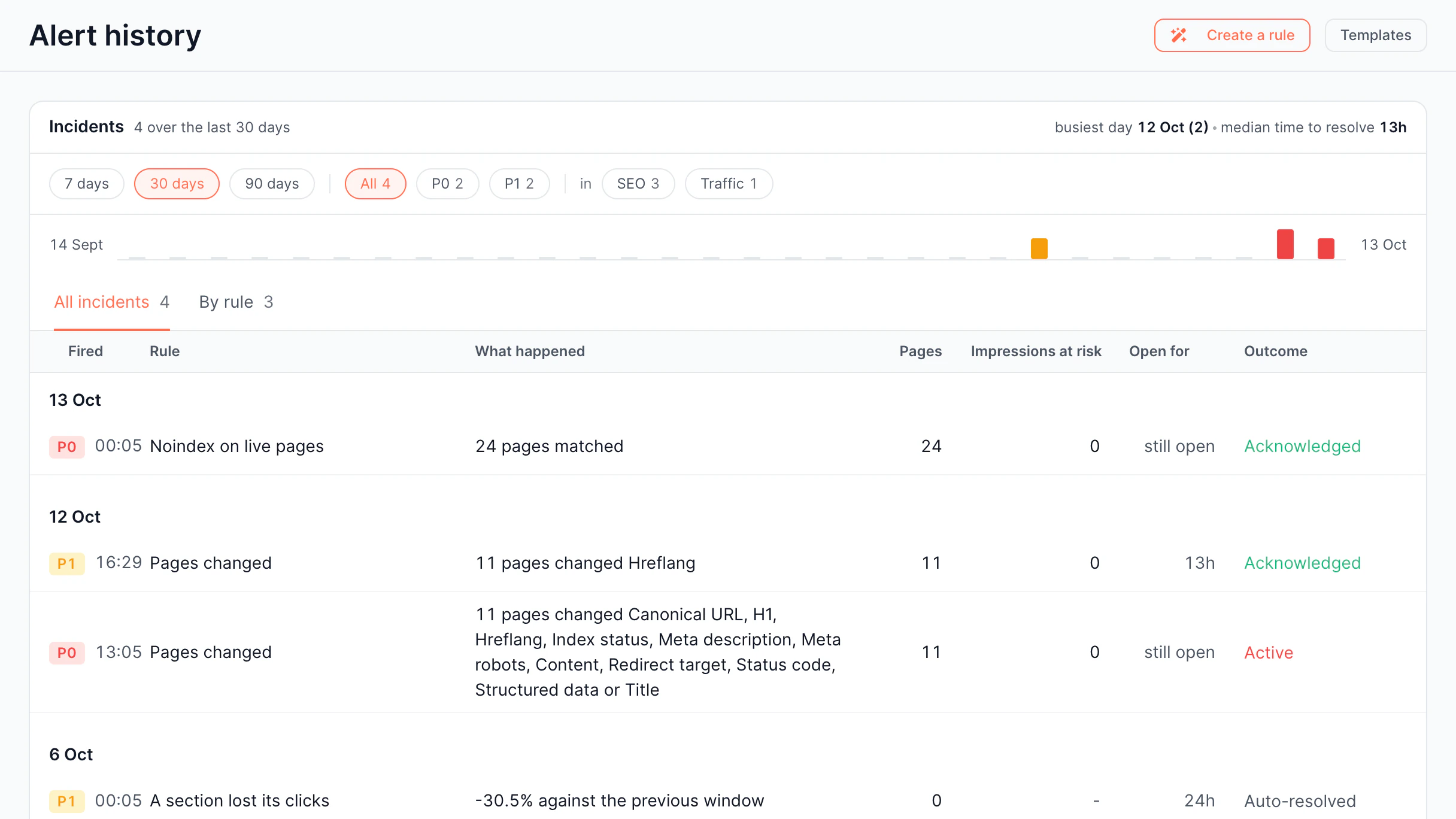
Incident log with pages, impressions at risk, and outcome.
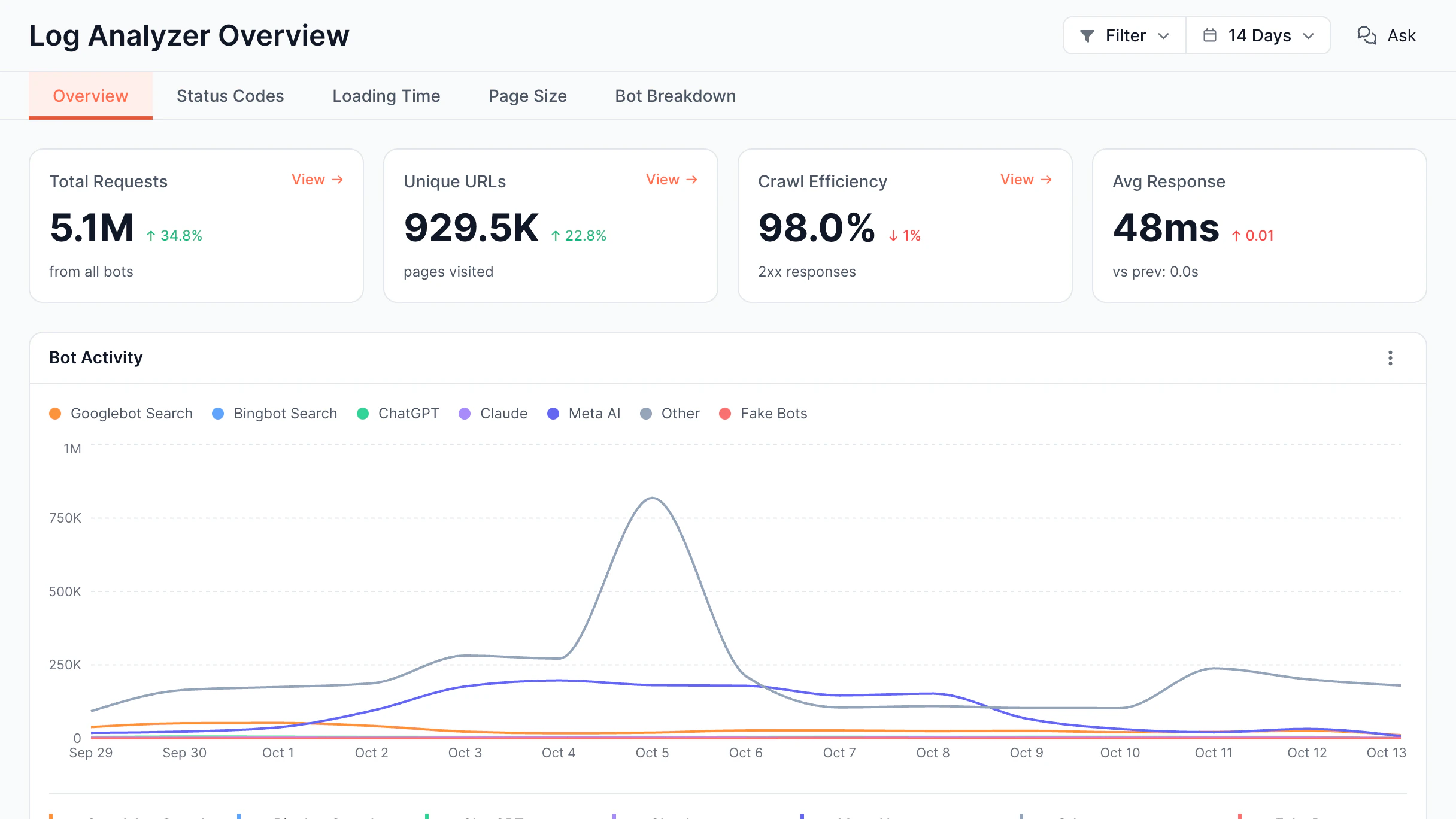
Requests per bot family, with status and response time.
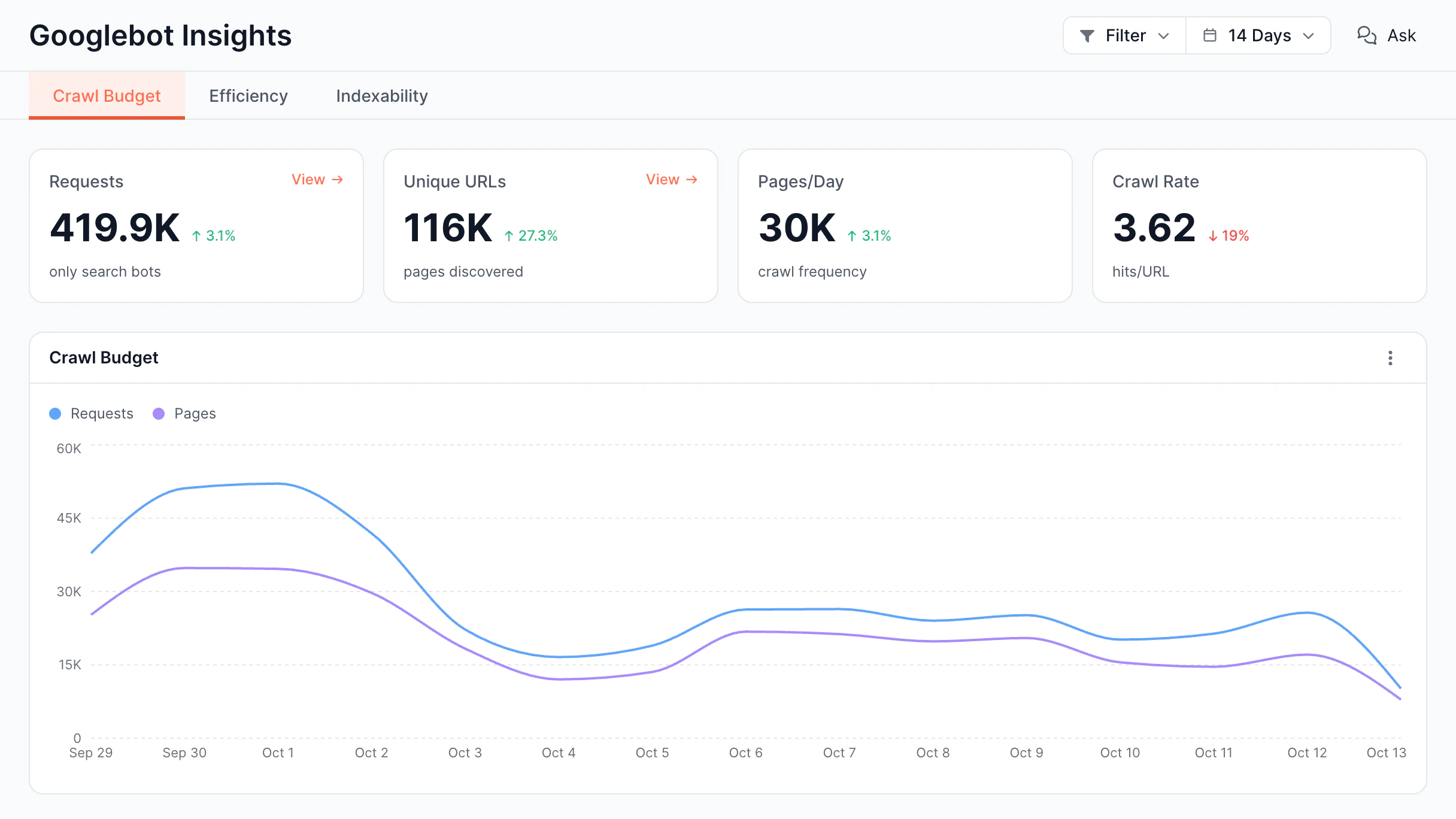
Googlebot requests, unique URLs, and crawl rate per day.
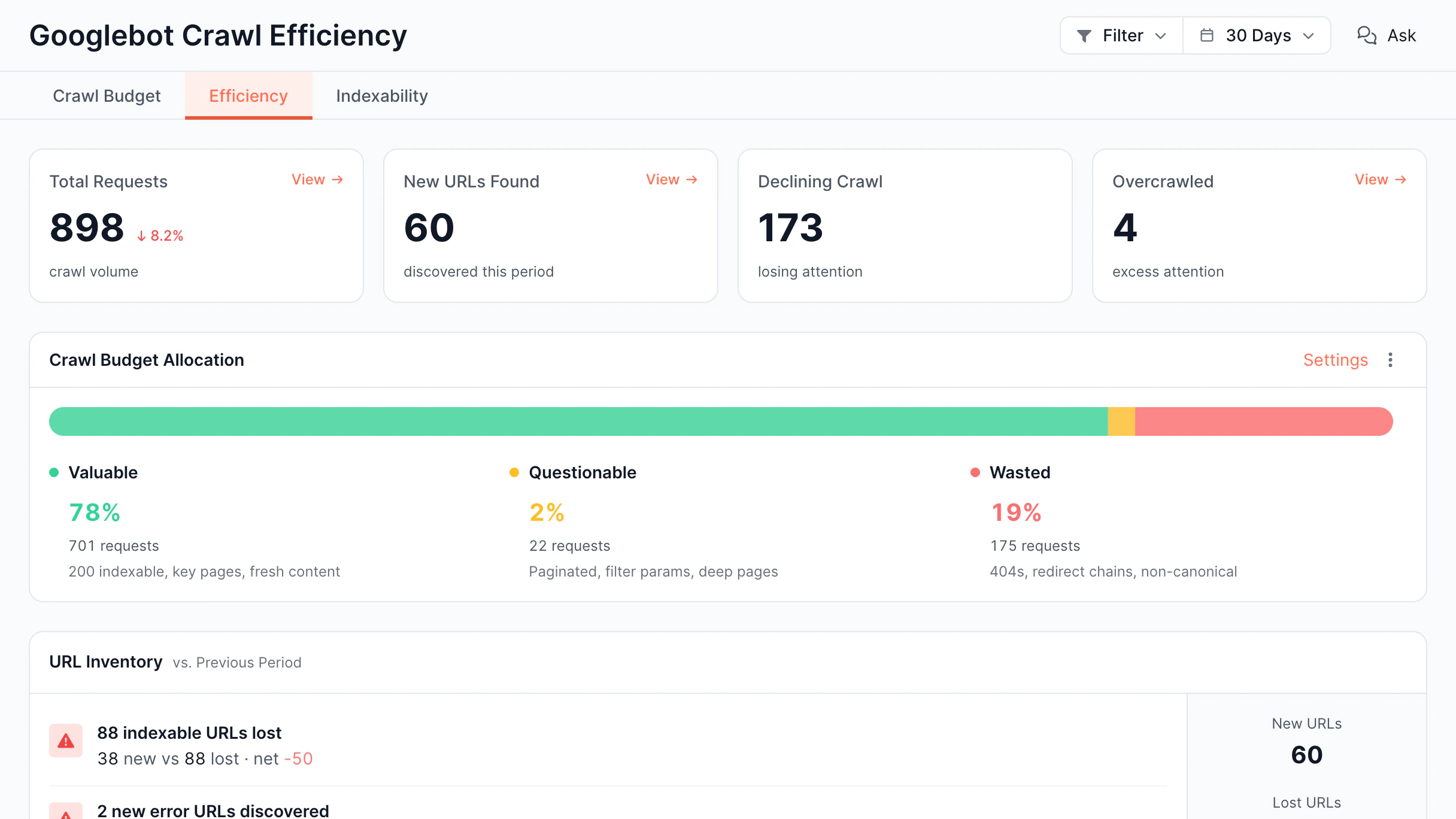
Googlebot crawl split into valuable, questionable, wasted.
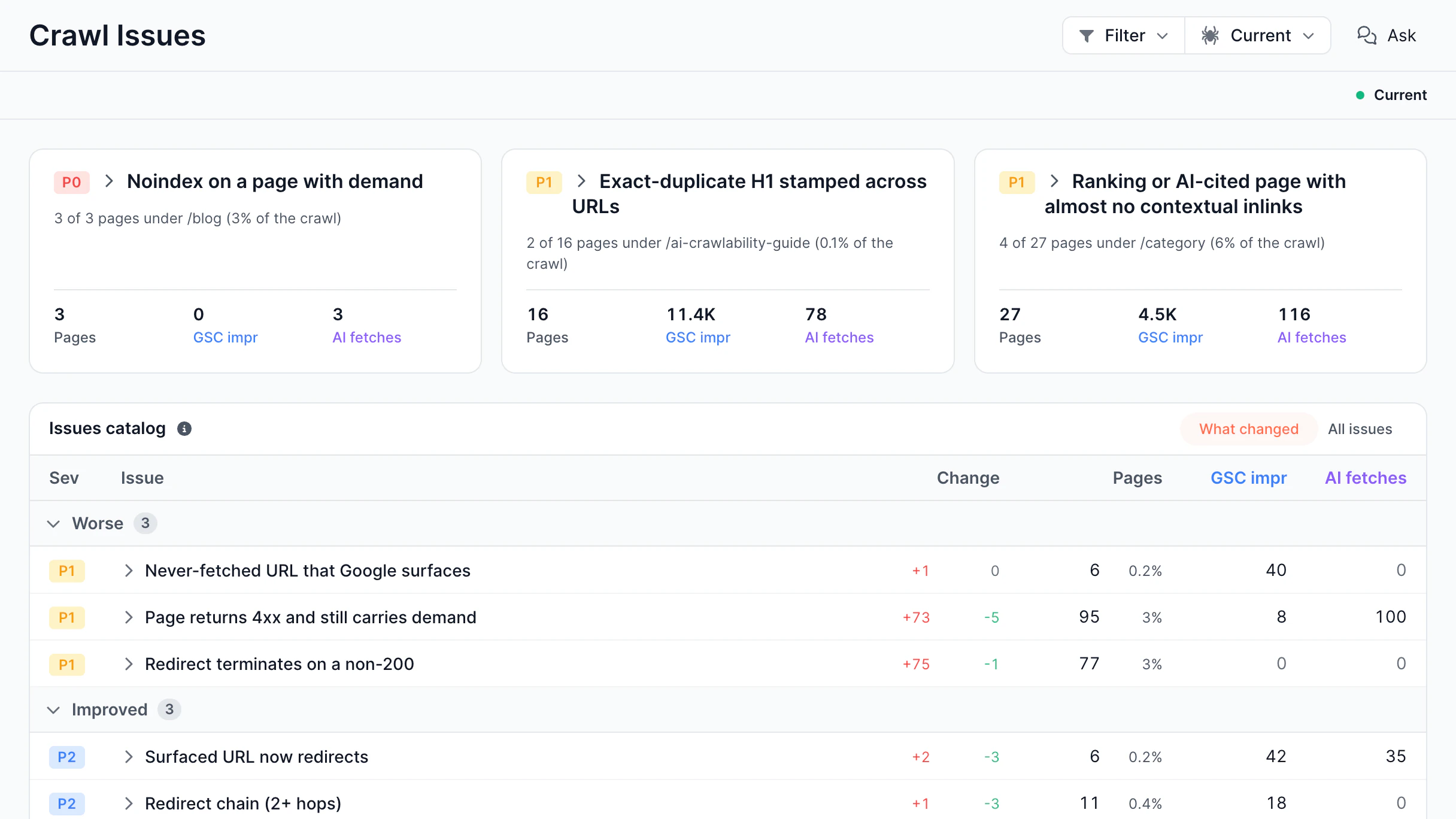
Audit issues that changed since the last crawl.
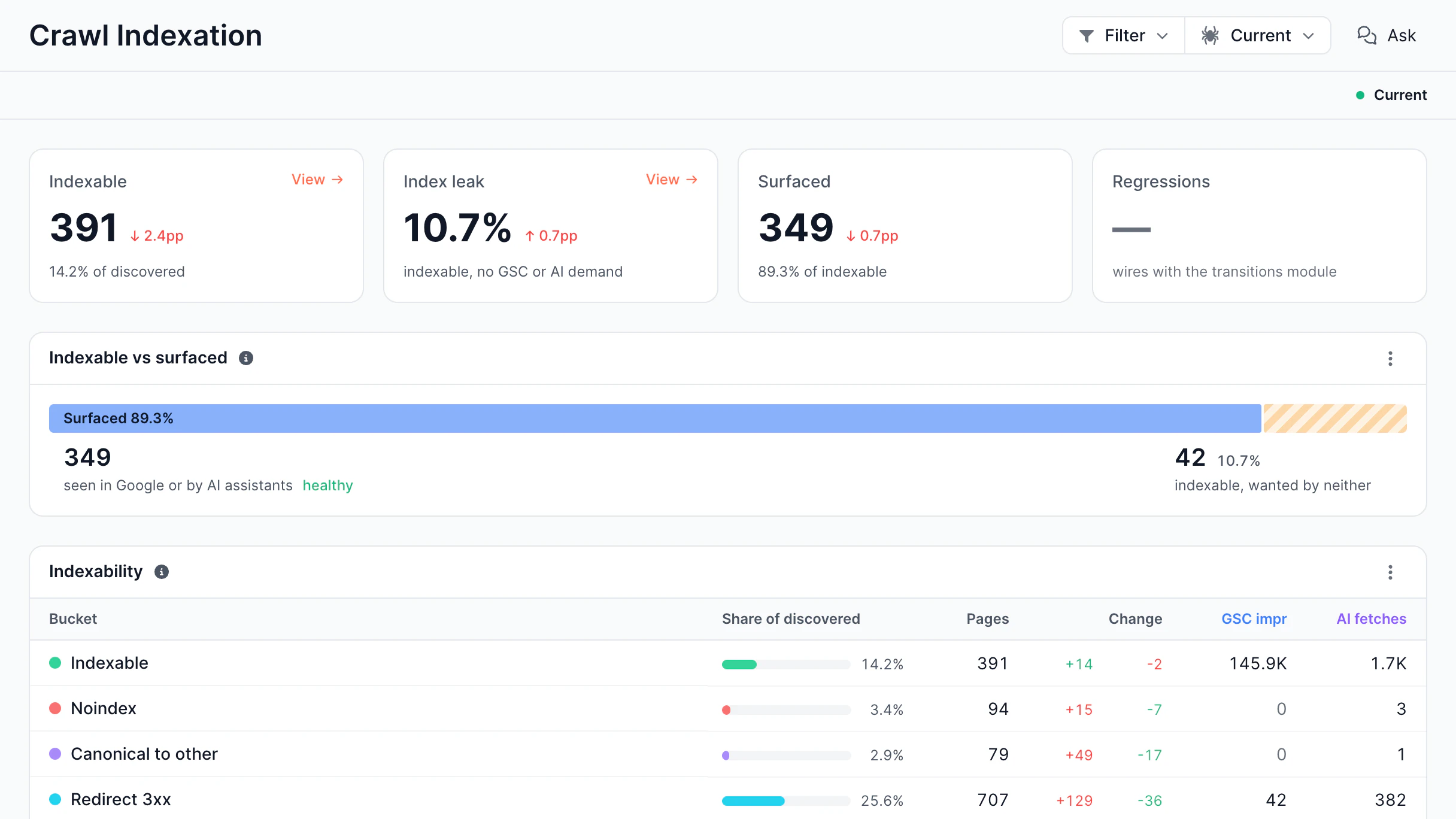
Indexable, noindex, canonicalized, and redirected pages.
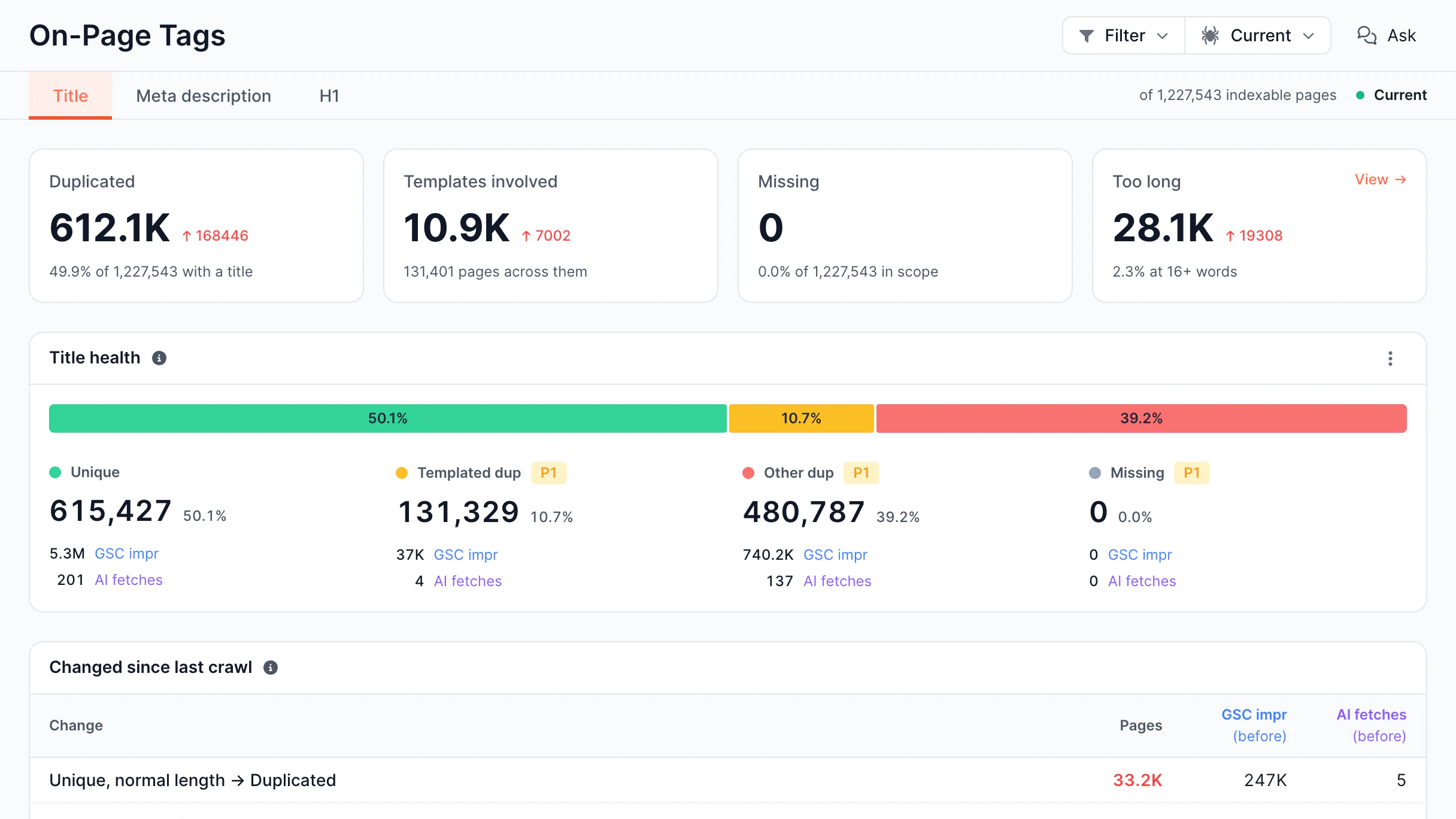
Duplicate, missing, and too-long titles.
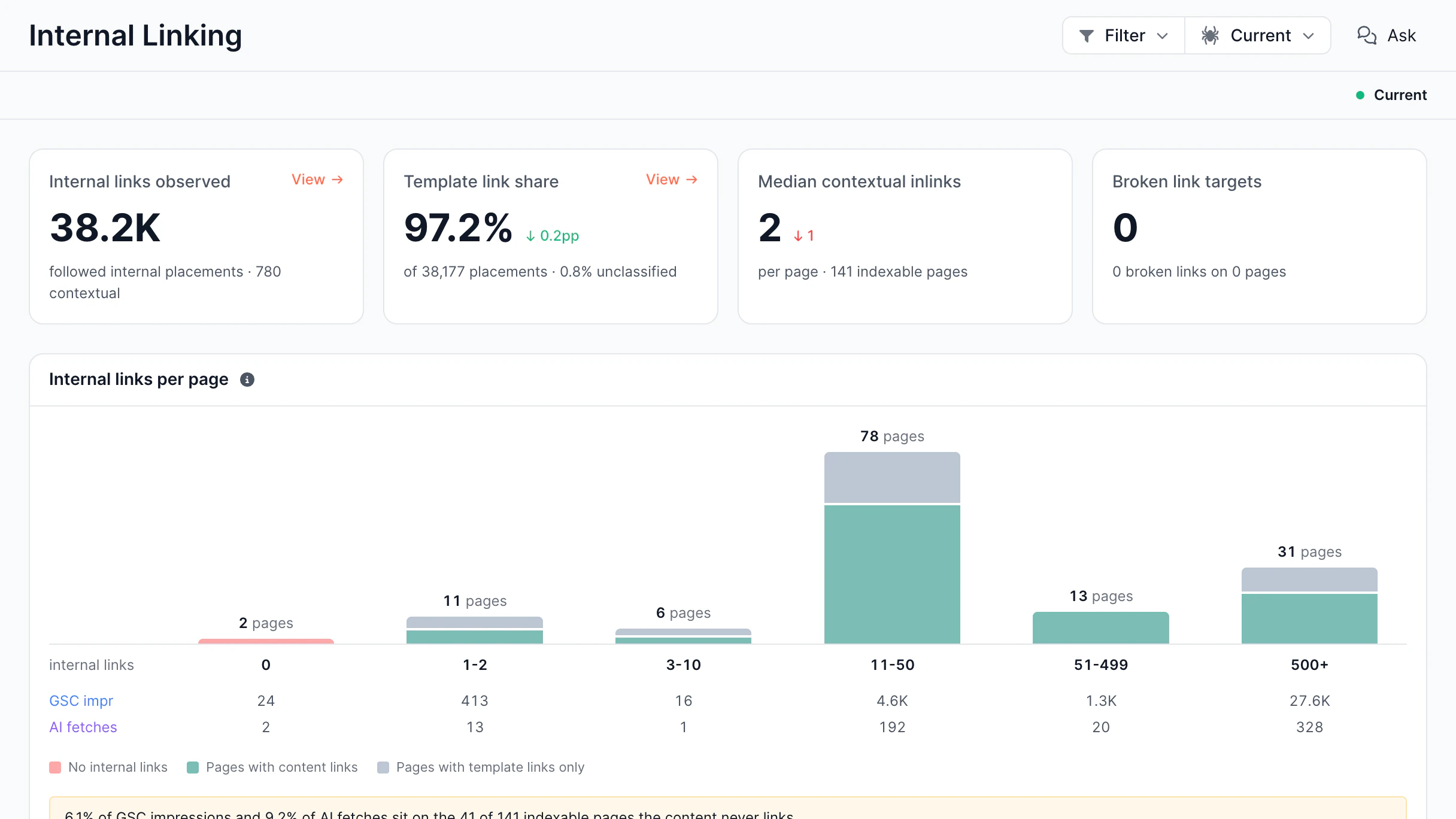
Internal links per page, content vs template.
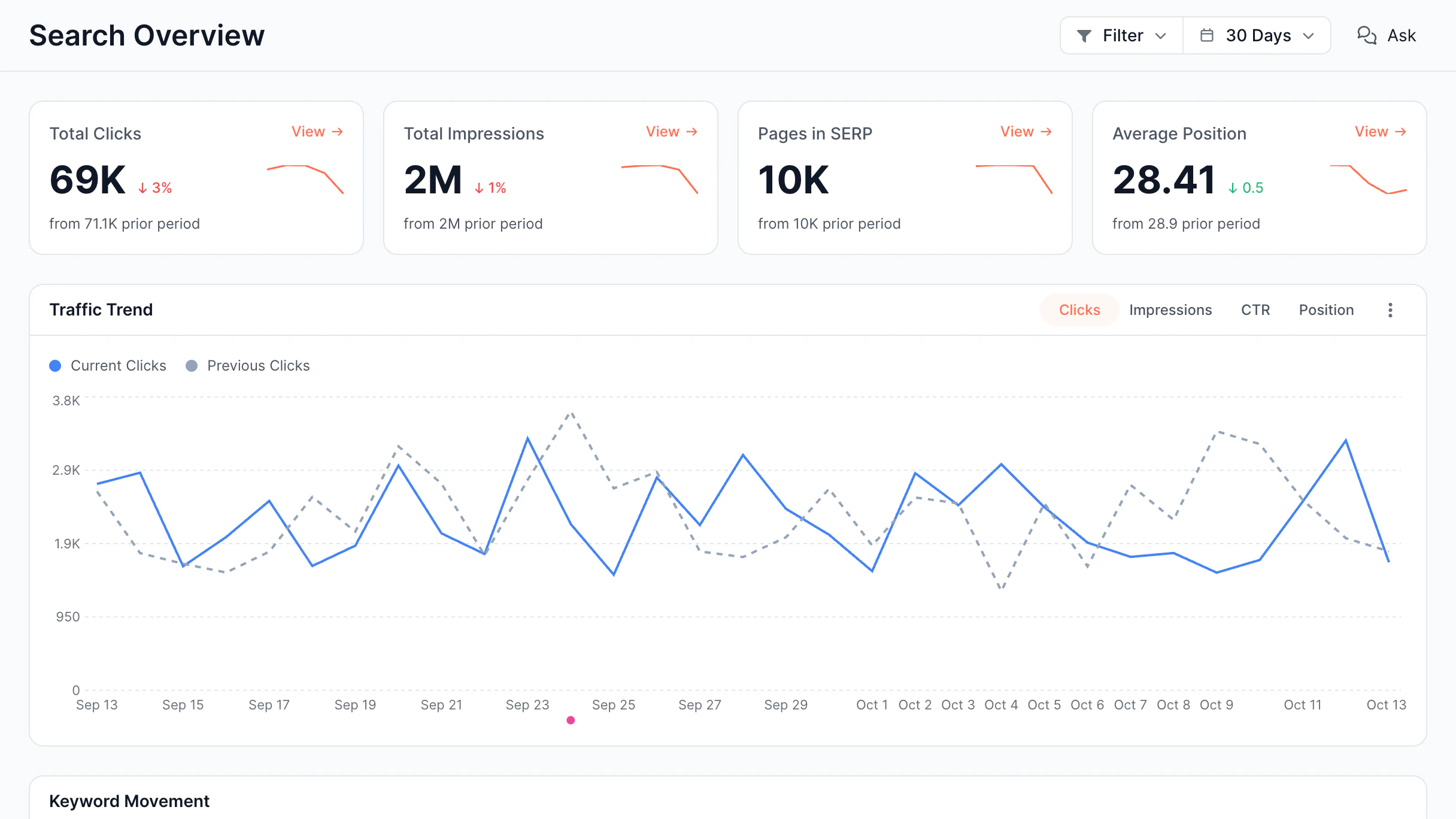
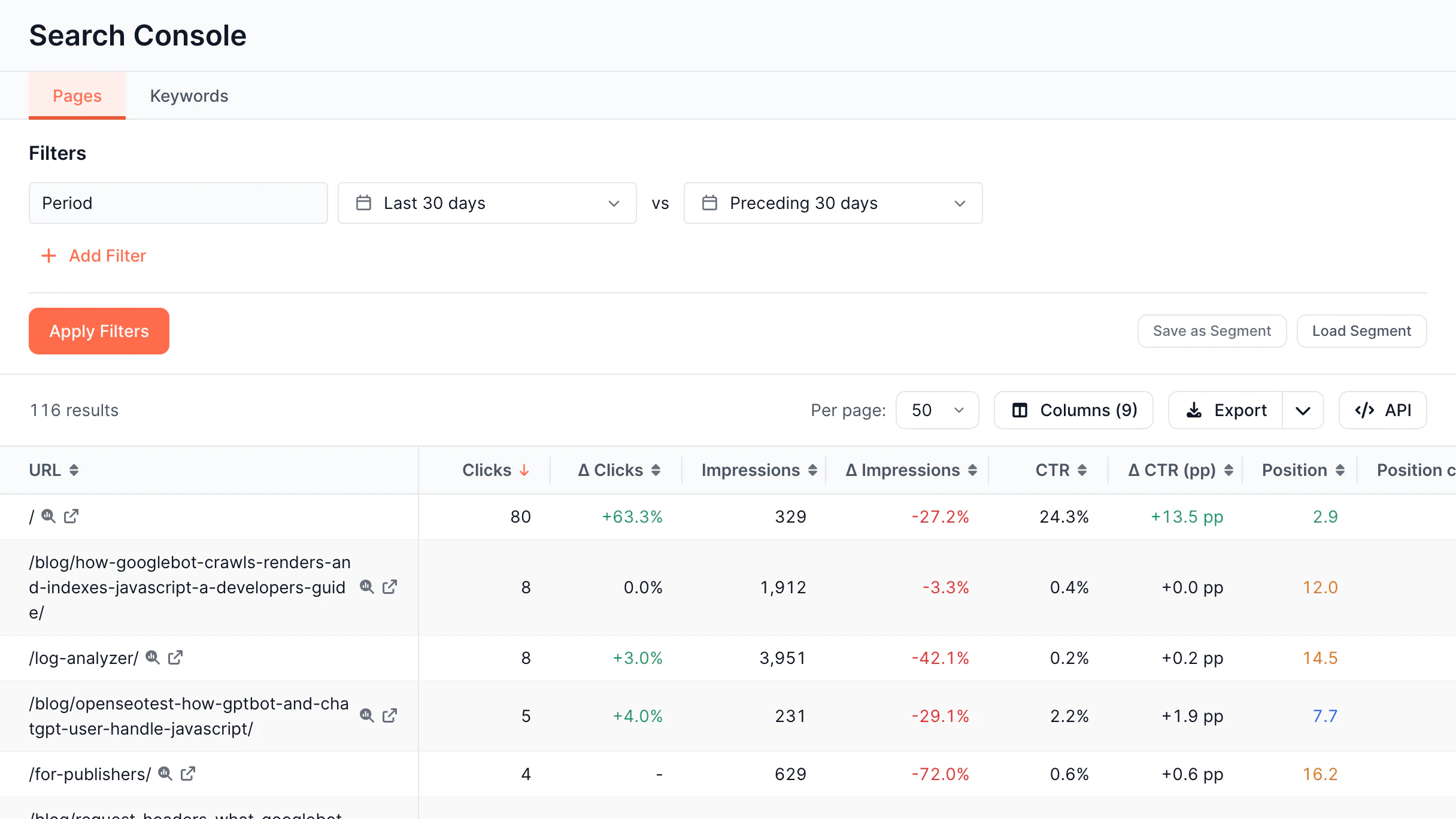
Search Console clicks, impressions, and position vs the previous period.
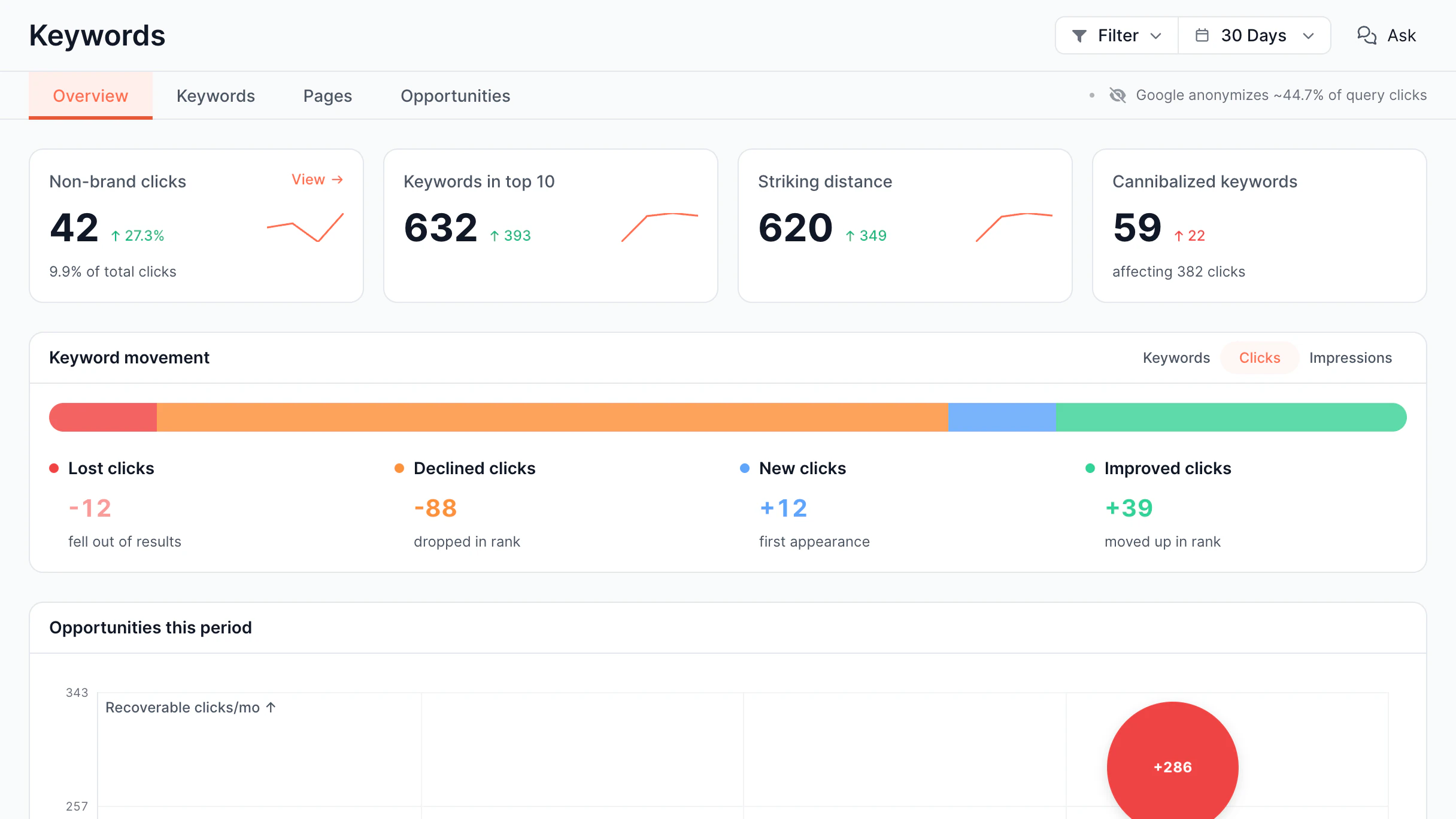
Keyword movement, top-10 counts, and striking-distance keywords.
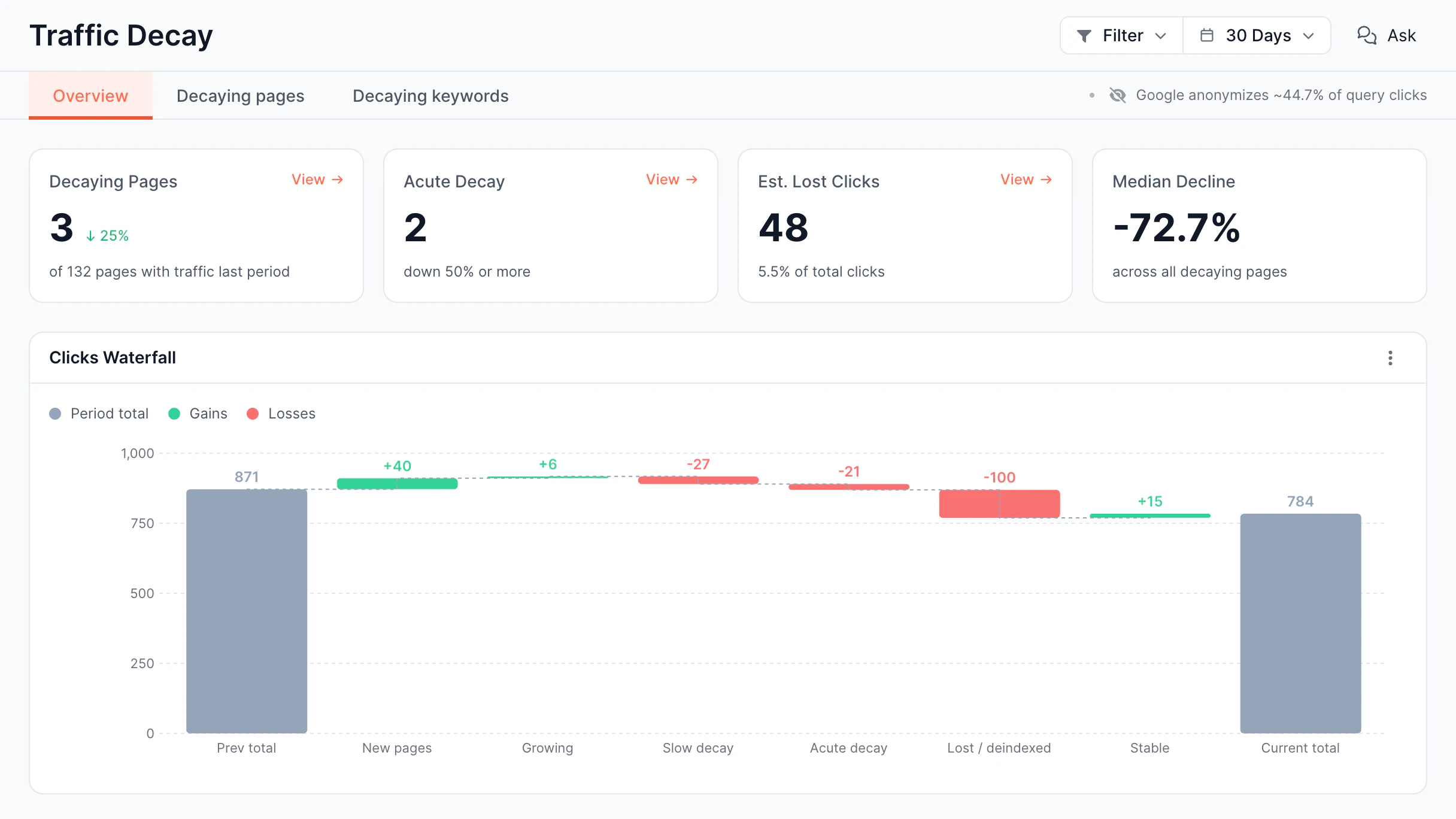
Pages losing clicks, split into slow decay, acute decay, and deindexed.
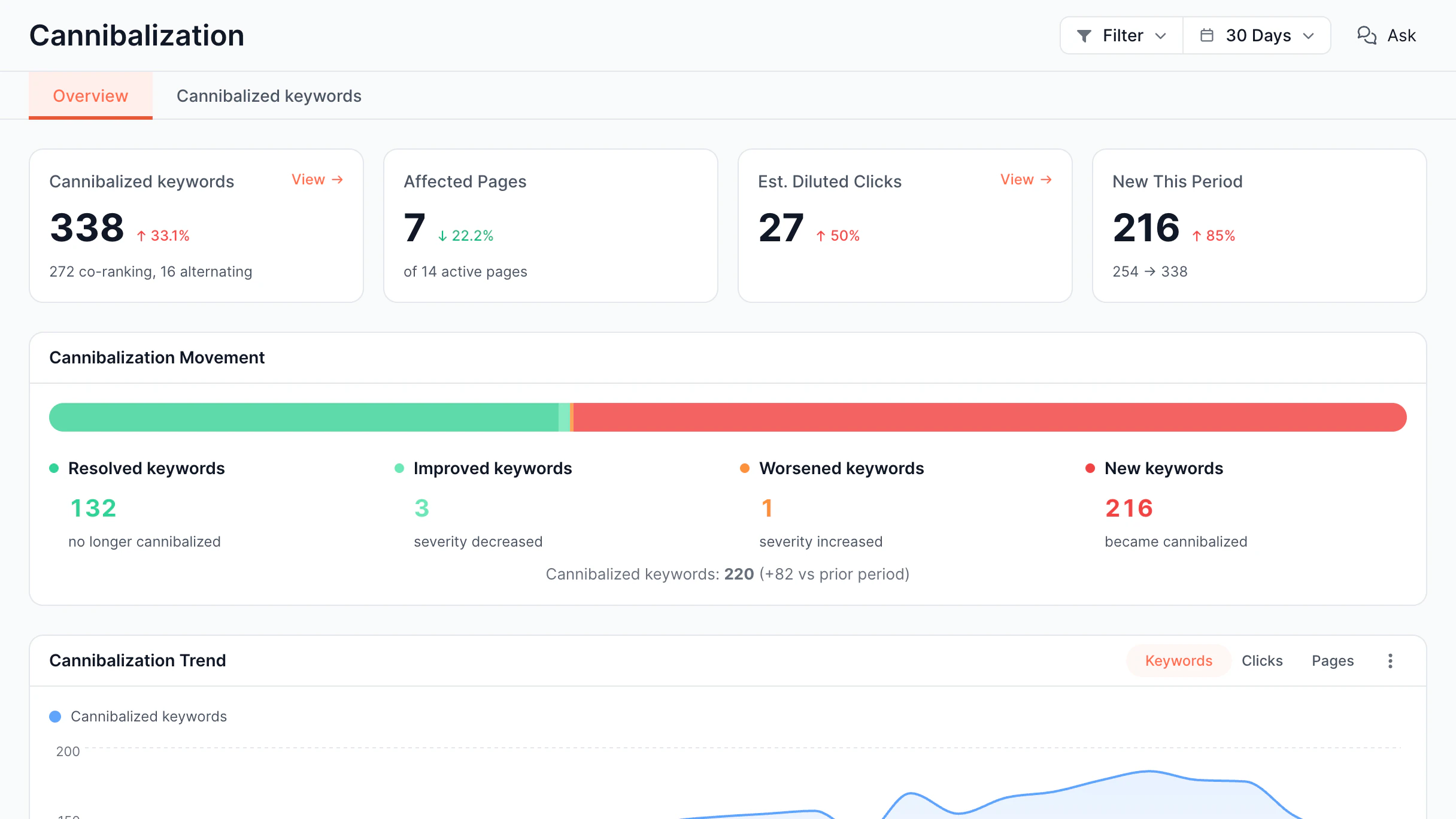
Keywords where several of your pages rank, and how that changed.
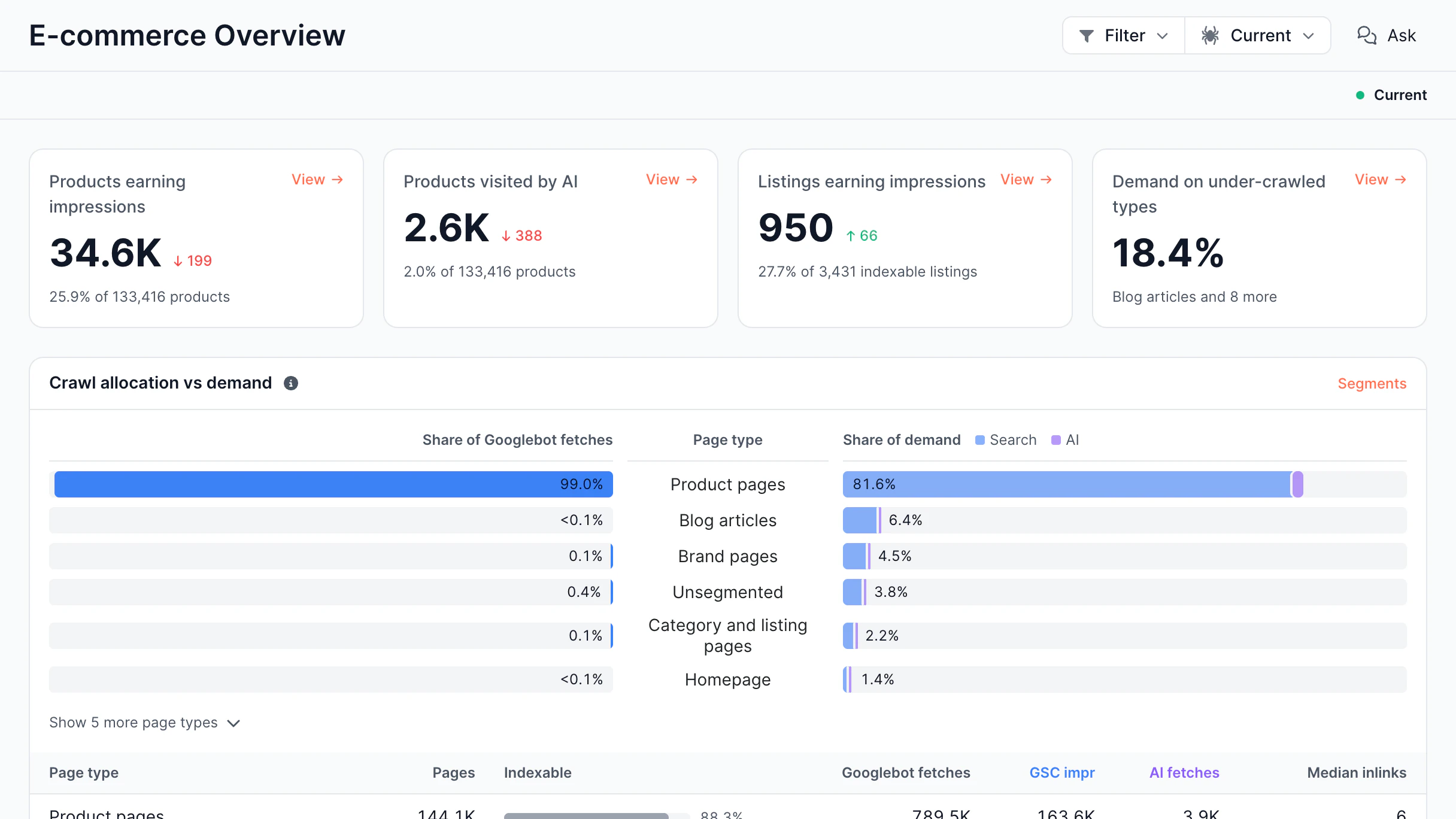
Googlebot fetches vs search and AI demand by page type.
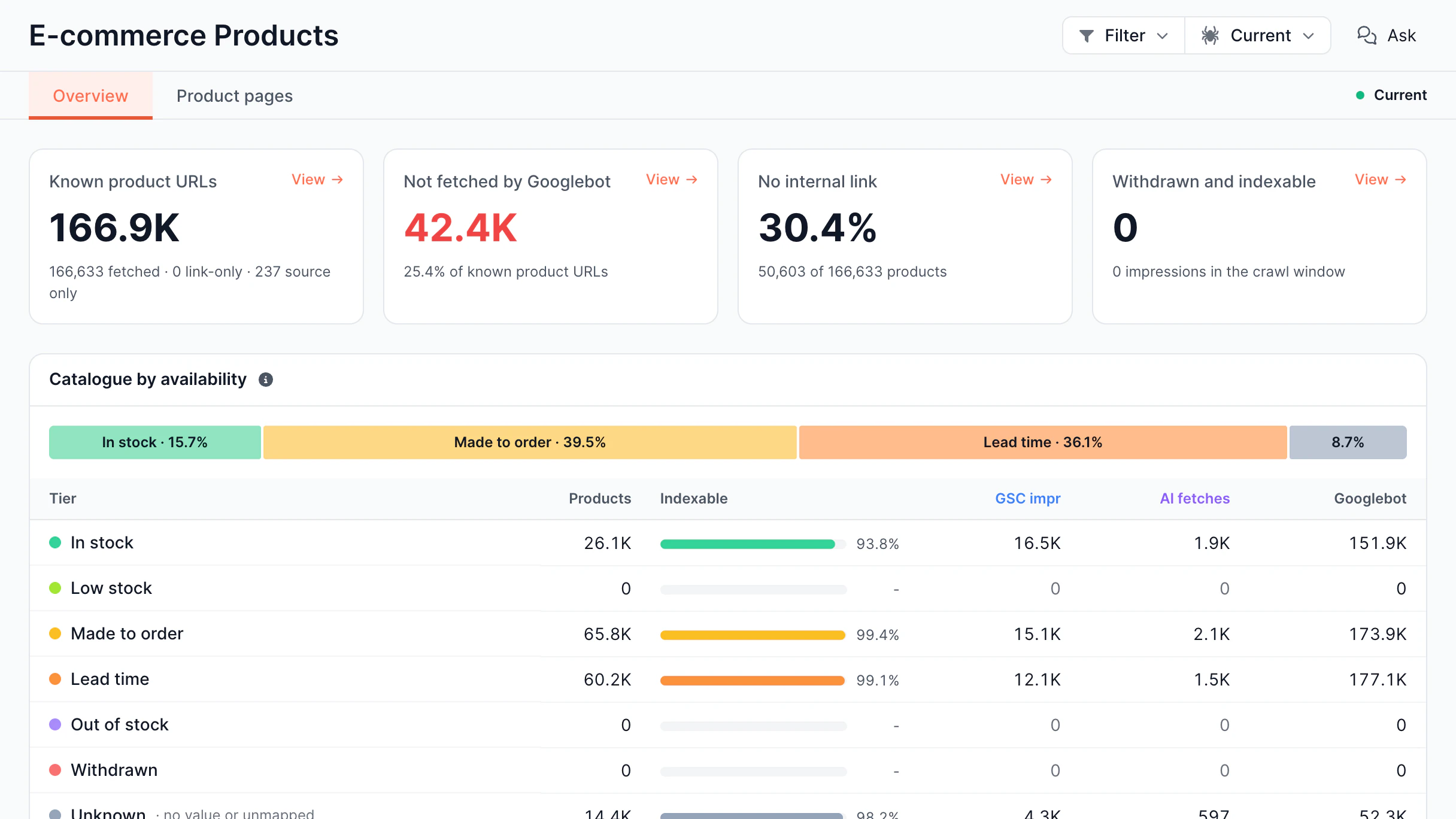
Products not fetched by Googlebot or not linked.
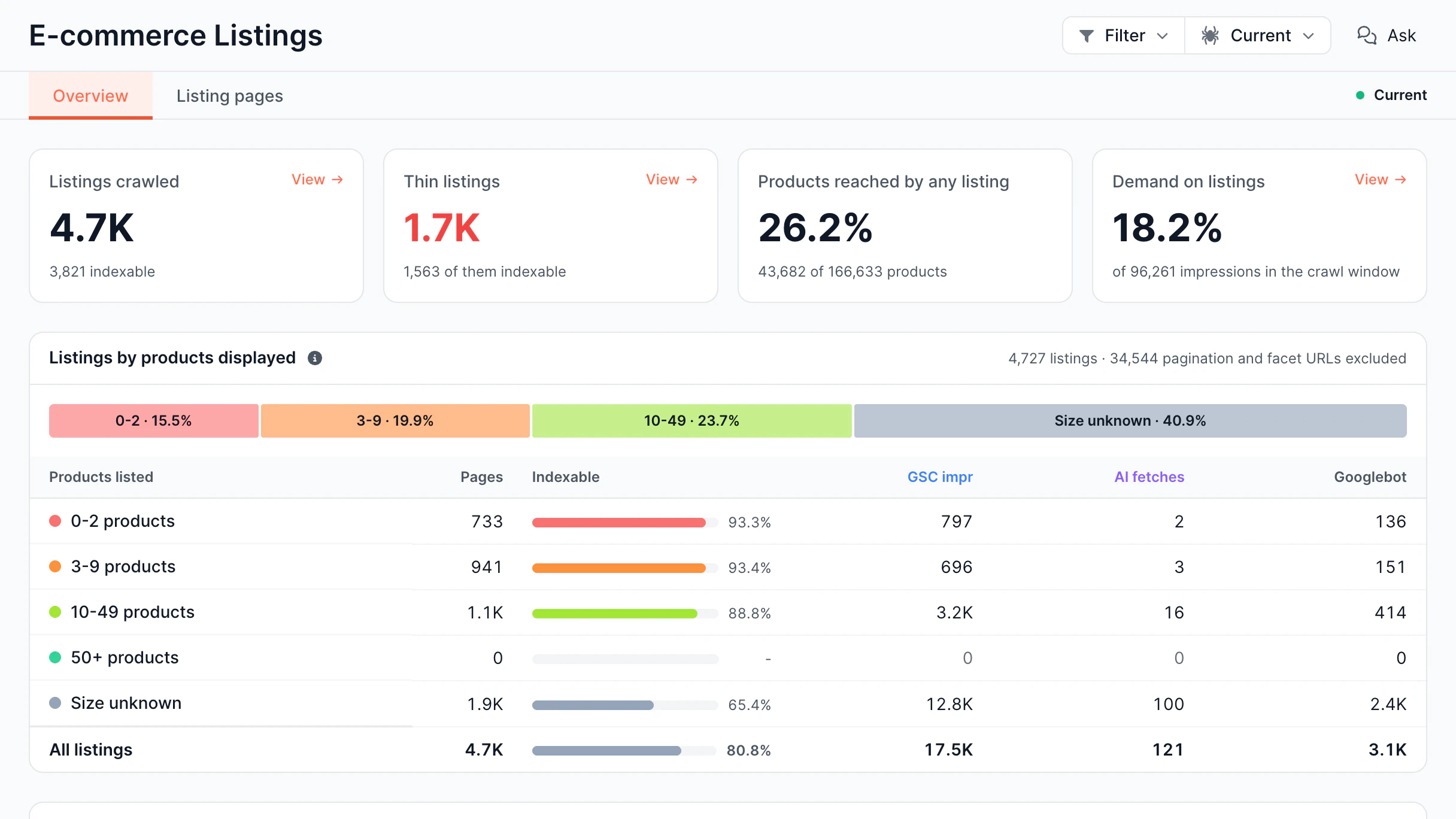
Category pages by number of products listed.
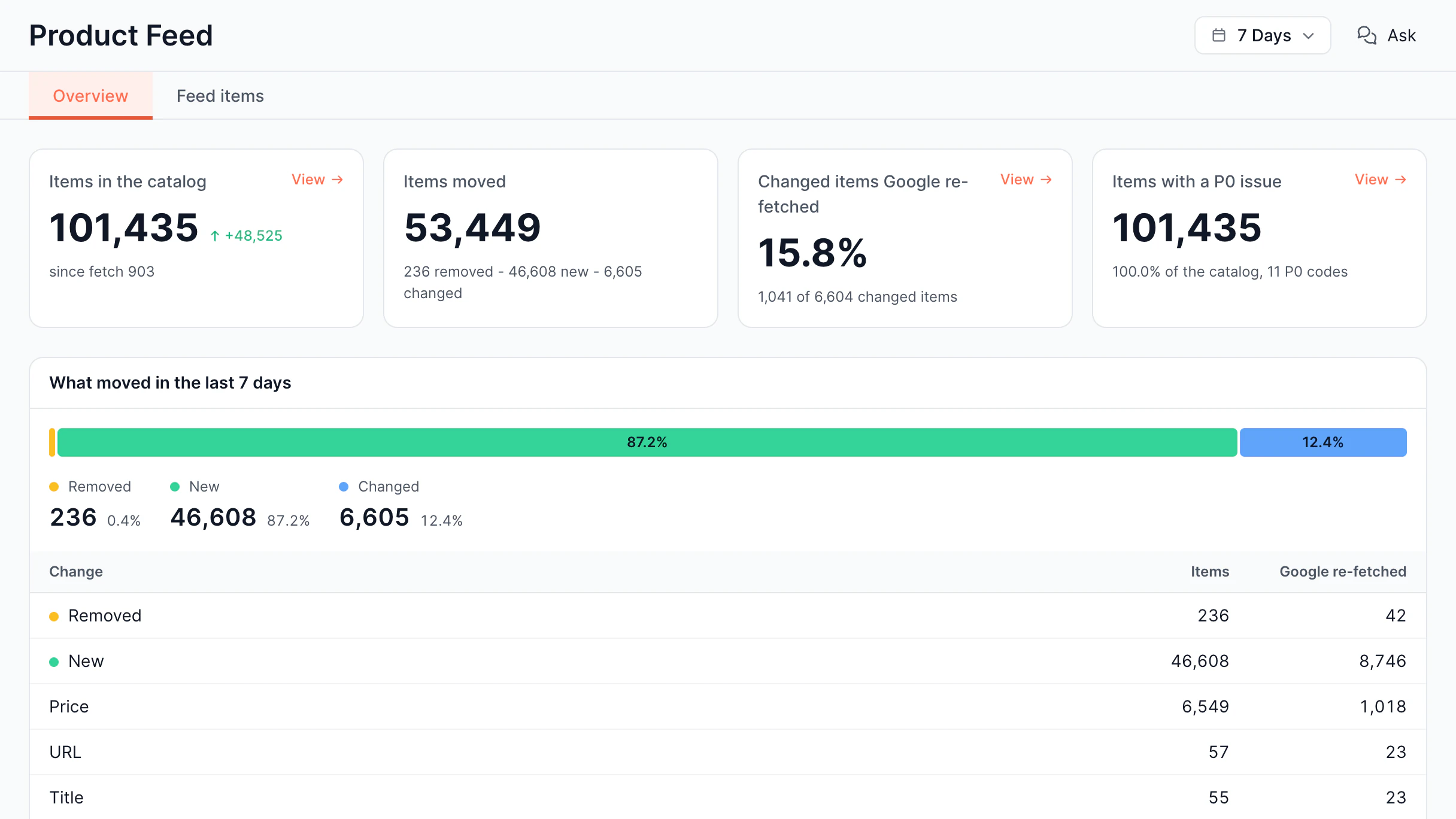
Merchant feed changes and Google re-fetches.
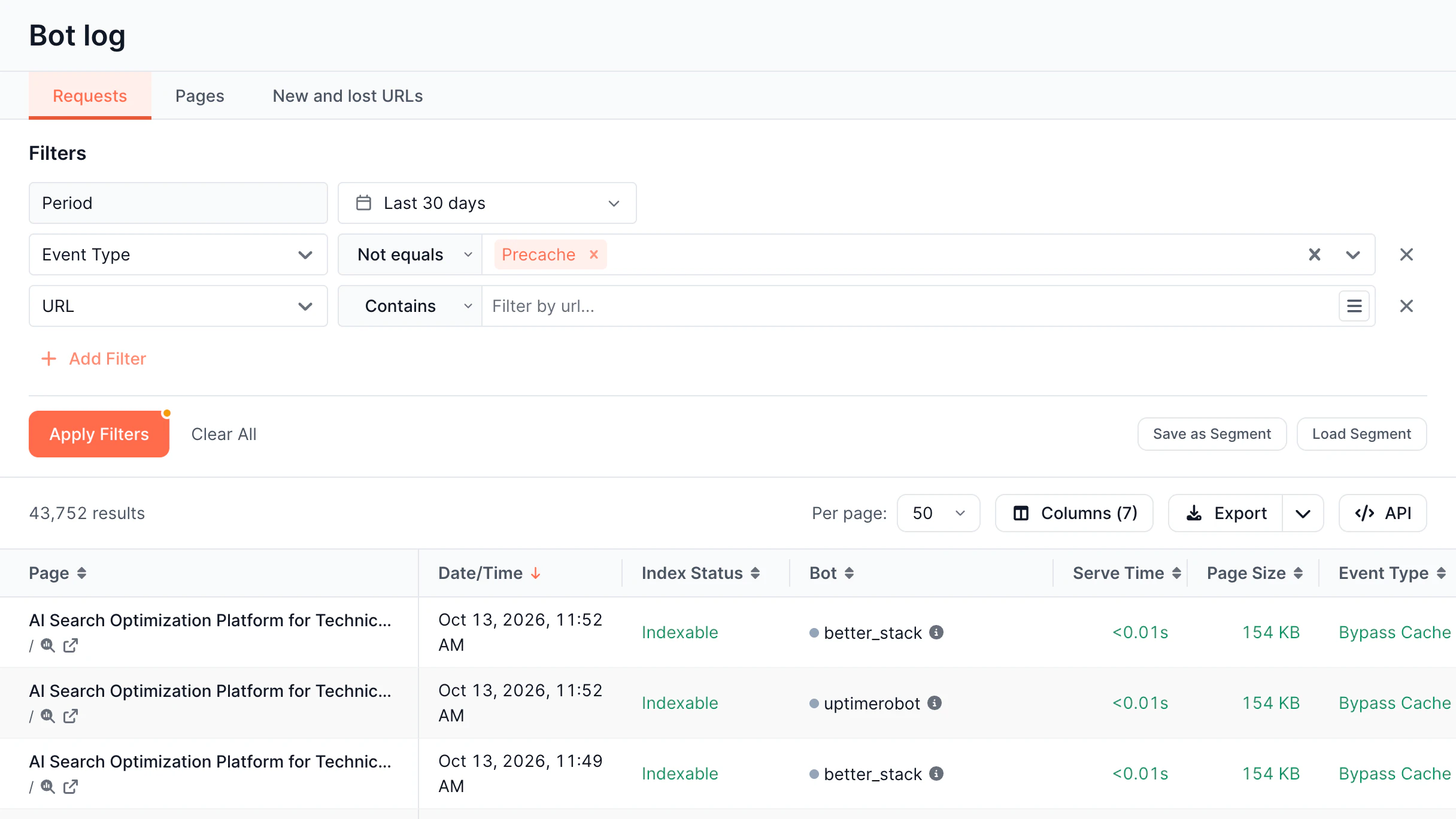
Table of every bot request with filters, segments, and export.
Search Console rows by page or keyword, with filters and period comparison.
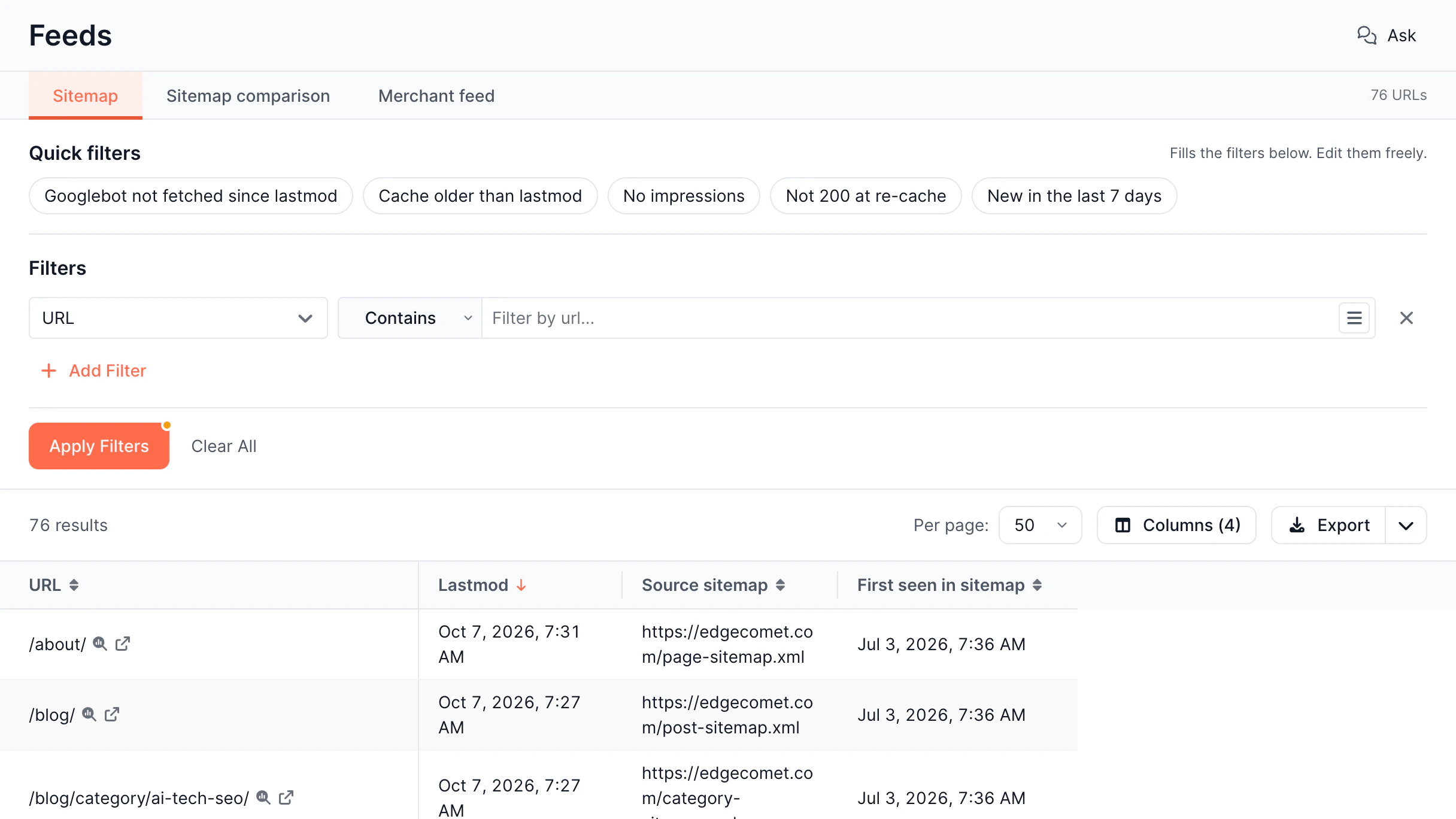
Sitemap and Merchant feed URLs with quick filters and export.
Improve indexing, visibility, and traffic from day one.
14-day free trial
SEO for real estate companies helps property listings become explorable by search and AI bots. This type of SEO covers how fast your content loads, whether it is readable without JavaScript, and how well your structured data provides property details like price, location, and availability.
SEO for real estate websites should include using unique descriptions for each listing, ensuring fast page rendering, fixing broken links, and building clean URLs. Googlebot needs to crawl and index your pages before AI can find them. That’s exactly what EdgeComet offers.
Internet Data Exchange content is often JavaScript-rendered and appears across hundreds of sites. Search engines have trouble indexing duplicate content, dynamically loaded listings – that makes your pages invisible to both Google and AI bots.
Yes, but only if Google already knows about these pages. User bots like ChatGPT-User fetch those pages that rank. If your listings aren't indexed by Google, AI won't find them either. Explore EdgeComet – it offers effective SEO for real estate listings for your website to rank in Google and be recommended in AI answers.
Large property websites generate thousands of duplicates and expired listings. Bots waste crawl budgets on empty or outdated pages instead of live listings.
A new property should be indexed as fast as possible. Buyers search in real time, so new listings should be crawlable immediately. A good SEO strategy for real estate is having clean URLs, fast server response, and proper sitemaps.
Listings may not get indexed because the content is loaded dynamically. Crawlers visit the page before JavaScript renders its details, see the empty page, and move on. Filters, pagination, and IDX/iframe embeds compound the problem by either duplicating URLs or hiding content entirely.
They send bots to crawl your pages on a limited budget. If your content responds slowly or returns incomplete pages, bots discover fewer listings per session. AI crawlers are stricter: 69% can't execute JavaScript at all, so dynamic listing content is simply invisible to them.
Among the most typical issues are the following: JavaScript-based content that bots can't inspect, crawl budget spent on filter and parameter URLs, pagination duplicates, IDX/iframe embeds hiding listing data, and slow origin response times that reduce how many pages bots discover per visit.
If listing details like price, address, photos, property specifications are loaded via JavaScript or injected by an IDX embed, bots may see an empty page. Google can eventually render JavaScript but queues pages for hours. AI bots typically don't come back at all. Pre-rendering delivers complete HTML on the first request, so no listing is left invisible.
EdgeComet helps automate SEO for real estate sites and bridge a gap between your site and every crawler that visits it. It serves fully rendered listing pages in under 15ms, makes IDX and AJAX content indexable, and lets your SEO team manage titles, structured data, and canonicals across 100K+ listings without involving developers.
Prioritize active property listings and location or category pages with unique content and search demand. Avoid indexing duplicate listings and low-value filter combinations. EdgeComet helps identify crawl waste and manage indexing rules across large property catalogs.
Keep sold listings accessible if they provide valuable information. Otherwise, redirect them to relevant replacement pages or return a 410 status when permanently removed. EdgeComet helps manage sold listing redirects, HTTP status codes, and indexability rules at scale.
Stay ahead with expert insights on search visibility, AI optimization, and technical SEO
I started digging into crawl budget around 2016, and in 2018 I gave my first talk built on crawl data...
Read Article
Faceted navigation SEO comes down to two decisions for every filter URL: may search engines crawl it, and may they...
Read Article
To view a page as Googlebot, you can use the URL Inspection tool in Google Search Console, compare raw HTML...
Read Article