
How Googlebot Crawls, Renders, and Indexes JavaScript: A Developer’s Guide
JavaScript content takes hours to weeks longer to index than static HTML because Googlebot cannot index it on the first...
Read ArticleEdgeComet helps SEO teams in eliminating rendering delays, optimizing crawl efficiency, revealing quicker appearances in AI-driven results, and turning hidden pages into revenue-generating assets.
What gets published is not always what gets indexed. Rendering paths, JavaScript execution, and bot prioritization create inconsistencies, so search engines often see a different version of the site than what is actually live.
AI systems are becoming a distribution layer, but there is still no clear control over how content is interpreted or used. Many crawlers don’t execute JavaScript, and teams have no unified way to see or influence what AI models actually consume.
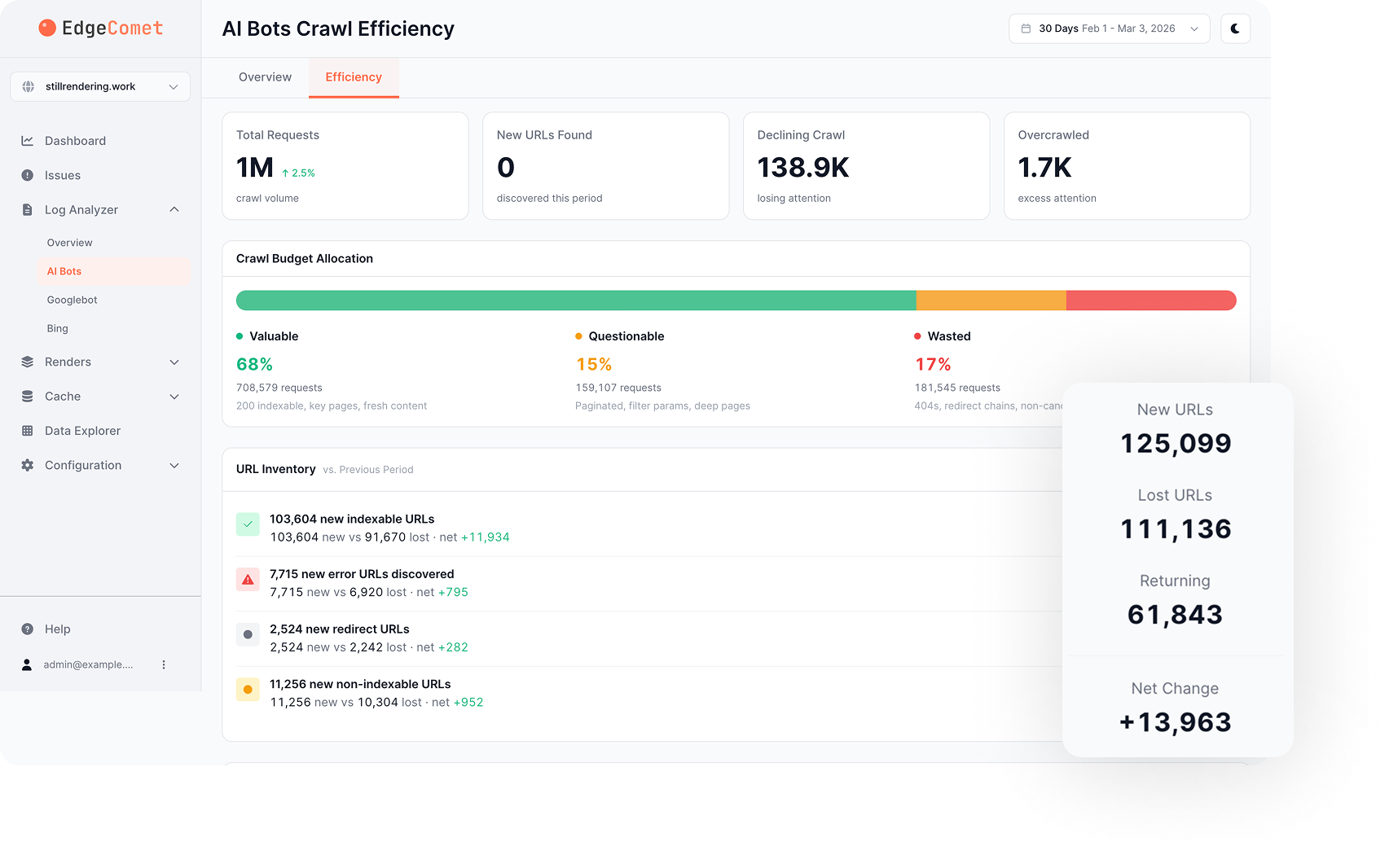
Search engines constantly move through large sets of URLs, but there is no shared system that aligns crawl behavior with business priorities. High-value pages compete with low-value ones, and resource allocation remains largely invisible.
There are separate tools and workflows that handle rendering, SEO changes, monitoring, analytics, and deployments. Without a unified operational layer where teams can execute changes, you can't observe bot behavior, and respond in real time.
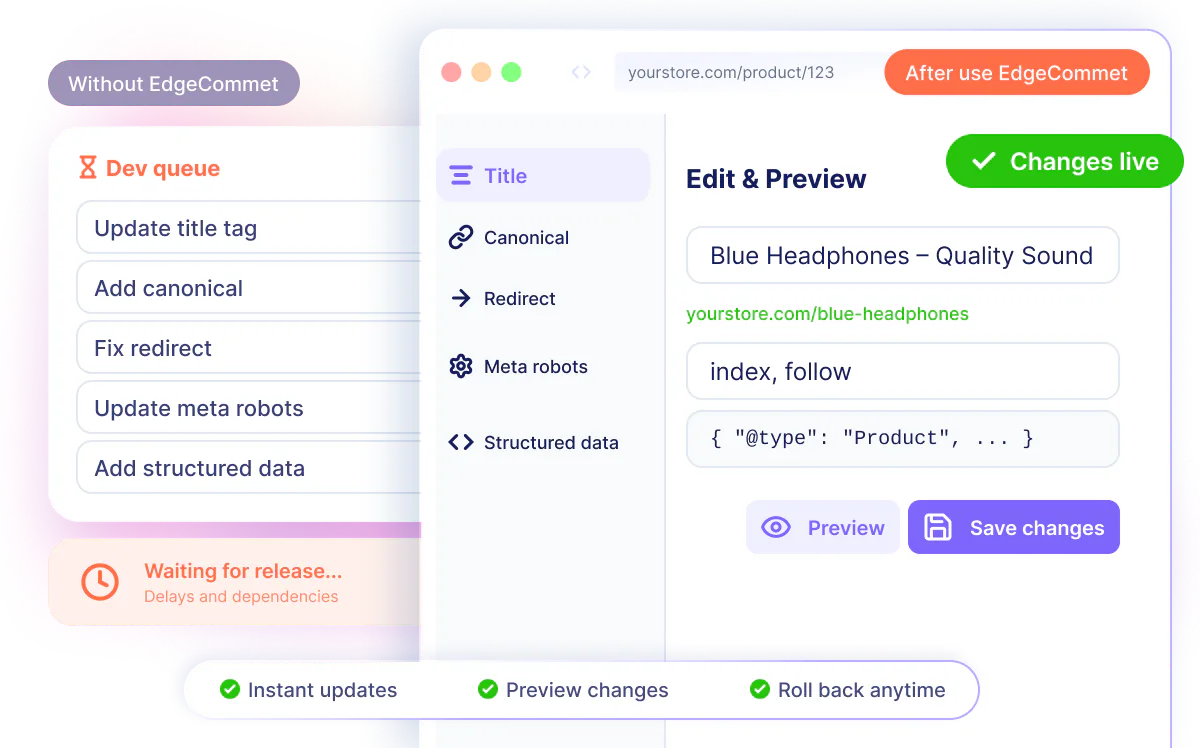
Even small SEO updates tend to get stuck in development queues, which slows everything down.
Instead of waiting for releases, changes can be applied directly at the response level — including titles, canonicals, redirects, meta robots, and structured data — with the option to preview or roll back if needed.
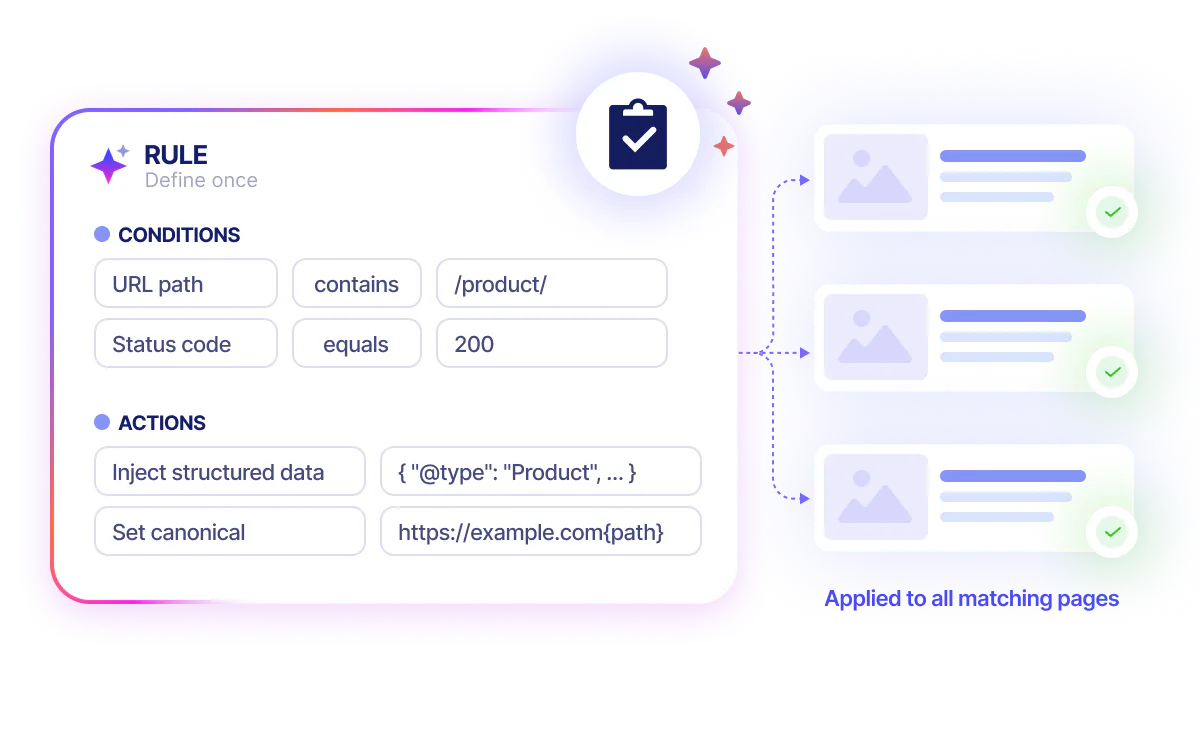
On larger sites, the same issue usually shows up across hundreds or thousands of pages, and fixing it one by one isn’t realistic.
Rather than handling pages individually, you define rules based on URL patterns, conditions, and rendered content, and let those rules apply changes across entire sections.
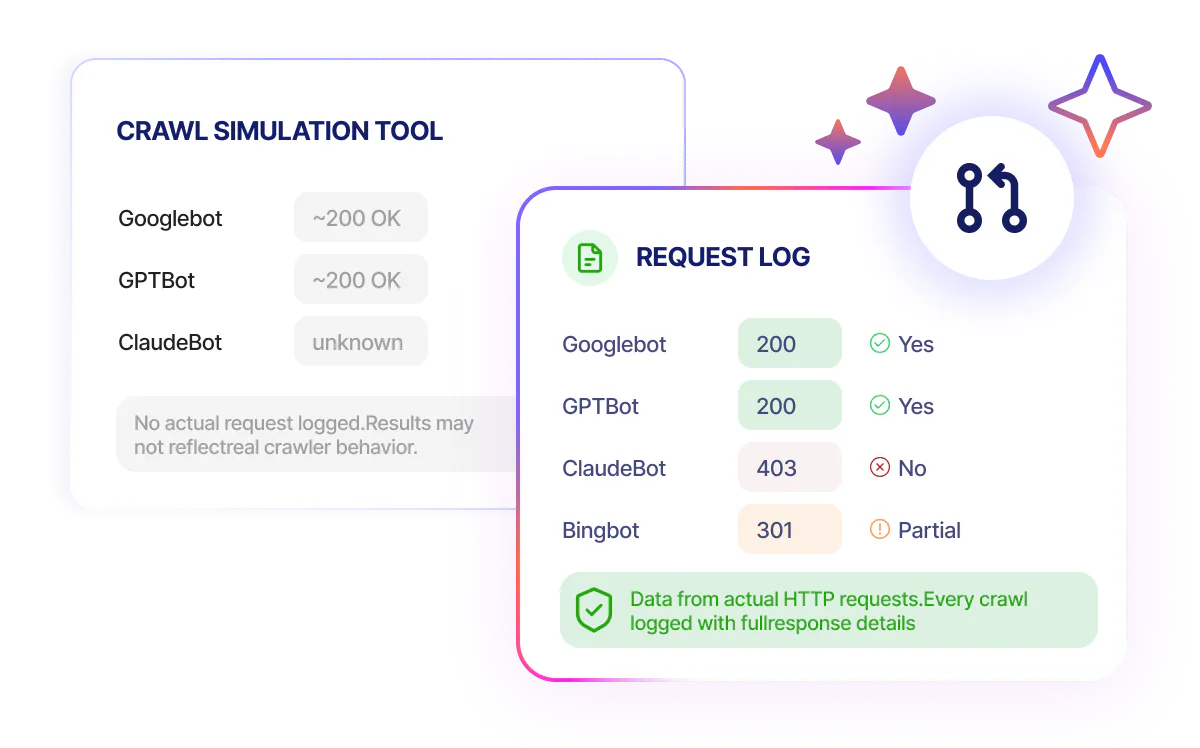
A lot of SEO decisions are still based on crawls that only approximate how bots behave.
Here, the data comes from actual requests. You can see what search engines and AI crawlers accessed, how often, and what they received in response.
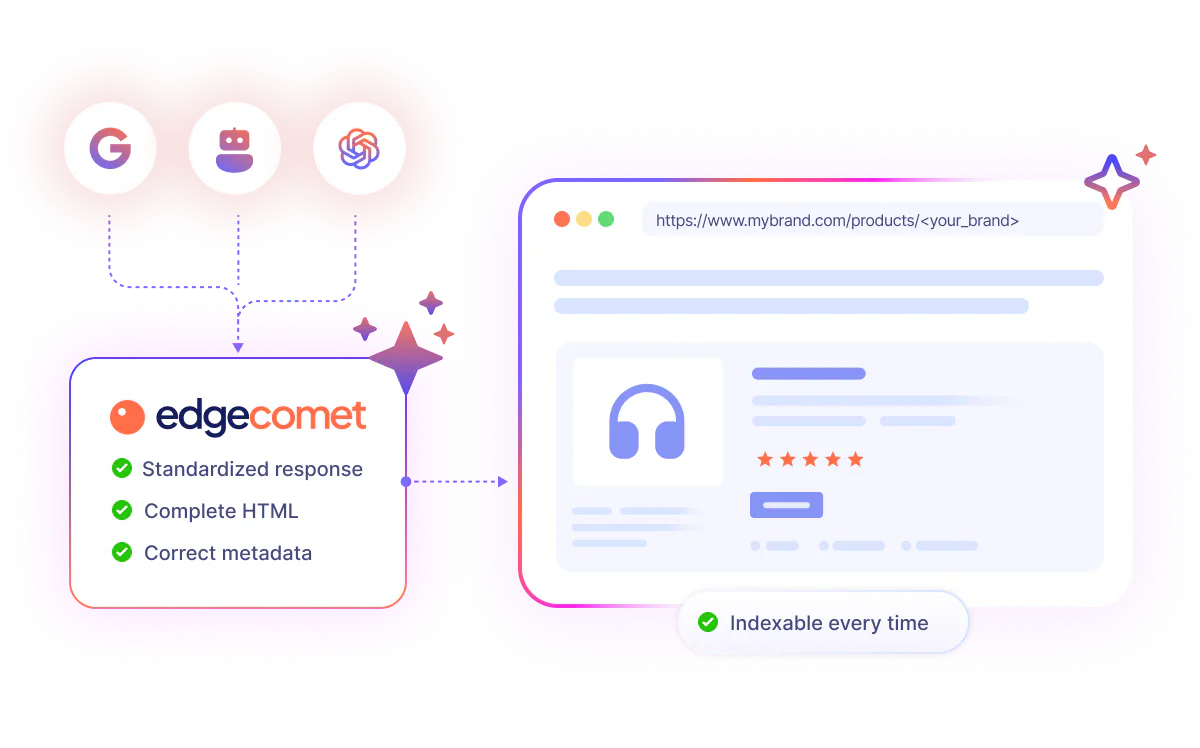
What gets indexed depends entirely on the response a bot receives, and that response isn’t always consistent.
Sitting in the request path, EdgeComet standardizes what is returned, so bots consistently get complete and indexable versions of your pages.
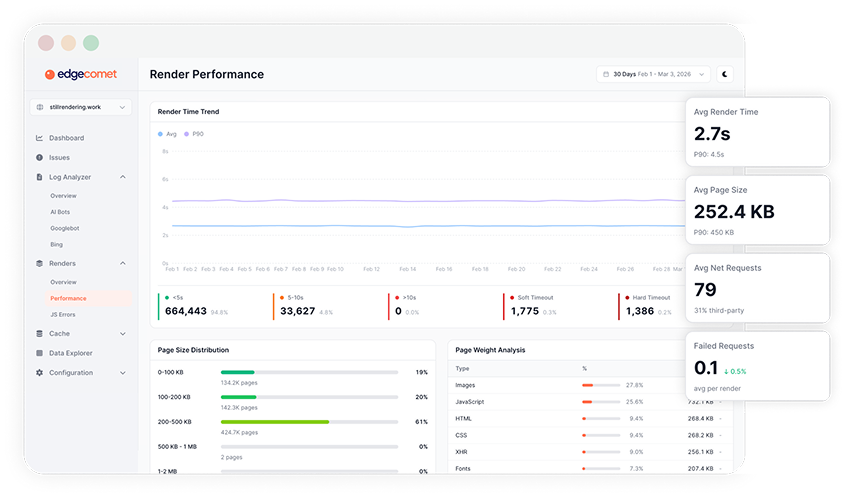
JavaScript rendering failures can silently break SEO and AI visibility. EdgeComet continuously monitors rendering performance.
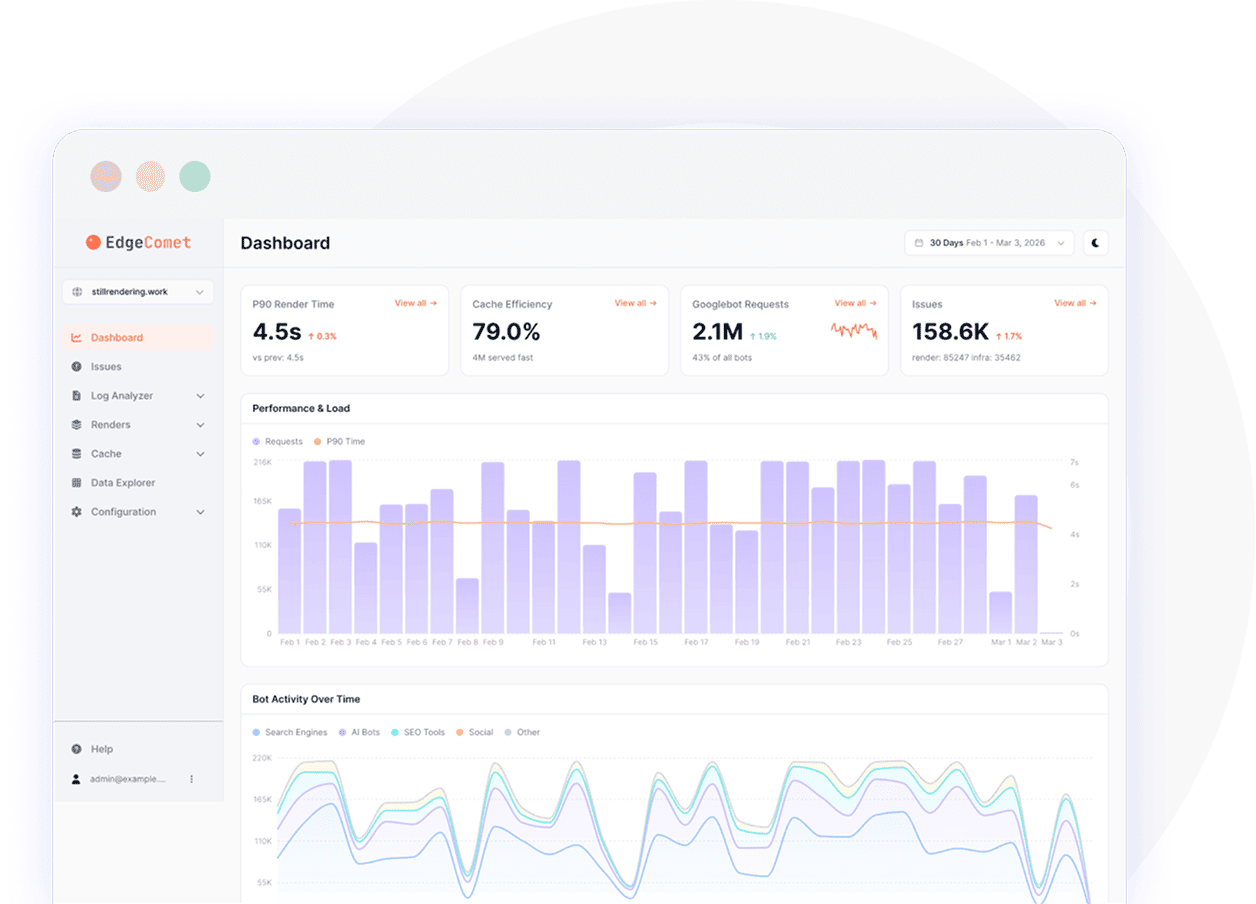
Monitor rendering activity and performance
Detect JS errors during bot rendering
Analyze render time and page size
Track ChatGPT, Claude, Perplexity crawlers
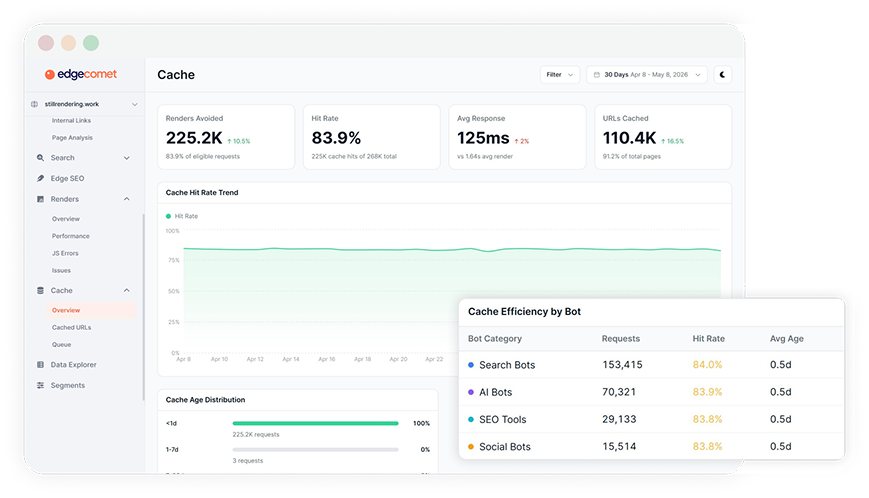
Rendering JavaScript pages on every request is slow and expensive. EdgeComet's caching system ensures bots receive pre-rendered pages instantly.
Manage and monitor cached renders
Pre-render critical pages before bots arrive
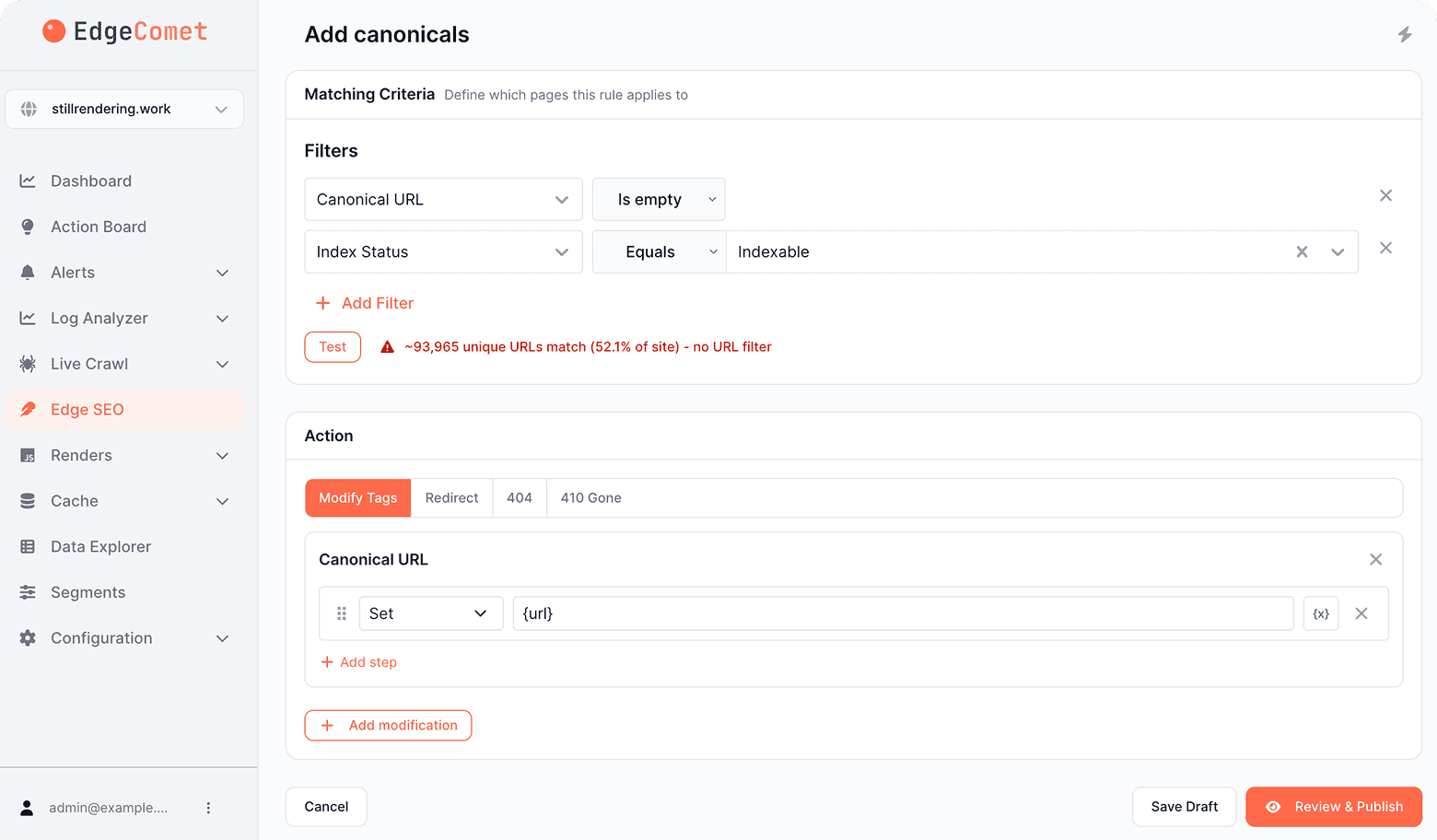
None of the minor SEO issues should require developers and a long wait. EdgeComet lets your SEO team make changes instantly.
Apply SEO changes across any set of pages
See exactly how a page will look to bots
Every change is tracked, you can revert it
AI generates correct rules for you
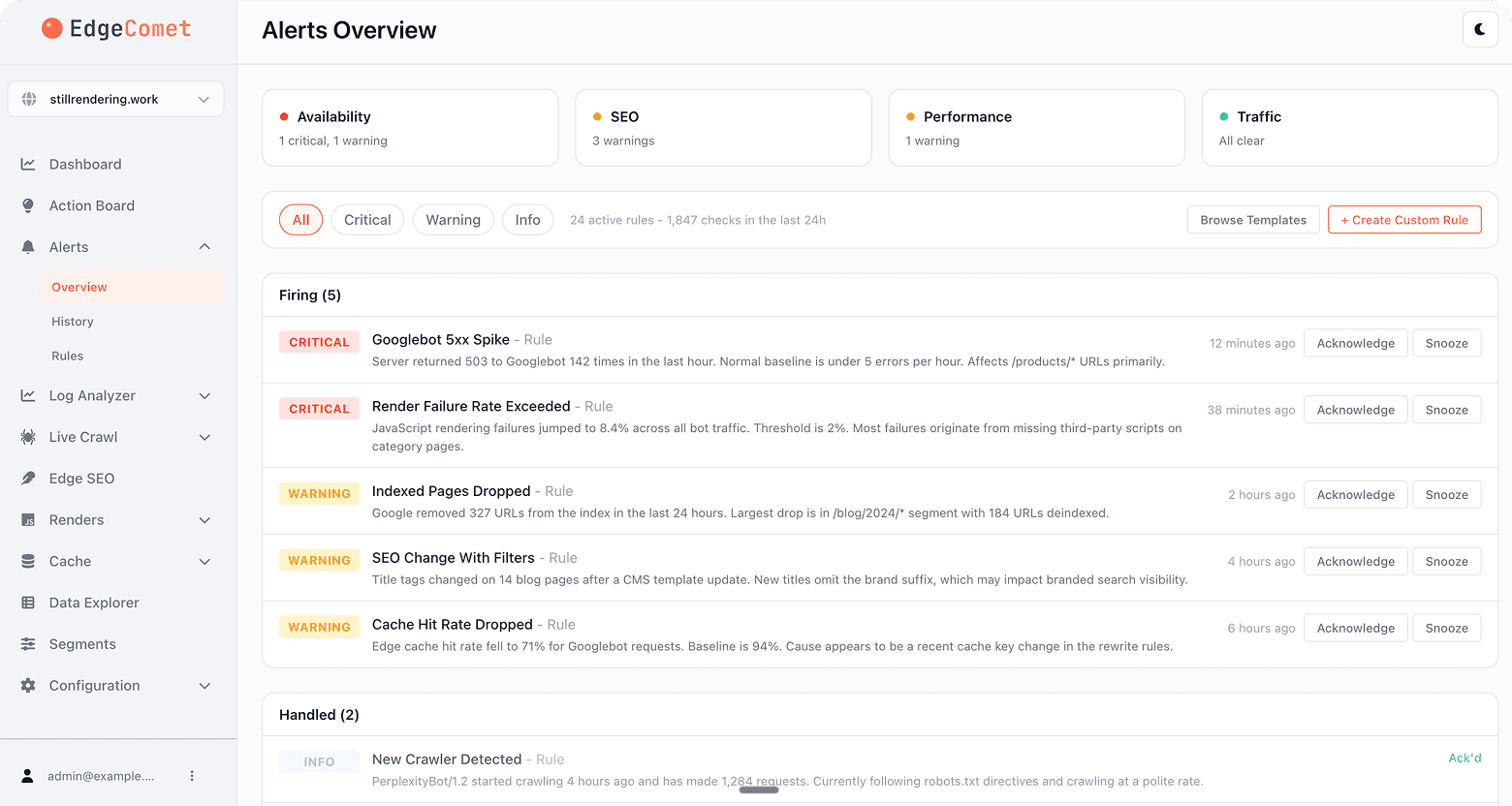
SEO issues happen often. EdgeComet monitors every real bot request and notifies if something seems wrong.
Alerts are triggered by actual bot traffic
AI explains what happened and why
Ready-to-use alert rules, active in one click
Get alerts where your team actually works
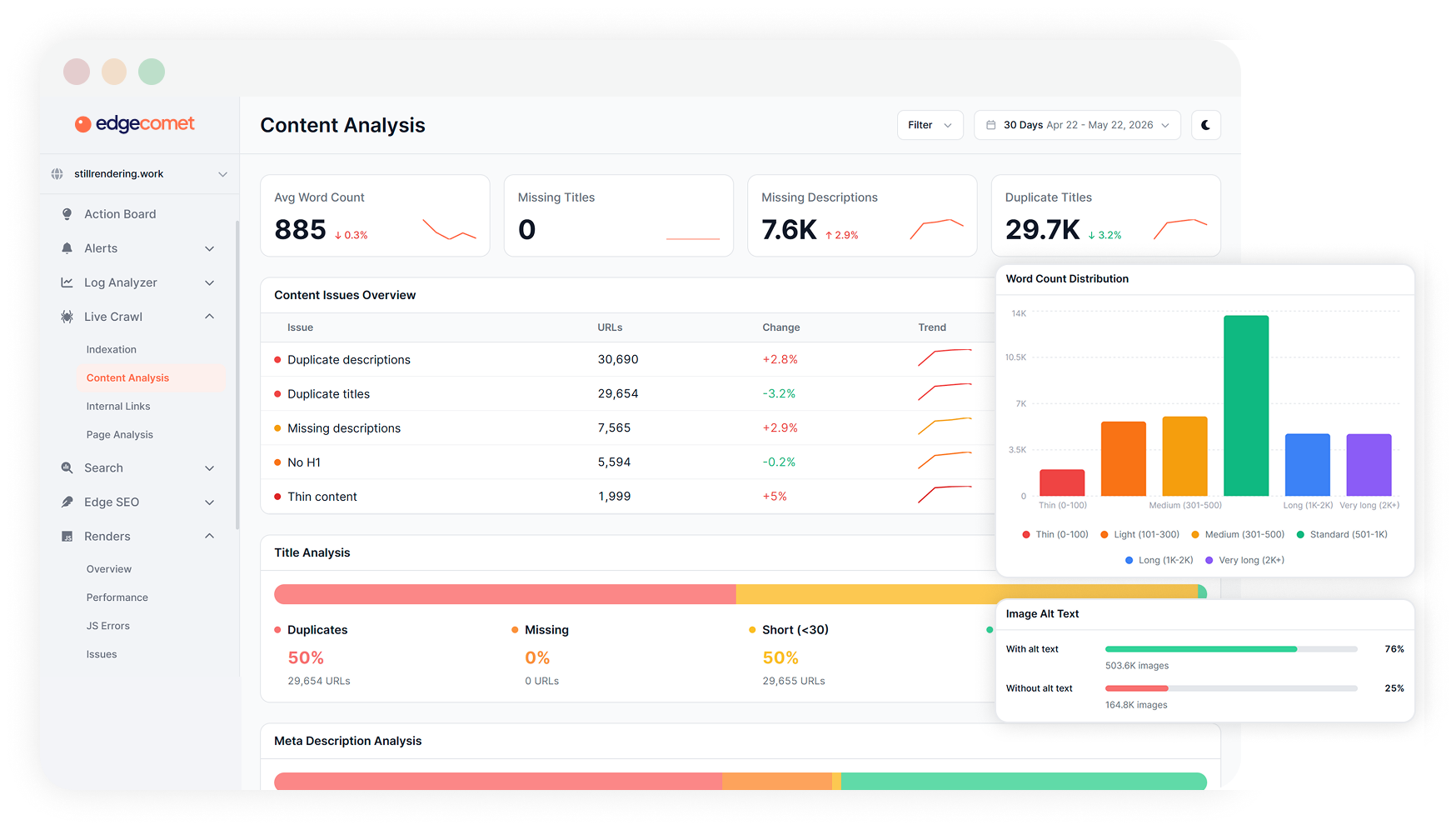
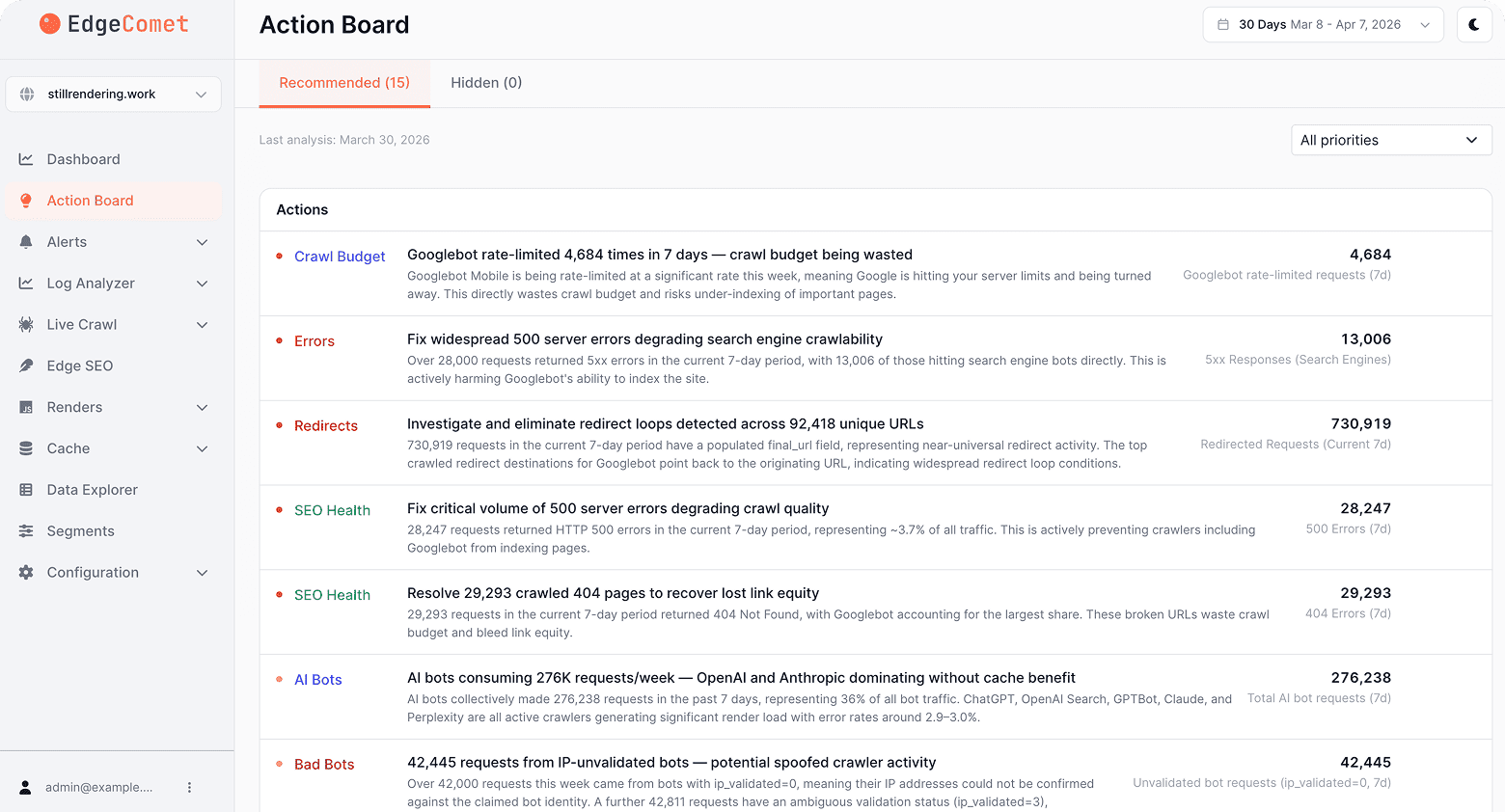
SEO data is only useful if you know what to do with it. EdgeComet's AI SEO website optimization platform monitors your site and tells you what to fix and how.
AI surfaces problems
Get specific fixes, not vague observations
AI builds rules for you
See crawl behavior, rendering problems, AI bot access, and indexation risks in one platfrom.
Improve indexing, visibility, and traffic from day one.
14-days free trial
No. Cloaking means showing different content to bots than to users. Here, bots receive the same content a user would see in the browser, but rendered and delivered faster. For JavaScript-heavy sites, pre-rendering is a known and accepted approach, not a workaround.
Very little. EdgeComet runs as a separate layer, so the only setup is routing bot traffic through it at the proxy level (Cloudflare, NGINX, HAProxy). There’s no need to touch application logic, and most teams can set it up within a day.
No changes are required. Your existing frontend, whether it’s React, Vue, Angular, or something else, stays as it is. Pages are rendered externally, so nothing in your code needs to be adapted.
You can simply bypass it at the proxy level. Traffic goes directly to your origin again, with no impact on your setup. If you decide to return later, the cache is still there.
It uses a maintained set of crawler patterns and request signals to identify search engines and AI bots. You don’t need to build or maintain detection logic yourself.
No. Only bot traffic is routed through EdgeComet while Users continue to interact with your application the same way as before.
Stay ahead with expert insights on search visibility, AI optimization, and technical SEO
JavaScript content takes hours to weeks longer to index than static HTML because Googlebot cannot index it on the first...
Read Article
When you optimize a website for search and AI visibility, you think about content quality, page speed, structured data, and...
Read Article
In contrast to Google Search, AI systems like ChatGPT, Perplexity, and even Gemini publish very little about their internal data...
Read Article