How Googlebot Crawls, Renders, and Indexes JavaScript: A Developer’s Guide
JavaScript content takes hours to weeks longer to index than static HTML because Googlebot cannot index it on the first...
Read ArticleMonitor every request that comes from search engines and AI crawlers. Log Analyzer captures every bot request with the actual rendered page content attached, so you know exactly what bots are indexing.
With EdgeComet’s SEO Log Analyzer, find the hidden issues of wasted crawl budget, broken rendering, and inappropriate content indexing.
Instead of focusing on your most important content, bots spend time on errors, duplications, and low-value URLs. It slows down discovery and reduces the amount of indexed pages.
Bots’ visits can cause pages to fail without appearing in regular monitoring. Even when everything seems good to users, bots can see incomplete or broken content.
You have no idea who is exploring your website and how frequently. You won’t be able to control how your content appears in AI-generated answers without an AI search log analyzer.
The majority of tools either display partial data or simulate bots. What was actually provided to crawlers is hidden from view.
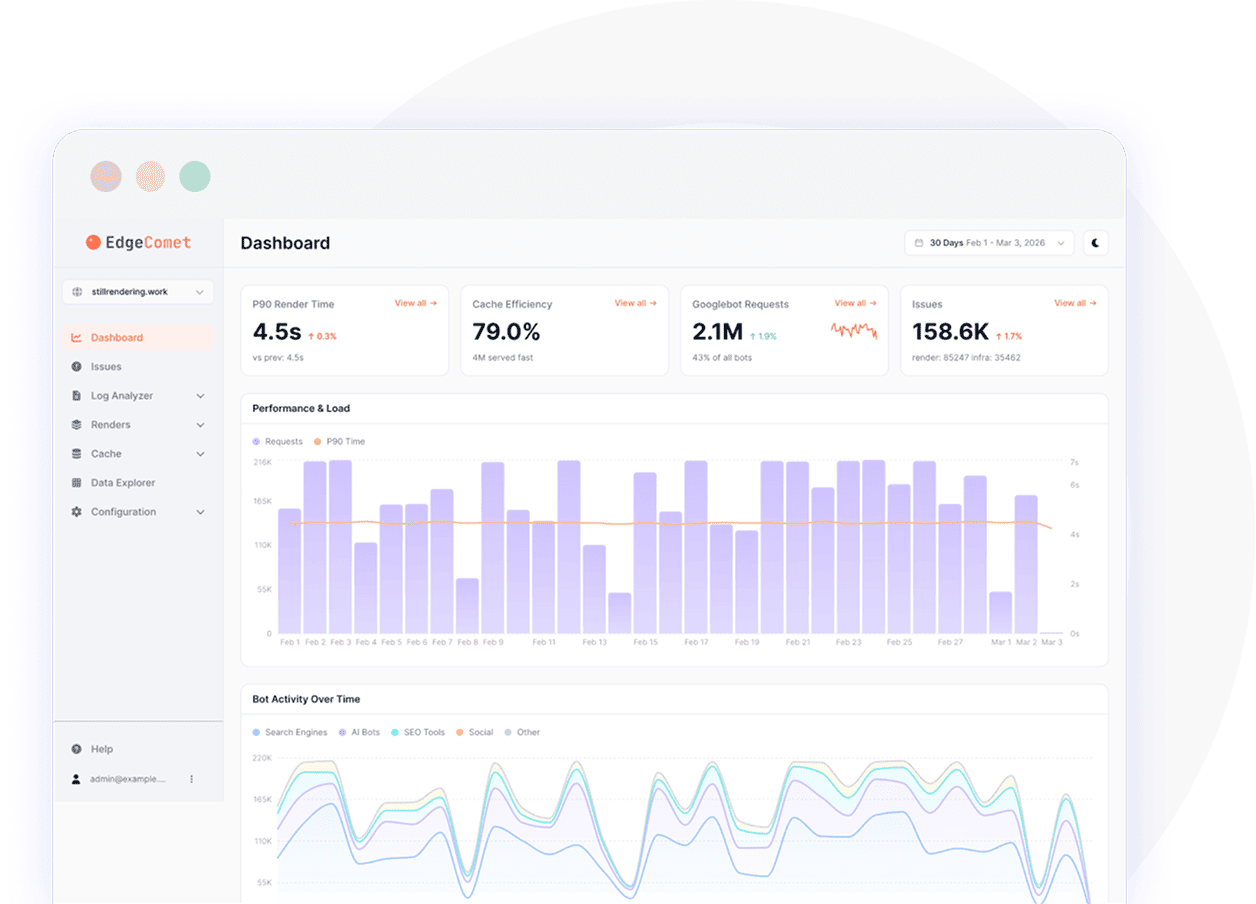
Log Analyzer gives website owners a complete view of how search engines and AI platforms engage with their content. It tracks every request made by bots from Google, Bing, GPT, Claude, Perplexity, and others, displaying what they inspect.
With EdgeComet’s web traffic log analyzer, see how crawlers engage with your site. Instead of using disconnected tools, analyze data from search engines and AI in one place.
Monitor all bots requests, unique URLs, and crawl volume.
Check how many requests succeed at indexable responses.
Detect slow response times that reduce crawl frequency.
See which pages are indexed, blocked, or returning errors.
Analyze how each bot inspects your site – not just Google, but the entire ecosystem. To optimize performance for both search engines and AI platforms, compare their behavior.
Analyze Google, Bing, ChatGPT, and Claude.
Explore how different bots inspect and prioritize your site.
Indentify which content search engines and AI crawlers focus on most.
Monitor growth and changes in AI crawler activity over time.
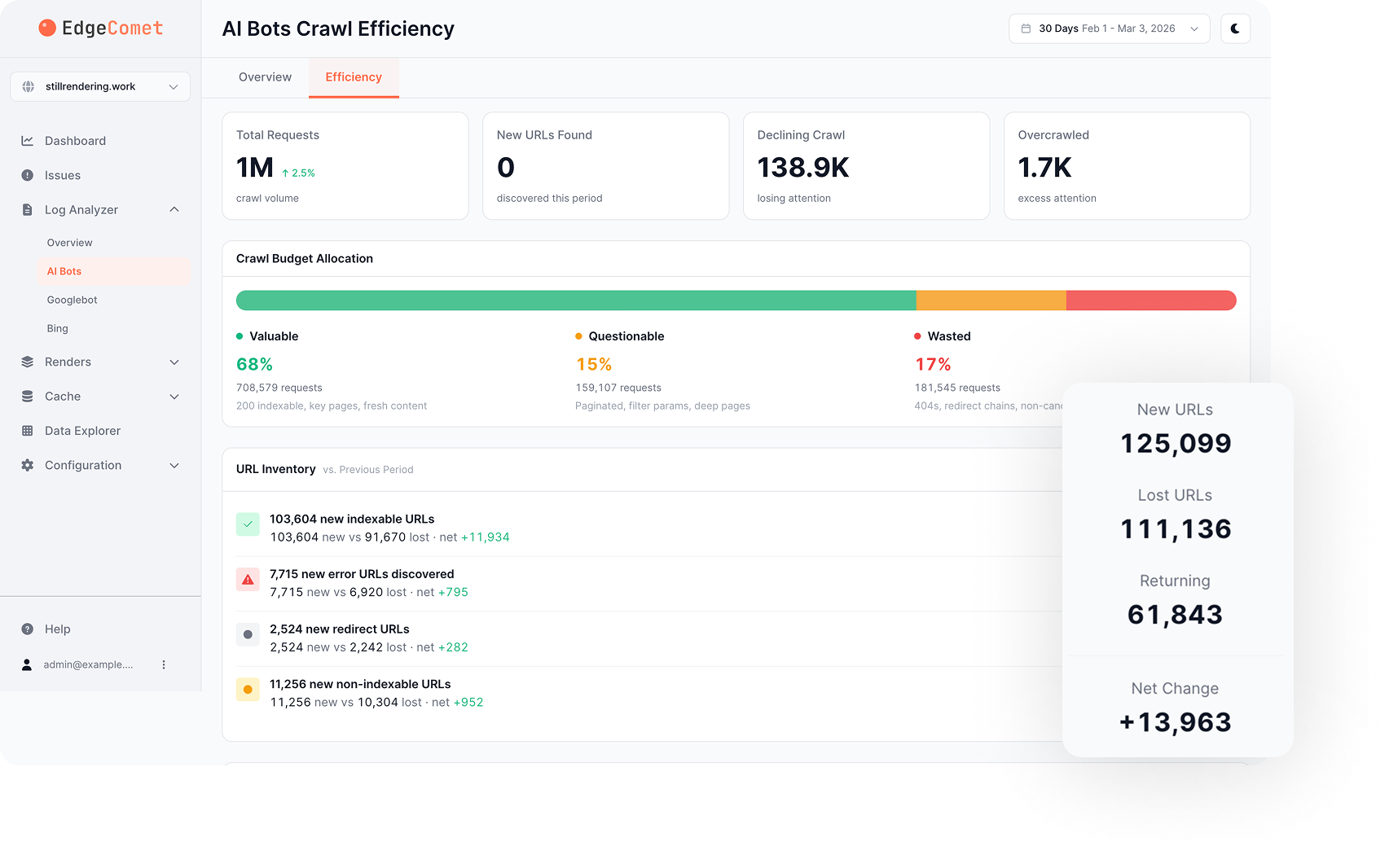
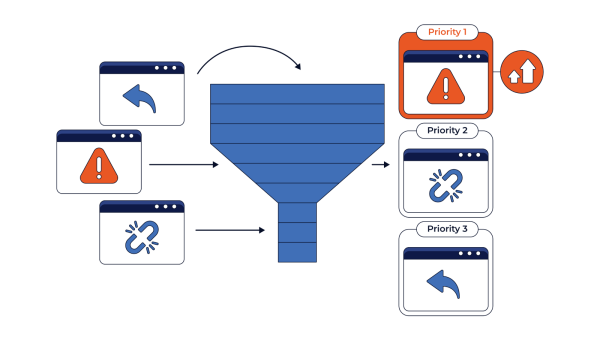
Learn exactly where your crawling budget is wasted and how to fix that. Detect low-value requests and ensure bots focus on the most important pages.
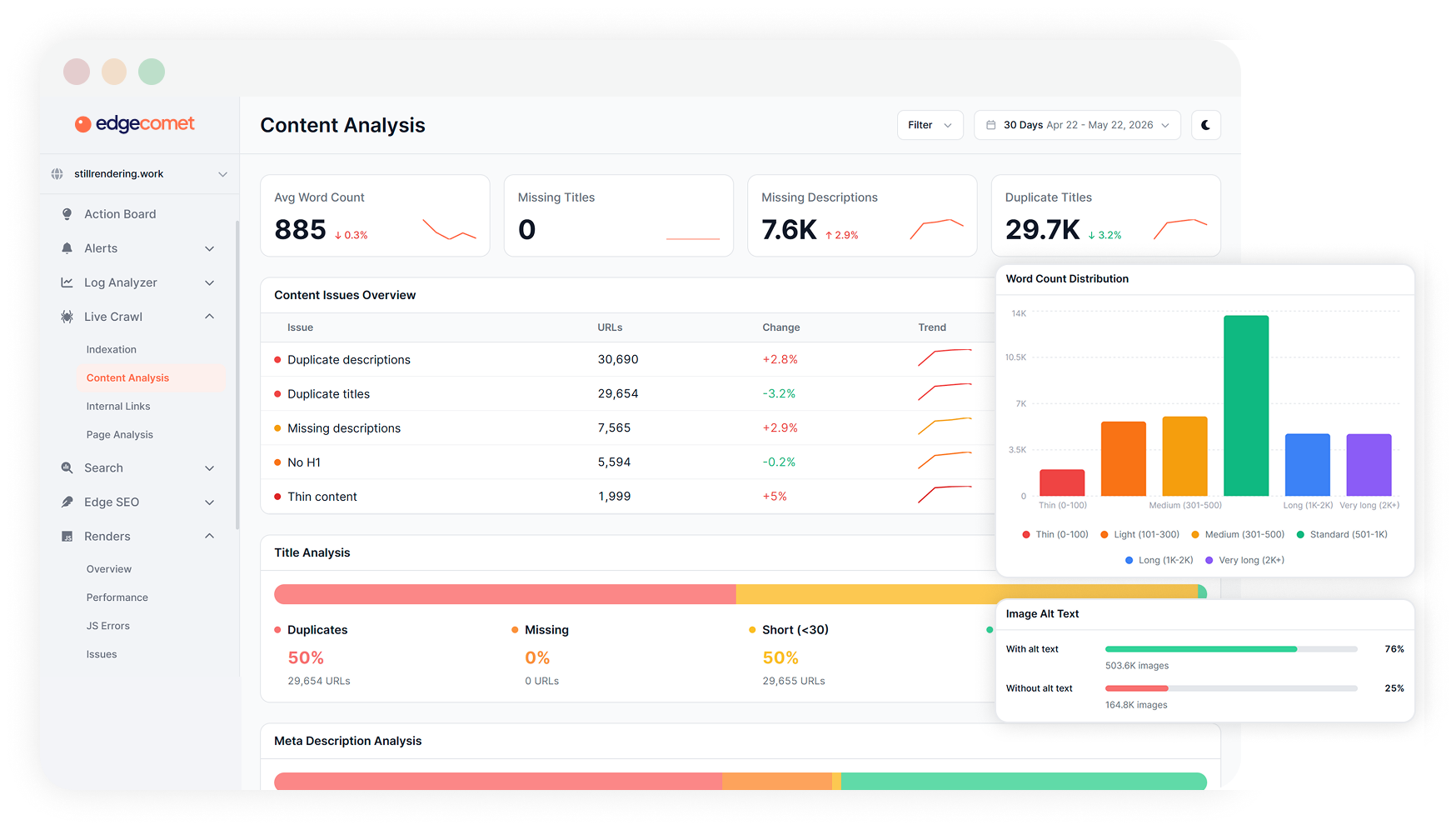
Find duplication, low-value URLs and pages.
Identify URLs lacking the bot attention or getting excessive crawl.
See which issues waste the most resources.
Measure how optimization improves crawl efficiency.
Explore all data behind every bot request. Examine problems at their root and go beyond aggregated metrics.
Check URL, timestamp, bot type, status code, and response data.
Identify errors, timeouts, and failed responses at request level.
Find the slowest, most error-prone, or most inspected URLs.
Move from high-level insights to raw data in one click.
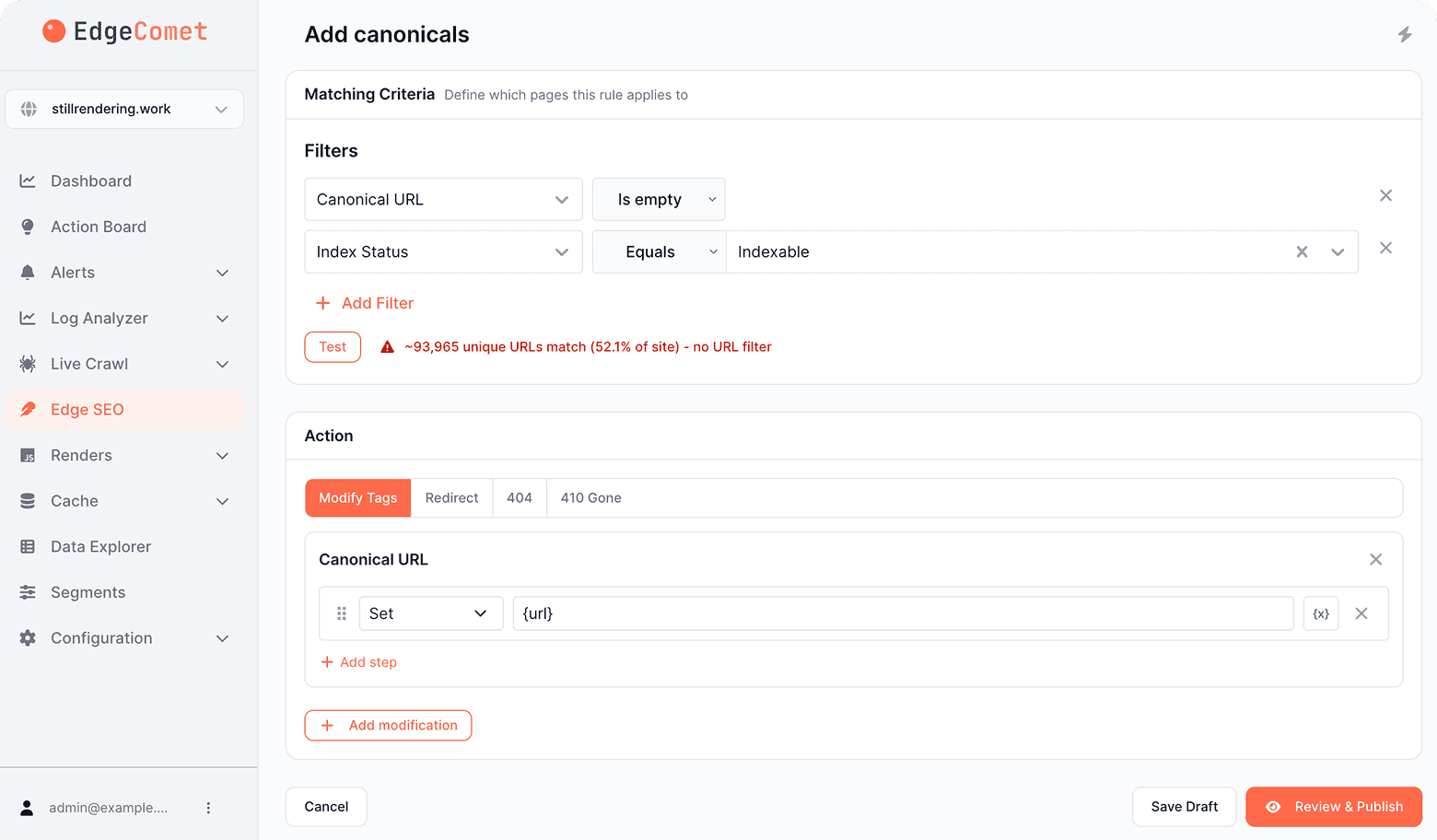
None of the minor SEO issues should require developers and a long wait. EdgeComet lets your SEO team make changes instantly.
Apply SEO changes across any set of pages
See exactly how a page will look to bots
Every change is tracked, you can revert it
AI generates correct rules for you
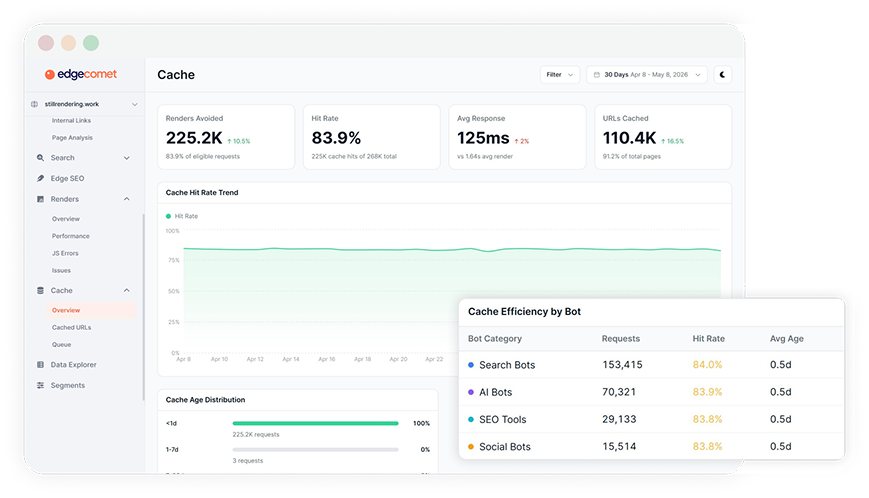
Rendering JavaScript pages on every request is slow and expensive. EdgeComet's caching system ensures bots receive pre-rendered pages instantly.
Manage and monitor cached renders
Pre-render critical pages before bots arrive
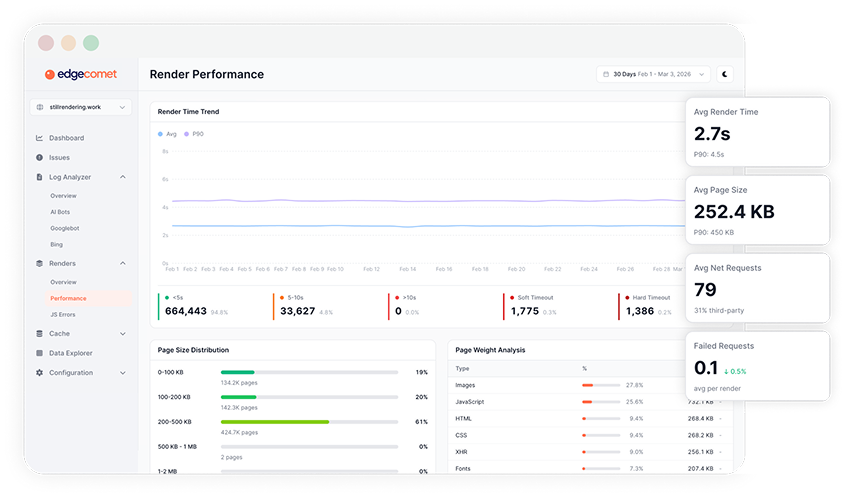
JavaScript rendering failures can silently break SEO and AI visibility. EdgeComet continuously monitors rendering performance.
Monitor rendering activity and performance
Detect JS errors during bot rendering
Analyze render time and page size
Track ChatGPT, Claude, Perplexity crawlers
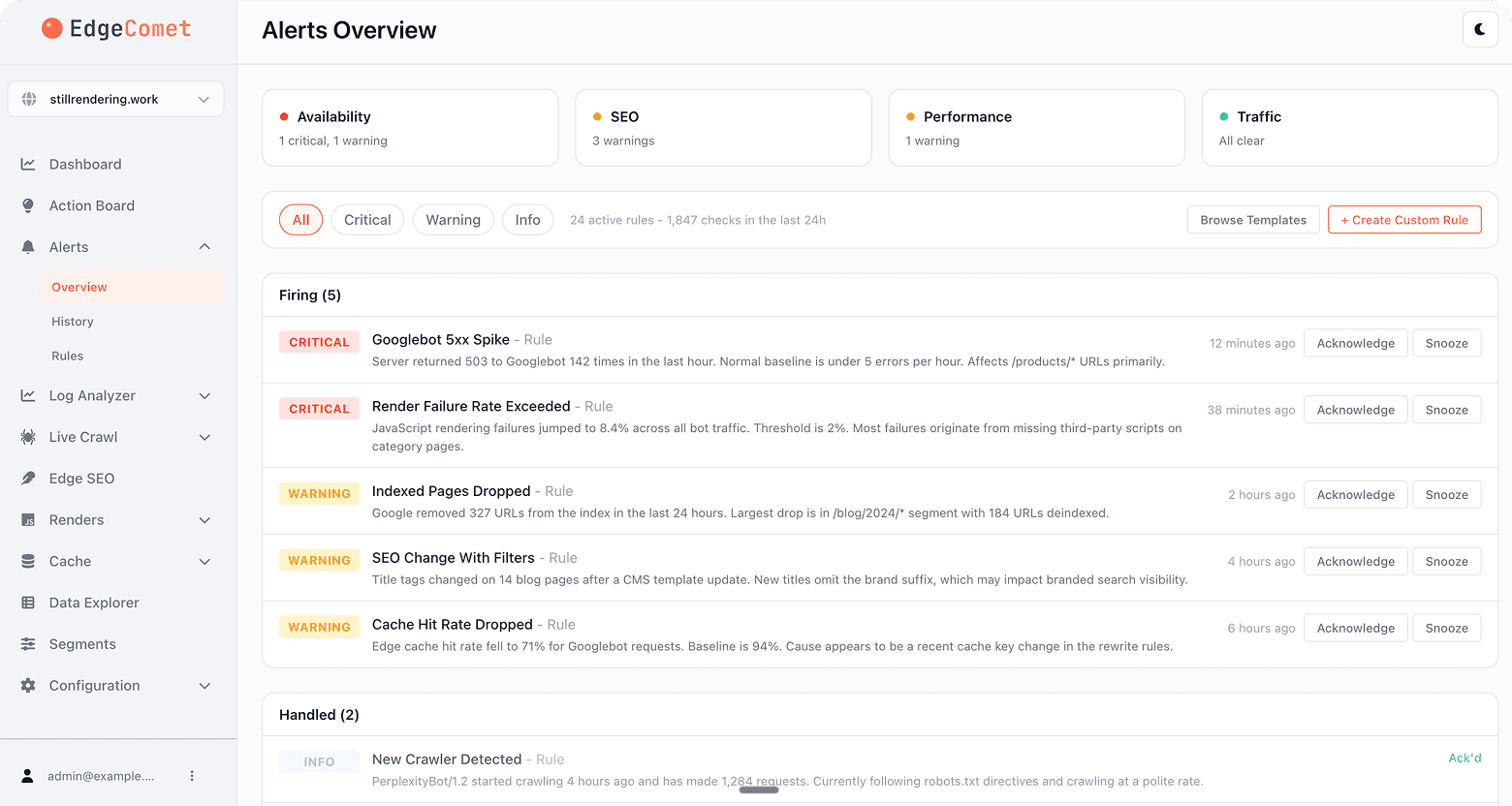
SEO issues happen often. EdgeComet monitors every real bot request and notifies if something seems wrong.
Alerts are triggered by actual bot traffic
AI explains what happened and why
Ready-to-use alert rules, active in one click
Get alerts where your team actually works
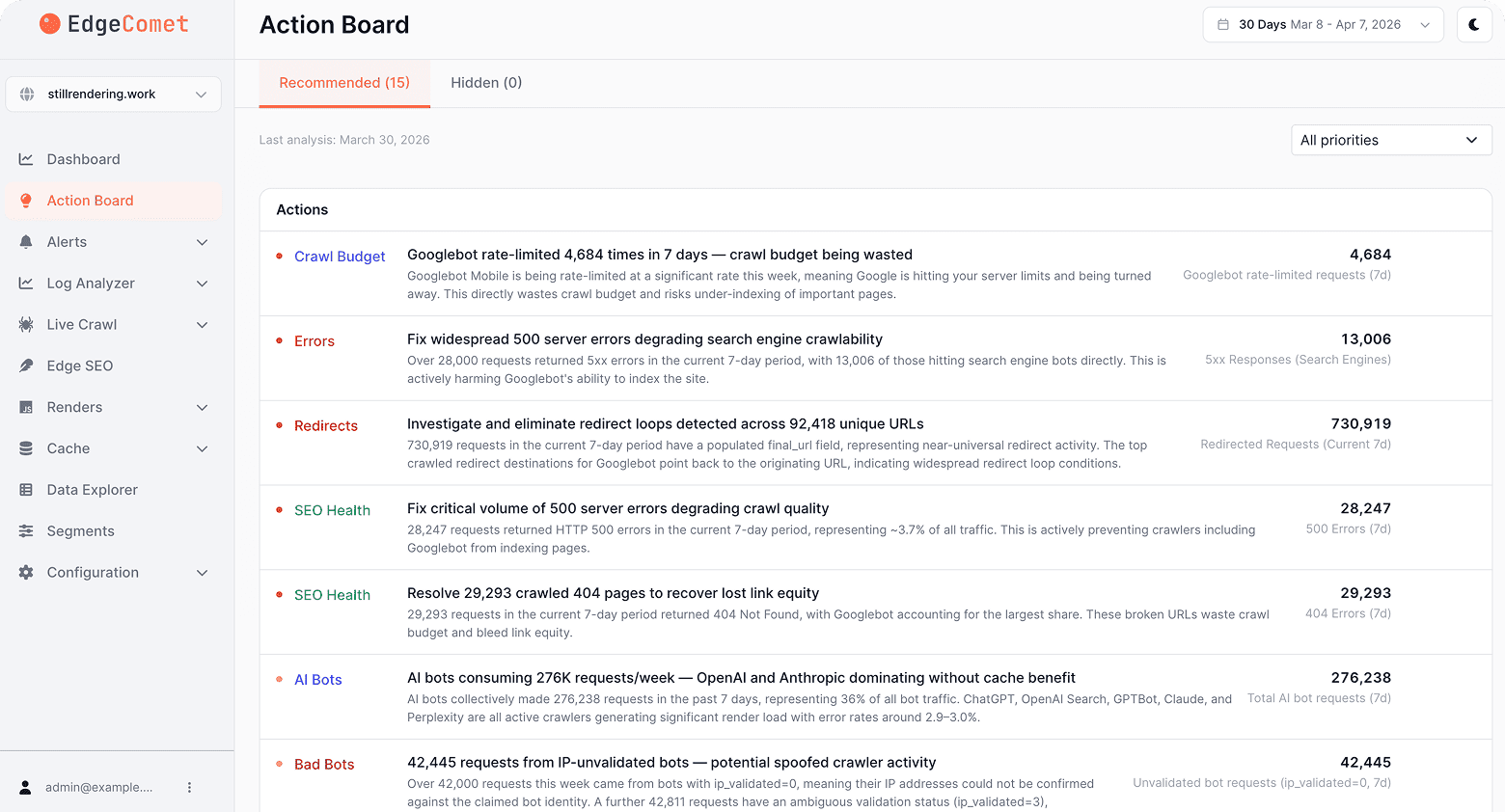
SEO data is only useful if you know what to do with it. EdgeComet's AI SEO website optimization platform monitors your site and tells you what to fix and how.
AI surfaces problems
Get specific fixes, not vague observations
AI builds rules for you
See how EdgeComet differs from traditional SEO tools and analytics platforms – across real bot data, AI visibility, and crawl intelligence. Here's an SEO log analyzer tools comparison.
EdgeComet combines real bot traffic, rendering data, and SEO log analysis in one system.
You see which pages are crawled, but not whether they are worth crawling. EdgeComet shows you what bots crawl and helps you fix it.
They show you what a Googlebot can do on your site, but not what it actually did. EdgeComet tracks real Googlebot sessions, so you get actual data.
They don’t know what bots visited their site and how frequently. EdgeComet monitors each crawler along with Googlebot.
Run EdgeComet on your real traffic with full access to the platform, including rendering, monitoring, and Edge SEO.
SEO log file analyzer processes raw server logs from bot visits, recording URLs, status codes, response time, and timestamps. It turns this data into clear dashboards showing which pages are accessed, how often, and where issues occur.
When Googlebot, GPTBot, or ClaudeBot visits your site, your server creates a log entry. EdgeComet gets these requests in real time and attaches the complete rendered page information.
The analyzer groups log entries by bot type, URL, status code, and response time, uncovering which pages get attention, which are ignored, and where budget is being wasted on errors or duplicates.
Unlike traditional solutions that only confirm a bot visited a URL, EdgeComet checks what it received: title tags, canonicals, or structured data, showing invisible issues that standard bots miss.
Website log analysis powered by EdgeComet will help your business optimize budget and improve website and AI traffic performance.
For content-related businesses where every minute of indexing delay results in lost traffic, Log Analyzer shows exactly which issues are slowing Google's discovery of new content.
Websites with short-lived listings can waste budgets on expired ads and filters instead of active inventory – Log Analyzer shows where budget goes and how to use it effectively.
Dynamic listings struggle with Googlebot crawling filters instead of property pages – Log Analyzer identifies the crawl patterns that drain budget away from indexable listings.
Online stores may lose revenue if product pages fail to render for Googlebot – Log Analyzer reveals which pages bots can't reach and why.
Improve indexing, visibility, and traffic from day one.
14-days free trial
EdgeComet’s Log Analyzer is one of the modern website log analysis tools that processes real server logs to show how search engines and AI bots inspect websites – what they request, how pages respond, and where issues occur.
It identifies where crawl budget is wasted on errors, duplication, and low-value pages, so you can redirect attention to content that actually gets indexed.
Website log file analyzer uses raw server data – every bot request with its URL, timestamp, status code, response time, and bot type.
You should connect your server logs to EdgeComet server log analyzer and monitor crawl patterns, response efficiency, and indexability across all crawlers in one dashboard.
Search Console gives aggregated, Google-only data – SEO log file analyser gives full request-level detail across every bot, including AI crawlers, with no gaps.
Any large or complex website, where crawl inefficiency affects indexing, needs SEO log file analysis tools. These websites include e-commerce and enterprise platforms, JavaScript-heavy applications, and SEO agencies.
Search engines send bots to evaluate content, then consider what to index and how frequently to return, so poor performance means important content gets missed or delayed.
Stay ahead with expert insights on search visibility, AI optimization, and technical SEO
JavaScript content takes hours to weeks longer to index than static HTML because Googlebot cannot index it on the first...
Read Article
When you optimize a website for search and AI visibility, you think about content quality, page speed, structured data, and...
Read Article
In contrast to Google Search, AI systems like ChatGPT, Perplexity, and even Gemini publish very little about their internal data...
Read Article