If you are evaluating Botify alternatives, this comparison breaks down features, pricing, and technical SEO capabilities side by side.
Botify is an enterprise SEO platform for crawling, log analysis, and search performance tracking. EdgeComet operates directly in the bot request path, combining real-time bot visibility with SEO execution.
Compare both platforms to find the right technical SEO solution for your team.
Both technical SEO platforms help teams understand how search engines interact with their websites. Botify uses crawl data and server logs, while EdgeComet looks at real production bot traffic and offers tools to act on the insights right away.
While Botify focuses on analysis, EdgeComet combines visibility insights with the tools needed to spot issues, make corrections, and track results from one platform.
Botify helps you understand crawl activity and server logs. EdgeComet shows the rendered page content that Googlebot, GPTBot, ClaudeBot, and other bots received, including titles, canonicals, structured data, and other SEO signals.
Botify Assist helps look at SEO problems. EdgeComet enables AI agents to identify issues and make changes via MCP integrations. This moves teams from AI recommendations to controlled SEO execution.
Instead of relying on crawl schedules, EdgeComet monitors live bot traffic and detects issues as they occur. Teams can identify problems before they affect visibility and traffic.
Botify is designed for large enterprise programs. EdgeComet provides rendering, SEO controls, AI visibility monitoring, and bot analytics on a single platform, with simpler setup and predictable plans.
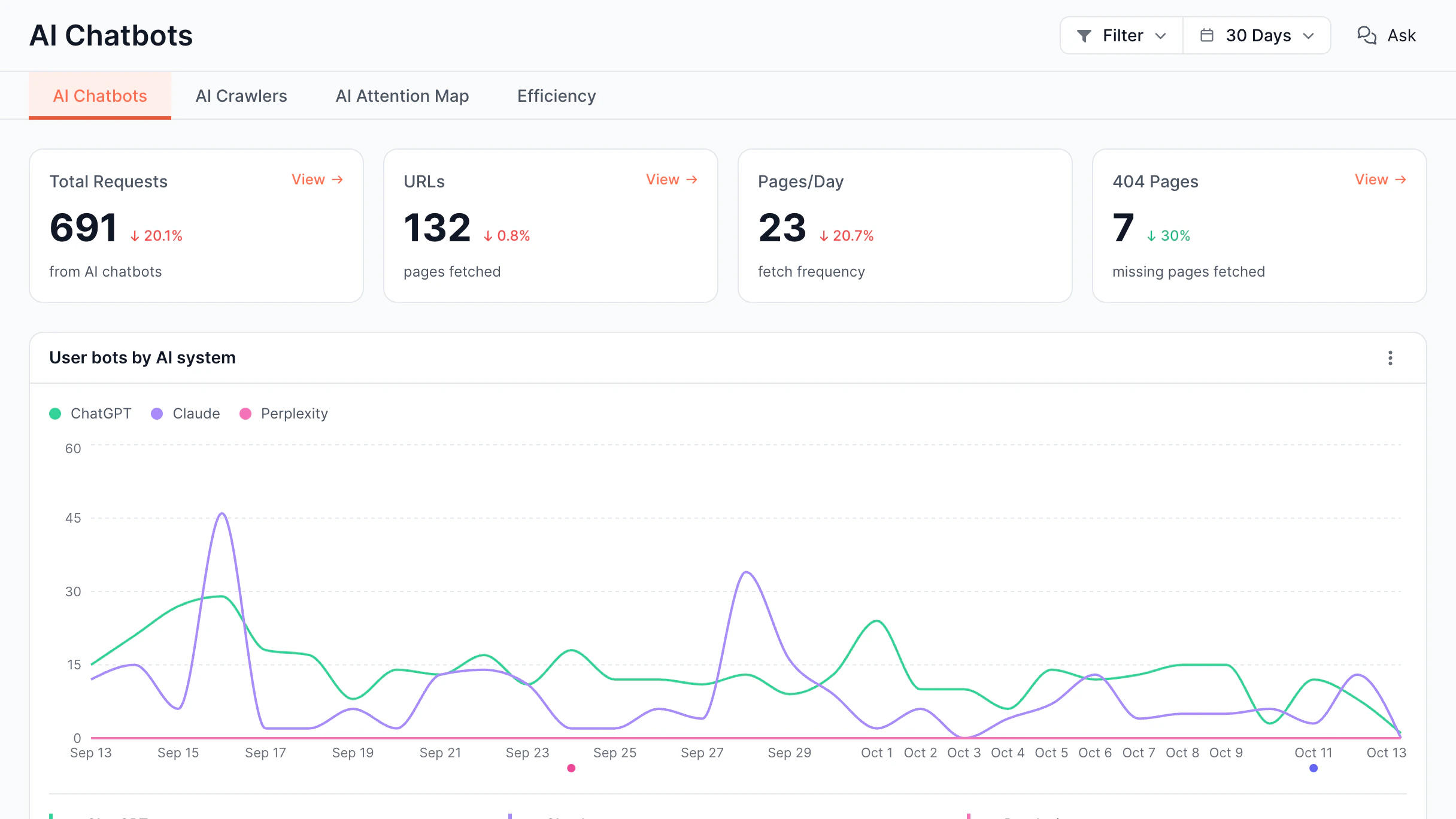
Pages ChatGPT, Claude, and Perplexity fetch while answering users, by day.
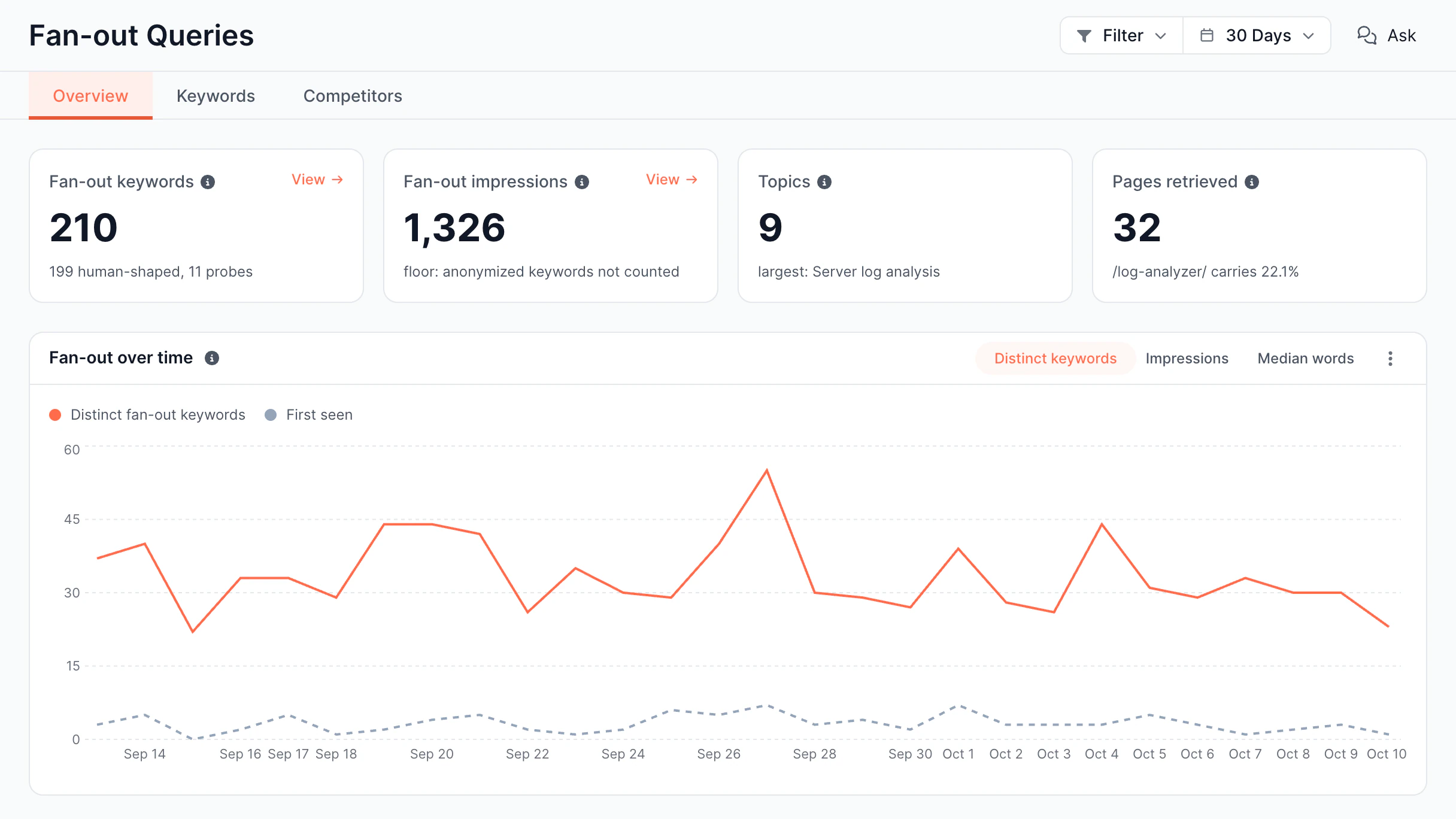
Fan-out keywords from Search Console, grouped into topics, with impressions.
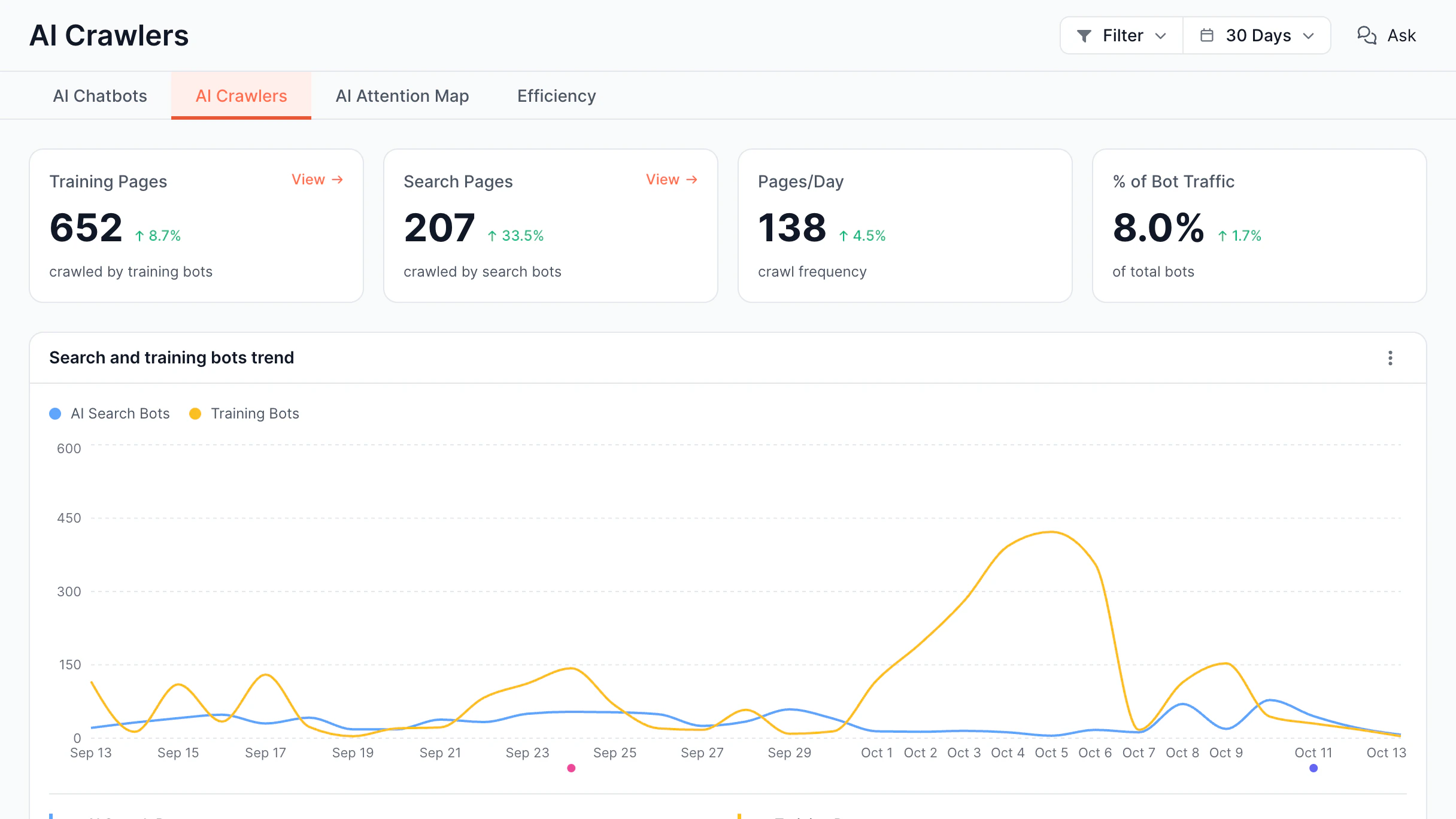
AI training and search bots: pages crawled, pages per day, share of traffic.
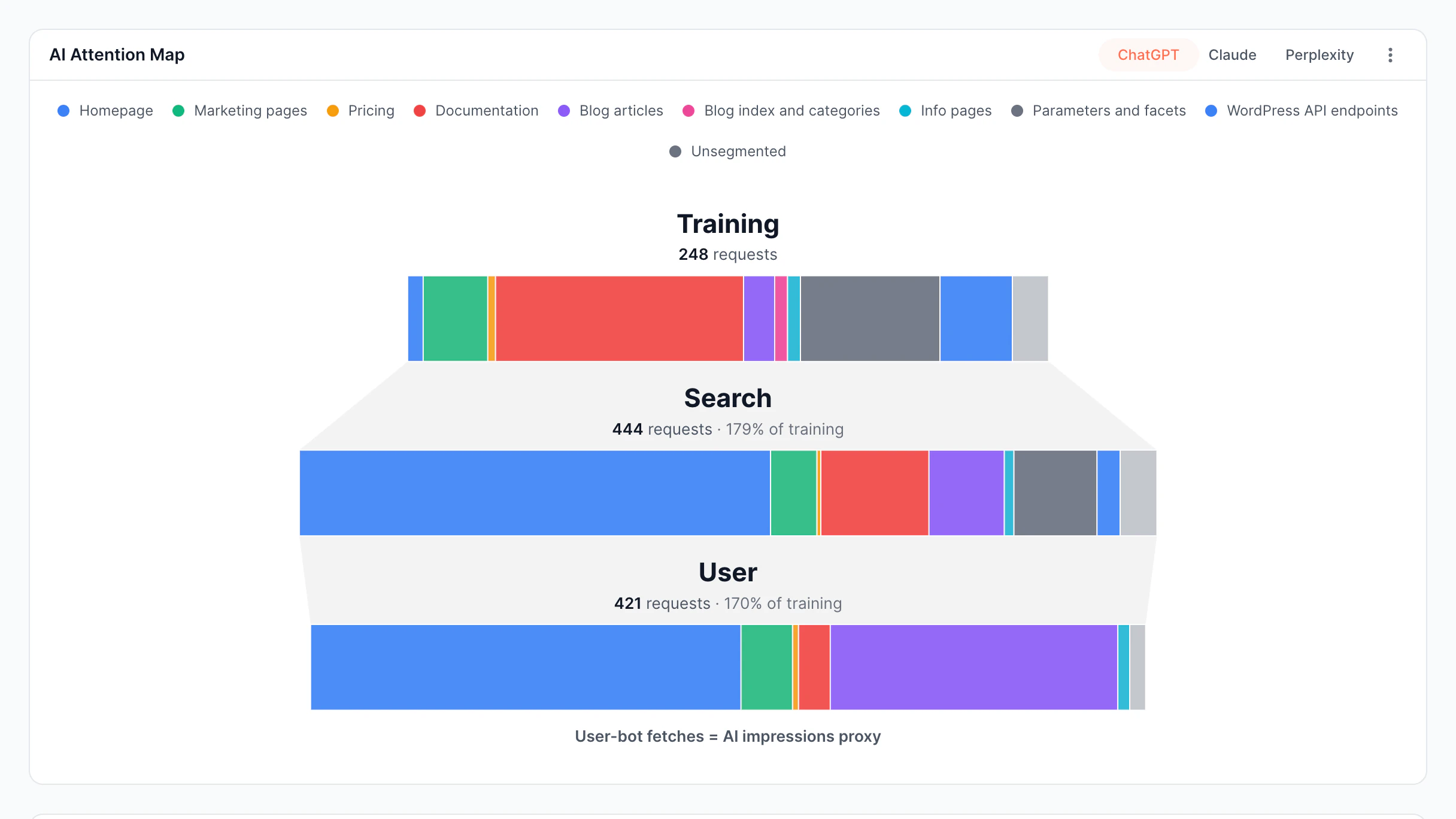
Training, search, and user bot requests by page type, for each AI provider.
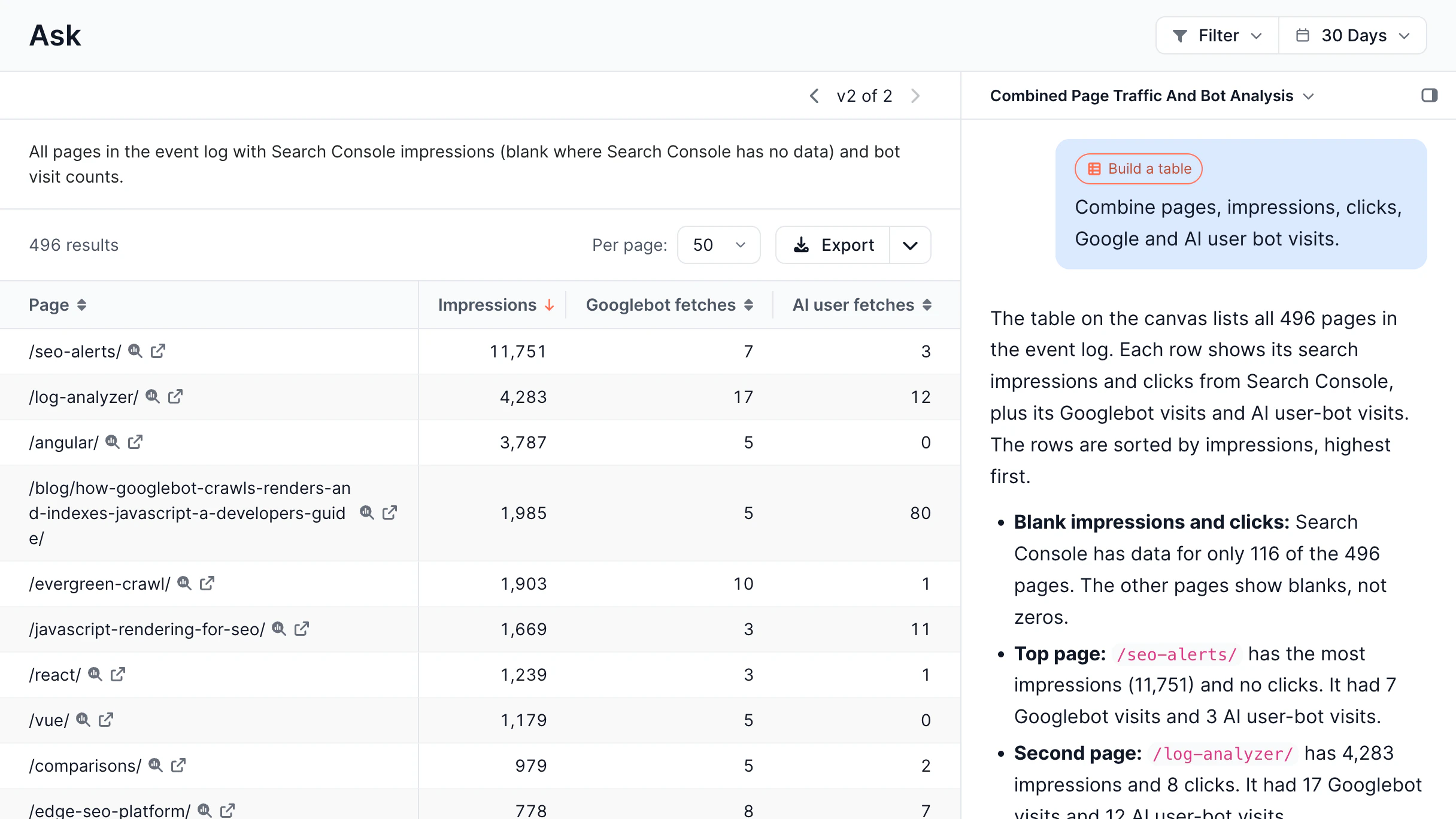
Chat that answers with sortable tables you can export to CSV or Google Sheets.
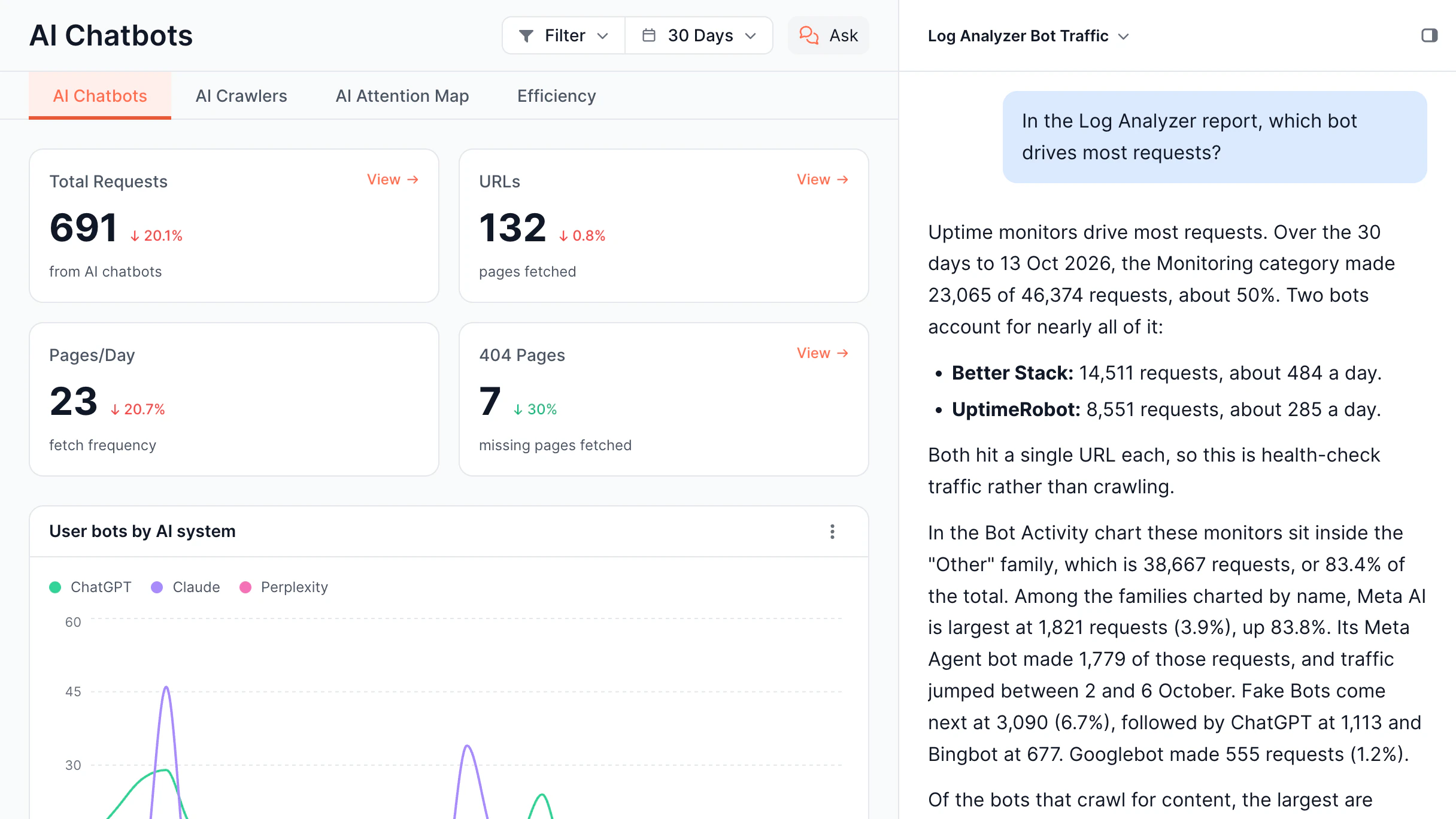
Chat panel next to any report that answers questions about its data.
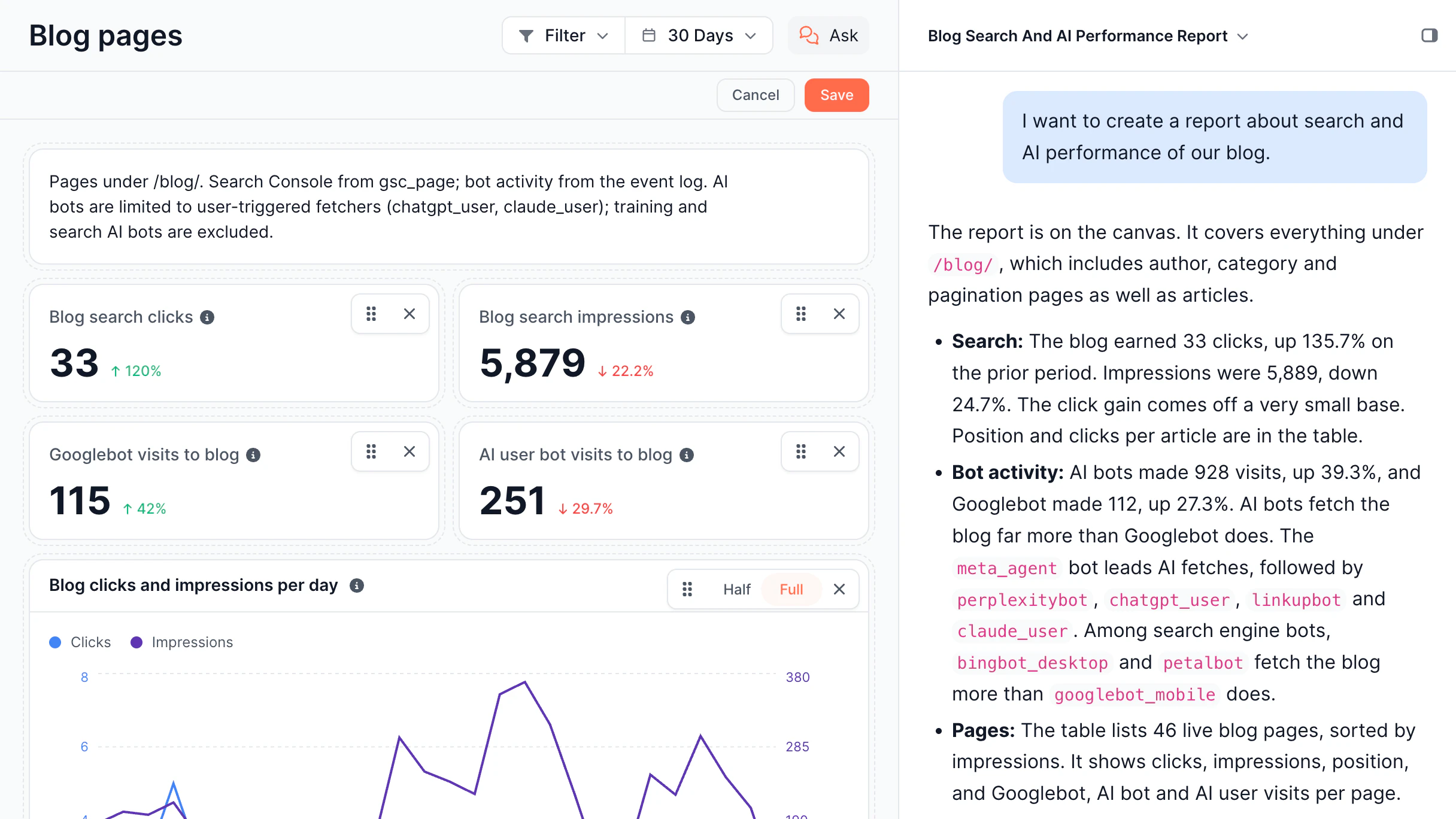
Custom reports built from a chat request, with widgets you can edit and save.
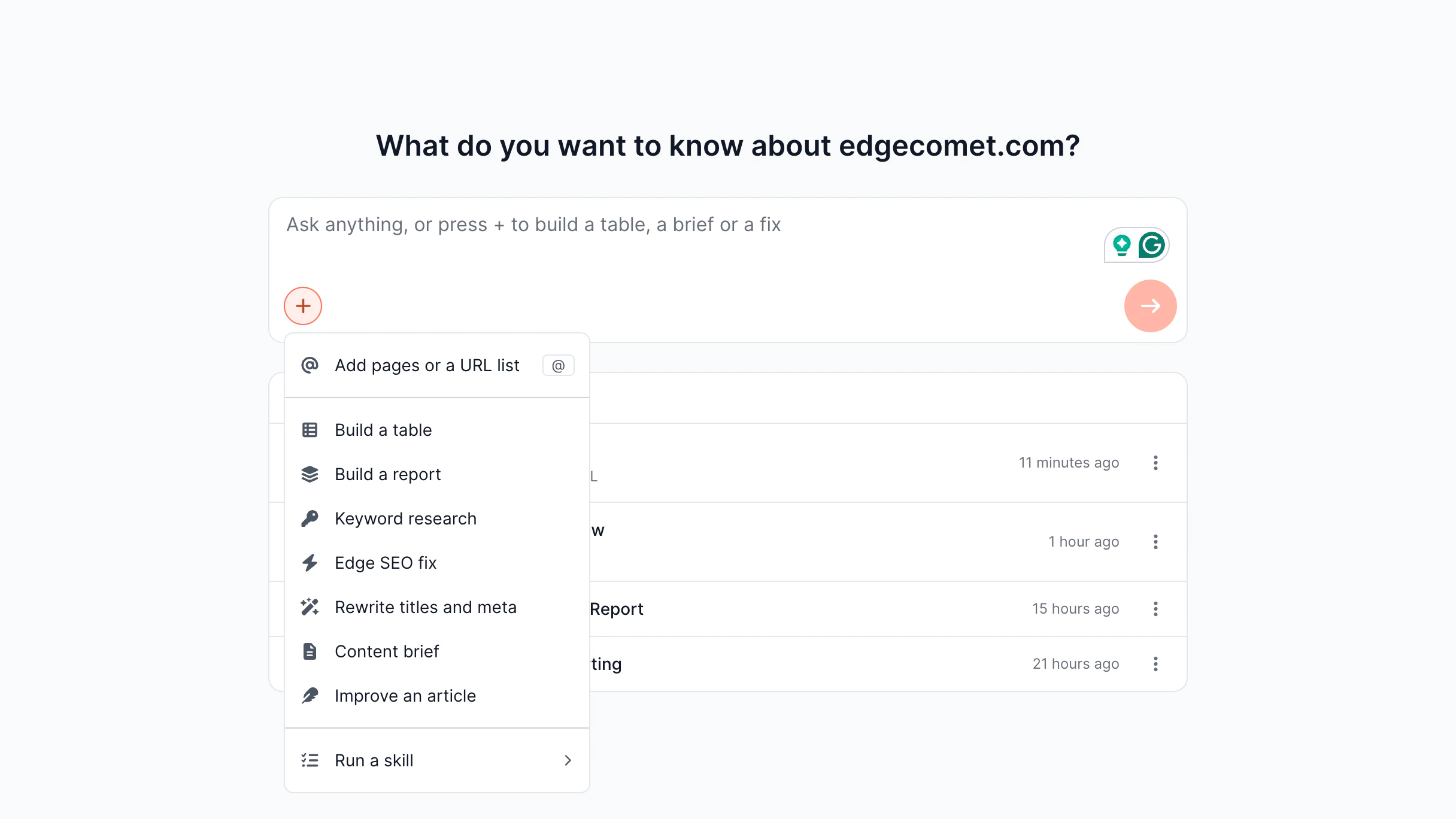
Skills menu: keyword research, content briefs, article and meta rewrites.
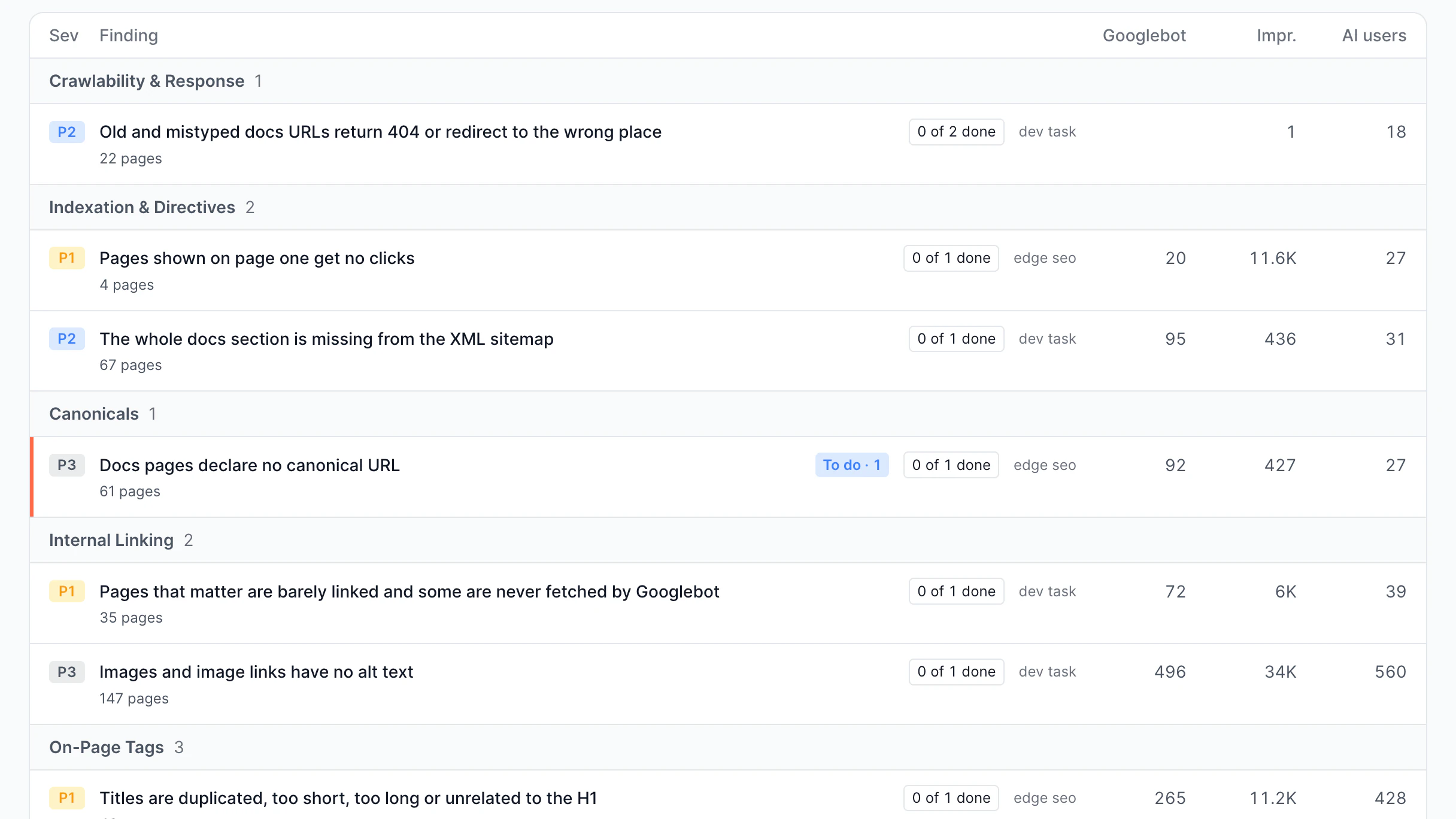
Findings by type and severity, with traffic per issue.
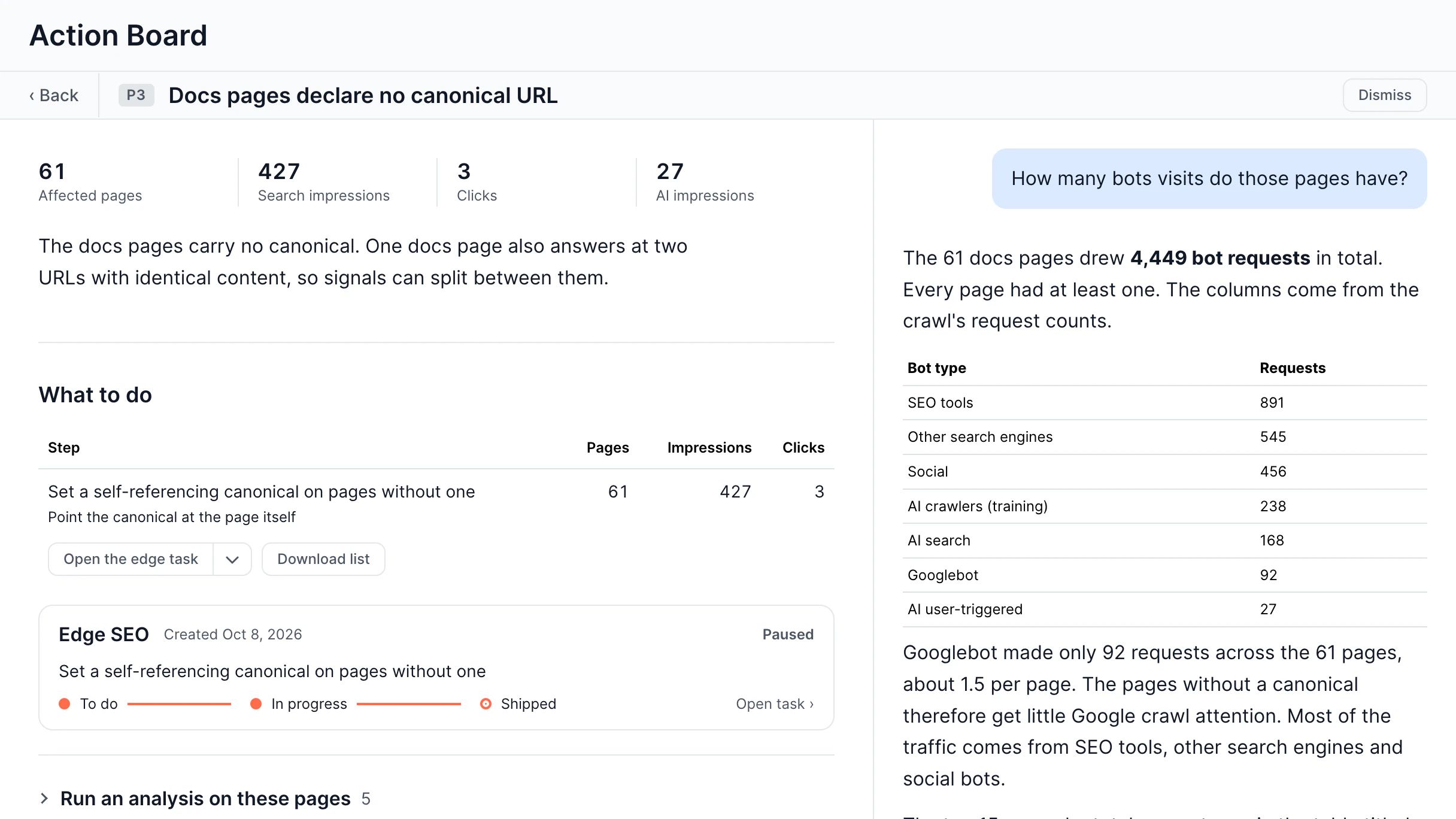
One finding: affected pages, fix steps, task status.
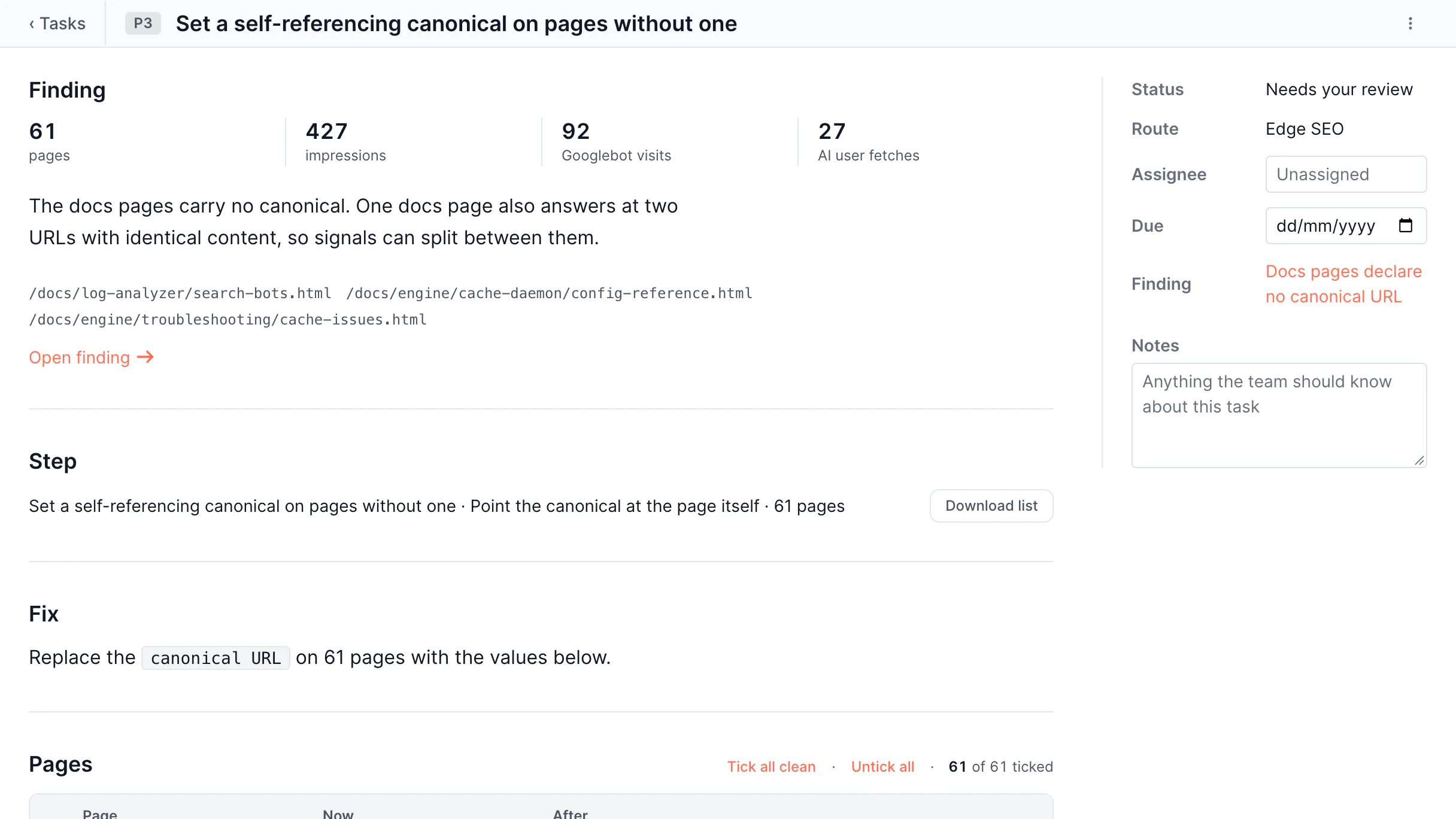
Task page with status, assignee, due date, and notes.
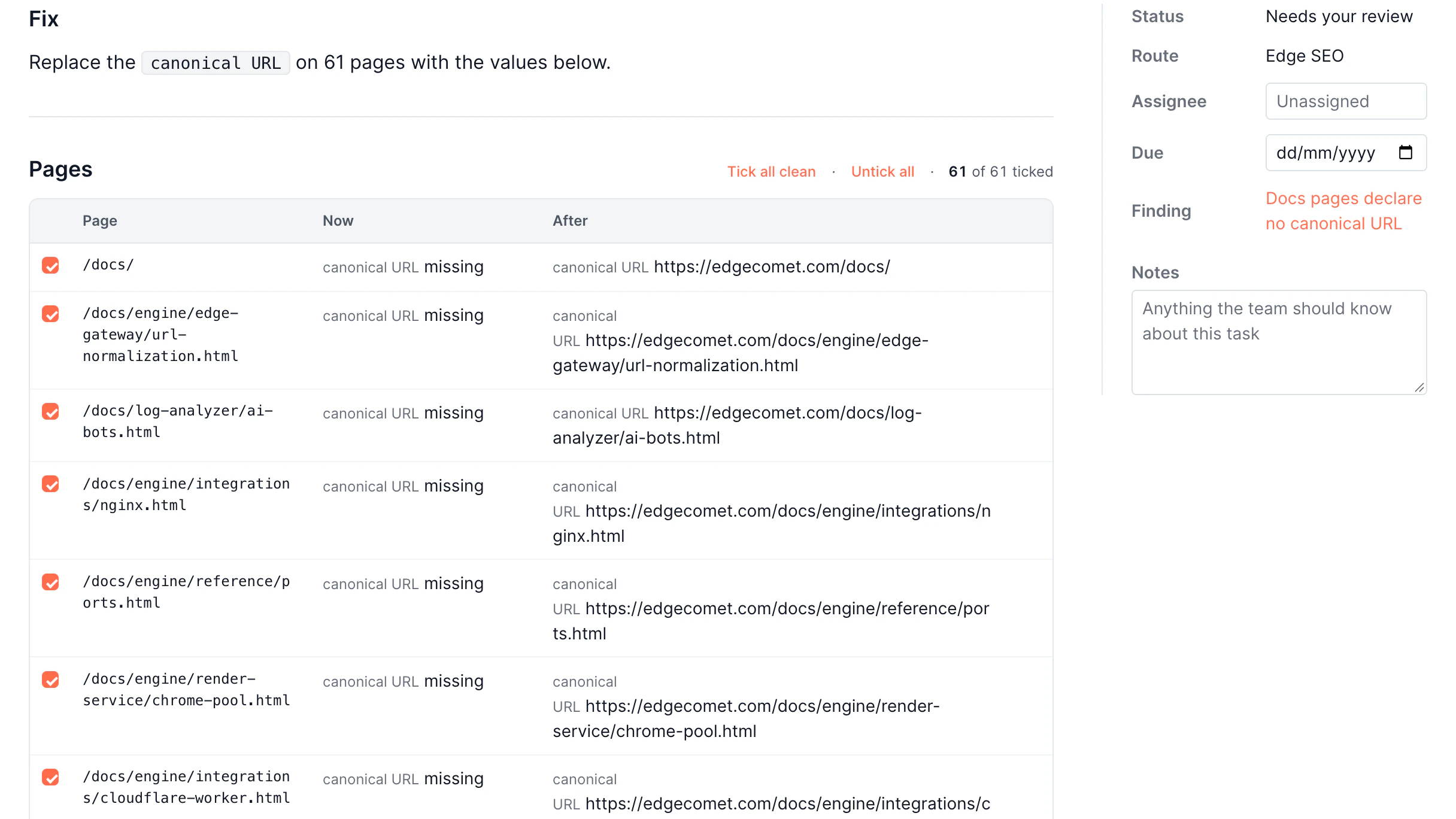
Before and after values per page, with edge deploy.
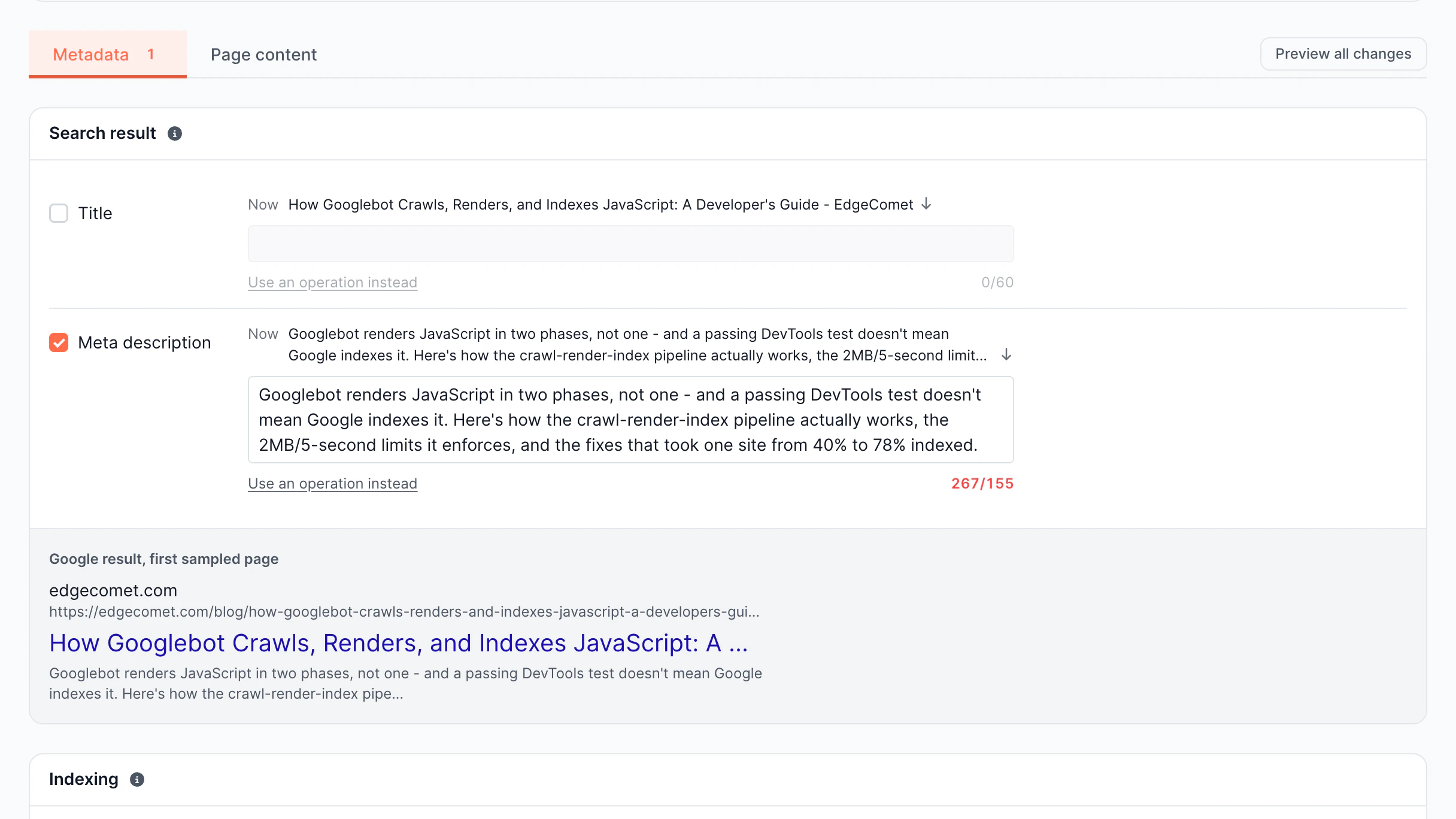
Title and meta overrides with a Google result preview.
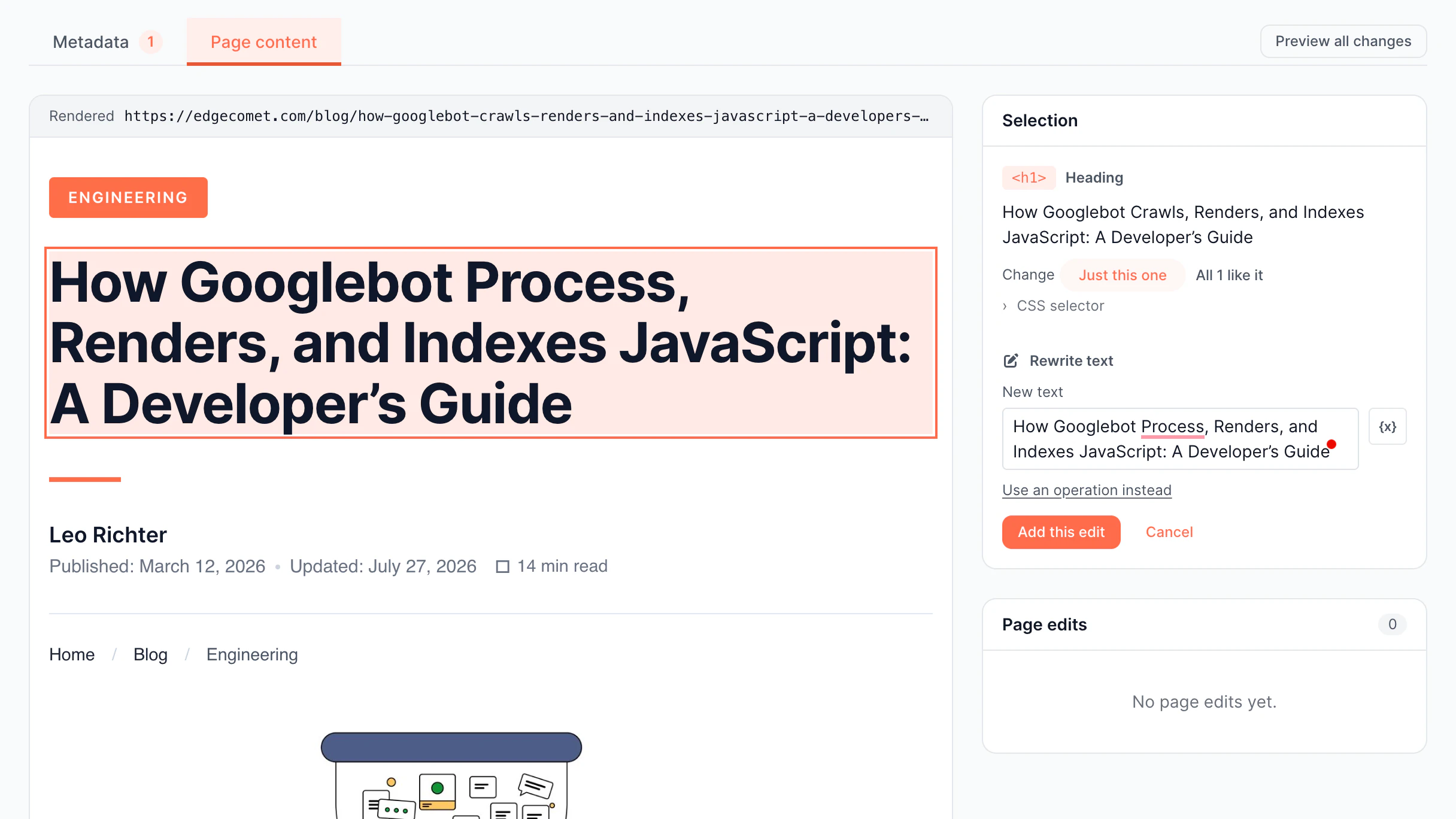
Select an element on the rendered page and edit its text.
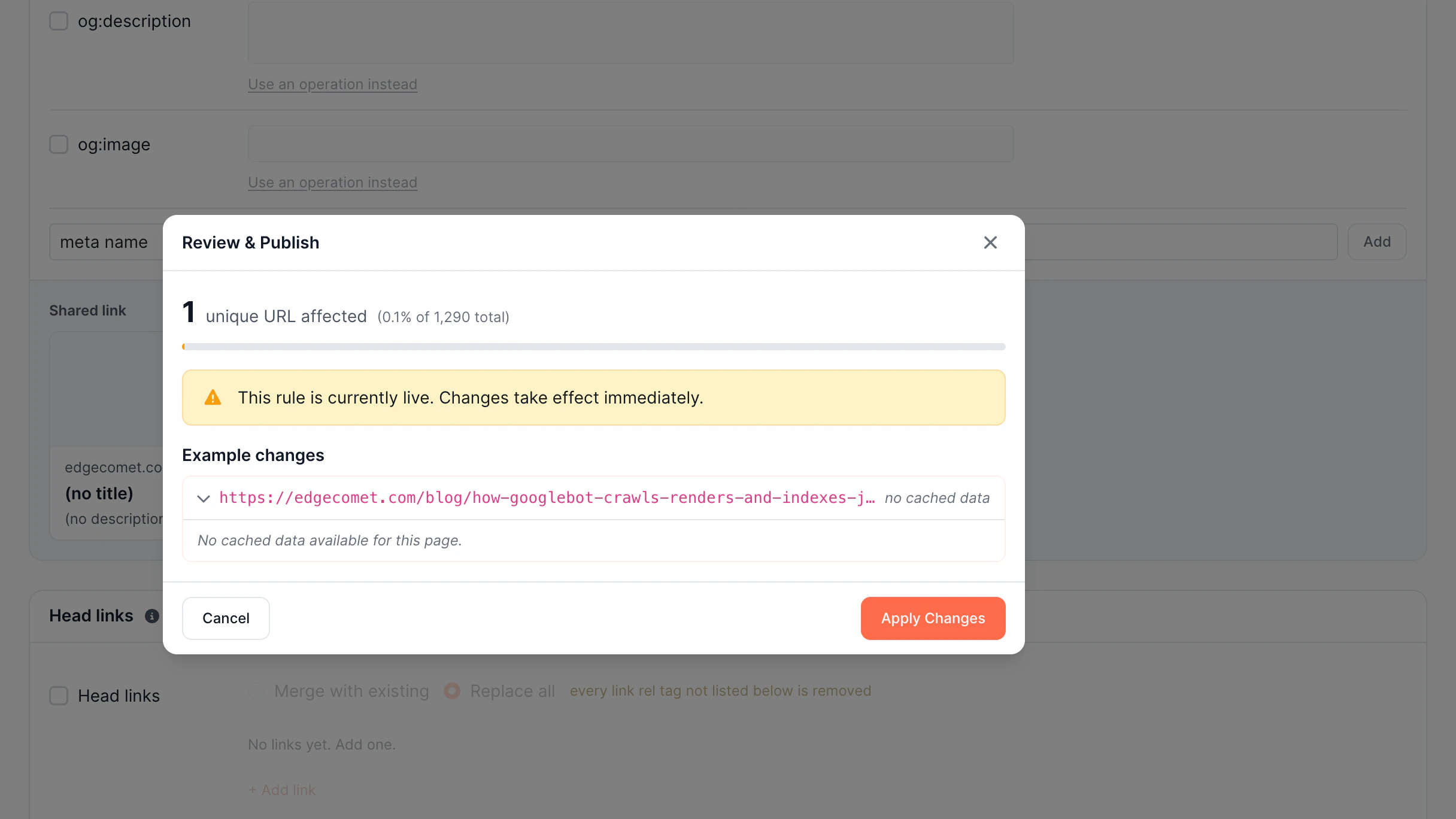
Review dialog with the number of URLs a rule changes.
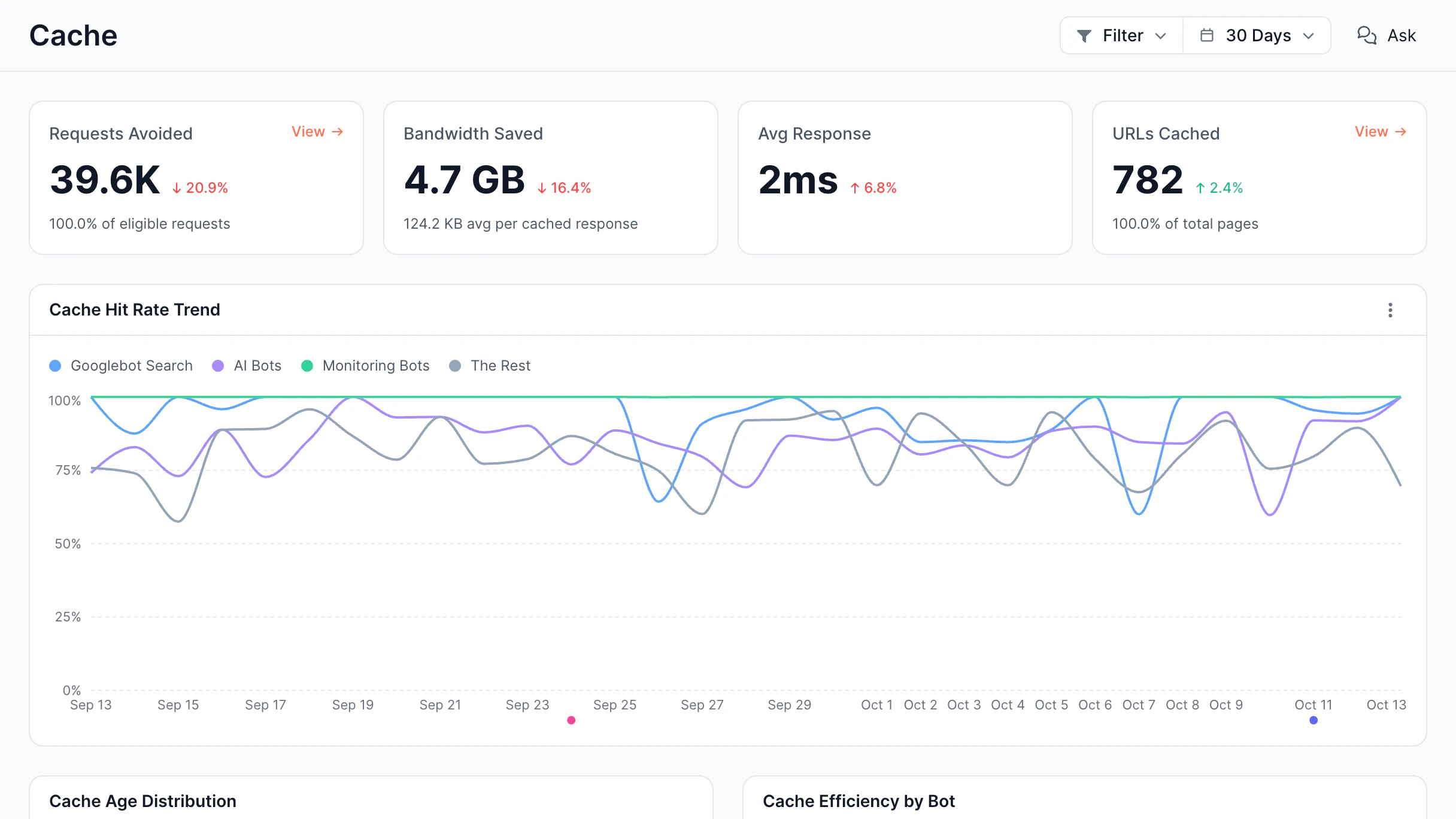
Hit rate, bandwidth saved, and cache age.
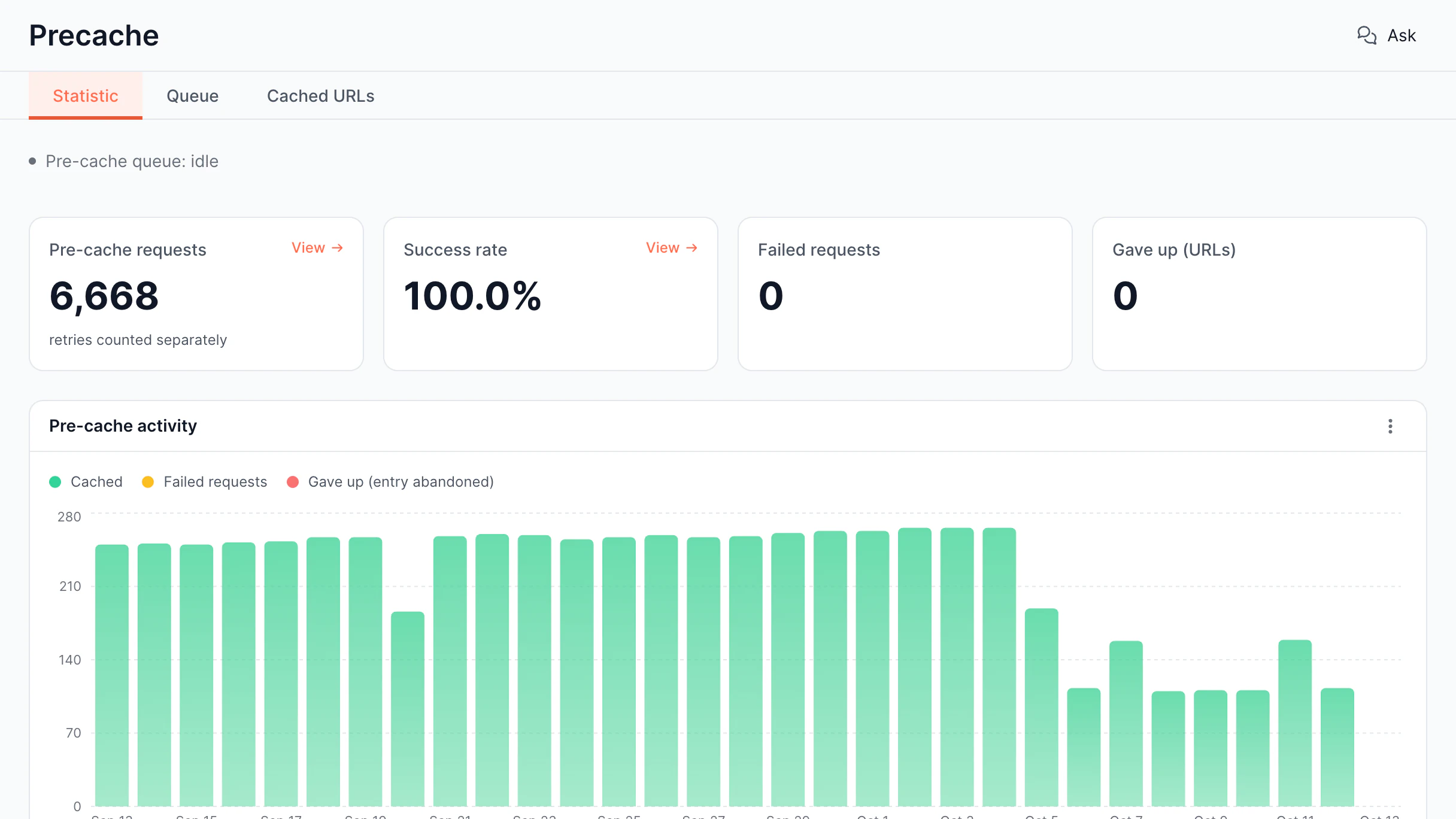
Pre-cache queue, success rate, and failures.
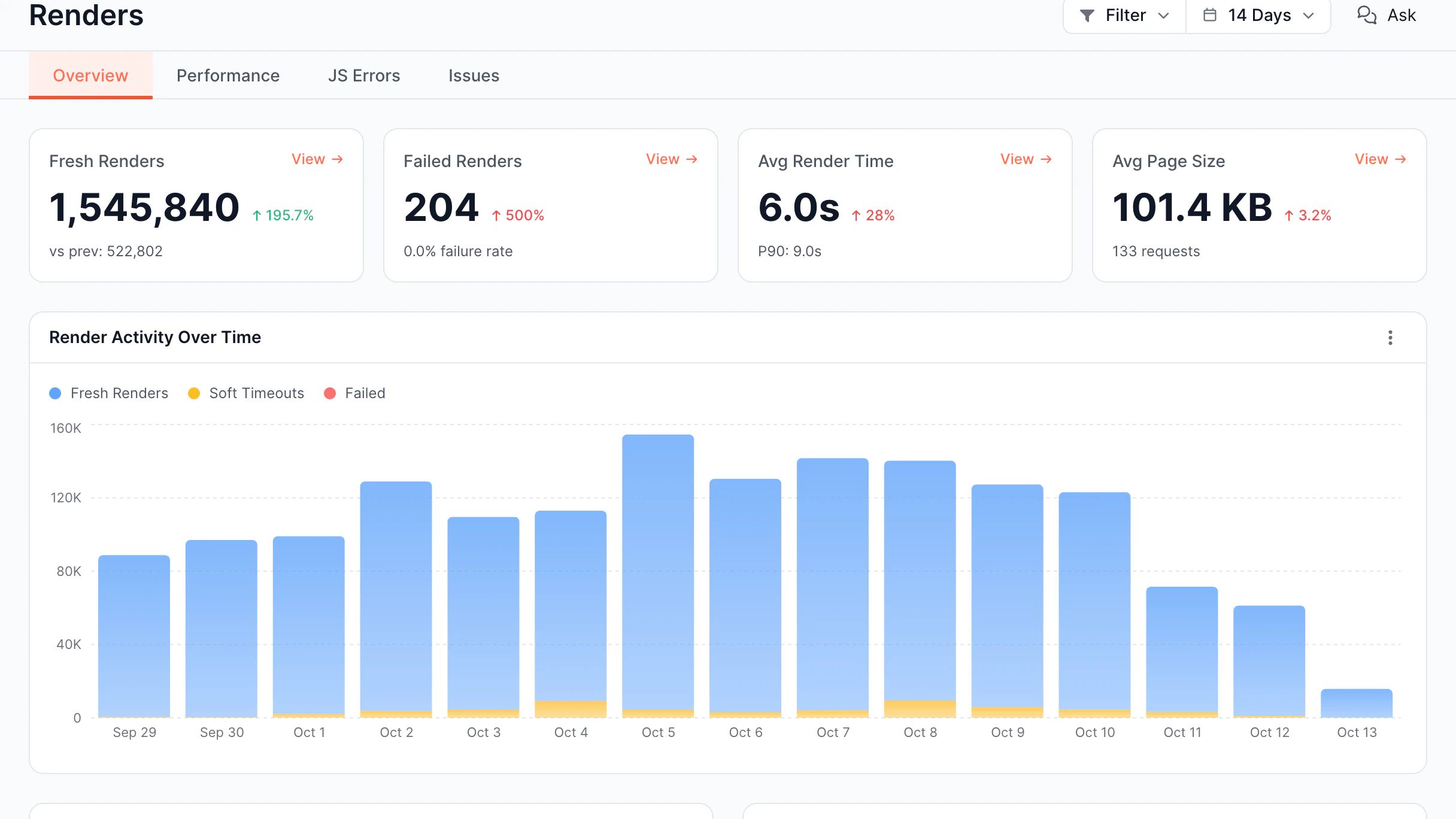
Renders per day, failures, and render time.
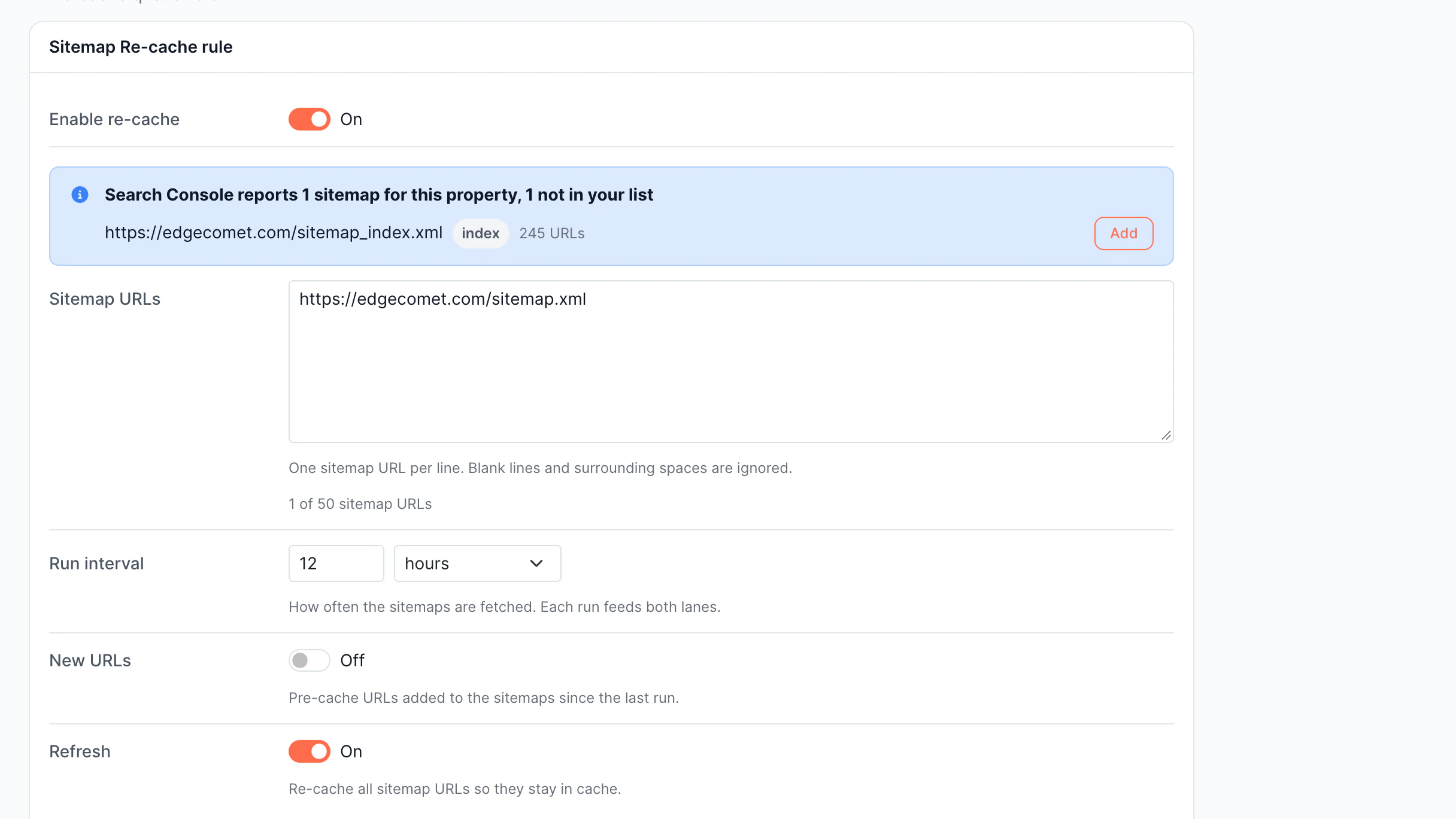
Re-cache rule for sitemap URLs on a schedule.
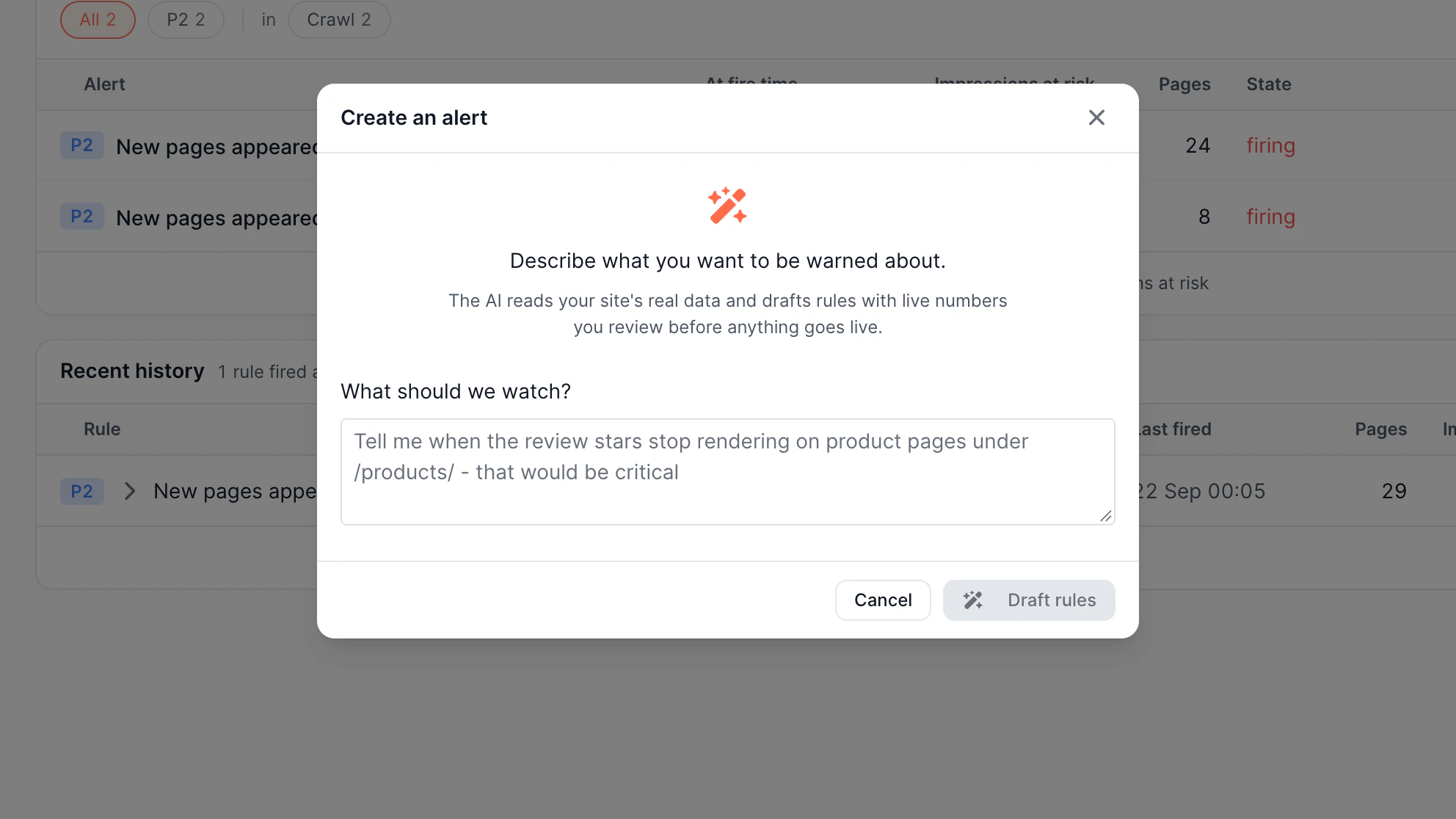
Create an alert by describing it in plain text.
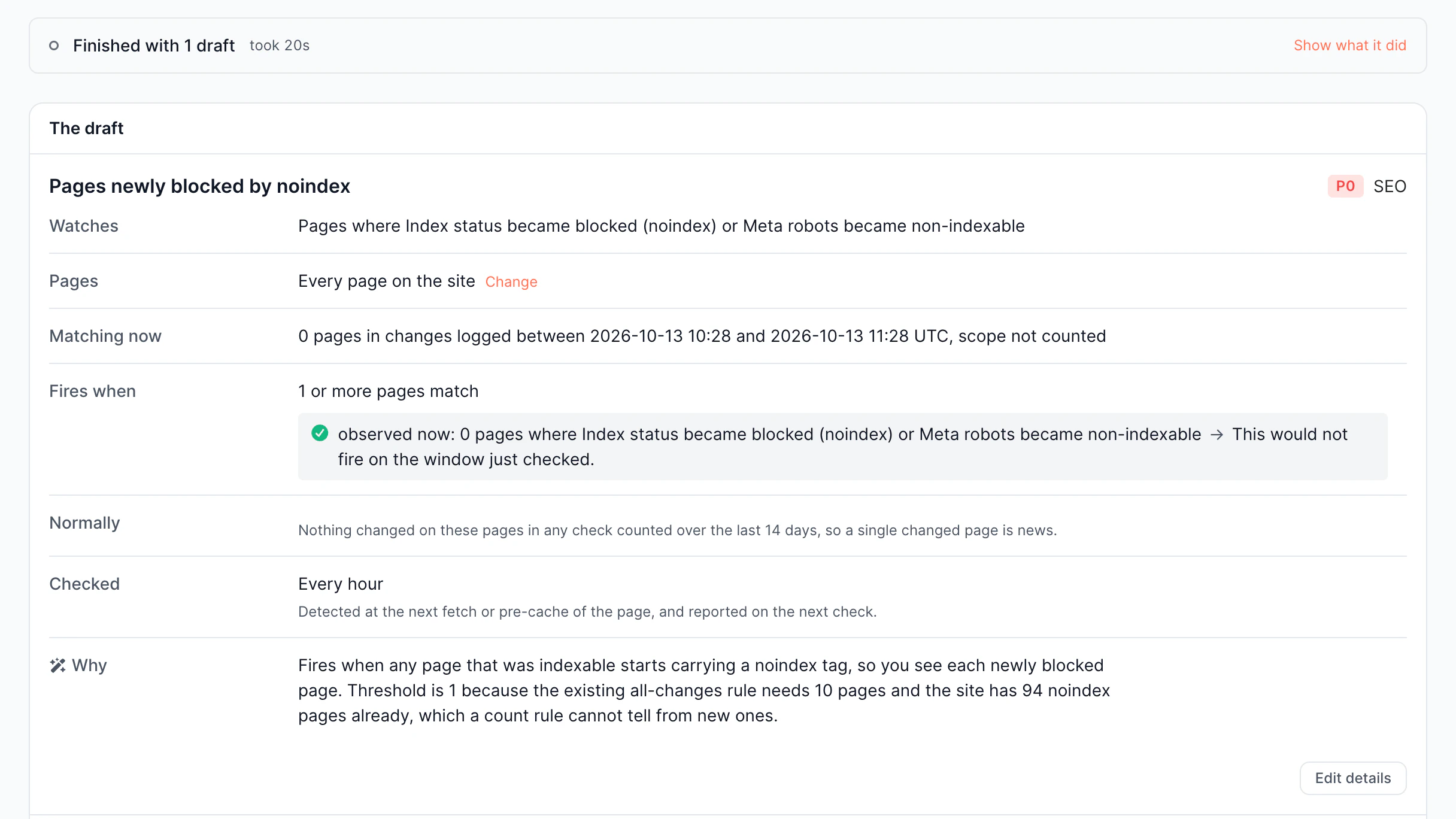
AI-drafted rule: what it watches and when it fires.
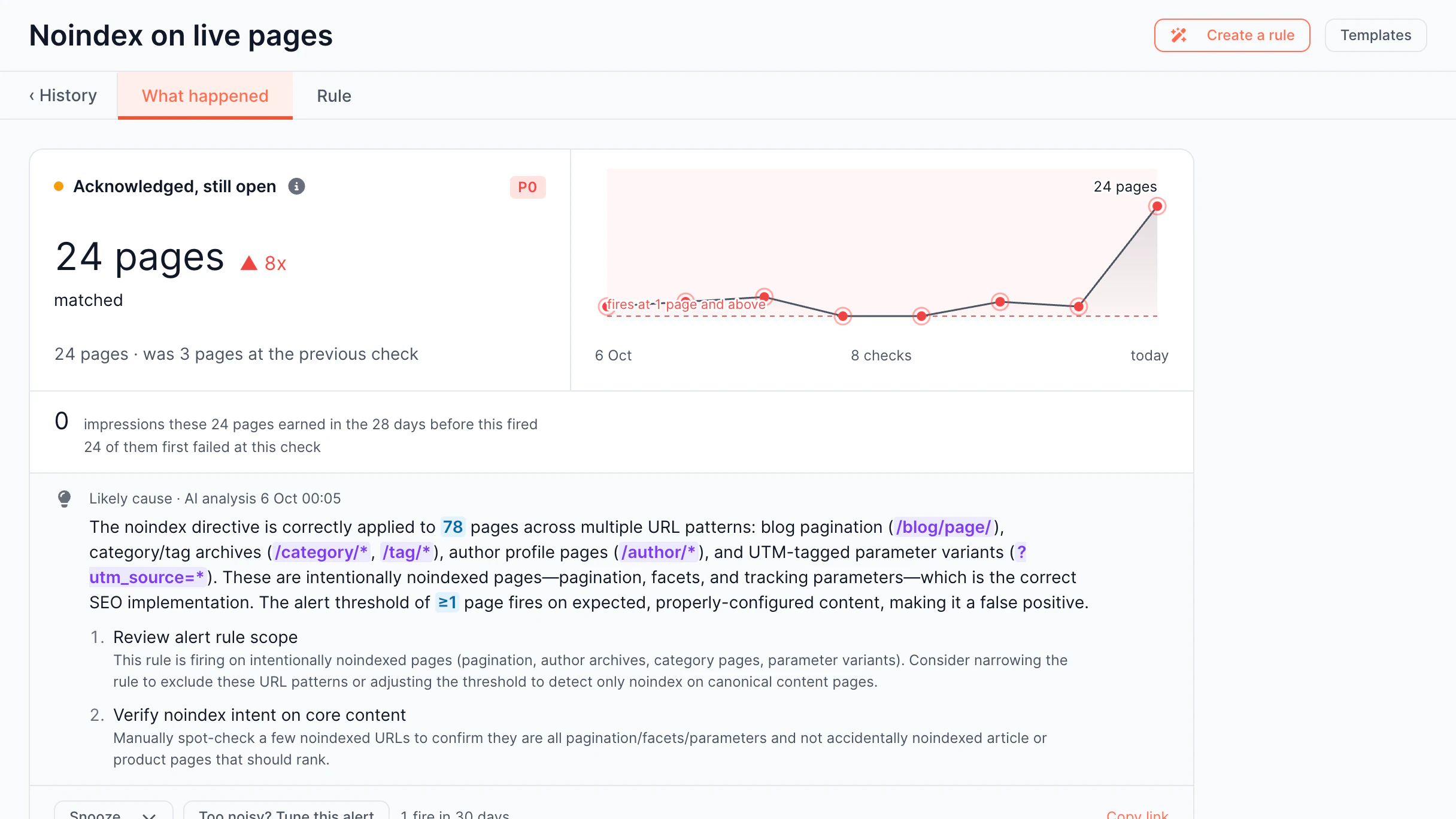
Incident page with matched pages and AI cause analysis.
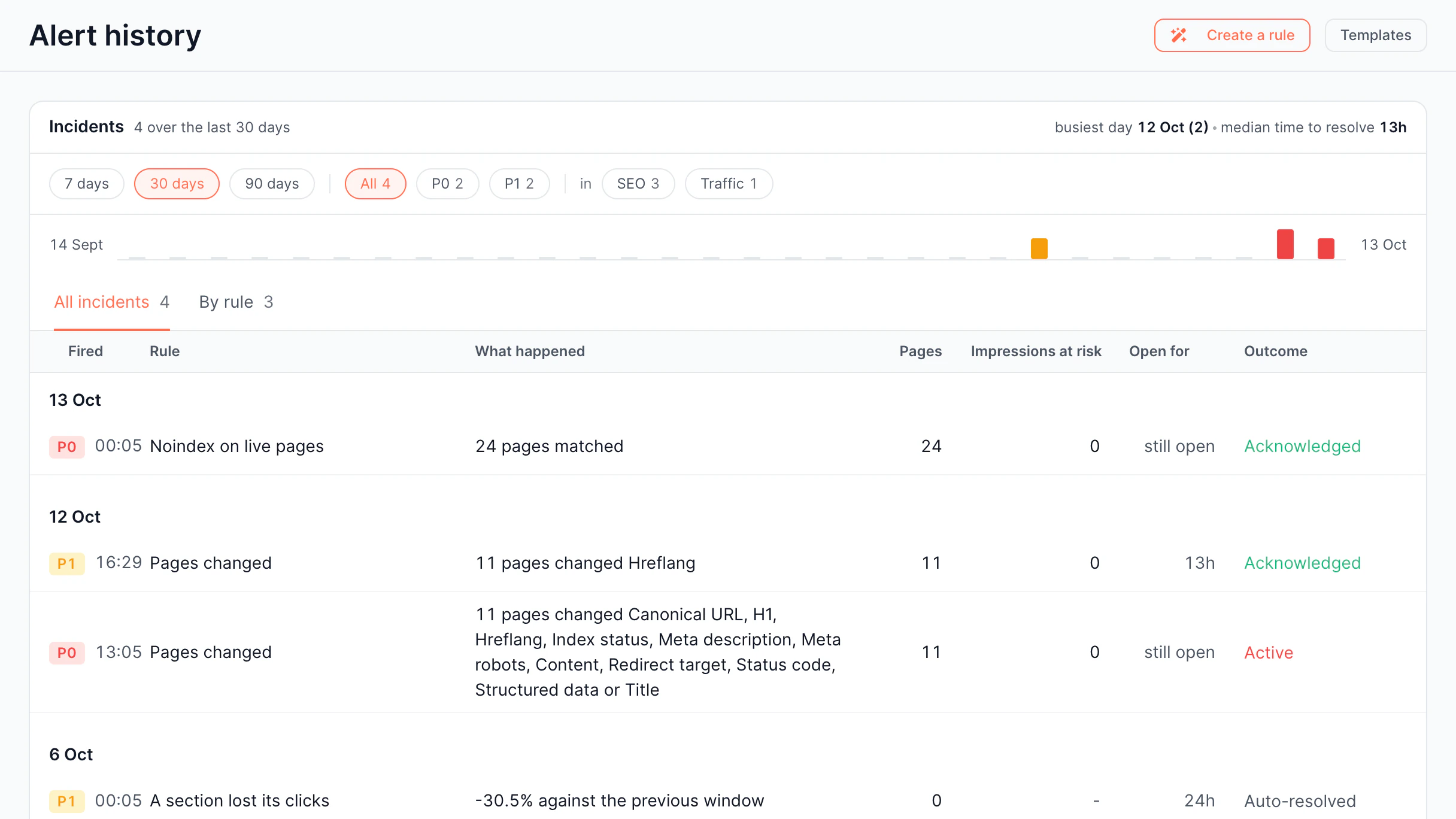
Incident log with pages, impressions at risk, and outcome.
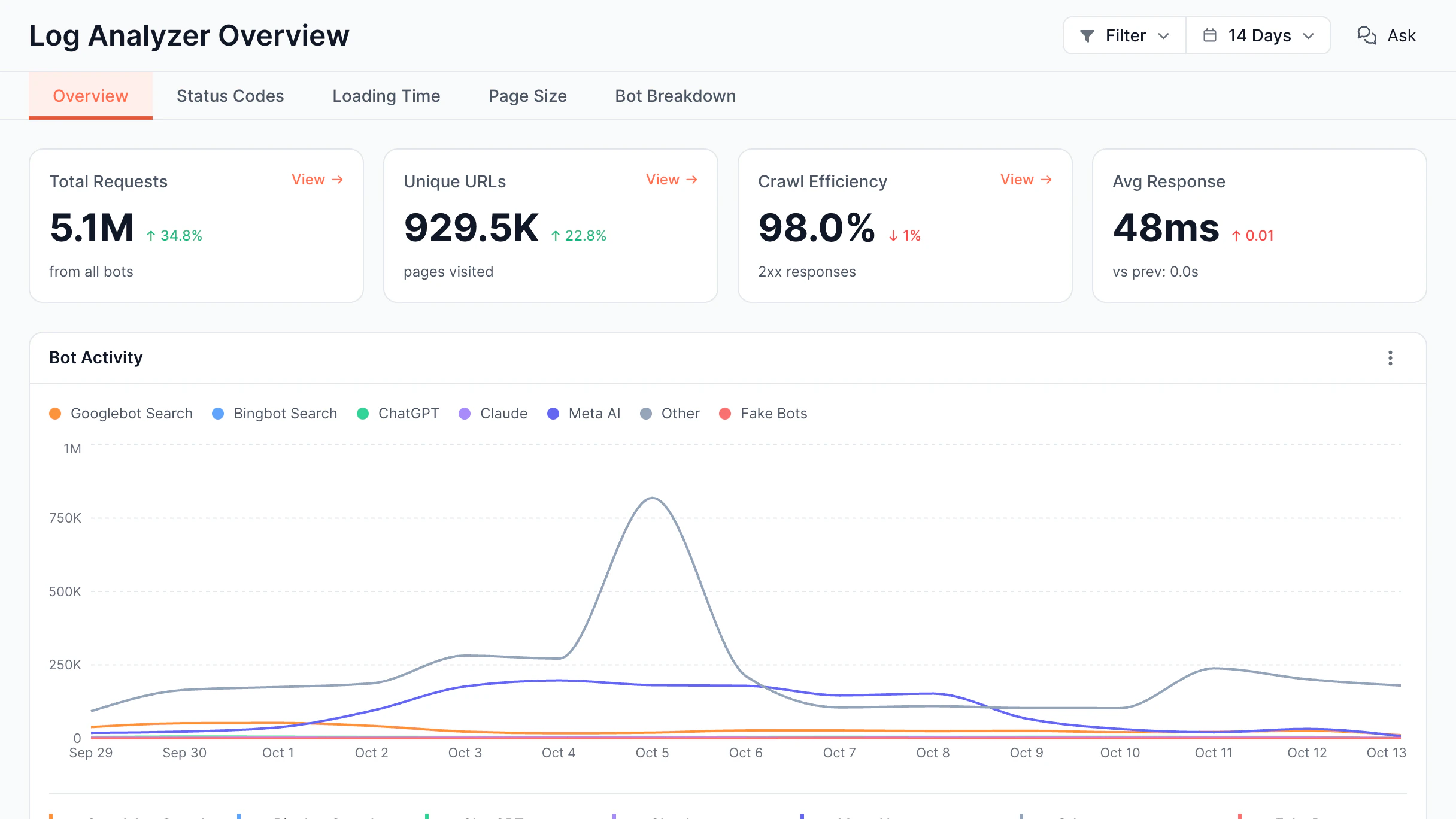
Requests per bot family, with status and response time.
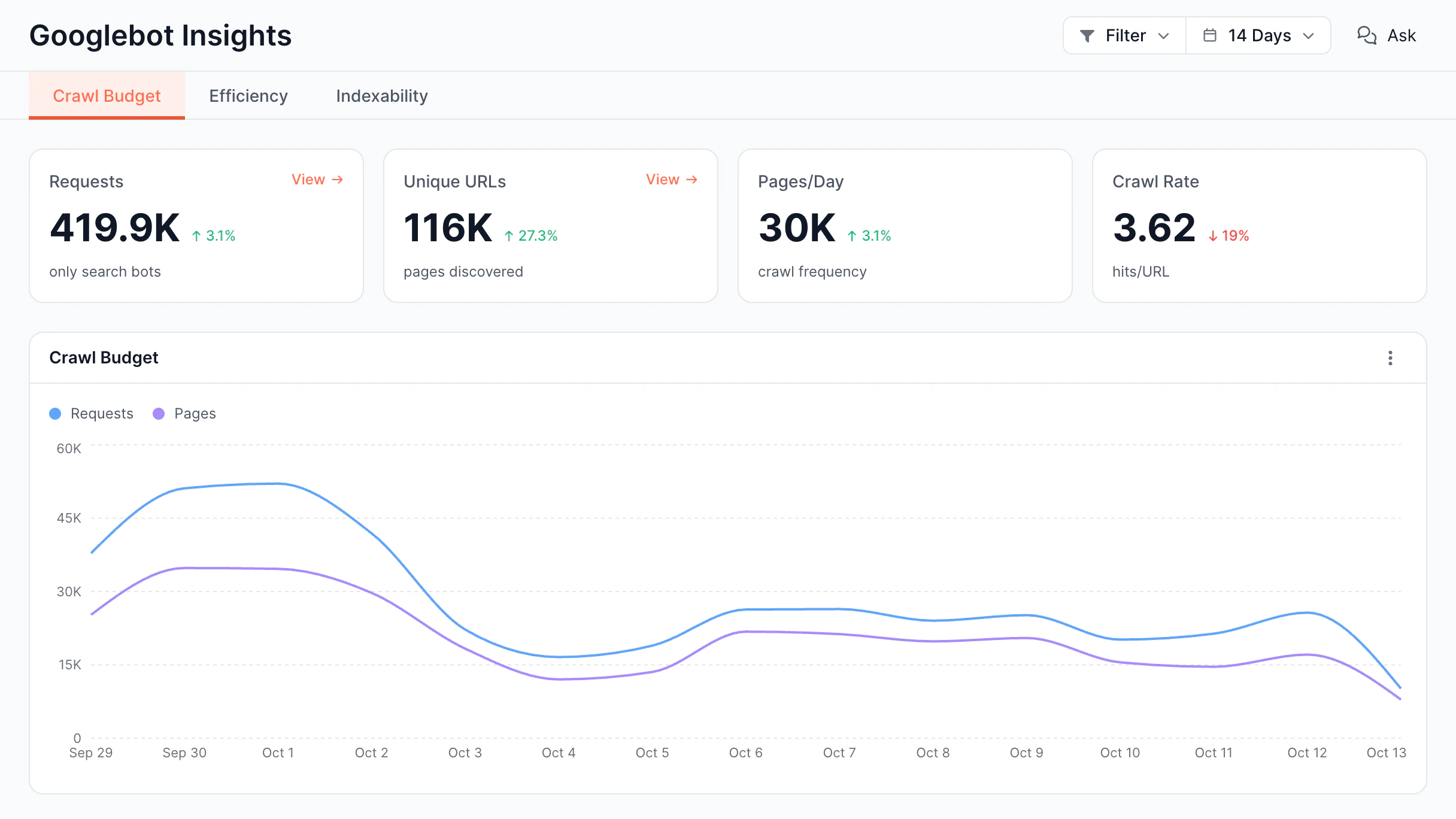
Googlebot requests, unique URLs, and crawl rate per day.
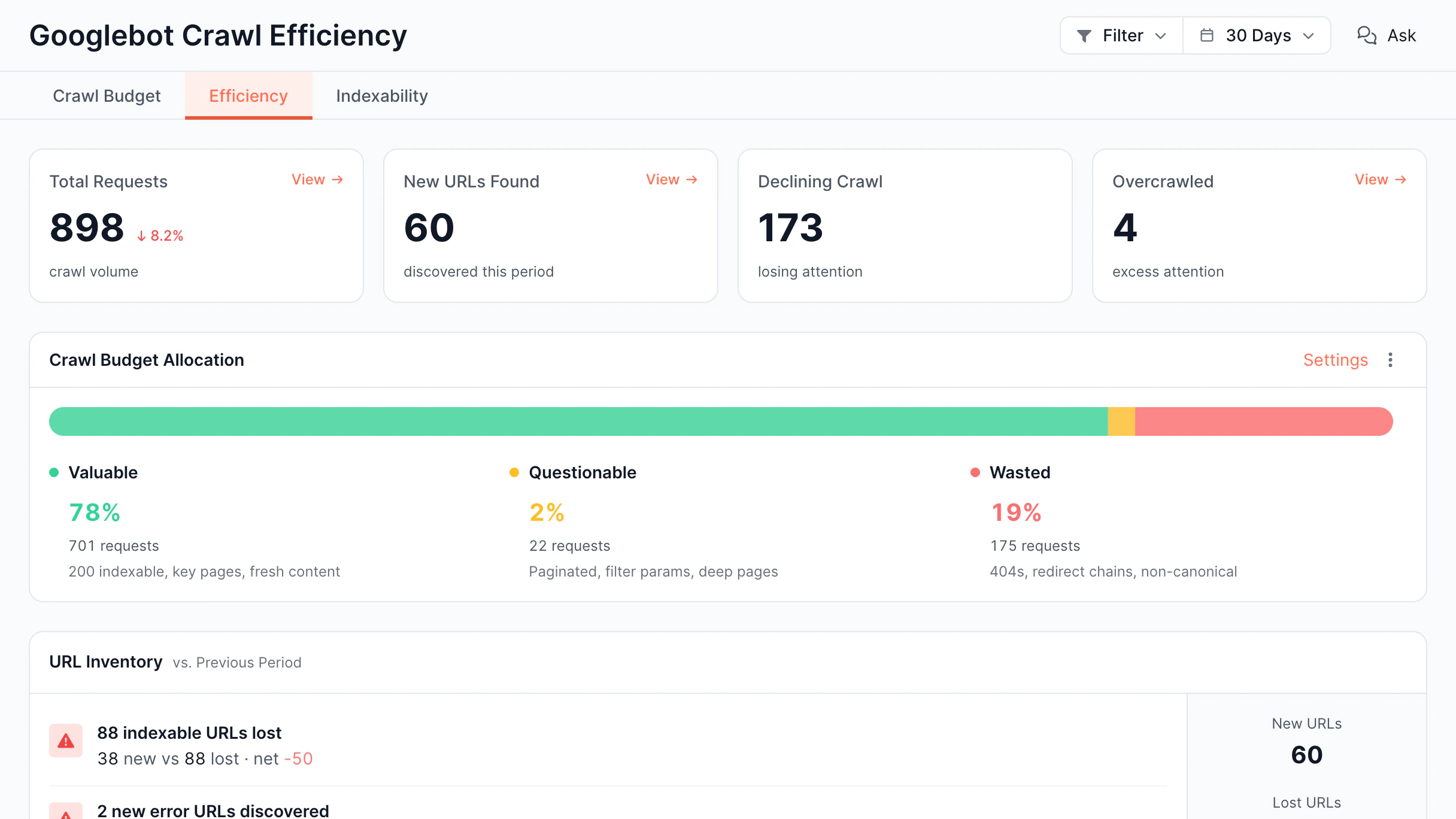
Googlebot crawl split into valuable, questionable, wasted.
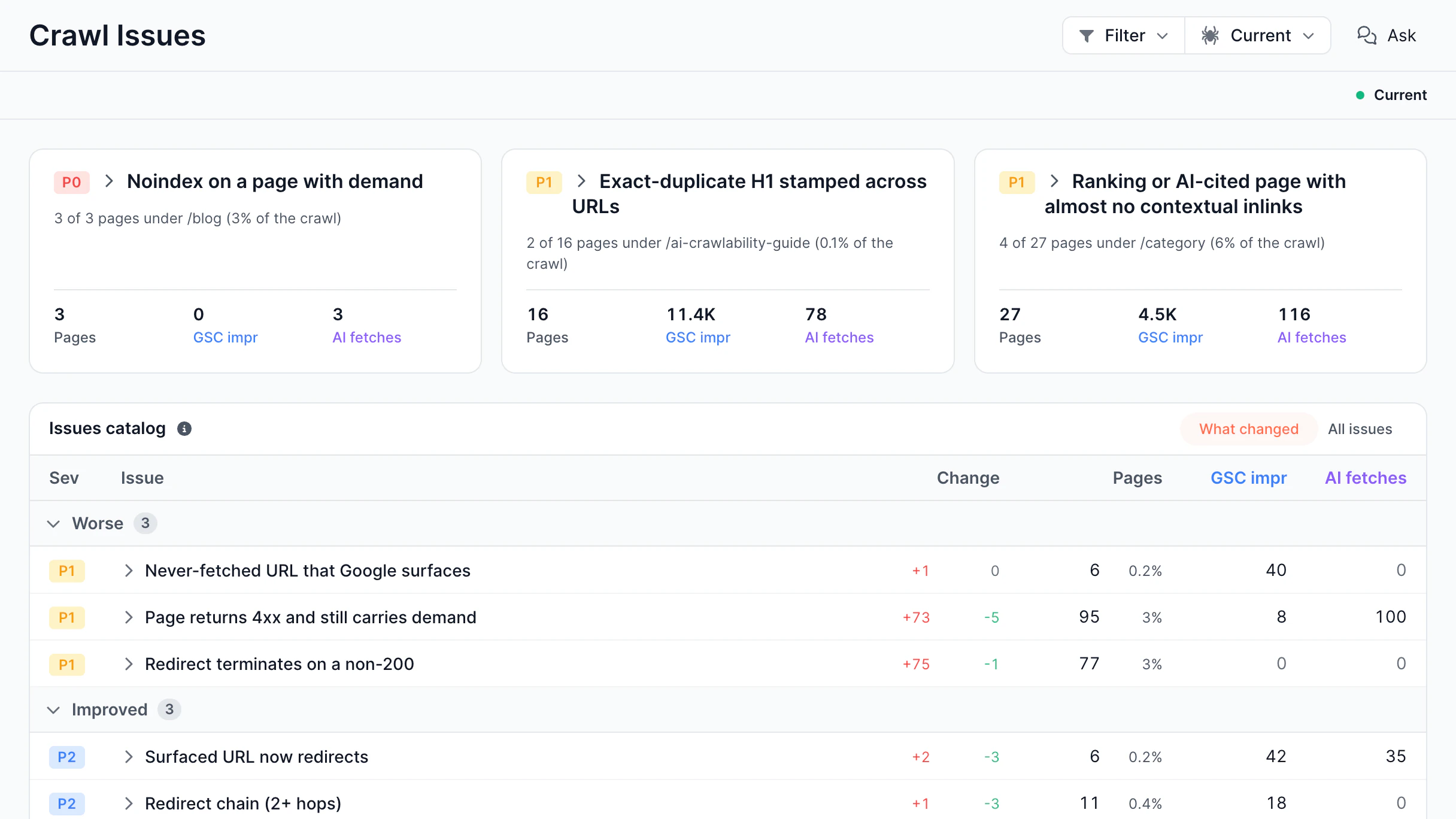
Audit issues that changed since the last crawl.
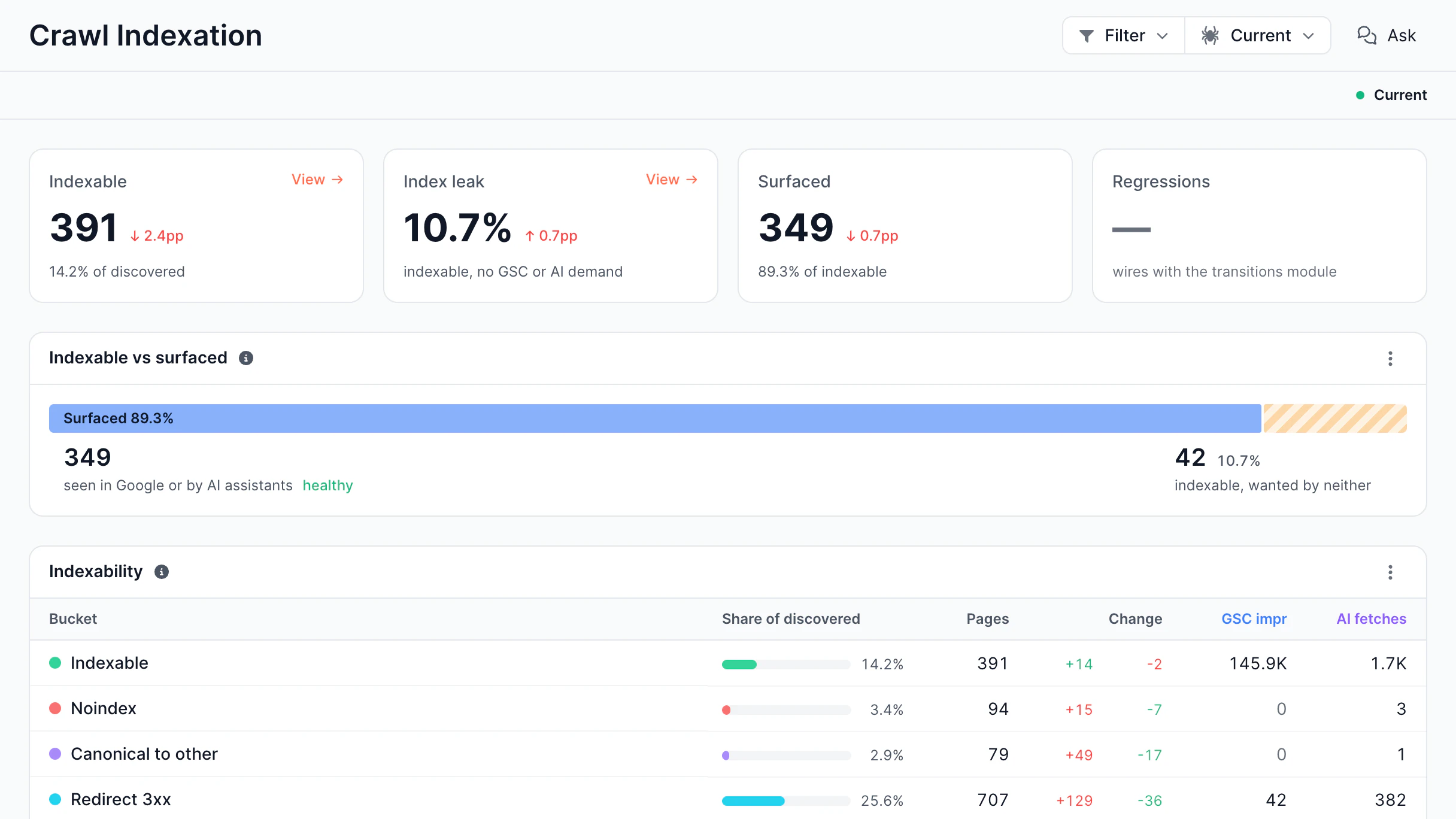
Indexable, noindex, canonicalized, and redirected pages.
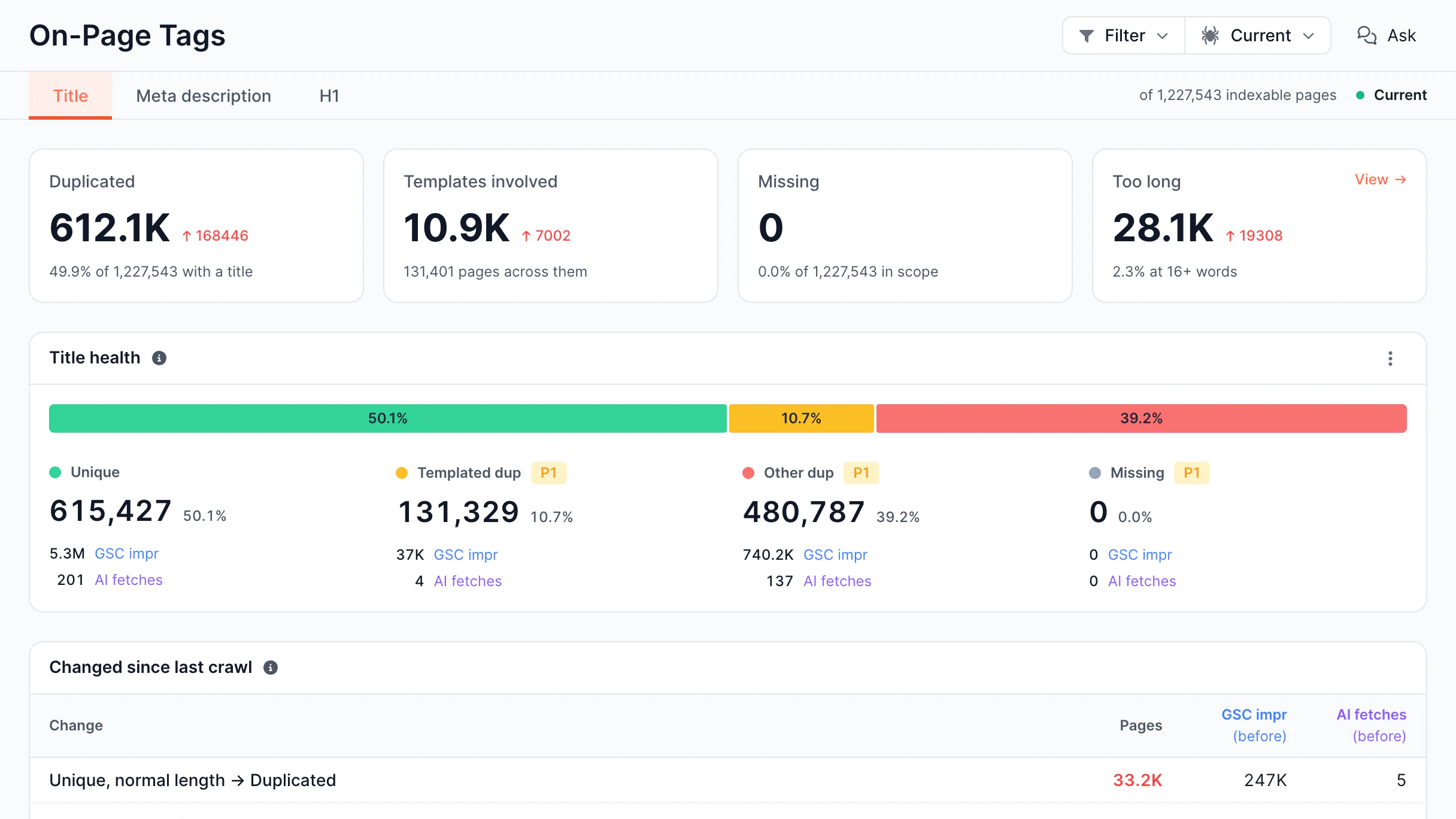
Duplicate, missing, and too-long titles.
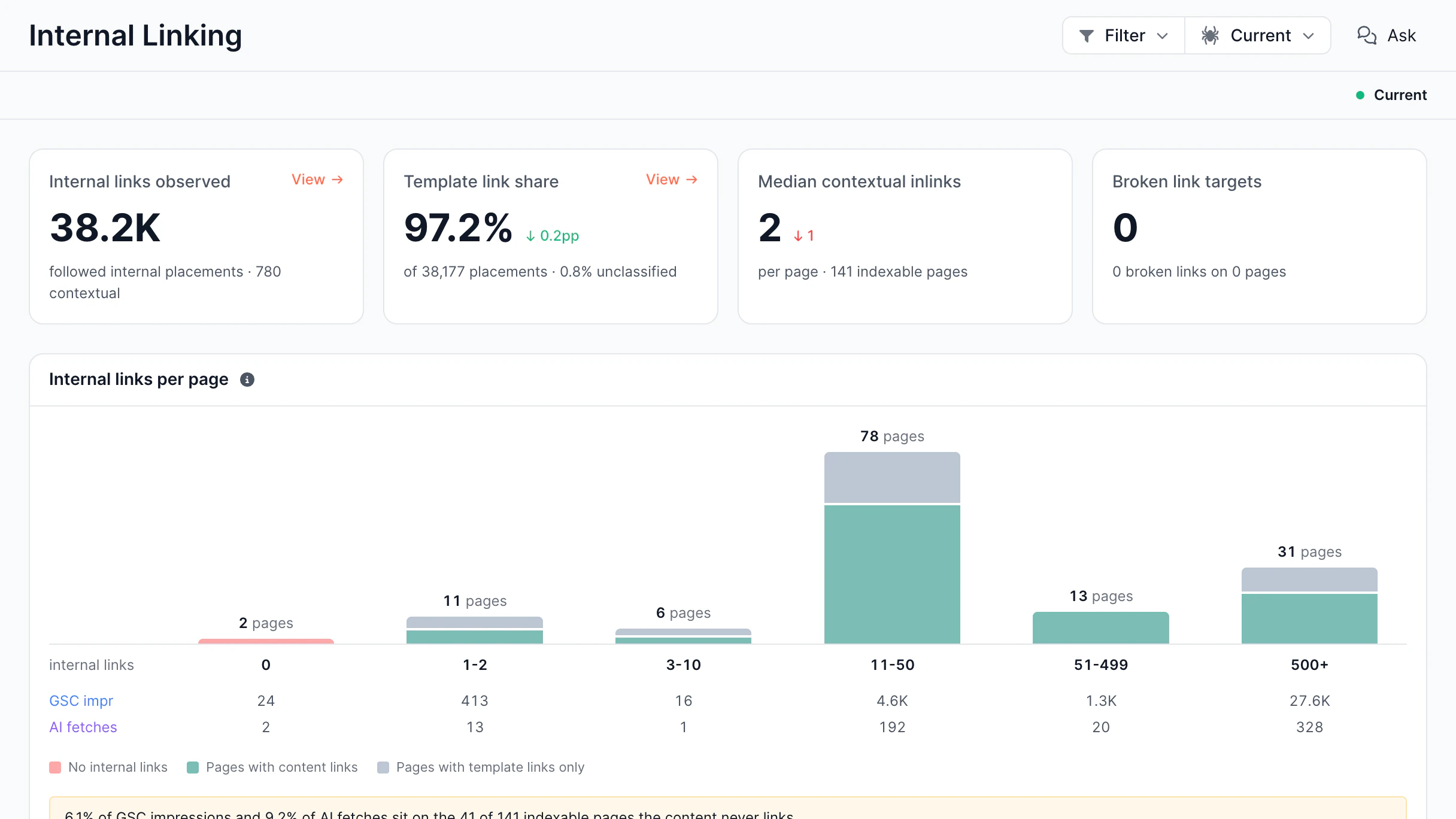
Internal links per page, content vs template.
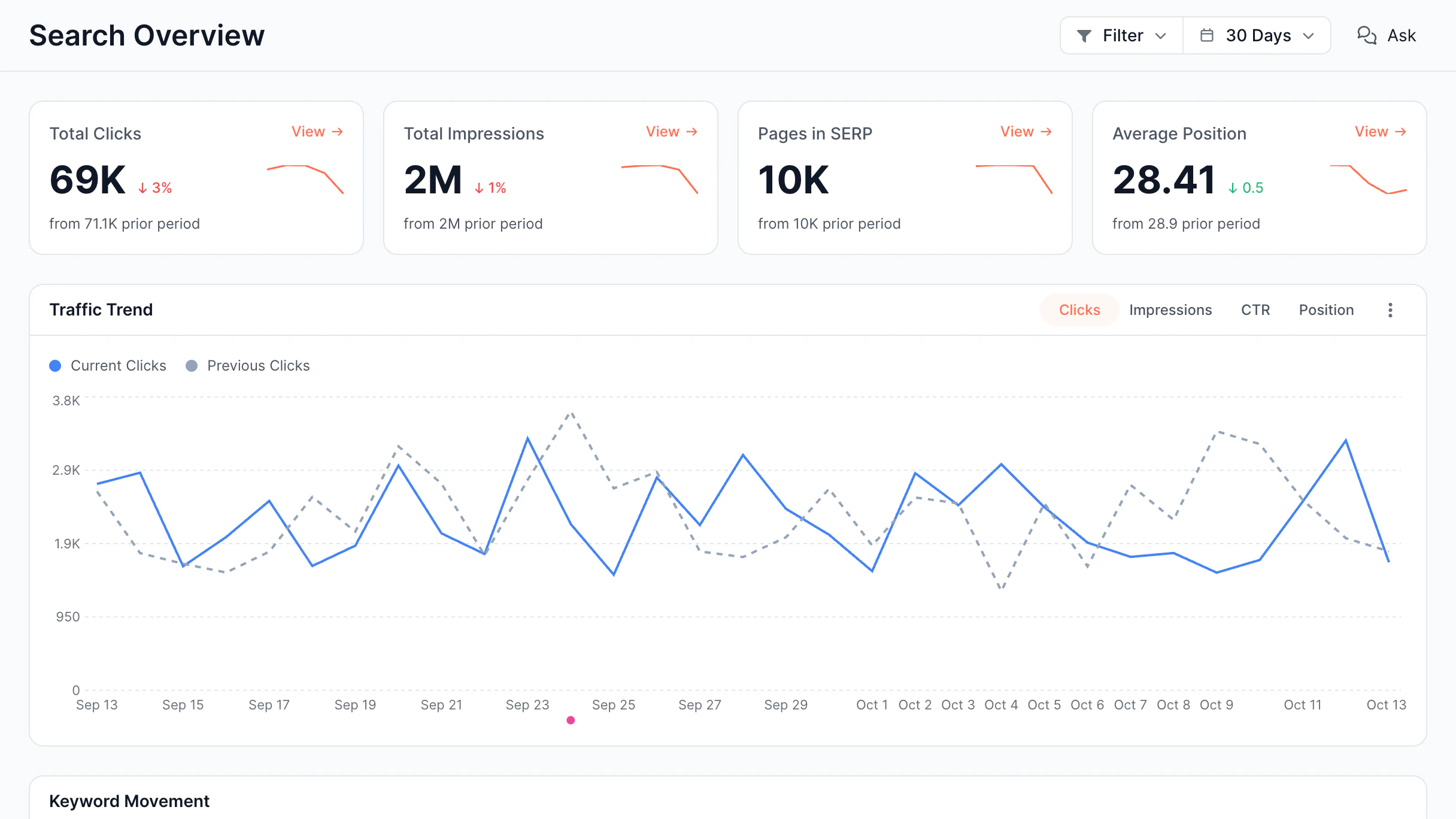
Search Console clicks, impressions, and position vs the previous period.
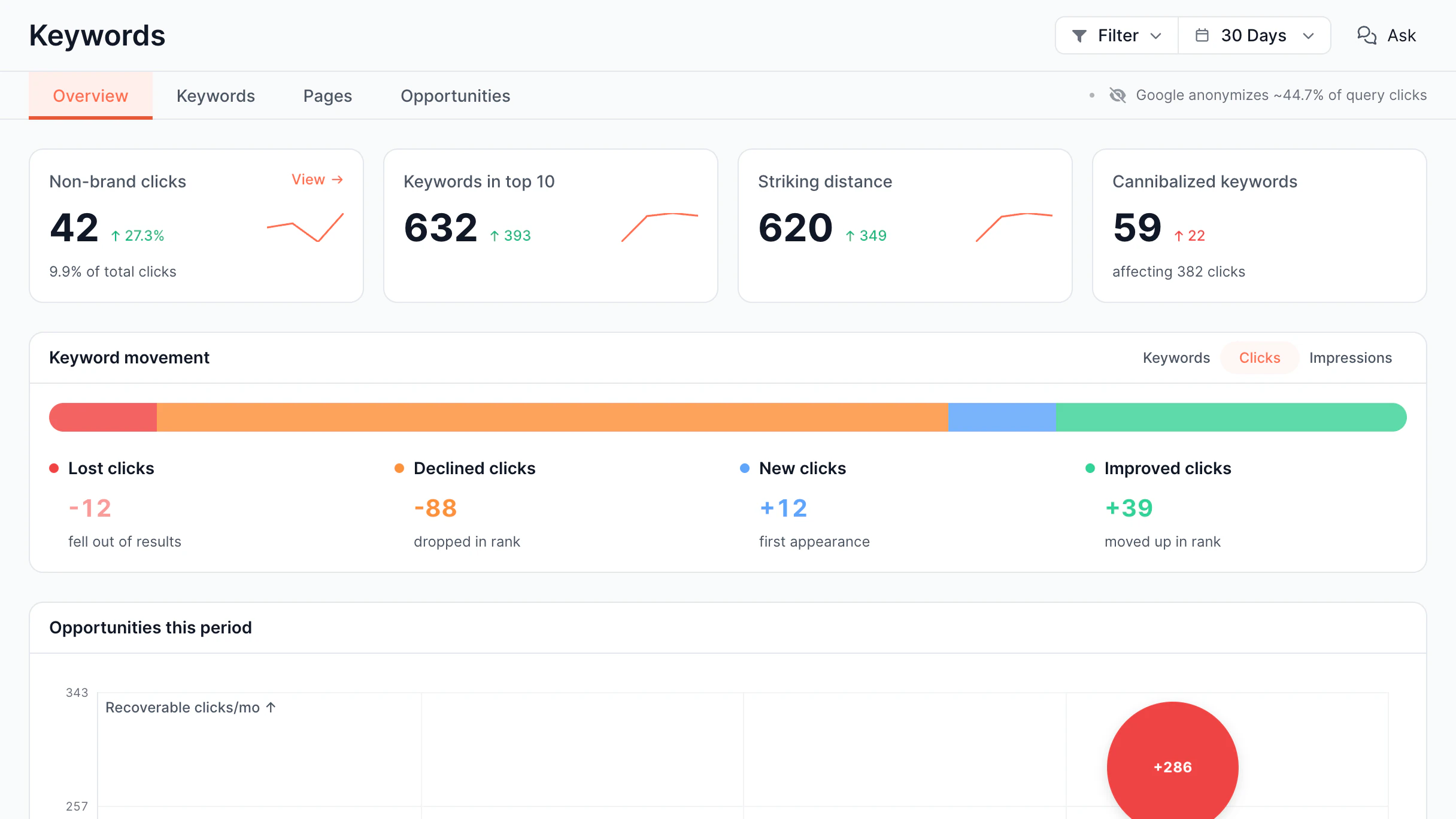
Keyword movement, top-10 counts, and striking-distance keywords.
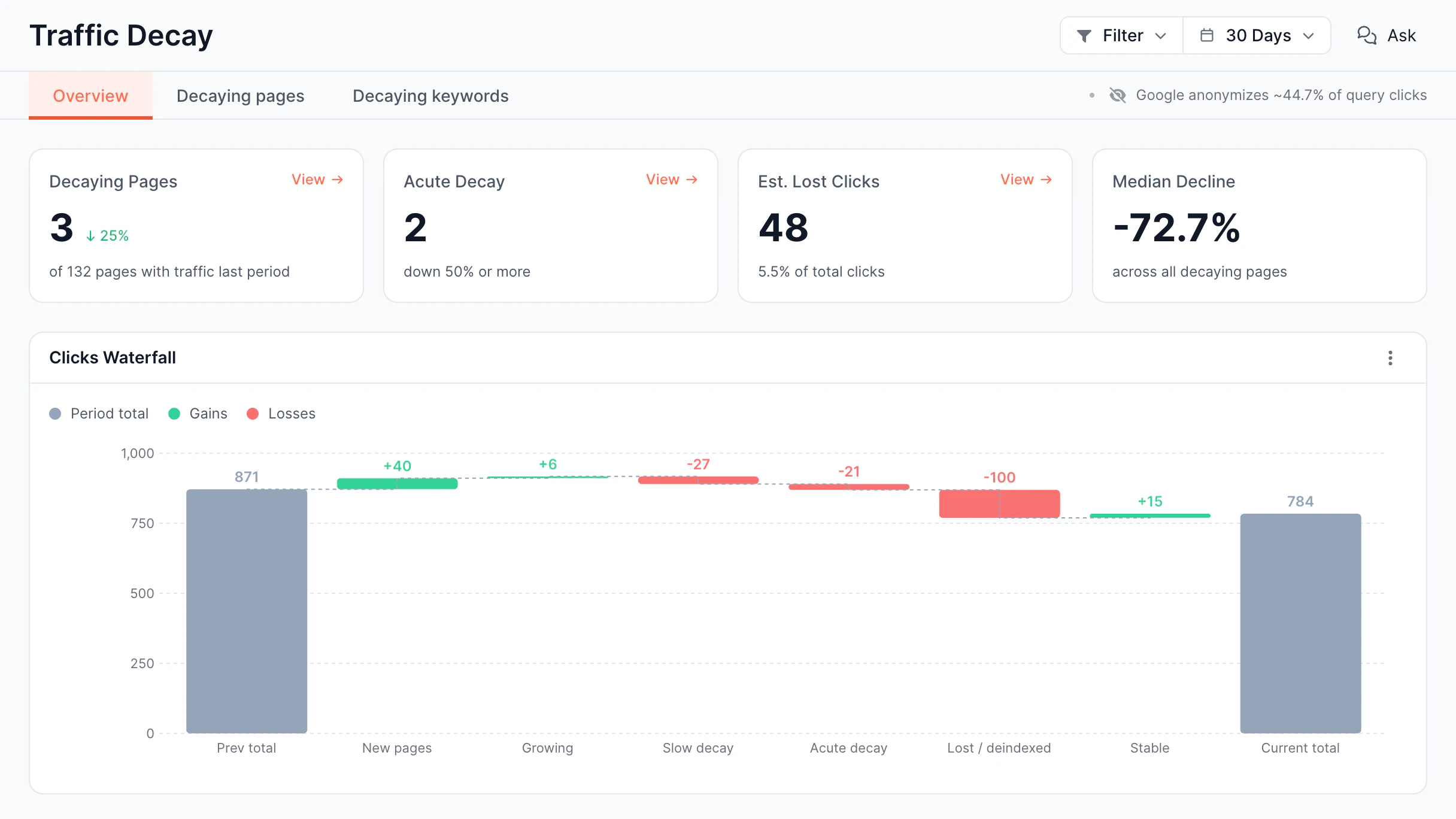
Pages losing clicks, split into slow decay, acute decay, and deindexed.
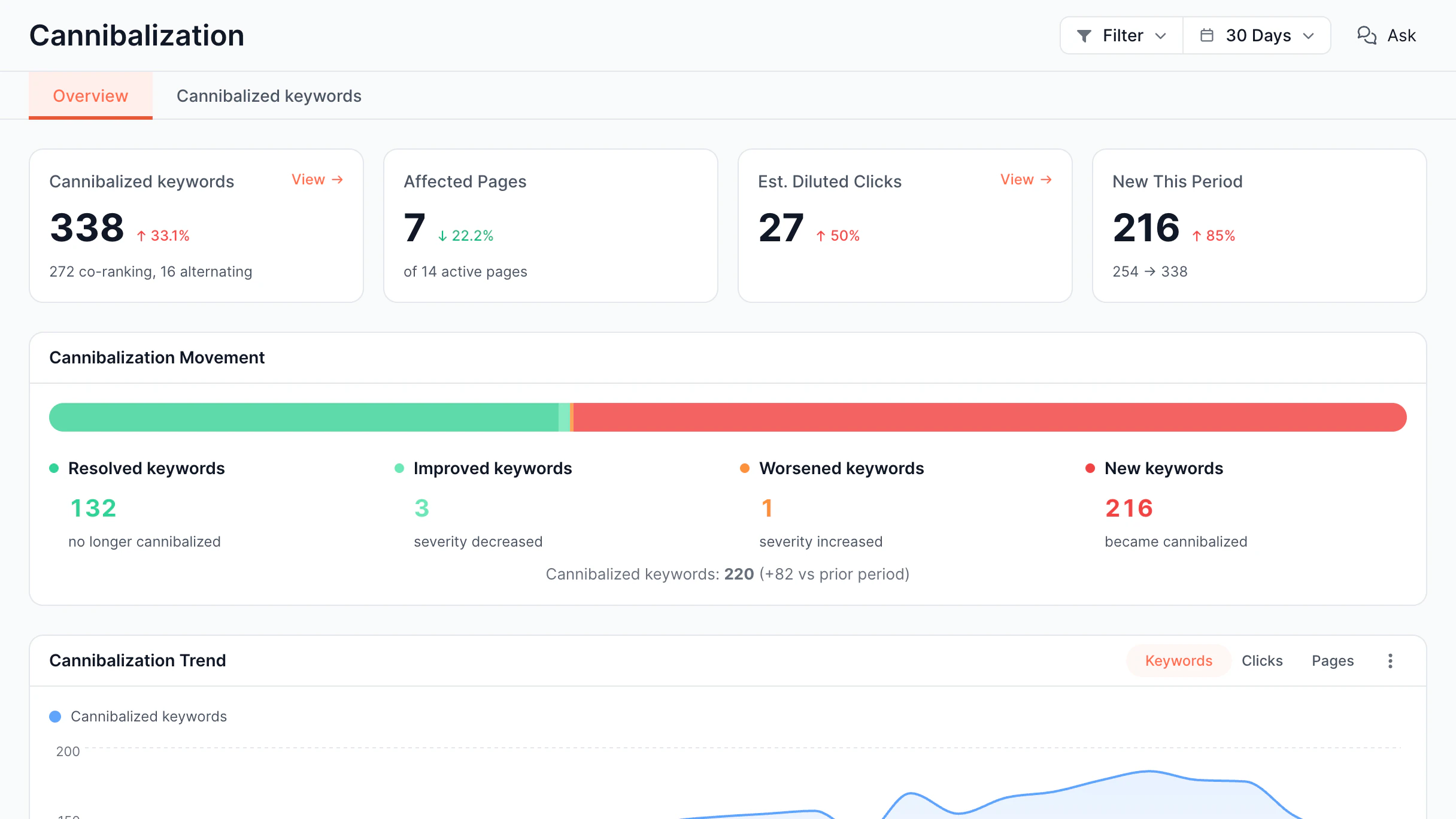
Keywords where several of your pages rank, and how that changed.
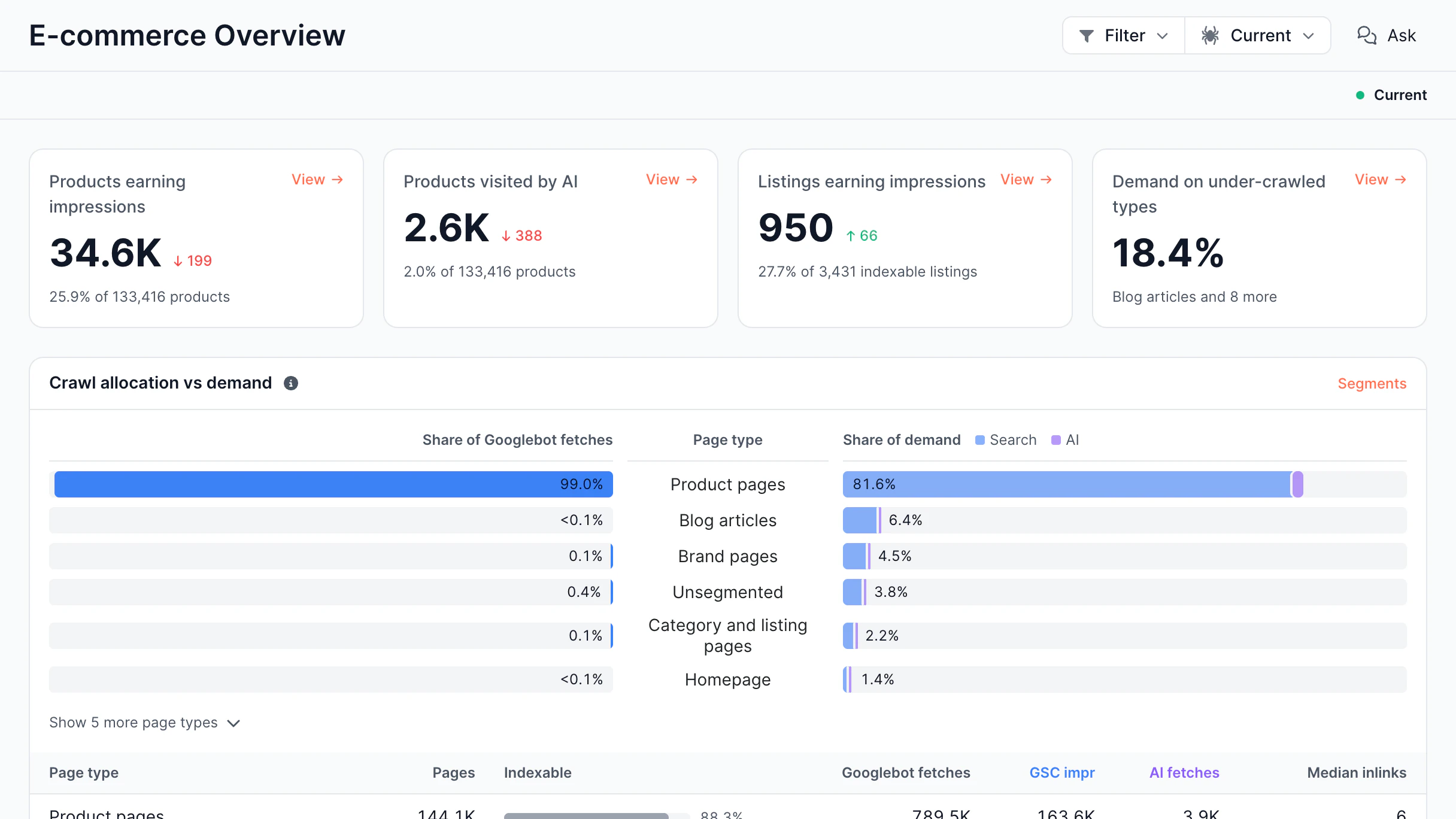
Googlebot fetches vs search and AI demand by page type.
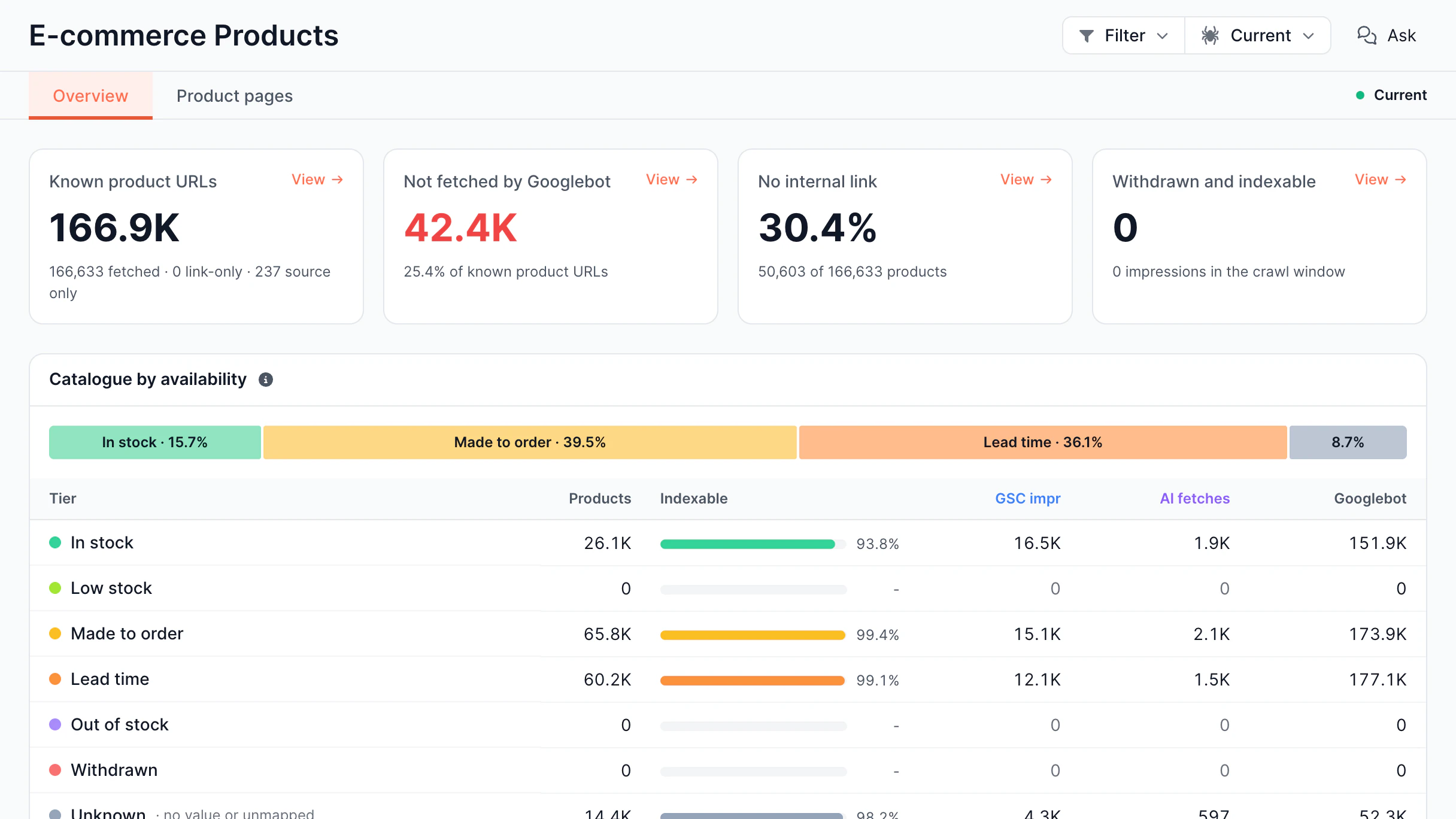
Products not fetched by Googlebot or not linked.
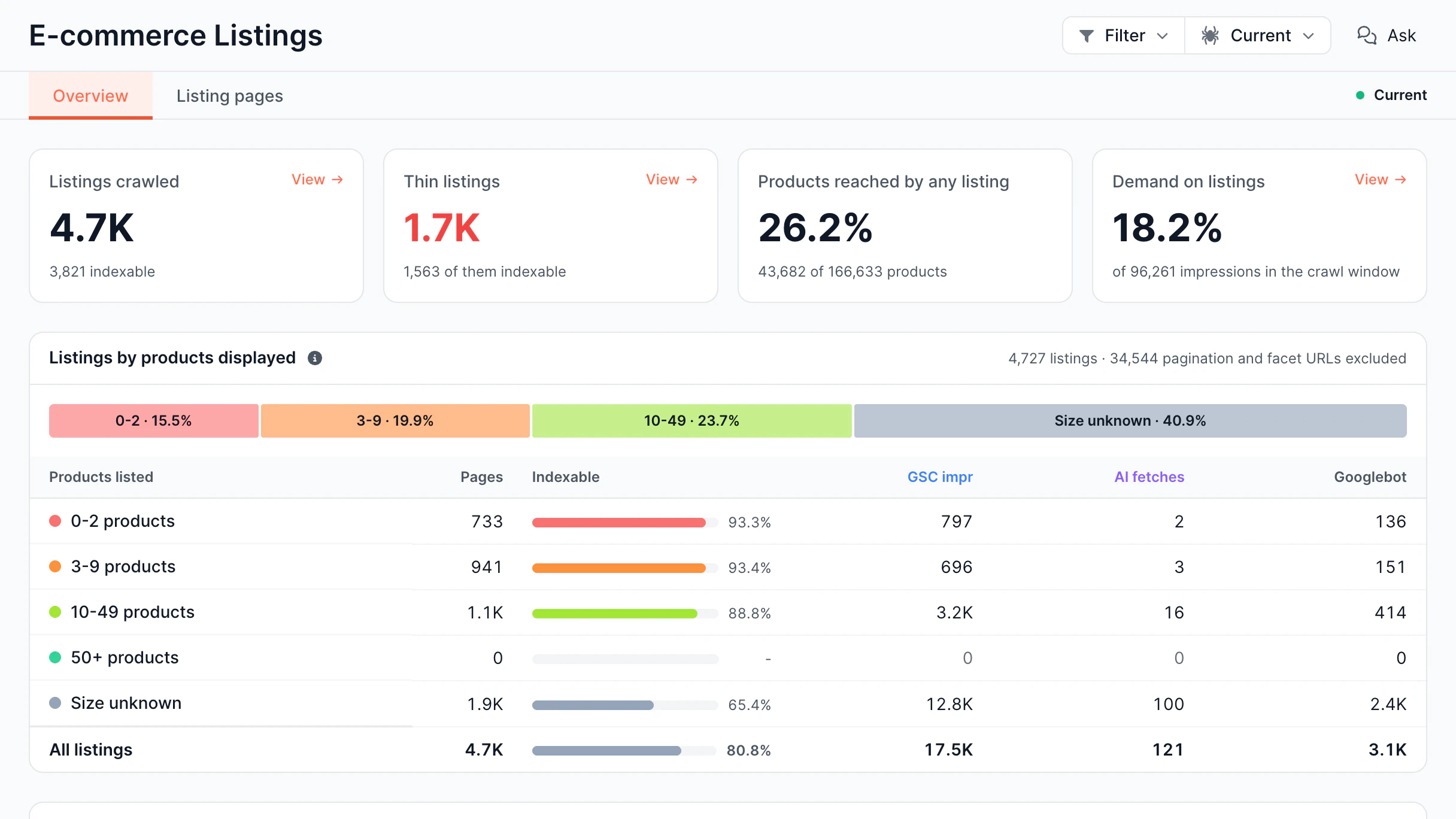
Category pages by number of products listed.
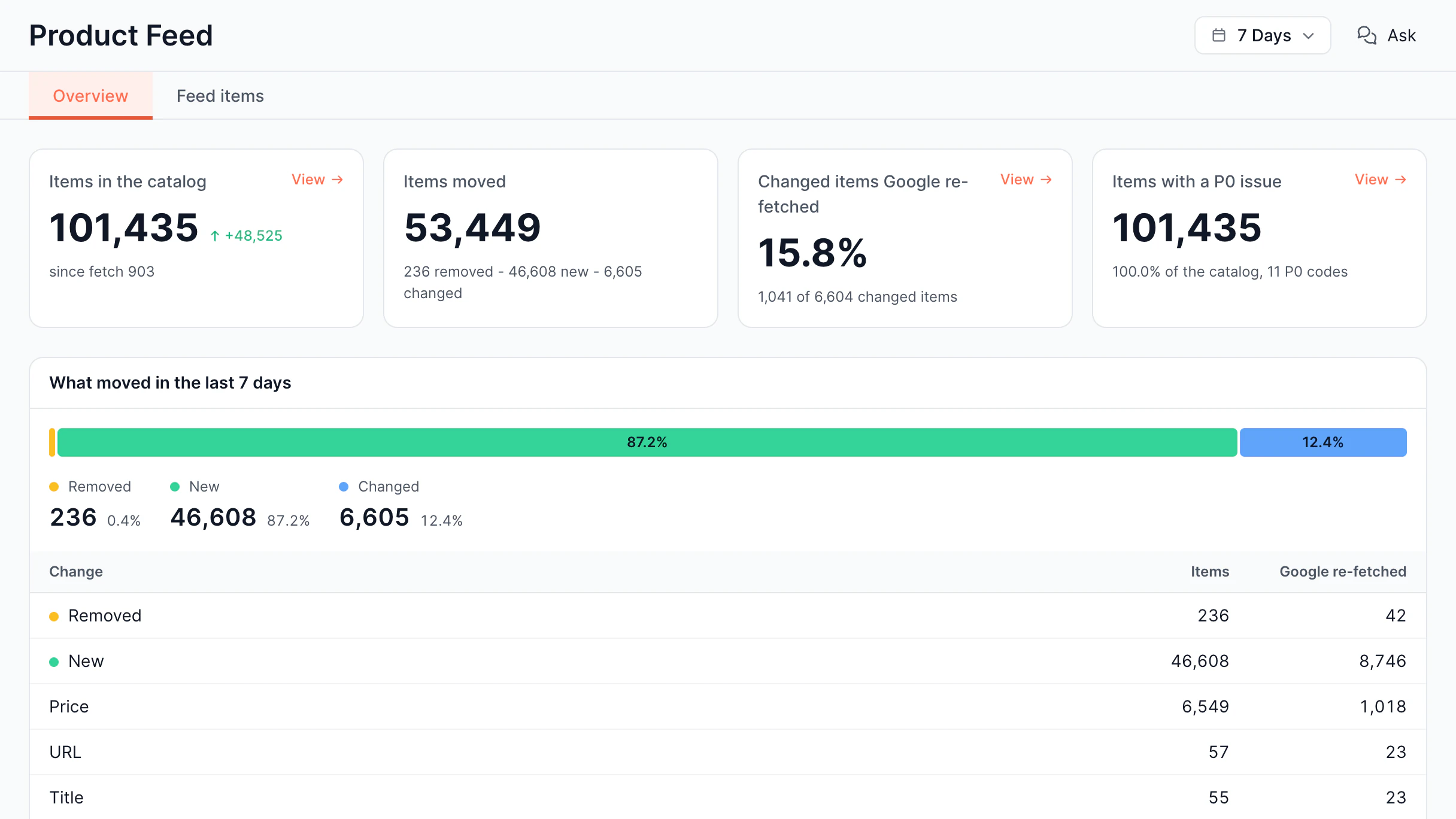
Merchant feed changes and Google re-fetches.
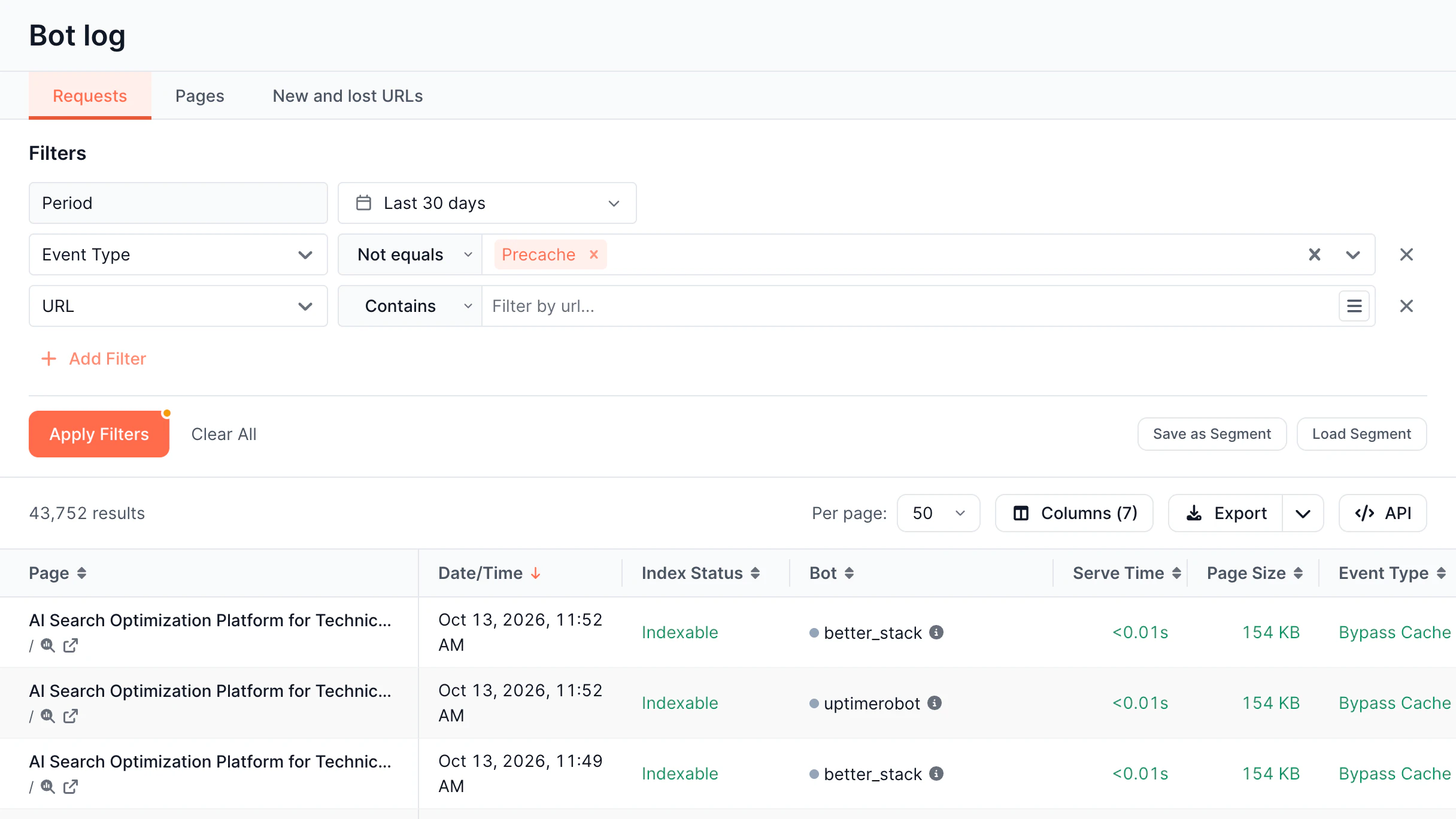
Table of every bot request with filters, segments, and export.
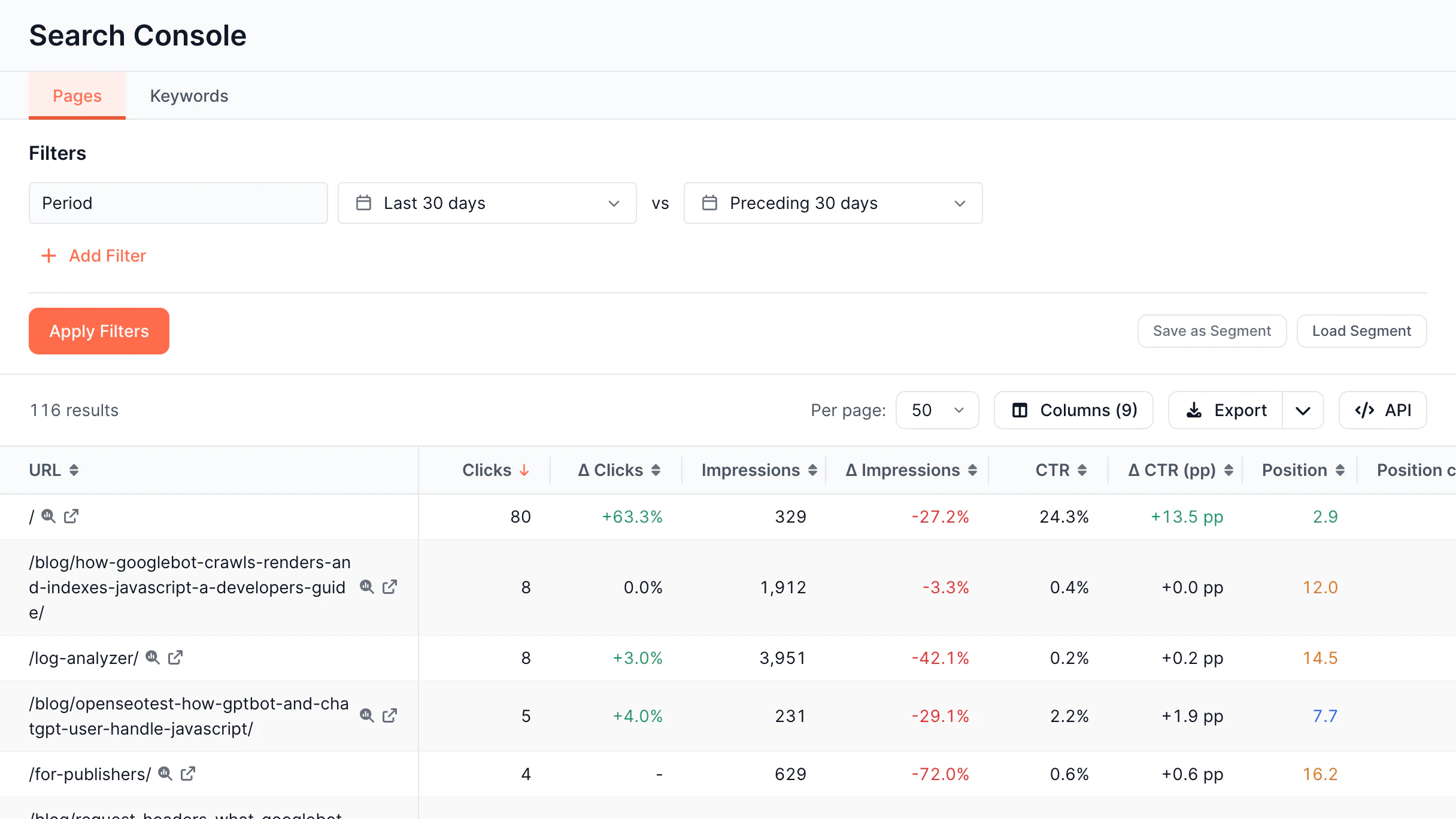
Search Console rows by page or keyword, with filters and period comparison.
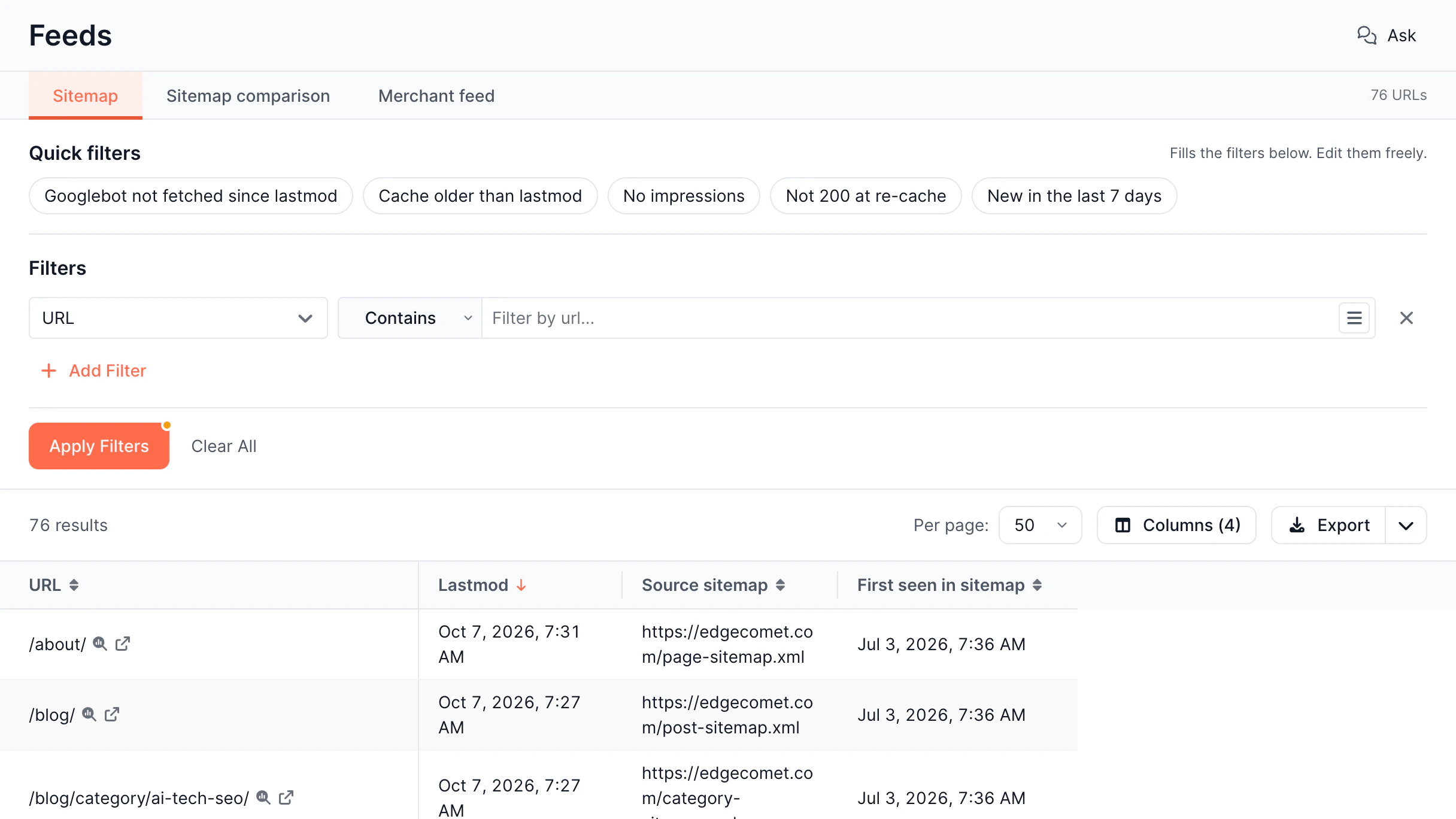
Sitemap and Merchant feed URLs with quick filters and export.
If you want more than just crawl reports and log analysis, EdgeComet brings together SEO execution, AI visibility monitoring, rendering, and real bot intelligence in one platform.
14-day free trial
When evaluating Botify alternatives and competitors, the best choice depends on your technical SEO needs, website complexity, and optimization goals. Enterprise teams should look for platforms that combine technical SEO analysis, real bot activity monitoring, and the ability to implement changes efficiently.
EdgeComet brings these capabilities together in one platform, offering JavaScript rendering, log analysis, SEO alerts, caching, and direct SEO execution. It helps teams identify technical issues, understand how search engines and AI bots interact with their websites, and implement fixes without relying on developers for every change.
Both EdgeComet and Botify help organizations improve search visibility and understand how bots interact with their websites. Botify mainly uses crawling and log analysis to find issues and opportunities. EdgeComet combines rendering, real bot traffic analysis, AI visibility monitoring, SEO alerts, and SEO execution tools. This allows teams to identify problems and fix them without lengthy development cycles.
The main difference is in the data source and workflow. Botify combines crawl data with server log analysis to help teams understand website performance. EdgeComet operates directly in the bot request path, offering visibility into what search and AI bots actually receive. EdgeComet also includes SEO execution tools, so teams can implement changes directly from the platform.
Botify is designed for enterprise organizations and usually requires annual contracts and custom pricing. EdgeComet provides predictable monthly pricing and self-serve plans, making it accessible for growing businesses, ecommerce brands, publishers, and enterprise teams. Organizations evaluating costs often compare Botify's enterprise model with EdgeComet's more flexible subscription approach.
Botify reviews often highlight the platform's crawl analysis, log file processing, and enterprise SEO capabilities. Many organizations use Botify to better understand website structure, indexing, and search engine behavior. Businesses that need additional features such as AI visibility monitoring, SEO execution, rendering, and real-time alerts often look for alternatives alongside Botify.
Botify offers a wide range of technical SEO features, including website crawling, log analysis, indexing monitoring, internal linking analysis, crawl budget insights, and technical issue detection. These tools help enterprise SEO teams spot optimization opportunities and monitor website health. EdgeComet enhances these capabilities with rendering, AI visibility monitoring, and technical SEO execution tools.
Both platforms help teams understand bot activity, but they take different approaches. Botify focuses on crawl analysis and server log data to show how search engines interact with websites. EdgeComet provides visibility into real search and AI bot requests, including rendered page content and the SEO signals bots receive. The right choice depends on whether your focus is on crawl analysis or real bot visibility.
Yes. EdgeComet is a solid alternative for organizations that need more than just crawl analysis. Besides helping teams understand search and AI bot behavior, EdgeComet offers rendering, SEO monitoring, AI visibility insights, and SEO controls. This lets teams implement changes quickly and reduces reliance on development resources.
Both platforms provide insights into AI crawler activity. EdgeComet provides additional information about the rendered content that AI systems receive, helping teams understand how AI bots access and interpret their pages. This makes it easier to spot discoverability issues and improve visibility across AI-powered search and answer engines.