Oncrawl helps enterprise SEO teams investigate technical issues through large-scale website audits, server log analysis, AI search insights, and cross-source reporting. EdgeComet goes beyond analysis by operating directly in the bot request path, allowing teams to monitor what search and AI crawlers receive, deliver rendered content, and implement SEO fixes without changing website code.
Explore this EdgeComet vs. Oncrawl comparison to understand their features, pricing, and key differences in technical SEO workflows.
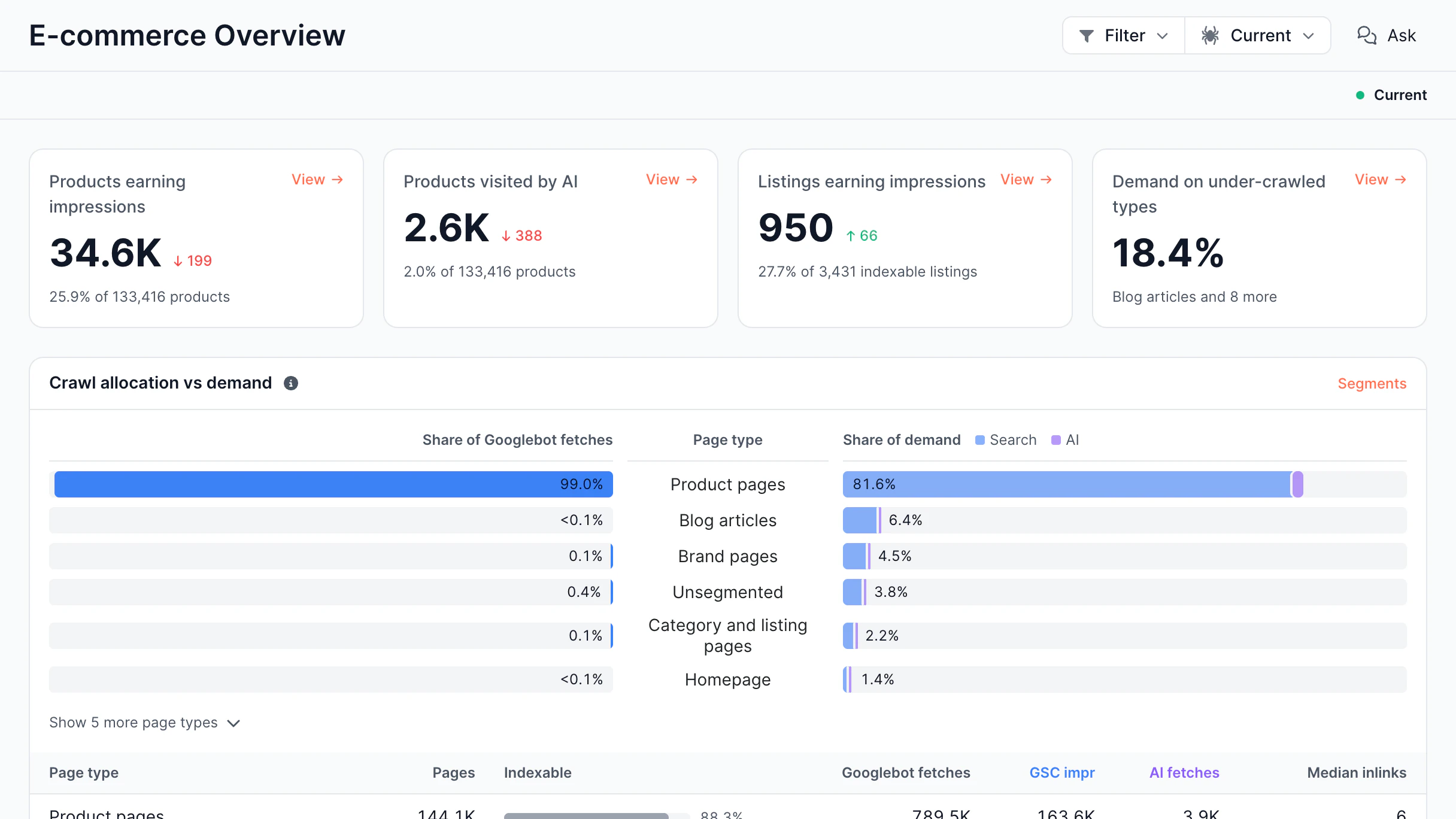
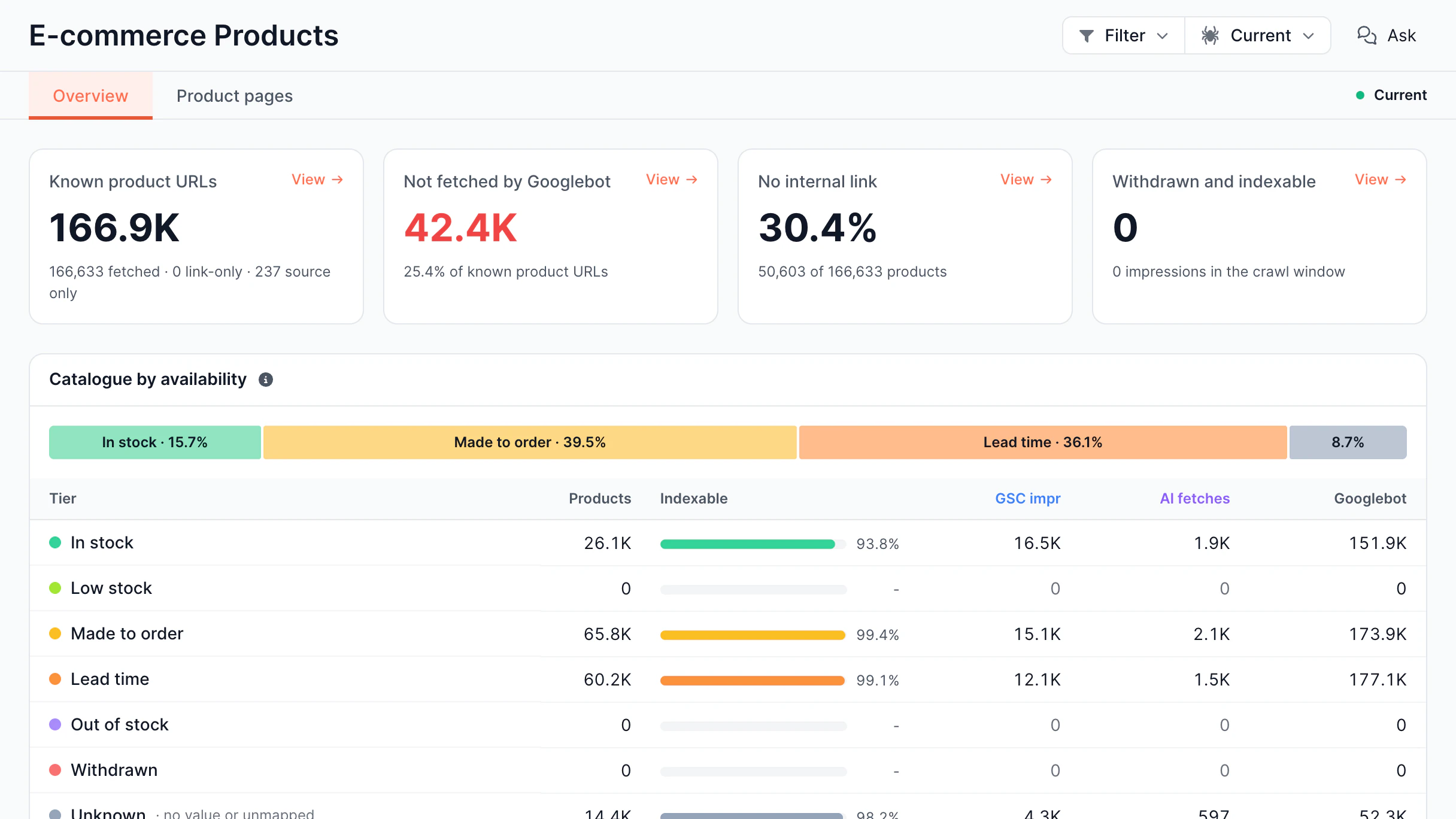
Oncrawl combines enterprise crawling, log analysis, and SEO intelligence to help teams understand and prioritize technical issues. EdgeComet takes it a step further. It works in the live bot path. This allows teams to detect, render, cache, and fix issues directly in the platform without waiting for developers.
Oncrawl information last verified on October 28, 2026 against Oncrawl's public demo page, terms of service, and help center articles on crawl tokens, live log monitoring, alerts, and the MCP Server. "Not listed in public documentation" means we did not find the feature in those sources on that date. Plans and features change. Check Oncrawl for current details. If something here is out of date, let us know and we will correct it.
Oncrawl is a trademark of its respective owner. EdgeComet is not affiliated with or endorsed by Oncrawl.
While Oncrawl analyzes your technical SEO data, EdgeComet provides the production controls teams need to act on those insights. It helps maintain steady bot access and verify the outcome in real time.
Server logs can show that a bot requested a URL. EdgeComet also keeps the rendered HTML and page-level SEO signals linked to that request. This allows teams to check titles, canonicals, structured data, links, content, and indexability instead of relying on a separate crawler snapshot.
Use Edge SEO to update metadata, canonicals, robots directives, structured data, redirects, status codes, and other SEO elements. There's no need to wait for a developer's involvement.
EdgeComet Cache can keep serving available content even when the origin, renderer, API, CDN, or third-party service has a temporary issue. Teams will get an alert while bot access stays protected.
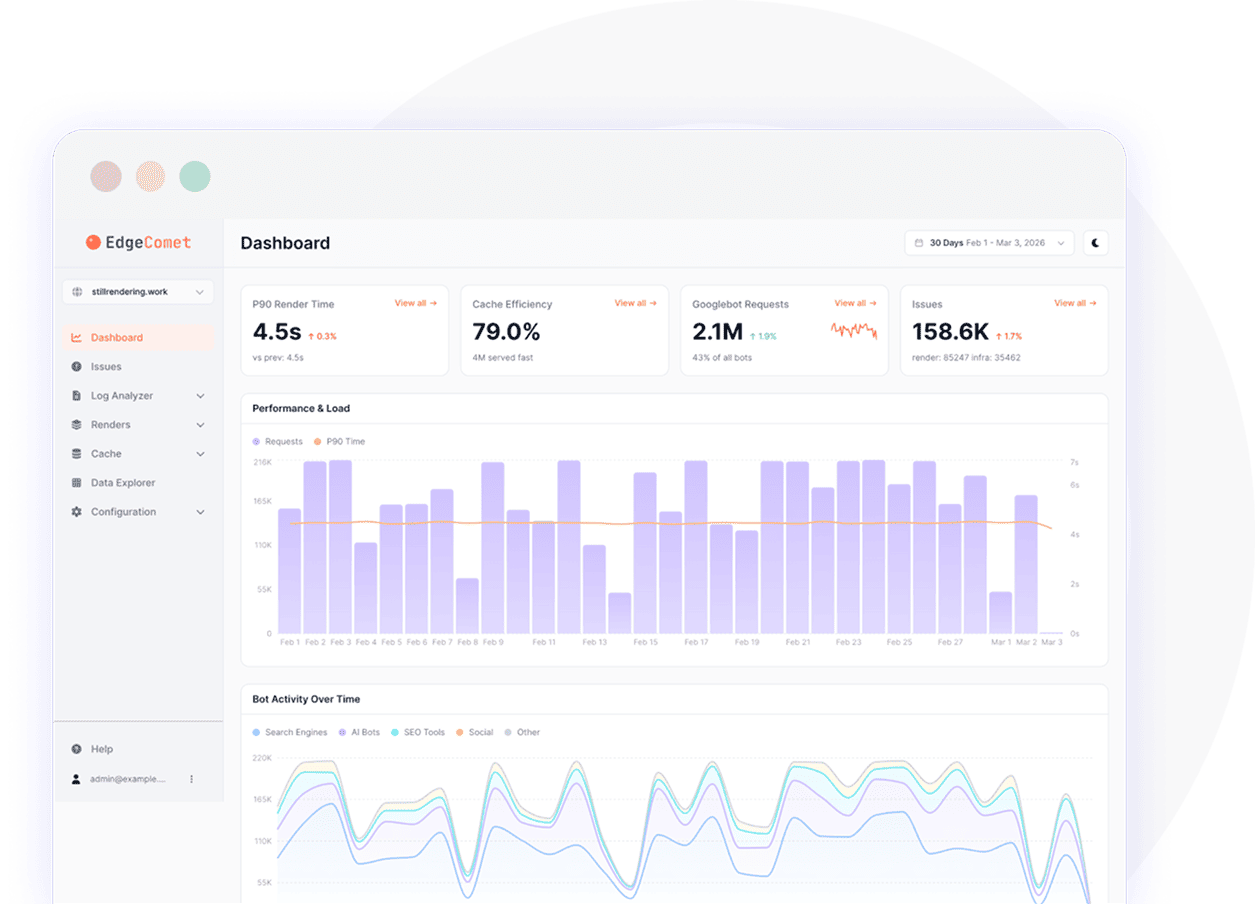
EdgeComet combines real bot analytics, JavaScript rendering, cache, SEO alerts, technical SEO controls, and MCP-based agentic SEO. Teams can identify, fix, and verify issues without switching between a crawler, rendering service, monitoring tool, and developer queue.
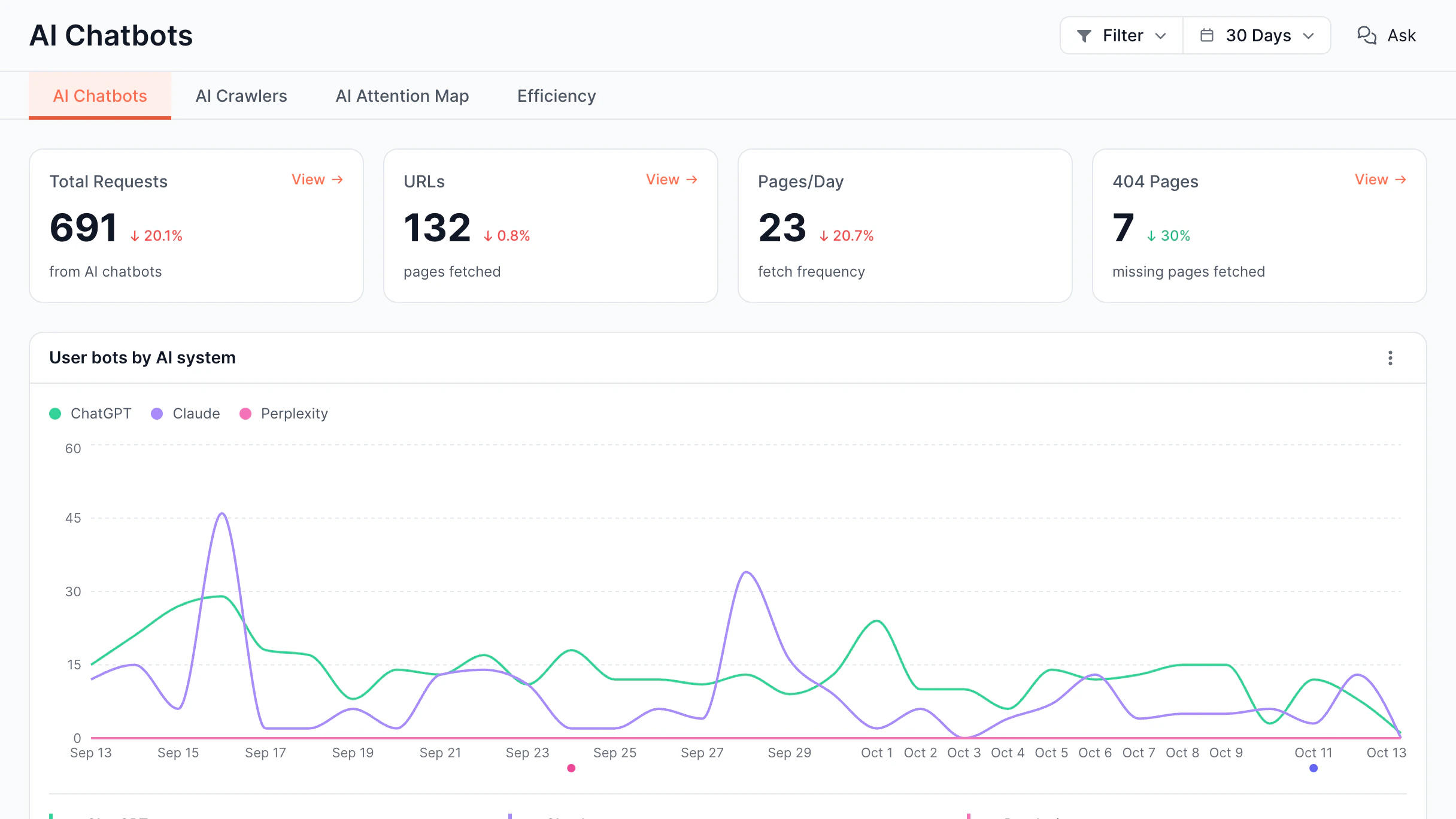
Pages ChatGPT, Claude, and Perplexity fetch while answering users, by day.
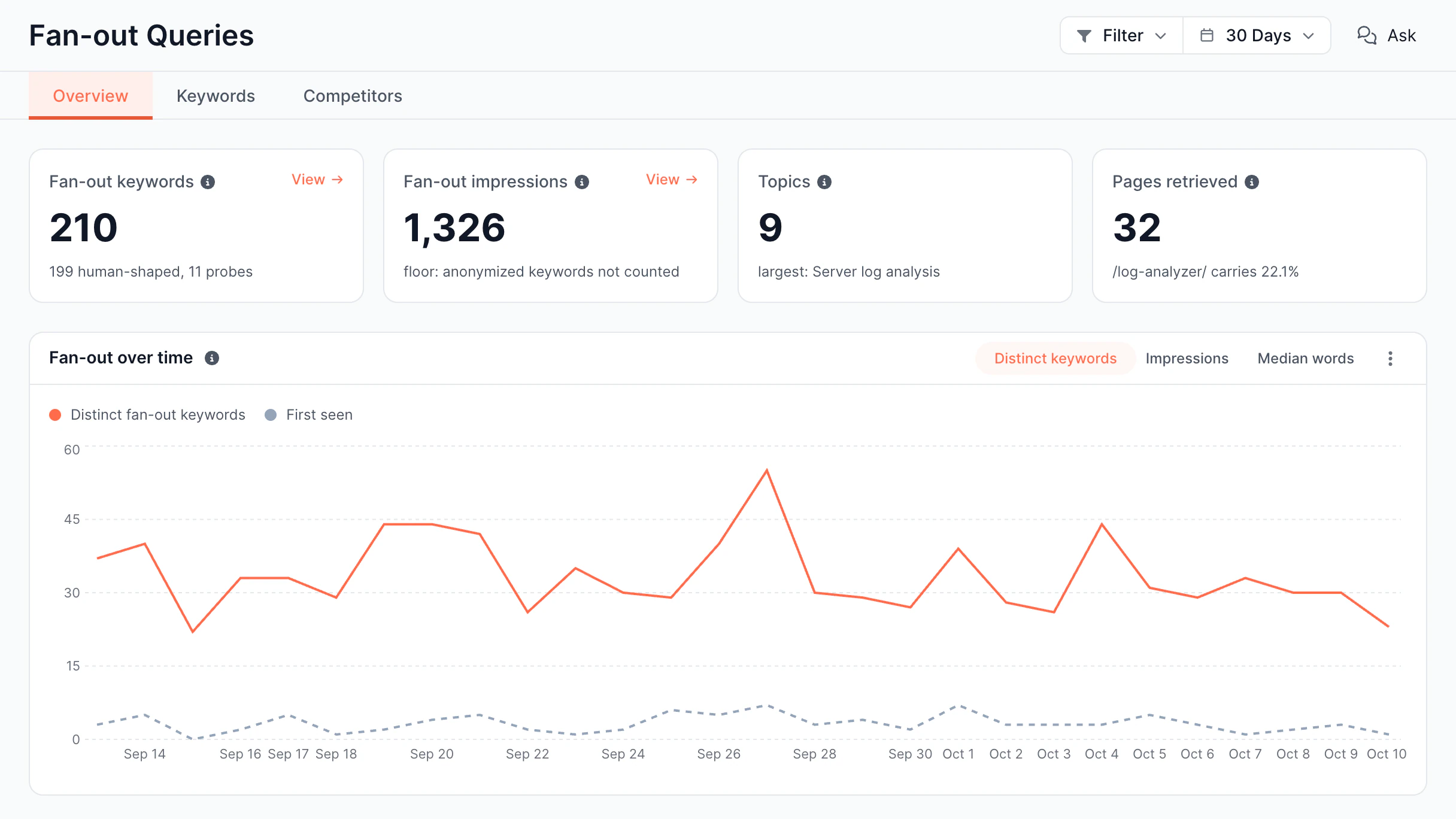
Fan-out keywords from Search Console, grouped into topics, with impressions.
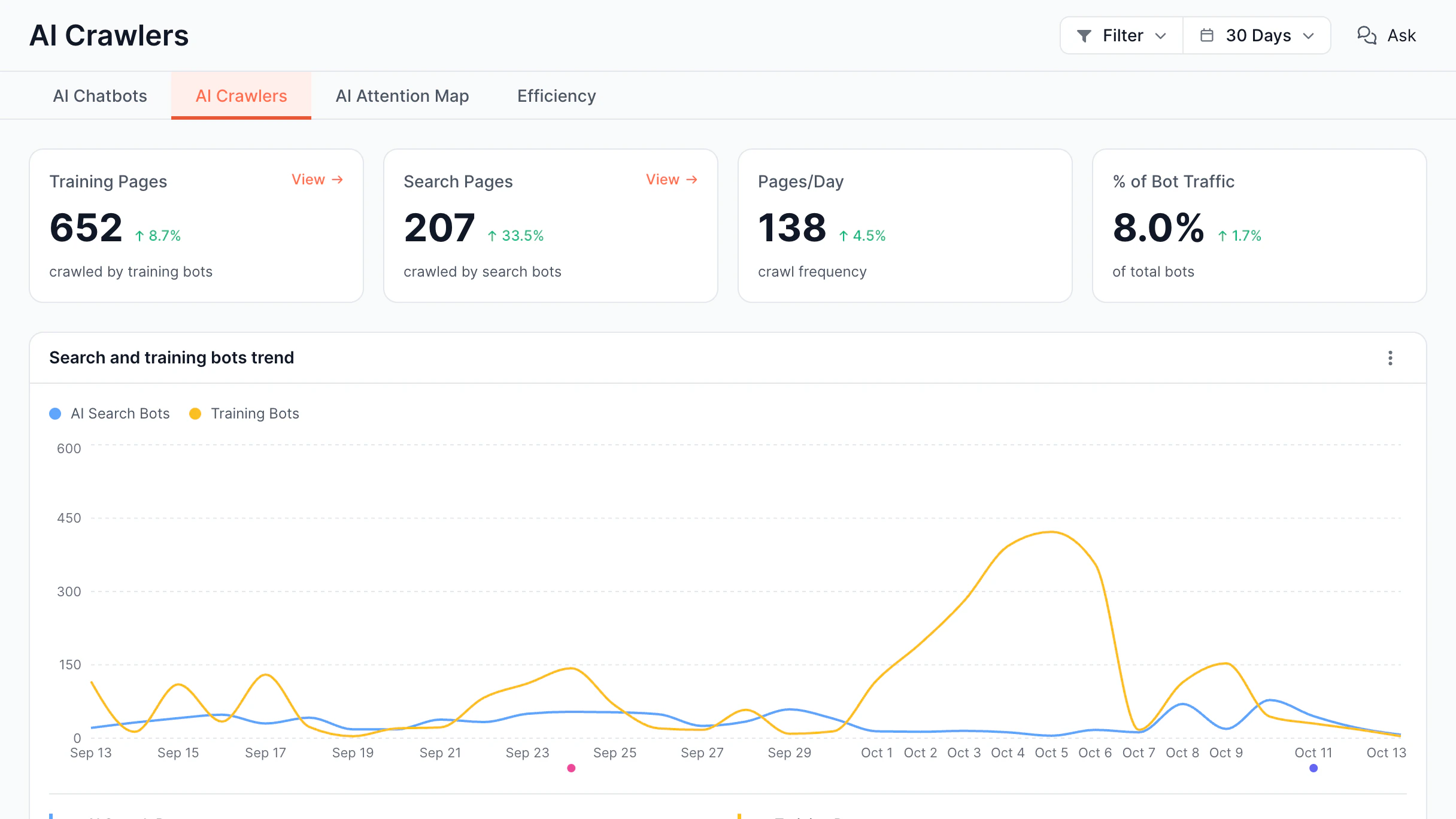
AI training and search bots: pages crawled, pages per day, share of traffic.
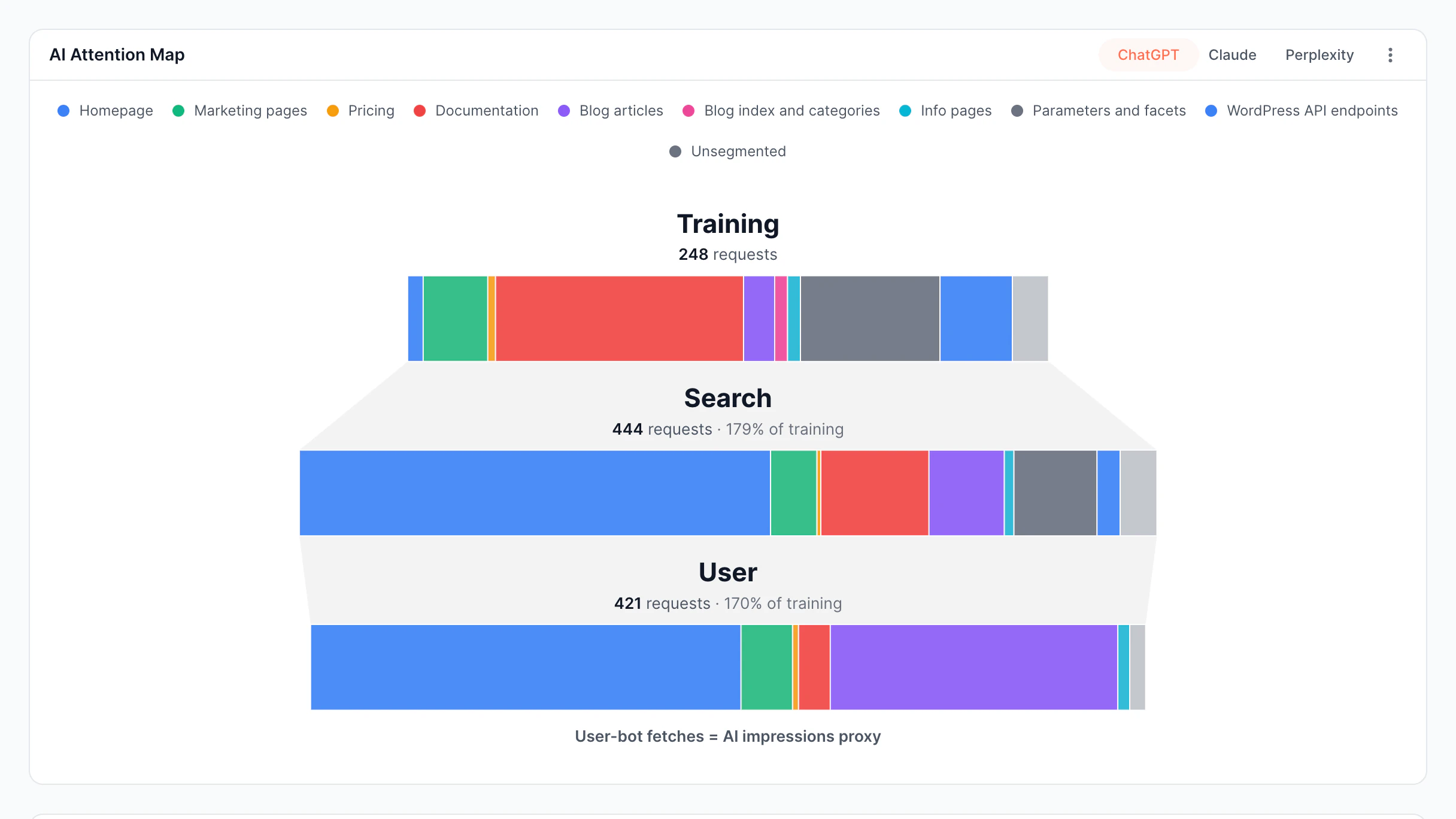
Training, search, and user bot requests by page type, for each AI provider.
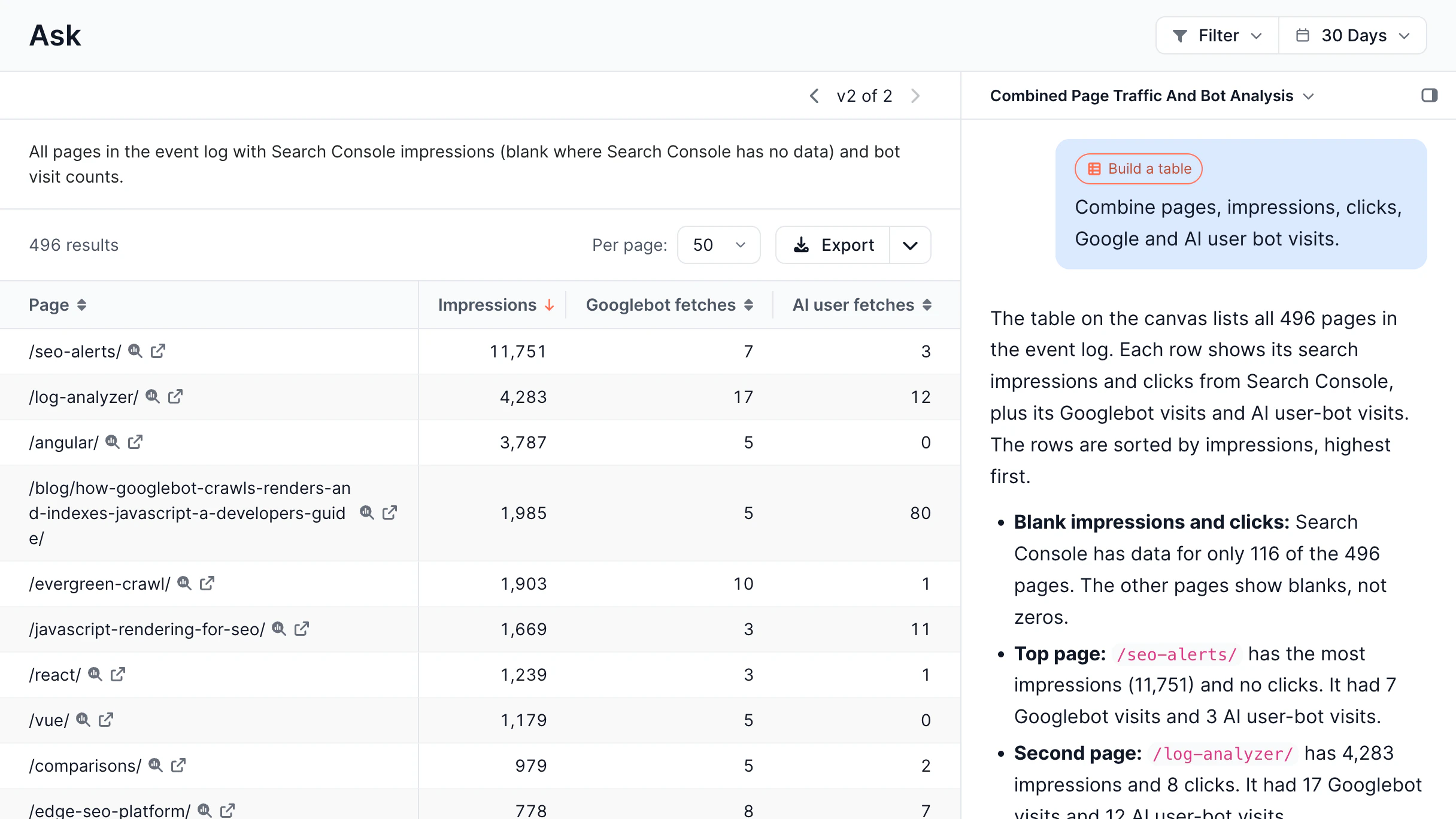
Chat that answers with sortable tables you can export to CSV or Google Sheets.
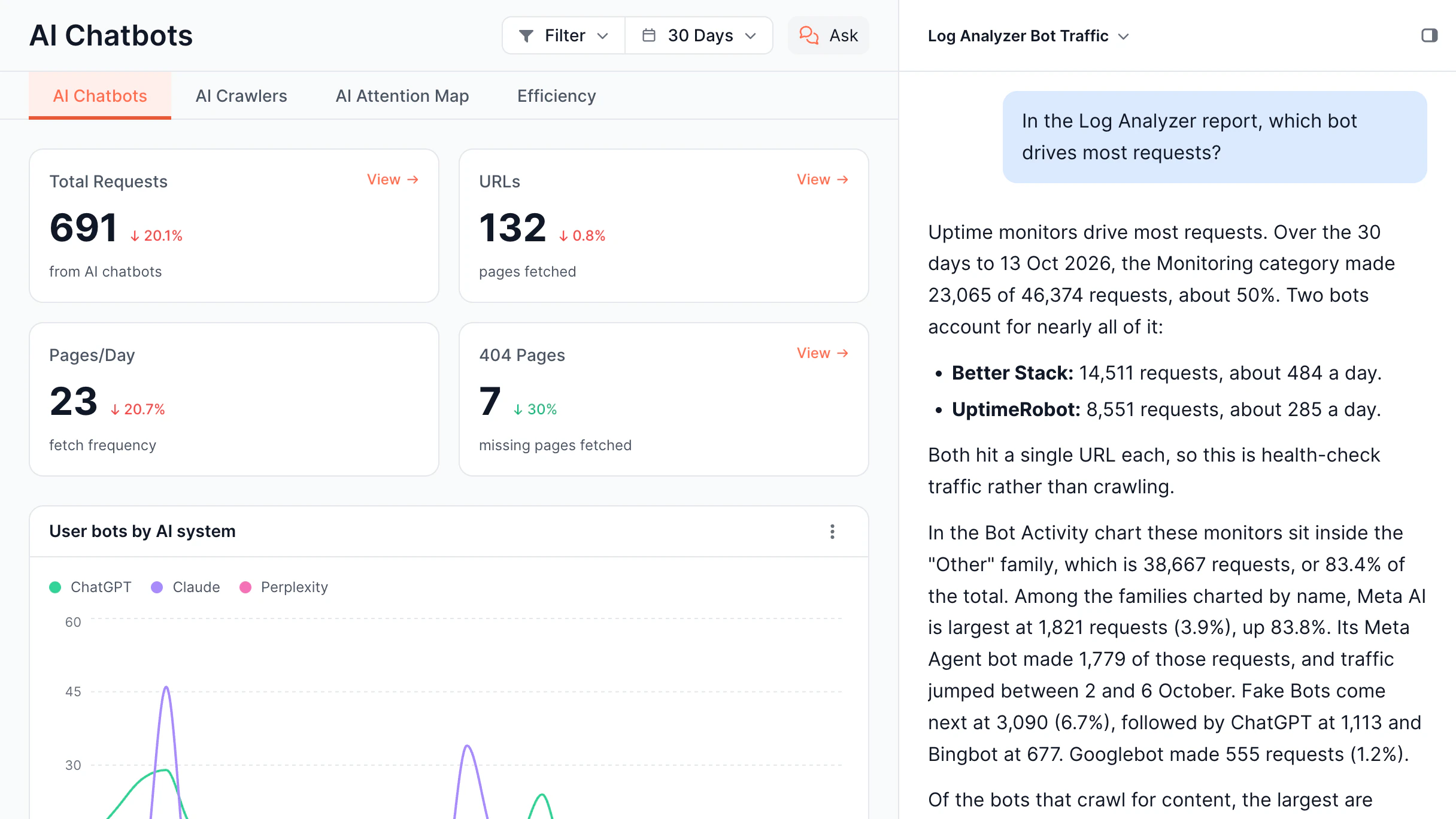
Chat panel next to any report that answers questions about its data.
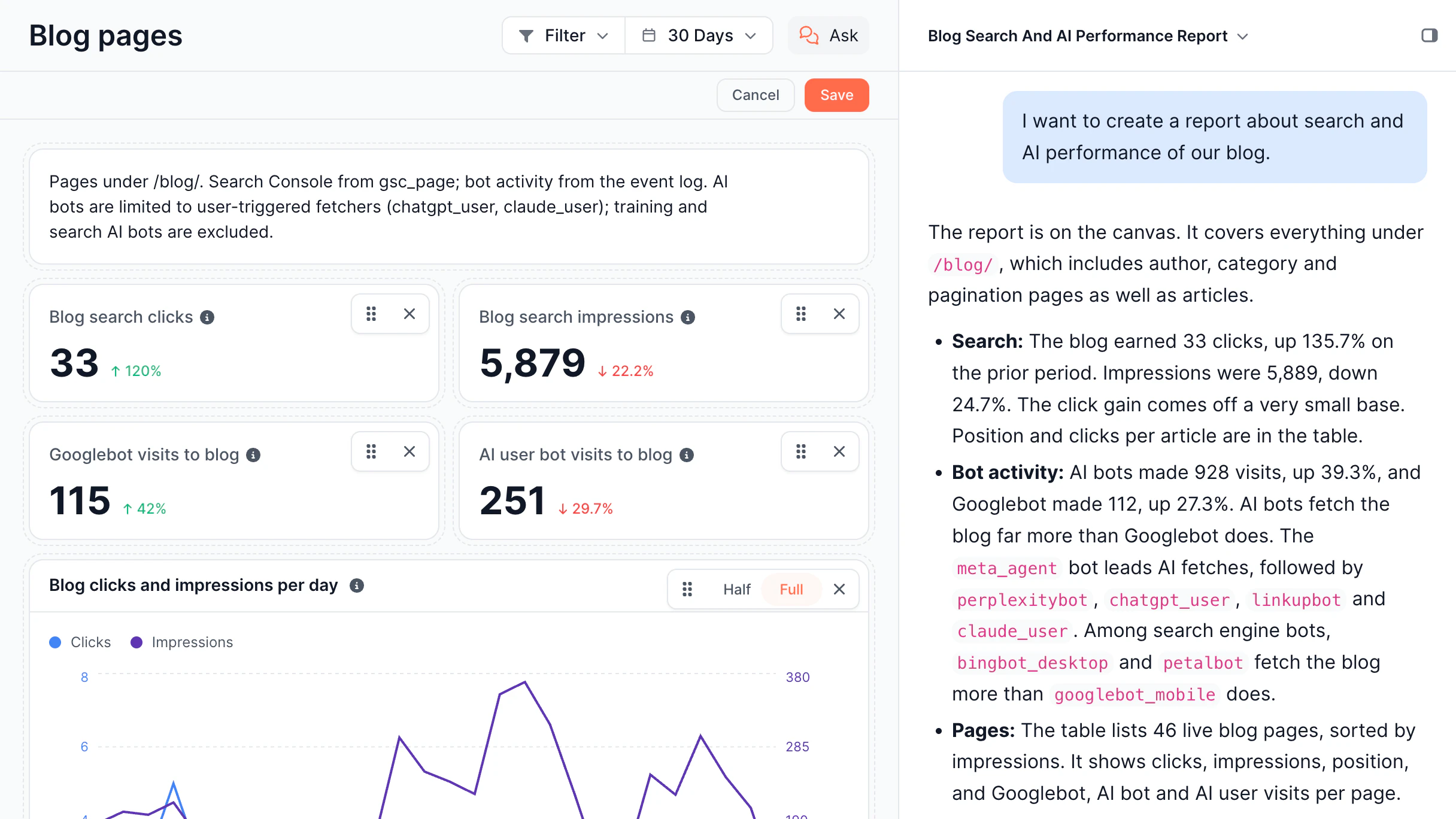
Custom reports built from a chat request, with widgets you can edit and save.
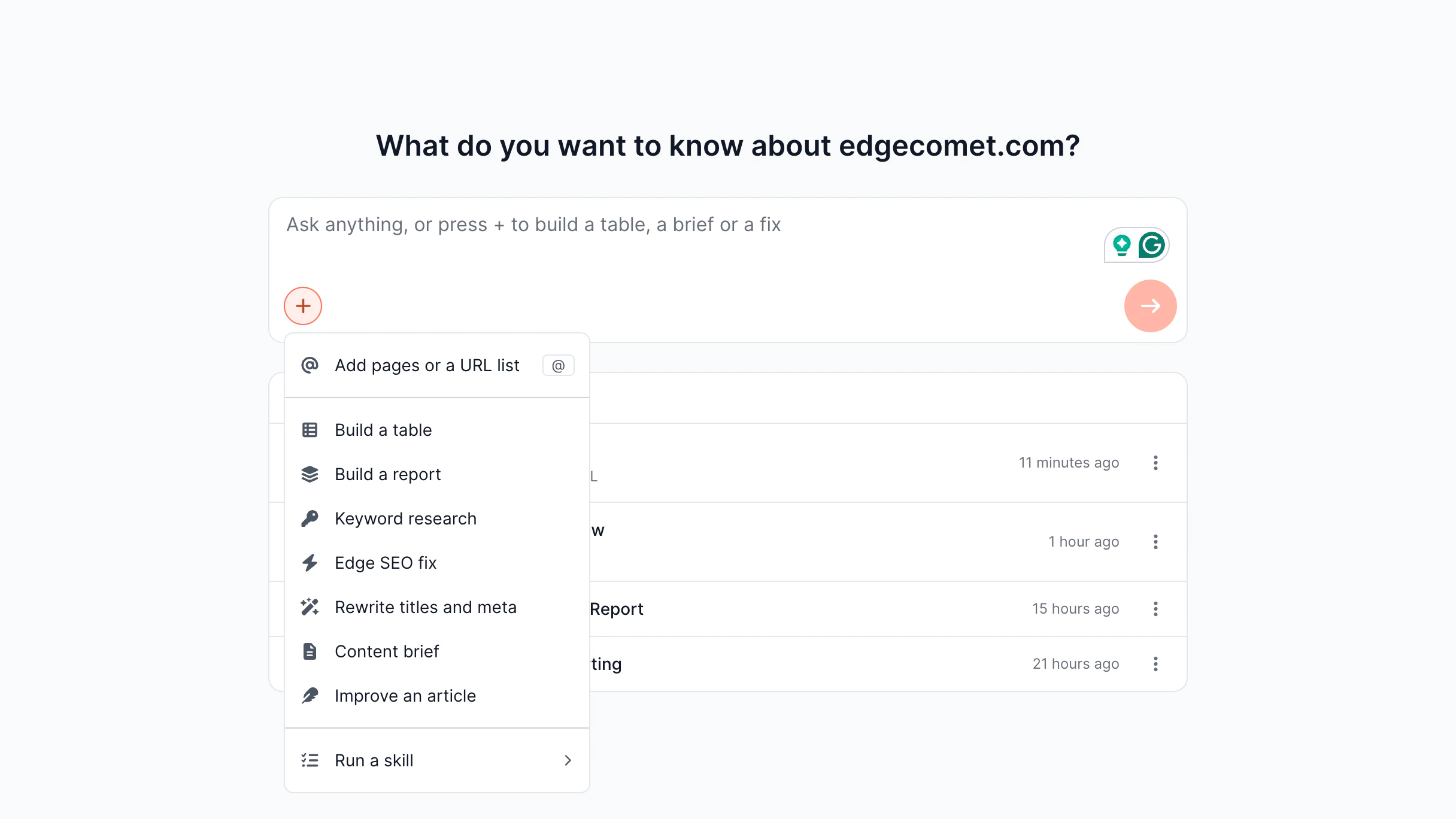
Skills menu: keyword research, content briefs, article and meta rewrites.
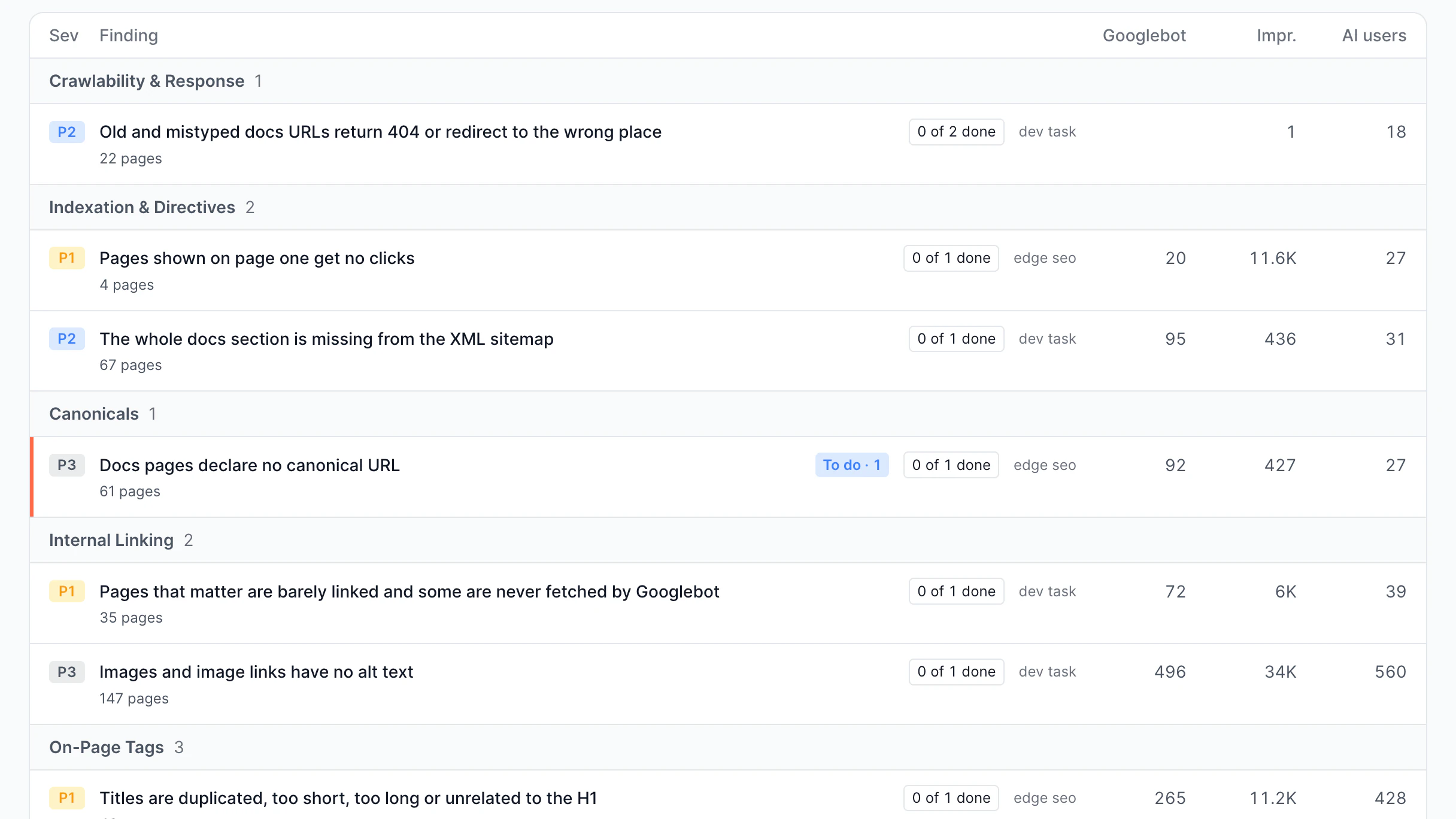
Findings by type and severity, with traffic per issue.
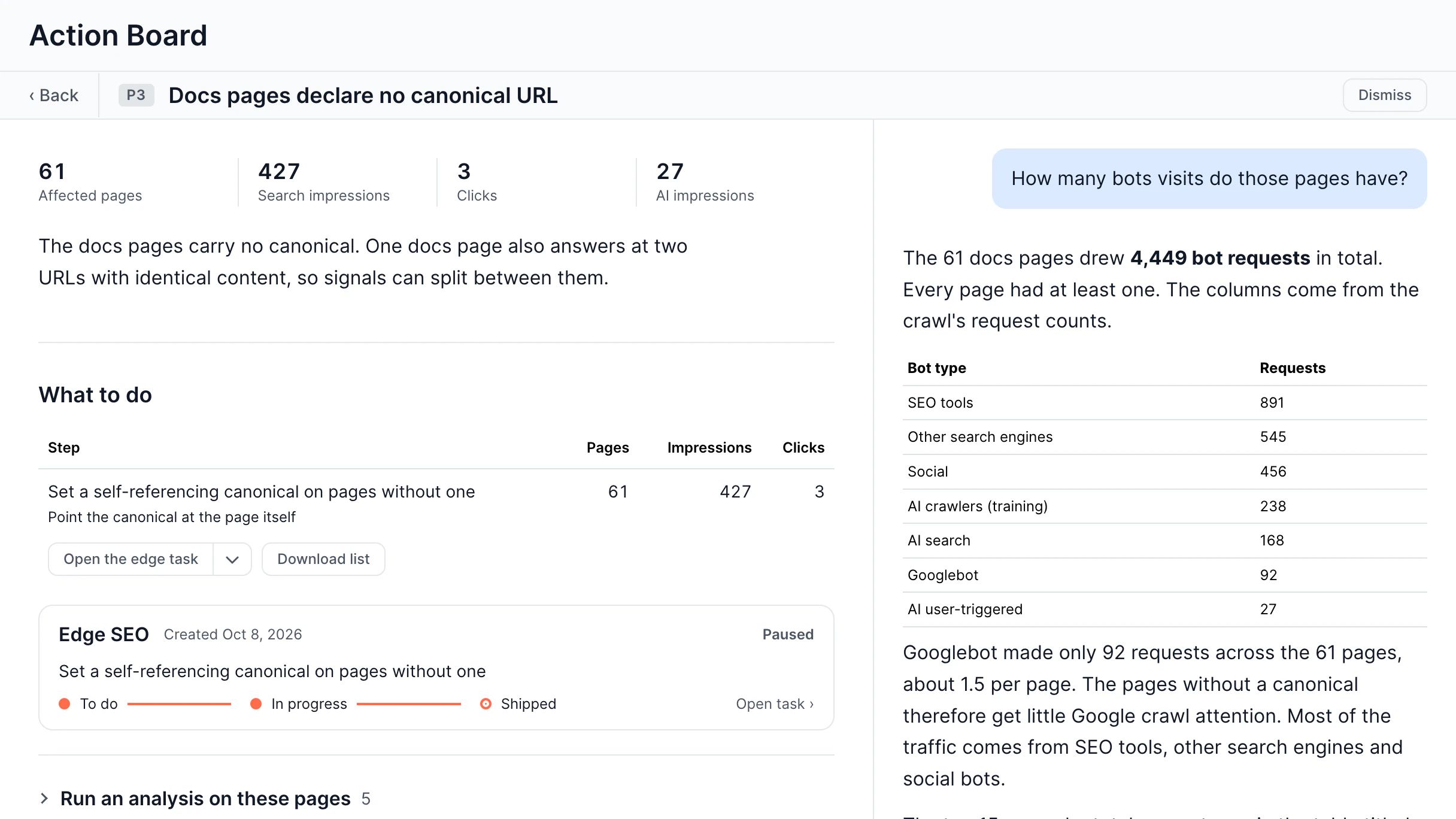
One finding: affected pages, fix steps, task status.
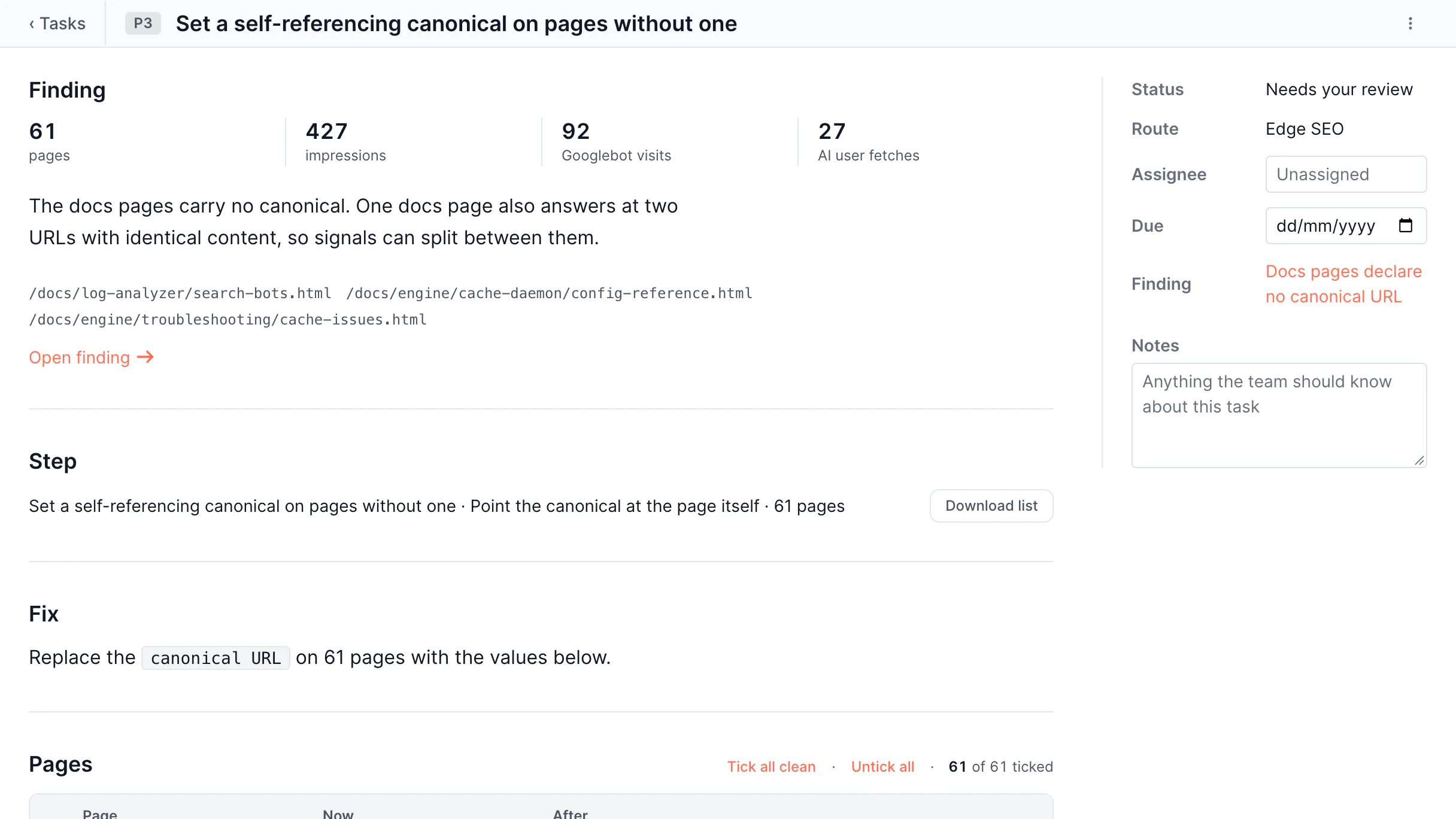
Task page with status, assignee, due date, and notes.
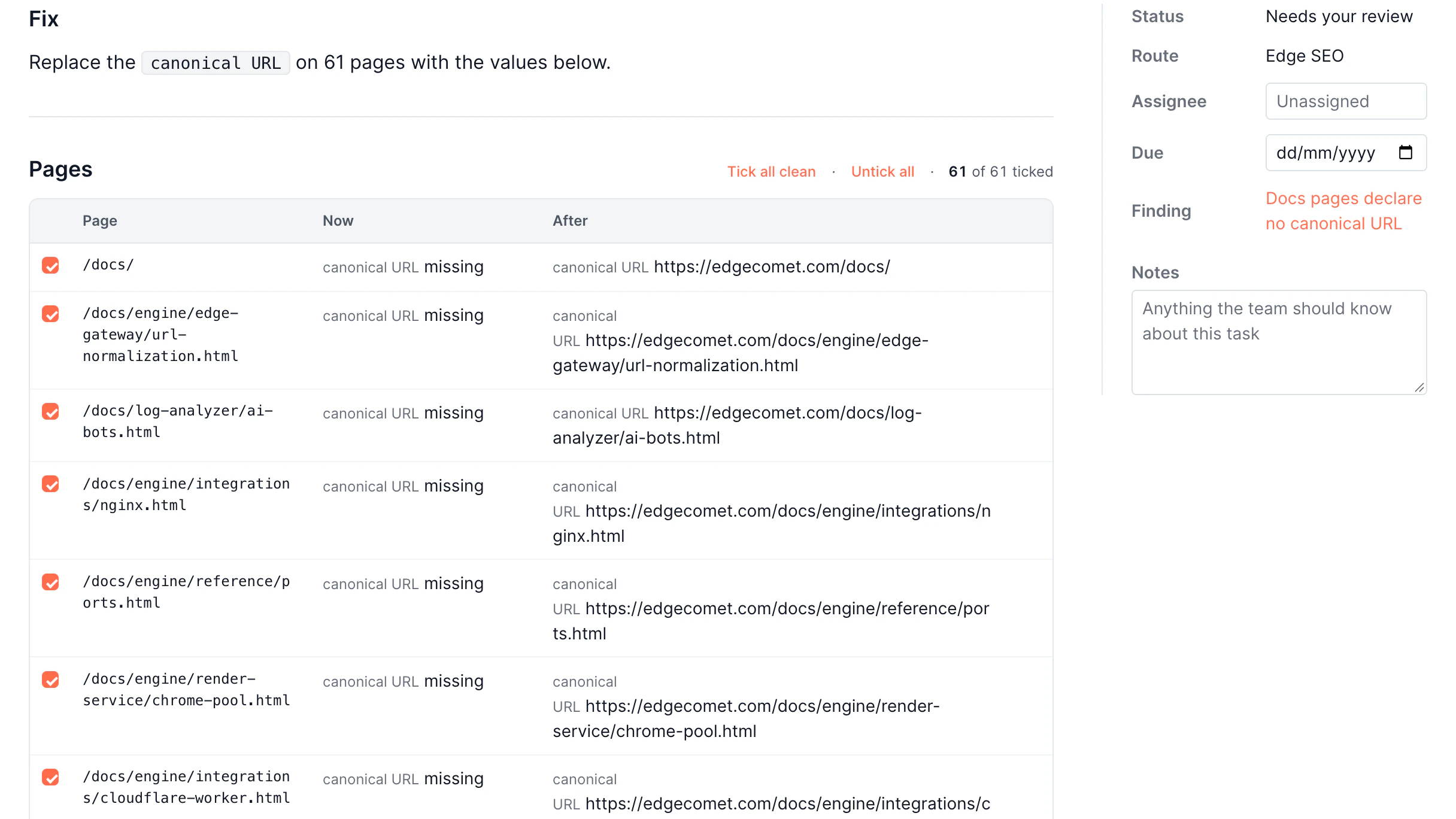
Before and after values per page, with edge deploy.
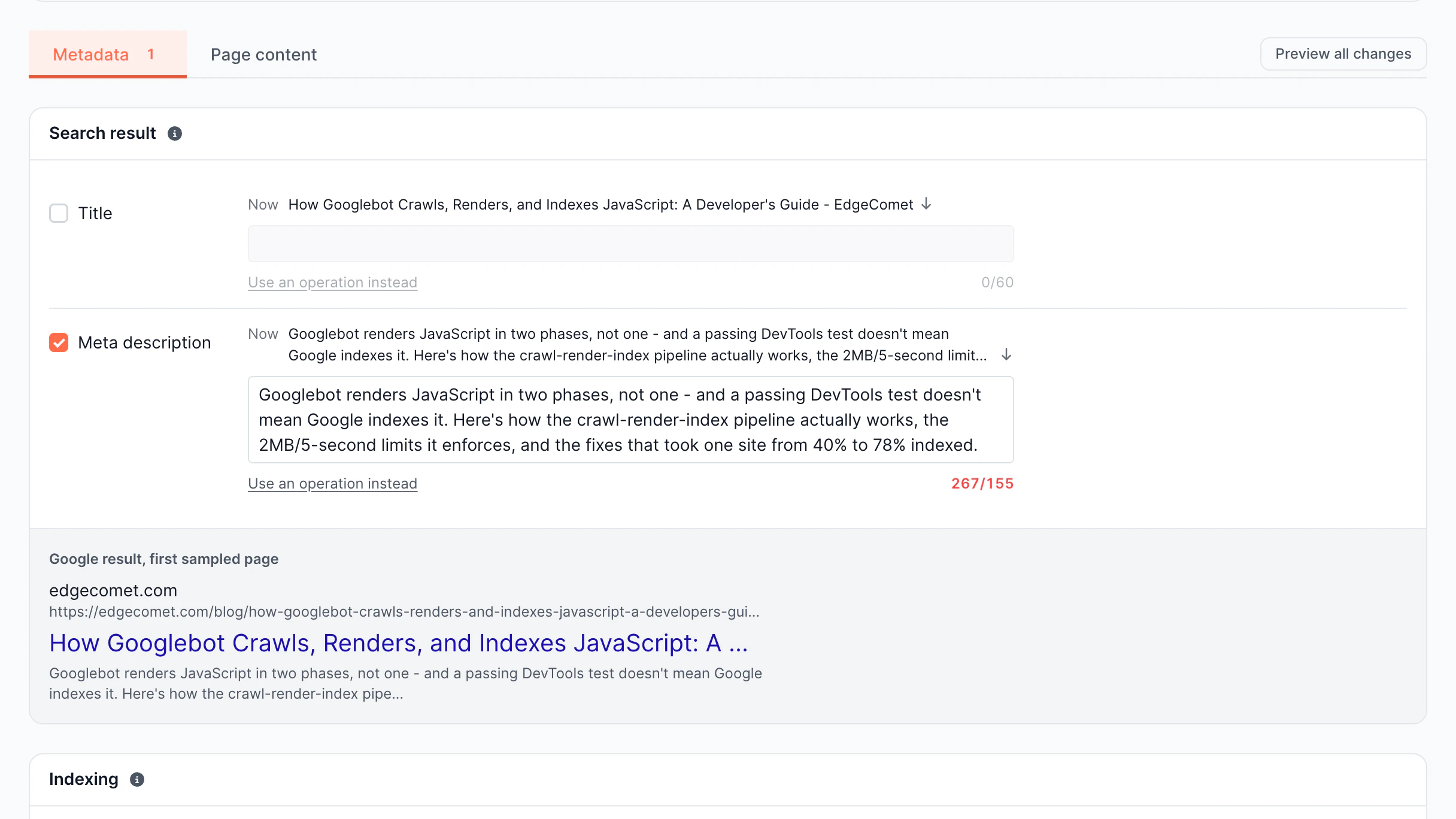
Title and meta overrides with a Google result preview.
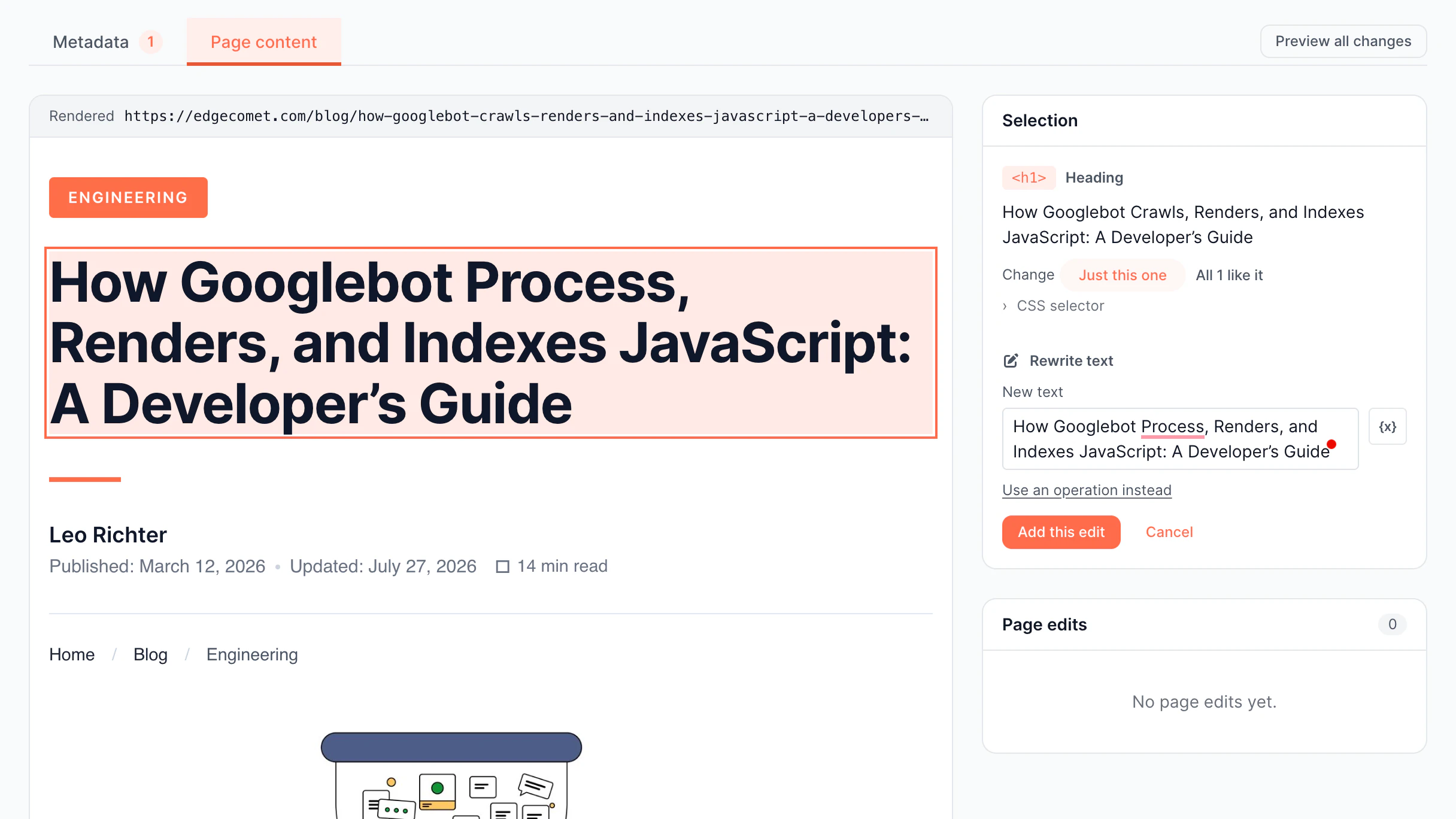
Select an element on the rendered page and edit its text.
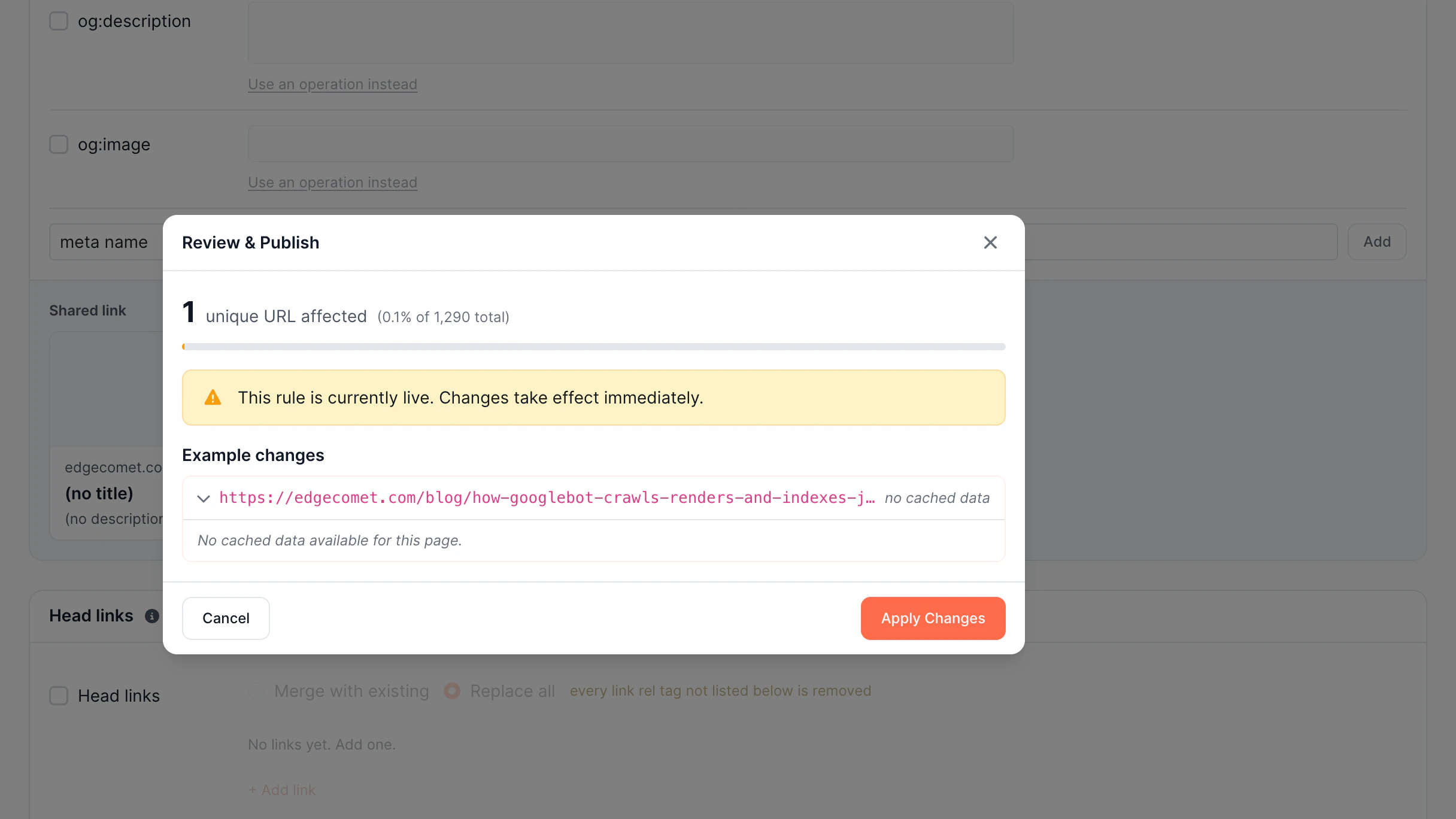
Review dialog with the number of URLs a rule changes.
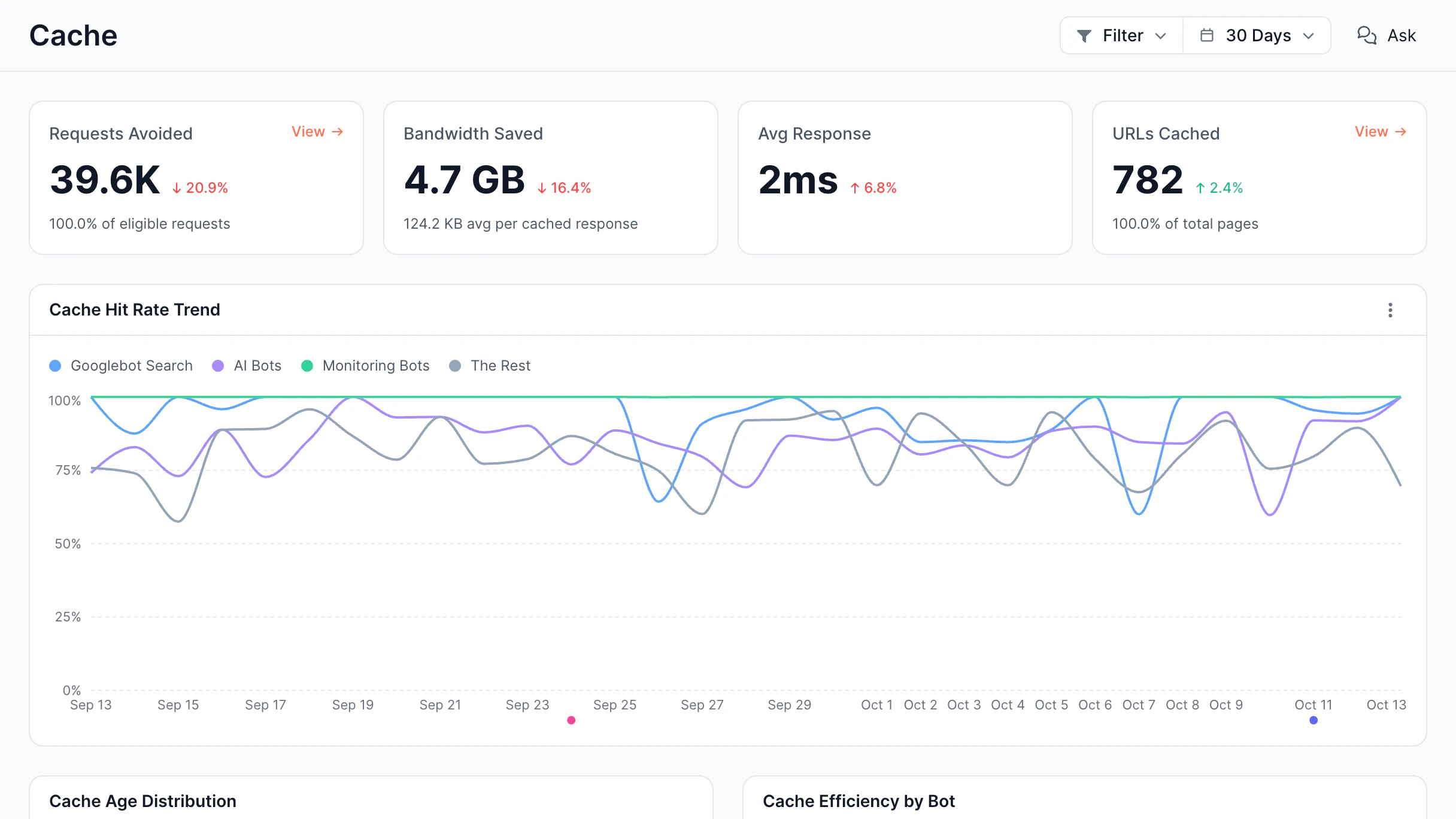
Hit rate, bandwidth saved, and cache age.
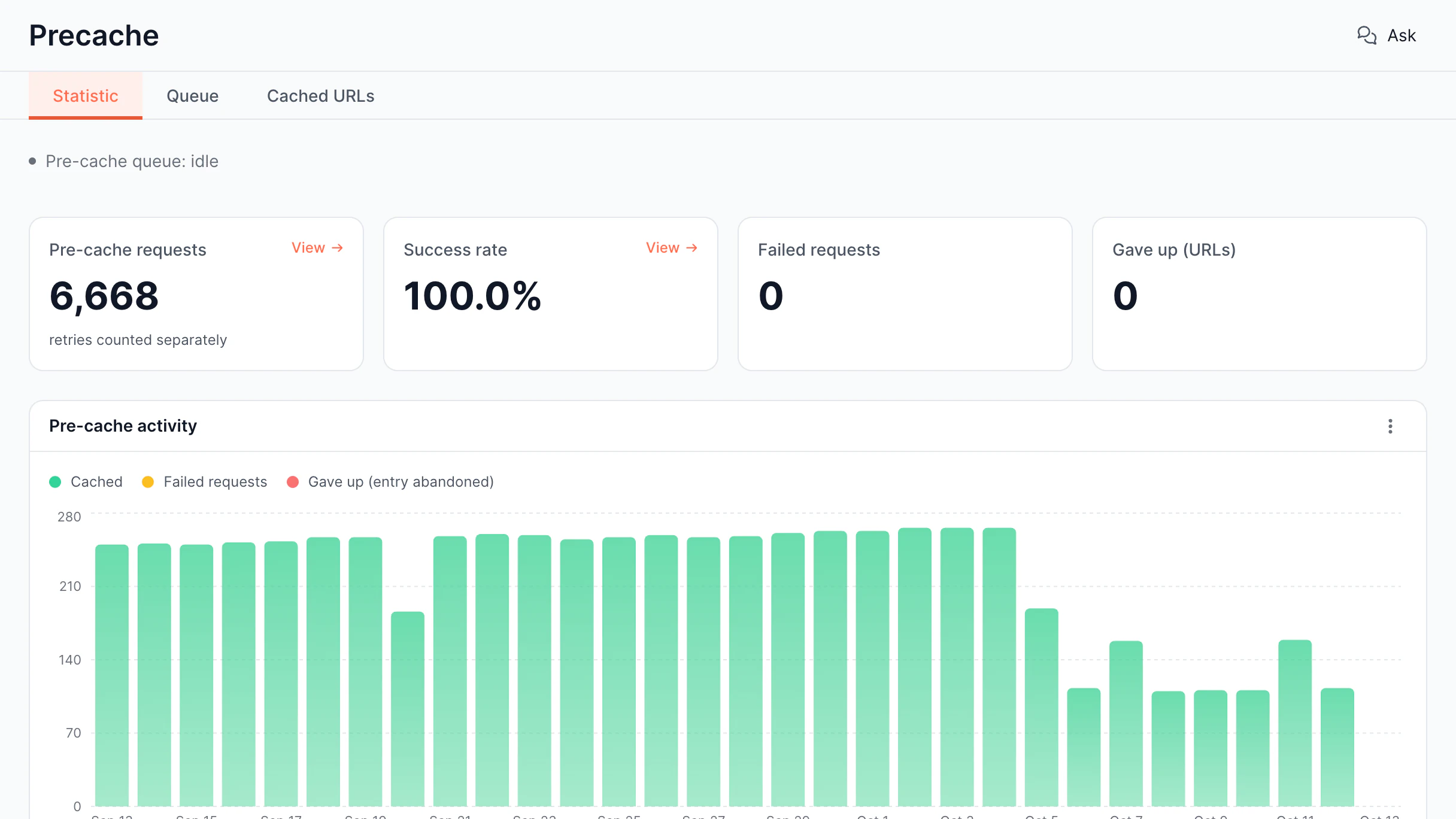
Pre-cache queue, success rate, and failures.
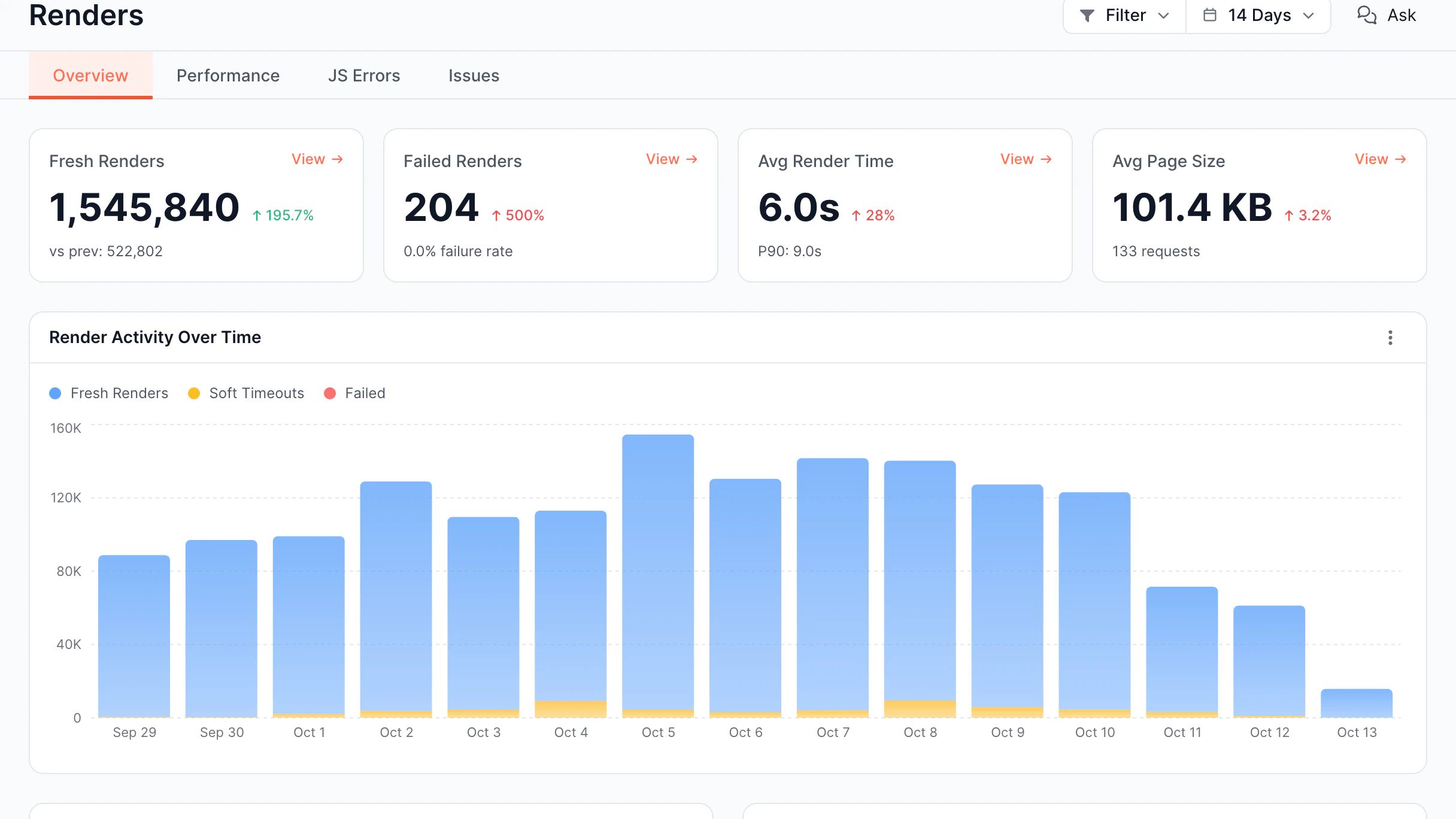
Renders per day, failures, and render time.
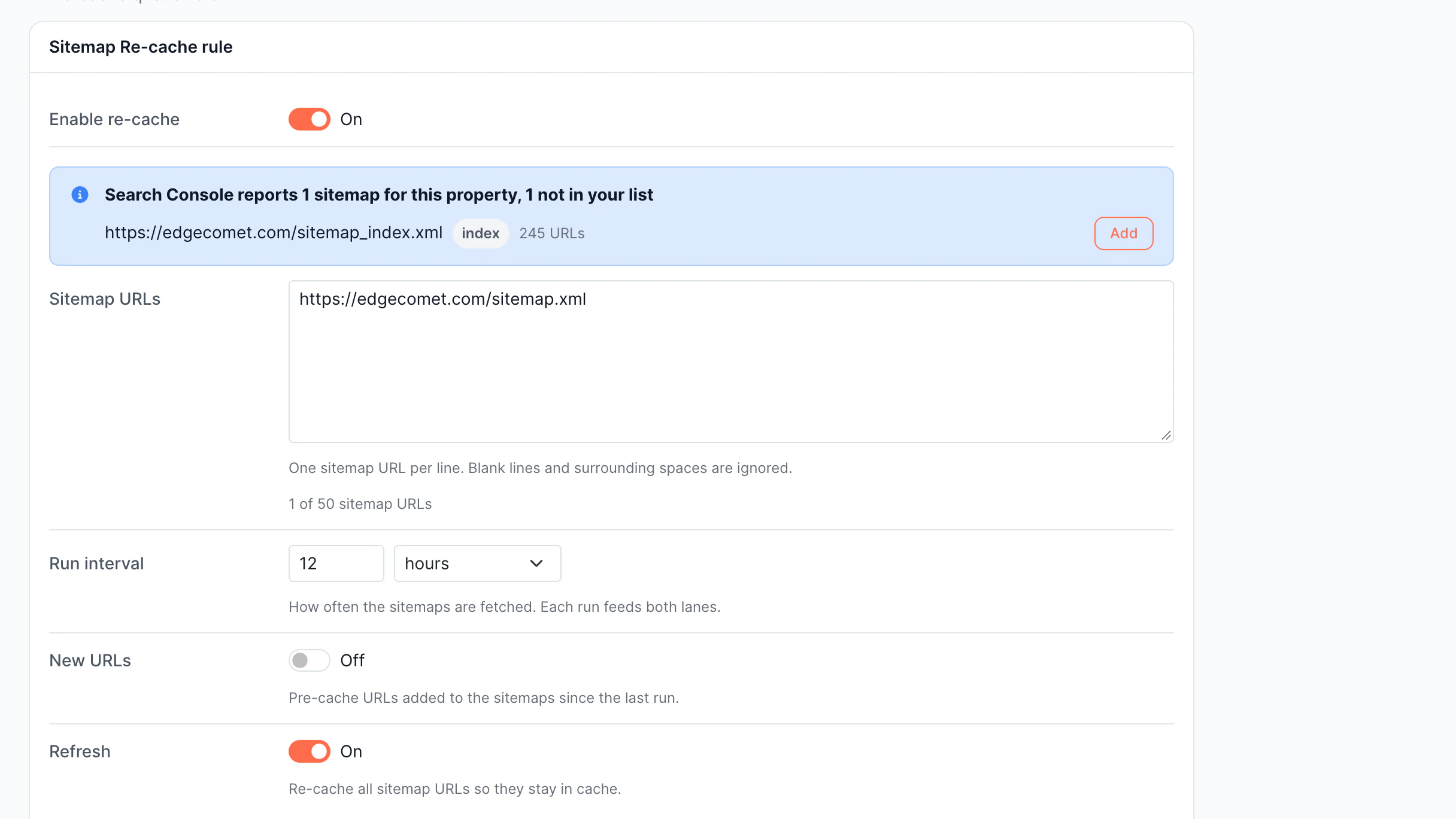
Re-cache rule for sitemap URLs on a schedule.
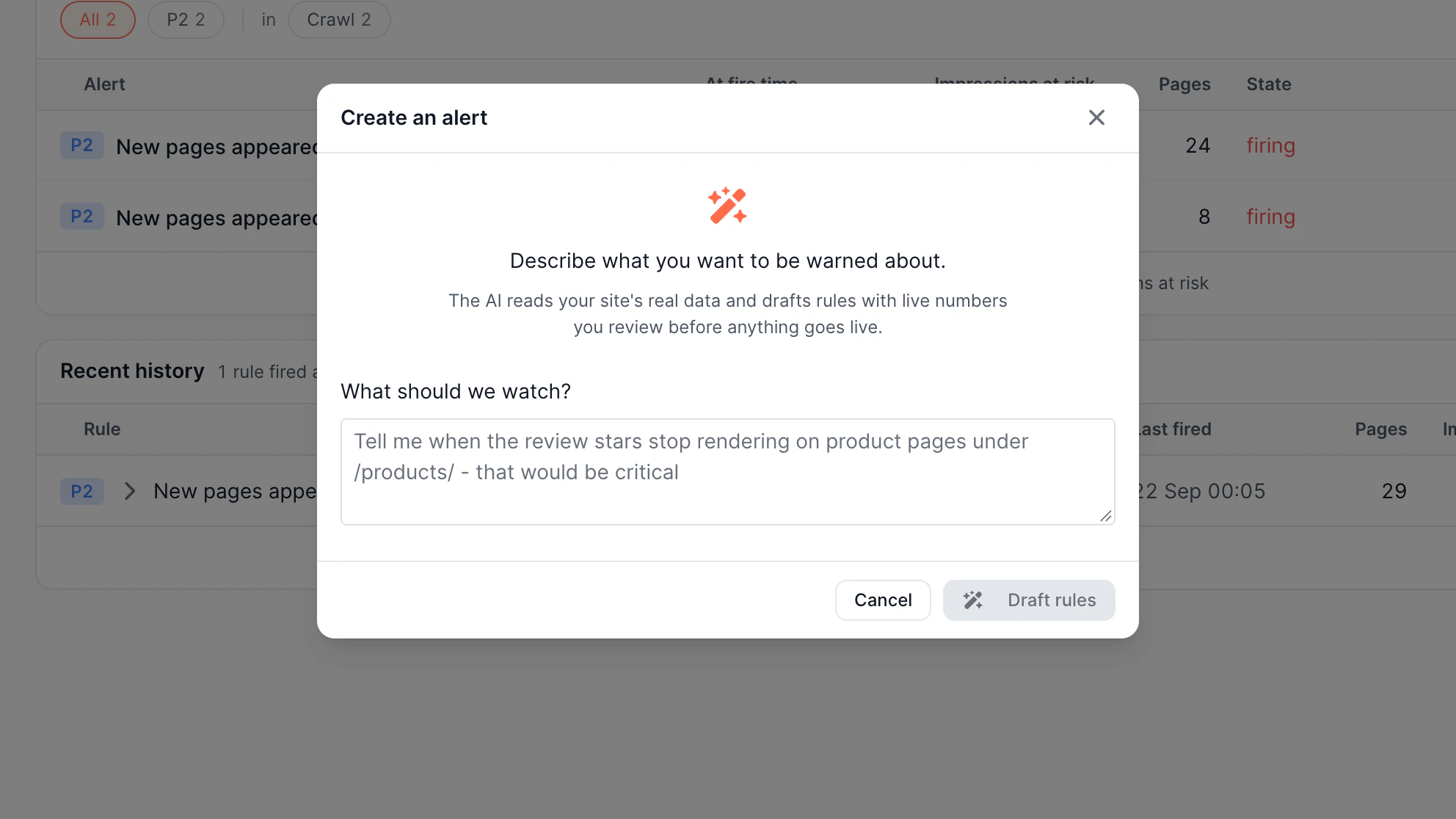
Create an alert by describing it in plain text.
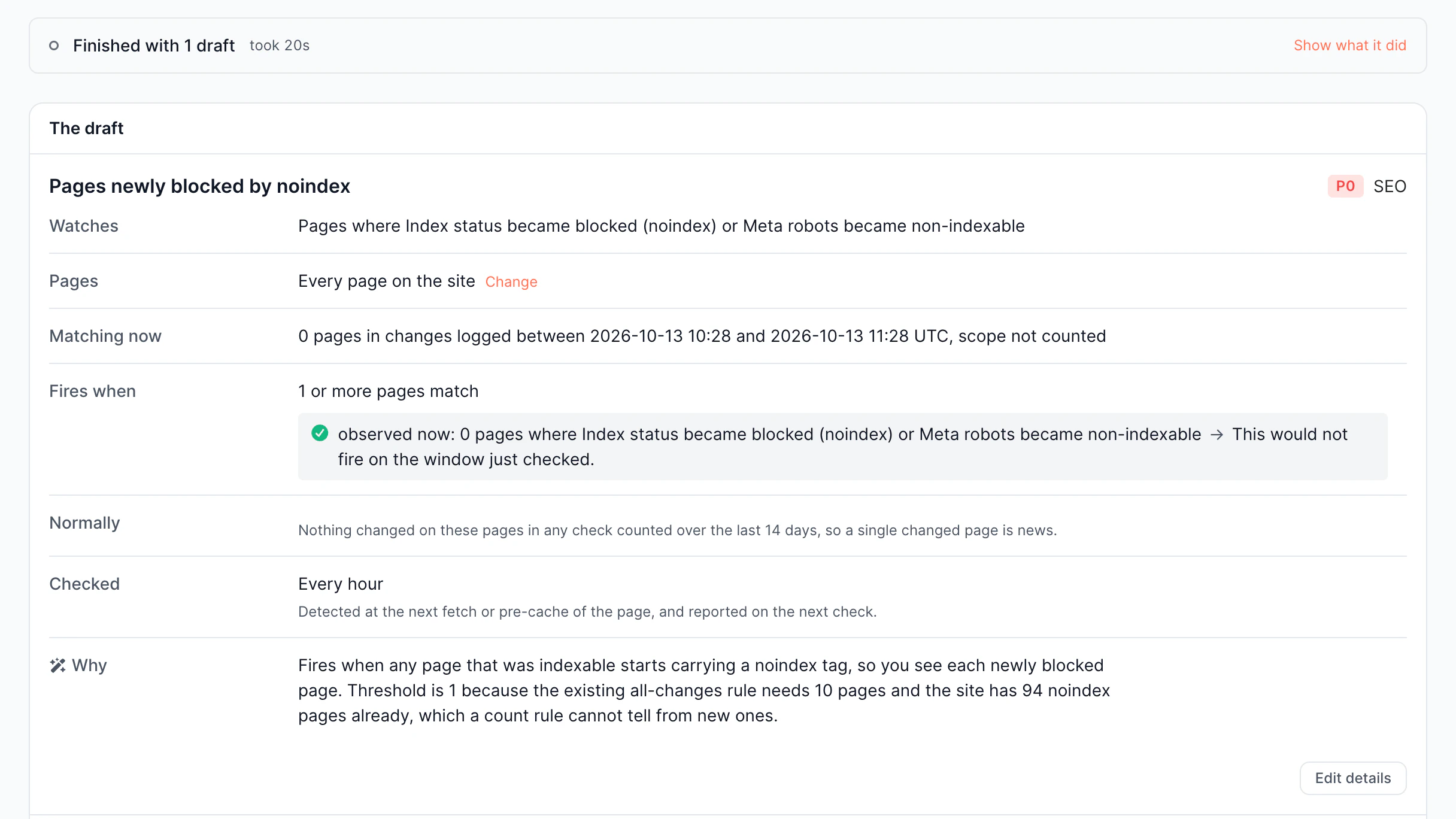
AI-drafted rule: what it watches and when it fires.
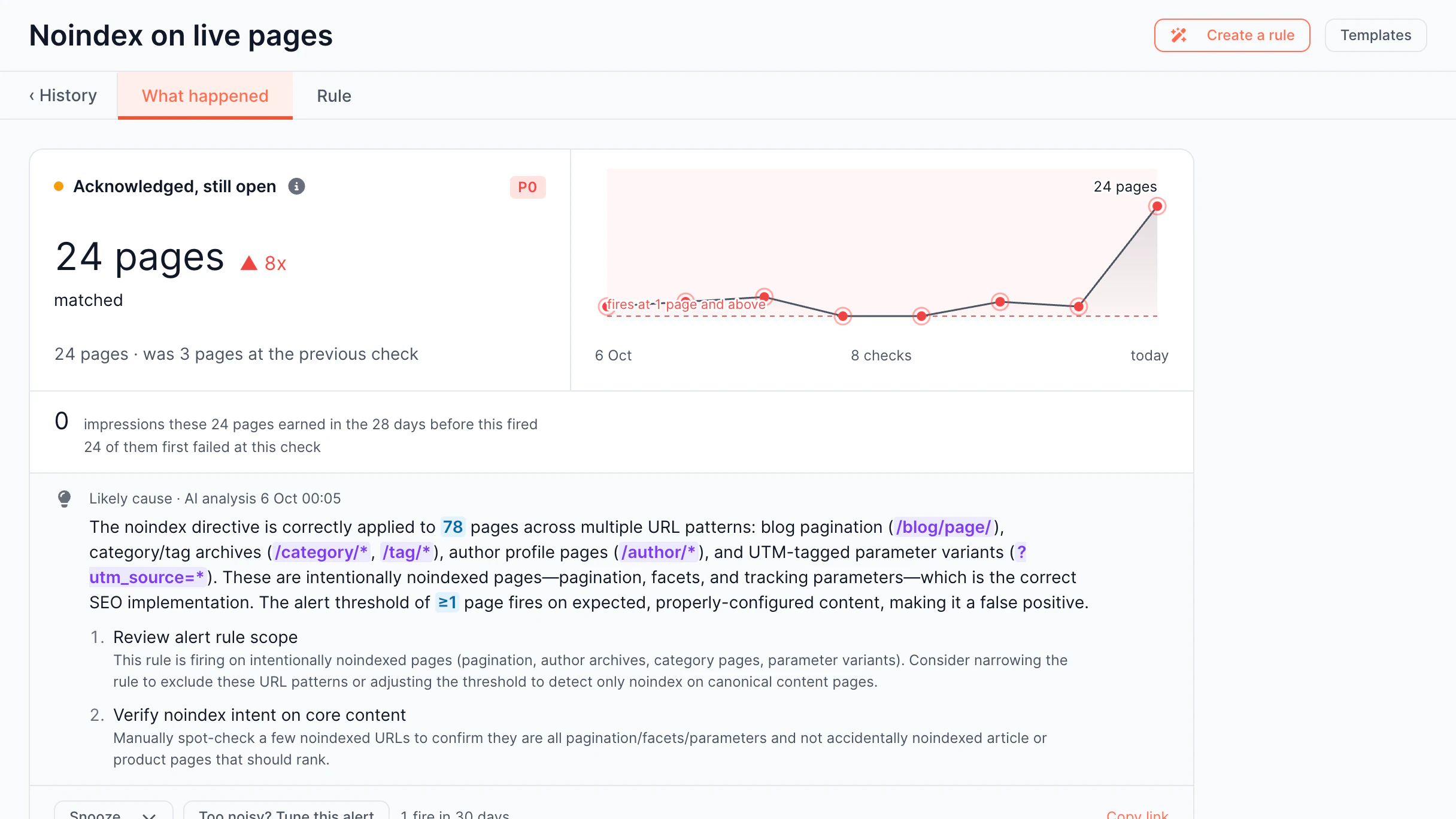
Incident page with matched pages and AI cause analysis.
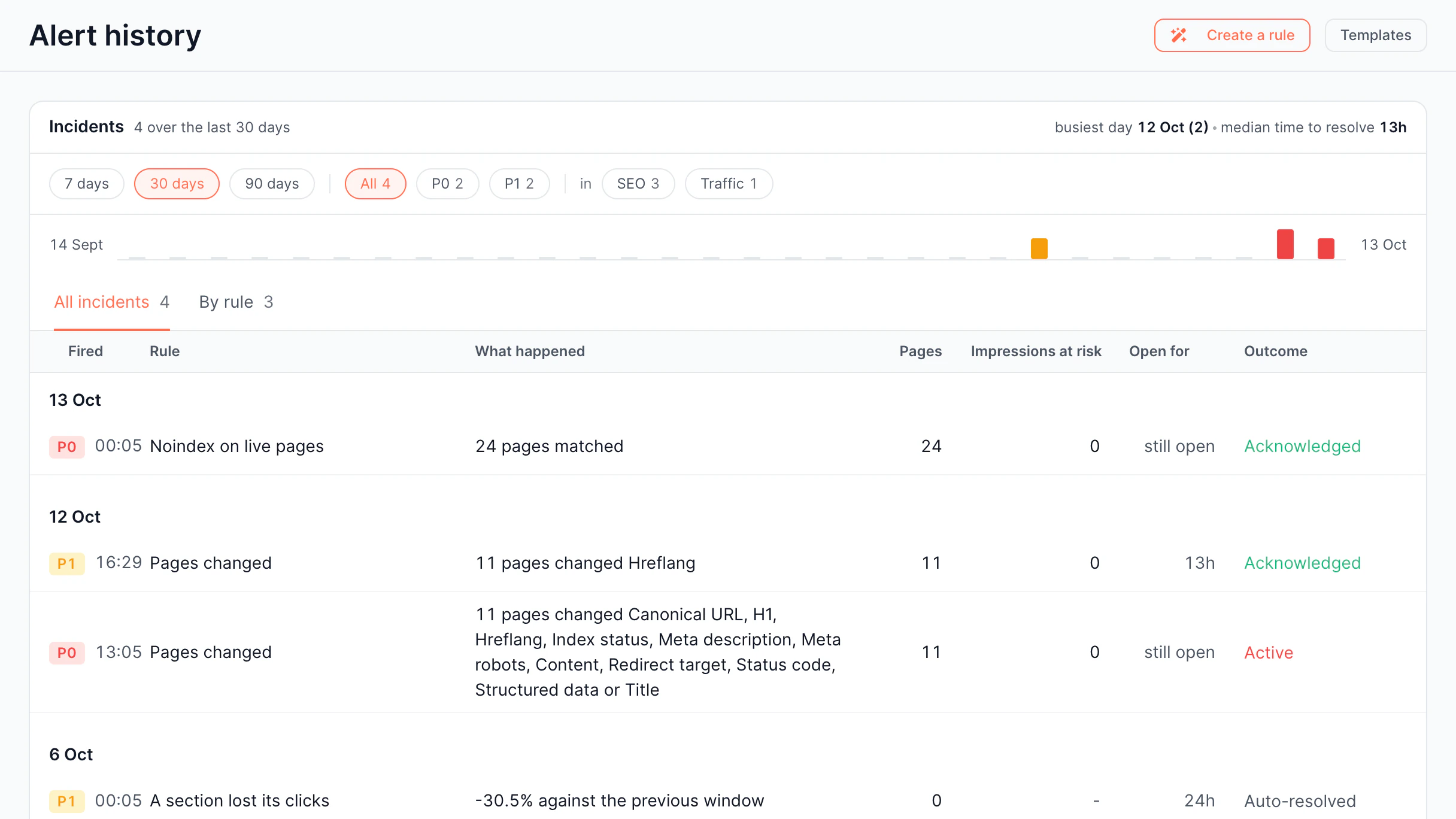
Incident log with pages, impressions at risk, and outcome.
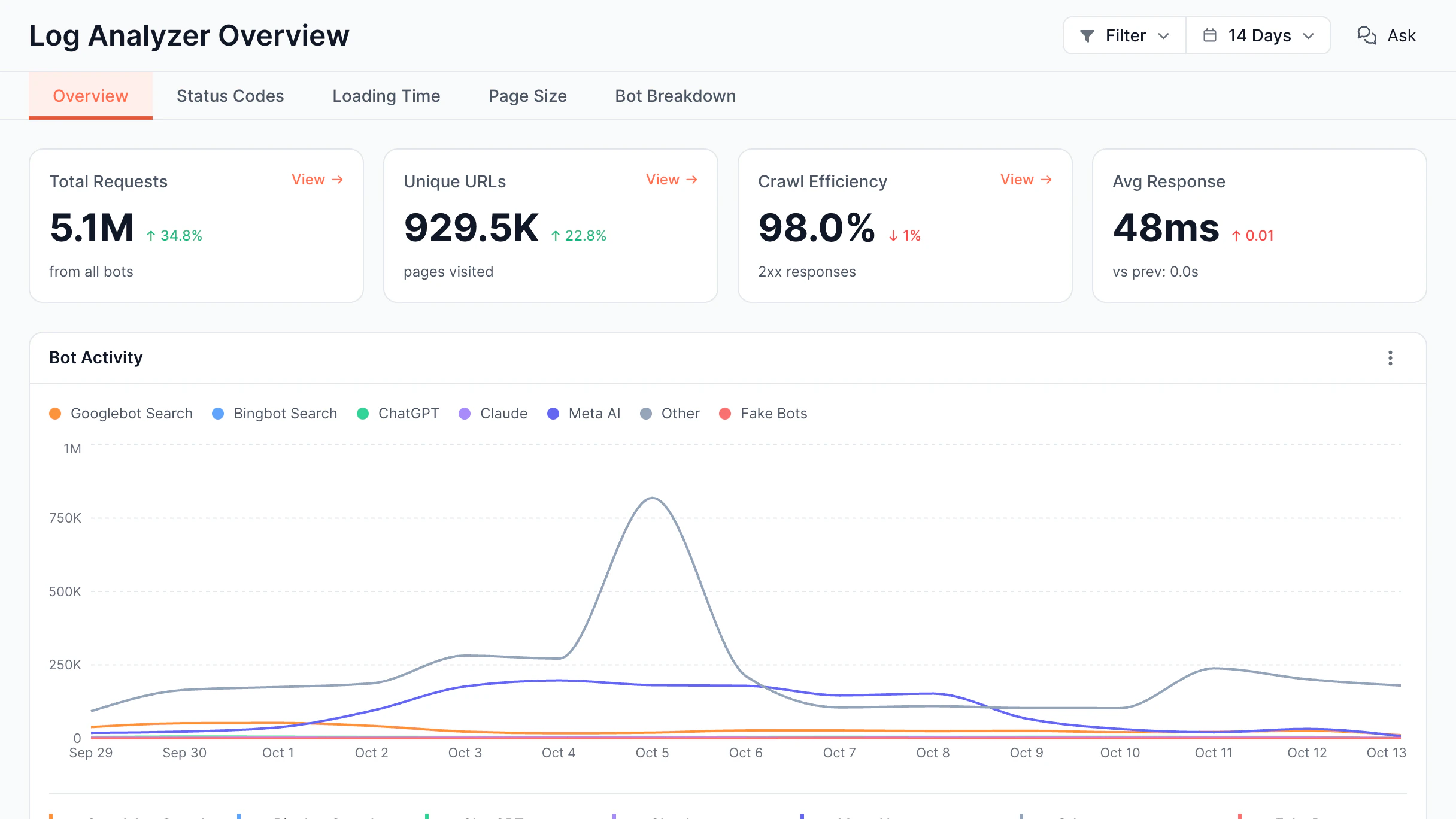
Requests per bot family, with status and response time.
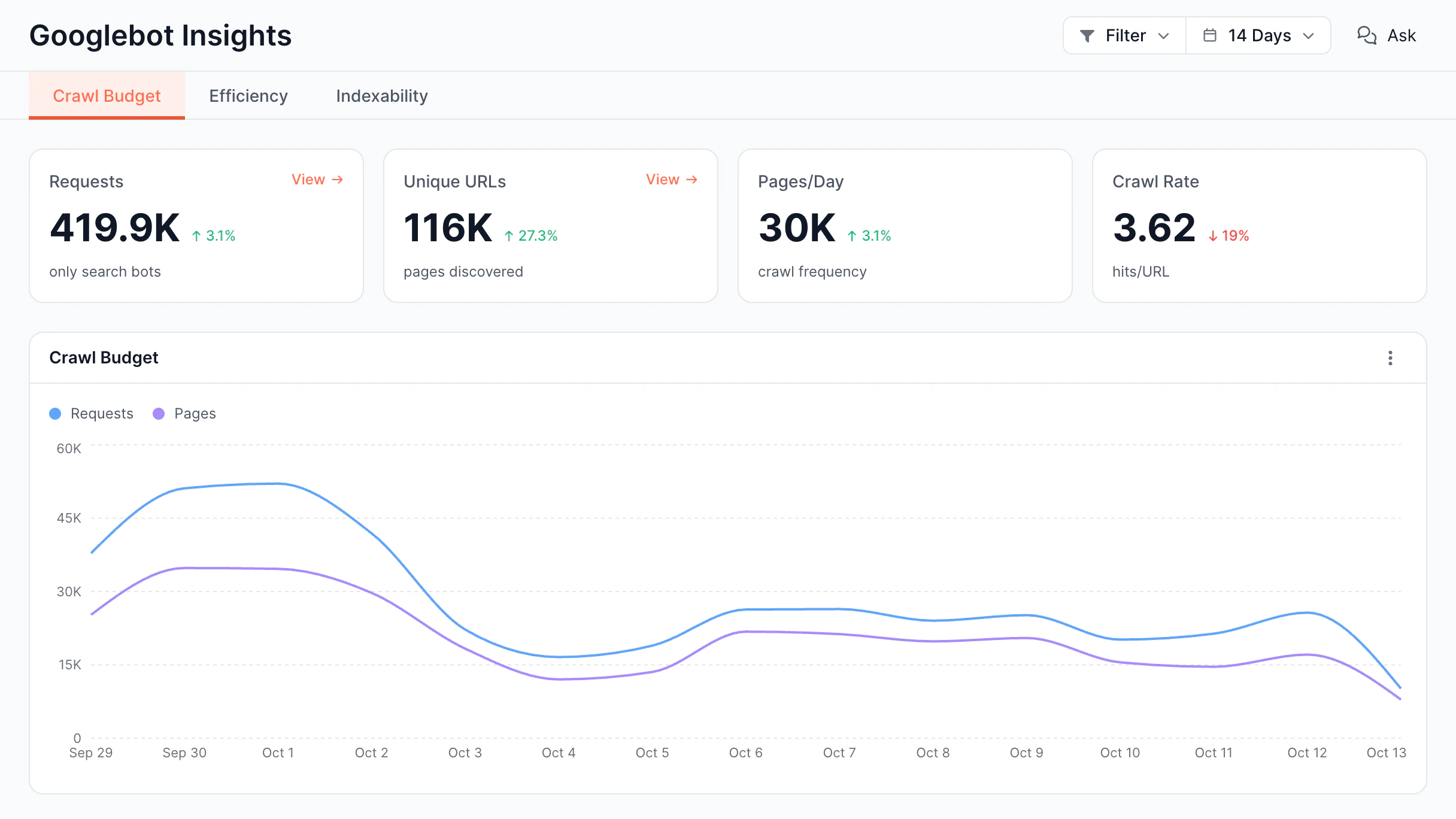
Googlebot requests, unique URLs, and crawl rate per day.
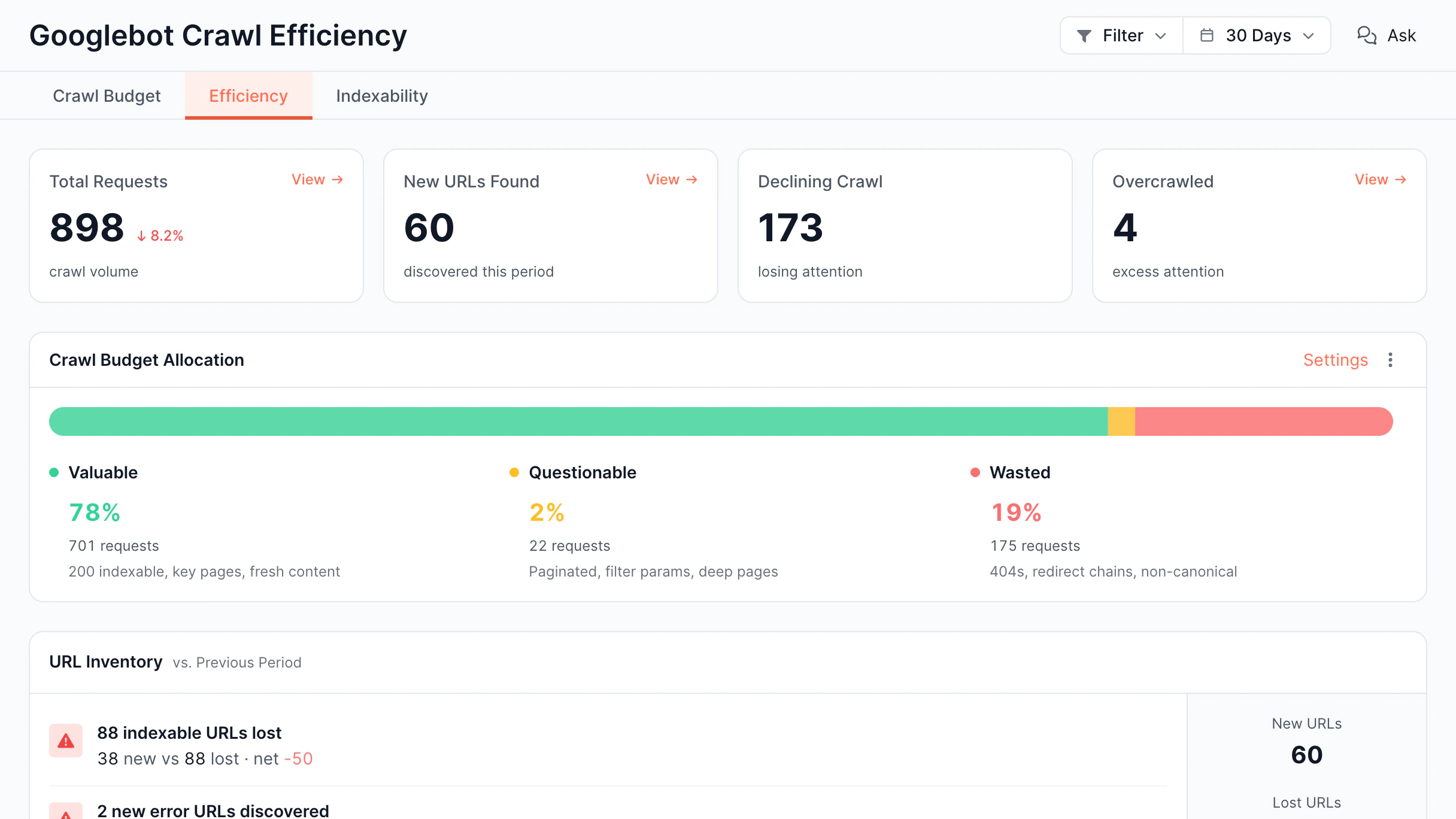
Googlebot crawl split into valuable, questionable, wasted.
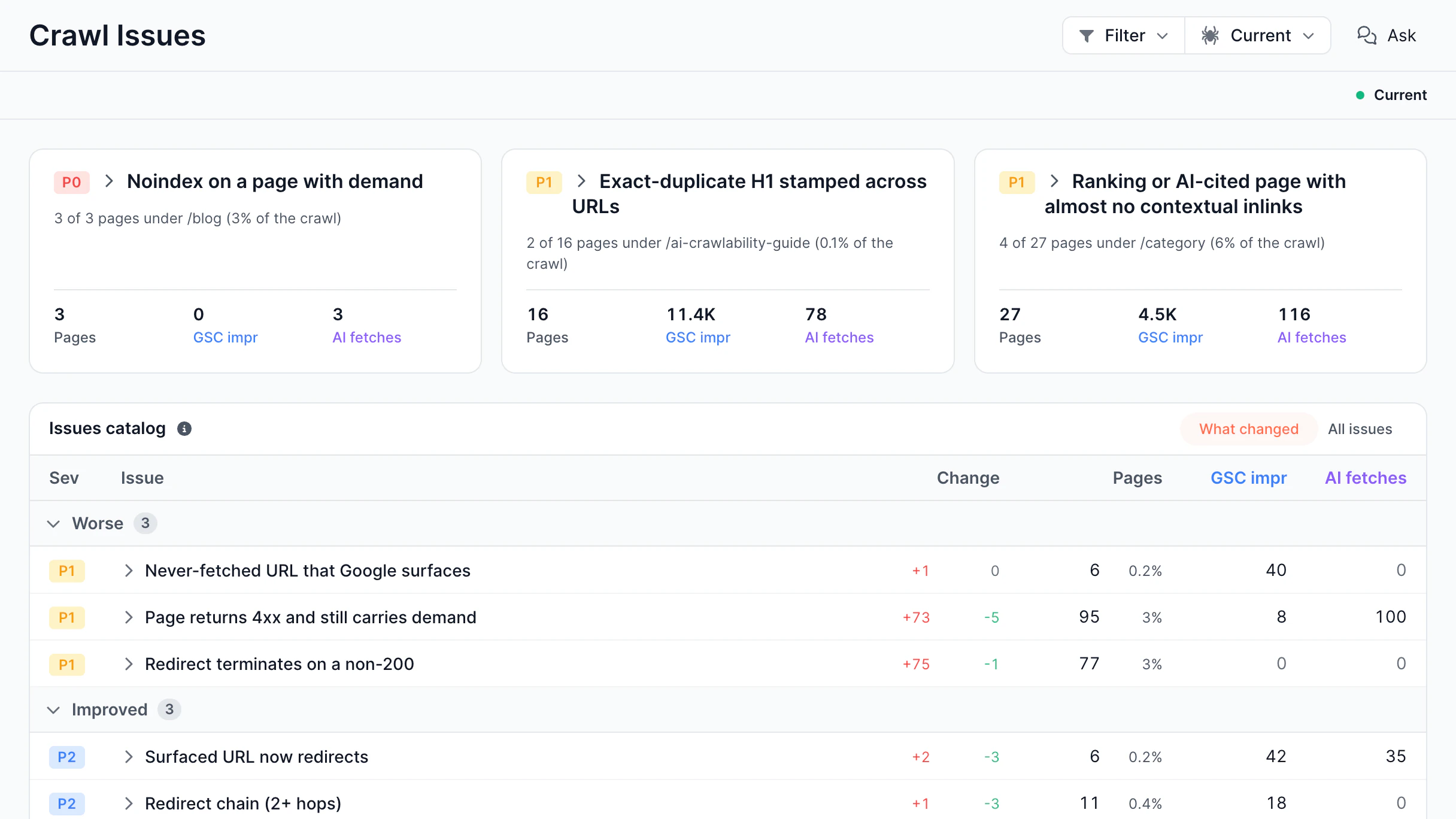
Audit issues that changed since the last crawl.
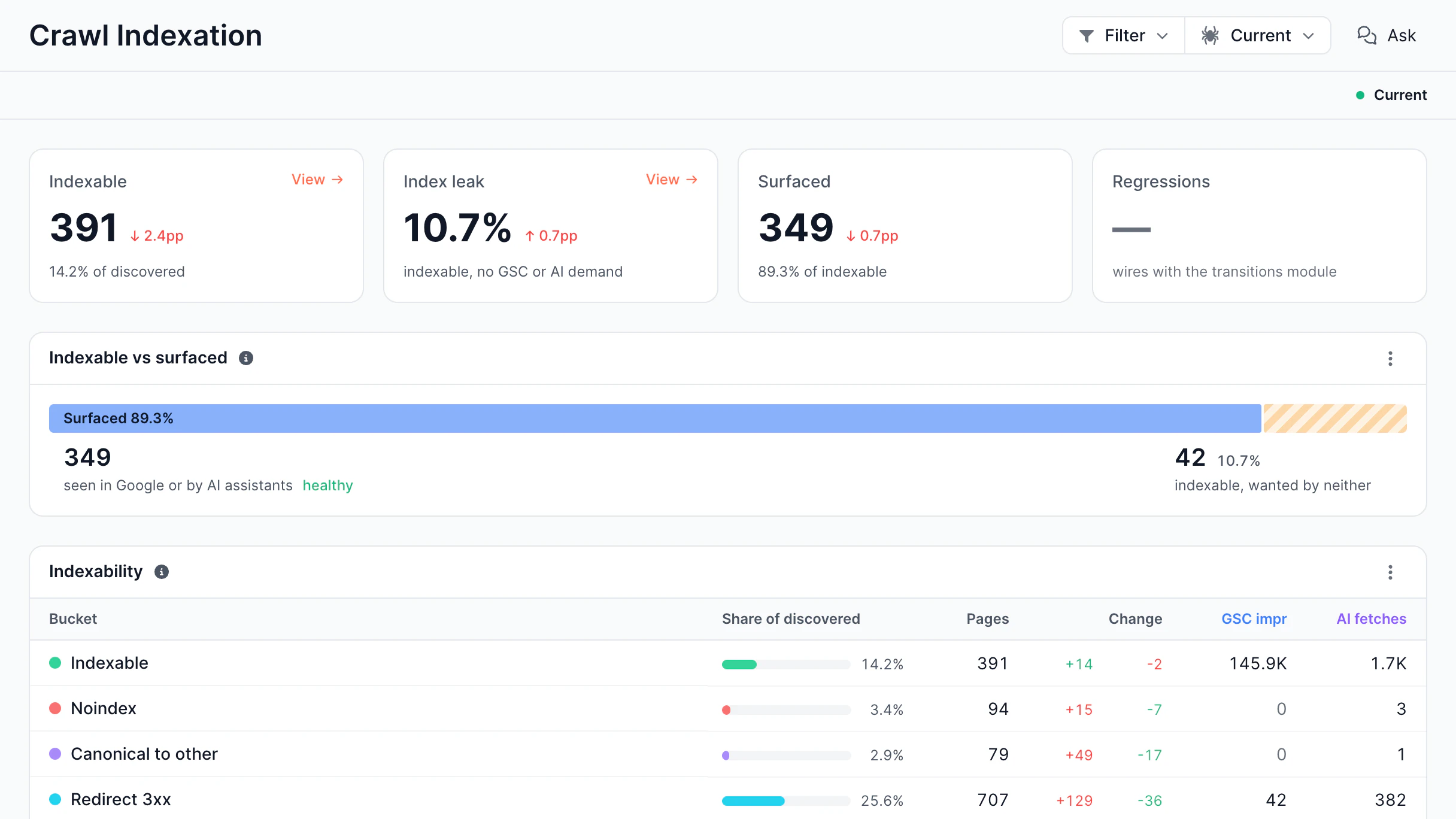
Indexable, noindex, canonicalized, and redirected pages.
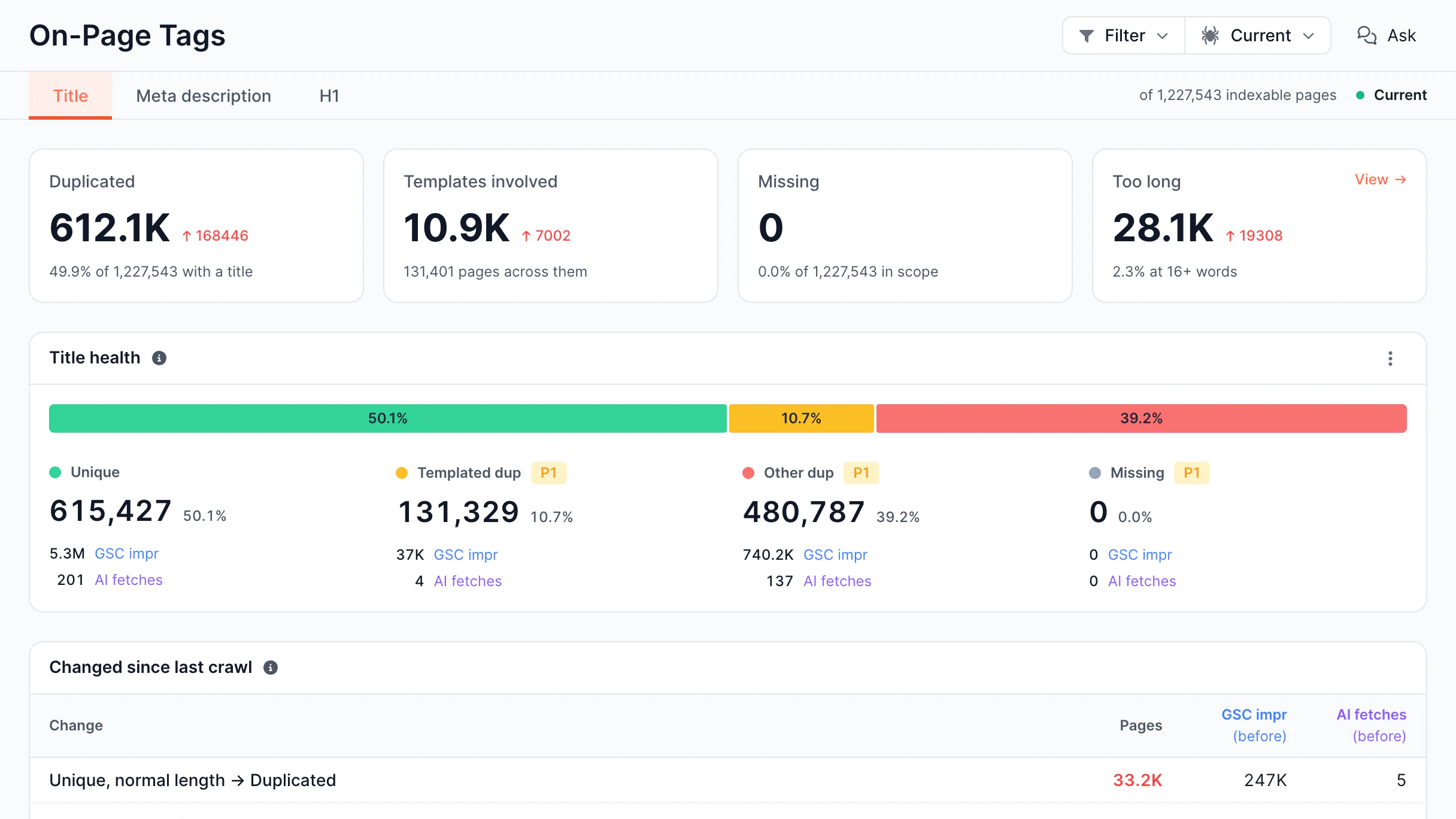
Duplicate, missing, and too-long titles.
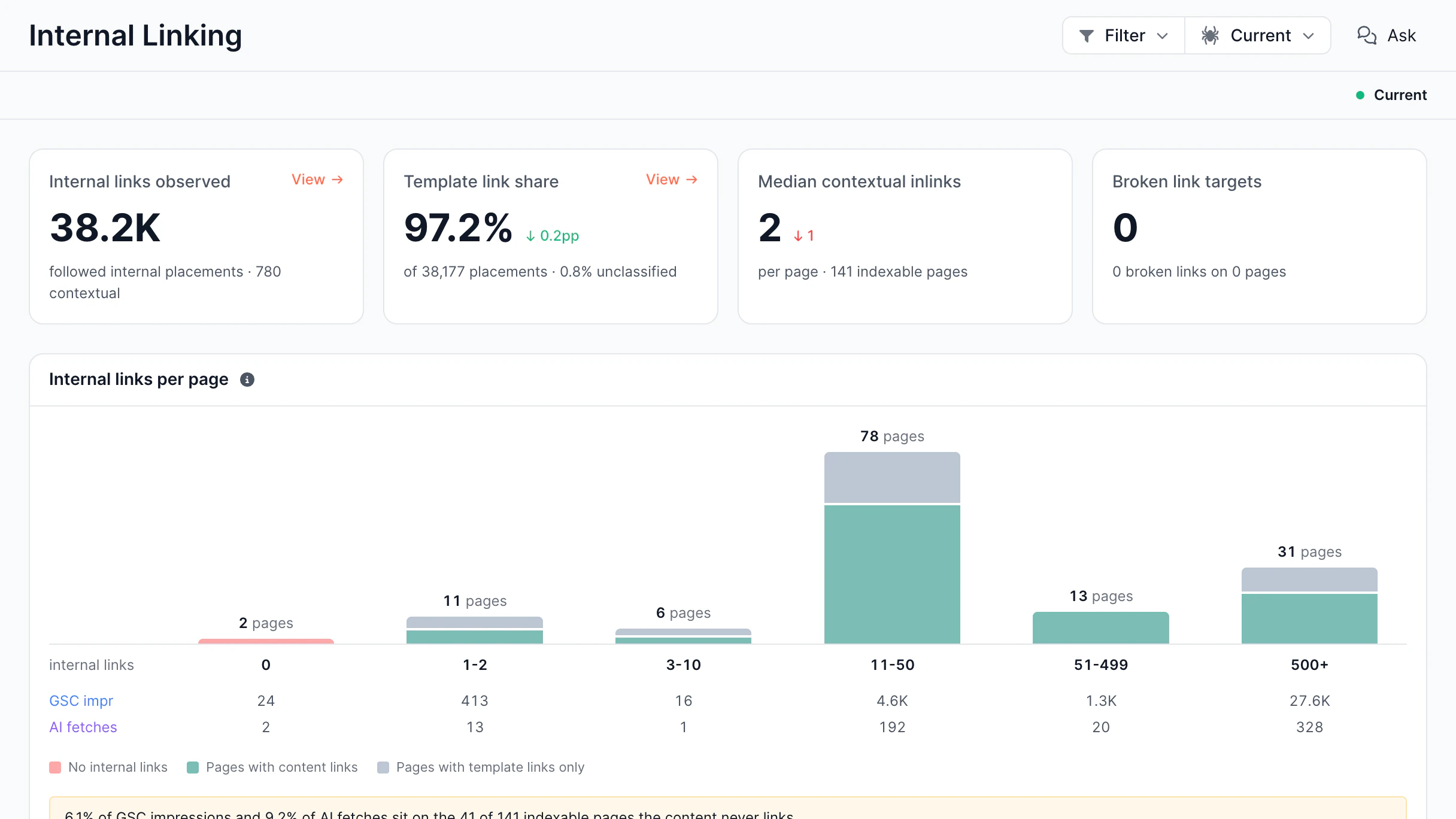
Internal links per page, content vs template.
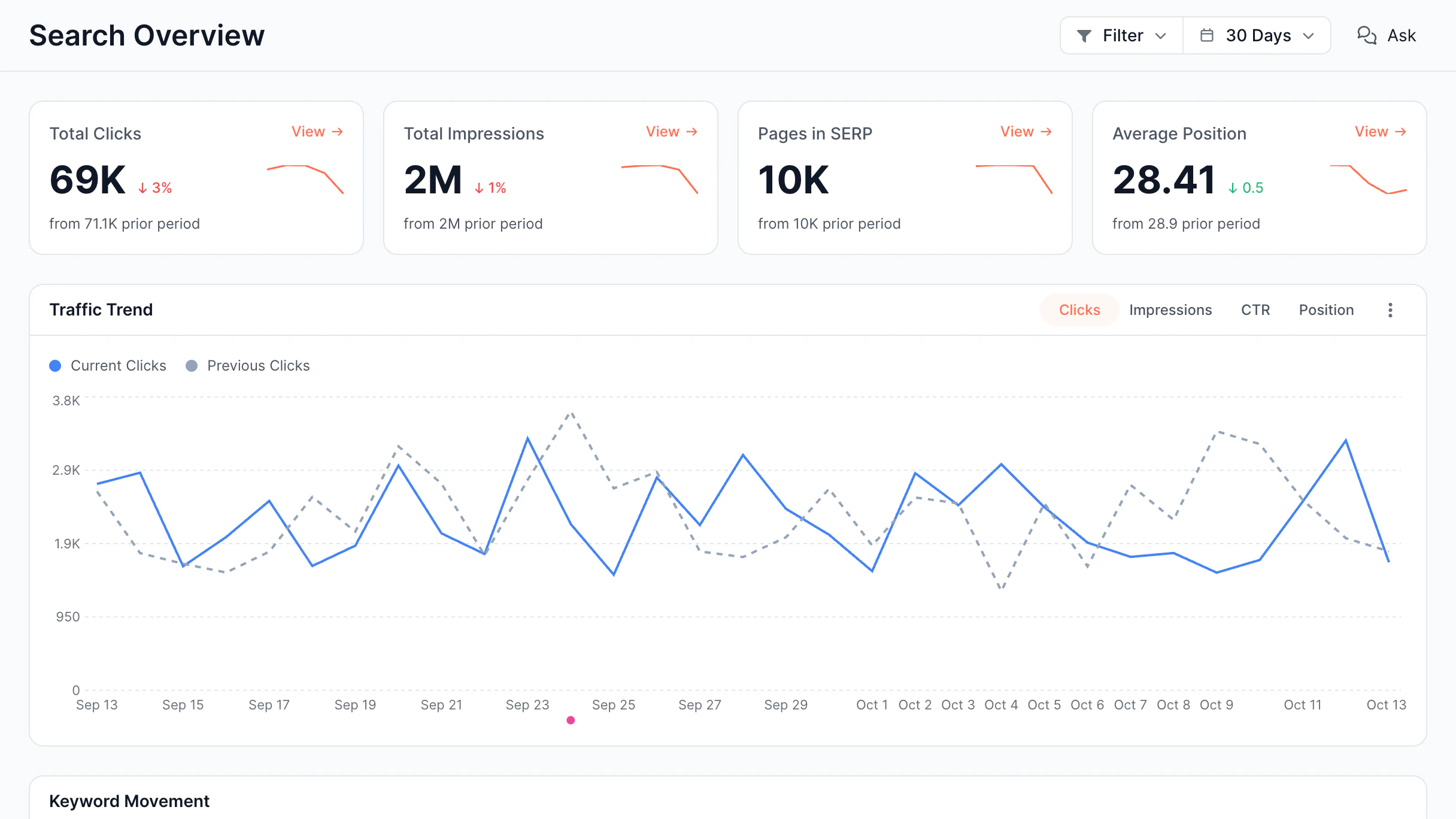
Search Console clicks, impressions, and position vs the previous period.
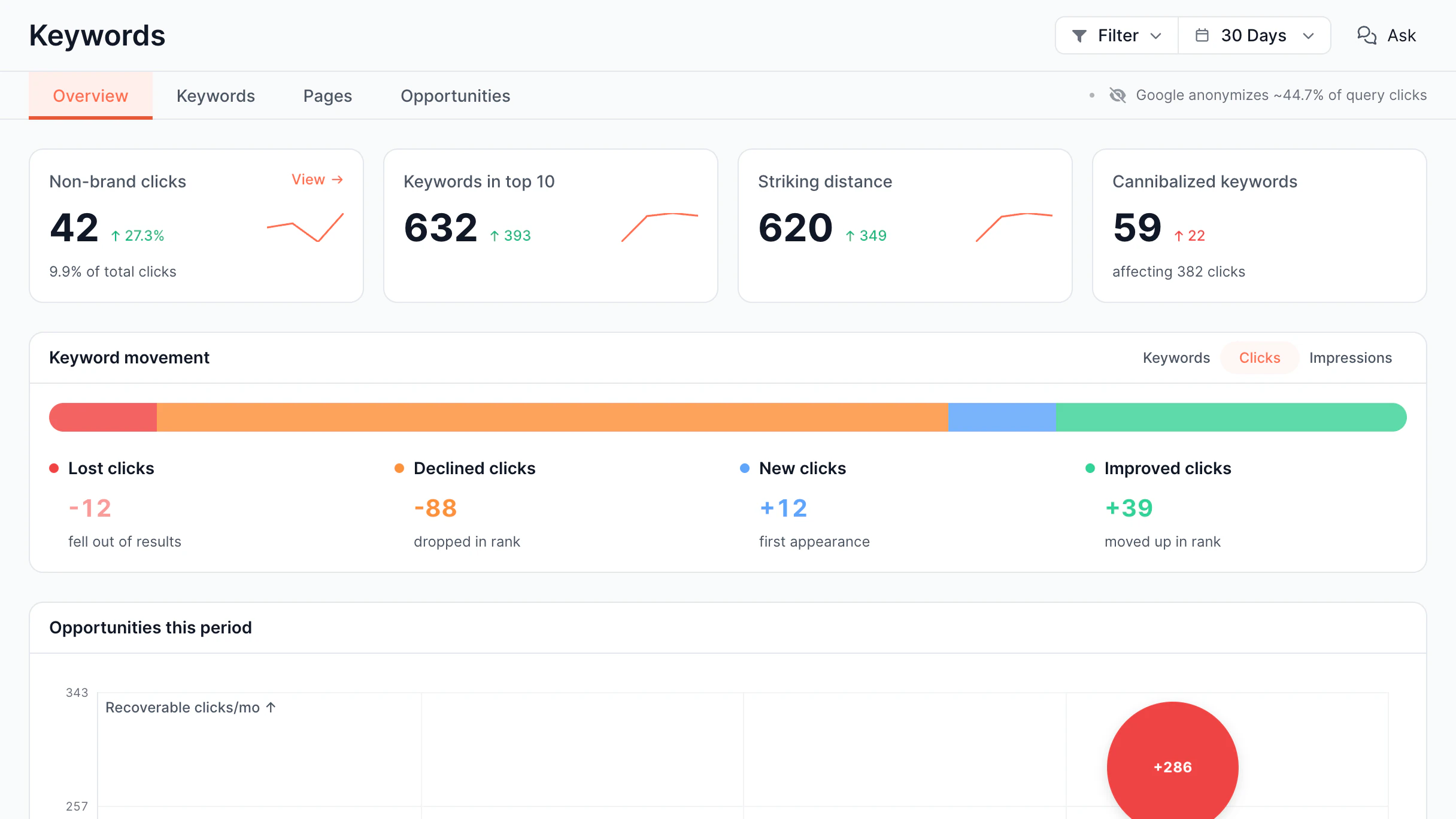
Keyword movement, top-10 counts, and striking-distance keywords.
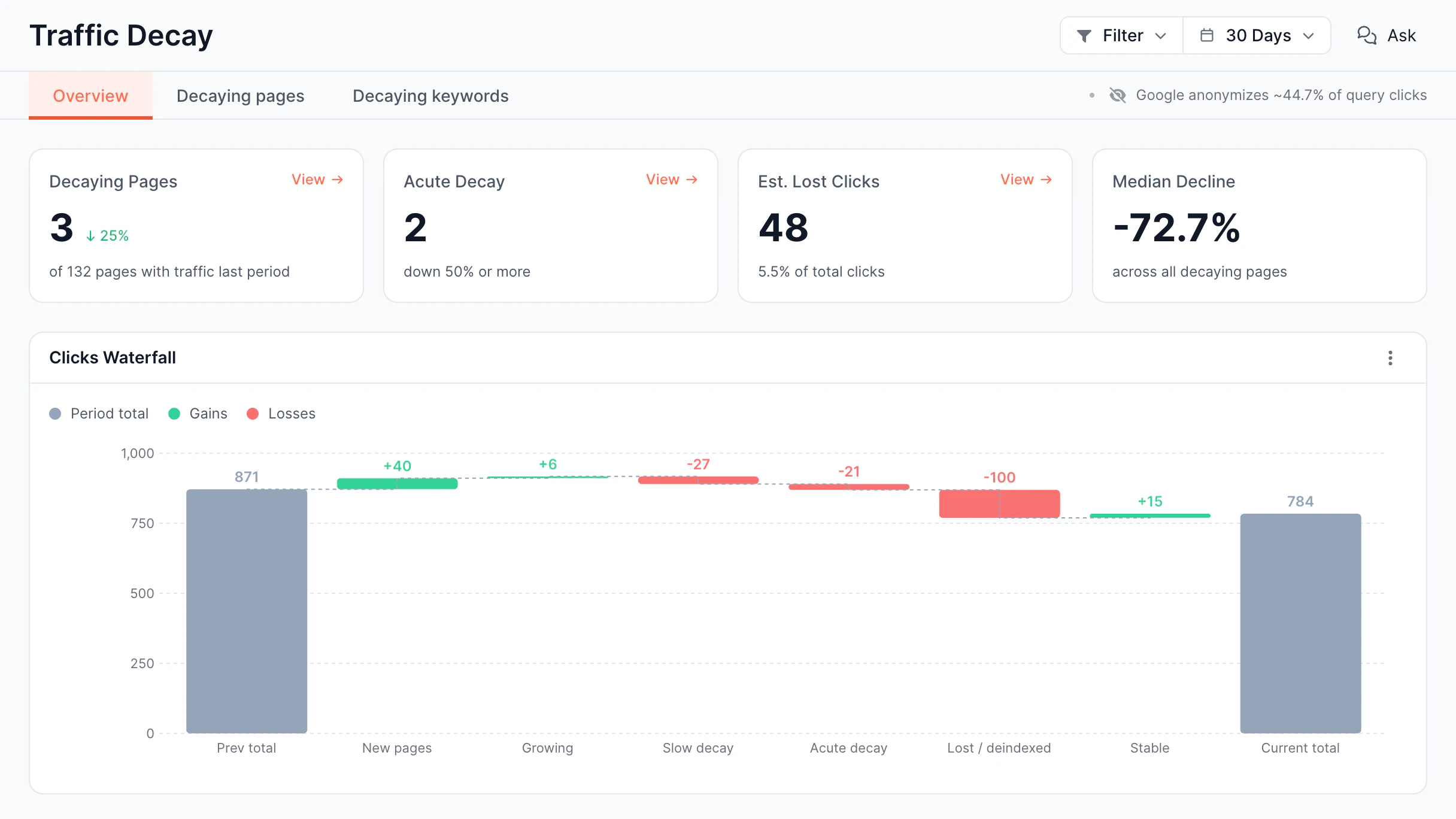
Pages losing clicks, split into slow decay, acute decay, and deindexed.
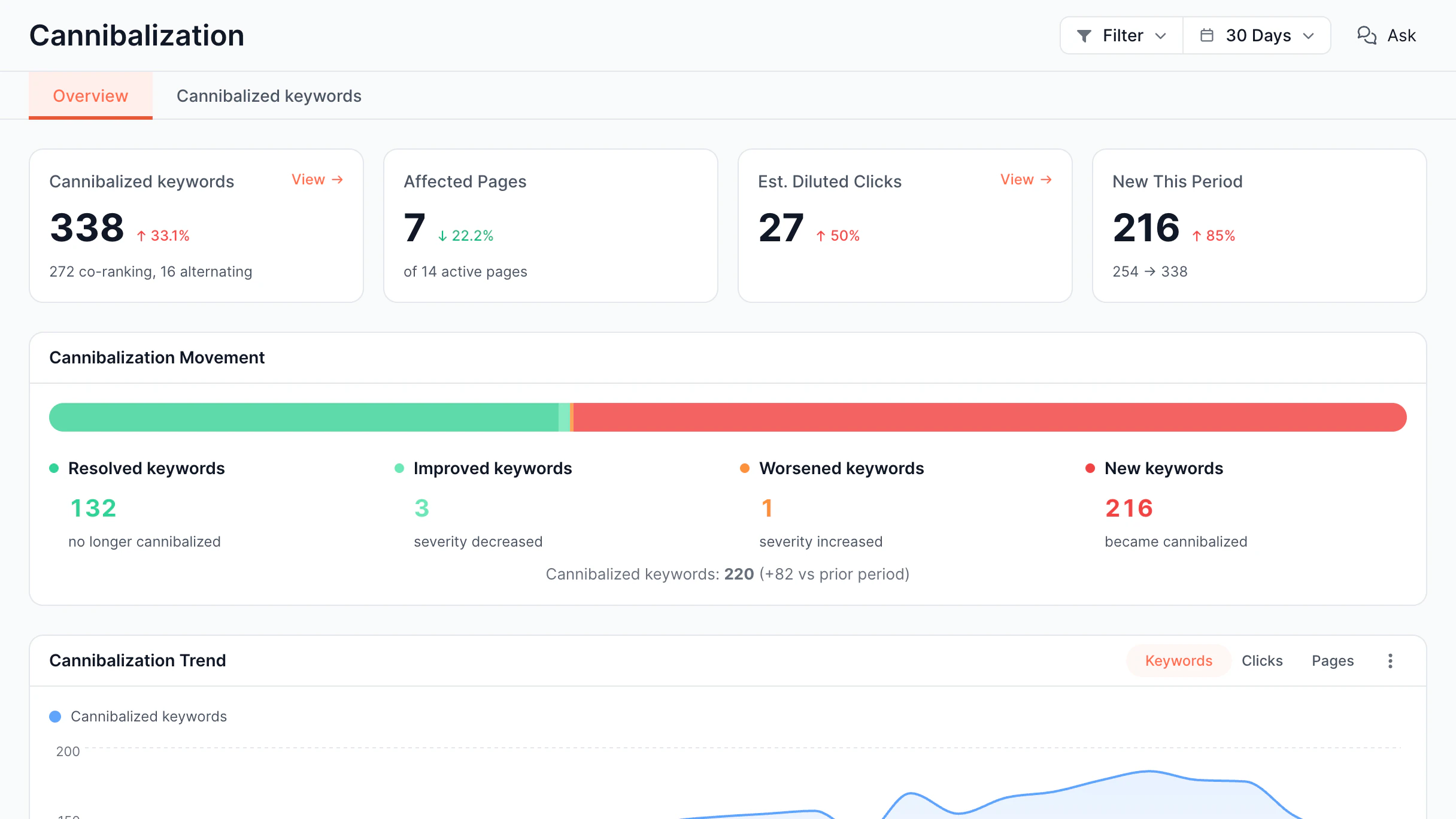
Keywords where several of your pages rank, and how that changed.
Googlebot fetches vs search and AI demand by page type.
Products not fetched by Googlebot or not linked.
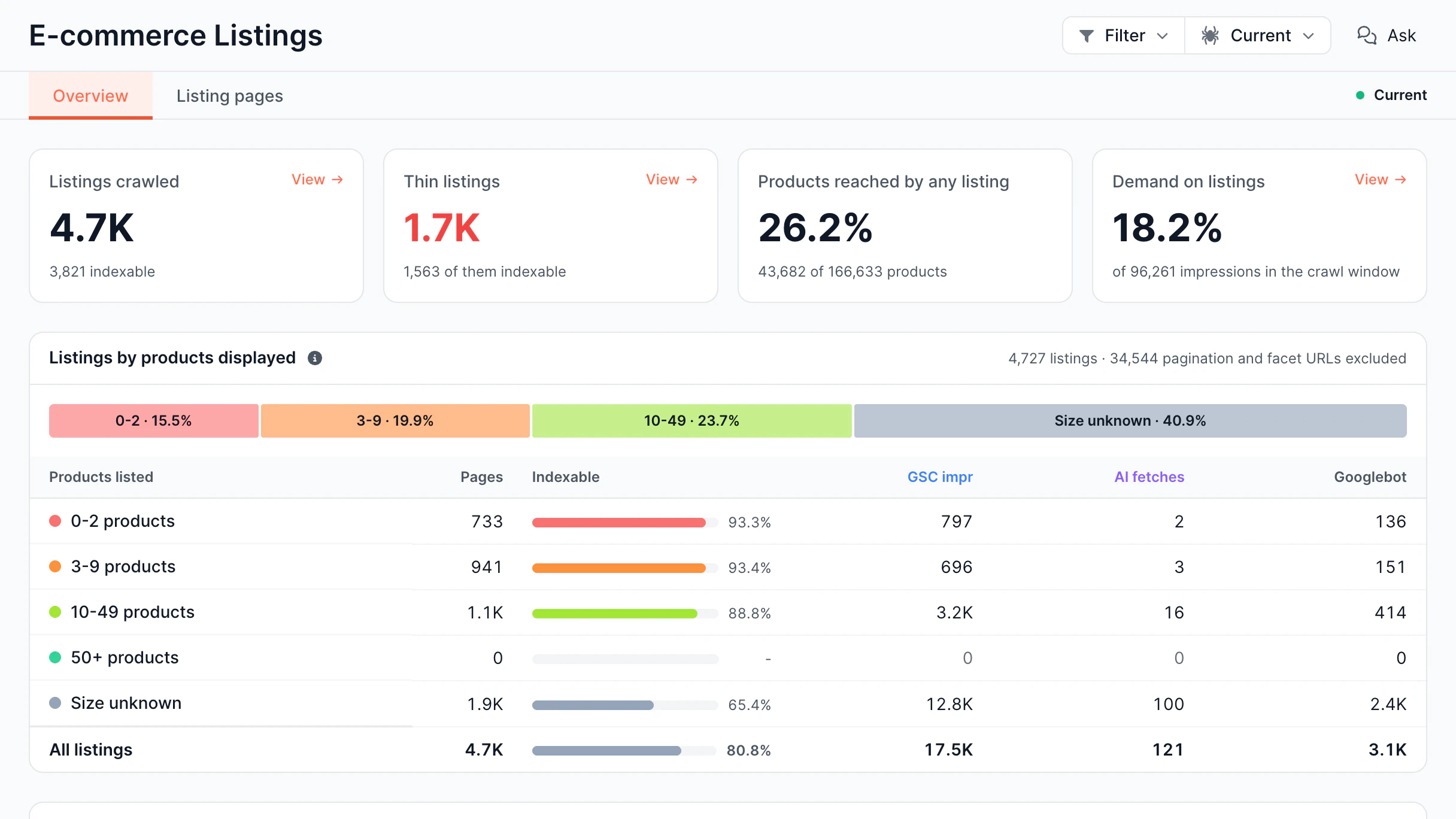
Category pages by number of products listed.
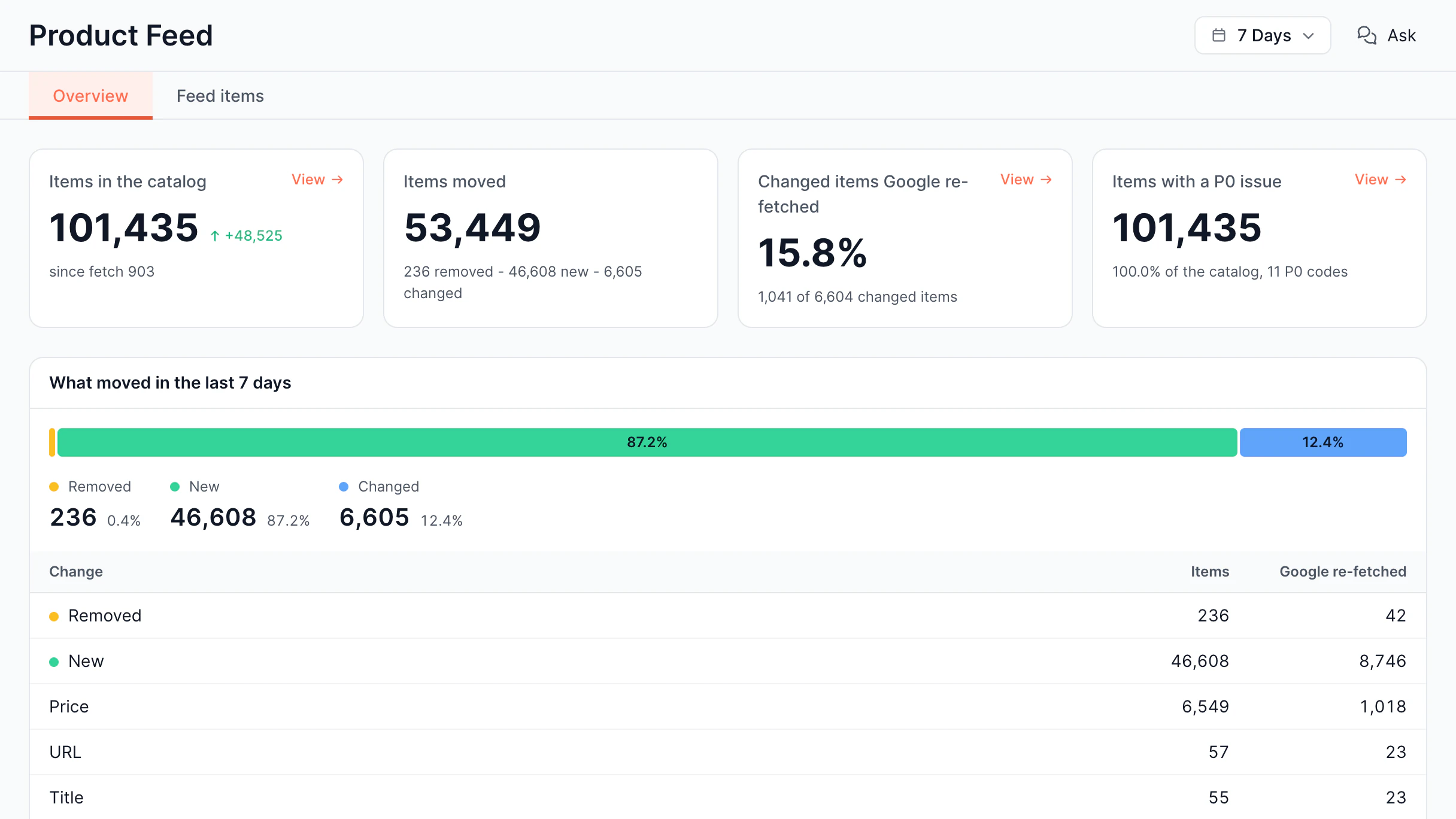
Merchant feed changes and Google re-fetches.
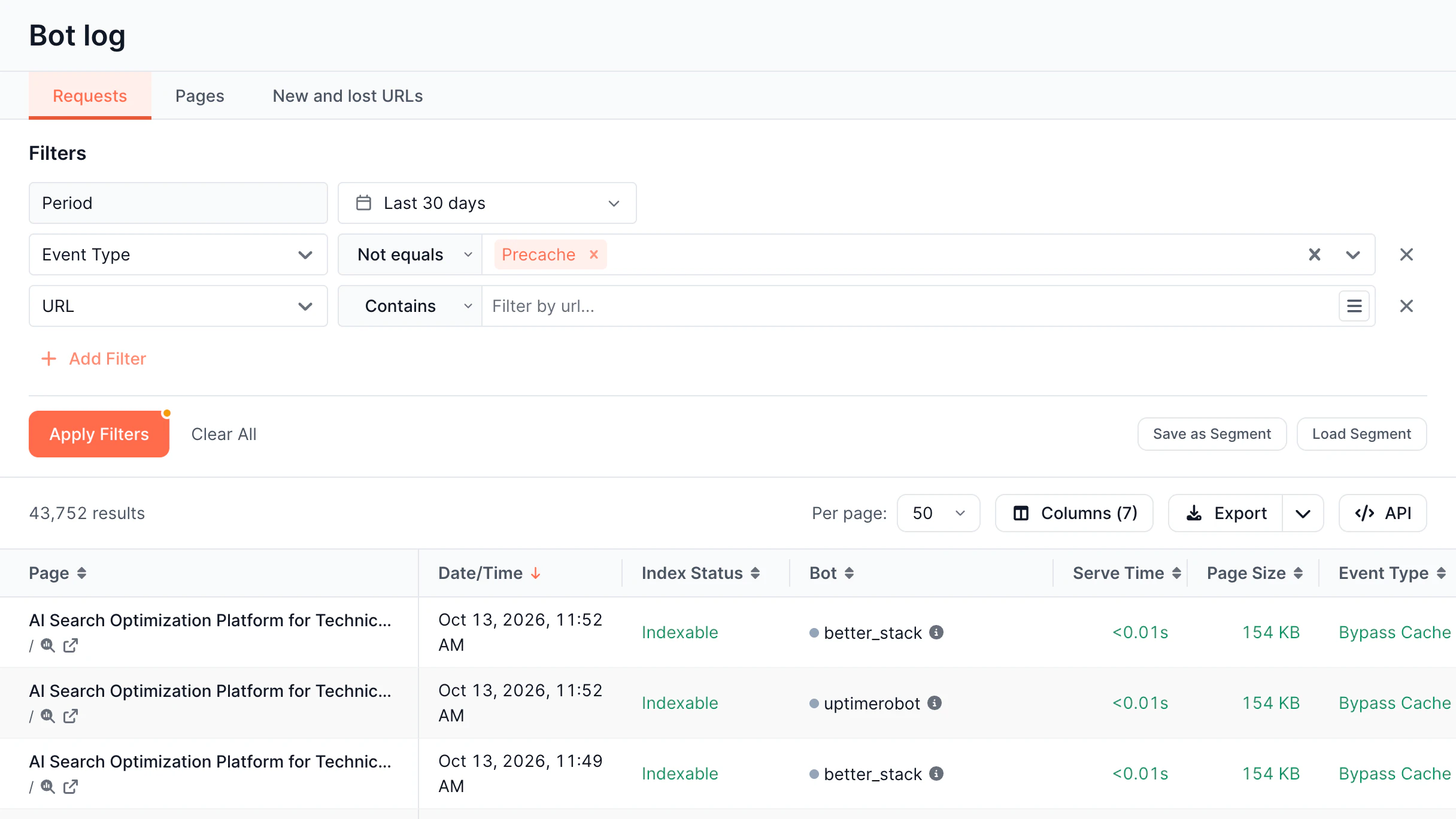
Table of every bot request with filters, segments, and export.
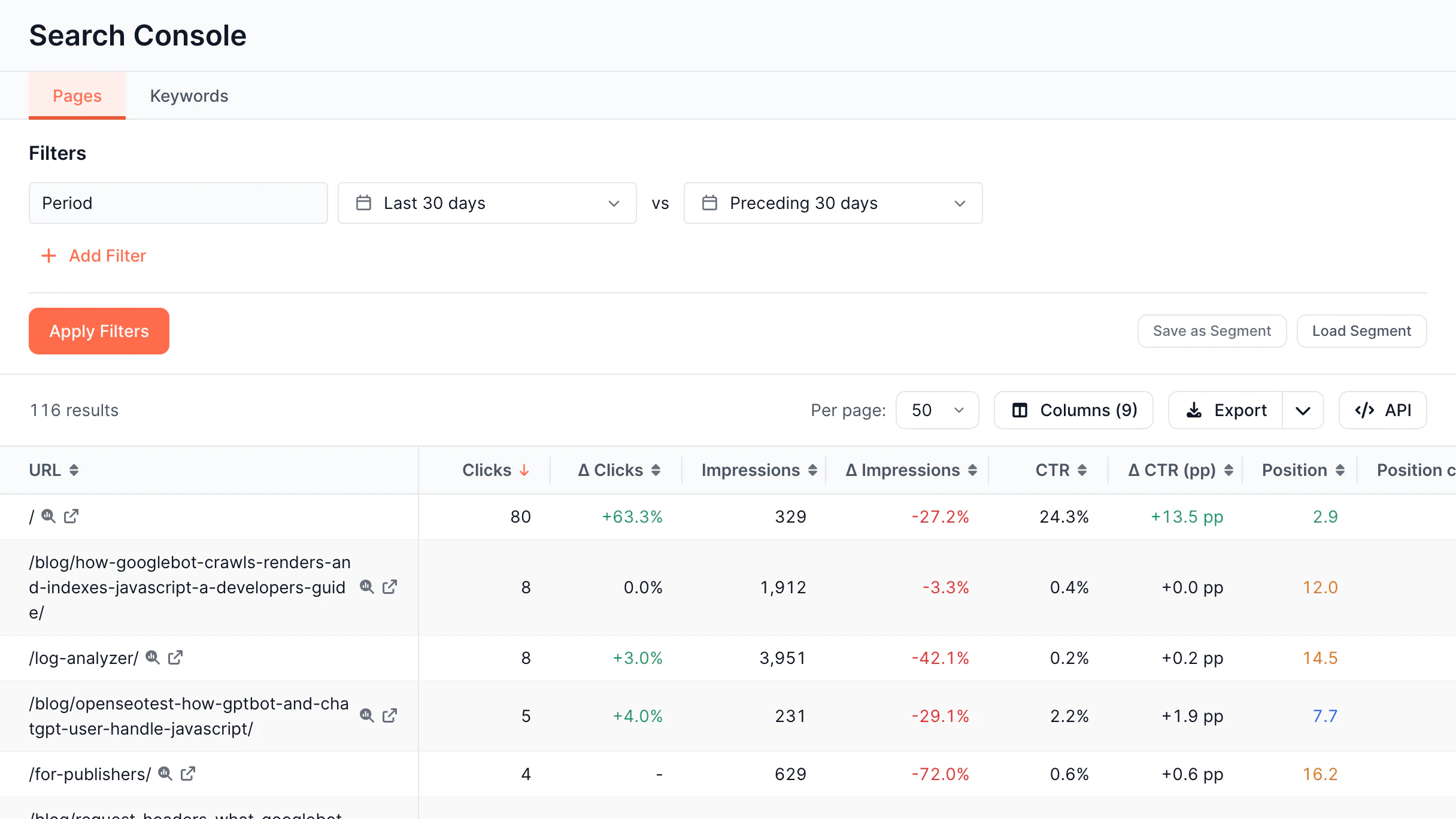
Search Console rows by page or keyword, with filters and period comparison.
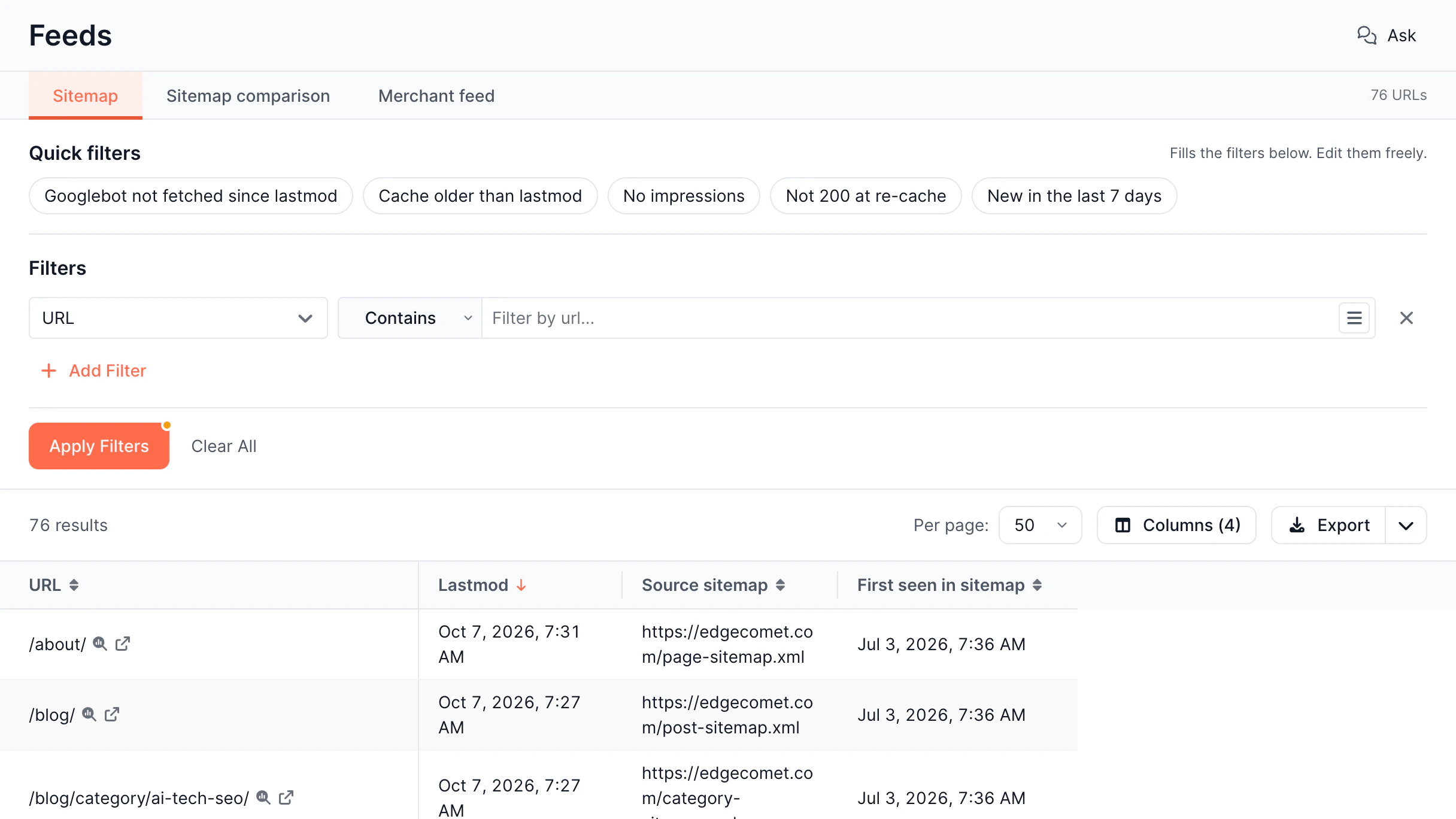
Sitemap and Merchant feed URLs with quick filters and export.
Go beyond SEO audits with real bot analytics, rendering, caching, and direct SEO execution. Identify, fix, and verify issues in one platform.
Start your 14-day free trial
The best alternative to Oncrawl depends on your team's goals. Botify and Lumar are popular choices for enterprise crawler-based analysis, while Screaming Frog and Sitebulb support audit workflows. EdgeComet is a better option for teams that need real bot response visibility, JavaScript delivery, caching, real-time SEO monitoring, and direct SEO execution from a single platform.
Oncrawl is a combination of enterprise crawling, server log analysis, AI search insights, and cross-source reporting to help teams investigate their SEO issues. EdgeComet operates in the production bot request path and provides real bot analytics combined with rendering, caching, SEO monitoring, and direct SEO changes. Oncrawl focuses on diagnosing and prioritizing issues; EdgeComet goes a step further and includes tools to implement many fixes.
The key difference is in how the platforms interact with the site. Oncrawl does its analysis via its own crawler, server logs, and connected data sets. EdgeComet works in the bot request path so you can inspect and manipulate the content that is actually delivered to real search and AI crawlers via rendering, caching, and Edge SEO.
EdgeComet offers monthly plans starting at $99 and provides a 14-day full-platform trial. Oncrawl uses custom pricing and currently asks prospects to book a demo for a personalized quote. This makes EdgeComet's pricing easier to assess before entering a sales process.
Yes, absolutely, for teams who want to go beyond the standard SEO analysis and actually improve how their site responds to search and AI bots. EdgeComet is ideal for JavaScript-heavy sites, e-commerce sites, marketplaces, publishers and enterprise teams who need rendering, caching, live bot analytics and technical SEO in place.
Many Oncrawl competitors focus on crawling, auditing, or reporting. EdgeComet stands out by combining analysis with a production Edge SEO layer. Teams can change metadata, canonicals, directives, structured data, redirects, and response behavior while still monitoring real bot traffic.
Yes. Oncrawl monitors AI crawler activity via server logs and provides the AI Search Lens to examine AI citation activity, AI referral traffic, content coverage, and the various technical SEO factors that will impact AI search. EdgeComet adds request-level visibility into the exact rendered content and SEO signals delivered to each real AI bot visit, helping teams confirm access and diagnose discoverability issues.
Oncrawl can identify, prioritize, export, and monitor technical SEO issues. Its AI Assistant, API, and MCP capabilities can work with Oncrawl data and workflows. Changes to the production website still need to be applied through another system. EdgeComet provides the execution layer for making many of those changes directly.
EdgeComet could be better for real-time monitoring of the responses delivered to actual search and AI bots since it sits in the request path. Oncrawl can provide fast log-event visibility and scheduled monitoring, but its overall reports depend on log ingestion, processing, and crawler runs.
Oncrawl provides a dedicated enterprise crawler with detailed site audits, JavaScript analysis, segmentation, internal linking reports, and historical crawl comparisons. EdgeComet takes a different approach with Evergreen Crawl, which analyzes pages observed through real bot traffic rather than running a separate crawler. Oncrawl is better suited to comprehensive crawler-driven audits, while EdgeComet is particularly useful for continuous production monitoring and direct SEO execution.