Evergreen Crawl: A New Way to See Your Site Through Googlebot’s Eyes
For fifteen years, the technical SEO job has started the same way: point a crawler at a site, wait, export...
Read ArticleTrack what AI crawlers and search engines actually get on every page: rendered content, SEO metadata, and indexability status seized from real bot traffic, not a generic audit you conduct once a month.
Without SEO crawl tools, critical indexing issues accumulate quietly, and you can detect them only after traffic has already decreased.
Nonindexed pages, mismatching canonicals, and missing data won’t activate alerts with traditional tools. By the time the issue is fixed, Googlebot has processed the wrong metadata.
Traditional SEO tools crawler like Screaming Frog or Botify audit sites using their own bots different from Googlebot. They don’t reflect the actual responses bots get during the visit.
On single page applications and headless sites, content appears for crawlers only after JavaScript runs. Crawlers that don't execute JavaScript see empty pages.
Crawls display what your site looked like at the moment of scan. Deployments that overwrite canonicals after undetected crawls go until the next scheduled runs which could be weeks away.
EdgeComet’s SEO site crawler captures 40+ SEO fields per rendering from every real Googlebot, GPTBot, and ClaudeBot visit, and displays issues in real time.
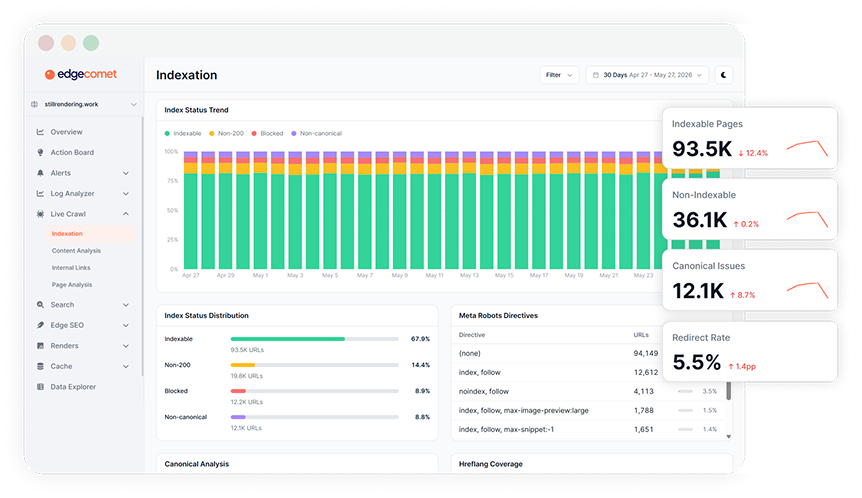
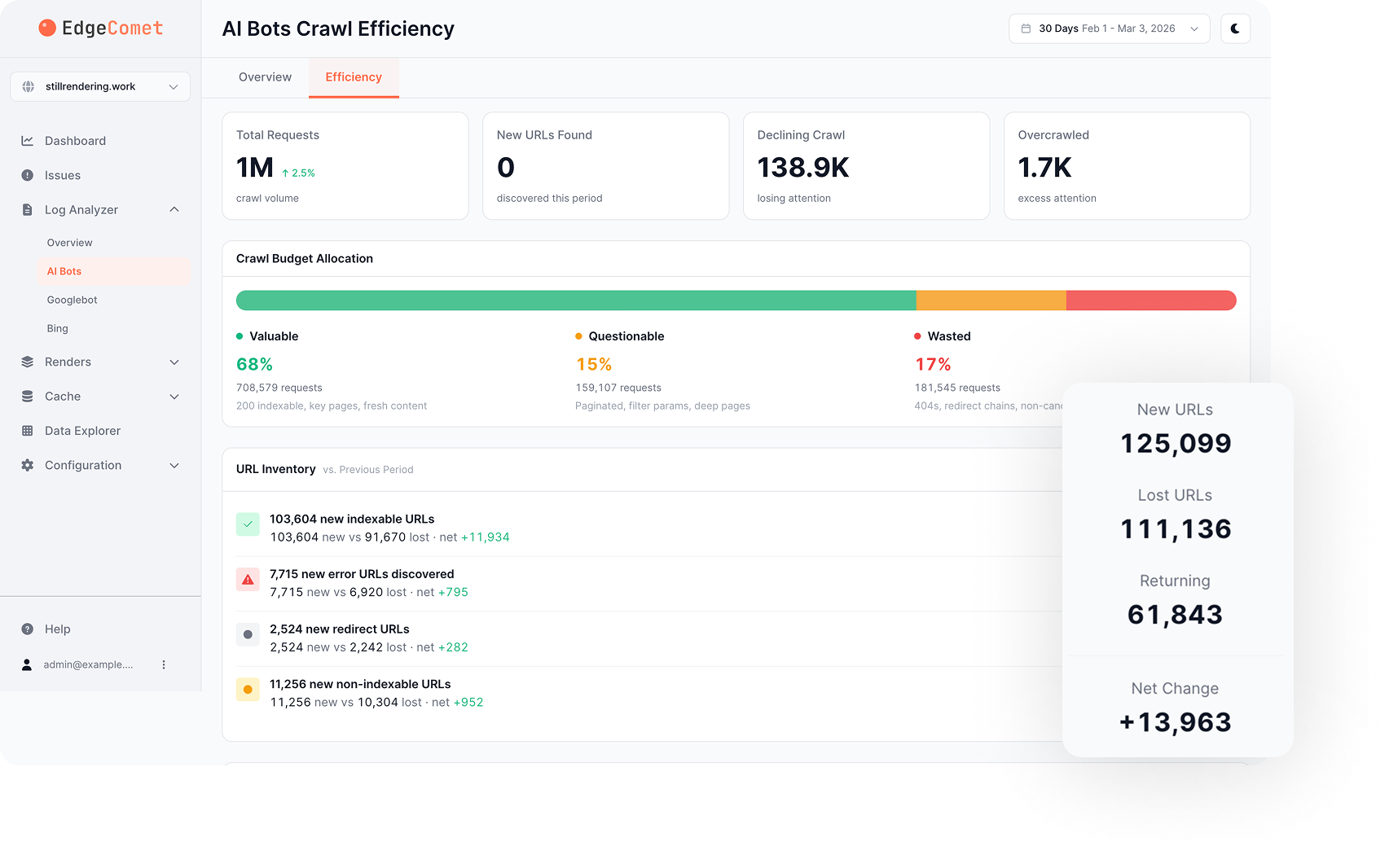
Detect and analyze indexing issues across your website: monitor which pages are indexable, blocked, and understand the reasons.
Indexable, non-200, blocked by no-index, non-canonical
Self-canonical, cross-canonical, missing and mismatched canonicals
See how noindex and nofollow are distributed site-wide
Coverage by language and region from real bot traffic
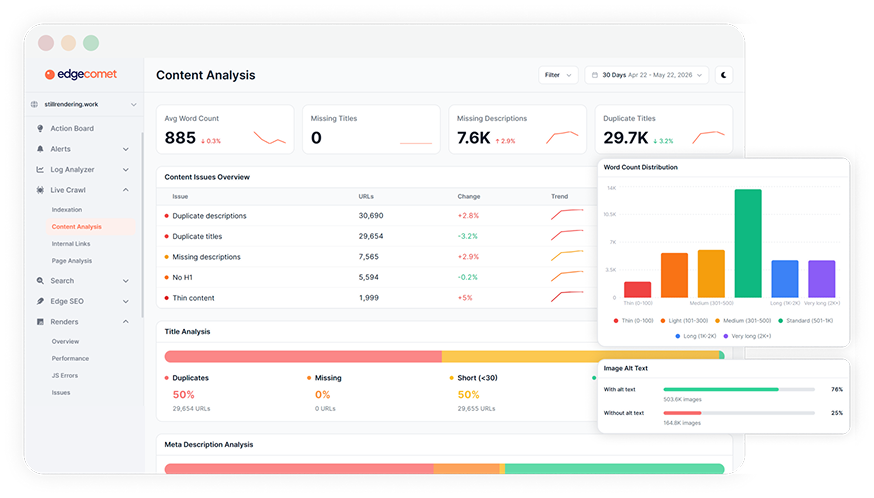
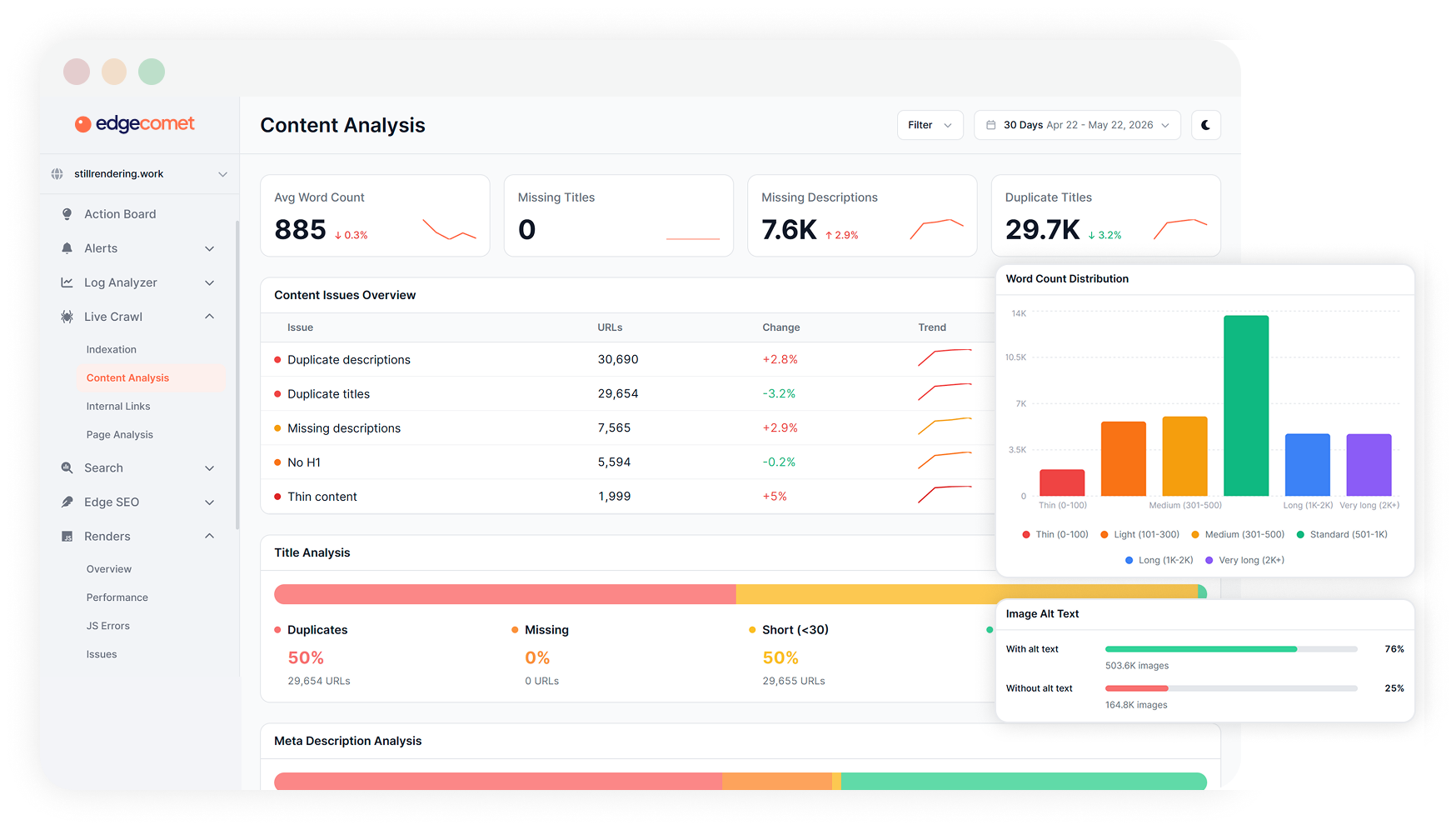
Analyze content in real time using data from what bots see: duplicate titles, missing descriptions, low-value content, and structured data gaps.
Learn which pages have the same title
Keep meta descriptions up-to-date
Find pages with no, multiple, or broken H1 hierarchy
Check pages with Product, Article, FAQ, or no schema at all
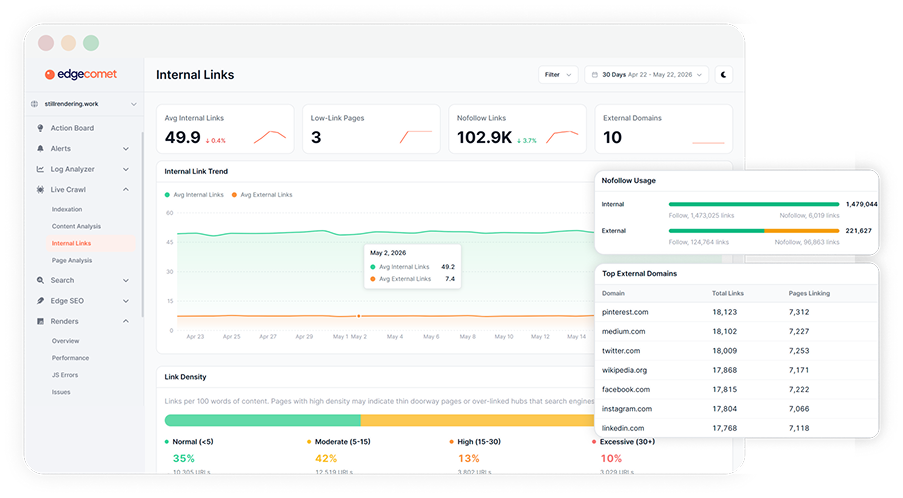
Conduct internal link audits continuously, so you always see how crawlers navigate your website structure right now.
See how many internal links pages send and get
Explore pages with too few internal links
Understand your crawl budget
See where link equity is blocked
Learn what the bot actually gets: every SEO field inspected at rendering time, attached to every request, searchable across any time range.
Track all metadata in one place
Check if Googlebot and AI got identical content
Explore all pages by different analysis filters
Detect changes without triggering formal audits
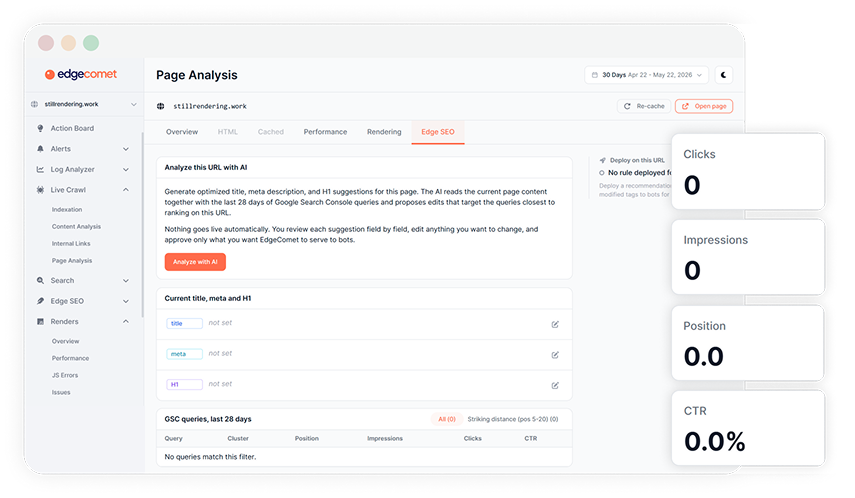
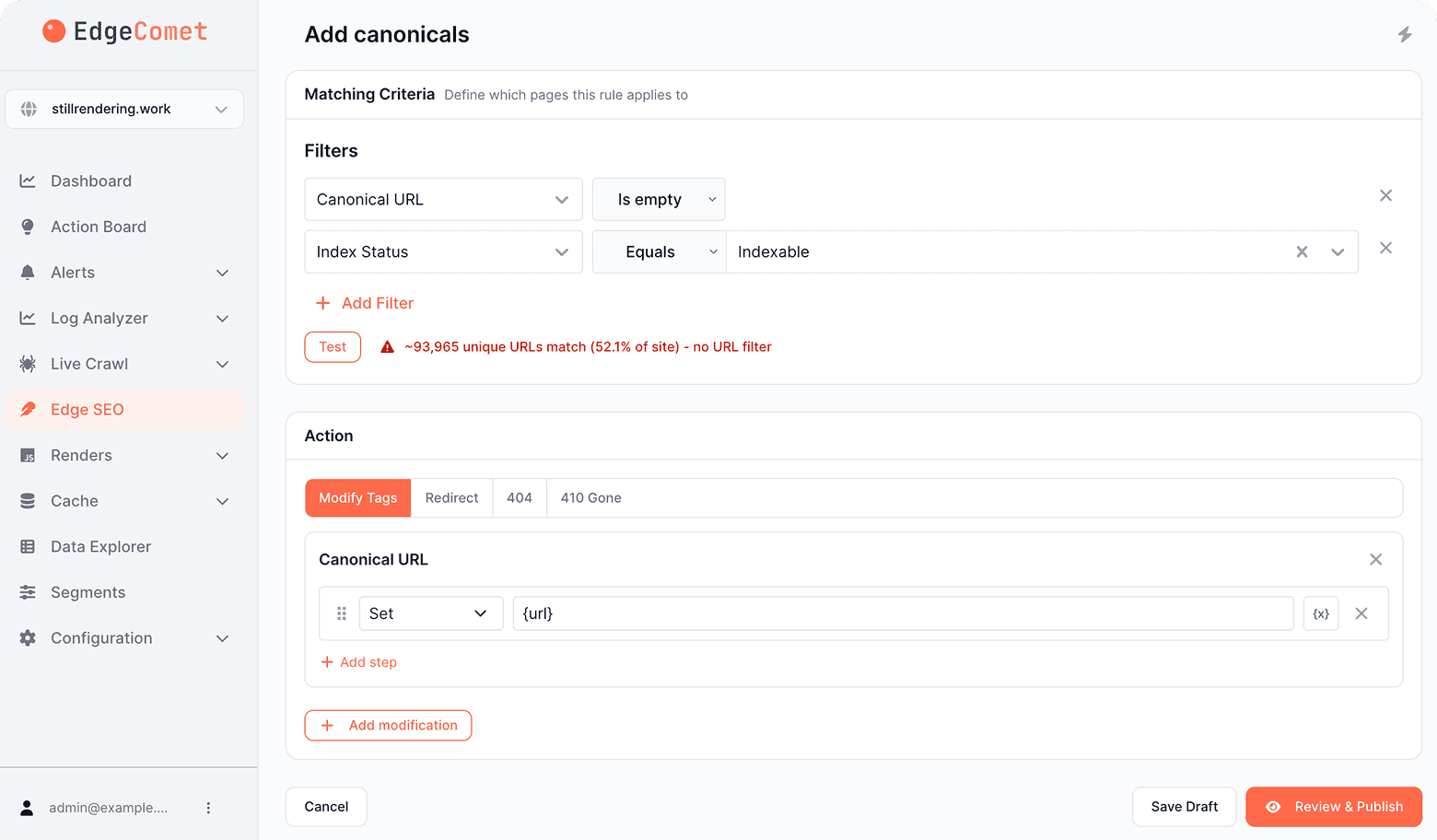
None of the minor SEO issues should require developers and a long wait. EdgeComet lets your SEO team make changes instantly.
Apply SEO changes across any set of pages
See exactly how a page will look to bots
Every change is tracked, you can revert it
AI generates correct rules for you
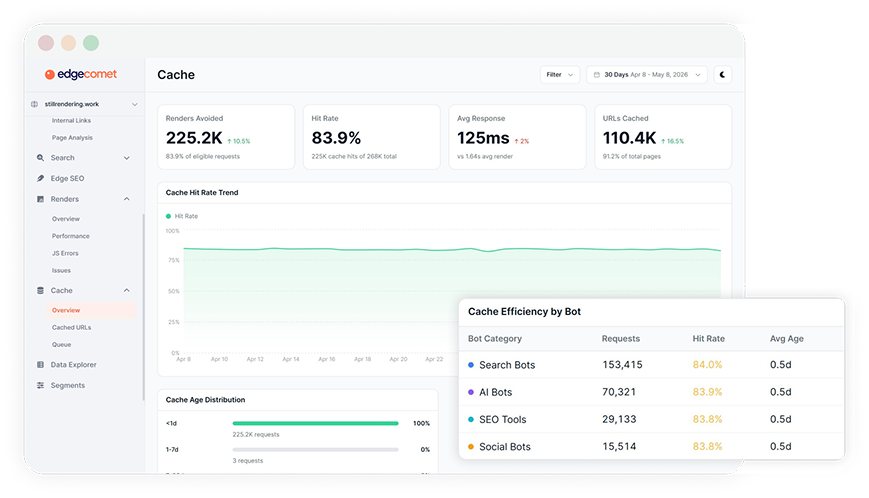
Rendering JavaScript pages on every request is slow and expensive. EdgeComet's caching system ensures bots receive pre-rendered pages instantly.
Manage and monitor cached renders
Pre-render critical pages before bots arrive
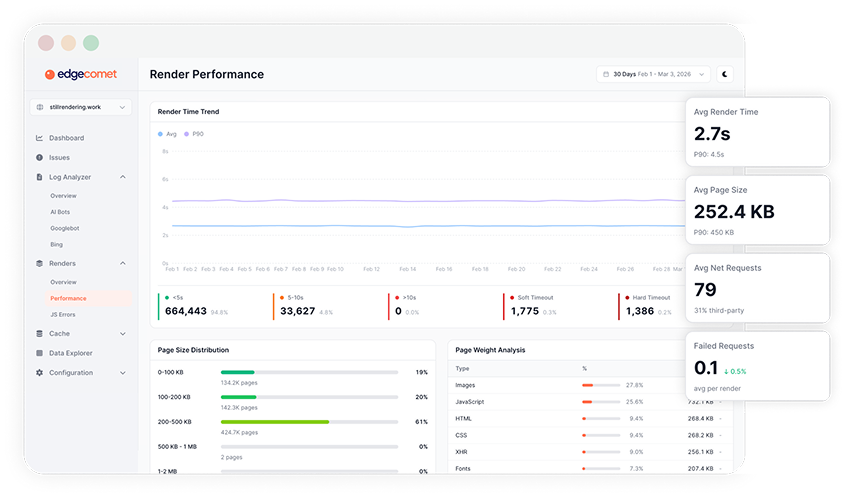
JavaScript rendering failures can silently break SEO and AI visibility. EdgeComet continuously monitors rendering performance.
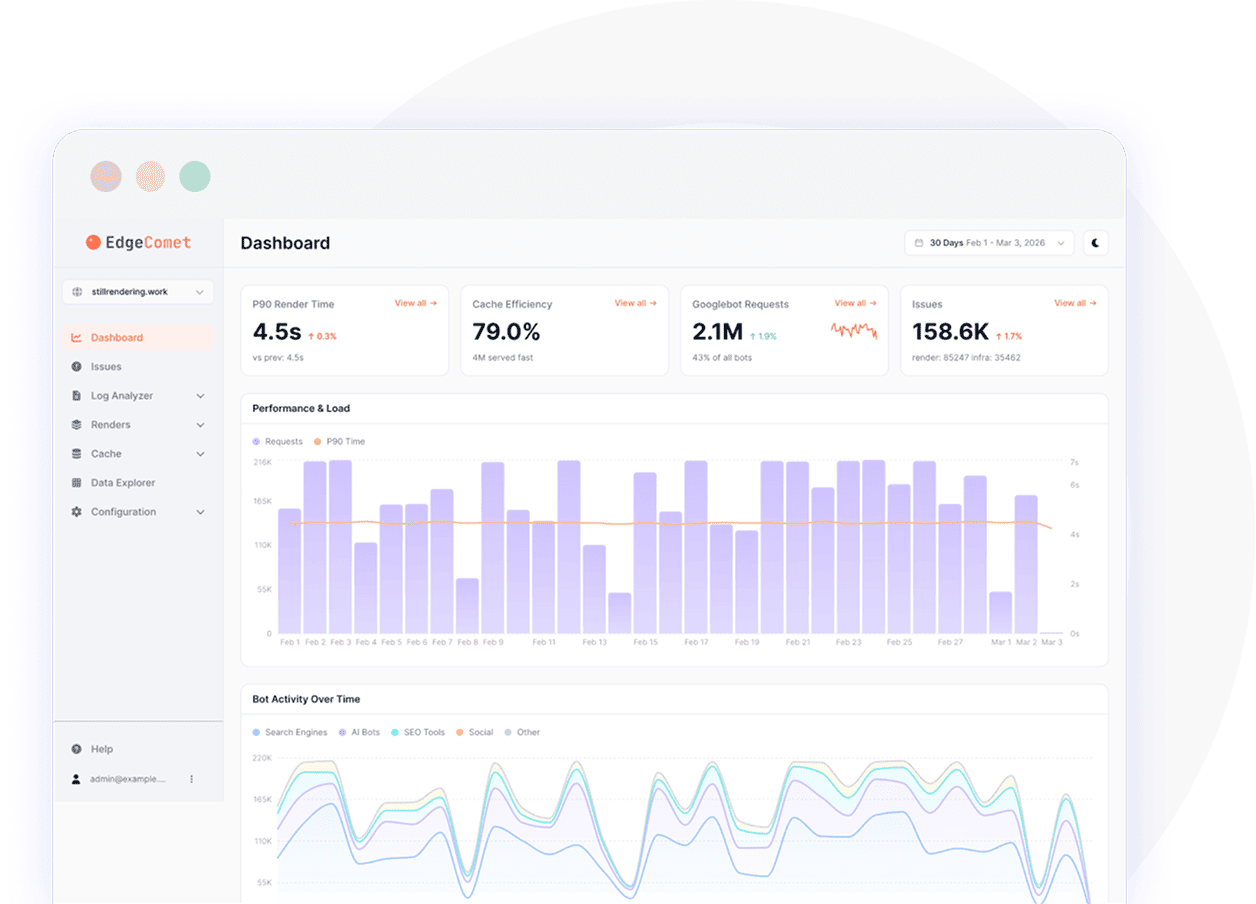
Monitor rendering activity and performance
Detect JS errors during bot rendering
Analyze render time and page size
Track ChatGPT, Claude, Perplexity crawlers
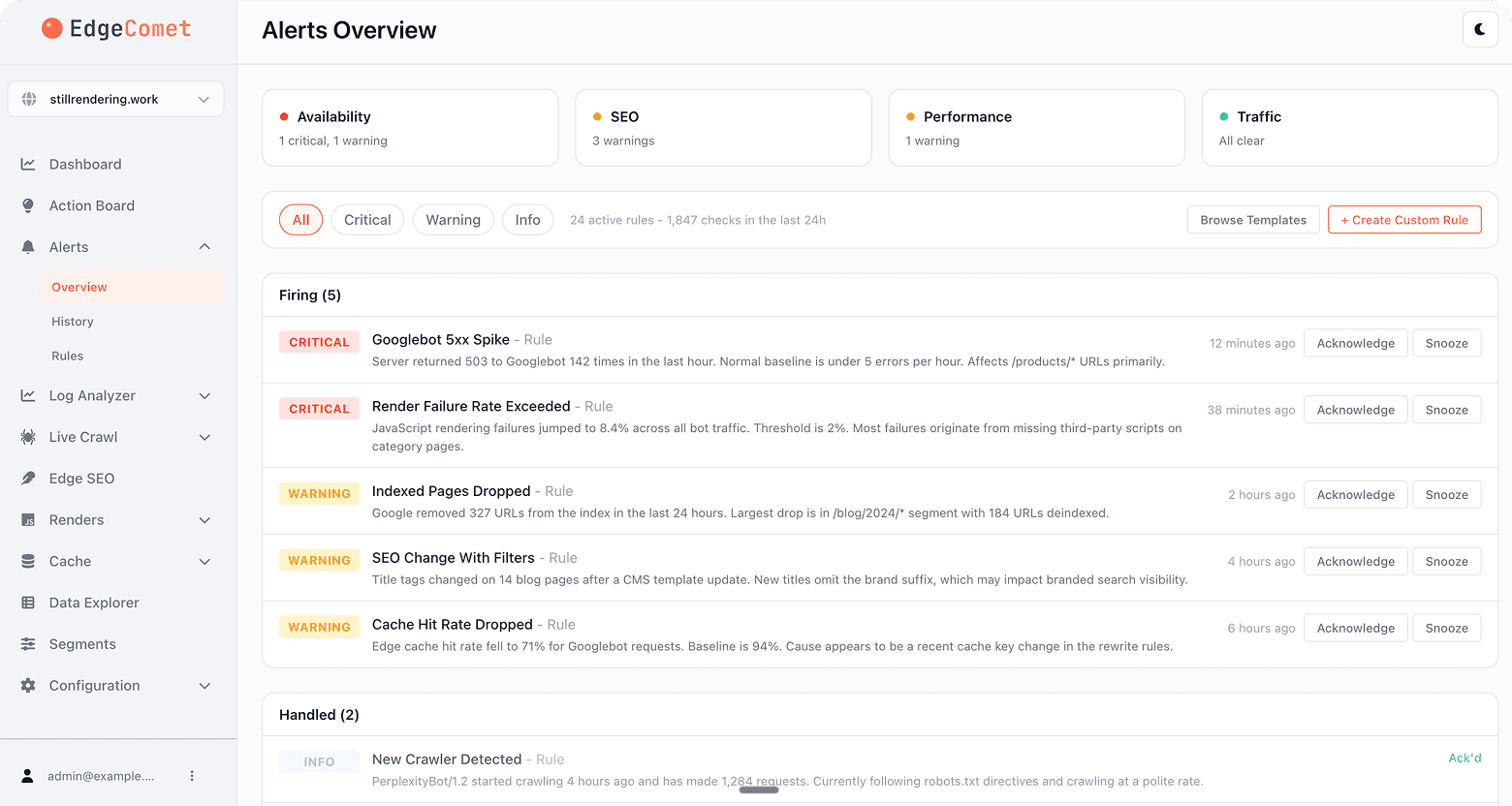
SEO issues happen often. EdgeComet monitors every real bot request and notifies if something seems wrong.
Alerts are triggered by actual bot traffic
AI explains what happened and why
Ready-to-use alert rules, active in one click
Get alerts where your team actually works
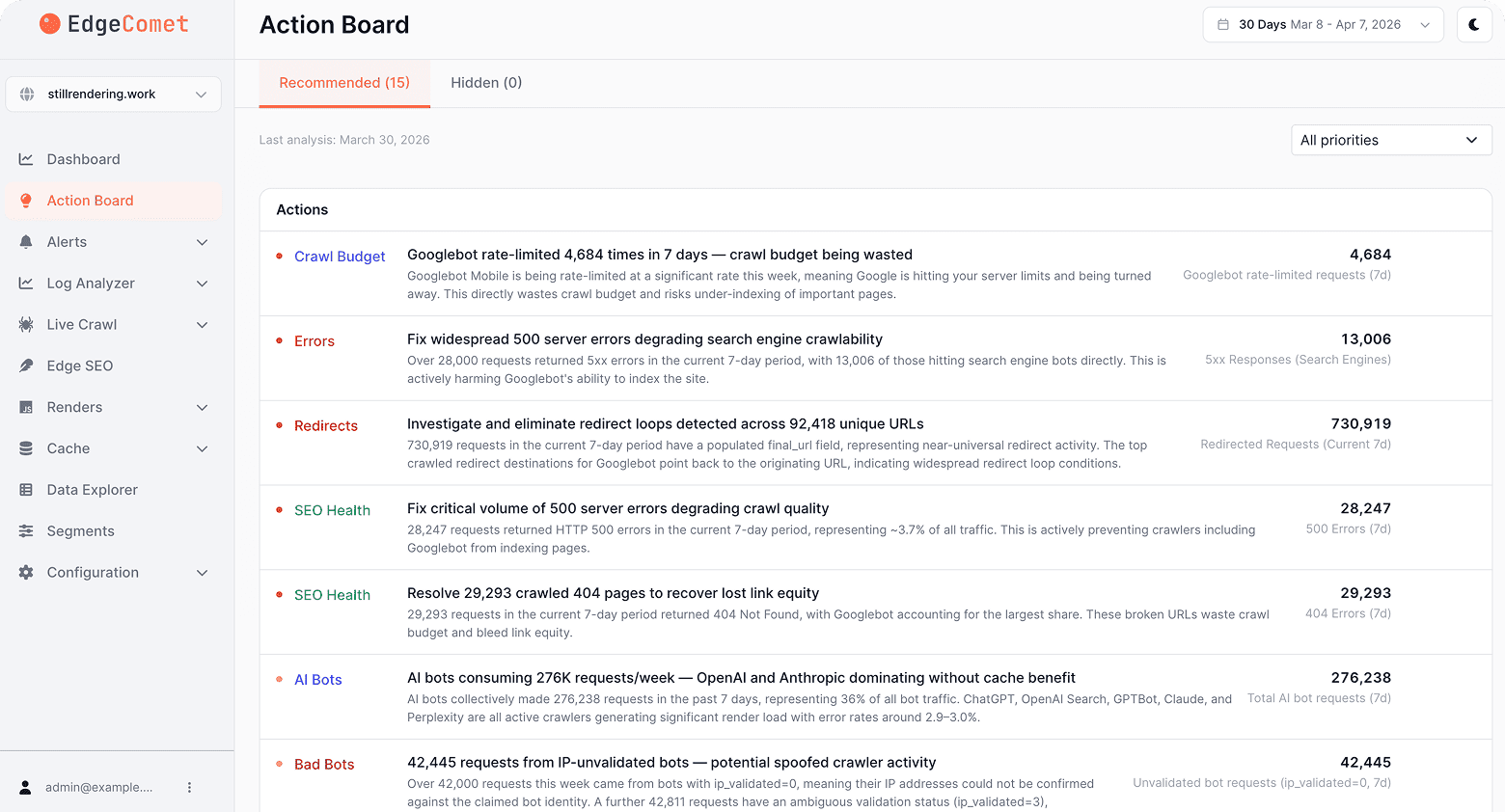
SEO data is only useful if you know what to do with it. EdgeComet's AI SEO website optimization platform monitors your site and tells you what to fix and how.
AI surfaces problems
Get specific fixes, not vague observations
AI builds rules for you
See how EdgeComet differs from traditional SEO tools and analytics platforms – across real bot data, AI visibility, and crawl intelligence. Here's an SEO log analyzer tools comparison.
SEO website crawler by EdgeComet inspects your content the same way Google does, after all scripts have run and the complete page has loaded.
On modern sites, that's an empty page, so the audit is based on nothing. EdgeComet JS SEO crawler inspects the fully rendered page.
But your tool flags issues that don't exist on the live site. EdgeComet crawler SEO solution can verify what it changes.
On headless or SPA sites, those links don't exist yet at that stage. EdgeComet audits the link structure Google actually sees.
Run EdgeComet on your real traffic with full access to the platform, including rendering, monitoring, and Edge SEO.
EdgeComet's SEO content crawler doesn't plan visits to your site. It tracks every real bot visit and catches full SEO data. Here's how it works in practice:
EdgeComet detects all incoming bots and sends the request via the rendering and analysis pipeline.
A headless Chrome instance renders the page, executing JavaScript and waiting for the configured condition. The completely rendered HTML is captured.
EdgeComet gets 40+ SEO fields from the rendered page, including titles, meta descriptions, headings, canonicals, robots, hreflang, word count, and more.
EdgeComet's web crawler SEO feature provides continuous indexation for any content platform where website crawling efficiency, content freshness, or AI visibility are business-critical.
EdgeComet monitors indexability across all product pages, detects duplicates and missing structured data, and identifies other crawl errors and budget waste from low-value content.
Listings post and delete pages constantly. EdgeComet's live crawl tracks new and lost links, so SEO teams know instantly when new pages aren't being crawled.
EdgeComet tracks data coverage across all property listing pages and notifies you the moment Googlebot finds missing or broken data, so listings stay visible in search results and AI replies.
EdgeComet shows crawl frequency per article, identifies thin content consuming crawl budget, and tracks AI visits separately, so editorial teams know whether bots explore new content.
Improve indexing, visibility, and traffic from day one.
14-days free trial
SEO crawlers visit pages on websites, render content there, and extract all metadata, including titles, canonicals, structured data, indexability status, and more. It helps you understand how search engines see your website.
A crawler in SEO is a bot that simulates Googlebot behavior by visiting your pages and extracting metadata, but it's not the same bot. It doesn't reflect the same rendering environment. EdgeComet captures each Googlebot visit with the full rendered page content attached.
EdgeComet's live crawl shows duplicates and missing titles and canonicals, absent or too short meta descriptions, noindex pages, structured data gaps and schema errors, thin content, broken heading structure, slow serve times to bots, JavaScript render failures, and 4xx or 5xx errors.
Most traditional crawlers are struggling with JavaScript; they parse raw HTML and empty pages. EdgeComet renders every page in headless Chrome before capturing metadata, so SEO elements generated by JavaScript are fully visible.
All indexation issues have a cause: missing canonicals, noindex, JavaScript error, or a server too slow for bots to crawl efficiently. EdgeComet’s JS crawler SEO identifies these issues in real time from actual bot traffic, so you can resolve them before rankings drop.
Yes, EdgeComet handles high-volume websites without planning scans or adding workload to your server, since every site structure analysis comes from real bot visits.
Stay ahead with expert insights on search visibility, AI optimization, and technical SEO
For fifteen years, the technical SEO job has started the same way: point a crawler at a site, wait, export...
Read Article
JavaScript content takes hours to weeks longer to index than static HTML because Googlebot cannot index it on the first...
Read Article
When you optimize a website for search and AI visibility, you think about content quality, page speed, structured data, and...
Read Article