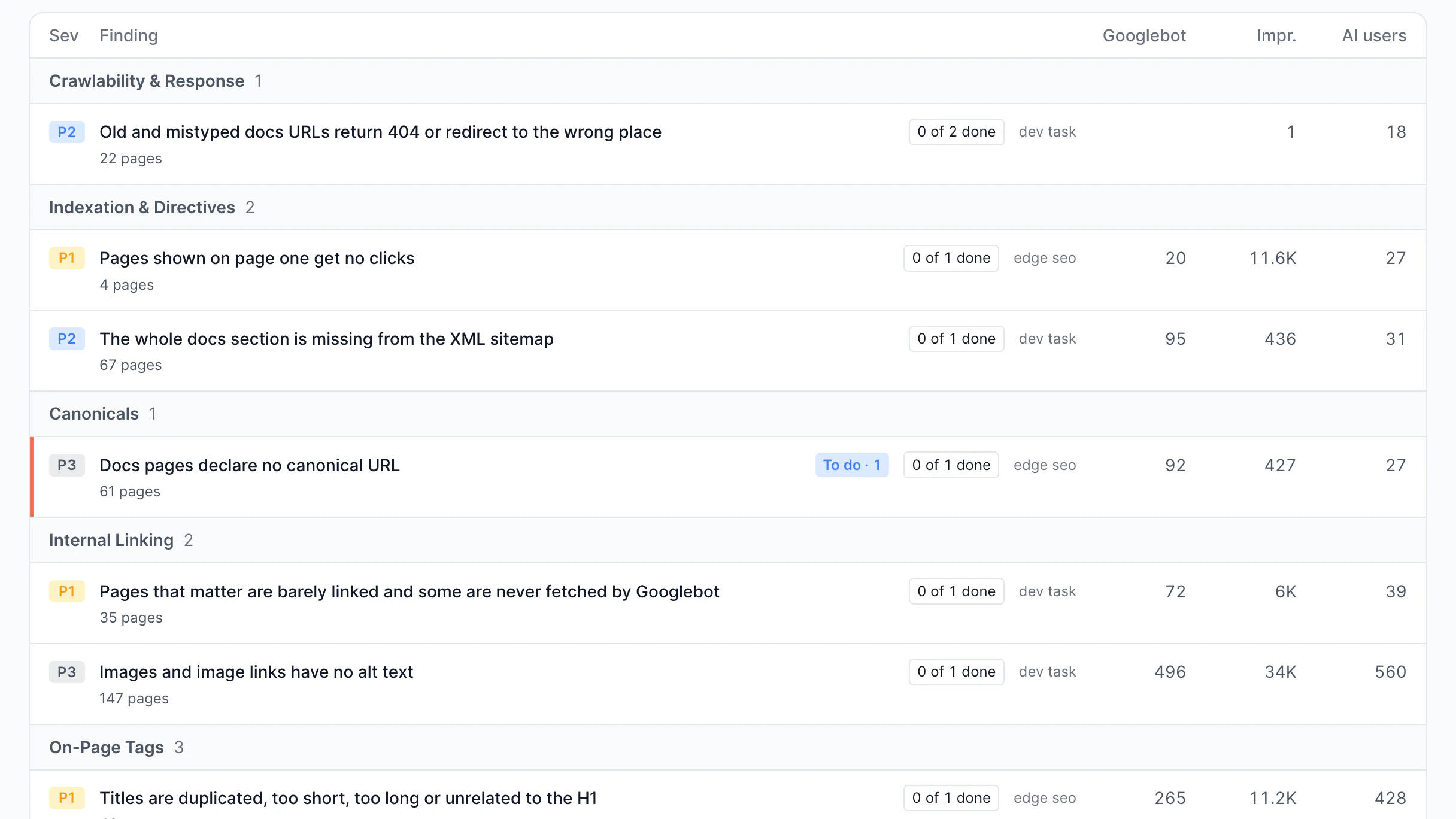
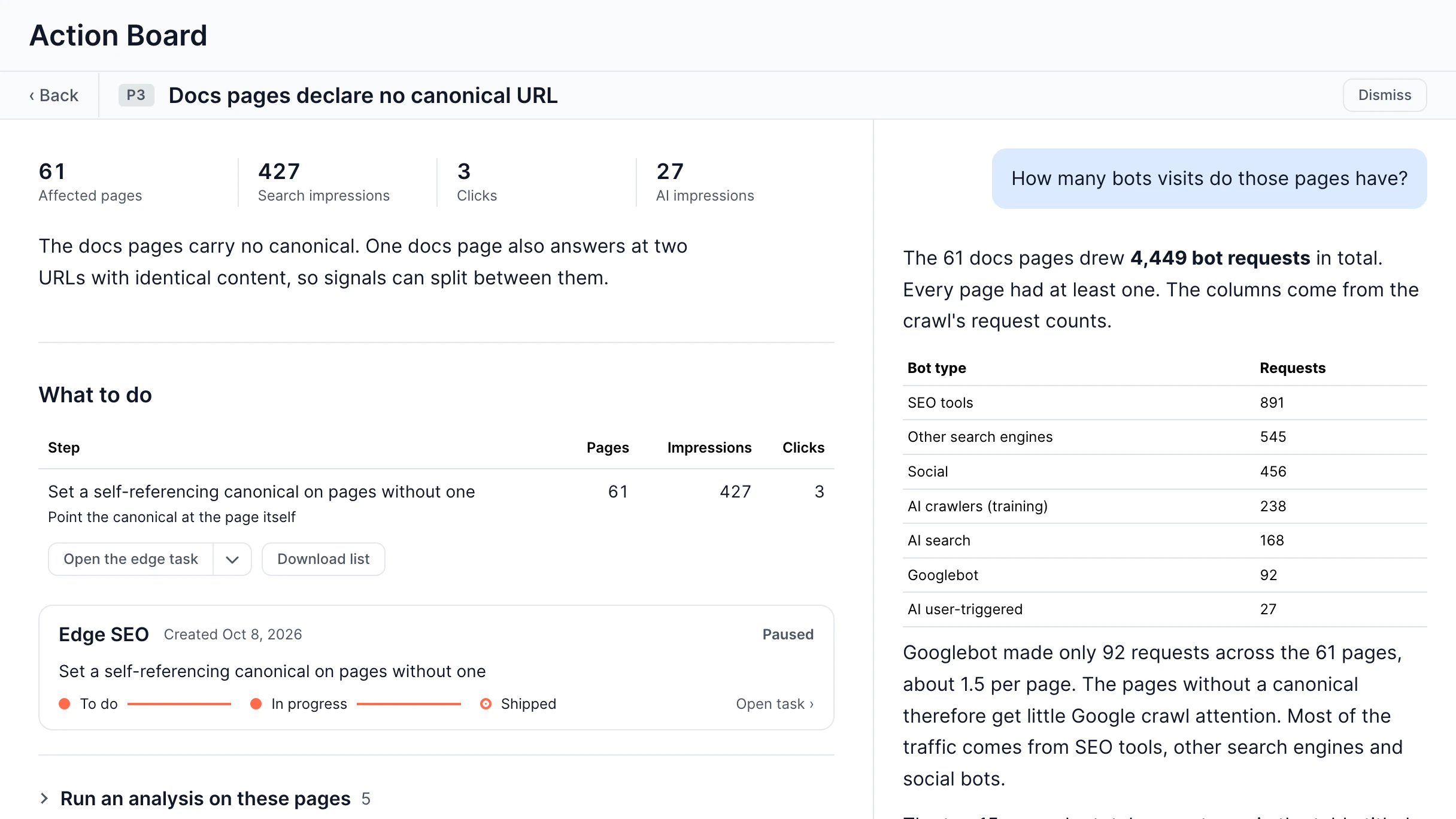
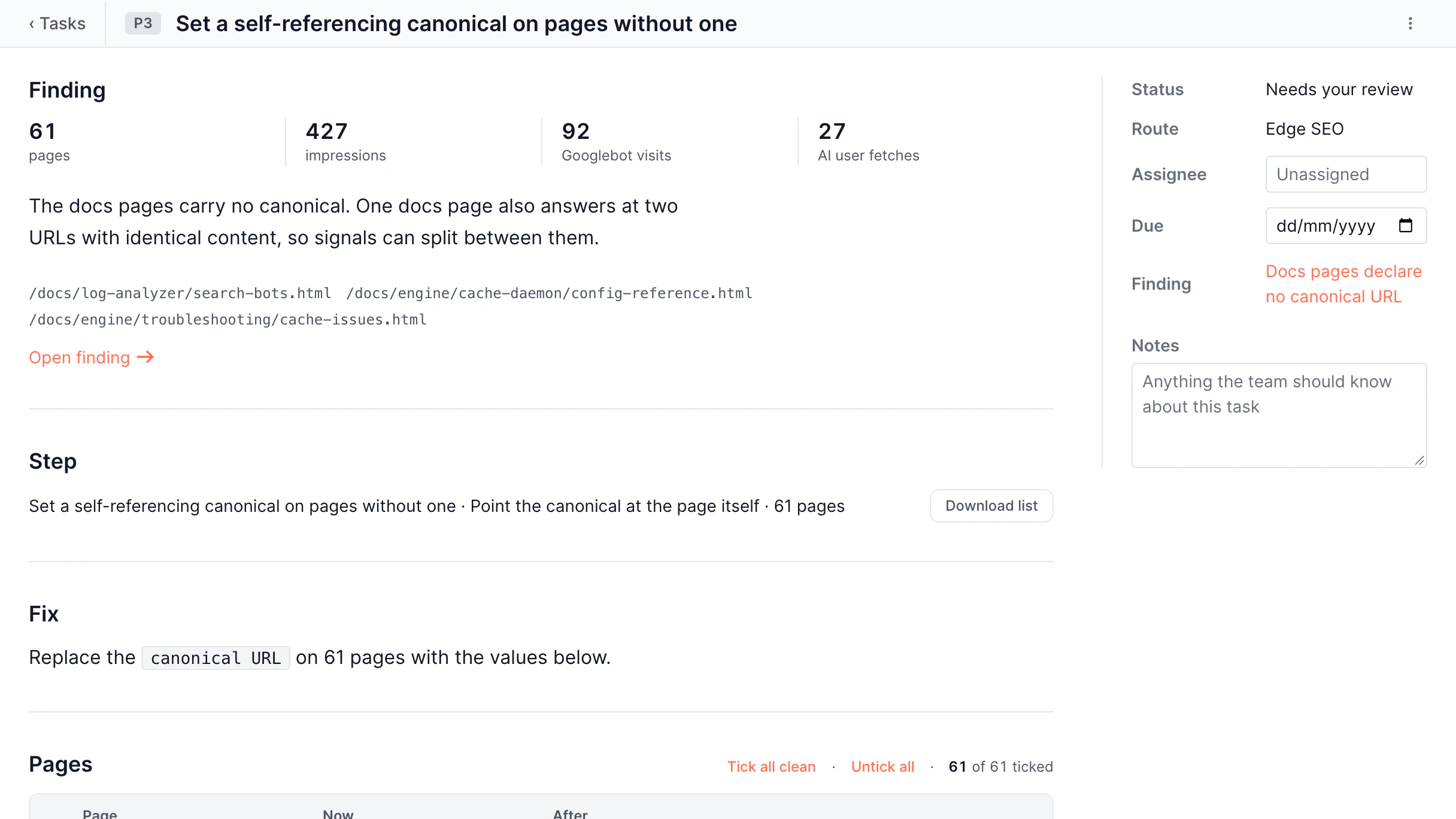
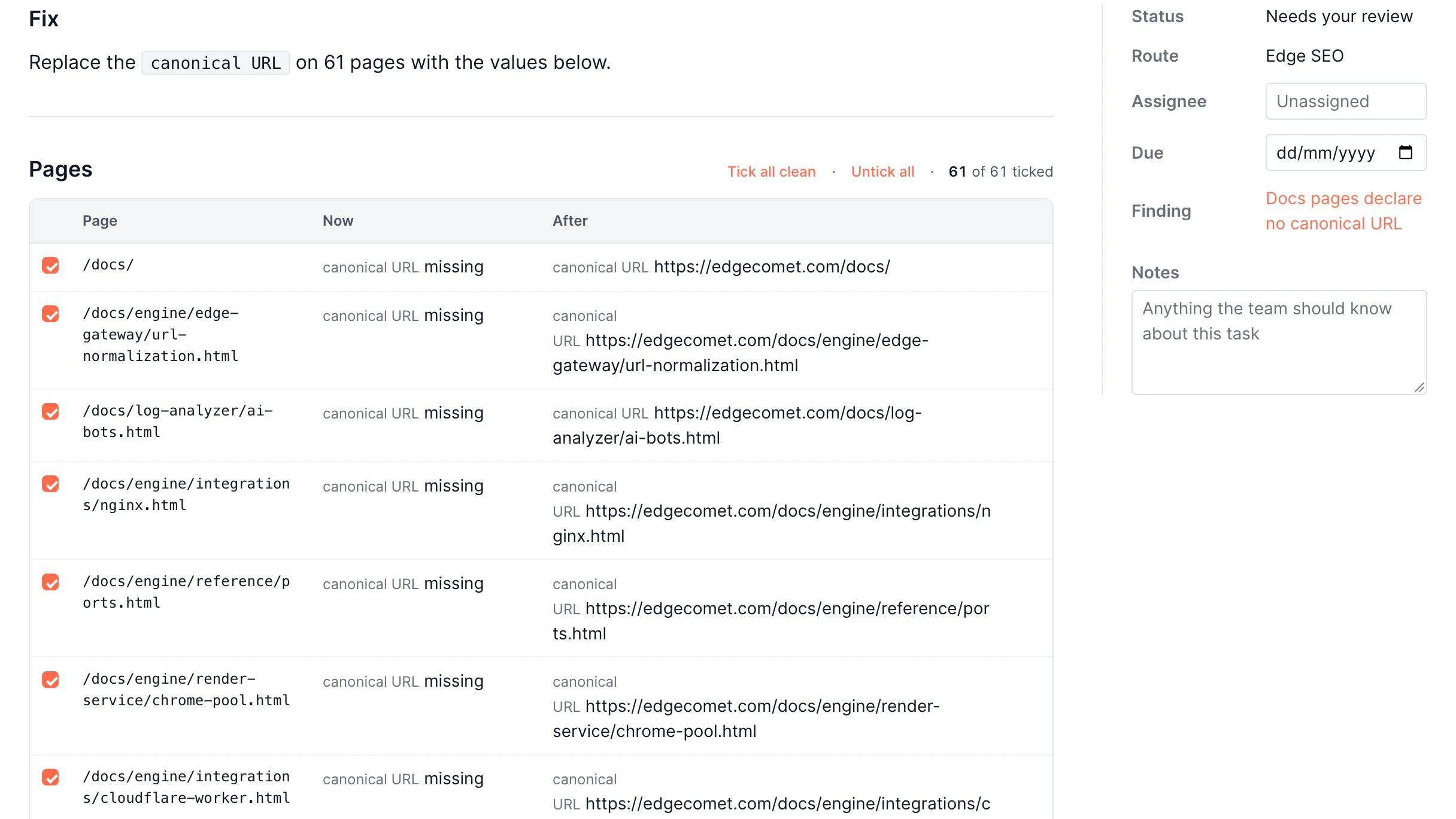
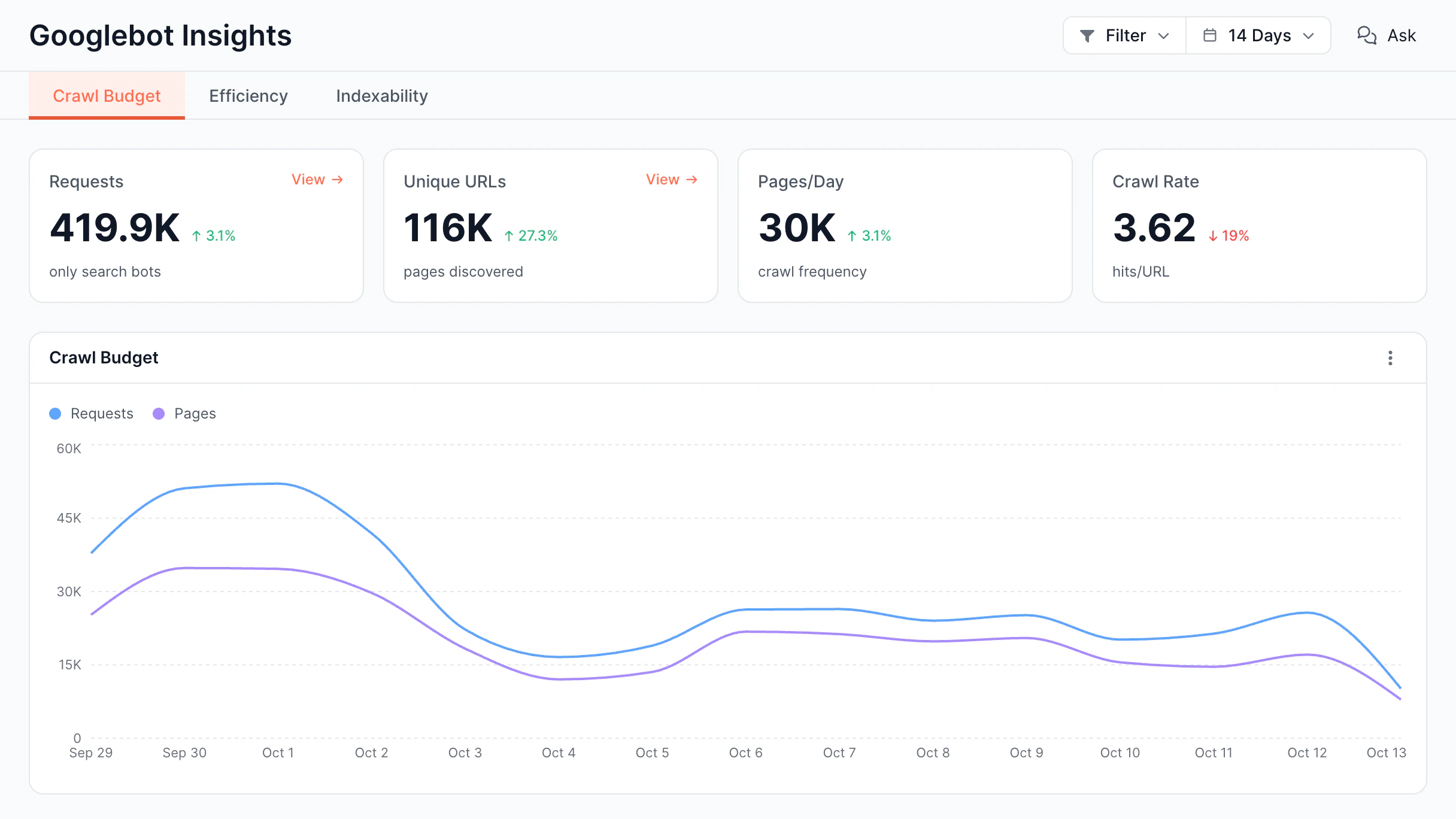
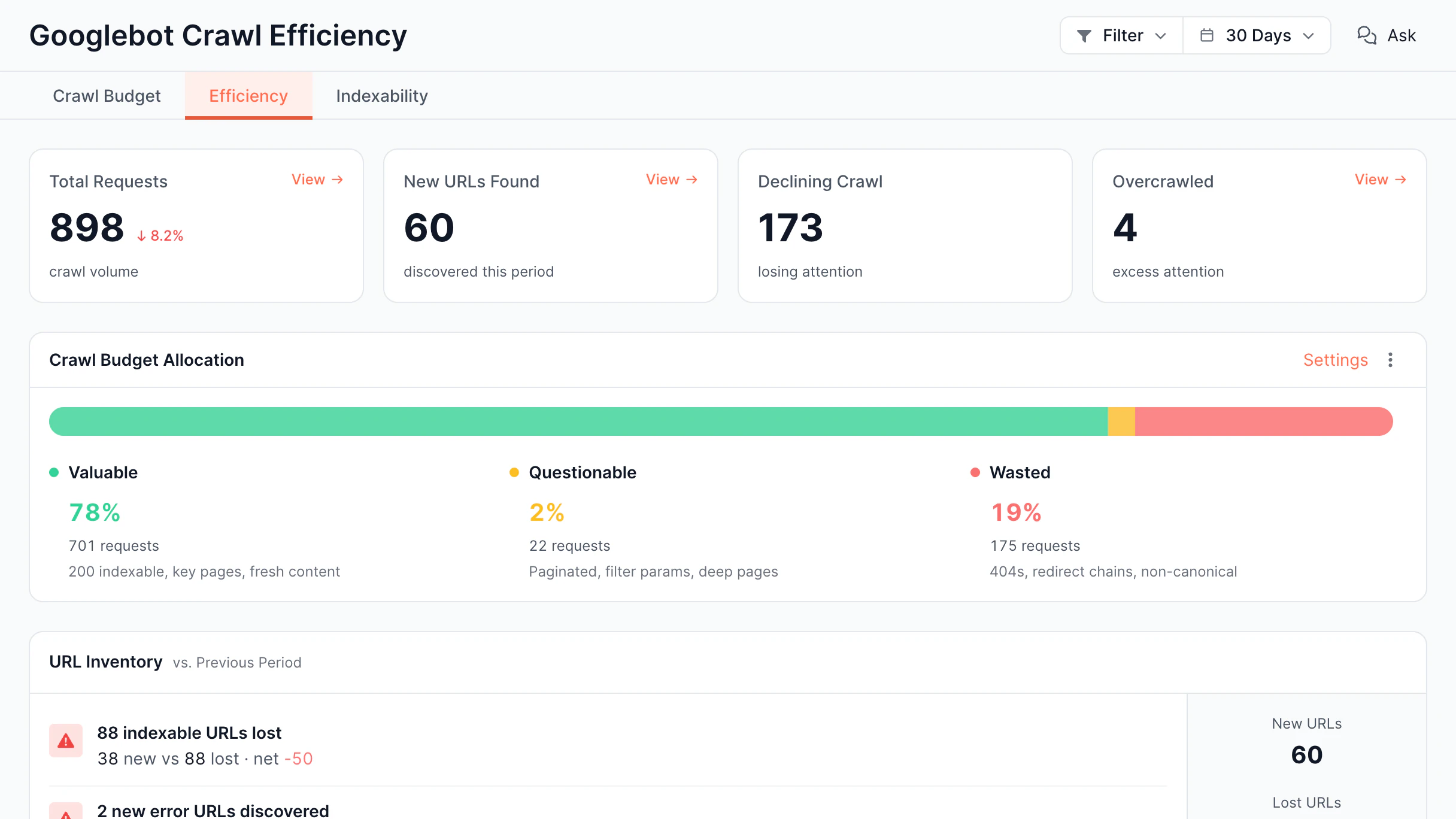
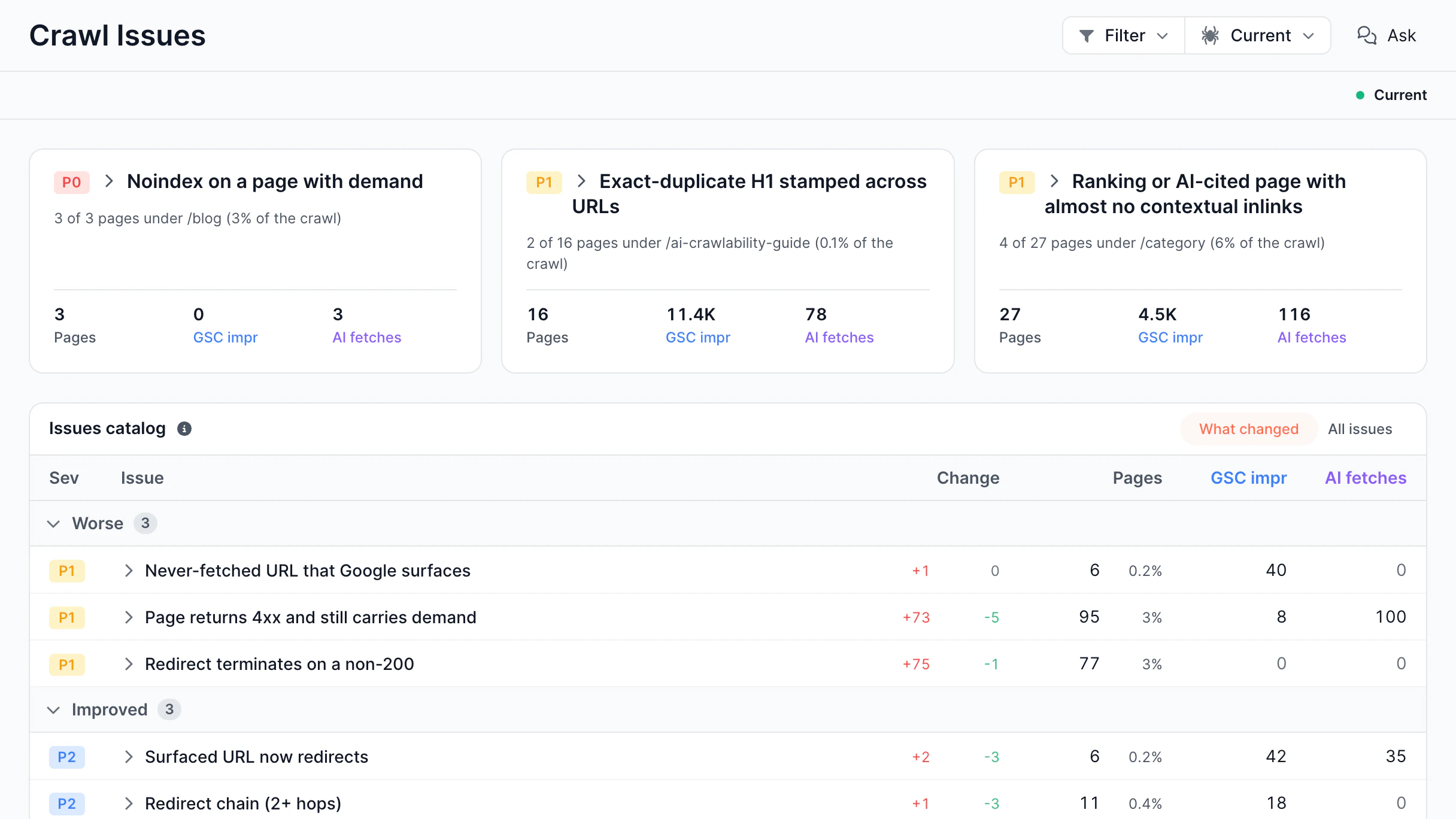
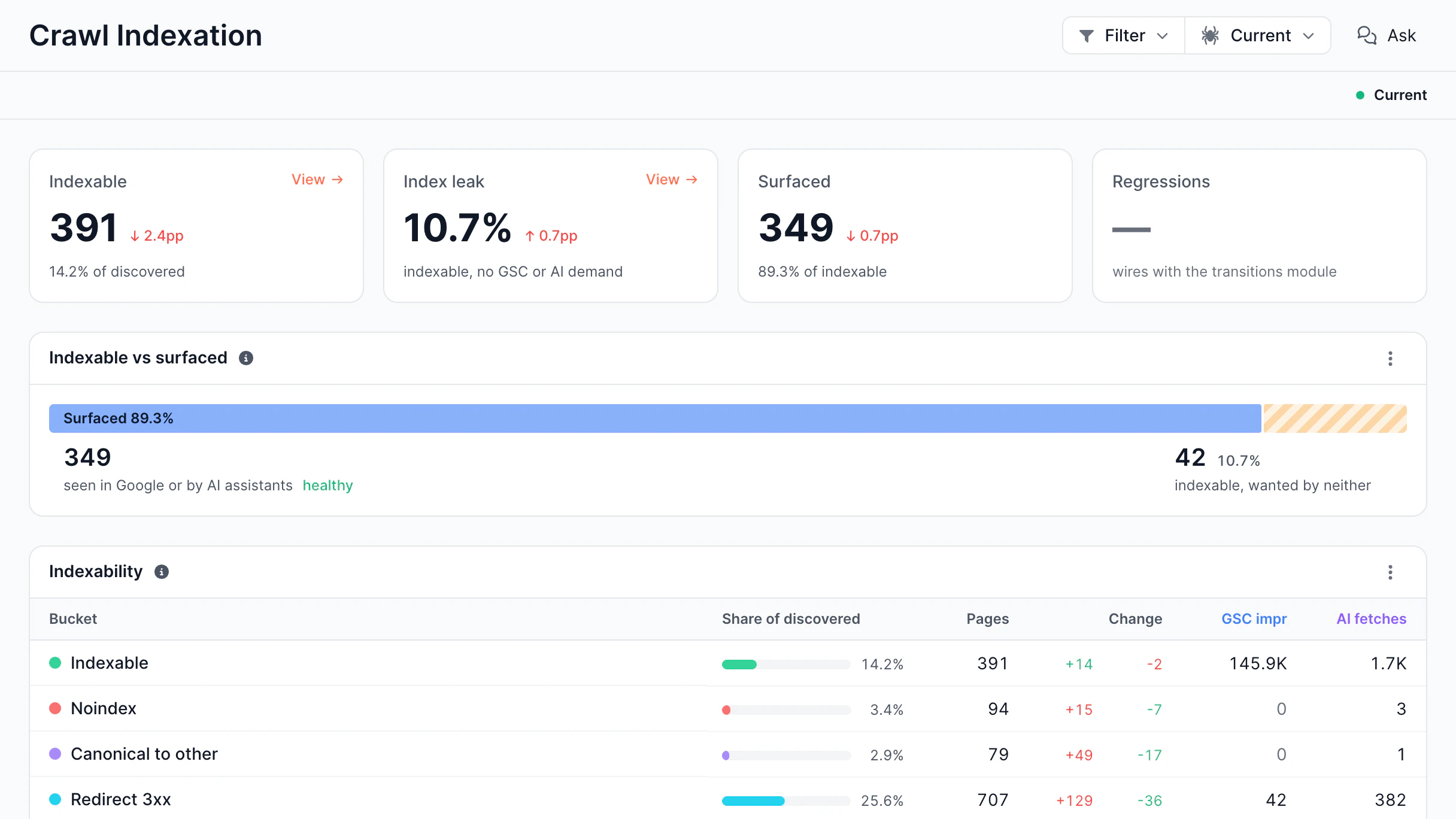
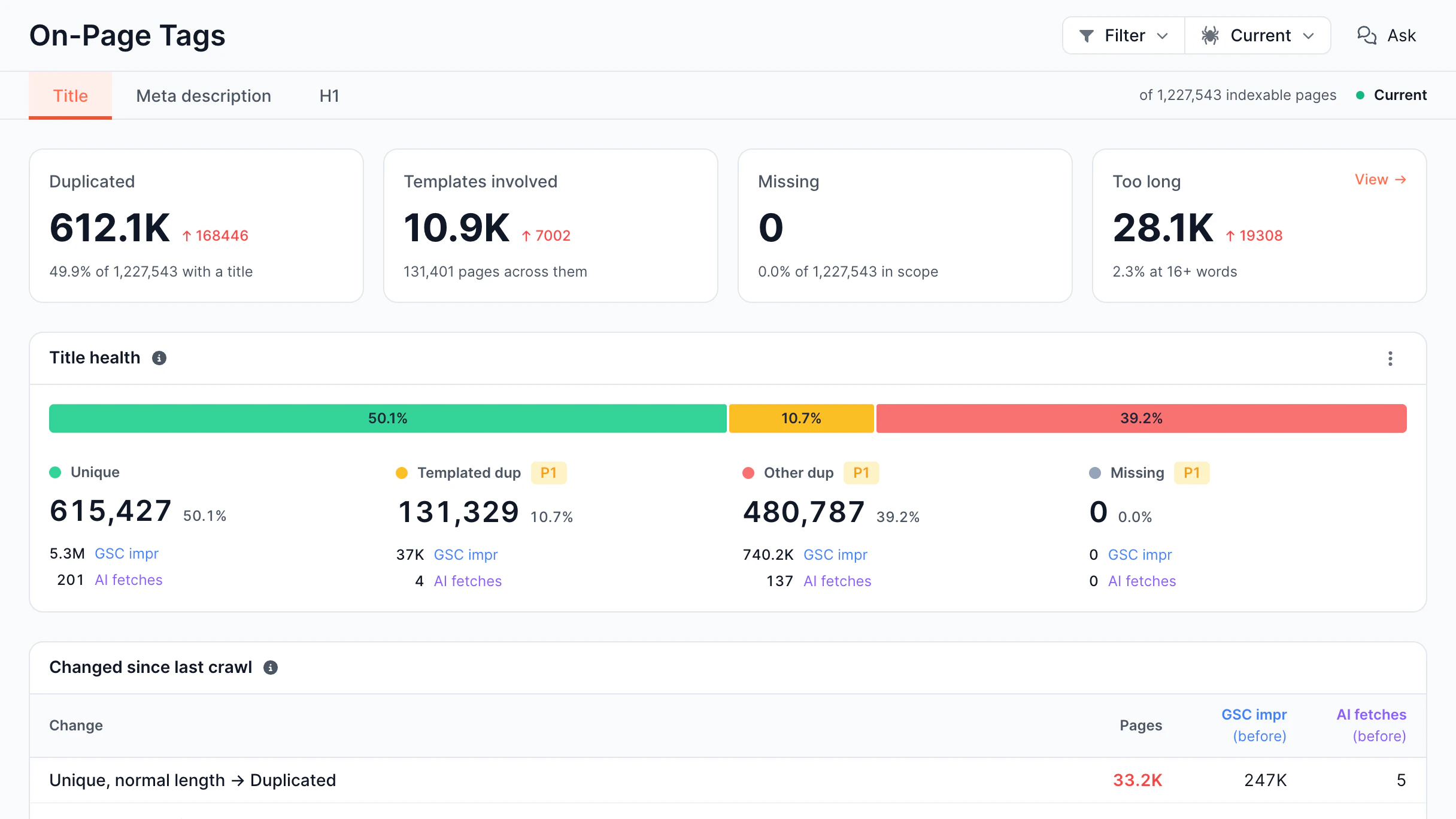
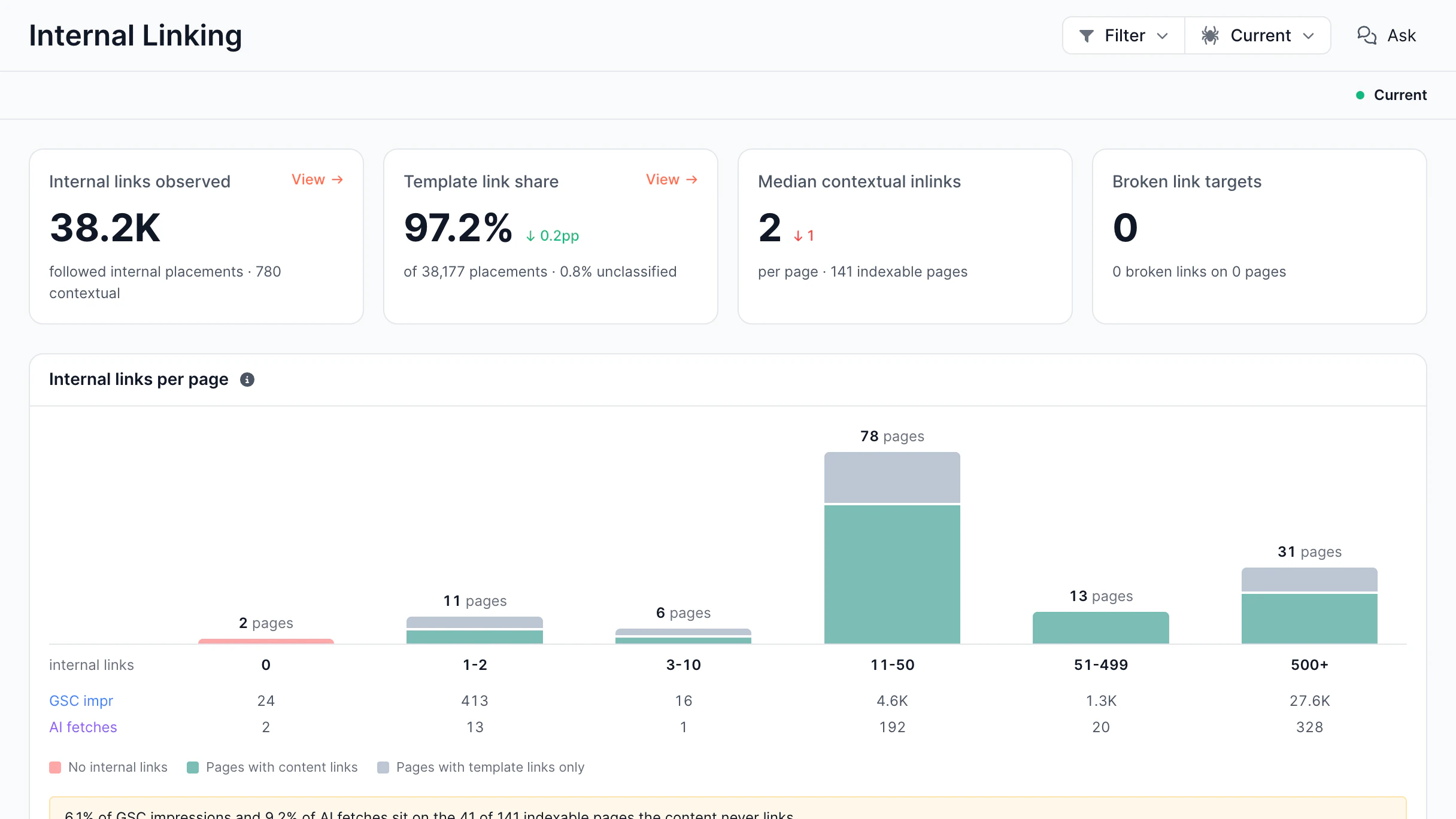
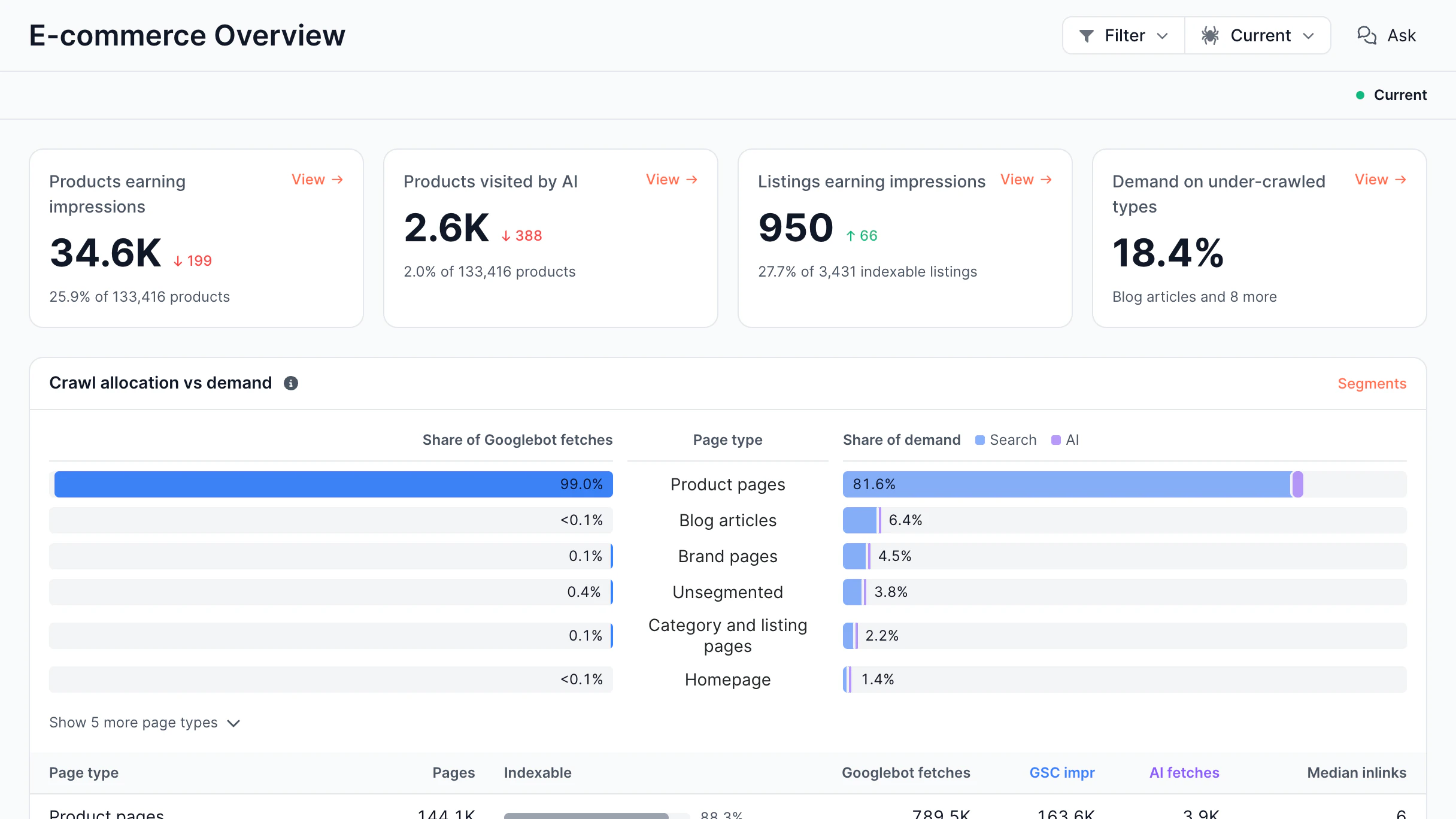
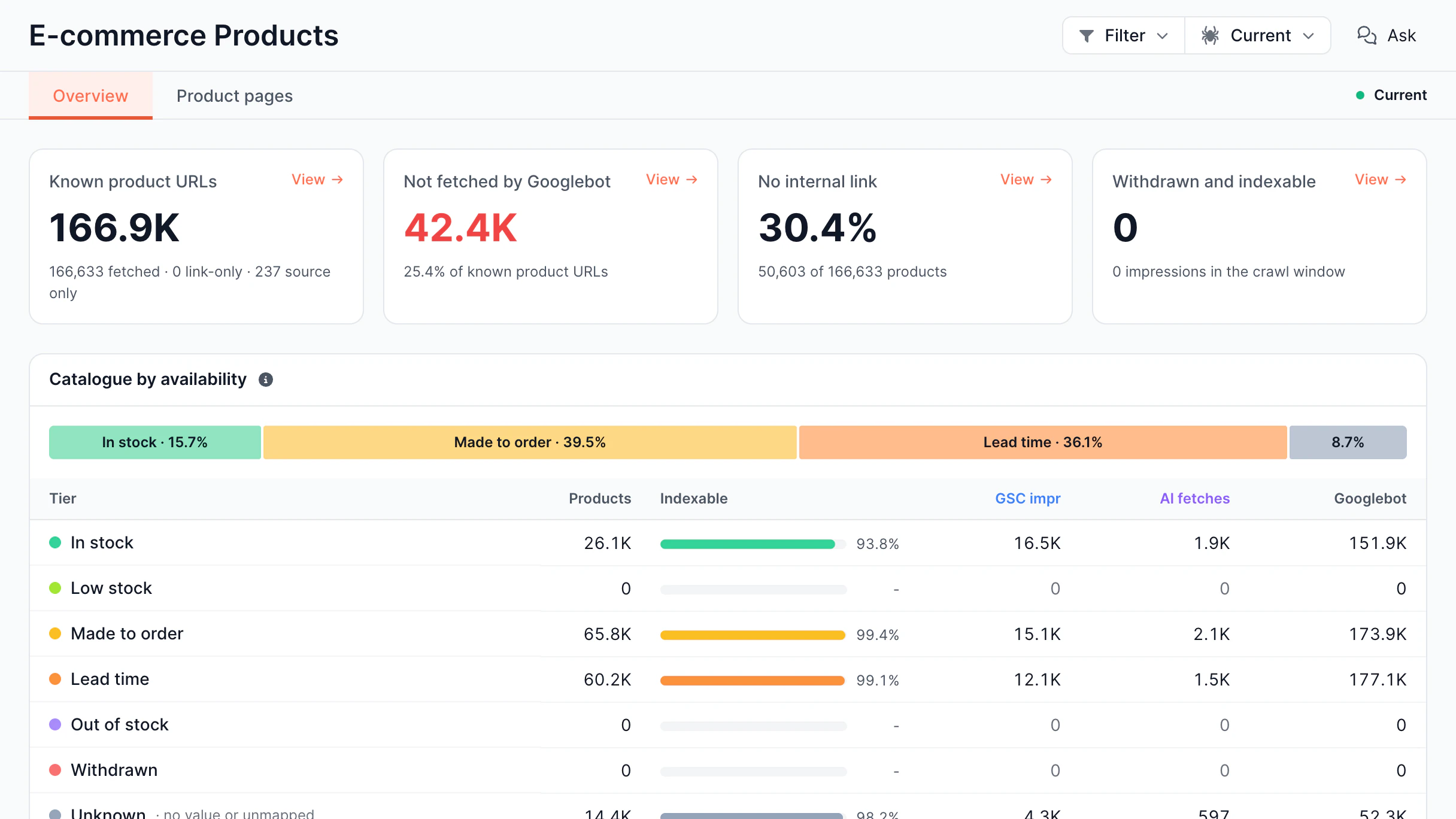
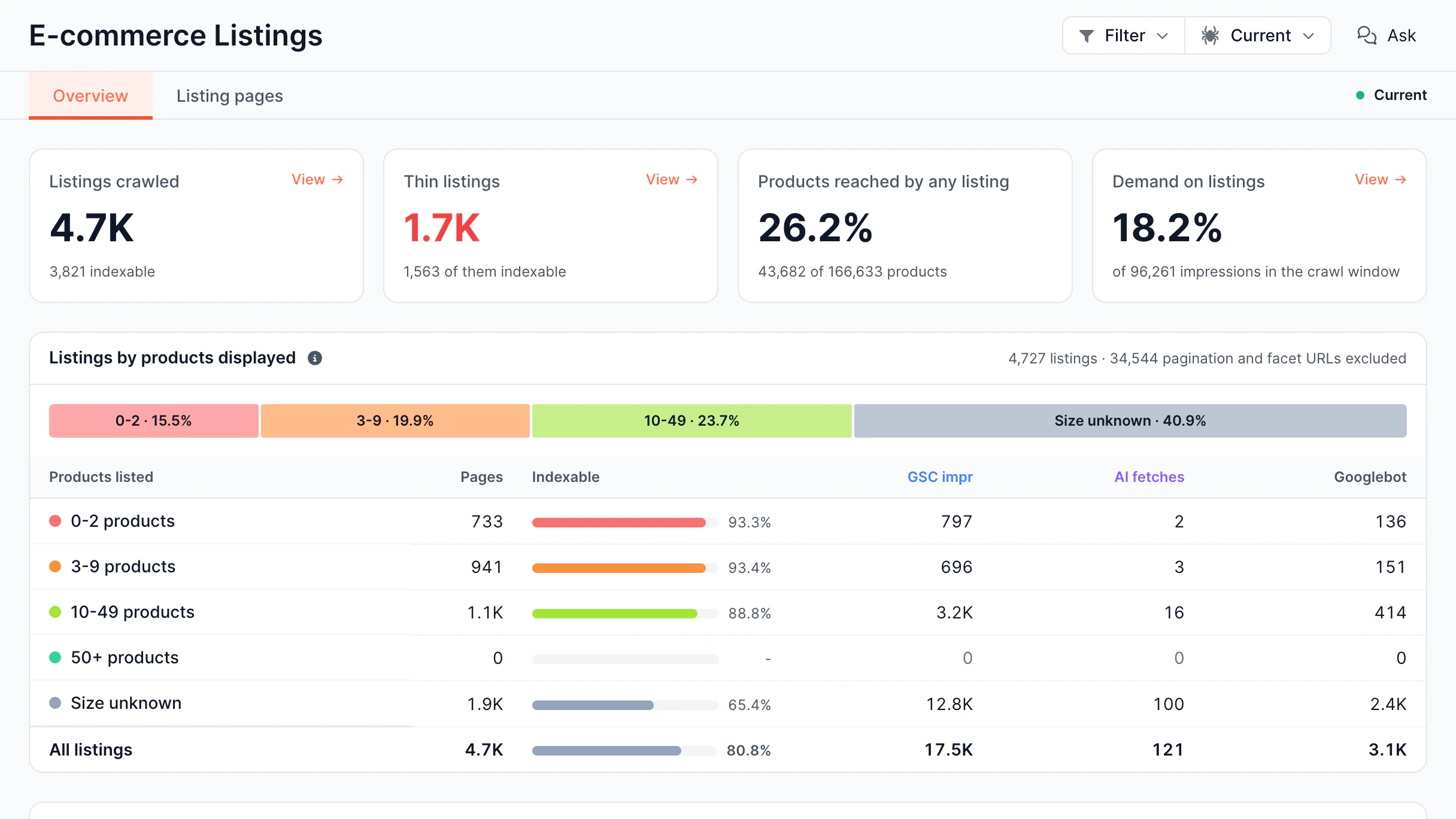
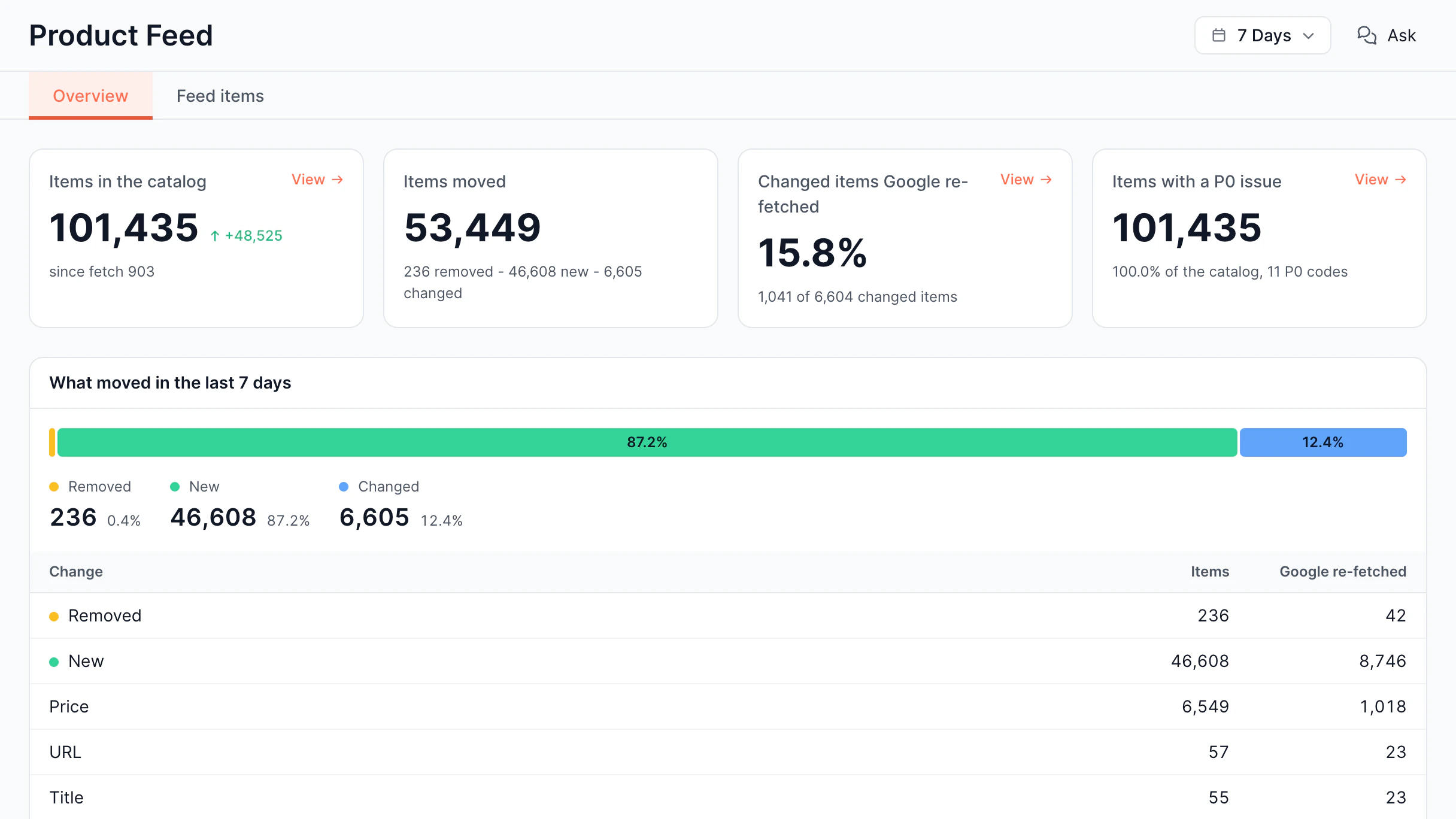
Evergreen Crawl V2: internal linking, prioritized checks, and automatic configuration
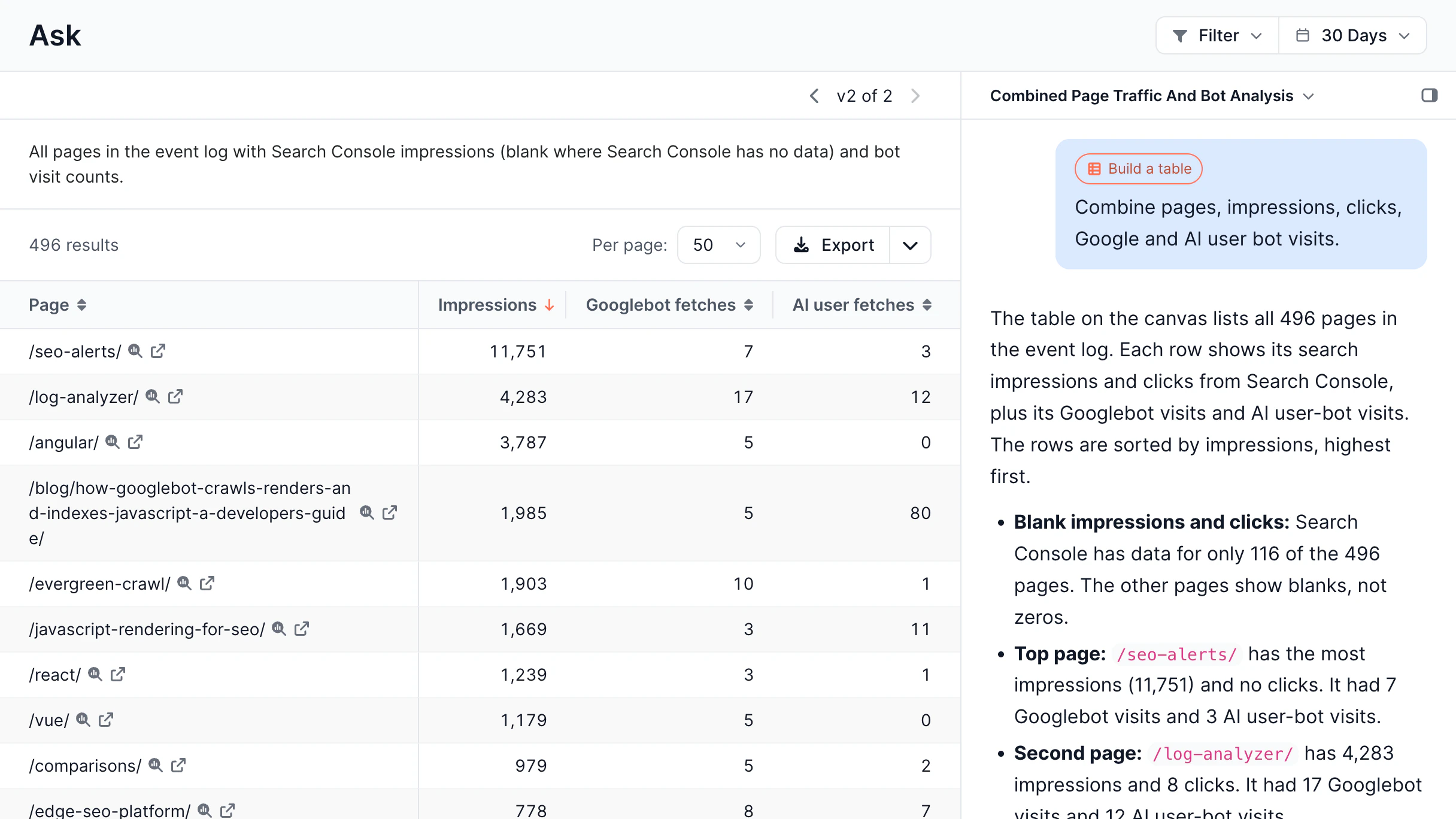
We released a new version of Evergreen Crawl V2, and it is now available on all accounts. The release adds...
Read ArticleRender JavaScript sites the way search engines and AI crawlers actually see them – with dedicated infrastructure that runs separately from your application, delivers cached responses in 15ms, and never adds load to your origin servers.
Without appropriate JavaScript rendering, AI bots and search engines miss critical pages and you won’t understand that until rankings already decrease.
Search engines have trouble executing JavaScript. If your content is rendered client-side, Googlebot sees an empty page and your rankings drop while analytics shows nothing wrong.
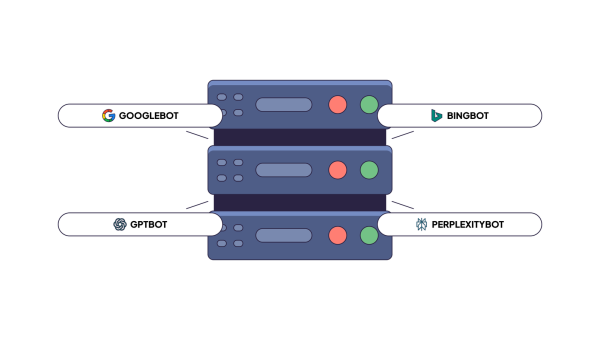
ClaudeBot, GPTBot, and PerplexityBot can't run JavaScript at all. Without dynamic rendering, AI indexes blank pages, making content invisible in AI-generated answers.
Common monitoring solutions check HTTP status codes, not what bots actually get. Rendering issues can stay undetected for days until organic traffic signals the decrease.
In-house server-side rendering couples rendering with backend, so each bot request adds compute load to production. It slows response times for real users and reduces crawl frequency.
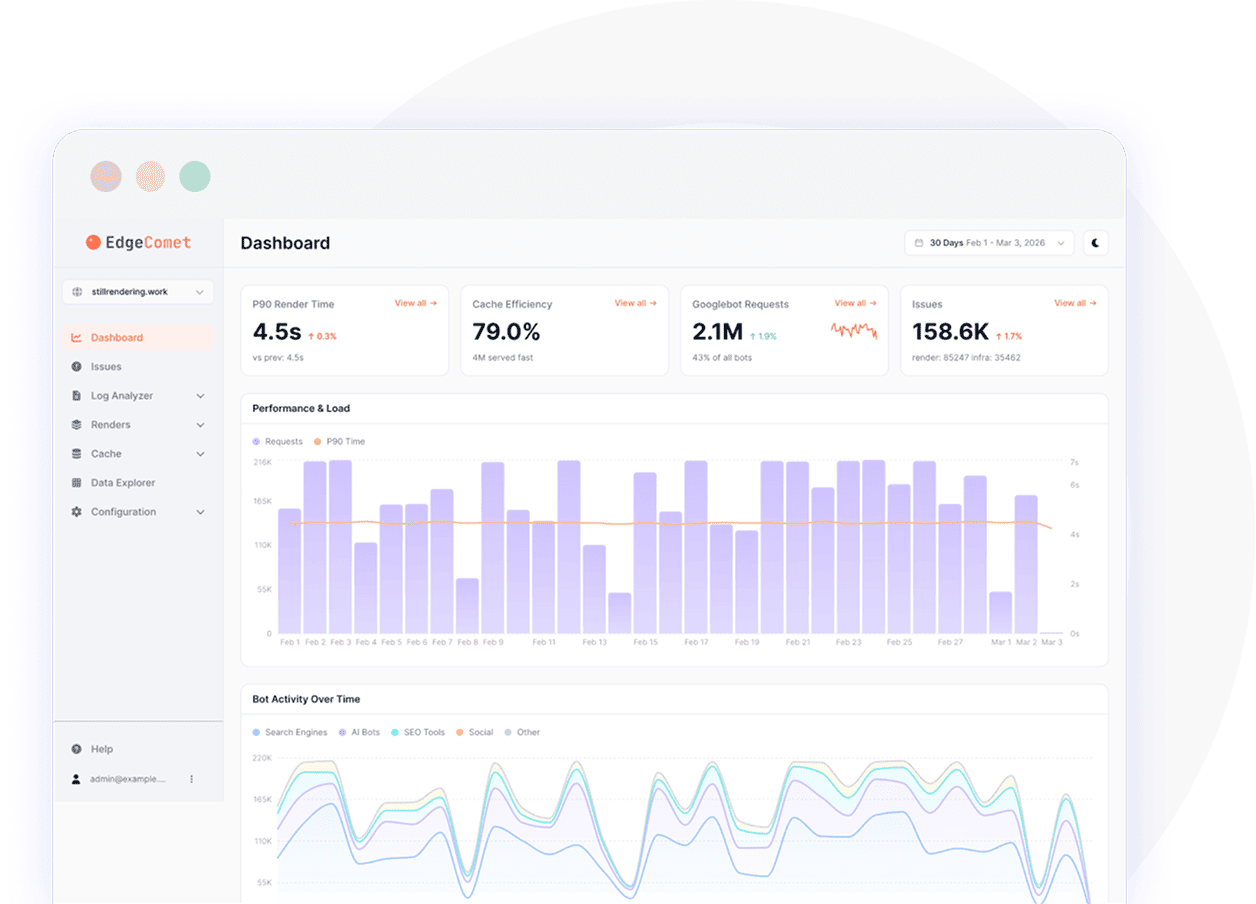
Get dedicated JavaScript rendering for SEO to serve fully processed pages to bots. Track rendering activity, catch JS failures, and track bot coverage from a single dashboard.
Serve completely rendered content to bots using dedicated headless browser infrastructure. Manage JavaScript-heavy sites and AI bots without adding load to servers.
Identify bot requests and serve fully processed HTML
Cover Googlebot, GPTBot, ClaudeBot, and more
Scale infrastructure without overloading production servers
Detect coverage gaps before they affect indexation
Detect JavaScript issues that prevent bots from getting visible and indexable content. Compare what crawlers actually see versus what users see, without conducting manual audits.
Detect broken scripts and incomplete page loads
Surface discrepancies before they impact rankings
See exactly what bots receive on each page
Trace rendering errors back to their root cause
Identify performance bottlenecks that slow down crawling and reduce render efficiency. Monitor render times, page weight, and third-party resource impact across all bots and page types.
Monitor render speeds across any date range
See whether Images, JavaScript, or CSS are bloating renders
Measure exactly how much third-party scripts slow rendering down
Track DOMContentLoaded, load, and networkIdle timing in real time
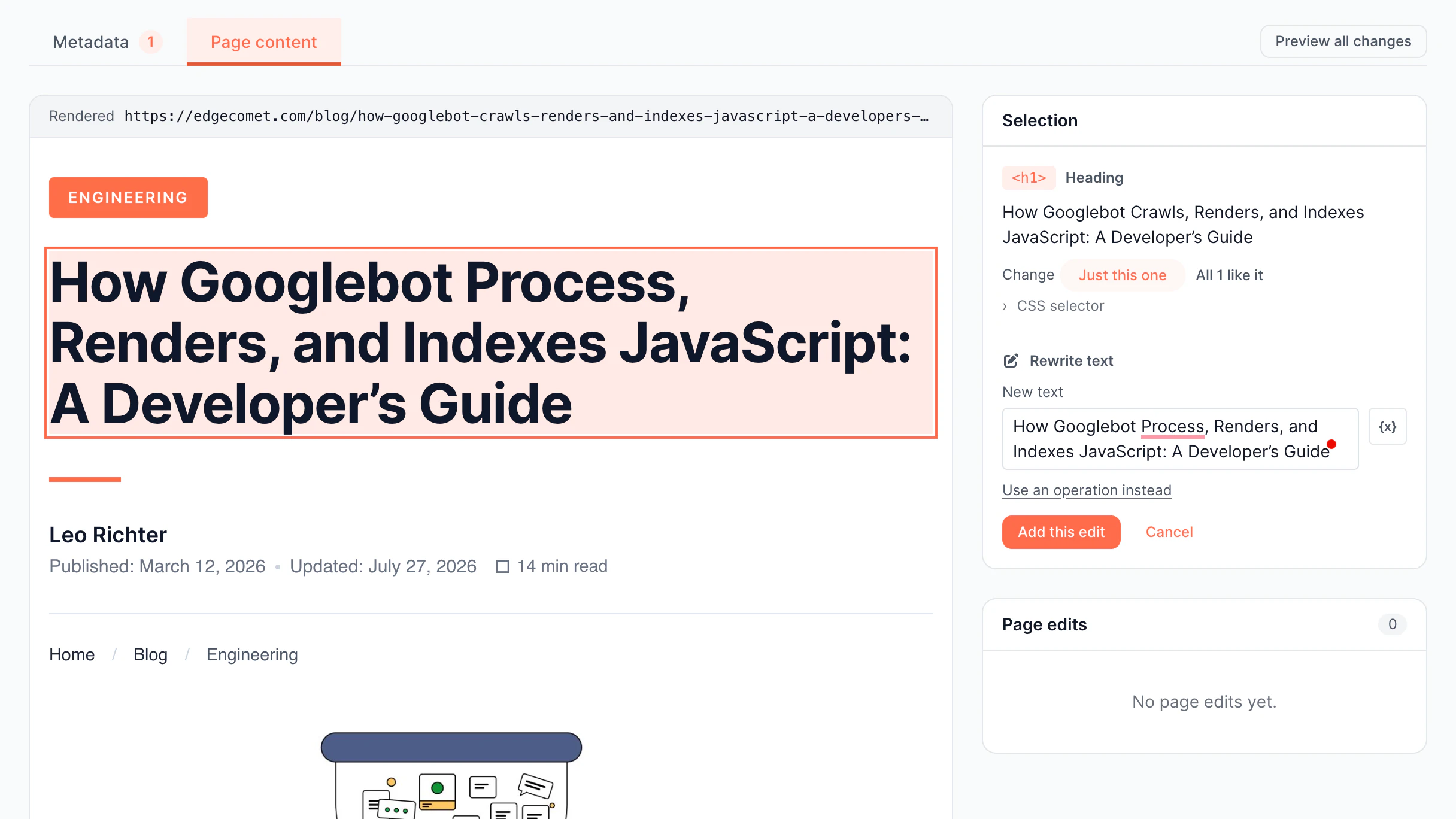
None of the minor SEO issues should require developers and a long wait. EdgeComet lets your SEO team make changes instantly.
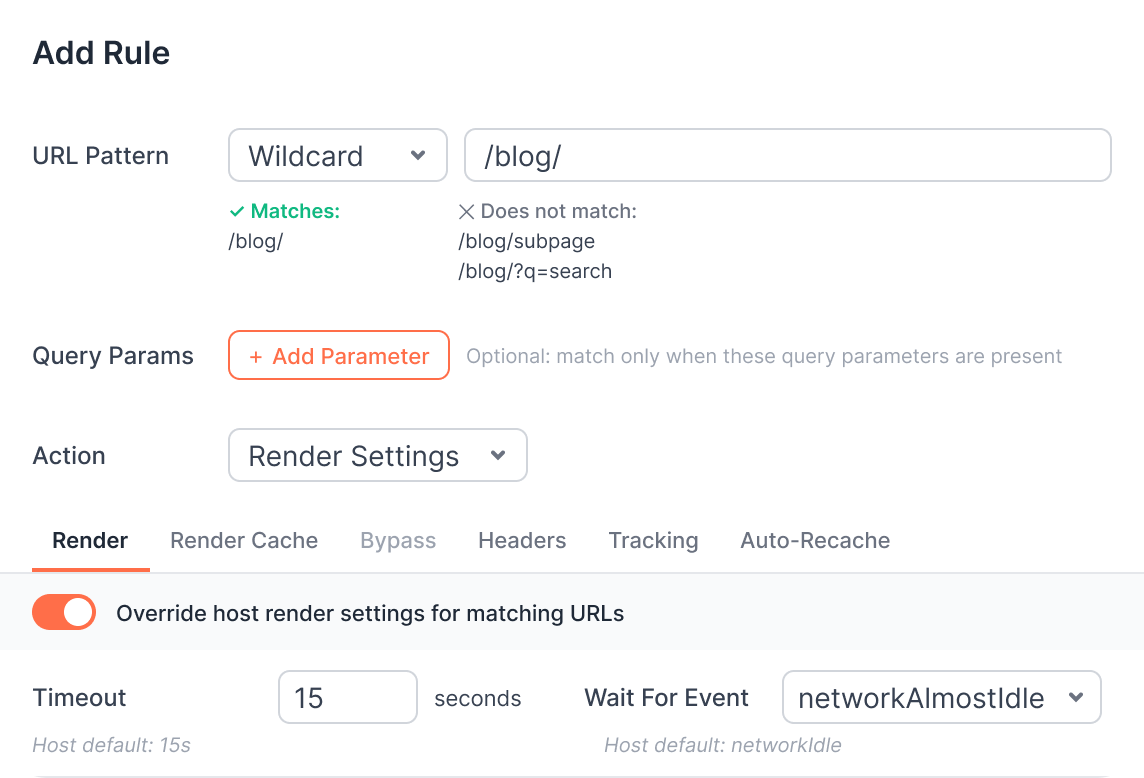
Deploy changes across thousands of pages.
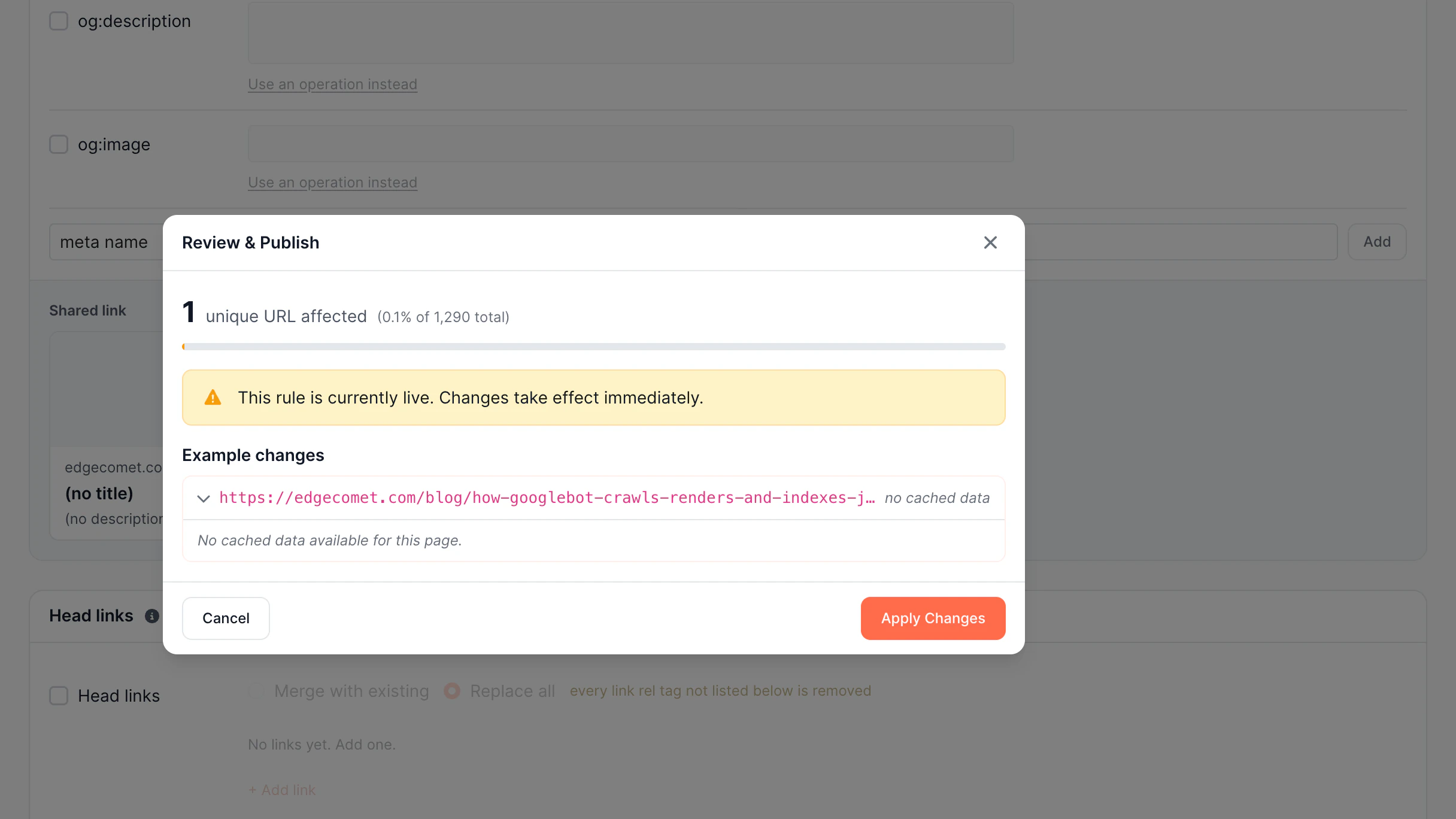
Preview changes before search engines see them.
Generate complex SEO rules in seconds.
Every change is versioned and reversible
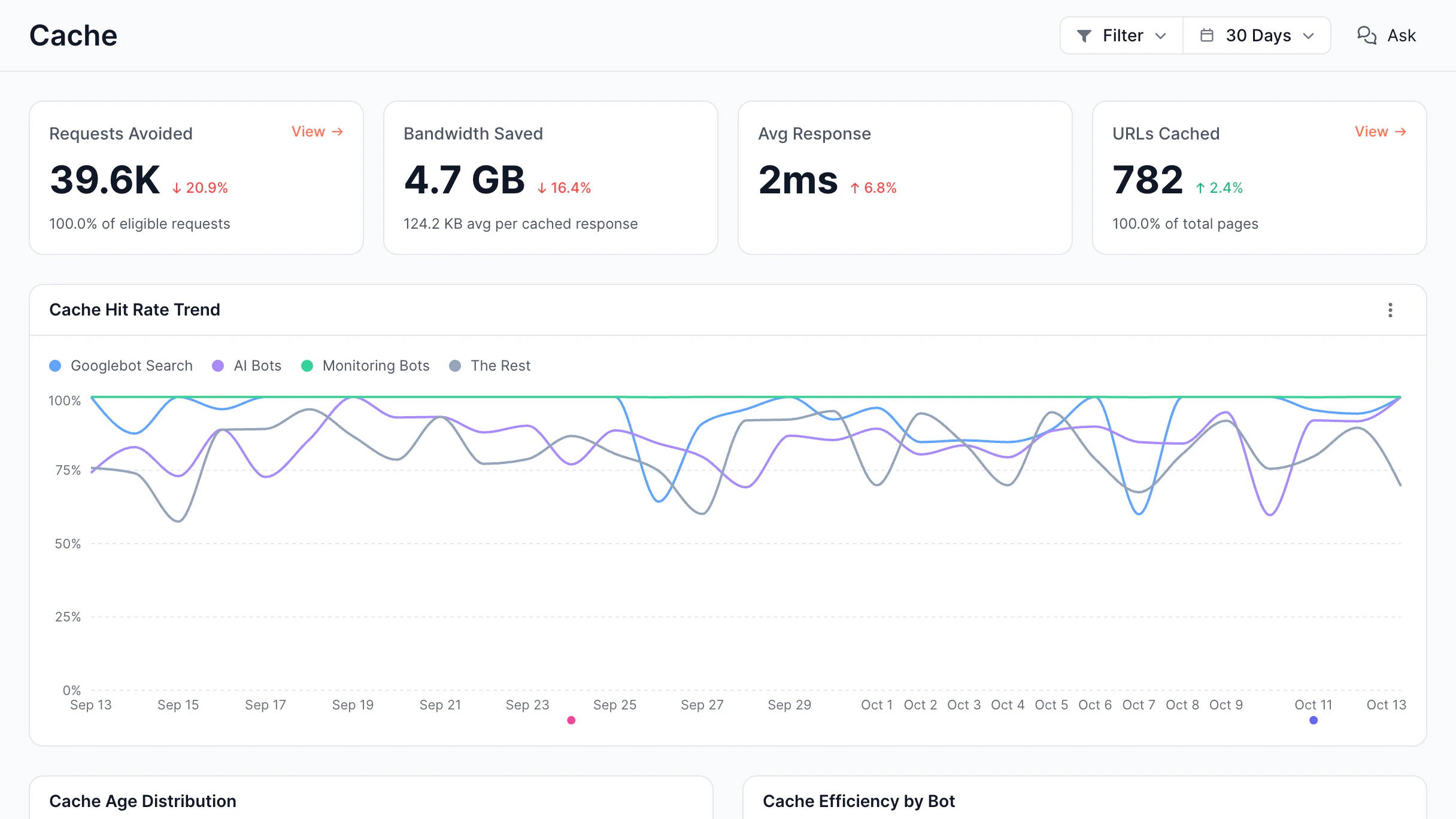
Rendering JavaScript pages on every request is slow and expensive. EdgeComet's caching system ensures bots receive pre-rendered pages instantly.
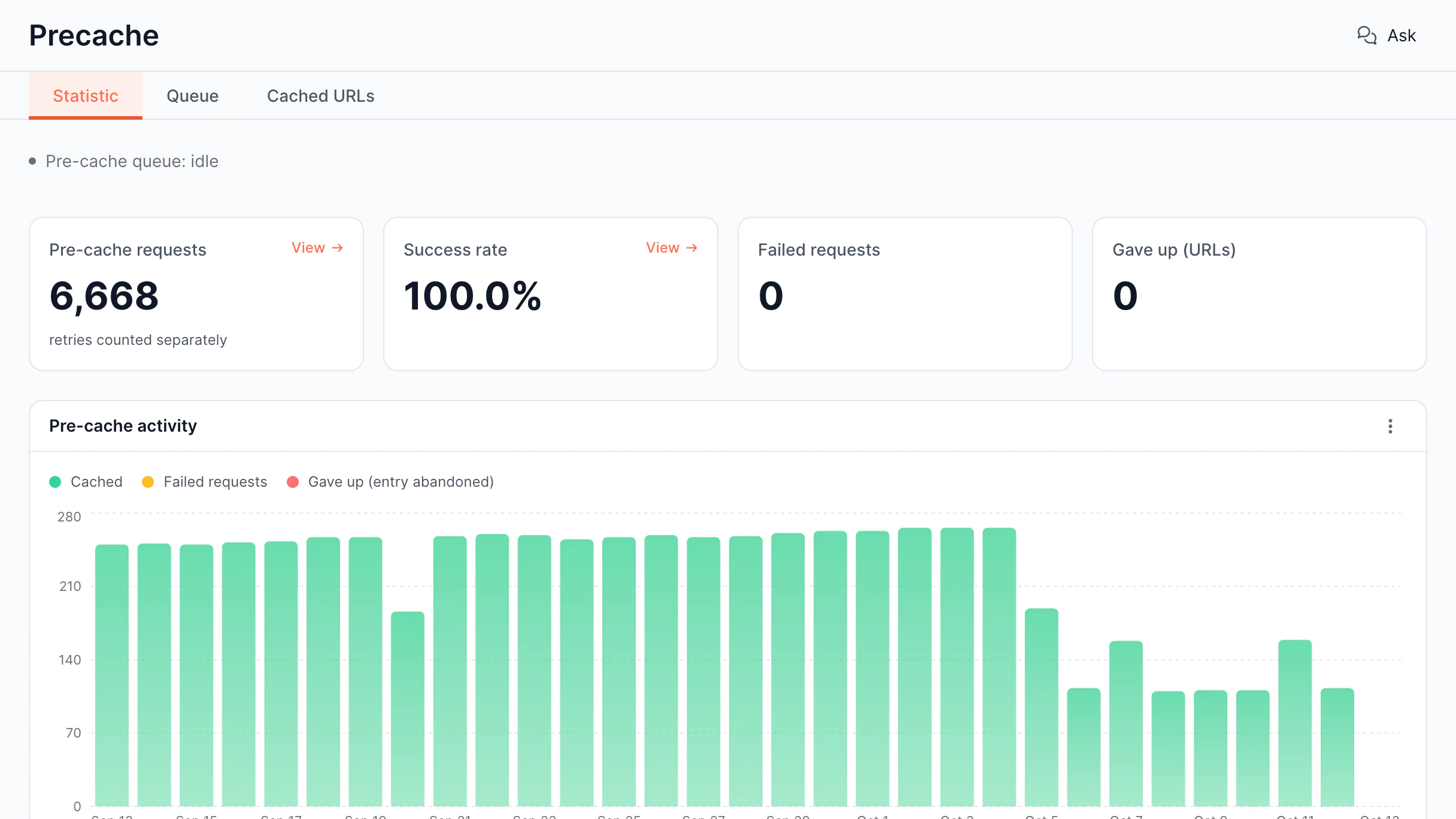
Manage and monitor cached renders
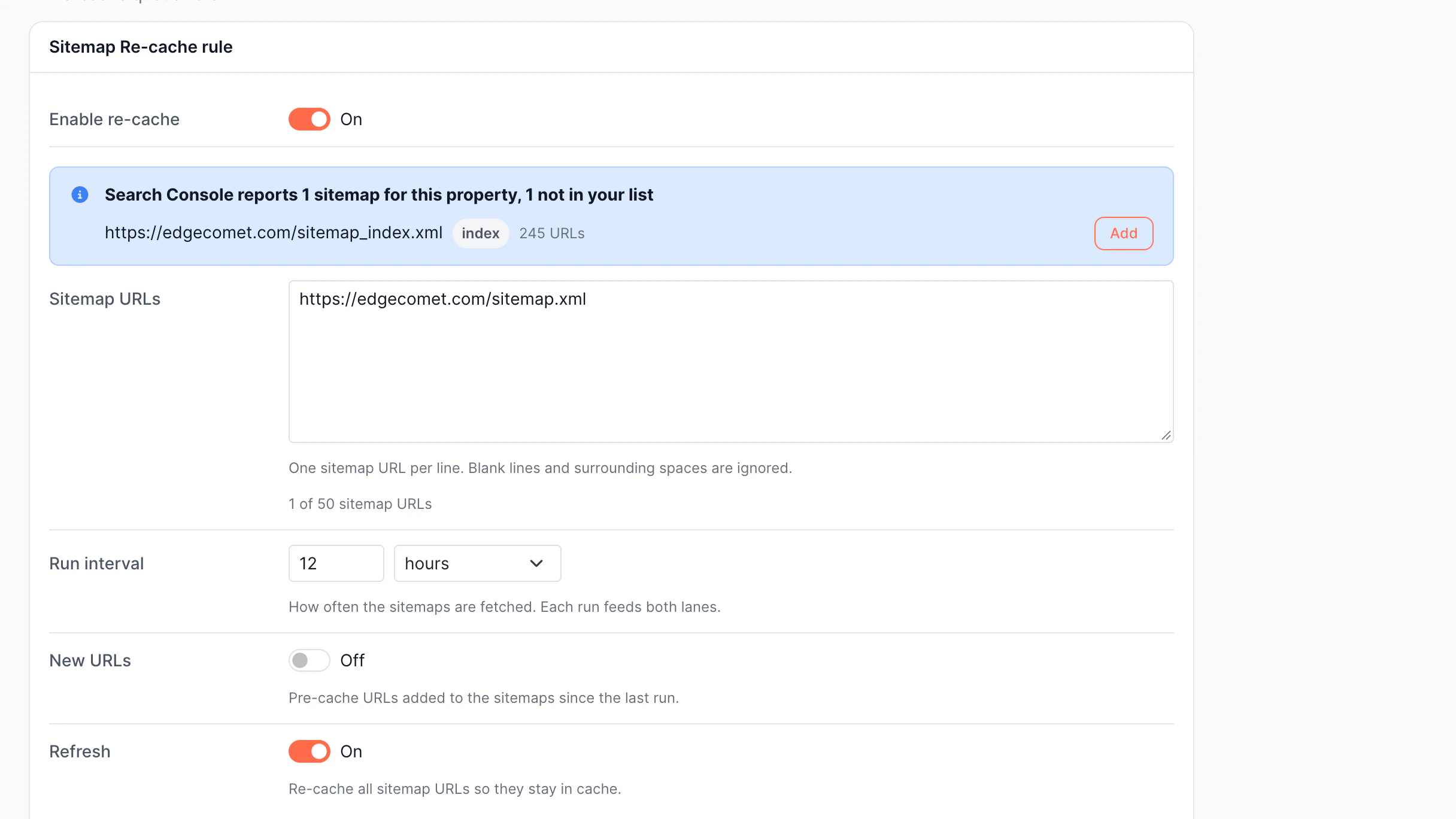
Pre-render critical pages before bots arrive
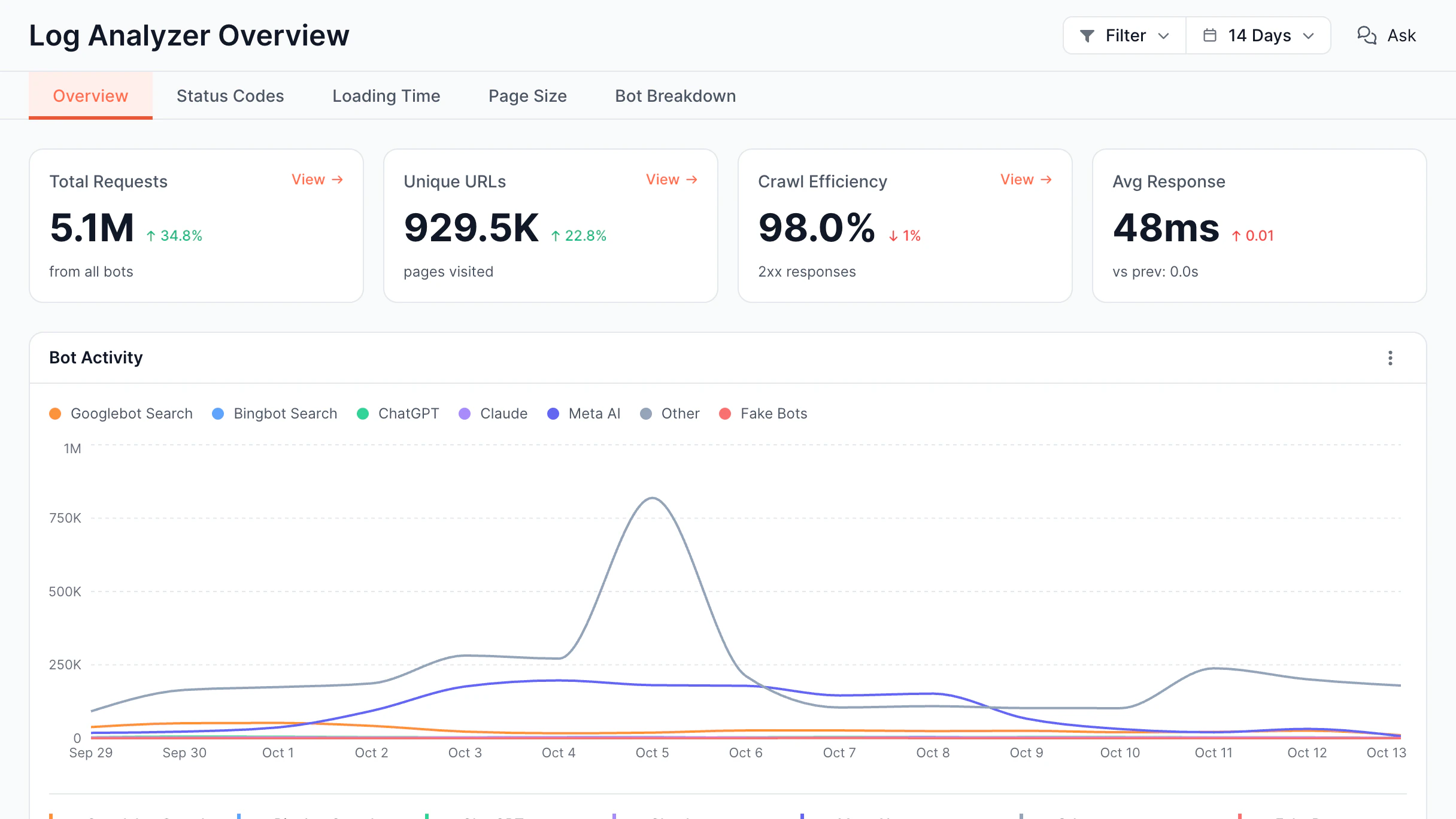
JavaScript rendering failures can silently break SEO and AI visibility. EdgeComet continuously monitors rendering performance.
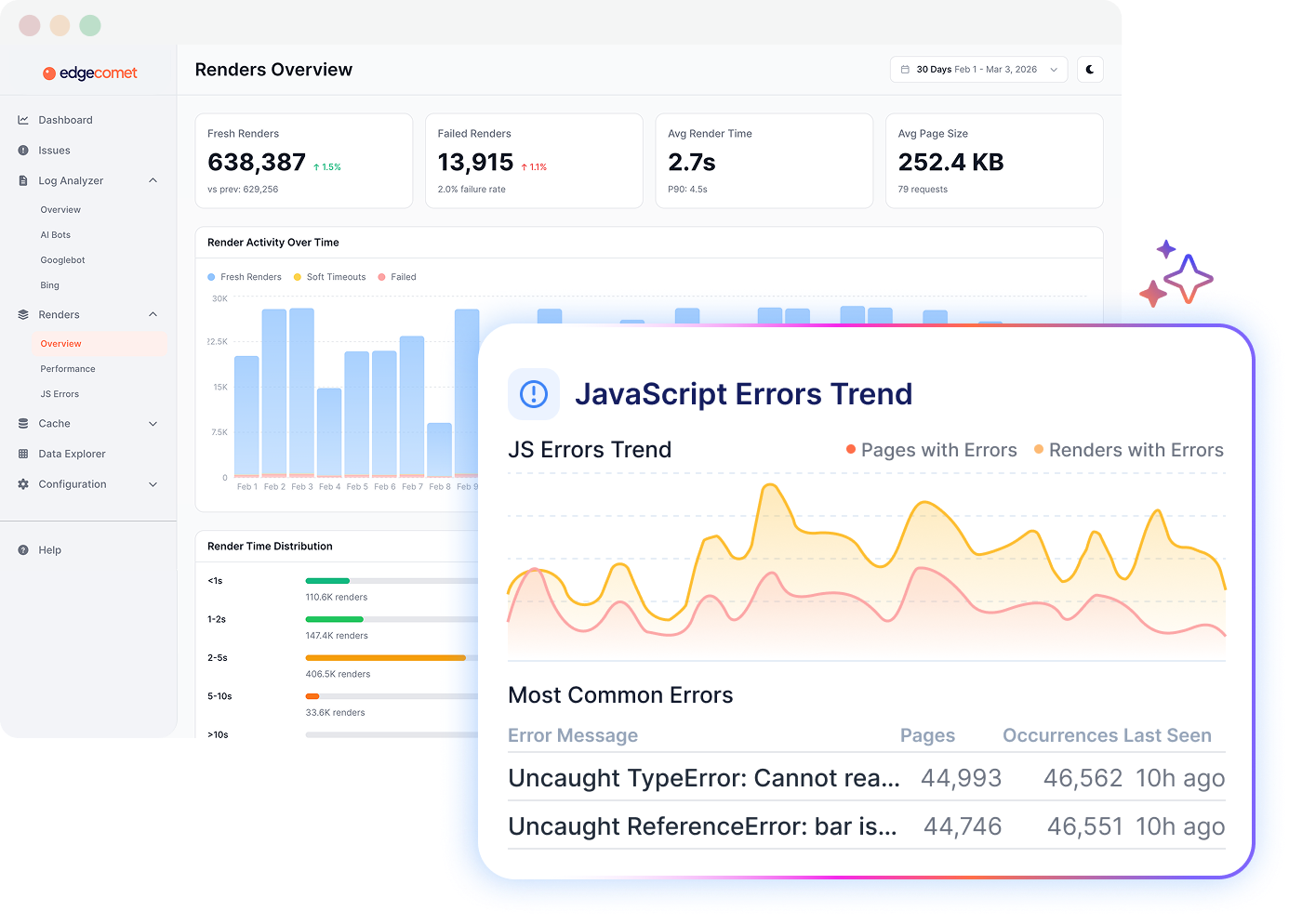
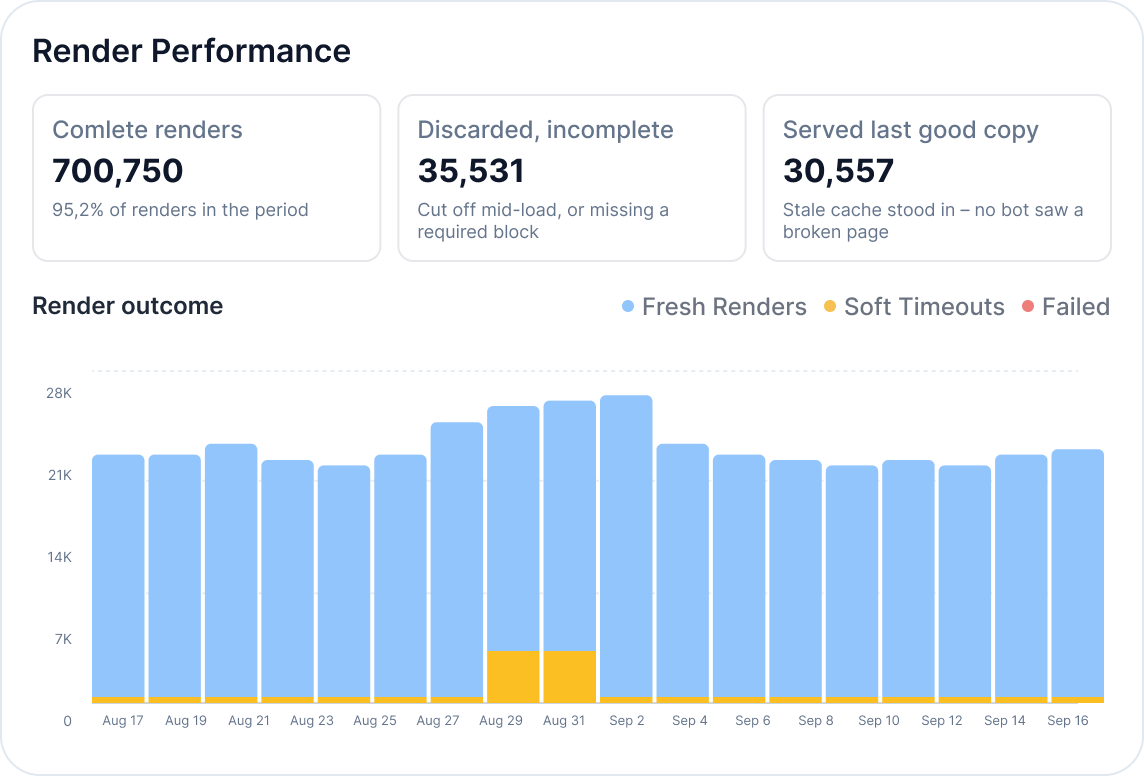
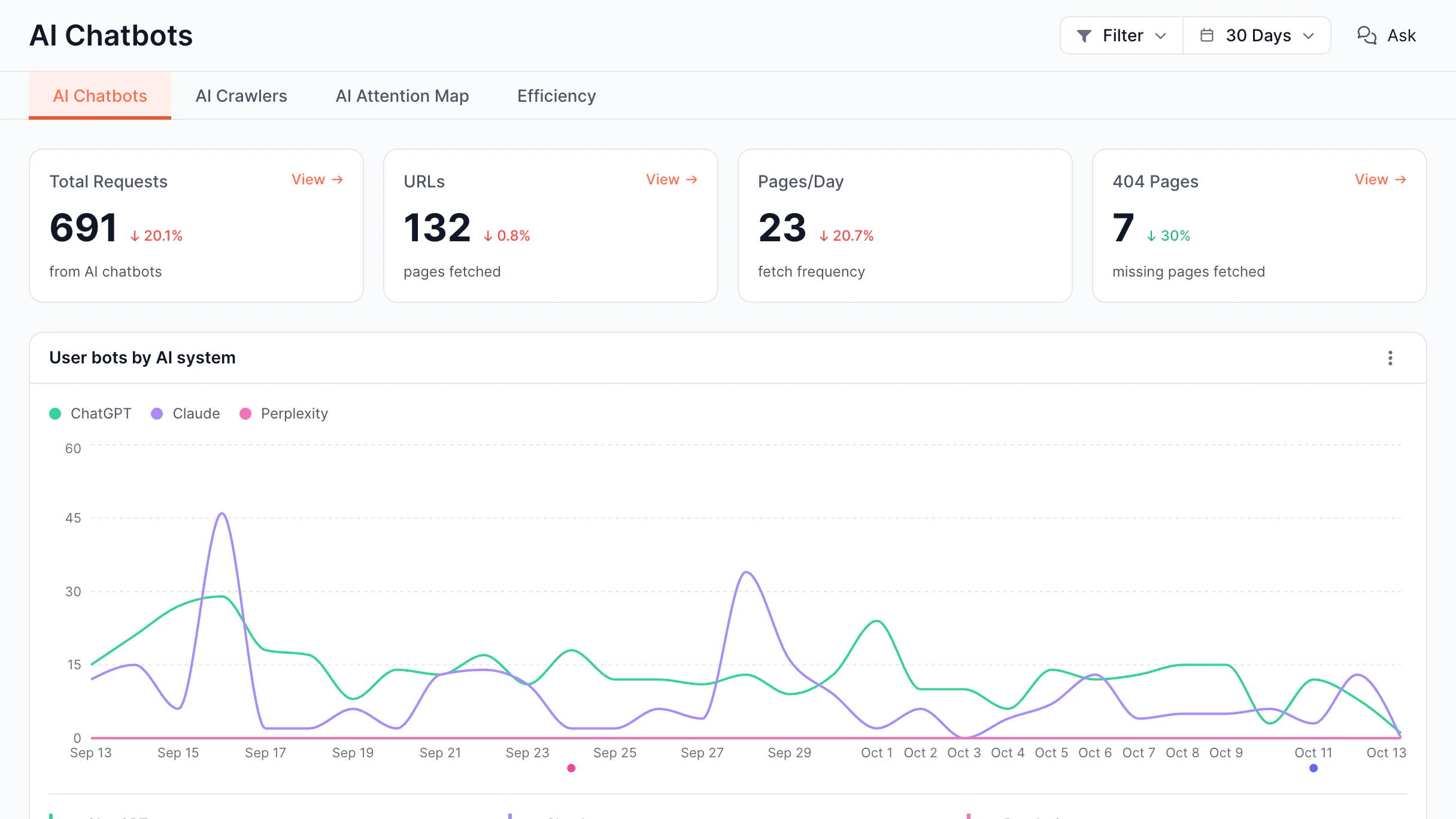
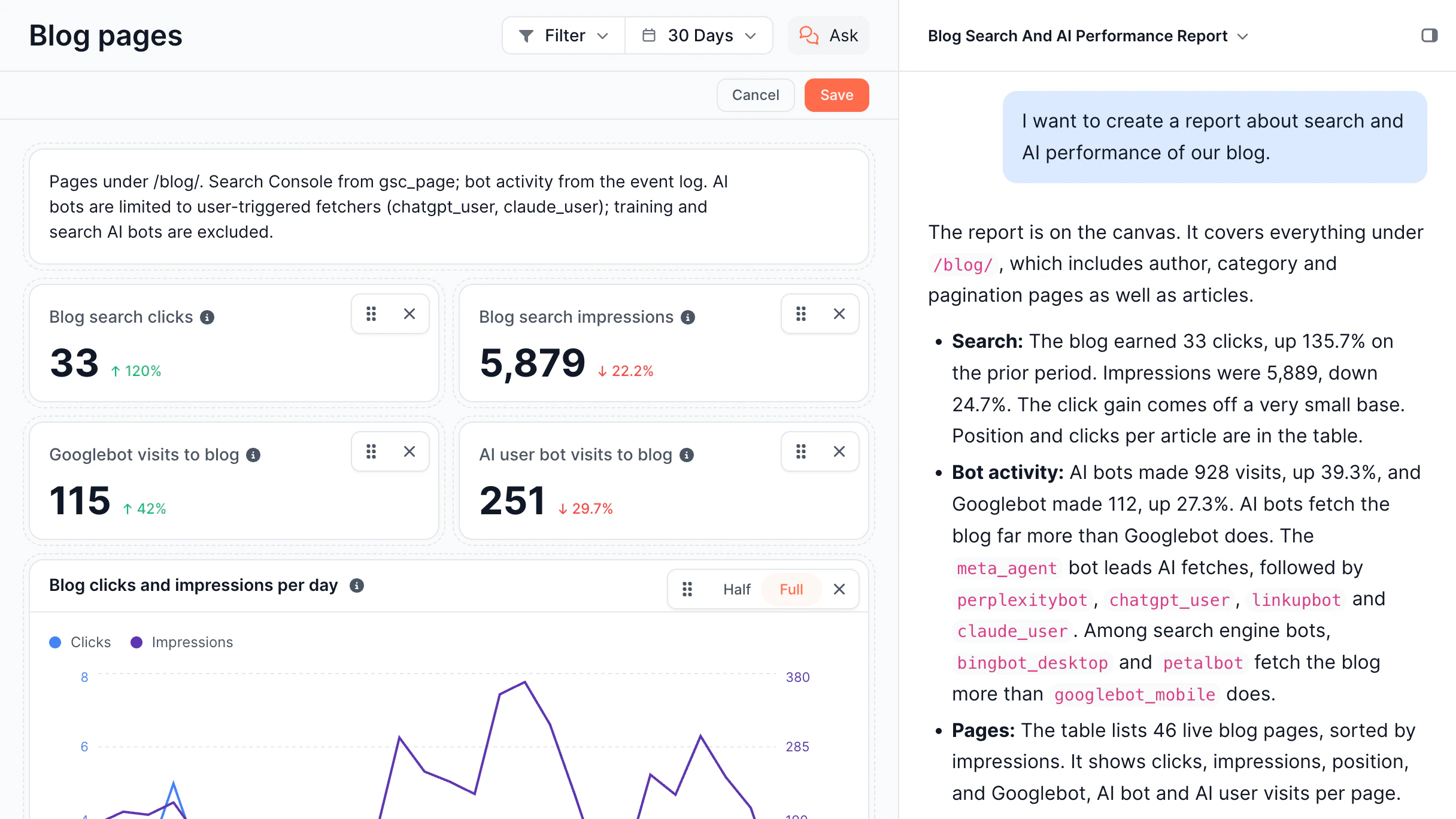
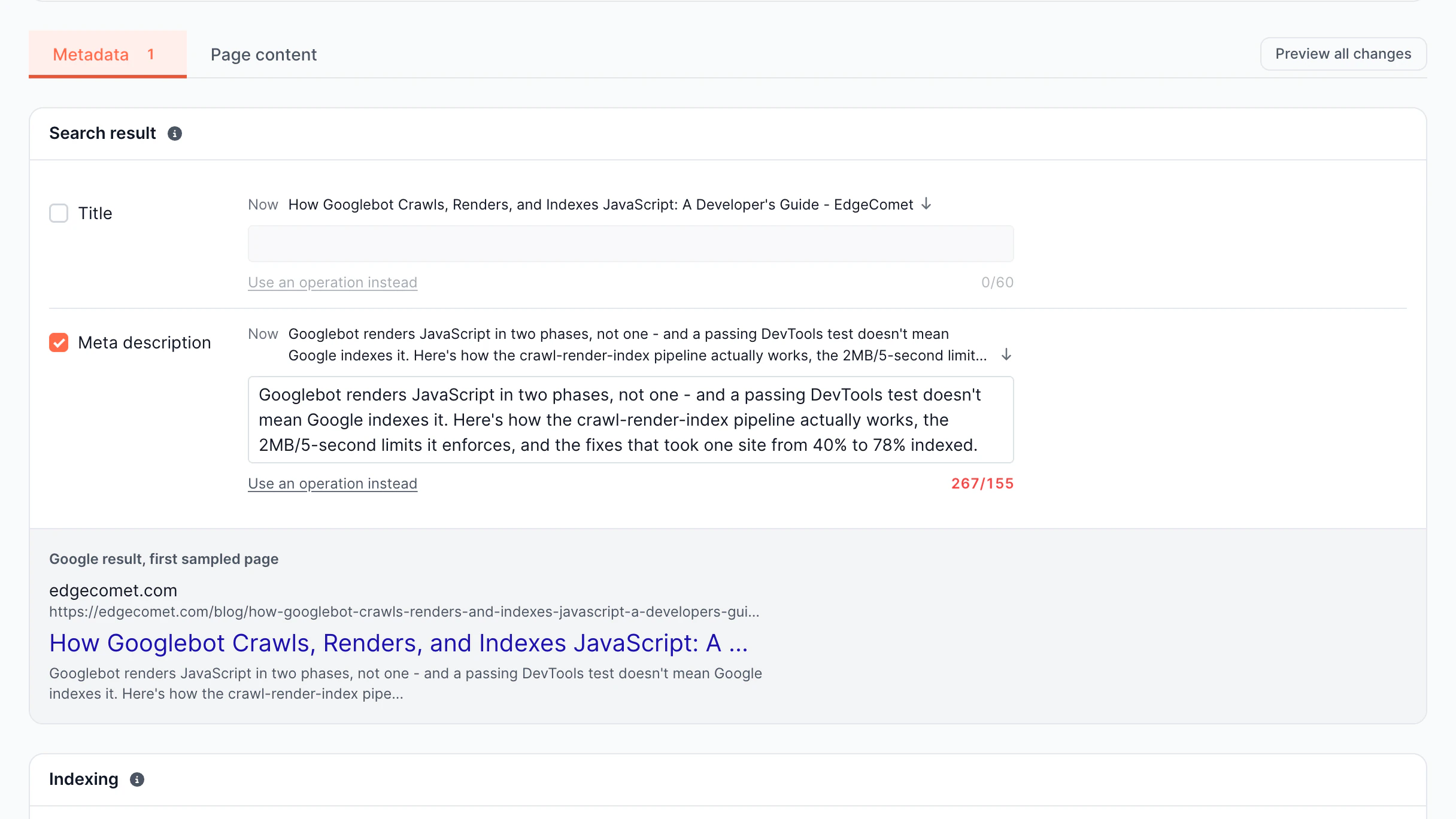
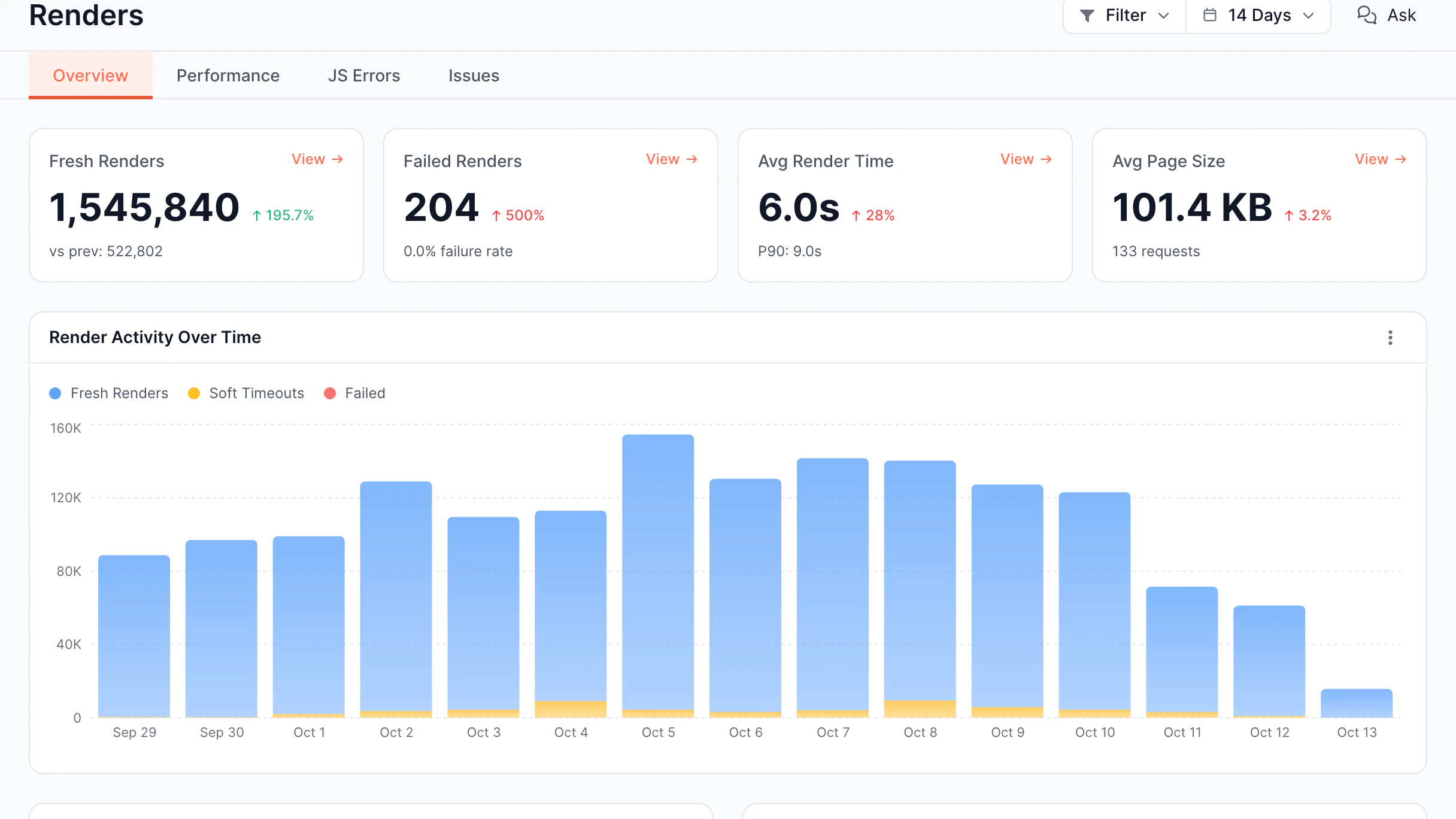
Monitor rendering activity and performance
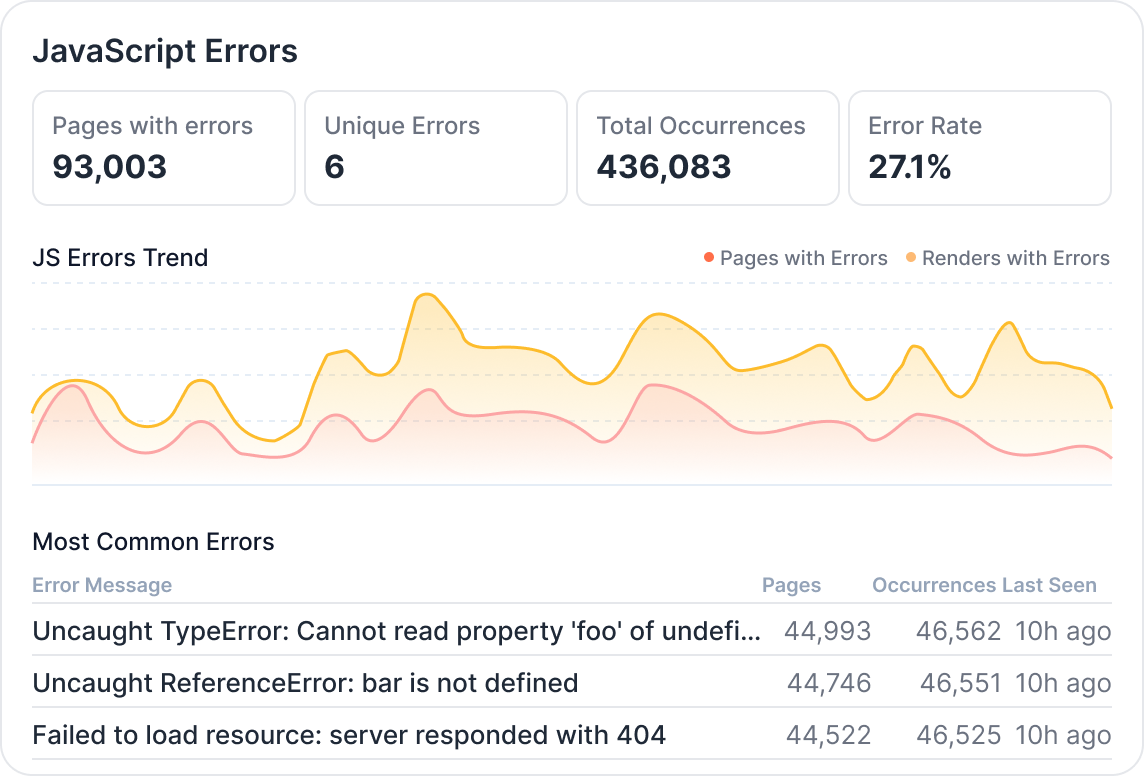
Detect JS errors during bot rendering
Analyze render time and page size
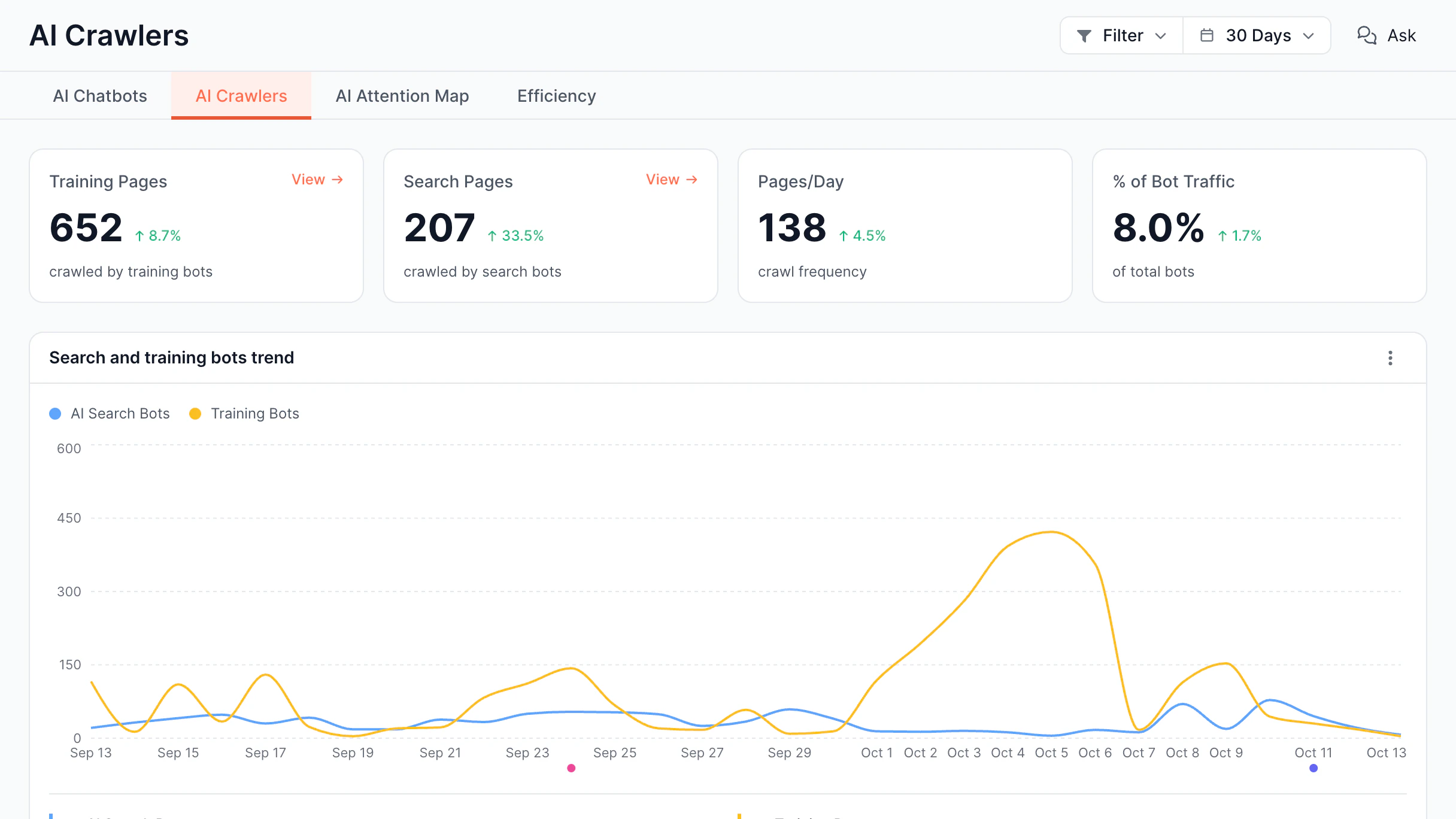
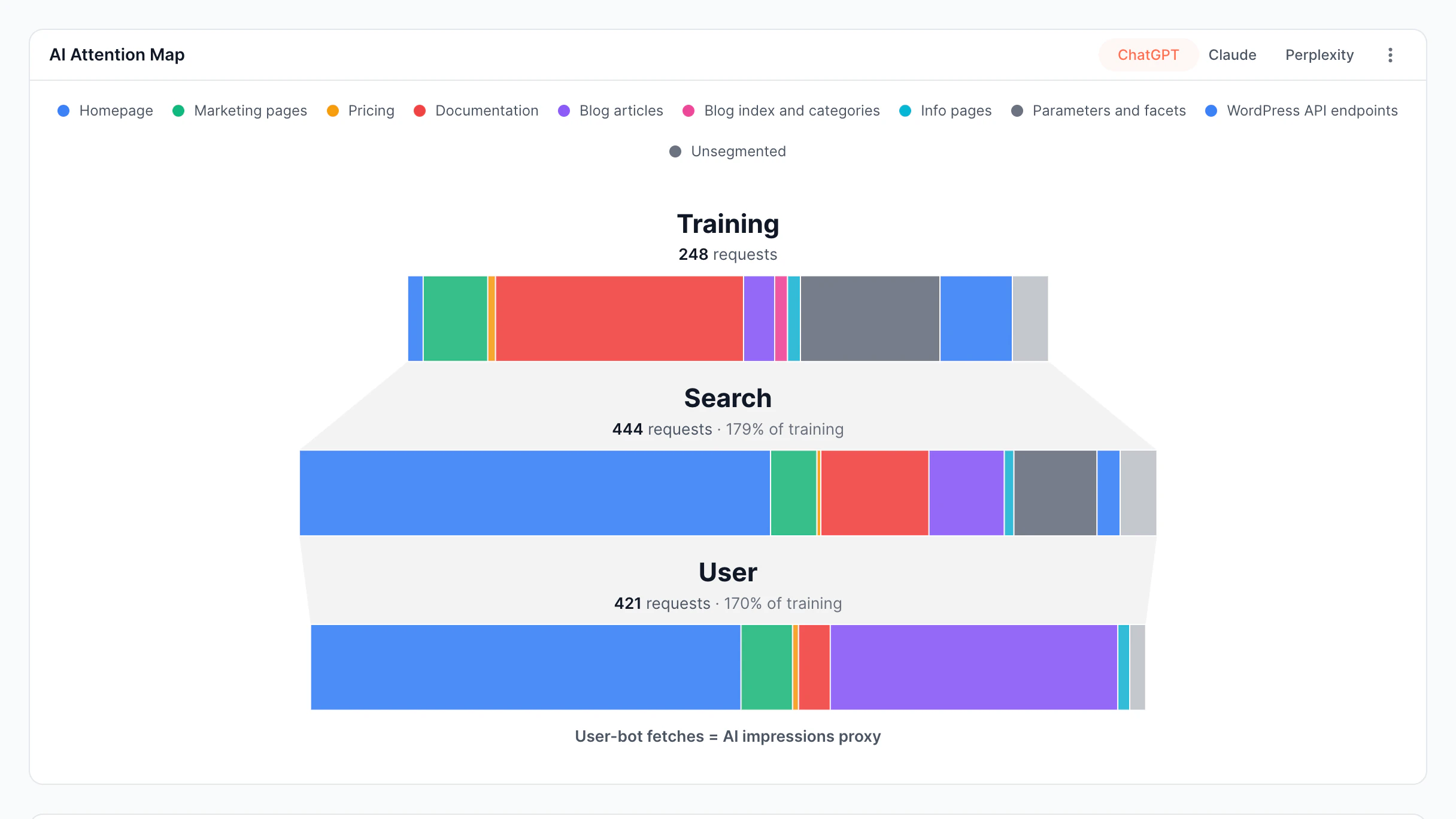
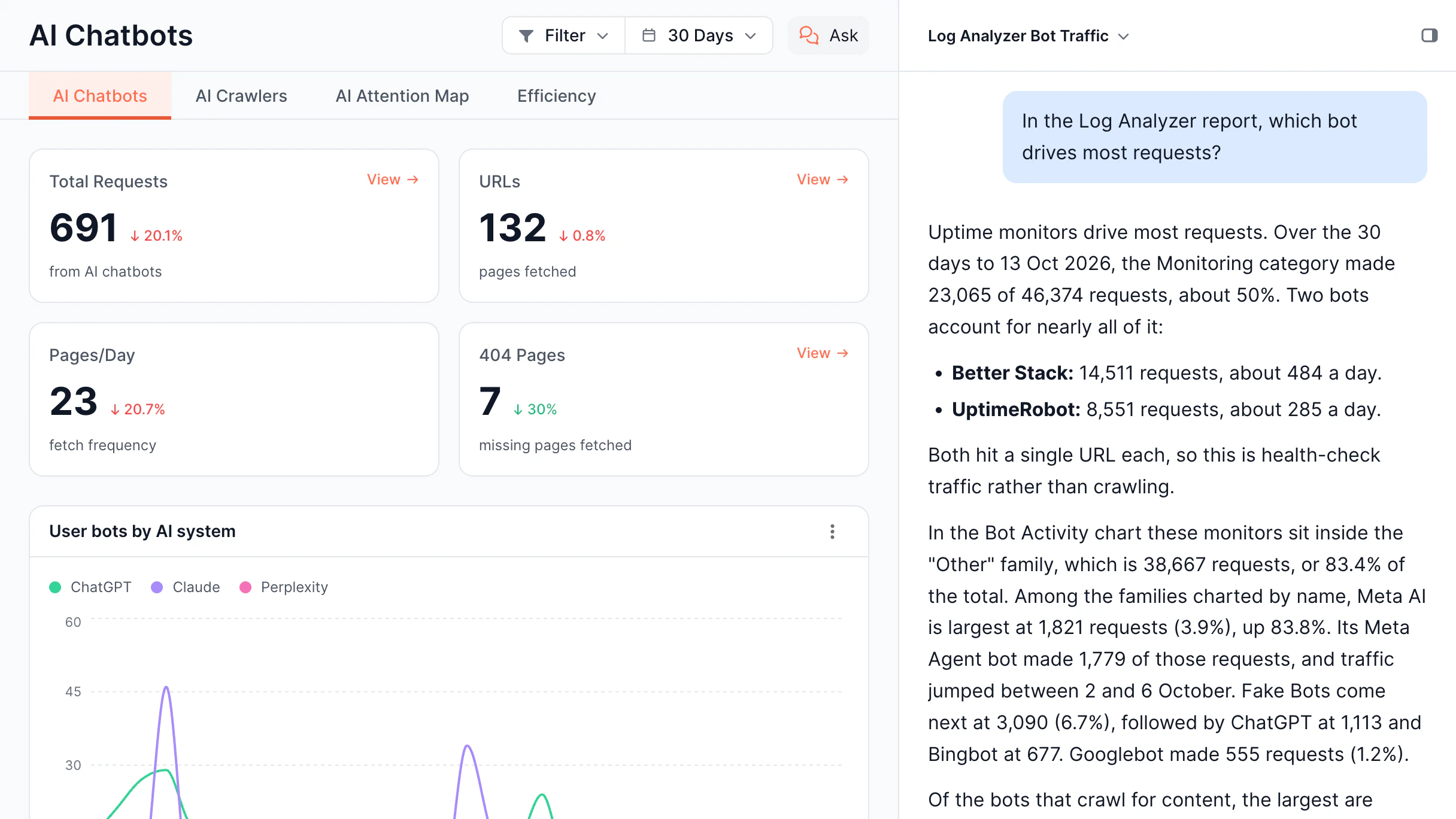
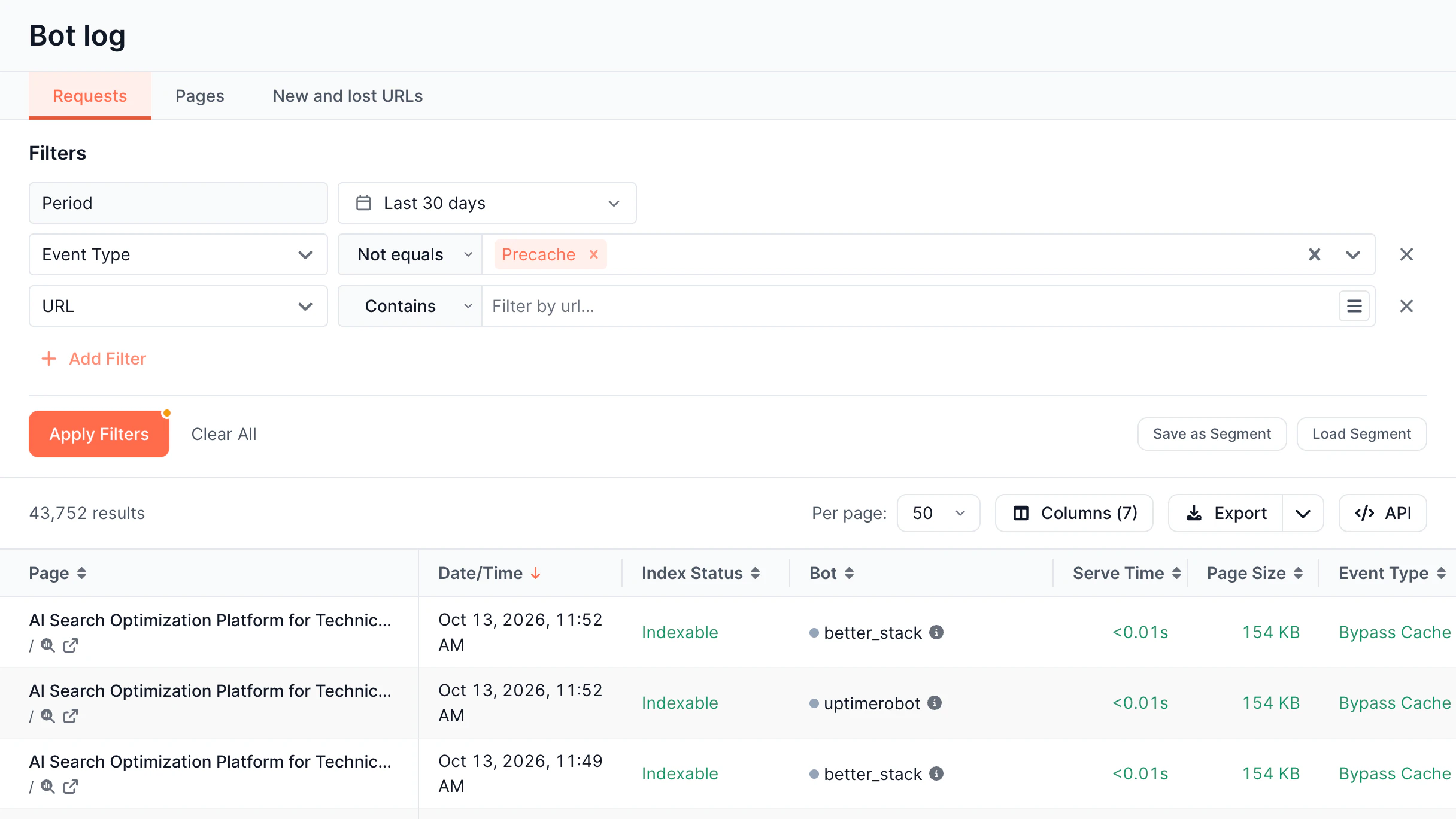
Track ChatGPT, Claude, Perplexity crawlers
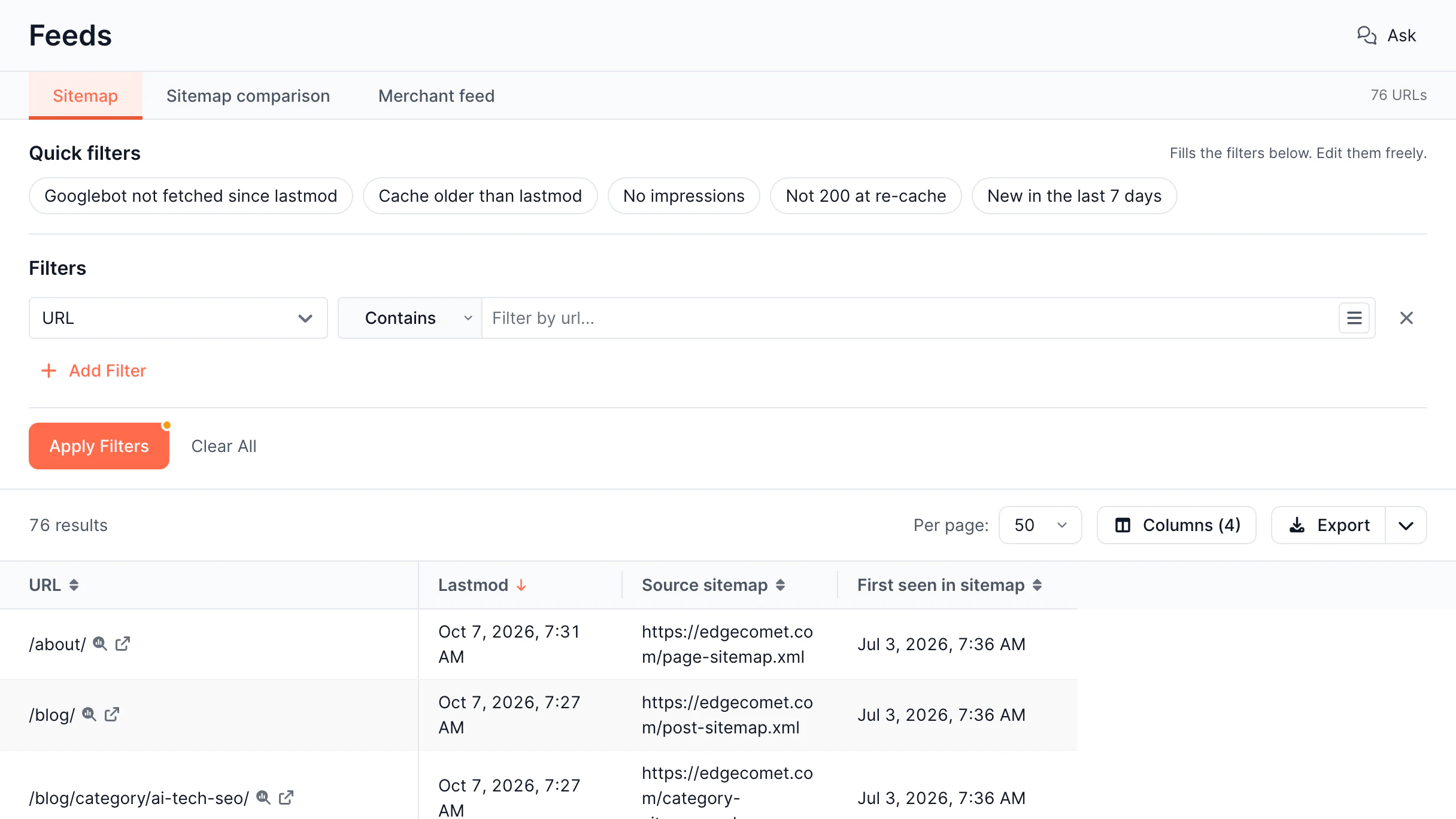
Traditional crawlers capture your site at one moment. Evergreen Crawl continuously refreshes SEO data whenever real search or AI bots visit your pages, without extra crawls or added server load.
Find pages that may not get indexed
Spot missing, duplicate, or weak content
Find missing or incorrect schema markup
Detect internal linking and nofollow issues
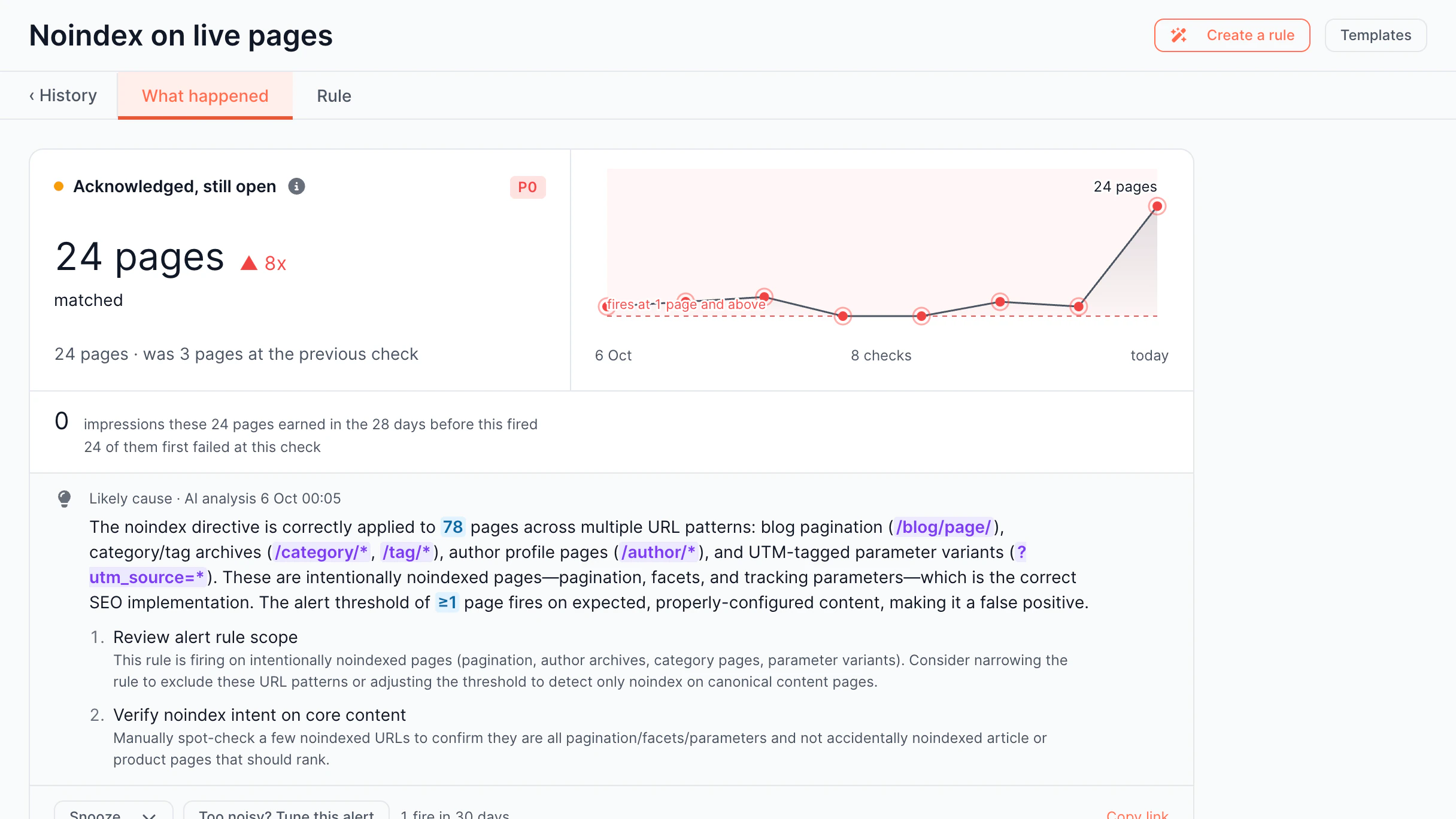
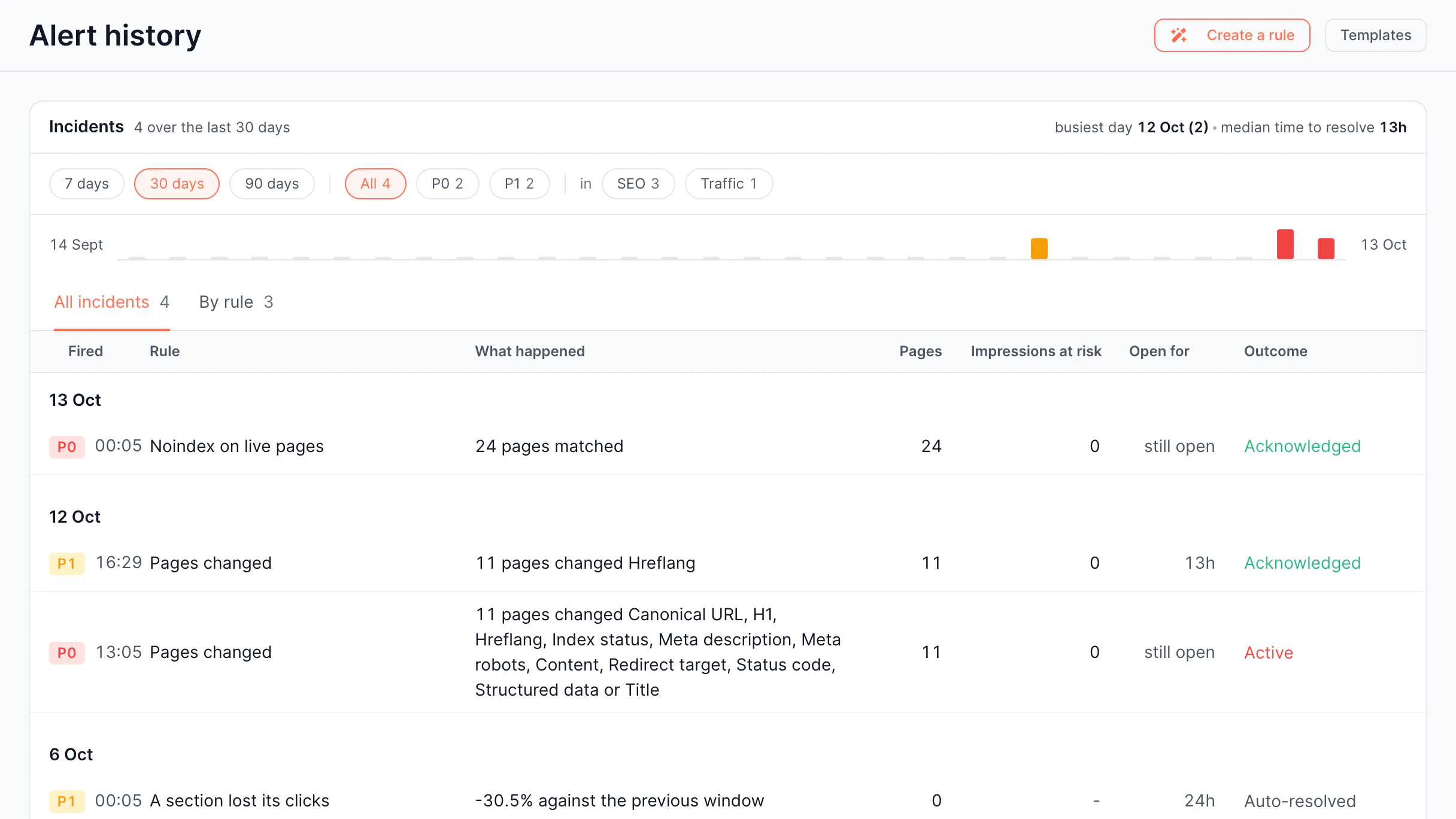
SEO issues happen often. EdgeComet monitors every real bot request and notifies if something seems wrong.
Alerts are triggered by actual bot traffic
AI explains what happened and why
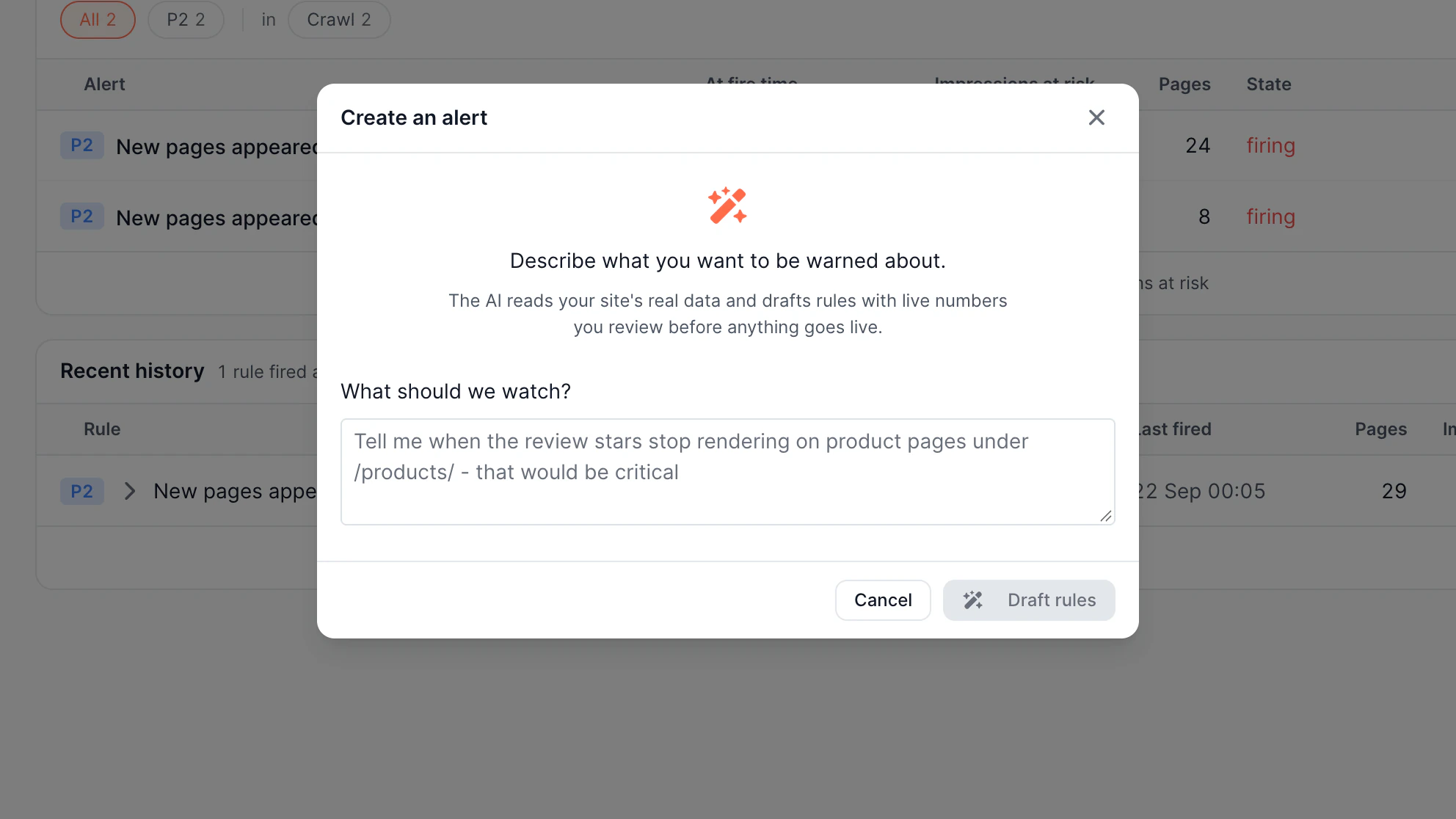
Ready-to-use alert rules, active in one click
Get alerts where your team actually works
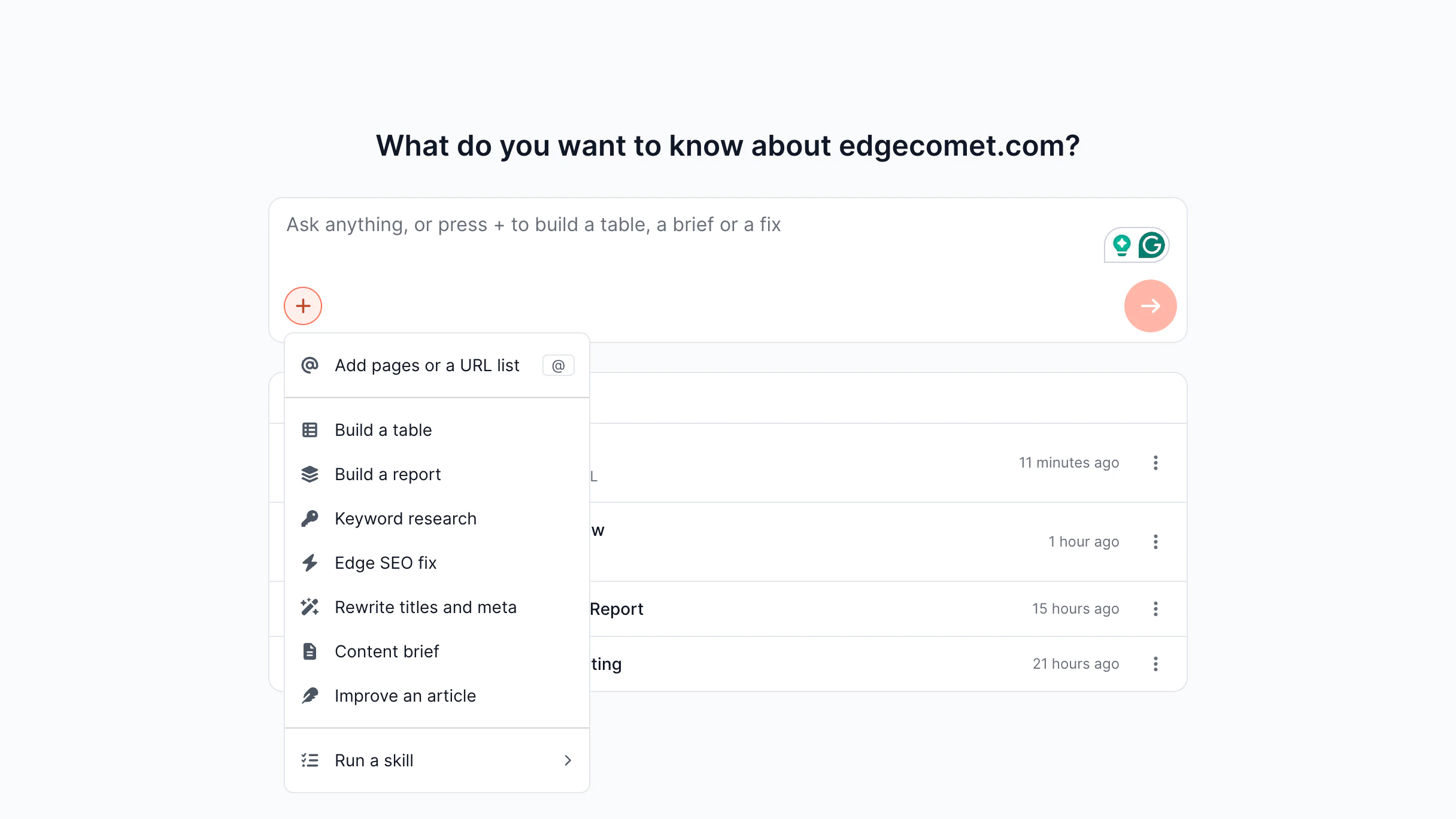
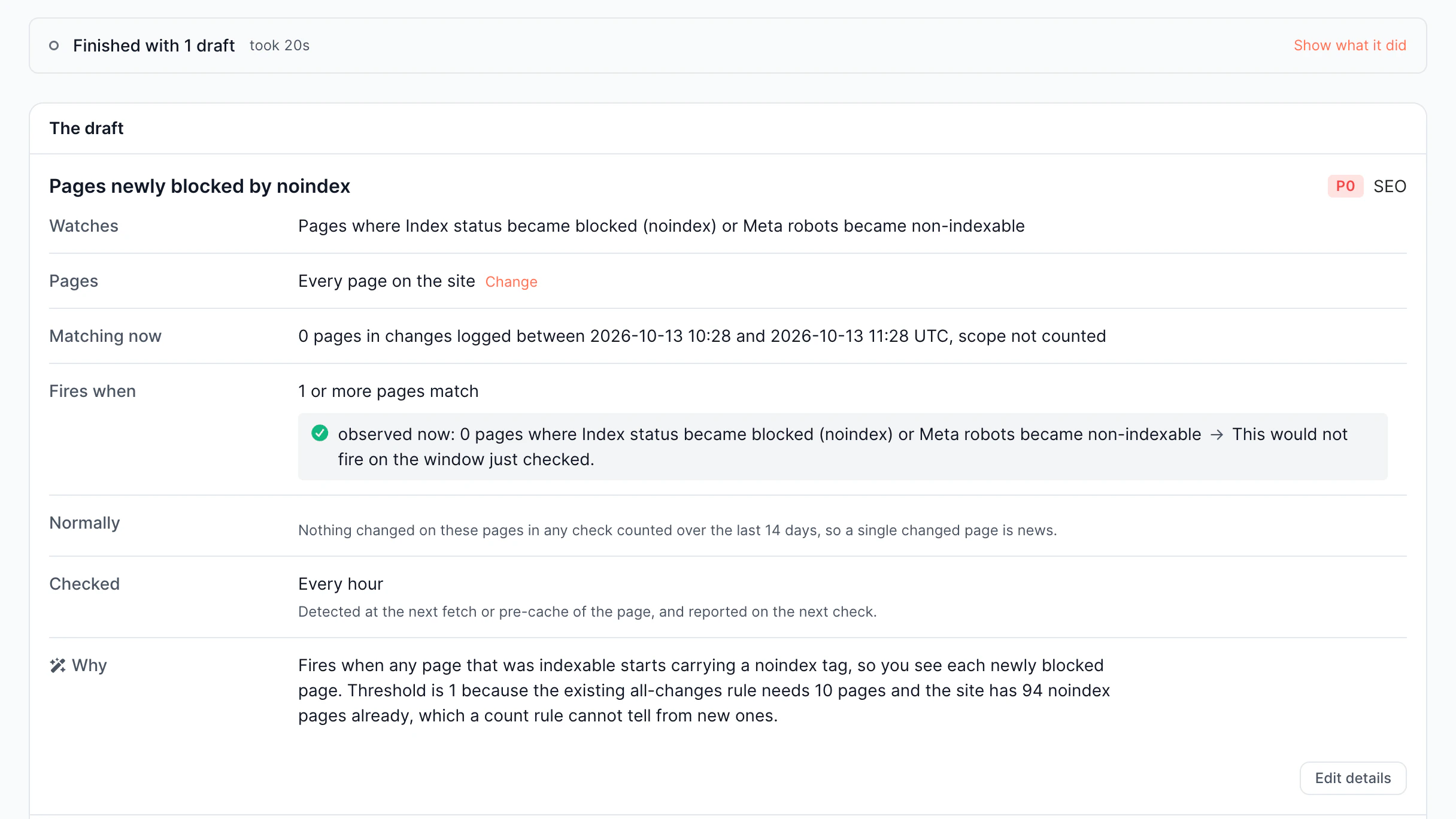
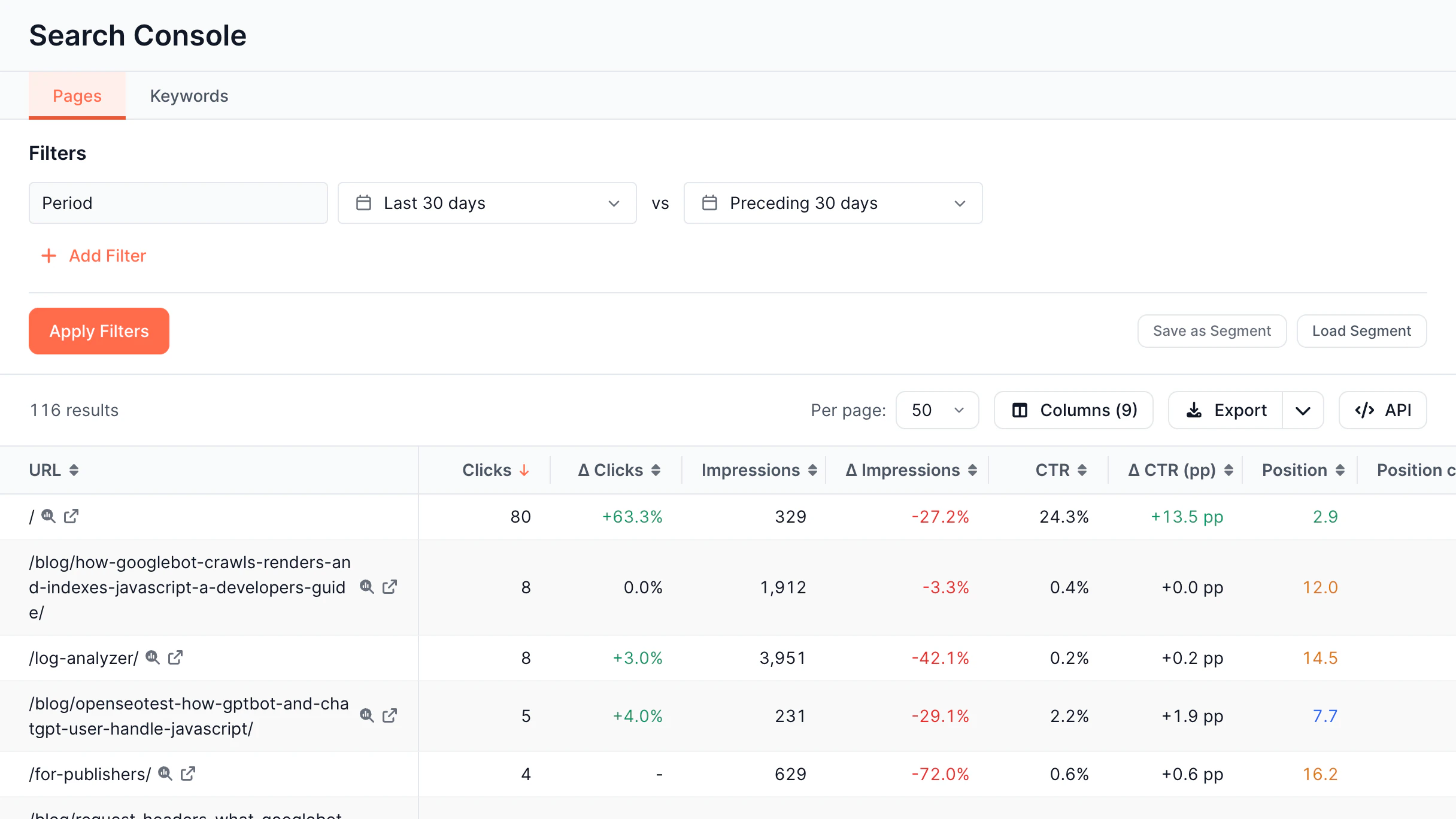
SEO data is only useful if you know what to do with it. EdgeComet's AI watches your website and tells you exactly what to fix and how.
AI surfaces problems
Get specific fixes, not vague observations
AI builds rules for you
See how EdgeComet differs from in-app server-side rendering and other prerendering services – across rendering architecture, response time, origin load, and AI bot coverage. Here's a JavaScript rendering solution comparison.
EdgeComet runs dedicated rendering infrastructure outside your site. Bots receive fast responses, and your servers stay unaffected.
Each bot request spends server resources and slows response time. EdgeComet renders pages outside a server, so bot traffic never overloads it.
You don’t know how bots are detected or how long content waits to load. EdgeComet prerenders pages with predictable pricing.
You should choose between infrastructure overhead and dependency on vendors. EdgeComet helps you keep full ownership of rendering.
Run EdgeComet on your real traffic with full access to the platform, including rendering, monitoring, and Edge SEO.
JavaScript dynamic rendering works by receiving bot requests before they gain your site and providing a completely rendered HTML. Here's how EdgeComet manages this in practice:
EdgeComet detects the incoming bot and automatically routes its request to the rendering layer.
A headless browser loads content, executes JavaScript, waits for the configured condition, and gets the rendered HTML.
The rendered output is stored in Redis and filesystem. On the next bot request for the same link, the cached response is provided in under 15ms.
EdgeComet's rendering feature solves JavaScript indexing issues for any website architecture, from single page applications to large enterprise platforms.
E-commerce sites on React or Vue render product data client-side. Without rendering, product-related results disappear. EdgeComet delivers rendered pages to every bot on every session.
Listings with dynamic pages can't rely on Googlebot's inconsistent JS execution. EdgeComet renders each page on first bot visit, caches it, and recaches automatically when content updates.
Property detail pages depend on API and map SDKs to populate content. EdgeComet ensures the page is loaded before capture, so address data, schema markup, and image carousels are all visible to bots.
Content websites using JS frameworks risk partial indexation. EdgeComet serves bots the complete article with full body text, structured data, and canonicals, preserving rankings and AI content visibility.
Improve indexing, visibility, and traffic from day one.
14-days free trial
JavaScript SEO rendering solutions help execute JavaScript in a headless browser and deliver HTML to search engines and AI bots, so they index the rendered content rather than an empty page.
Rendering infrastructure intercepts crawler requests, executes the JavaScript in a real browser, and delivers the fully rendered output so that dynamic content and metadata are visible and indexable.
Google officially recognizes dynamic rendering as an accepted solution for JavaScript-heavy sites – users and bots receive the same content, just delivered differently. EdgeComet follows this exactly, serving bots the same rendered HTML.
No, EdgeComet's rendering infrastructure runs entirely separately from your site. User requests are never sent via the rendering layer, only bot requests are intercepted.
Most teams see results within days. EdgeComet SEO solution for JavaScript intercepts and renders bot traffic without serving the output, allowing you to verify rendering quality on live traffic before switching over.
Yes, EdgeComet's rendering feature scales. Cache architecture absorbs repeated bot visits at 15ms response times, and rendering capacity can be configured as crawling volume grows.
Stay ahead with expert insights on search visibility, AI optimization, and technical SEO
We released a new version of Evergreen Crawl V2, and it is now available on all accounts. The release adds...
Read Article
Implementing an agentic SEO workflow moves a team from managing isolated tasks to governing an automated loop. While a standalone...
Read Article
Small sites can get from 1 to 5 alerts weekly, while large sites, especially e-commerce marketplaces, can reach 20+ alerts...
Read Article